

Journalist

Kim Hye In
haileykim0516@ajunews.com
-
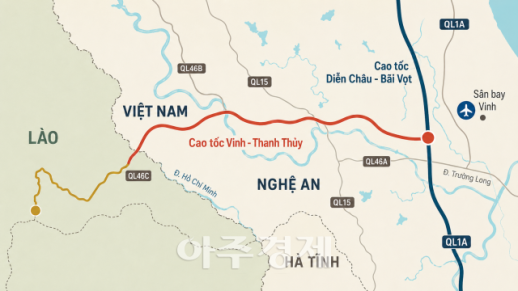 Vietnam Begins Construction of Vinh-Tan Thuy Highway to Connect Northern Region and Laos Vietnam has commenced construction on the Vinh-Tan Thuy Highway, which will connect the northern region with Laos. The project has a total investment of approximately 24 trillion dong (about $1.37 billion) and spans 65 kilometers, with a completion target set for 2029. This highway is a key segment of the Hanoi-Vientiane regional corridor. According to Vietnamese media outlet VnExpress, the groundbreaking ceremony took place on May 18 in Nghe An province, following a previous event in Dai Hue. The highway will begin at the Hung Thuy interchange, connecting to the eastern North-South Expressway's Dien Chau-Bai Bot section, and will end at the Tan Thuy-Nam On border area at the Vietnam-Laos border. The planned route will feature six lanes, with the first phase involving the complete construction of four lanes, while major bridges will be built to accommodate six lanes. The road will have a width of 32.25 meters, with design speeds ranging from 100 to 120 km/h in certain sections, and 60 to 80 km/h in mountainous areas where the width will be 29 meters. The total land area used for the project is approximately 582 hectares, including 98.5 hectares of upstream protection forest, 141 hectares of production forest, 221 hectares of rice fields, and 31 hectares of residential land. The Vinh-Tan Thuy Highway is part of the Hanoi-Vientiane connection corridor, which was agreed upon by the governments of Vietnam and Laos in 2016. The Vietnamese section of the corridor spans approximately 370 kilometers, with about 310 kilometers overlapping with the currently under-construction eastern North-South Expressway. Once completed, travel time from the Tan Thuy border to urban areas and ports within Nghe An province is expected to be significantly reduced. This will enhance connectivity between Vietnam's northern region and Laos, as well as Thailand. It is also anticipated to increase visitor traffic to tourist attractions such as Cua Lo Beach, Kim Liên Historical Site, and Phu Mat National Park. Bui Thanh An, Vice Chairman of the Nghe An Provincial People's Committee, emphasized at the groundbreaking ceremony that "this project is a strategic infrastructure initiative at both regional and national levels," and he called for close cooperation among various agencies, requesting support from the central government and relevant departments. In recent years, the Vietnamese government has prioritized funding for several east-west routes, including the North-South Expressway (eastern section), the Cai Nha-Buon Ma Thuot, the Bien Hoa-Vung Tau, the Chau Doc-Kan Tho-Soc Trang, and the Quy Nhon-Pleiku routes, aiming to complete a total of 5,000 kilometers of highways by 2030. This project is expected to enhance transportation infrastructure through modern and integrated facilities, strengthening economic and trade cooperation between Vietnam and Laos. Additionally, it aims to develop safe and sustainable transportation options, contributing to regional development and reducing traffic accidents.* This article has been translated by AI. 2026-05-19 14:42:16
 -
 Vietnam to Send Trade Delegation to Seoul in July to Enhance Cooperation The Vietnamese government is taking proactive steps to restructure its cooperation framework aimed at penetrating the South Korean market. With bilateral trade reaching an all-time high, Vietnam is shifting from mere support to a partnership focused on creating shared value. According to various Vietnamese media outlets, on May 14, the Trade Promotion Agency (VIETRADE) under the Ministry of Industry and Trade (MoIT) held a seminar on trade and investment promotion in the South Korean market. The event was attended by representatives from relevant ministries, associations, and Vietnamese companies, as well as officials from the Korea Trade-Investment Promotion Agency (KOTRA) and the Korea International Trade Association (KITA) Hanoi office. In his opening remarks, Le Hoang Thai, Deputy Director of VIETRADE, noted, "This year marks the 34th anniversary of diplomatic relations between Korea and Vietnam. Last year, the trade volume between the two countries reached $94.5 billion, a 9% increase from the previous year, with Vietnam's exports to Korea amounting to $28.9 billion, up 12.9%." He also reported that the trade volume for the first quarter of this year was approximately $26.9 billion, reflecting a 29.5% increase compared to the same period last year. However, there are calls to reassess the cooperation model itself. Dao Trong Tien, a second secretary at the Vietnamese Embassy in South Korea, emphasized that the priority now is to revisit the cooperation model. He stated, "We are rapidly transitioning from a past approach focused on unilateral support to a partner model that creates value and data together." He explained that South Korea's economic growth rate has remained between 1.8% and 2.1% in recent years, with key criteria emerging around technological competitiveness, digital transformation capabilities, compliance with international standards, ESG (environmental, social, and governance) practices, data transparency, and rapid response capabilities. Need to Strengthen Competitiveness of Vietnamese Partners Currently, South Korea is Vietnam's largest source of foreign direct investment (FDI). The cumulative registered investment exceeds $90 billion, with over 10,000 projects currently in operation. However, it has been noted that Vietnamese companies remain stuck in low-value-added processing stages. Strategies to address this include expanding the use of free trade agreements (FTAs), enhancing digital infrastructure in industrial zones, refining ESG standards, and entering the supply chains of large FDI companies. Kang Heon-woo, head of the KITA Hanoi office, stated, "From 2025, semiconductors will become the top export item from Vietnam to South Korea." He highlighted that semiconductors and flat-panel displays account for approximately 55.7% of South Korea's exports to Vietnam, with intermediate goods making up over 50%. He stressed the need for Vietnamese companies to improve quality, pricing, delivery, safety certifications, and responsiveness to establish themselves as key suppliers for South Korean FDI firms. Examples from the field were also shared. Bui Thi Hoa, vice president of Viet Han High-Tech Production Joint Stock Company, described her company's entry into the global supply chain through a strategy called "3I" (Investment, Absorption, Innovation). She noted that investments in equipment, automation, and the application of Korean-style quality management systems have been foundational in enhancing competitiveness. Building on these discussions, VIETRADE announced it will operate a "Korea Trade and Investment Delegation" in Seoul from July 12 to 17. The delegation will include 25 member companies from various sectors, including industrial products, electronics, manufacturing, furniture, textiles, and agricultural products. Furthermore, the delegation will hold a "Vietnam-Korea Trade and Investment Cooperation Conference" at KOTRA headquarters, followed by a "Vietnam-Korea Business Conference" at the KITA headquarters. One-on-one business consultations will also be conducted in collaboration with the Korea Importers Association (KOIMA) and the Korea-ASEAN Center. A visit to the Incheon Free Economic Zone Authority (IFEZ) is also scheduled to facilitate discussions from multiple angles.* This article has been translated by AI. 2026-05-19 05:11:58
 -
 Korea-Vietnam Manufacturing Alliance Expands into Robotics Amid Chinese Competition As the global wave of robotization accelerates, Vietnam faces pressure to overhaul its manufacturing model, which has long relied on cheap labor. With supply chain strategies being challenged, both South Korea and China are vying for a foothold in the Vietnamese market by leveraging robotics and artificial intelligence (AI), creating a clear competitive landscape. Attention is now on whether Korea-Vietnam cooperation can extend beyond manufacturing to become a key partnership in robotics. According to Bloomberg Vietnam, the density of robots in Vietnam's electronics industry is about 90 to 150 per 10,000 workers, falling short of the global average of 162. In contrast, South Korea leads the world with 1,220 robots per 10,000 workers, followed by Singapore with 818 and China with 470. China's dominance is particularly evident in terms of volume. In 2024 alone, approximately 295,000 new robots are expected to be installed in China, capturing 54% of the global market. Currently, around 2 million robots are operational in China, which is 4.5 times more than in Japan. The food and beverage sector has seen an 86% increase in new robot installations, while the textile industry has grown by 29%, indicating rapid robotization even in labor-intensive sectors. Vietnam holds a 24.5% share of the Southeast Asian robotics market, emerging as the largest market in the region last year. However, much of this growth has been driven by foreign direct investment (FDI) in the electronics sector. Global companies like Samsung, LG, and Foxconn have relocated their operations to Vietnam as part of a 'China Plus One' strategy, bringing robots along with them. Consequently, Vietnam is still considered to be in the 'user' stage of robotics, with the need to enhance its capabilities in system integration and industry-specific optimization. Korea and China Compete in Vietnam's Robotics Market Amid this backdrop, South Korea is intensifying its efforts to position Vietnam as a next-generation advanced manufacturing hub. The Korea Trade-Investment Promotion Agency (KOTRA) recently operated a 'Korean Robotics Pavilion' at the 'VINAMAC EXPO 2026' held in Hanoi from May 14 to 16, showcasing five Korean tech companies that presented their robotic products and automation solutions. Approximately 50 export consultations were conducted with 17 buyers, including Vietnamese automation firm ITEK Automation Solutions. South Korea's exports of industrial robots to Vietnam have surged sharply. In 2022, exports increased by 67% year-on-year, and they are projected to grow by another 12.4% to approximately $15.29 million (about 230 billion won) by 2025. Over the past three years, exports of transport and handling robots have skyrocketed 13-fold, while automation solutions have risen by about 40%. KOTRA is set to host the 'Korea-Vietnam AI Innovation Day' on May 20 in Ho Chi Minh City to discuss collaborative strategies for digital transformation in manufacturing. Chinese companies are also making significant inroads. The 'China Home Life Vietnam 2026' exhibition, which opened on May 13, featured around 500 Chinese firms showcasing industrial machinery, automation equipment, and AI-based smart devices. The exhibition included delivery and cleaning robots, voice-controlled smart home systems, and automated production lines for small and medium-sized enterprises. Some companies actively emphasized the potential for technology transfer and customized production partnerships. With both South Korea and China targeting Vietnam, local firms face a crucial decision in choosing their partners. Moreover, Vietnam's internal supply chain operations are rapidly evolving. Factories are now operating 24/7, demanding speed and precision in raw material procurement, logistics, and warehouse management. As robot-based quality control becomes commonplace, defects that were difficult to detect through manual inspection are now being monitored, and real-time data integration has become a fundamental requirement for entering the primary supply chain. Ultimately, Vietnam's ability to enhance its robot system integration and industry-specific optimization capabilities will be a decisive factor in determining its future standing. Combining imported robots with management software in sectors such as food, textiles, and cold chain logistics presents a realistic opportunity. Historically, Korea and Vietnam's collaboration has primarily focused on production networks centered around electronics and manufacturing. However, as robotics and AI emerge as core infrastructure in supply chains, the potential for the two countries to evolve into major partners encompassing system integration and technological advancement is increasingly significant.* This article has been translated by AI. 2026-05-19 05:04:05
 -
 Vietnam's Durian Exports Surge 262%, But Farmers Face Challenges In the first quarter of this year, Vietnam's durian exports skyrocketed by 230% compared to the previous year, showing a strong recovery. Growth in new markets such as South Korea and the United States is notable, but challenges remain, including high dependence on China, cadmium contamination issues, and price instability. According to Vietnam's Ministry of Agriculture and Rural Development on May 17, durian exports reached approximately $221.7 million (about 333.3 billion VND) in the first quarter, marking a 230% increase year-on-year. Total export volume exceeded 80,000 tons, with fresh durian accounting for about 68,500 tons and frozen durian about 11,600 tons. The surge in export value is primarily driven by frozen durian, which saw an average export price of around $4,302 per ton (approximately 6.46 million VND), over 20% higher than the previous year and 18-22% more than fresh durian. In addition to traditional markets like China, significant growth has been observed in various importing countries. Exports to South Korea surged by 262%, the highest growth rate, while exports to the United States increased by over 107%. Australia and Japan also saw increases of 40% and 12%, respectively. This indicates a growing presence of Vietnamese durian in demanding markets. ◆ China Absorbs 90% of Fresh Durian Exports, Price Instability Persists However, the outlook for future durian exports is not entirely optimistic. China remains the largest market, absorbing about 90% of Vietnam's fresh durian exports. The inconsistency of China's quarantine and purchasing policies leads to repeated price fluctuations. Cases of contamination with harmful substances like cadmium and O-aminophenol continue to occur, disrupting exports to China. Currently, sources from southern production and distribution areas report that the Ri6 variety is priced at 40,000 to 49,000 VND per kilogram (about $2.20 to $2.70), an increase of 5,000 to 7,000 VND from the previous week. In contrast, the Thai variety (Monthong) has decreased by about 3,000 VND, priced at 76,000 to 81,000 VND per kilogram. Dang Phuc Nguyen, Secretary-General of the Vietnam Vegetable and Fruit Association, stated, "The recent recovery in durian prices is due to a temporary stabilization of exports to China and a reduction in the supply of the Ri6 variety from the Mekong Delta region." However, he cautioned that the issues of cadmium and O-aminophenol contamination remain unresolved, which could lead to renewed export restrictions to China. Additionally, overlapping harvest times with Thai varieties are major factors contributing to price instability. Following the harvest in the southwestern Mekong Delta, large-scale shipments of Thai varieties (Monthong) are expected primarily from the southeastern region between May and July, and from the western highlands between August and November, raising concerns about potential price declines in the second half of the year. Experts emphasize the urgent need for zoning of cultivation areas, systematic management, enhanced cadmium testing capabilities, and standardization of cultivation processes. Meanwhile, the Vietnamese government is taking strong measures to address structural weaknesses in the durian export certification system. On May 15, Deputy Prime Minister Ho Duc Phoc convened relevant ministries to request that the Ministry of Public Security investigate broker activities related to cultivation codes, code trading and leasing, and manipulation of inspection results. This comes after 403 cultivation codes and 240 packaging facility codes received non-compliance warnings from China since 2025, indicating that misuse and false usage of codes are undermining export credibility. The Deputy Prime Minister remarked, "If control is not properly implemented, we will see repeated price crashes during bumper harvests, ultimately harming farmers the most." He also directed the simplification of the cultivation code issuance process, decentralization of authority, and further negotiations with the General Administration of Customs of China for additional code approvals.* This article has been translated by AI. 2026-05-18 21:22:54
 -
 Vietnam Expands Trade and Investment Cooperation with Busan A Vietnamese business delegation is visiting Busan to explore entry into the Korean market. The Busan Economic Promotion Agency (BEPA) hosted an export consultation meeting in Vietnam last October and reached an agreement with the Consul General of Vietnam in Busan in November on a joint business plan for 2026. This forum is expected to yield results from a year of collaborative groundwork. On May 17, the Overseas Market Development Bureau of Vietnam's Ministry of Industry and Trade announced that it will send a business delegation to Busan and southern Korea from May 19 to 22 to promote trade. This visit is part of the 2026 trade promotion program, aimed at identifying import demand and growth potential in Busan and southern Korea, understanding product quality standards, packaging, and distribution systems, and detailing strategies for promising export items such as agricultural products, processed foods, furniture, household goods, and OEM cooperation. Vietnamese companies plan to introduce their products and explore trading possibilities by meeting directly with local import partners at the 'Vietnam-Korea Business Networking Workshop' in Busan. ◆ Meeting Between Consul General and BEPA Director in November 2022: Agreement on Joint Business Plans for 2026 This forum is a continuation of the cooperation established over the past year. On November 17, 2022, Consul General Doan Phuong Lan met with BEPA Director Song Bok-cheol in Busan to discuss future cooperation directions. Lan highlighted Vietnam's economic development status, market potential, and prospects for collaboration between Vietnamese local governments and Busan, officially proposing the dispatch of reciprocal trade promotion delegations, investment attraction, technology cooperation, and expansion of startup collaboration. In response, Director Song praised Vietnam's development potential and the possibilities for Korea-Vietnam economic, trade, and investment cooperation, expressing BEPA's commitment to actively support trade and investment promotion events and assistance for small and medium-sized enterprises and startups. He also shared the results of BEPA's ongoing trade promotion programs in the Vietnamese market during the meeting. BEPA is a nonprofit organization jointly established by the city of Busan and the Ministry of SMEs and Startups of Korea. Additionally, in October 2022, BEPA dispatched a trade delegation consisting of 10 local SMEs to Vietnam using the Busan Economic Revitalization Support Fund (BEF). Vietnam is Busan's fourth-largest export destination, accounting for approximately 6.9% of the city's total exports. To support the somewhat sluggish recovery of exports to Vietnam, BEPA held export consultation meetings in Hanoi and Ho Chi Minh City, the economic centers of Vietnam. Through pre-matching, 60 local buyers were selected for consultations on various products, including cosmetics, health supplements, industrial welding machines, and dental implants, resulting in a total consultation performance of $12 million (approximately 18 billion won) and contract negotiations worth $8 million (approximately 12 billion won). The trade volume between the two countries is rapidly growing. As of last year, the trade volume exceeded $90 billion, and from January to April this year, trade reached $37.2 billion, continuing a strong growth trend. Exports to Korea amounted to $11.1 billion, a 22.9% increase compared to the same period last year, while imports rose to $26.1 billion, up 40.8%. As of the end of March this year, Korea's cumulative registered investment in Vietnam was approximately $99 billion, with 10,450 active projects, accounting for 23% of all projects and 18% of total foreign direct investment (FDI). * This article has been translated by AI. 2026-05-18 20:22:26
 -
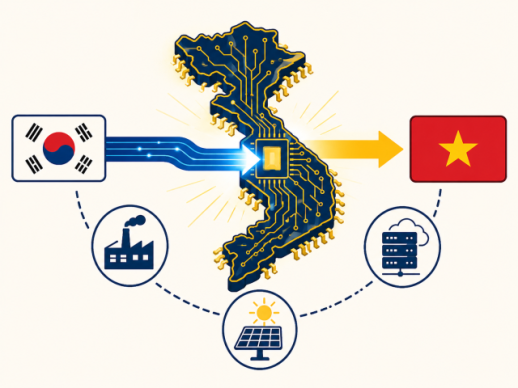 Vietnam No Longer a Low-Cost Base: South Korea's Investment Shifts to Integrated Manufacturing and Services Hub South Korea's foreign direct investment (FDI) in Vietnam is undergoing structural changes amid global value chain (GVC) restructuring and trends toward digital and green transitions. South Korean capital, which accounts for about 18% of total FDI in Vietnam, is moving from a manufacturing focus to high-tech and value-added sectors, significantly impacting Vietnam's industrial structure and supply chains. On May 15, local time, Vietnamese media outlet Cong Thuong reported that a research team led by Professor Do Thi Minh Hue at the National Economics University in Hanoi analyzed these trends in their paper titled "South Korean Direct Investment in Vietnam: Trends and Strategic Business Implications." The team examined changes in the scale, structure, and strategies of South Korean FDI based on secondary data from domestic regulatory agencies and international organizations, drawing implications for businesses and policies. According to the research, as of the end of 2024, Vietnam's cumulative FDI is expected to reach approximately $502.8 billion, with 42,002 projects. Last year, new registered capital of about $38.4 billion was added, projecting the cumulative total to rise to around $540 billion. South Korea is identified as a key investor, with a notable concentration in the processing and manufacturing sectors. Approximately 75% of South Korean FDI is concentrated in this area, leading to the establishment of large-scale production and export clusters focused on electronics, textiles, supporting industries, and chemicals. Major projects from companies like Samsung and LG have transformed regions such as Bac Ninh, Thai Nguyen, Hai Phong, and Ho Chi Minh City into global production hubs for electronics and mobile devices. There is a clear trend of investment being concentrated in areas with well-developed industrial and logistics infrastructure. However, the research notes that some capital is beginning to shift to new regions, considering land availability, labor costs, and infrastructure connectivity. This movement is interpreted as a strategic effort to diversify risks and optimize costs. The nature of investments is also rapidly changing. South Korean FDI, which traditionally focused on assembly and textiles, is now expanding into high-tech electronics, semiconductors, renewable energy, data centers, and finance and logistics sectors. The researchers view this as a signal that Vietnam is evolving from a simple low-cost production base to a strategic regional hub that integrates manufacturing and services. However, deep connections between South Korean and Vietnamese companies remain limited. Many South Korean firms prioritize existing regional supply chains due to factors such as technological gaps, quality standards, delivery capabilities, and financial capacity, which ultimately hinders the level of localization. Institutional support programs for suppliers are also noted to be insufficiently systematic. The research suggests that Vietnamese companies need to move beyond simple subcontracting and more clearly define their roles within the value chain, including components, semi-finished products, supporting services, and research and development (R&D). It emphasizes the need for active investment in technological capabilities, quality management systems, digital transformation, and human resource development. The government is also urged to shift from a quantitative approach focused solely on attracting investment to a "selective FDI strategy" that prioritizes high-tech and high-value projects and connections with domestic companies.* This article has been translated by AI. 2026-05-15 22:30:00
 -
 Vietnam Turns to Korean Agricultural Model Amid Durian Export Challenges As China's tightened cadmium import standards disrupt durian exports from Vietnam's Dong Thap province, local authorities are looking to a "Korean-style soil restoration model" as a solution. The aim is to shift focus from agricultural expansion to improving soil quality itself. According to Vietnamese media outlet Zing News on May 13, the Dong Thap People's Committee is establishing a laboratory to analyze agricultural soil quality and is developing a long-term plan for tailored improvement strategies for different crops. This initiative comes in response to China's strict enforcement of a cadmium limit of 0.05 mg/kg for imported fruits, increasing the demand for quality control from the production stage. Nguyen Phuc Tien, vice chairman of the Dong Thap People's Committee, stated that the cadmium residues in durians are a result of long-term soil contamination from farming practices. He emphasized the need to review the management of cultivation area codes and promised strict measures against regions that do not comply with regulations. Additionally, he proposed a plan to periodically analyze soil samples by cultivation area, similar to practices in South Korea. Deputy Minister of Agriculture and Rural Development Bo Van Hung also identified the source of the problem during a "2026 Export Promotion Meeting" held over the weekend. He noted that "the fundamental cause of cadmium contamination is primarily the residues left in the soil," stressing the need for soil improvement research, crop rotation, and control of input materials. He added that, in the short term, the management system would be refined to prevent logistics disruptions due to inspection delays. Experts believe that the current situation reflects accumulated gaps in the management of fertilizers and pesticides. Nguyen Dang Nghia, former director of the Tropical Agriculture Research and Consulting Center, remarked that "the current crisis clearly shows the results of uncontrolled expansion in the durian industry over the years." He pointed out that cadmium naturally exists in soil and is also found in some fertilizers and pesticides. He explained that the high cadmium content in certain imported DAP fertilizers used in the Mekong Delta, along with saline intrusion at the end of the dry season and prolonged use of phosphate fertilizers, has compounded the issue. Interest in Korean Soil Restoration Policies In this context, South Korea's soil restoration policies are being presented as a reference model. This strategy focuses on improving soil quality rather than merely increasing production area. South Korean agriculture has transitioned from excessive use of chemical fertilizers and pesticides to prioritizing the restoration of natural soil fertility. In this process, organic fertilizers, compost, and microbial agents have been actively utilized to enhance organic matter content and beneficial microbial environments. The core of the Korean model lies in a technology-based precision management system. Farmers regularly analyze their soil to assess nutrient content, pH levels, organic matter content, and chemical residue risks. Based on these results, specialized institutions provide specific recommendations on the types and amounts of fertilizers and cultivation methods. This approach allows for tailored management that reflects regional characteristics. Nghia noted that soil restoration technologies have already been implemented in Vietnam. He described biochar as a high-carbon material created by pyrolyzing biomass in oxygen-limited environments, which can help stabilize pH and capture heavy metals when added to soil. He also mentioned that some companies are implementing models that combine cadmium-free selective fertilizers with biochar, which are gradually spreading to the Mekong Delta region. Meanwhile, durian has already established itself as a key crop in Vietnam's agricultural exports. Thus, the cadmium issue is seen not merely as a one-time setback but as a turning point that could reshape the entire industry. Attention is focused on how the advanced agricultural policies modeled after South Korea, encompassing soil diagnosis, restoration, and cultivation area code management, will yield results in Dong Thap province.* This article has been translated by AI. 2026-05-14 20:29:52
 -
 Korea-Vietnam Copyright Forum Addresses Content Protection in the AI Era The Vietnamese government has launched a crackdown on intellectual property violations, targeting online piracy and counterfeit goods. This initiative stems from the belief that issues related to intellectual property infringement directly impact Vietnam's investment climate and national credibility. In conjunction with this effort, the Korea-Vietnam Copyright Forum was held to discuss protective measures suitable for the digital and artificial intelligence (AI) era. According to various Vietnamese media outlets, Deputy Prime Minister Ho Quoc Dung signed a directive on May 5, announcing a nationwide crackdown on intellectual property violations from May 7 to May 30. Despite previous successes in enforcement, complexities remain in certain sectors and regions, threatening both the investment environment and the legitimate rights of individuals and businesses. The special enforcement campaign will adhere to a 'zero tolerance' principle. Authorities aim to strictly punish violations under a policy of no safe zones or exceptions, with a target to increase the number of detected and processed cases by at least 20% compared to May of last year. Each ministry and local government will implement a rapid reporting system to immediately notify the Ministry of Science and Technology of serious or complex cases, with a comprehensive report due by May 31. Online copyright infringement is a primary focus. The Ministry of Public Security will collaborate with relevant agencies to investigate and prosecute serious cases related to copyright, trademark, and geographical indication violations, while also shutting down websites and organizations that illegally store and distribute foreign films, music, mobile games, and TV programs, including those in English. The Ministry of Defense will join the effort, coordinating with border guards and coast guards. The Ministry of Culture, Sports and Tourism will check compliance with copyright laws regarding software used by businesses, as well as the adherence to copyright laws for films, music, TV programs, and video games online. The Ministry of Industry and Trade and local people's committees will focus on enforcing industrial property rights and cracking down on counterfeit goods, while the Ministry of Finance will halt customs clearance for goods clearly violating intellectual property rights. Local governments will also bear greater responsibility. Each provincial and municipal people's committee chairperson is required to establish a joint task force under their direct supervision to oversee enforcement, while party secretaries are instructed to mobilize the entire political system to achieve tangible results. Korea-Vietnam Copyright Forum Held Amid these developments, the 'Korea-Vietnam Copyright Forum 2026' was held in Hanoi on May 7, organized by the Copyright Office under Vietnam's Ministry of Culture, Sports and Tourism, along with South Korea's Ministry of Culture, Sports and Tourism and the Korea Copyright Protection Agency. The forum's theme was 'Copyright Protection in the Digital Age and AI-Driven Content Industry,' bringing together government officials, experts, and industry professionals from both countries. During the forum, South Korean representatives introduced copyright monitoring and infringement prevention systems utilizing AI, and discussions were held on copyright protection in the gaming industry and potential cooperation between the two nations. Tran Hoang, head of Vietnam's Copyright Office, stated, "In this new era, copyright is no longer just a legal tool but an essential infrastructure supporting the creative economy. In an environment where content is generated, replicated, and distributed almost in real-time, copyright and related rights must be effectively and transparently protected in line with technological changes." Mai Tuan, vice president and secretary-general of the Vietnam Copyright Association, noted that the distribution of illegal content is becoming increasingly organized and large-scale. He emphasized the need to move beyond merely punishing violations to creating mechanisms for legal use. He referenced the collective management model recommended by the World Intellectual Property Organization (WIPO), highlighting the urgent need for a system that adequately protects the rights of copyright holders. Professor Huynh Hoa Dai Nghia from the Vietnam National University in Ho Chi Minh City urged that intellectual property issues should not be viewed solely from a legal or market management perspective but recognized as directly linked to national competitiveness. He reiterated that for Vietnam to transition to an innovation-driven economy, strict protection of intellectual property rights is essential. The Vietnamese government plans to continue monitoring intellectual property enforcement across ministries and local governments, establishing a consistent and systematic framework for ongoing efforts.* This article has been translated by AI. 2026-05-12 06:08:55
 -
 Vietnam Launches Crackdown on Illegal Streaming Platforms The popular Vietnamese free streaming site DoraWatch has announced its closure. This decision comes as the Vietnamese government has intensified its nationwide crackdown on intellectual property infringement starting in May, casting a shadow over illegal content distribution within online communities. Despite this, illegal movie sites continue to reappear under different domains, testing the response capabilities of authorities and the industry. According to various Vietnamese media outlets, MonFanSep, the operator of DoraWatch, announced on May 6 via its fan page that the site would "gradually disappear today or tomorrow." The company cited the increasingly stringent copyright regulations as the backdrop for this decision, stating that it would transition the website into a space for user posts and communication. This move aligns precisely with a directive signed by Deputy Prime Minister Ho Quoc Dung on May 5, which mandates a nationwide crackdown on intellectual property infringement from May 7 to May 30. The directive emphasizes strict action against websites that illegally distribute movies, TV programs, and digital content. Earlier, the National Assembly passed a resolution at the end of April that defined copyright protection in the online environment and digital cultural sovereignty as a pillar of cultural security, outlining measures to enhance scanning, monitoring, and processing of infringing content. The Vietnamese government's regulatory approach has also led to increased administrative penalties. In March, the Ministry of Public Security proposed a draft administrative penalty for the cybersecurity and personal data protection sectors, which includes fines ranging from 10 million to 20 million dong (approximately $420 to $840) for illegally digitizing and sharing electronic publications for profit. Following this, many unauthorized e-book sharing groups announced immediate operational shutdowns. Resilient Illegal Sites However, industry insiders continue to express concerns about the persistent resilience of illegal sites. A representative from a Vietnamese online TV and entertainment platform reported that they currently employ about 10 staff members dedicated to copyright protection. He stated, "We have dismantled large networks before, but illegal sharing websites keep sprouting up like mushrooms after rain. This is the most urgent issue." Notably, films released in theaters or exclusive content that airs simultaneously are often illegally uploaded within hours of their broadcast. The representative added, "TVB dramas, Korean dramas, European and American films, and exclusive simultaneous broadcasts right after theatrical releases incur enormous costs for copyright acquisition. Yet illegal sites often download and stream these before legitimate broadcasters." For non-exclusive films, there are calls for better cooperation among domestic platforms and more decisive support from regulatory agencies. The representative noted, "Even if we manage to take down a film, it might be after its screening has already ended." Bui Hoai Son, former chairman of the National Assembly's Culture and Social Committee, warned against viewing digital copyright infringement merely as a 'free viewing' issue. He remarked, "The Prime Minister's directive to dismantle high-traffic illegal sites accurately identifies the core of digital copyright infringement. Without protecting intellectual property, the cultural industry cannot thrive, and in an environment where creators do not receive proper compensation, creativity cannot be encouraged." Authorities also view the current situation as a 'race against time.' Nguyen Thanh Cuong, director of the Department of Cinema, stated, "Even if we block one website for a day, it immediately reappears with a new domain and server or continues operating using overseas servers." He explained that some systems maintain multiple domains like Motchi**, Roph**, and Ghien Ph** to prepare for shutdown measures in advance. In response, inter-agency cooperation has strengthened, with specialized regulatory bodies and cybersecurity and investigative agencies now conducting joint inspections and actions. Cuong stated, "The Department of Cinema will collaborate with the copyright office and relevant agencies to jointly identify violating websites and problematic content, assess the impact on the film market, and actively support the processing of copyright holders and distribution activities." * This article has been translated by AI. 2026-05-12 06:04:59
 -
 Vietnamese Parents Express Concerns Over Youth Exposure to Online Content In Vietnam, where online learning has become commonplace, a growing social debate surrounds the exposure of youth to harmful content. Parents and schools are at odds over their responsibilities, struggling to find effective solutions. According to a report by the Vietnamese media outlet Tuoi Tre on May 11, 87% of adolescents aged 12 to 17 use the internet daily, with many spending 5 to 7 hours online. Additionally, 74% of these youths access the internet during school hours. This trend suggests that digital devices have become essential tools for learning, leading to a situation where children are constantly connected to the internet. Critics argue that this environment weakens parental control. One parent shared their struggle to limit screen time and keep phones out of bedrooms, only to find that assignments and supplementary learning are all conducted online, undermining their rules. Concerns are particularly pronounced regarding the continuity of online classes and assignments. Parents worry that screens left open for learning easily transition into messaging and social media activities. The debate over parental responsibility is intensifying. Some readers pointed out that many parents prefer to keep quiet and hand their children a phone. Another commenter remarked, "If the upper levels are not stable, the lower levels will inevitably be chaotic." Conversely, others questioned, "In a situation where all school assignments and education are conducted online, who can manage the children individually?" Another comment highlighted, "The issue is not whether children use the internet, but whether adults are prepared to help them online." There is also division over proposals to ban social media use for those under 16. Some argue that if adults are swayed by misinformation, how can children discern the truth? Others counter that teaching children to use these platforms correctly from an early age may be safer in the long run. The proliferation of provocative content online is raising further concerns. Some popular Vietnamese YouTube channels feature videos with repeated profanity and threats, often categorized as 'online gangster' content. Some videos have garnered over 100,000 views within days of being posted. One channel boasts over 770,000 subscribers and has published more than 600 videos. Additionally, content featuring dangerous motorcycle stunts, risky challenges, and skits mimicking debt collection is rapidly spreading, making it easy for youth to imitate. Legal issues are also emerging. Tran Minh Hung, a Vietnamese lawyer, explained that Article 21 of Vietnam's Child Law protects children's privacy and personal information. He noted that disclosing sensitive information or images of children over the age of 7 without their consent and that of their parents or guardians could constitute a clear legal violation. He added that if content is deemed obscene, Article 326 of the Criminal Code may apply, as well as Article 155 if the intent is defamation or insult. Calls for stronger technical measures are also being voiced. Some readers suggested specific actions, such as blocking access after 10 p.m. or automatically shutting down games after an hour of play. However, many believe that rather than imposing blanket bans on social media, it is more realistic for families and schools to establish guidelines and work together with children. As digital environments have become essential for learning and communication, the question of how to protect children remains unresolved. There is an urgent need for societal discussions on the responsibilities and roles of parents, schools, and platforms in safeguarding youth.* This article has been translated by AI. 2026-05-12 03:44:18