

Journalist

Han Young-hoon
han@ajunews.com
-
 IMF Welcomes Constructive US-China Dialogue Amid Trade Tensions The International Monetary Fund (IMF) has positively assessed the summit between U.S. President Donald Trump and Chinese President Xi Jinping, believing that a reduction in tensions between the two nations will benefit not only their economies but also the global economy. On May 14, during a briefing, IMF spokesperson Julie Kozak stated that it is crucial for the world's two largest economies to engage at the highest levels. She expressed her approval of the constructive dialogue taking place between the two countries, noting that it is beneficial for both economies and the global economy to reduce trade tensions and uncertainty. The IMF has long urged the U.S. and China to resolve trade conflicts through dialogue rather than unilateral actions. This statement aligns with the IMF's ongoing position that the burden of U.S.-China tensions on global trade and investment sentiment must be alleviated. However, the summit was not without its challenges. President Xi warned during the meeting in Beijing that mishandling the Taiwan issue could lead U.S.-China relations to a "very dangerous place," underscoring that Taiwan remains a core point of conflict between the two nations. Discussions on trade and investment reportedly progressed positively. President Trump announced in a Fox News interview that China has agreed to order 200 Boeing passenger jets. U.S. Treasury Secretary Scott Bancen also mentioned in an interview with CNBC that discussions included U.S. energy and agricultural exports, as well as the establishment of a bilateral trade and investment framework in non-strategic sectors. The IMF also pointed out the deteriorating conditions of the global economy. Kozak noted that due to the ongoing conflict in the Middle East and the closure of the Strait of Hormuz by Iran, international oil prices have exceeded $100 per barrel, pushing the global economy toward a negative scenario outlined in the IMF's April World Economic Outlook. This scenario predicts a 2.5% growth rate for global real GDP this year, which is 0.6 percentage points lower than the baseline forecast of 3.1% that assumes a quick resolution to conflicts. Last year's global growth rate was 3.4%. The IMF's negative scenario is based on the assumption that oil prices will remain around $100 per barrel throughout the year, financing conditions will worsen, and inflation expectations will rise. However, Kozak explained that while short-term inflation expectations have increased due to rising energy prices, medium-term inflation expectations remain stable. She also assessed that global financial conditions are still accommodative. The IMF is discussing support measures for member countries facing increased energy and raw material costs due to the Middle East conflict. Kozak did not specify any countries but mentioned that several nations have requested policy advice and assistance. IMF Managing Director Kristalina Georgieva is scheduled to discuss global economic issues with finance ministers and central bank governors from the Group of Seven (G7) in Paris next week. Dan Katz, the IMF's Deputy Managing Director, will attend a meeting of finance deputies and central bank deputies from the Group of Twenty (G20) in Miami this week.* This article has been translated by AI. 2026-05-15 09:54:29
 -
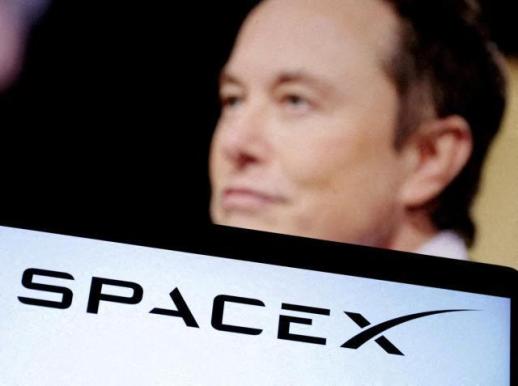 Elon Musk Misses Final Arguments in OpenAI Trial Amid Trump’s China Visit Elon Musk, CEO of Tesla and SpaceX, did not attend the final arguments in the OpenAI trial. He is reportedly accompanying President Donald Trump on his visit to China. On May 14, Musk's lead attorney, Steven Molo, apologized to the jury for Musk's absence during the final arguments held at the federal court in Oakland, California. Molo emphasized that Musk is passionate about the case and that his absence does not indicate a lack of interest. The trial stems from a lawsuit Musk filed against OpenAI co-founders Sam Altman and Greg Brockman. Musk alleges they violated their promise to keep OpenAI a nonprofit organization and gained unfair advantages during the restructuring of the company. The controversy surrounding Musk's absence has intensified in light of his legal status. CNBC reported that Judge Yvonne Gonzalez Rogers previously designated Musk as 'subject to recall,' meaning he could be summoned back to court on short notice if necessary. Musk had already testified during the first week of the trial. Typically, witnesses must seek court permission to travel long distances, and it is unclear whether Musk received such permission for his trip to China, according to a court spokesperson. Musk's legal team did not respond to inquiries regarding the court's approval. Musk joined Trump on his visit to China just before the final arguments began. Trump met with Chinese President Xi Jinping in Beijing. The delegation also included Jensen Huang, CEO of NVIDIA, and Tim Cook, CEO of Apple. OpenAI quickly seized on Musk's absence as a point of contention. OpenAI attorney William Savitt stated during the final arguments, "Musk is not here today. My clients are here because they take this matter seriously." Both Altman and Brockman were present in court. OpenAI's legal team directly countered Musk's claims. Savitt and attorney Sarah Eddy presented evidence, arguing that Musk had previously sought to transition OpenAI into a for-profit entity but only intended to pursue this when he could control the company or merge it with Tesla. Eddy claimed that Musk's initial donations to OpenAI came with specific conditions, but he failed to provide proof of this. He pointed out that testimonies from Musk's associates and former OpenAI director Siobhan Gilly did not support Musk's claims.* This article has been translated by AI. 2026-05-15 09:27:54
 -
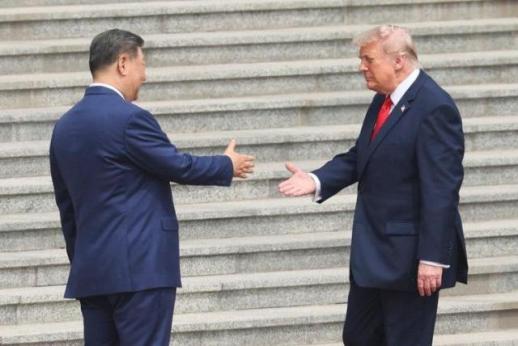 Trump Says Xi Jinping Offered to Mediate Iran Deal, Wants Hormuz Reopening Donald Trump, the President of the United States, revealed that Chinese President Xi Jinping expressed a willingness to help resolve issues related to Iran. The U.S.-China summit focused on the reopening of the Strait of Hormuz and China's imports of Iranian oil. On May 15, Fox News reported that Trump, following his meeting with Xi in Beijing, stated in an interview with Sean Hannity that "President Xi wants to see an agreement reached." He added, "Xi said he would like to help if I can in any way." Trump also noted that Xi expressed a desire for the Strait of Hormuz to be reopened. He said, "Xi wants the Strait of Hormuz to be open." The strait is a critical passage for oil transport from the Middle East and has become a significant factor in the international energy market due to shipping safety concerns following the Iran conflict. China's interests were also discussed during the meeting. Trump mentioned that Xi referred to China's imports of Iranian oil, stating, "Xi said China buys a lot of oil from there and wants to continue doing so." This implies that for China to maintain its oil trade with Iran, normalizing passage through the Strait of Hormuz is essential. Additionally, Trump indicated that the issue of China's military support for Iran was addressed. He stated, "Xi assured that China would not provide military equipment to Iran." Trump described this as a significant statement, noting, "He said it very strongly." Concerns regarding Iran's potential toll on ships passing through the Strait of Hormuz were also raised. Trump reported that "Xi was not pleased with the idea of Iran charging fees to ships." However, he added, "I don’t know if that’s actually happening. Who would pay that money? Where would that money go?" Trump attributed the disruptions in shipping through the Strait of Hormuz to Iran, asserting, "We didn’t block it; they did, and we blocked them." These comments followed a two-and-a-half-hour U.S.-China summit. The leaders also discussed expanding U.S. access to the Chinese market and addressing the issue of fentanyl precursors entering the United States.* This article has been translated by AI. 2026-05-15 08:43:42
 -
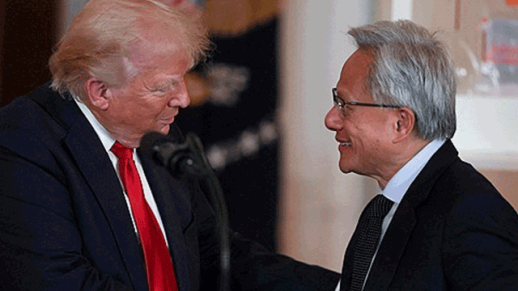 U.S. Approves Nvidia H200 Sales to China, But No Deliveries Yet The U.S. government has granted permission for Nvidia to sell its high-performance artificial intelligence (AI) semiconductor, the H200, to Chinese companies. However, no actual deliveries have been reported so far, indicating that the approved transactions are still affected by the ongoing U.S.-China tech rivalry. According to Reuters on May 14, the U.S. Department of Commerce has approved Nvidia H200 purchases for about ten Chinese companies, including Alibaba, Tencent, ByteDance, and JD.com. Some distributors, such as Lenovo and Foxconn, are also included in the list of approved sellers. Approved companies can purchase the chips either directly from Nvidia or through authorized distributors. Under U.S. regulations, each approved customer can buy up to 75,000 units. The challenge lies in the aftermath of the approval. Sources familiar with the matter told Reuters that not a single delivery has occurred despite the U.S. authorization, as Chinese companies are delaying purchases following directives from Beijing. There is increasing pressure within China to block orders or impose strict scrutiny. Chinese authorities view the import of Nvidia chips as a potential threat to their domestic AI semiconductor development strategy. This concern is further amplified by trends among Chinese AI firms, such as DeepMind, that emphasize the use of domestic semiconductors like those from Huawei. U.S. conditions are also complicating transactions. Regulations introduced in January require Chinese buyers to demonstrate adequate security measures and confirm that the chips will not be used for military purposes. Nvidia must also verify that there is sufficient stock available in the U.S. Former President Donald Trump has established a separate arrangement, whereby the U.S. will receive 25% of the revenue from H200 sales to China. Due to legal restrictions on directly imposing export fees, this arrangement requires the chips to pass through U.S. territory before reaching China. This structure has heightened concerns in China, where fears persist that the chips could be damaged or embedded with hidden vulnerabilities during transit. Following the recent introduction of supply chain security regulations by the Chinese government, there has been a stronger push to reduce reliance on foreign technology in critical infrastructure. For Nvidia, which is eager to recover its position in the Chinese market, this situation poses a significant challenge. Before the tightening of U.S. export regulations, Nvidia held approximately 95% of the advanced semiconductor market in China. At one point, China accounted for 13% of Nvidia's revenue, and CEO Jensen Huang has estimated that the Chinese AI market could reach $50 billion this year. Huang joined President Trump's delegation for his upcoming visit to China, despite not being initially listed among the representatives. Market observers speculate that Huang's presence in Beijing could be crucial in finding a breakthrough for the stalled H200 transactions.* This article has been translated by AI. 2026-05-14 20:38:26
 -
 Russia Launches Major Drone and Missile Attack on Kyiv Amid Trump-Xi Talks Russia has launched a large-scale drone and missile attack across Ukraine, including the capital Kyiv. This assault coincided with discussions between U.S. President Donald Trump and Chinese President Xi Jinping in Beijing regarding the war in Ukraine, prompting Ukraine to criticize the attack as evidence of Russia's lack of willingness for peace negotiations. According to the Kyiv Post and CNN, the Ukrainian Air Force reported that Russia fired a total of 731 aerial weapons overnight, including 675 drones and 56 missiles. The primary target of the attack was Kyiv. Russia deployed Kinzhal air-launched ballistic missiles, Iskander-M ballistic missiles, Kh-101 cruise missiles, Shahed-type attack drones, and decoy unmanned aerial vehicles. The Ukrainian Air Force stated that it intercepted or suppressed 693 targets, including 41 missiles and 652 drones. However, 15 missiles and 23 drones struck 24 locations, and debris from intercepted missiles fell in 18 areas. Damage in Kyiv was significant. Mayor Vitali Klitschko reported that part of a nine-story apartment building in the Darnytskyi district was destroyed. Eighteen apartments collapsed, and rescue teams managed to save 11 residents from the rubble. Oleksii Kuleba, Ukraine's Minister of Regional Development, confirmed that one person died in Kyiv. CNN, citing Mayor Klitschko, reported that 32 people were injured, including a one-month-old baby. Damage was also reported in several areas of Kyiv. In the Obolonskyi district, debris from intercepted missiles fell on residential buildings, causing fires. Damage to residential buildings, roads, parked vehicles, and non-residential facilities was reported in the Dniprovskyi, Holosiivskyi, and Solomianskyi districts. The timing of the attack is noteworthy. CNN reported that explosions were heard in Kyiv while President Trump and President Xi were meeting in Beijing. Ukrainian Foreign Minister Dmytro Kuleba criticized on Telegram, stating, "While the world expects peace, predictability, and cooperation, Putin launched hundreds of drones and ballistic and cruise missiles at the Ukrainian capital at the very time the leaders of great powers met in Beijing." He added that "President Trump and President Xi have sufficient influence to tell Putin to end the war." According to Chinese state media, Presidents Trump and Xi discussed the Ukraine war during their meeting, although specific details of their discussions were not immediately disclosed. This attack is interpreted as a saturation strategy aimed at depleting Ukraine's air defense capabilities rather than just a large-scale bombing. Ukrainian officials believe that Russia aimed to weaken air defense munitions and surveillance systems by deploying drones in multiple waves, thereby enhancing the effectiveness of missile strikes. The Kyiv Post noted that Russia had launched approximately 800 drones at Ukraine the previous day, describing this assault as one of the longest and largest continuous bombardments since the war began. Ukrainian officials analyzed that Russia seeks to exert psychological pressure not only through military damage but also on civilians. The attack, coinciding with the Trump-Xi meeting, appears intended to project an impression of Russian superiority on the battlefield to the international community. This airstrike is expected to further highlight the issue of the Ukraine war during the Beijing talks. Ukraine is demanding that the U.S. and China exert substantial pressure on Russia.* This article has been translated by AI. 2026-05-14 19:37:47
 -
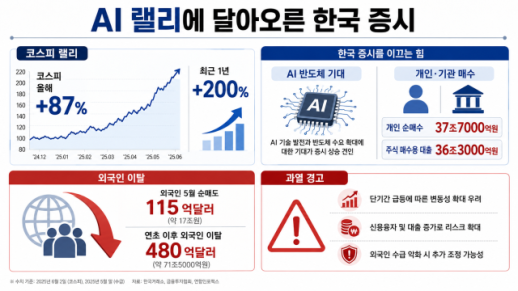 KOSPI Rises to World's Highest Amid AI Semiconductor Rally, Foreign Investors Exit The South Korean stock market is experiencing the steepest rise in the world, driven by a rally in artificial intelligence (AI) semiconductors. While domestic retail and institutional investors are pushing the index higher, foreign capital is quickly exiting the market. There are warnings that the stock market may be overheating as borrowing for investment increases. According to Bloomberg, the KOSPI index has surged 87% this year, the highest among major global indices tracked by the outlet. The index's increase over the past year has reached approximately 200%. The total market capitalization of the South Korean stock market has grown to $4.6 trillion (about 6,850 trillion won), with Samsung Electronics surpassing a market cap of $1 trillion (approximately 1,490 trillion won), making it the second most valuable company in Asia. At the heart of this surge is the semiconductor sector. The expansion of AI investments has led to a significant increase in demand for memory chips, boosting expectations for the performance of Samsung Electronics and SK Hynix. SK Hynix reported a fivefold increase in quarterly profits due to rising memory prices. President Yoon Suk Yeol's expectations for stock market support and financial reforms have also stimulated domestic investor sentiment. Notably, retail investors are rapidly entering the market. Domestic individuals have purchased 37.7 trillion won worth of Korean stocks this year. Many who had been cautious for much of last year are now joining the AI rally. Domestic institutions have also joined the buying spree. Loans for stock purchases have reached unprecedented levels. According to the Korea Financial Investment Association, the balance of loans for stock purchases was 36.3 trillion won at the beginning of May, a 32% increase from the end of last year. There are concerns that the actual scale of leveraged investments may be even larger when considering unreported loans. The investment fervor is even spreading to accounts held by minors. Data from Toss Securities indicates that new account openings for individuals under 18 increased nearly tenfold in the first quarter compared to a year ago. Trading volumes have surged to record levels, and daily fluctuations of over 5% in the KOSPI have become more frequent. Bloomberg reported that the KOSPI has emerged as the index with the largest price swings among major global indices. In contrast, foreign investors are pulling out of the South Korean stock market. According to Bloomberg, foreign investors sold off $11.5 billion (approximately 17 trillion won) worth of Korean stocks in May. If the current trend continues, May is projected to see the third-largest monthly outflow of foreign capital on record. In February and March, there were unprecedented levels of foreign exits. The cumulative outflow this year has also been substantial. Foreign capital has exited the South Korean stock market by approximately $48 billion (about 71.5 trillion won) since the beginning of the year. If this trend continues, it could set a record for the largest annual outflow. The scale of foreign exits from the South Korean stock market is more than double the amount sold off in the Indian market, which is less directly connected to the AI investment trend. Despite the foreign exit, some analysts believe that stock prices are not excessively high compared to earnings. Bloomberg noted that the KOSPI is trading at about 8.5 times projected earnings for the next year, which is lower than the 21 times for the S&P 500 index. Some Wall Street banks have raised their KOSPI targets to 8,500, 9,000, and even as high as 10,000 in optimistic scenarios. However, the risk of a significant price drop following the surge has increased. Just the day before, Kim Yong-beom, head of the presidential office's policy office, mentioned the possibility of a 'citizen dividend' utilizing excess AI profits, leading to a loss of approximately $300 billion (about 447 trillion won) in KOSPI market capitalization within two hours. The stock prices later recovered more than half of that loss, and the government clarified that the statement was a 'personal opinion, not policy.' The key issue in the market is whether the memory semiconductor sector has entered a long-term boom. Domestic investors are optimistic about further gains based on the expansion of AI demand and improvements in semiconductor performance. In contrast, foreign investors are wary of the potential for the memory market to continue its cycle of booms and busts.* This article has been translated by AI. 2026-05-14 17:53:46
 -
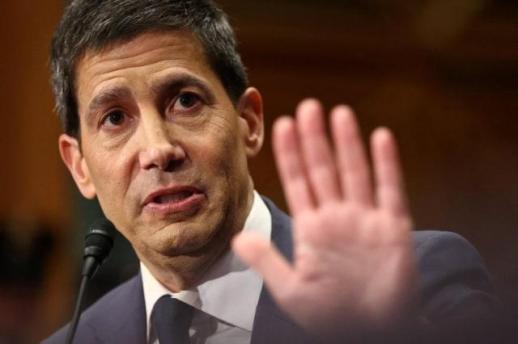 Kevin Warsh Set to Lead Federal Reserve Amid Economic Challenges Kevin Warsh is poised to take over as the next Chair of the Federal Reserve. While President Donald Trump anticipates interest rate cuts, Warsh faces a challenging economic landscape. Inflation is rising again, and within the Fed, there is a growing sentiment for caution rather than immediate rate reductions. On May 13, the U.S. Senate confirmed Warsh's nomination as Fed Chair with a vote of 54 in favor and 45 against. All 53 Republican senators supported the nomination, while only Democratic Senator John Fetterman voted in favor. Senator Kirsten Gillibrand did not cast a vote. Warsh will succeed Jerome Powell, whose term ends on May 15. Warsh will preside over his first Federal Open Market Committee (FOMC) meeting on June 16-17, filling the position previously held by former board member Stephen Myron. Early Rate Cut Expectations Stifled by Inflation Market attention is focused on how quickly Warsh might pivot toward rate cuts. President Trump has publicly criticized Powell for delaying rate reductions, which he claims have burdened government economic policies. Warsh's nomination is seen as a continuation of this trend. However, inflation data is constraining Warsh's options. The Consumer Price Index (CPI) for April rose 3.8% year-over-year, an increase from March. The Producer Price Index (PPI) also climbed 6.0% year-over-year, marking the highest increase since December 2022. Rising energy prices due to the conflict between the U.S. and Iran are further exacerbating inflationary pressures. Despite high inflation, Warsh has argued that there is still room for rate cuts. He suggests that productivity gains from artificial intelligence (AI) could alleviate inflationary pressures, and that reducing the Fed's long-term bond holdings could create space for short-term rate reductions. He also believes that alternative indicators, which more accurately reflect actual price movements, should be considered in policy decisions. However, this reasoning requires validation before leading to a policy shift. It remains uncertain whether the productivity effects of AI will stabilize prices in the short term. Critics argue that rising asset prices could stimulate consumption and push short-term prices higher. Additionally, linking the reduction of long-term bond holdings to short-term rate cuts must undergo internal Fed research. Political pressures also remain a variable. While Warsh emphasized the Fed's independence during his confirmation hearing, the voting patterns revealed a clear partisan divide. Warsh's decision to retain his board seat after Powell's departure signals that the tension between the Trump administration and the Fed is not yet resolved. Fed Reforms Likely to Take Precedence Over Rate Cuts In this context, Warsh's initial actions are expected to focus more on reforming the Fed's operational methods than on adjusting interest rates. He has previously criticized the Fed's large-scale bond purchases and market interventions. The Fed's current asset holdings stand at approximately $6.7 trillion. After taking office, Warsh is anticipated to review the balance sheet reduction, bank reserve requirements, inflation measurement methods, and communication strategies regarding monetary policy. The first area he may address is the Fed's communication style. Warsh has expressed skepticism about the dot plot, which indicates FOMC members' interest rate projections, and the quarterly Summary of Economic Projections (SEP). He believes that press conferences and forward guidance can overly constrain the market. However, since the dot plot and press conferences have become essential tools for managing market expectations, experts predict that discussions will likely focus on modifications rather than outright elimination. The pace of reforms may also be moderated. Randall Kroszner, a professor at the University of Chicago who worked with Warsh at the Fed from 2006 to 2009, told Reuters, "He does not want to shake up the market. He has many things he wants to accomplish, but it will take time to address them one by one." He added, "It’s not as if he will suddenly decide to reduce the balance sheet to $4 trillion."* This article has been translated by AI. 2026-05-14 16:14:17
 -
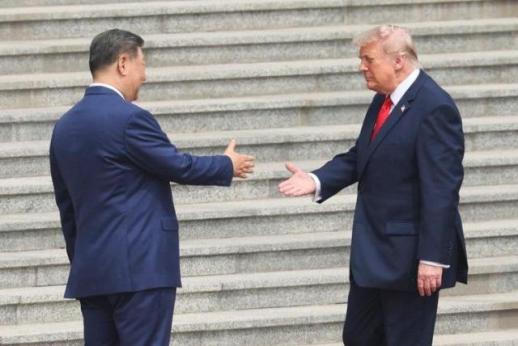 Xi Jinping Warns Trump on Taiwan Issue Amid U.S.-China Talks Xi Jinping, the President of China, directly warned U.S. President Donald Trump that the Taiwan issue could lead to a U.S.-China conflict. While tariffs and trade were the main agenda items for their summit, China emphasized that the Taiwan issue is a core matter it cannot compromise on. According to state-run Xinhua News Agency, during their meeting at the Great Hall of the People in Beijing, Xi stated, "The Taiwan issue is the most important issue in U.S.-China relations." He added, "If handled well, the relationship between the two countries can maintain overall stability, but if mishandled, the two countries could clash or even come into conflict, pushing U.S.-China relations into a very dangerous situation." Xi also strongly addressed the issue of Taiwan independence, asserting, "'Taiwan independence' and 'peace in the Taiwan Strait' cannot coexist like water and fire," and emphasized that maintaining peace and stability in the Taiwan Strait is in the common interest of both nations. China views Taiwan as part of its territory and has not renounced the goal of reunification. In contrast, Taiwan is a democratic self-governing region that has never been ruled by the Chinese Communist Party. Xi's remarks are seen as a significant escalation from China's previous stance on Taiwan. While China has long defined the Taiwan issue as its most vital interest, it is unusual for Xi to mention the possibility of 'conflict' directly in front of Trump. This is interpreted as a message aimed at preemptively countering U.S. arms sales to Taiwan. Before his visit to China, Trump indicated that he would discuss U.S. arms sales to Taiwan during the summit. According to CNN, the Trump administration has been considering a weapons sale package to Taiwan worth approximately $14 billion, but no official announcement or congressional notification has been made yet. China has consistently opposed U.S. arms sales to Taiwan. The U.S. policy toward Taiwan is complex. While the U.S. does not maintain official diplomatic relations with Taiwan, it continues to engage with the island. Additionally, the Taiwan Relations Act provides a legal basis for supplying arms to Taiwan to defend itself. However, it remains unclear whether the U.S. would militarily intervene if China were to attack Taiwan. CNN reported that concerns have grown about potential disruptions to arms sales following Trump's announcement of discussions with Xi regarding the Taiwan issue. Taiwan is also a crucial region for the semiconductor supply chain. The national security strategy released by the Trump administration last year highlighted Taiwan's role in semiconductor production and its military and economic significance. However, the language regarding Taiwan's defense was not clear, leading experts to assess that the Trump administration's Taiwan policy lacks clarity. Trump's response has not yet been specifically disclosed. Early in the meeting, he referred to Xi as a 'great leader' and emphasized the potential for improving bilateral relations. While Xi acknowledged the need for cooperation, he made it clear that he would not back down on the Taiwan issue.* This article has been translated by AI. 2026-05-14 14:55:18
 -
 U.S. and China Discuss Lowering Trade Barriers on Non-Sensitive Goods The United States and China are discussing ways to lower trade barriers, focusing on non-sensitive goods. Instead of pressuring China to change its state-led, export-driven economic model, the two countries are looking to manage trade volumes by identifying specific items they can sell to each other. While sensitive technologies will remain restricted, there are attempts to revive trade in energy, agricultural products, and some consumer goods. According to Reuters on May 13, U.S. President Donald Trump and Chinese President Xi Jinping are expected to discuss reducing tariffs or trade barriers on approximately $30 billion worth of goods from each country during their summit this week. The focus will be on non-sensitive products that are not directly tied to national security. This initiative reflects a shift in the U.S. trade strategy toward China. Previously, the U.S. demanded that China alter its economic model. The current negotiations emphasize managing tradeable areas within their differing economic systems rather than pressuring for systemic changes in China. Jamison Greer, the U.S. Trade Representative (USTR), described this approach as a "Board of Trade" concept. In a recent interview with Fox Business, he stated, "This is not about changing how China governs or operates its economy. We can find ways to optimize trade between the two countries to create a more balanced relationship." He explained that this is akin to using an "adapter" to connect two incompatible economic systems. U.S. Treasury Secretary Scott Vessen and Chinese Vice Premier He Lifeng met for about three hours at Incheon Airport in South Korea to coordinate economic agendas ahead of the summit. However, no separate statement was issued following their meeting. Reuters cited four sources familiar with the Trump administration's goals, indicating that the framework of reducing trade barriers on $30 billion from each side could serve as a starting point for a new mechanism. It remains unclear whether specific items will be determined during the summit. Reuters reported that it is still uncertain whether Trump and Xi will finalize particular products or if they will be addressed in subsequent meetings. Wendy Cutler, a former USTR negotiator, noted that both sides are seeking common ground on product categories worth between $30 billion and $50 billion. Energy and agricultural products are likely to be prioritized. The U.S. aims to increase its sales of energy and agricultural goods to China. Currently, China imposes an additional 10% tariff on all U.S. imports. Specifically, it has retaliatory tariffs of 10% on crude oil, 15% on liquefied natural gas (LNG), 15% on coal, and up to 55% on beef. The U.S. may also adjust tariffs on certain consumer goods imported from China. During the first phase of the trade war in 2019, the U.S. imposed a 7.5% tariff on various Chinese consumer products, including televisions, flash memory, smart speakers, Bluetooth headphones, bedding, multifunction printers, and footwear. An additional 10% temporary tariff, set to expire in July, is applied on top of this tariff. However, it is unlikely that these discussions will lead to a comprehensive easing of U.S.-China trade tensions. U.S. tariffs and export controls on sensitive technologies will remain in place. Non-sensitive goods account for a small portion of overall U.S.-China trade. Cutler remarked, "The basket of non-sensitive goods currently represents a very small part of total trade with China." Trade between the U.S. and China has already significantly decreased. According to data from the U.S. Census Bureau, the trade volume between the two countries fell from $582 billion in 2024 to $415 billion in 2025, a 29% decline. During the same period, the U.S. trade deficit with China decreased by approximately 32% to $200 billion, marking the lowest level in 20 years. Investment cooperation is still in its early stages. The two sides are also expected to discuss a "Board of Investment" concept to address investment issues. However, Greer indicated at a Hudson Institute event last month that he does not believe the relationship is at a stage to discuss large-scale, two-way investment programs with China. Domestic opposition in the U.S. also poses a variable. Congress and industries such as automotive, steel, and technology are opposed to agreements that would allow Chinese investments in the U.S. auto industry, citing concerns that Chinese capital could undermine the U.S. manufacturing base.* This article has been translated by AI. 2026-05-14 12:43:12
 -
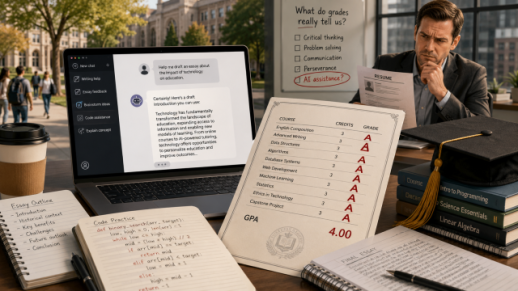 Rise in A Grades at U.S. Colleges Linked to ChatGPT Use A study has found that the introduction of OpenAI's ChatGPT has led to a rapid increase in A grades at U.S. colleges, particularly in courses with heavy writing and coding assignments. The influence of generative artificial intelligence (AI) on assignment evaluations is raising concerns about the reliability of grades as a hiring criterion for companies. According to a report by The Wall Street Journal on May 13, Igor Chirikov, a senior researcher at the University of California, Berkeley's Center for Studies in Higher Education, stated in a recently published paper that the proportion of A grades in college courses with high potential for AI use has significantly increased since the release of ChatGPT. Chirikov analyzed over 500,000 grades from a large public university in Texas between 2018 and 2025. The university's transparency in sharing syllabi and grade distributions allowed for a comparison of assignment types and grade changes across courses. The analysis revealed a notable increase in A grades in courses with substantial writing and coding assignments, particularly in the humanities and engineering fields. Until 2022, there was little difference between courses with high and low exposure to AI, but following the launch of ChatGPT, A grades in AI-exposed courses rose more rapidly. In courses with high AI exposure, the number of A grades awarded by professors increased by approximately 30%. Conversely, the proportion of A- and B+ grades declined. Courses with a higher percentage of homework assignments completed at home also saw a greater likelihood of students receiving A grades. Chirikov expressed skepticism about interpreting this trend as an improvement in student learning outcomes. He suggested that students may be leveraging generative AI to enhance their assignment results. "Learning requires a process of solving problems independently, and AI can weaken this process," he noted. The implications extend to corporate hiring practices. As the job market for new graduates cools, companies are tightening their criteria for filtering applicants. According to the National Association of Colleges and Employers, the percentage of companies using GPA as a hiring criterion increased from 37% in 2023 to 42% recently. Global investment banks like Barclays and Morgan Stanley have set minimum GPA requirements for certain internship positions. However, the proliferation of AI is clouding the significance of GPA. Just as AI has diminished the reliability of evaluations for cover letters and resumes, there are growing concerns that grades may reflect a student's access to and ability to use AI rather than their actual capabilities. Some prestigious universities are beginning to address the issue of relaxed grading standards. Harvard University is discussing a cap on the percentage of A grades awarded, while Yale University noted in a report last month that "grades are meant to convey what a student has learned, but currently, they are not fulfilling that function effectively." In response to these challenges, some universities are moving to change their evaluation methods. Chelsea Shine, a professor teaching negotiation and business ethics at the Wharton School of the University of Pennsylvania, confirmed that after recognizing the ease with which students could achieve perfect scores on assignments using AI, she has reduced the weight of homework and increased the emphasis on midterms and in-class quizzes.* This article has been translated by AI. 2026-05-14 12:01:41