

Journalist

Han Young-hoon
han@ajunews.com
-
 Meta Begins Charging for AI Services with Subscriptions Starting at $7.99 Meta has initiated the monetization of its artificial intelligence (AI) services. While the free version of Meta AI will continue to be available, users who utilize advanced features such as image and video generation will be charged. This move comes as the company seeks to expand its revenue sources amid increasing investment costs. According to reports from The Verge and others on May 27, Meta plans to test its dedicated paid AI products, named 'Meta One Plus' and 'Meta One Premium,' starting next month in Singapore, Guatemala, and Bolivia. The subscription prices are set at $7.99 per month (approximately 12,000 won) and $19.99 per month (approximately 30,000 won), respectively. The free version will remain available, but there will be usage limits on advanced features such as image and video generation and complex question answering. Subscribers will have greater access to these capabilities. The company is also expanding its paid offerings for Facebook, Instagram, and WhatsApp. 'Facebook Plus' and 'Instagram Plus' will be priced at $3.99 per month (approximately 6,000 won), while 'WhatsApp Plus' will cost $2.99 per month (approximately 4,500 won). These subscriptions will include benefits such as extended story exposure time, additional pinned chats, and premium stickers. Additionally, products aimed at creators and businesses are being introduced, including 'Meta One Essential' for $14.99 per month (approximately 22,000 won) and 'Meta One Advanced' for $49.99 per month (approximately 75,000 won). These will offer features like verification badges, enhanced search visibility, and the ability to include external links in posts and short videos. This monetization strategy is closely tied to Meta's increasing investment burdens. According to Reuters, the company raised its capital expenditure forecast for 2026 from $115 billion to $135 billion to a new range of $125 billion to $145 billion during its first-quarter earnings report. As costs for data centers and computational infrastructure rise rapidly, investors are becoming more sensitive to the timing of returns on these investments.* This article has been translated by AI. 2026-05-28 10:30:00
 -
 Russian Military Deaths Approach 500,000 as UK Intelligence Warns of Battlefield Losses According to a recent assessment by UK intelligence, the number of Russian military personnel killed since the start of the Ukraine war is nearing 500,000. This comes as warnings emerge about Russia's increasing cyber attacks and threats to infrastructure targeting the UK and Europe. On May 27, Anne Keast-Butler, head of the Government Communications Headquarters (GCHQ), stated during her first annual threat assessment speech at Bletchley Park that new intelligence indicates nearly 500,000 Russian soldiers have died since the war began. She noted, "This figure suggests that President Putin is losing on the battlefield." Previously released figures often combined deaths and injuries, but this announcement specifically highlights the death toll, providing a clearer picture of troop losses. GCHQ believes the threat from the war extends beyond the battlefield. Keast-Butler remarked, "Russia continues to target the UK's critical infrastructure, democratic processes, supply chains, and public trust." Key areas of concern include undersea cables and energy pipelines in waters surrounding the UK. She emphasized that protecting these vital cables and pipelines, through which data and energy flow, is a primary task for GCHQ, which is responding in ways that reveal Russia's intentions and underwater operational capabilities. Cyber attacks and attempts to smuggle Western technology are also significant areas of focus. Keast-Butler stated, "GCHQ is working to thwart Russia's attempts at technology smuggling and cyber attacks, while also countering reckless sabotage and assassination attempts." She noted that it is rare for heads of intelligence agencies to speak publicly and emphasized that the UK is at a critical juncture. "The risk of miscalculation is higher than I have ever seen," she warned. 2026-05-28 10:21:00
 -
 Elon Musk's Starship V3 Test Flight Canceled 40 Seconds Before Launch Elon Musk's SpaceX canceled the first test flight of its next-generation spacecraft, Starship V3, just before launch. The countdown was halted less than a minute before liftoff due to a problem with the launch pad equipment. According to Reuters and other sources on May 21, SpaceX called off the 12th test flight of the Starship at its Starbase facility in Texas. The launch was stopped approximately 30 to 40 seconds before takeoff. Reports indicate that the issue was caused by a hydraulic pin on the launch tower arm not folding correctly. This test was intended to be the first integrated flight of the Starship V3 and the upgraded Super Heavy booster. The Starship V3 is a massive launch vehicle that features improvements in its propulsion system, fuel tanks, and re-entry design compared to previous models. For this test, SpaceX planned to carry 20 model Starlink satellites instead of actual ones to assess the deployment capabilities. The spacecraft was expected to orbit the Earth before landing in the Indian Ocean. SpaceX aims to attempt another launch during a 90-minute window starting at 5:30 PM Central Time on May 22, pending resolution of the issues. CEO Musk stated, "We may retry the next day depending on the repair situation."* This article has been translated by AI. 2026-05-23 18:19:38
 -
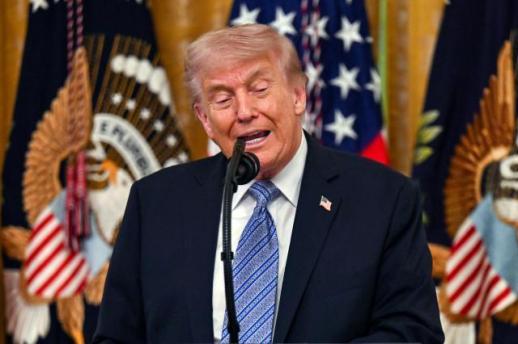 Trump's Net Worth Surges 165% to $6.1 Billion in 18 Months President Donald Trump's net worth has reportedly increased by 165% over the past 18 months, reaching $6.1 billion (approximately 9.2 trillion won), according to a report by The Times. On May 22, The Times cited estimates from Forbes, stating that Trump's net worth has risen to $6.1 billion. Bloomberg's estimates place it even higher at $7.1 billion (about 10.7 trillion won). The valuation of net worth varies based on assessments of private equity, real estate, and virtual assets. The surge in assets has been driven largely by virtual assets. The Times reported that the family's involvement with World Liberty Financial and its related token issuance played a significant role in expanding their wealth. This venture generated approximately $1.4 billion (around 2.1 trillion won) in revenue, with a book value estimated at $2 billion (about 3 trillion won). Additionally, Trump's branding efforts have contributed to the increase in assets. The value of licensing deals for products such as Bibles, mobile phones, and fashion items is estimated at $551 million (about 830 billion won). Existing real estate holdings and shares in Trump Media & Technology Group (TMTG) are also classified as major assets. However, concerns regarding potential conflicts of interest are growing. The Times noted that the intertwining of the presidency, family businesses, and brand value raises worries about blurring the lines between public office and private gain. While Trump's team maintains that they are separating business operations from presidential duties, critics argue that it is difficult to clearly distinguish between the policy influence of a sitting president and the profits of family businesses.* This article has been translated by AI. 2026-05-23 18:07:58
 -
 China Blocks NVIDIA's Game Chips Amid U.S.-China Semiconductor Tensions China has reportedly blocked the import of NVIDIA's game-specific graphics processing unit (GPU) designed for the Chinese market. This action marks a new phase in the ongoing semiconductor conflict between the U.S. and China, as even lower-performance models intended to comply with U.S. export regulations are unable to clear Chinese customs. According to the Financial Times on May 21, China has halted the import of NVIDIA's gaming GPU, the 'RTX 5090D V2.' This model is a modified version of the GeForce RTX 5090 series, designed to meet U.S. export control standards by reducing memory and computational performance compared to existing high-performance products. The blockade occurred at the customs level. Market research firm Jon Peddie Research reported that Chinese customs authorities informed logistics companies and GPU manufacturers that they would not grant import permits for the RTX 5090D V2. This situation differs from previous U.S. restrictions on NVIDIA's AI semiconductor exports to China, as it represents a direct action by China to prevent the entry of U.S.-made high-performance GPUs. This move aligns with China's recent trend of promoting domestic semiconductor use over foreign alternatives, particularly in light of the ongoing restrictions on NVIDIA's H200 and other AI chips. While the RTX 5090D V2 is primarily a gaming product, its high-performance capabilities make it suitable for AI tasks as well. Industry analysts view this as a signal that China aims to reduce its reliance on U.S. chips while fostering domestic companies like Huawei and Cambrian Technologies. China has not disclosed specific reasons for the import ban. NVIDIA now faces the challenge of navigating both U.S. export controls and Chinese import restrictions in its efforts to regain a foothold in the Chinese market.* This article has been translated by AI. 2026-05-23 17:58:44
 -
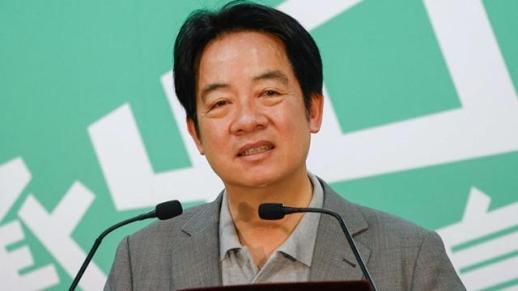 Trump Plans Call with Taiwan's President; Taiwan's Office Says No Contact Yet U.S. President Donald Trump has stated he intends to speak with Taiwan's President Lai Ching-te, but Taiwan's presidential office has reported that no specific communication has been received yet. This potential call comes ahead of a U.S. decision on arms sales to Taiwan, raising the likelihood of a backlash from China. According to Taiwanese media outlets, including the China Times and United Daily News, Taiwan's Presidential Office Secretary General Pan Meng-an said on May 22 that they have not been notified of any related calls regarding Trump's comments made the previous day. He added, "If a call occurs, we will disclose the relevant details," while assuring that communication channels between Taiwan and the U.S. remain open. On May 20, during a press conference at Joint Base Andrews in Maryland, Trump responded affirmatively when asked if he planned to speak with President Lai before the arms sales decision, although he did not specify when the call would take place. President Lai has previously expressed his intention to explain the need for peace and stability across the Taiwan Strait, as well as the ongoing necessity for military purchases from the U.S., should he have the opportunity to converse with Trump. If the call between the U.S. and Taiwan leaders takes place, it is expected to have diplomatic repercussions. Since the U.S. established diplomatic relations with China in 1979 and severed ties with Taiwan, no sitting U.S. president has directly communicated with a Taiwanese president. Trump did speak with then-President Tsai Ing-wen in 2016 when he was president-elect. China has consistently opposed official contacts and arms sales between the U.S. and Taiwan. Trump's mention of a potential call adds a new variable to U.S.-China relations in the context of Taiwan's military sales.* This article has been translated by AI. 2026-05-23 17:54:22
 -
 U.S.-Iran Negotiations Stalled Over Uranium and Hormuz Strait Issues U.S. and Iranian ceasefire and peace negotiations have reached a critical juncture. Both sides have reportedly made significant progress toward a draft peace agreement through messages exchanged via a mediator. However, issues surrounding Iran's export of enriched uranium and navigation through the Hormuz Strait have emerged as key obstacles, preventing a final agreement. On May 21, Ayatollah Ali Khamenei, Iran's Supreme Leader, issued a directive against the export of enriched uranium. Senior Iranian officials indicated that this policy reflects Khamenei's wishes and a consensus within Iran's power structure. This stance directly contradicts a core demand from the United States, which insists that Iran must export its stockpile of 60% enriched uranium. This level of enrichment is significantly higher than that used for civilian nuclear power and could drastically reduce the time needed to further enrich it to weapons-grade levels of 90%. On the same day, President Donald Trump stated at the White House regarding Iran's uranium, "We will take it. We do not need it or want it. After we take it, we will probably destroy it." Iran's calculations differ. The Iranian leadership believes that exporting uranium would make them more vulnerable to further attacks from the U.S. and Israel. They insist that they need to secure guarantees against additional attacks before entering detailed negotiations on their nuclear program. While Iran is open to discussing the dilution of uranium under the supervision of the International Atomic Energy Agency (IAEA), they have drawn a line at exporting it. The issue of navigation through the Hormuz Strait has also surfaced as a significant barrier to agreement. U.S. Secretary of State Marco Rubio stated that if Iran pushes for a toll system in the Strait, a diplomatic agreement would become impossible. He emphasized, "No one in the world supports a toll system; it is unacceptable, completely illegal, and a threat to the world." Rubio's comments address more than just the toll issue. If Iran were to operate the Hormuz Strait under a selective permit system and demand tolls, accepting such a system would imply U.S. recognition of Iran's maritime control, which is why the U.S. has classified this as a non-negotiable issue. Rubio acknowledged some "progress" and "good signals" in talks with Tehran but noted that Iran's internal decision-making appears "somewhat divided," suggesting that further observation is necessary. Even if practical agreements are reached, the alignment of interests among Iran's internal power factions remains a variable for a final agreement. Ultimately, the crux of this negotiation hinges not just on the peace agreement itself but on how far the U.S. is willing to recognize Iran's nuclear capabilities and maritime control post-war. For the U.S., extracting enriched uranium from Iran and restoring freedom of navigation in the Hormuz Strait are essential justifications for accepting any agreement. Conversely, Iran needs to retain its uranium and control over the Strait to maintain its narrative of regime security. Both sides face significant pressure to compromise. Reuters reported that "Tehran views its stockpile of enriched uranium and control over the Hormuz Strait as 'vital strategic assets for survival.'" A senior Iranian official also stated, "Surrender is not an option."* This article has been translated by AI. 2026-05-23 17:18:30
 -
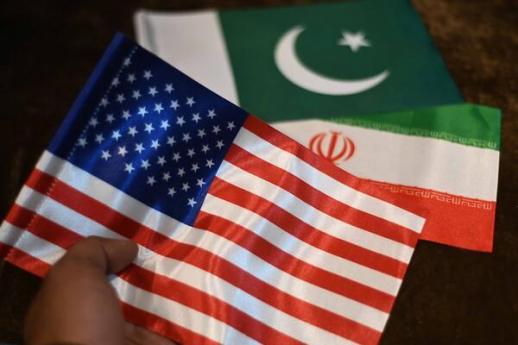 U.S. and Iran Exchange Messages on Peace Talks via Pakistan The United States and Iran are reportedly exchanging messages regarding peace talks through Pakistan. While direct conversations have not occurred, diplomatic channels facilitated by the intermediary nation remain active. On May 22, Anadolu Agency cited Iran's semi-official ISNA news outlet, stating that messages between Tehran and Washington continue via Pakistan's mediation. Earlier, Reuters reported that Iran had conveyed its response to a U.S. peace proposal through the intermediary, Pakistan. Al Jazeera also referenced comments from an Iranian Foreign Ministry spokesperson, confirming that Tehran's reply was delivered to the U.S. through Pakistan. ISNA reported that the latest U.S. proposal has narrowed some differences between the two sides. However, Iran maintains that the U.S. must abandon military solutions for further progress to be made. Reuters echoed this sentiment, noting that while the gap between the two sides has narrowed, disagreements remain regarding uranium stockpiles and control over the Strait of Hormuz. Pakistan's mediation efforts are becoming more concrete. Mohsin Naqvi, Pakistan's Interior Minister, has reportedly visited Tehran for the second time in a week to relay messages from the U.S. to Iranian officials. Al Jazeera also reported that General Asim Munir, Chief of Army Staff of Pakistan, is scheduled to visit Tehran for discussions with Iranian authorities. Negotiations have yet to reach a conclusion, with key issues including the handling of Iran's enriched uranium stockpile and navigation through the Strait of Hormuz. Reuters reported that Iran's leadership has instructed against exporting enriched uranium. The U.S. and Israel insist that any peace agreement must include provisions for uranium export. The Strait of Hormuz remains a contentious issue, with the U.S. demanding the lifting of navigation restrictions while Iran insists on maintaining control over the waterway. Iran prioritizes a complete end to hostilities and guarantees against further attacks from the U.S. and Israel, while the U.S. seeks to include nuclear activity limitations and navigation assurances in the peace terms. Major foreign news outlets indicate that while diplomatic channels between the U.S. and Iran are being maintained and some differences are being narrowed, significant time is still needed to finalize a comprehensive agreement.* This article has been translated by AI. 2026-05-23 16:58:09
 -
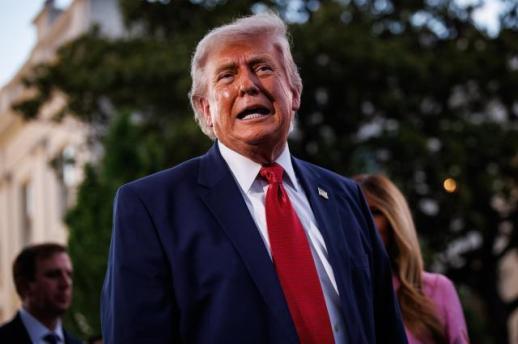 Trump Uncertain About Attending Son's Wedding Amid Iran Tensions President Donald Trump has not confirmed whether he will attend the wedding of his son, Donald Trump Jr. He stated that he is trying to make it but cited ongoing diplomatic and security issues, particularly concerning Iran, as reasons for his uncertainty. On May 21, during a press briefing at the White House, Trump was asked about his attendance at his son's wedding. He responded, "I’m going to try to make it, but right now is not a good time for me. There’s the Iran situation and other things going on." Donald Trump Jr. is reportedly set to marry his fiancée, Bettina Anderson, this weekend in the Bahamas. Reports indicate that the wedding is planned as a small, private event. Regardless of his decision, Trump acknowledged that he would face criticism from the media. He expressed frustration, saying that if he attends, he will be criticized, and if he does not attend, he will also be criticized. These comments come amid ongoing tensions between the U.S. and Iran. Recently, Trump has indicated that military operations could resume if an agreement with Iran is not reached. His attendance at his son's wedding is being closely watched in light of these developments.* This article has been translated by AI. 2026-05-23 15:30:00
 -
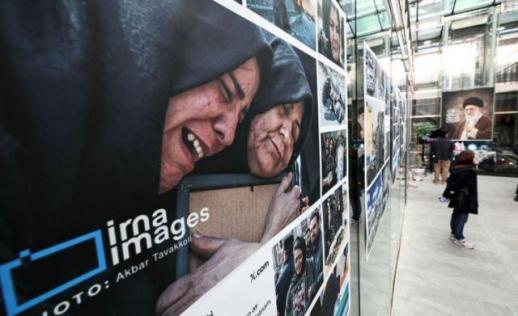 Iran Resumes Drone Production During Ceasefire, U.S. Intelligence Reports Faster Recovery Iran has reportedly resumed some drone production during the ceasefire with the United States and Israel. U.S. intelligence agencies assess that Iran's recovery of its military production capabilities is occurring faster than initially expected. According to CNN on May 21, two sources familiar with U.S. intelligence assessments stated that Iran began resuming some drone production during the six-week ceasefire that started in early April. Four additional sources indicated that the Iranian military is restoring its military capabilities much more quickly than anticipated. Some intelligence evaluations suggest that Iran could restore its drone attack capabilities to pre-war levels within six months. Drones are considered a key supplementary force for Iran. Even with significant damage to its missile production capabilities, increasing drone numbers allows Iran to maintain pressure on Israel and Gulf states. CNN reported that both Israel and Gulf nations fall within the range of Iran's drones and missiles. During the conflict, U.S. and Israeli airstrikes targeted missile bases, launch sites, and major weapon production facilities in Iran. However, recent intelligence assessments indicate that Iran still possesses ballistic missiles, drones, and air defense capabilities. CNN previously reported that approximately half of Iran's missile launchers survived U.S. airstrikes, with recent estimates suggesting that this figure has risen to two-thirds. Factors contributing to the accelerated recovery include external support and less extensive damage from airstrikes than expected. CNN noted that assistance from Russia and China, along with the limited impact of U.S. and Israeli airstrikes, has influenced Iran's rapid reconstruction. U.S. intelligence assessments also indicate that China has continued to supply components that could be used for missile production during the conflict. However, the Chinese Foreign Ministry denied these allegations, stating they are "not based on facts." U.S. intelligence assessments differ from public statements made by military officials. On May 20, U.S. Central Command Commander Brad Cooper testified before the House Armed Services Committee that U.S. operations had significantly weakened Iran's ballistic missile and drone capabilities, claiming that 90% of Iran's defense industrial base had been destroyed, preventing recovery for years. However, sources cited by CNN indicated that recent intelligence assessments do not align with this explanation. One source stated, "The damage to Iran's defense industrial base may have delayed recovery by months rather than years." CNN analyzed that while the conflict has indeed harmed Iran's military capabilities, it has not completely destroyed them. With some production capabilities still intact, the pace of recovery for specific military capabilities could be even faster.* This article has been translated by AI. 2026-05-23 14:54:00