

Journalist

Han Ji-hyun
hanji@ajunews.com
-
 Air Premia Launches Networkwide Spring Fare Sale, U.S. Round Trips From 605,600 Won Air Premia said Thursday it will run a networkwide spring travel promotion, offering discounted fares on all routes. The sale runs from March 16 to 29 and covers Wide Premium and economy-class tickets, starting from promotional base fares. For U.S. routes, round-trip totals including fuel surcharges and airport taxes start at 2,998,200 won for Wide Premium to Washington, D.C.; 1,698,200 won to New York; 1,463,200 won to Los Angeles; 1,363,200 won to San Francisco; and 1,295,600 won to Honolulu. Economy fares start at 1,243,200 won to Washington, D.C.; 898,200 won to New York; 843,200 won to Los Angeles; 703,200 won to San Francisco; and 605,600 won to Honolulu. Travel on U.S. routes is valid from March 16 through Nov. 30. The Washington, D.C., route will be available from April 24 in line with its new service schedule. For Asia routes, Wide Premium round trips start at 285,600 won to Narita; 474,900 won to Bangkok; 475,800 won to Da Nang; and 320,700 won to Hong Kong. Economy fares start at 205,600 won to Narita; 244,900 won to Bangkok; 235,800 won to Da Nang; and 260,700 won to Hong Kong. Travel on Asia routes is valid from March 16 through Oct. 24. For customers who miss the promotional fares, the airline is also offering an economy-class discount code, “HIBOM20,” for 20% off the airfare portion when entered at booking. Air Premia said it also provides an eSIM service for ticketed customers, with discounts of up to 30% when purchased through the Air Premia app. Promotional tickets are available through the airline’s official website and mobile app. An Air Premia official said the promotion was designed to help customers plan overseas trips at “reasonable prices” during the spring travel season, adding the airline will continue to expand benefits to improve customer convenience.* This article has been translated by AI. 2026-03-13 08:39:18
 -
 LIG Nex1 to Rename as LIG Defense & Aerospace, Expanding Into Space LIG Nex1, marking its 50th anniversary this year, will change its name to LIG Defense & Aerospace (LIG D&A) as it seeks to broaden its business beyond missiles into space and aviation and position itself as a global defense contractor. The company said it aims to expand exports of a Korean-style integrated air defense system, led by its flagship Cheongung-II interceptor, as part of its push to become a 100-year company. According to the defense industry on March 12, LIG Nex1 will hold a shareholders meeting on March 31 to discuss agenda items including the name change, an increase in the scale of bond issuance, reflecting revisions to the Commercial Act, and approval of dividend payments. The company had signaled in January that it would adopt the LIG D&A name. A company official said the change is intended to clarify its defense-industry identity while expanding into global markets and the space sector, adding that it would make a fresh start under a new banner meaning “to the world, to space, to the future.” Tracing its roots to Geumseong Precision, LIG Nex1 began in 1976 as a U.S. missile maintenance company working on systems such as Hawk and Nike. After separating from the LG Group, it acquired LG Innotek’s defense business division in 2004 and adopted its current name in 2007. Its core technologies include precision strike, surveillance and reconnaissance, avionics, command and control, and communications. Key products include the Shingung short-range surface-to-air missile, the Cheongung medium-range surface-to-air guided weapon, and the Bigung guided multiple-launch weapon. The company has drawn attention in global markets after Cheongung-II deployed in the United Arab Emirates during the recent U.S.-Israel and Iran war posted a 96% interception success rate. LIG Nex1 said the rebranding reflects its goal of becoming a comprehensive defense company spanning guided weapons, aircraft armaments, electronic warfare and space. As modern warfare shifts toward reconnaissance, target identification, precision strike and layered air defense networks, space-based technology is increasingly central, driving defense firms to secure space infrastructure. The company says it already has capabilities in rocket propulsion, guidance, radar, communications, sensors and satellite data, making expansion into space more feasible. It also pointed to the example of RTX, created through the merger of missile maker Raytheon and aerospace-focused UTC. An industry official said missiles and satellites share many underlying technologies, and that the space sector faces simpler export controls than weapons, making it easier to attract investment, pursue technical cooperation and join global projects. LIG Nex1 is also posting results in related areas. A key project is a 1.6 trillion won program signed with South Korea’s Defense Acquisition Program Administration to develop a Korean electronic warfare aircraft system. The company has also begun business cooperation with global space defense firm L3Harris on future space and satellite development. It plans to expand bond issuance to support new business growth. Industry observers said the new LIG D&A name and the Cheongung-II showcase are expected to lift the company’s global profile. CEO Shin Ik-hyun said, “This year, our 50th anniversary, will be the first year of a new start toward the next 100 years,” adding that the company will aim to become a true defense leader by building a global foundation, accelerating research and development and strengthening a culture of communication.* This article has been translated by AI. 2026-03-13 05:03:29
 -
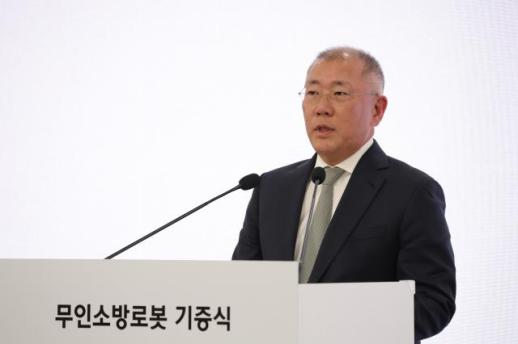 Hyundai Motor Group Chairman Chung Euisun Earns $3.9 Million in First Kia Pay Hyundai Motor Group Chairman Chung Euisun received 5.4 billion won ($3.9 million) in compensation from Kia last year, the automaker said. In its 2025 annual business report filed Thursday, Kia said Chung was paid 2.7 billion won in salary and 2.7 billion won in bonuses, for a total of 5.4 billion won. Chung, who became chairman of Hyundai Motor Group in 2020, had run Kia without pay through 2024 and received compensation from the company for the first time last year. Through 2024, he received salary from two companies, Hyundai Motor and Hyundai Mobis. Excluding Hyundai Motor, whose business report has not yet been filed, Chung’s total compensation last year from Kia and Hyundai Mobis was 8.46 billion won, the report said. Kia said Chung has contributed to record results since being appointed an inside director in March 2019, citing efforts to strengthen competitiveness and recruit global talent. It said it began paying him last year to reinforce accountable management as global trade conditions and geopolitical uncertainty worsen and competition in future mobility intensifies. Kia CEO Song Ho-sung received 3.042 billion won in compensation last year, including 1.516 billion won in salary and 1.526 billion won in bonuses and other pay, up 5.7% from a year earlier. Kia posted 114.1409 trillion won in revenue last year and 9.0781 trillion won in operating profit. Revenue rose 6.5% from the previous year to a record, while operating profit fell 28.6% due to the impact of U.S. tariffs. Total production was 2,851,092 vehicles, with plant utilization at 91.6%. 2026-03-12 19:03:15
 -
 Korea Auto Industry Welcomes Passage of Special Law on Strategic U.S. Investment South Korea’s auto industry welcomed the National Assembly’s passage on Thursday of a special law on strategic investment management with the United States, a follow-up step to tariff negotiations. The Korea Automobile & Mobility Association said in a statement Thursday that it “sincerely welcomes” the bill’s approval, thanking the Assembly for bipartisan cooperation and government officials for pursuing trade talks. The association said the industry had been concerned that if U.S. export tariffs on Korean vehicles were raised again from 15% to 25%, it could weaken export competitiveness, reduce domestic production and shrink the broader auto industry ecosystem. With the law’s passage, it said, uncertainty over possible tariff hikes has been eased and Korean companies will be able to compete on equal footing with rivals. The association added that the measure is expected to help create a more stable business environment across the industry — including automakers and parts suppliers — and support expanded investment. It said the industry will continue investing in technology innovation, productivity improvements and the shift to future vehicles, while also working to strengthen the domestic production base through efforts such as boosting domestic demand and building a virtuous cycle in the parts ecosystem.* This article has been translated by AI. 2026-03-12 16:18:30
 -
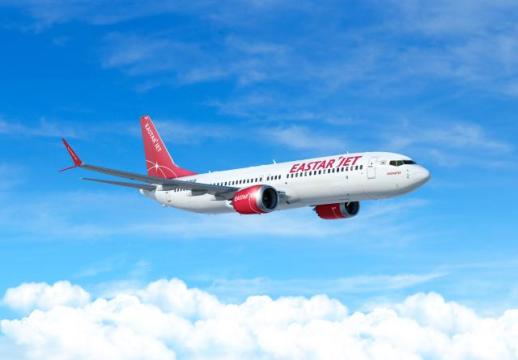 No-frills Eastar Jet tops South Korean carriers in seat occupancy SEOUL, March 12 (AJP) - Eastar Jet filed more than 90 percent of its seats on average last year, the highest among South Korean airlines, the budget carrier said on Thursday. Of the carrier's roughly 33,600 flights with 6.33 million seats, about 5.71 million passengers were aboard, reaching an average seat occupancy rate of 90.14 percent. The figure is well above the aviation industry's average of 84.86 percent, according to the Ministry of Land, Infrastructure and Transport. Eastar Jet attributed the high occupancy rate to several factors such as affordable fares, flexible routes, comfortable cabins and convenient in-flight services, as well as benefits offered through affiliated partnerships. The carrier is also modernizing its fleet, replacing half of its 20-plane fleet with new Boeing 737-8 aircraft featuring premium leather seats and quieter engines. Eastar Jet also had the fastest check-in among South Korean carriers, averaging 10 minutes and 8 seconds, in a survey conducted by Incheon International Airport Corp. last year. "We will keep working to provide passengers with an easy and convenient travel experience, in line with our 'Easy Flight' slogan reflected in our corporate name," said an Eastar Jet spokesperson. 2026-03-12 13:48:41
 -
Eastar Jet Leads South Korea With 90% Load Factor After Offering 6.33 Million Seats Eastar Jet said Thursday it posted an annual load factor of 90% last year, the highest among South Korean airlines. The carrier operated 33,600 flights and offered 6,329,790 seats. A total of 5,705,493 passengers flew, putting the load factor at 90.14%. Based on the Transport Ministry’s aviation information portal, the figure was the highest among domestic airlines and well above the overall average load factor of 84.86%. Eastar Jet cited several factors, including competitive fares, flexible route operations, a more comfortable cabin environment on new aircraft, easier airport and in-flight services, and partnership benefits for members. The airline is accelerating fleet modernization, operating 10 Boeing 737-8 aircraft as new planes, half of its 20-aircraft fleet. Because the aircraft are new rather than used, the company said, they feature new leather seats and reduce engine noise by more than 50%, providing a more comfortable flight environment. Eastar Jet also noted that in a service monitoring survey run by Incheon International Airport Corp. last year, its check-in processing time, including waiting, averaged 10 minutes 8 seconds, the shortest among South Korean carriers. The airline said it also provides real-time gate information via mobile and offers airport services such as discounts through partnerships with airport limousine buses and lounges. An Eastar Jet official said, “We thank the many customers who chose Eastar Jet last year,” adding, “In line with our brand slogan, ‘Easy Flight,’ we will continue working to provide an easy and convenient travel experience.”* This article has been translated by AI. 2026-03-12 09:15:48
-
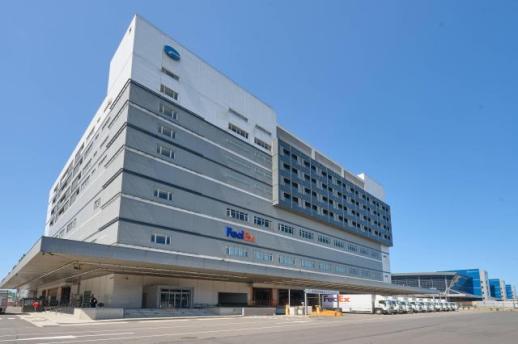 FedEx Expands Taiwan Transshipment Hub to Boost Asia-Pacific Supply Chain Capacity Federal Express Corp., known as FedEx, said Thursday it has expanded its transshipment center at Taiwan Taoyuan International Airport to strengthen its Asia-Pacific network. FedEx called the project its largest single investment in Taiwan since it began operations there 35 years ago. The company said the expansion is expected to improve capacity to meet rising logistics demand tied to advanced technology, semiconductors and e-commerce across Taiwan and the wider Asia-Pacific region. The new facility is about twice the size of the previous site, covering about 19,000 square meters (204,514 square feet). It includes an advanced automated sorting system capable of handling up to 9,000 packages per hour. FedEx said import processing efficiency is 2.5 times higher than at the previous facility, while export processing is up 1.2 times. FedEx also said it has strengthened handling for express parcels and general cargo, as well as special shipments including dangerous goods and cold-chain freight, improving operational safety and supply-chain stability. The company said the new facility reflects the Asia-Pacific region’s growing role as a key base for the global technology industry. Taiwan accounts for more than 80% of global semiconductor production, it said, and rapid advances in new technologies including artificial intelligence are increasing demand for logistics infrastructure that can connect technology hubs, manufacturing bases and growth markets quickly and precisely. FedEx said shipping high-value, time-sensitive products such as semiconductors and precision equipment requires reliability, real-time visibility and strict security throughout the transport process. To meet those needs, it said it applies FedEx Surround Monitoring and Intervention and its SenseAware ID technology to cross-border shipping services. “As Asia-Pacific economies become more closely connected through expanding trade and investment, companies need logistics foundations that can keep pace with changing trade flows,” said Salil Chari, FedEx’s Asia-Pacific regional president. He said the Taiwan expansion underscores FedEx’s commitment to building logistics infrastructure that provides customers with the speed, reliability and flexibility needed to strengthen supply chains and expand into new markets. * This article has been translated by AI. 2026-03-12 09:09:49
 -
 Hyundai Motor Group Rises to No. 2 Globally in Operating Profit, Overtakes Volkswagen Hyundai Motor Group has entered the global top two for operating profit among automakers for the first time, industry officials said. Analysts said the group improved the quality of its growth by earning more profit than Germany’s Volkswagen Group despite selling fewer vehicles. They credited three strategies pushed by Chairman Chung Euisun even as the industry faced headwinds including U.S. auto tariffs and war in the Middle East. According to the industry on Tuesday, Hyundai Motor Group (Hyundai Motor, Kia and Genesis) sold 7.27 million vehicles worldwide last year, ranking third behind Toyota Group (11.32 million) and Volkswagen Group (8.98 million). On profitability, however, Hyundai moved ahead of Volkswagen. Toyota held the top spot with revenue of 50.4508 trillion yen (about 471.2 trillion won) and operating profit of 4.3128 trillion yen (about 40.2 trillion won) in its most recent fiscal year. Hyundai ranked third in revenue at 300.3954 trillion won and second in operating profit at 20.5460 trillion won. Volkswagen posted operating profit of 8.9 billion euros (about 15.3 trillion won). It was the first time Hyundai’s annual operating profit exceeded Volkswagen’s, the officials said. Hyundai also ranked near the top in operating margin, another key measure of profitability. Its operating margin was 6.8%, second globally behind Toyota’s 8.6%. The figure was more than double Volkswagen’s 2.8%, according to the data cited. Officials attributed the improved performance to three initiatives led by Chung: shifting to electrification, expanding localization and moving upmarket. Chung set a goal of achieving 100% electrification in major markets including the United States and Europe by 2040 and ordered development of a range of electric vehicles, the officials said. They also pointed to preemptive investment to raise local production capacity to 1.2 million vehicles a year to address tariff risks after the launch of the second Trump administration. Hyundai’s tariff costs last year totaled 7.2 trillion won, less than Toyota’s 1.2 trillion yen (11.2 trillion won), after Toyota’s U.S. tariff rate was cut to 15% ahead of South Korea, the officials said. Hyundai also strengthened sales of higher-value models such as hybrids and sport utility vehicles and launched a standalone premium brand through its design-led strategy. Genesis, the premium brand launched in 2015 under Chung’s leadership, surpassed 1.5 million in cumulative global sales in 10 years. “Most companies took a major hit from U.S. auto tariffs, but Hyundai held up well, posting higher operating profit than Volkswagen despite selling fewer vehicles,” an industry official said. “It has shown it is no longer competing only on value for money.”* This article has been translated by AI. 2026-03-12 05:03:27
 -
 Global EV Deliveries Excluding China Rise 21.2% in January; Hyundai Motor Group Ranks No. 4 Global electric-vehicle deliveries excluding China rose in January despite weakness in North America, according to SNE Research. The firm attributed the increase to stronger demand in Europe and other Asian markets as electrification gains momentum. SNE Research said Tuesday that 572,000 EVs were newly delivered worldwide outside China in January, up 21.2% from a year earlier. The tally includes plug-in hybrid electric vehicles as well as battery-electric models. Europe posted 19.5% growth, maintaining a steady trend. SNE Research cited the broader rollout of new EV models and continued carbon-emissions regulations, even as some governments discuss scaling back subsidies or adjusting policies. Asia outside China roughly doubled from the same month last year. North America, however, fell 30.2%. SNE Research said consumer preferences have shifted toward internal-combustion and hybrid vehicles, while demand has cooled quickly after EV tax credits ended. By group, Volkswagen remained No. 1, delivering 88,000 vehicles, up 8.1%. China’s BYD ranked second after deliveries surged 118.6% to 67,000. Tesla was third, up 8.4% to 53,000. Hyundai Motor Group delivered 38,000 vehicles, up 4.9%, but slipped to fourth from third a year earlier as BYD climbed the rankings. * This article has been translated by AI. 2026-03-11 17:27:18
 -
 Jeju Air Opens 2026 Hiring for Entry-Level Office Jobs Jeju Air said Wednesday it is accepting applications for entry-level office positions for the first half of 2026. The airline plans to hire in six areas: information security, branch transportation, ramp operations, crew scheduling, flight crew administration and flight training administration. Applicants must apply through Jeju Air’s recruitment website and complete an online competency test. Candidates who advance will go through two rounds of interviews and a pre-employment medical exam before final selections are made. Applications are open to four-year college graduates and those expected to graduate in August, with submissions due by 5 p.m. March 19. Jobs will be based in Seoul or Incheon. Applicants must meet minimum scores on recognized English tests such as TOEIC or OPIc and must be eligible for overseas travel. * This article has been translated by AI. 2026-03-11 11:40:14