
Journalist

Kwon Ga-lim
hidden@ajunews.com
-
 KakaoBank Launches Nationwide Living Expense Account for Vulnerable Groups KakaoBank announced on May 19 that it will launch a "Nationwide Living Expense Account" designed to protect customers' minimum living expenses.The Nationwide Living Expense Account is a policy product aimed at ensuring basic living standards for financially vulnerable groups through seizure prevention features. Anyone aged 14 and older can enroll, but accounts can only be opened at one financial institution. The account allows for flexible deposits up to a monthly limit of 2.5 million won, ensuring the safety of essential living expenses.KakaoBank developed this product in conjunction with the Korea Credit Information Service. The base interest rate is set at 2% annually until the end of this year.To enhance customer convenience, the bank has added unique features. Customers will receive notifications when a new deposit limit is assigned on the first of each month or when the total limit of 2.5 million won is reached. Additionally, users can easily access transaction statements and balance certificates through a dedicated menu in the app.KakaoBank is also expanding inclusive finance by lowering interest rates for its New Hope Seed II and Sunshine Loan products.A KakaoBank representative stated, "This product was designed to help customers facing economic difficulties maintain their daily lives and recover even in seizure situations. We will continue to practice inclusive finance for small business owners and those with low credit ratings."* This article has been translated by AI. 2026-05-19 10:49:11
 -
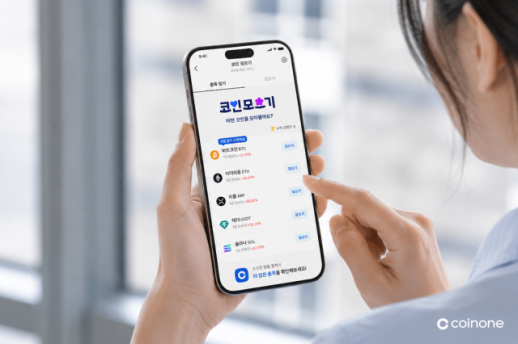 Coinone Launches 'Coin Collecting' Service via KakaoBank Coinone announced on May 19 that it will offer its savings investment service, 'Coin Collecting,' through the KakaoBank app.Coinone transitioned its real-name account partnership from NH Nonghyup Bank to KakaoBank in August 2022 and has renewed the contract annually since then. Customers of Coinone with KakaoBank accounts can now conveniently access the Coin Collecting service.Coin Collecting is an automated order service that allows customers to purchase virtual assets on designated dates based on their chosen asset, frequency, and amount. This service aims to reduce the burden of short-term price fluctuations while pursuing stable long-term returns. Since its launch in December of last year, the service has surpassed 40,000 users.Users can set up their collection rules directly within the KakaoBank app without needing to switch between platforms, and they can monitor their returns in real-time. A total of ten types of virtual assets are supported, and each user can apply for up to 20 collections. The minimum investment amount per collection is 5,000 won, while the maximum is 5 million won.Cha Myung-hoon, CEO of Coinone, stated, "We have launched this service in collaboration with KakaoBank to enhance user experience and attract new customers. We aim to combine Coinone's expertise in the virtual asset sector with the strengths of KakaoBank, which has over 20 million users, to showcase diverse collaborations moving forward." 2026-05-19 08:38:52
 -
 Annual Business Closures Exceed 1 Million as Banks Increase Support for Small Enterprises As annual business closures surpass 1 million, the banking sector is stepping up to provide consulting and financial support for struggling small enterprises.Cho Yong-byeong, chairman of the Korea Federation of Banks, stated at the 'Joint Small Business Consulting Results Sharing Event' held on May 18 in Seoul, "Small business owners, our valued customers, are directly facing economic changes and cost burdens in the most immediate sectors of the economy." He emphasized the commitment to actively support the processes of business closure and recovery.Since 2025, 20 domestic banks have collaborated on consulting for startups and businesses facing closure. Due to recent economic downturns, the number of consulting applicants has reached 646, exceeding the initial target by more than double. In total, 2,100 consulting sessions have been provided to 800 small business owners. The consulting results indicate a concerning trend, with 50% of requests focusing on closure strategies rather than management improvement or tax inquiries, highlighting the deepening financial struggles of small businesses. The service industry accounted for the largest share of requests at 27.1%, followed by retail and food services at 26.3%.The prolonged domestic economic slump has led to a wave of closures among self-employed individuals, who are crucial to local economies. The annual business closure rate has reached over 1 million, with a closure rate of approximately 9%. Increasing numbers of self-employed individuals are unable to meet their loan obligations, contributing to a rise in delinquency rates. The delinquency rate for loans to individual business owners at the five major banks—KB Kookmin, Shinhan, Hana, Woori, and NH Nonghyup—was 0.78% in the first quarter of this year, up 0.07 percentage points from late January. Meanwhile, Kakao Bank, which has been increasing its loans to individual business owners, reported a delinquency rate of 1.40%.In response, the Korea Federation of Banks has implemented tailored consulting services based on data and artificial intelligence (AI) from professional consultants. Additionally, they are linking consulting services for small business owners to various financial support programs, such as Personal Business Loan 119, to alleviate interest burdens. It is estimated that 99.3% of borrowers have total loans of less than 1 billion won. If 30% of those who close their businesses apply for financial support, the reduction in interest burdens could amount to 315 billion won annually. A consultant noted, "27% of applicants have completed their business closure process, and we will continue to support the remaining applicants."However, the burden on the banking sector is significant. The annual financial support burden for small businesses is estimated to be between 600 billion and 700 billion won. Nevertheless, as support for startups and businesses in distress aligns with productive finance strategies, the banking sector plans to expand the scope of Personal Business Loan 119 and long-term installment repayment options.Chairman Cho stated, "We will continue to disseminate the experiences and best practices from this joint initiative across the banking sector to enhance the self-sustainability of small businesses and support the recovery of the economy and inclusive finance."* This article has been translated by AI. 2026-05-18 18:52:33
 -
 Shinhan Bank Provides 7.5 Billion Won in Guaranteed Loans to Incheon SMEs Shinhan Bank announced on May 18 that it will provide a total of 7.5 billion won in guaranteed loans to small and medium-sized enterprises (SMEs) and small businesses in the Incheon area.To support mid- to low-credit companies and e-commerce businesses, Shinhan Bank has signed a 'Specialized Inclusive Finance Guarantee Agreement' with the Incheon Credit Guarantee Foundation.The initiative aims to reduce the financial burdens faced by small businesses with mid- to low-credit ratings and to provide stable operating funds for online sellers experiencing cash flow issues due to delayed settlements.The loan limit for each business is set at a maximum of 50 million won, targeting new operating fund loans offered by Shinhan Bank. The guarantee will cover 100% of the loan amount, with a guarantee fee rate of 0.8% per year. The loans will be structured with a one-year grace period followed by four years of installment repayment or a lump-sum repayment at maturity.Currently, Shinhan Bank serves as the primary bank for Incheon City, with a new primary bank to be designated in August. This financial support for SMEs in Incheon is expected to have a positive impact on the upcoming selection of the primary bank.A Shinhan Bank official stated, "We will continue to collaborate with local credit guarantee institutions to provide financial support that small businesses and SMEs can truly feel in their operations."* This article has been translated by AI. 2026-05-18 18:41:48
 -
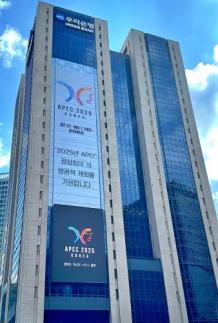 Woori Financial Launches Loan Program for Low-Credit Borrowers with Maximum Rate of 7% Woori Financial Group announced on May 18 that it will launch a dedicated refinancing loan product for low-credit customers by the end of this month, allowing them to switch to loans with lower interest rates.The announcement came during the 'May Advanced Strategic Industry Finance Council' held on May 15 at the group's headquarters in Jung-gu, Seoul, chaired by Chairman Im Jong-ryong. The council discussed the implementation tasks and achievements of inclusive finance.Since establishing productive and inclusive finance as a core long-term strategy in September of last year, Woori Financial has held monthly meetings chaired by the chairman to review progress. This month's meeting included 19 participants, including CEOs of subsidiaries and heads of divisions, who discussed ways to expand financial support for youth and low-credit borrowers.The new integrated 'Woori One Dream Refinancing Loan' will be available by the end of this month, enabling low-credit customers who have been using credit cards, capital loans, and savings bank loans to transition to lower-rate bank loans.The maximum interest rate will be set at 7% per year, with a repayment period of up to 10 years in installment payments. The program will utilize alternative credit assessment models to assist individuals such as homemakers and freelancers, who may have difficulty providing income verification, in accessing formal financial services.Additionally, Woori Financial plans to launch an integrated platform called '36.5 Degrees' by the end of this month, which will consolidate inclusive finance products from its subsidiaries. The group aims to expand its inclusive finance initiatives to 7.2 trillion won, accelerating its commitment to cooperative finance.Im Jong-ryong, Chairman of Woori Financial, stated during the meeting, "Youth are a key generation that will lead our future, and we must continue to provide substantial financial support to ensure they do not lose hope. Financial support for low-credit borrowers should also be pursued as a means to eliminate financial blind spots and protect socially vulnerable groups as part of a financial safety net." 2026-05-18 13:30:47
 -
 Citibank Reports Record Q1 Profit of 132.8 Billion Won Citibank Korea announced on May 15 that it achieved a net profit of 132.8 billion won in the first quarter of this year. This marks a 61% increase compared to the same period last year, reaching the highest level in eight years.Total revenue for the first quarter was 330.5 billion won, a 23% increase year-over-year. This growth was largely driven by a 77% rise in non-interest income from corporate finance, including foreign exchange, derivatives, and securities-related earnings.Interest income fell to 104.2 billion won, a 26% decrease from the previous year. The net interest margin (NIM) dropped to 2.01%, down 0.36 percentage points from 2.37% in the same quarter last year.Total loans decreased by 5% to 9.7741 trillion won due to the gradual phase-out of the consumer finance sector. However, total deposits rose by 16% to 21 trillion won, driven by growth in the corporate finance sector.Citibank plans to continue expanding corporate loans and securities this year to sustain the upward trend in both interest and non-interest income.Yoo Myung-soon, CEO of Citibank Korea, stated, "Despite the challenging market environment characterized by geopolitical conflicts and increased volatility in interest and exchange rates, we achieved our best quarterly performance since 2018. This success is a result of significantly enhancing non-interest income in our core business areas, including foreign exchange, capital markets, and securities services."* This article has been translated by AI. 2026-05-16 00:00:40
 -
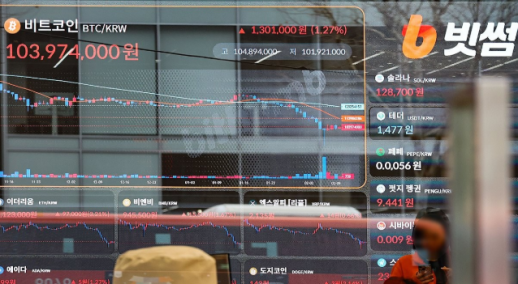 Bithumb Reports $869 Million Loss in First Quarter Amid Market Challenges In the first quarter of this year, Bithumb reported a transition to a loss, attributed to external factors such as global economic uncertainty and a downturn in the virtual asset market. On May 15, Bithumb announced that its net loss for the first quarter reached 86.9 billion won (approximately $69 million). The decline in performance is largely due to prolonged investor sentiment dampened by geopolitical instability in the Middle East and rising interest rate pressures, leading to a significant drop in trading volume. Bithumb's average daily trading volume for the first quarter was $647.31 million, a 55% decrease compared to the same period last year. Additionally, losses from asset valuations and costs associated with regulatory actions contributed to the shift to a net loss. Domestic virtual asset exchanges rely heavily on transaction fee revenue, which accounts for 99% of their income, making reduced trading volumes directly correlate with deteriorating financial results. Bithumb plans to focus on optimizing its cost structure and enhancing platform competitiveness to adapt swiftly to market conditions. A Bithumb representative stated, "We will strengthen our internal capabilities while enhancing service competitiveness to establish a foundation for sustainable growth in anticipation of a market rebound."* This article has been translated by AI. 2026-05-15 23:49:52
 -
 Dunamu Reports Q1 Profit of 69.5 Billion Won Amid Declining Trading Volume Dunamu reported a significant decline in its financial performance, with a nearly 80% drop compared to last year. This downturn is attributed to a decrease in trading volume in the virtual asset market amid global economic slowdown.In the first quarter of this year, Dunamu recorded a net profit of 69.5 billion won, marking a 78.3% decrease from the same period last year.The decline in performance is largely influenced by global risks, including the conflict between the United States and Iran, which have led to reduced trading volumes in the virtual asset market. Since the major liquidation crisis in October of last year, the downturn in the virtual asset market has persisted. Upbit's cumulative trading volume for the first quarter of this year was $141 billion, down 62.3% from the previous year. The influx of investment funds into the domestic stock market, driven by a booming stock market, has also contributed to the contraction of the virtual asset market.Domestic virtual asset exchanges rely heavily on transaction fee revenue, with dependence reaching 99%, making the reduction in trading volume directly linked to deteriorating financial results. Dunamu plans to seek a rebound through service enhancements, expanding partnerships, and exploring new business opportunities.* This article has been translated by AI. 2026-05-15 23:42:28
 -
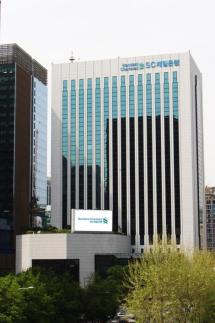 SC First Bank Reports Q1 Net Profit of 104.9 Billion Won, Down 6.3% Year-on-Year SC First Bank reported a decline in profits for the first quarter of this year, attributed to rising operating costs. On May 15, the bank announced that its net profit for the first quarter was 104.9 billion won, a decrease of 6.3% compared to the same period last year.Interest income fell due to a decline in the net interest margin (NIM). For the first quarter, interest income was 291.5 billion won, down 5.1% from the previous year. During the same period, NIM decreased by 0.23 percentage points.In contrast, non-interest income increased significantly, driven by improvements in the wealth management (WM) sector, which saw a rise in high-net-worth clients. Non-interest income for the first quarter reached 110.1 billion won, a 25.1% increase year-on-year.The total loan portfolio grew to 43.7363 trillion won, marking a 2.2% increase from the previous year. Asset quality indicators remained stable, with the non-performing loan (NPL) ratio at 0.56% as of the end of March, similar to the end of last year.SC First Bank plans to continue enhancing its WM sector performance by expanding private banking (PB) centers in the metropolitan area and Busan, following the success in Apgujeong.* This article has been translated by AI. 2026-05-15 23:19:47
 -
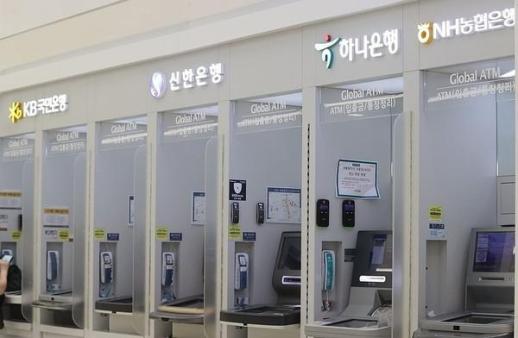 COFIX Rises After a Month, April Rate Up 0.08% Banking sector variable mortgage rates, determined by the COFIX (Cost of Funds Index), have risen after a month. The Korea Federation of Banks reported on May 15 that the new COFIX for April was 2.89%, an increase of 0.08 percentage points from March's rate of 2.81%.The balance-based COFIX also rose from 2.85% to 2.87%, an increase of 0.02 percentage points. COFIX represents the weighted average interest rate of funds raised by eight domestic banks. An increase in COFIX indicates that banks are paying higher interest rates to secure funds.The new balance-based COFIX, introduced in June 2019, increased from 2.45% to 2.49%. This new index includes rates for other deposits, borrowings, and transaction funds.With COFIX rising after a month, mortgage rates are expected to increase as well. Amid stricter household loan regulations making it difficult to obtain mortgages, the rising interest rates are likely to heighten the financial burden for actual borrowers.* This article has been translated by AI. 2026-05-15 22:15:17