
Journalist

Kwon Ga-lim
hidden@ajunews.com
-
 State-Owned Banks Face Employee Exodus Amid Wage Disparities State-owned banks, once regarded as 'jobs for life,' are losing their appeal. Lower salaries compared to commercial banks and ongoing discussions about relocating to regional areas during election seasons are contributing to a rise in employee turnover.According to data from the Public Institution Management Information Disclosure System, Alio, the turnover rate for male employees at the Industrial Bank of Korea reached 9.0% last year. This marks a threefold increase from 3.0% in 2021. In contrast, the turnover rate for female employees rose slightly from 1.5% to 1.6% during the same period. The turnover rate at IBK Industrial Bank also increased, with male turnover rising from 1.7% in 2021 to 6.2% last year, while female turnover went from 1.0% to 1.3%. Similarly, the Export-Import Bank of Korea saw its male turnover rate increase from 3.2% to 4.1%, and female turnover rise from 0.7% to 2.6%.As employee departures increase, the average tenure at these banks is decreasing. The average length of service at the Industrial Bank fell from 199 months in 2021 to 185 months last year. IBK's average tenure decreased from 209 months to 195 months, while the Export-Import Bank's average tenure dropped from 155 months to 151 months.The rising turnover rates at state-owned banks can be attributed to wage disparities with commercial banks. Last year, the average salary for employees at these state banks was 115.94 million won, approximately 4 million won lower than the average salaries at the four major commercial banks: Kookmin, Shinhan, Hana, and Woori.The issue of relocating financial public institutions to regional areas during election seasons has also accelerated employee departures. Since the push for the Industrial Bank's relocation to Busan began in 2022, the number of resignations increased from 30 to 100. Ahead of this year's local elections, candidates for the Daegu mayoralty from both major parties have pledged to relocate IBK to Daegu, with the Export-Import Bank and the Korea Deposit Insurance Corporation also under consideration for relocation.Additionally, the less favorable wage peak system at state-owned banks has impacted employee retention. While commercial banks offer retirement incentives and educational funds for children equivalent to two to three years' salary, employees opting for voluntary retirement at state-owned banks receive only 45% of their salary during the wage peak period as severance pay.* This article has been translated by AI. 2026-05-11 03:44:27
 -
 KOSPI Surges Past 7,000 as Demand for Borrowing Hits Record 40 Trillion Won KOSPI has surpassed the 7,000 mark for the first time, leading to a significant influx of funds from individual investors into the stock market. The demand for borrowing to invest in stocks has surged, pushing the balance of minus accounts to a record 40 trillion won. Meanwhile, demand deposits have decreased for the second consecutive month, prompting some banks to raise interest rates on deposits.As of May 7, the balance of minus accounts at the five major banks—KB Kookmin, Shinhan, Hana, Woori, and NH NongHyup—stood at 40.5029 trillion won. This marks an increase of 715.2 billion won in just three business days since the end of April, when the balance was 39.7877 trillion won. The current balance is the highest since January 2023, when it reached 40.5395 trillion won. In terms of monthly growth, this is the largest increase in two years and seven months, surpassing the previous high in October 2023.This surge is attributed to a combination of household loan regulations and the rise in KOSPI. The balance of minus accounts began to expand significantly in October 2022, reaching over 40 trillion won by the end of November 2022. As various regulations, including the June 27 and October 15 real estate measures, reduced the limits on mortgage loans, the balance of minus accounts increased sharply. The recent rise in KOSPI past 7,000 has further fueled this increase.In May, over 5 trillion won has exited from demand deposits, reflecting expectations of continued stock market growth. The balance of demand deposits at the five major banks was 696.0511 trillion won as of May 7, down 5.013 billion won from 696.5524 trillion won at the end of April. This follows a decrease of 3.3557 trillion won in April, indicating a trend of funds leaving for two consecutive months.In response to this situation, some banks are taking defensive measures to retain deposits. NH NongHyup Bank has raised the interest rate on its NH All One e-deposit from 2.95% to 3.10%. KakaoBank and K-Bank have also introduced deposit products with interest rates over 3%. However, there are predictions that these rate increases may not significantly alter the flow of funds. A financial industry source stated, "In a situation where stock prices have risen by more than 10%, even a slight increase in interest rates is unlikely to stop the movement of funds."* This article has been translated by AI. 2026-05-11 03:00:15
 -
 Shinhan Financial Group's CEO Jin Ok-dong Promotes Investment in North America Jin Ok-dong, the CEO of Shinhan Financial Group, is visiting the United States, Mexico, and Canada to hold investor relations (IR) meetings with overseas institutional investors. According to Shinhan Financial Group, Jin will meet with major global asset management firms and pension fund investors in North America over the next two weeks, starting from May 10 until May 22. During his visit, Jin will explain the stability and fundamentals of the South Korean financial market and will also visit local subsidiaries and branches to review the status of global operations and regional growth strategies. Jin plans to outline the group's enhanced corporate value improvement plans, which include a shareholder return system linked to return on equity (ROE) and growth rates, a capital policy that increases predictability and sustainability, and a strategy for diversifying revenue based on global business. He will also share Shinhan Financial's response to the prolonged conflict between the U.S. and Iran. "Transparent and consistent communication with investors is a crucial foundation for enhancing corporate value," Jin stated. "Shinhan Financial will thoroughly explain our sustainable system for expanding both group growth and shareholder returns to global investors, and we will continue to enhance corporate value based on market trust." Shinhan Financial has announced a new value enhancement policy this year, strengthening shareholder returns. The company has introduced a formula for calculating shareholder return rates linked to an elevated ROE target of over 10%. This new system eliminates the previous 50% cap on returns, establishing a predictable return framework calculated as '1 - (growth rate / target ROE)'. The dividend policy will also be strengthened, with plans to initiate tax-exempt dividends for three years starting from the 2026 fiscal year, aiming for a yearly increase of over 10% in the dividend per share (DPS). 2026-05-10 11:34:27
 -
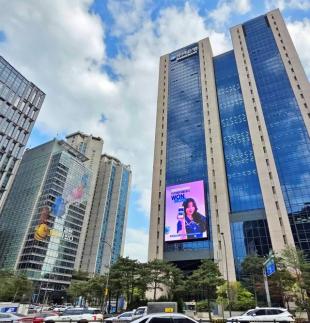 Woori Bank Selected to Manage $886 Billion National Pension Fund's Foreign Assets Woori Bank has been selected as the preferred negotiator to manage the National Pension Service's (NPS) $886 billion in foreign assets. This decision, announced on May 7, reinforces Woori Bank's status as a leader in foreign exchange management after successfully holding the custody since August 2021. The NPS plans to finalize the contract with Woori Bank in June. If negotiations fail, they will engage with the next preferred candidate. The initial contract period is three years, with the possibility of extending it for up to two additional years based on annual evaluations.Woori Bank and KB Kookmin Bank competed for the bid, with selection criteria including financial stability, operational capability, foreign currency management experience, service quality, and risk management. Woori Bank's experience since 2021 gave it a competitive edge in the selection process.This marks the first selection of a foreign currency custody bank for the NPS in five years. As the designated bank, Woori Bank will oversee various functions, including domestic and international foreign exchange transactions, account management for foreign currency, short-term fund limits, remittances, and foreign exchange trading. As of late February, the NPS's total fund reserves stood at 1,610 trillion won, with 55% allocated to foreign assets. Managing the NPS's foreign exchange transactions will enhance Woori Bank's industry standing and generate fee income.* This article has been translated by AI. 2026-05-07 23:27:57
 -
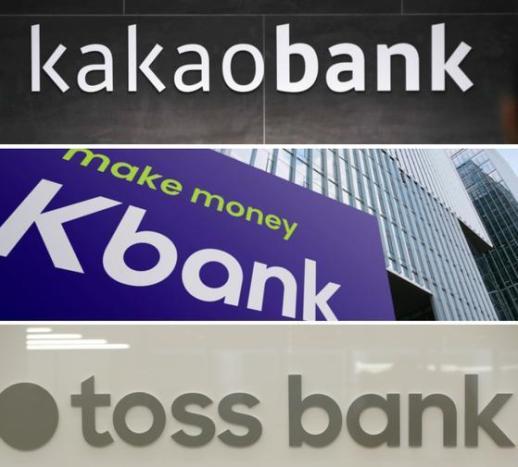 Internet Banks Struggle to Find Sustainable Growth Amidst Competition Concerns are growing that internet banks, since their inception, have focused solely on superficial growth without establishing sustainable growth drivers. Their business models heavily rely on household loans, and their interest rates are less competitive than those of traditional banks. Initially aimed at reducing costs through online operations, these banks are now caught in a fierce competition for customer acquisition, neglecting the development of differentiated revenue models.As of the first quarter of this year, Kakao Bank has attracted 27 million customers, capturing 78% of the customer base of the largest traditional bank, KB Kookmin Bank, which has 34.7 million customers. K Bank, the first internet bank in South Korea, has 16.07 million customers, while Toss Bank has 14.23 million, surpassing Shinhan Bank's mobile platform, SOL, which has 10.42 million users.While these banks initially gained customers with low interest rates, they are now losing their competitive edge in interest rates compared to traditional banks. According to the Korea Federation of Banks, the interest rate spread for household loans in the first quarter was 2.02% for Kakao Bank, 2.28% for K Bank, and 2.09% for Toss Bank, compared to just 1.77% for the five major traditional banks (KB Kookmin, Shinhan, Woori, Hana, and NH Nonghyup).In the realm of general credit loans, Kakao Bank's interest rate spread is 2.78%, K Bank's is 2.29%, and Toss Bank's is 3.20%, all exceeding the average rate of 1.76% for traditional banks. Unlike traditional banks, internet banks do not operate physical branches, allowing them to focus on household loans and easily generate interest income.The high interest rate spreads have resulted in increased profitability. In the first quarter, Kakao Bank reported a net interest margin (NIM) of 2%, surpassing the average of 1.69% for the five major banks, while K Bank recorded 1.57%. Last year, Toss Bank achieved a high margin of 2.55%. However, the initial goal of providing differentiated digital services with lower costs is now being overshadowed by a focus on superficial growth.Critics warn that a business structure fixated on growth could ultimately harm customers. The banks are perceived as vulnerable in terms of long-term risk management and profitability compared to traditional banks, raising concerns that their current strategies may not be sustainable. With household loans making up 90% of their portfolios, their offerings are limited to personal loans and advertising revenue from platforms, leading to questions about their original mission.A financial industry insider stated, "The focus on expanding interest rate spreads and short-term funding strategies clearly has limitations in terms of sustainability. Given the high proportion of so-called cherry-picking customers who move based on interest rates or promotions, it will be challenging to secure a stable funding base. Ultimately, the risk of passing unfavorable conditions onto consumers during interest rate fluctuations cannot be ignored, so a competition model based on soundness and sustainability needs to be explored."* This article has been translated by AI. 2026-05-07 16:27:29
 -
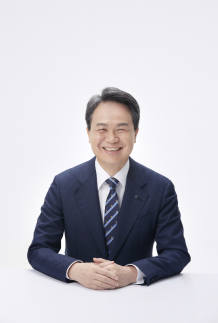 Shinhan Financial Group Leads in Inclusive Finance Initiatives Shinhan Financial Group is gaining attention as the fastest-moving financial group in response to the government's inclusive finance initiatives. Under Chairman Jin Ok-dong, the group has revived the 'microfinance' program, previously used as a policy finance tool, to differentiate itself in the market.As of May 7, Shinhan Financial has actively integrated microfinance into its inclusive finance strategy, enhancing its presence. Microfinance provides low-interest startup and operational funds to low-income individuals without requiring collateral or guarantees, aimed at supporting financially vulnerable groups. Although launched during the Lee Myung-bak administration and expanded under the Moon Jae-in administration, its significance had diminished in recent years.The current government had not considered utilizing microfinance, but Shinhan Financial has adopted it as a tool for inclusive finance. Chairman Jin recognized its potential during a review of existing inclusive finance systems, suggesting, "Let’s use existing systems efficiently" instead of creating new ones.This approach has been praised for balancing speed and effectiveness, reducing the time needed to design new systems while clearly defining the support targets. Following Shinhan Financial's proposal, other financial groups are reportedly exploring similar models.The proactive efforts of Chairman Jin and Vice Chairman Ko Seok-hun have been noted, with the group quickly generating ideas in response to messages from financial authorities. Shinhan Financial was the first to propose debt forgiveness for disabled individuals, reflecting this trend.Shinhan Financial plans to contribute 100 billion won to the Shinhan Microfinance Foundation to support diligent repayers and develop new policy loan products. Additionally, it aims to convert all diligent repayment customers from savings banks to bank products within the first half of the year and operate cooperative finance loan products using its platform, distinguishing itself from other financial groups.A financial authority official stated, "Shinhan Financial is notably quick in its responses and frequently proposes ideas, making it one of the active players in inclusive finance."* This article has been translated by AI. 2026-05-07 16:25:37
 -
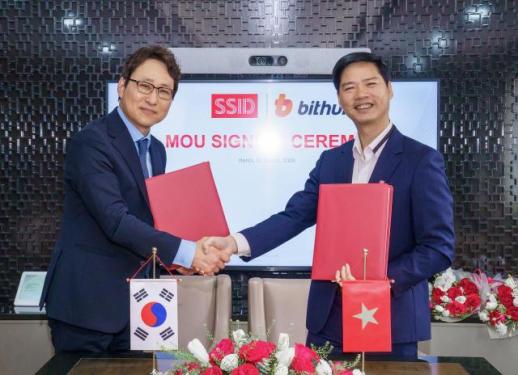 Bithumb Signs MOU With Vietnam’s SSID to Pursue Crypto Exchange Venture Bithumb is expanding cooperation with overseas financial firms as it builds a base for global business. Bithumb said May 7 it signed a broad memorandum of understanding with SSID, a subsidiary of SSI Securities, Vietnam’s largest securities firm, to pursue a virtual-asset exchange business. Attendees at the signing included Bithumb CEO Lee Jae-won, SSID CEO Nguyen Khac Hai and SSI Securities Chairman Nguyen Duy Hung, the company said. The MOU aims to build a strategic partnership to establish and operate an exchange in Vietnam. Subject to regulatory approval for virtual assets in Vietnam, the agreement also leaves open the possibility of a strategic equity investment by Bithumb in an SSID-designated entity. The companies plan to cooperate on technology architecture and development, wallet and custody systems, security and risk management, regulatory support and knowledge transfer, business and product development, and institutional business. Vietnam’s government last month put into effect a resolution allowing coin trading and the establishment of exchanges through a virtual-asset pilot program to be implemented over the next five years. The pilot limits foreign investor ownership stakes, making joint ventures with local financial firms and IT companies important for domestic exchanges. A Bithumb official said cooperation with SSI Securities and SSID reflects international recognition of Bithumb’s exchange operations and transparency. The official said Bithumb will prioritize strict compliance with Vietnam’s regulatory environment and work with its partners to build safe virtual-asset trading infrastructure.* This article has been translated by AI. 2026-05-07 09:41:28
 -
 KB Kookmin Bank Expands Support for Youth Leaving Care Through KB Dream Home Program KB Kookmin Bank is expanding inclusive-finance efforts, including support for youth preparing to live independently after leaving care. The bank said May 7 it has selected sites for its KB Dream Home program, which supports these young people. KB Dream Home is a corporate social responsibility initiative that offers capacity-building programs such as job counseling and help obtaining professional certificates. The goal is to help participants build a foundation for independence while living in a more comfortable housing environment. The program is part of KB Financial Group’s “KB National Happiness Hope Project.” The bank said it completed renovation work last year at independent-living facilities in five regional areas, starting with South Chungcheong Province and including Gwangju, Mokpo, Daejeon and Jeonju. This year, the bank plans to continue support for facilities nationwide. One facility in Seoul and four in regional areas — including Wonju in Gangwon Province and Cheongju in North Chungcheong Province — were selected for upgrades. The bank said it will carry out tailored remodeling based on on-site inspections. The bank has also continued other youth-support programs. Last month, it said it would support 200 young people for one year with independence assistance funds, along with career exploration, certificate training and job consulting throughout the employment process. A bank official said the KB Dream Home program is intended to provide “a solid foundation” for young people beginning independent lives, adding that the bank will continue to expand inclusive-finance support so that “all people, including youth,” can be happier.* This article has been translated by AI. 2026-05-07 09:13:05
 -
 KOSPI Closes Above 7,300 as Chip Stocks Lead Rally; Government, Elections and Fund Updates Semiconductor exports jump 139% while non-chip exports rise 11% South Korea posted its largest-ever first-quarter exports, helped by an artificial intelligence boom and a recovery in the semiconductor cycle. But the surge also deepened concerns about overreliance on a narrow set of items, especially memory chips, raising questions about the stability of the export structure. The Ministry of Trade, Industry and Energy said Tuesday that first-quarter exports rose 37.8% from a year earlier to $219.9 billion, the highest for the period. The ministry cited expanded investment in AI servers and strong semiconductor conditions as factors boosting competitiveness. The concentration risk remains, officials said. First-quarter semiconductor exports rose 139% from a year earlier to $78.5 billion.* This article has been translated by AI. 2026-05-06 21:54:20
 -
 CMA CGM Ship Hit While Transiting Strait of Hormuz; Iran Suspected France’s CMA CGM, the world’s third-largest shipping company, said one of its vessels was attacked while transiting the Strait of Hormuz. According to Yonhap News Agency and Reuters, CMA CGM said in a statement Tuesday that its ship San Antonio was hit, injuring crew members and damaging the vessel. The company said the injured crew were evacuated and are receiving medical care. “We are closely monitoring the situation and are doing everything possible in response alongside our crew,” CMA CGM said. The attacker was not identified, but the ship was reported to have come under an Iranian missile strike. A day earlier, the naval command of Iran’s Revolutionary Guard warned on X that any vessel seeking to pass through the Strait of Hormuz must use routes designated by Iran, and said those that do not would face a military response. Separately, at about 8:40 p.m. on May 4 (Korea time), a fire broke out after an explosion on the port side of the engine room of the HMM Namu while it was anchored north of Sharjah in the United Arab Emirates, inside the Strait of Hormuz. * This article has been translated by AI. 2026-05-06 21:51:15