

As of May 7, the balance of minus accounts at the five major banks—KB Kookmin, Shinhan, Hana, Woori, and NH NongHyup—stood at 40.5029 trillion won. This marks an increase of 715.2 billion won in just three business days since the end of April, when the balance was 39.7877 trillion won. The current balance is the highest since January 2023, when it reached 40.5395 trillion won. In terms of monthly growth, this is the largest increase in two years and seven months, surpassing the previous high in October 2023.
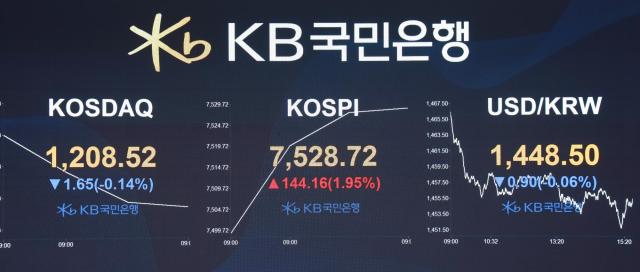
This surge is attributed to a combination of household loan regulations and the rise in KOSPI. The balance of minus accounts began to expand significantly in October 2022, reaching over 40 trillion won by the end of November 2022. As various regulations, including the June 27 and October 15 real estate measures, reduced the limits on mortgage loans, the balance of minus accounts increased sharply. The recent rise in KOSPI past 7,000 has further fueled this increase.
In May, over 5 trillion won has exited from demand deposits, reflecting expectations of continued stock market growth. The balance of demand deposits at the five major banks was 696.0511 trillion won as of May 7, down 5.013 billion won from 696.5524 trillion won at the end of April. This follows a decrease of 3.3557 trillion won in April, indicating a trend of funds leaving for two consecutive months.
In response to this situation, some banks are taking defensive measures to retain deposits. NH NongHyup Bank has raised the interest rate on its NH All One e-deposit from 2.95% to 3.10%. KakaoBank and K-Bank have also introduced deposit products with interest rates over 3%. However, there are predictions that these rate increases may not significantly alter the flow of funds. A financial industry source stated, "In a situation where stock prices have risen by more than 10%, even a slight increase in interest rates is unlikely to stop the movement of funds."
* This article has been translated by AI.
Copyright ⓒ Aju Press All rights reserved.