
Journalist

Kwon Ga-lim
hidden@ajunews.com
-
 South Korea approves five National Growth Fund projects, bringing total to 8.4 trillion won The Financial Services Commission is moving to step up investment through the National Growth Fund. The FSC said Saturday it approved funding support for five projects at a meeting of the fund’s investment review committee. With the latest approvals, the fund has approved 11 projects totaling 8.4 trillion won in cumulative financing. A key agenda item was a 100 billion won direct investment in Upstage, a South Korean AI venture that develops AI solutions for businesses and government and builds large language models. The FSC said the investment will be used to develop next-generation AI models and build infrastructure to operate large language models, as part of a planned 560 billion won fundraising effort. The committee also approved a project to build a national AI computing center. The FSC said the approval confirms 400 billion won in capital fundraising, with plans to pursue additional loans of up to more than 2 trillion won. A proposal tied to building an advanced industrial belt in Saemangeum was also approved. The National Growth Fund decided to provide Future Graph with a total of 250 billion won in low-interest loans, including 200 billion won from an advanced strategic industries fund. The FSC said the factory project, with 400 billion won to be invested, is expected to establish an annual production base of 37,000 tons of spherical graphite at the Saemangeum National Industrial Complex. Other approved items included an expansion of STGen Bio’s contract manufacturing plant for biopharmaceuticals and low-interest loans for a midsize semiconductor materials company. The FSC said it is accelerating investment planning after creating the 150 trillion won National Growth Fund to foster advanced strategic industries and support an economic rebound. It said it will regularly announce large-scale projects with broad industrial spillover effects while responding on an ongoing basis to diverse funding needs across the advanced-industry ecosystem.* This article has been translated by AI. 2026-05-03 12:05:10
 -
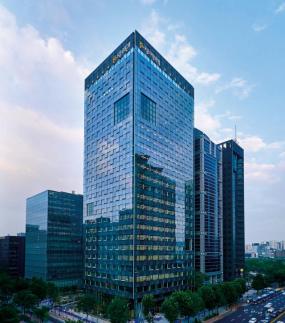 KB Financial Discusses Digital Asset Cooperation With Pantera Capital KB Financial Group said Saturday it discussed ways to cooperate in blockchain with Pantera Capital, a U.S. blockchain-focused venture capital firm and hedge fund. Founded in 2003, Pantera Capital launched the first U.S. bitcoin fund in 2013 and specializes in blockchain investments. It currently manages about $5.2 billion in assets. The two sides shared the latest trends in the global blockchain industry and looked for areas that align with KB Financial’s digital asset agenda, the company said. They also discussed benchmarking investment approaches and cooperation models that have been proven in global markets, and ways to strengthen collaboration going forward. A KB Financial official said the group will “secure future financial competitiveness based on blockchain and accelerate efforts to identify promising new global businesses” by building close ties with leading global funds. Separately, KB Financial has been moving to strengthen cooperation with Tether and Circle, the top two global stablecoin operators, as it seeks an edge in the digital asset market. It has also signed a business agreement for the second phase of “Project Hangang,” led by the Bank of Korea. * This article has been translated by AI. 2026-05-03 11:30:14
 -
 With Won Near 1,500 per Dollar, Expert Urges Stronger Foreign-Exchange Defenses Bank of Korea Gov. Shin Hyun-song took office April 20. The central bank’s most important tasks are price stability and defending the exchange rate, the author wrote. The won has trended weaker over decades, from the 200-won range in the 1970s to about 2,000 won during the IMF foreign-exchange crisis and 1,600 won during the global financial crisis. South Korea depends on trade, with a trade-to-GDP ratio of about 75%, the world’s second-highest, the author said. That makes exchange-rate swings from external shocks more than a market indicator, he wrote, calling on the government to build a stronger foreign-exchange “breakwater” on three fronts. First, the author urged building foreign-exchange reserves toward $1 trillion. South Korea’s reserves stand at $420 billion, which he said is insufficient in a crisis and equals about 23% of gross domestic product. He compared that with Taiwan, Hong Kong and Switzerland, which he said hold reserves equal to 80% to 130% of GDP. He cited Taiwan’s experience in the 1997 Asian financial crisis, saying its stockpiled reserves helped it remain stable. South Korea should expand reserves to $1 trillion, or about 50% of GDP, to provide psychological stability to markets, he wrote, arguing that readily deployable cash is the most practical shield against speculative attacks on the won. Second, he called for restoring and expanding currency swap lines with the United States and Japan on a standing basis. If reserves are a country’s own capital, he wrote, swap lines are a second line of defense, like an overdraft. The $60 billion Korea-U.S. swap line has ended, and the Korea-Japan swap line has shrunk to about $10 billion from a previous $70 billion, he wrote. Swap lines with reserve-currency countries, he added, can convince markets that “Korea will not run short of dollars,” helping curb sharp exchange-rate spikes. Third, he urged stricter debt management and stronger fiscal discipline. The IMF has warned about 2030, when South Korea’s government debt ratio is expected to reach 60%, he wrote. Including contingent liabilities such as civil servant and military pensions, he said broader public debt has already reached 181%. If fiscal weakness erodes external confidence, he warned, the won’s long-term weakening could accelerate. The author also called for attracting more foreign investment by cutting South Korea’s corporate tax rate from 26% to the global average of 21% and easing regulations tied to the fourth industrial revolution. He wrote that new industries such as Uber, Airbnb and Tada have all been banned in South Korea, adding that the exchange rate is “the price of national credibility.” He argued the government must also avoid injecting excessive liquidity. The government has finalized a 26 trillion won supplementary budget. Last year, South Korea posted 1% economic growth and 2% inflation, and he wrote that an appropriate money-supply increase would be about 3%. But he said the minimum wage was raised 2.9%, the annual budget was increased 8.1%, and including the 26 trillion won “war” supplementary budget would push the total above 9%. More won liquidity would fuel demand, lift prices and lead to a weaker currency, he wrote. South Korea’s ratio of money supplied relative to GDP is 154%, he said, compared with 71% for the United States. Only preemptive action can prevent a “second IMF,” he wrote. Companies and individuals have accumulated more than $1 trillion in dollars, he said, but low-income households holding assets only in won would face greater hardship in an exchange-rate crisis. With war and global supply-chain restructuring, he added, exchange-rate stability is no longer solely the Bank of Korea’s task. He urged an all-of-government push to build reserves, expand swap lines and strengthen fiscal discipline. The government, he wrote, should not miss the “golden time” to protect the economy and break what he described as an 86% probability that the exchange rate will keep rising. He called for a responsible choice between repeating a foreign-exchange crisis and protecting livelihoods through early action.* This article has been translated by AI. 2026-04-29 17:07:58
 -
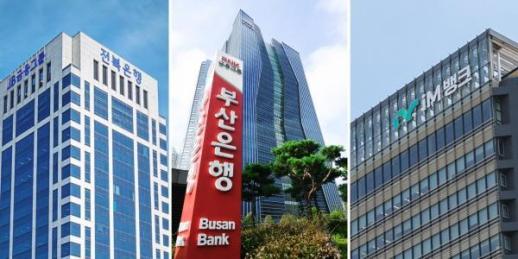 Regional Korean Banks Post Higher Profit as Delinquency Rates Surge Regional financial holding companies posted improved first-quarter results, but warning signs are flashing on asset quality as delinquency rates climbed to as much as four times the level at major commercial banks. According to the financial industry on April 29, BNK Financial Group is expected to report first-quarter net profit of 224.6 billion won, up 30.7% from a year earlier. JB Financial Group posted 166.1 billion won, up 2.1%, and iM Financial Group reported 154.5 billion won, up 0.1%. All three improved results on the back of noninterest businesses, but they are also facing rising delinquencies. JB Financial’s first-quarter delinquency rate rose to 1.63%, up 0.50 percentage points from the end of last year. iM Financial’s rate also increased to 0.86%. By bank, Jeonbuk Bank’s delinquency rate reached 1.65% and Gwangju Bank’s rose to 1.27%. BNK Financial has also been on an upward trend, posting a 1.14% delinquency rate in the fourth quarter of last year. That compares with an average 0.40% for five major commercial banks — KB Kookmin, Shinhan, Hana, Woori and NH NongHyup — meaning regional groups are running as high as four times that level. The strain is building in both household and corporate lending. At Jeonbuk Bank, the household-loan delinquency rate rose to 1.74%, while corporate-loan delinquencies jumped to 1.67%. Gwangju Bank’s corporate-loan delinquency rate climbed to 1.27%. Analysts link the trend to structural features of regional banks. Their small- and midsize-business lending accounts for about half of total loans, and their operations are concentrated outside the Seoul metropolitan area, making them more sensitive to local economic conditions. With weakness in real estate project financing and a manufacturing slowdown overlapping, the recovery in regional economies has been delayed, feeding into higher delinquencies. Rather than a new risk, the rise in delinquencies is being seen as a clearer expression of existing vulnerabilities during a regional slowdown. Delinquency rates have topped 1% across major industries including real estate and leasing, manufacturing and construction, with some sectors exceeding 2%. Financial industry officials expect conditions could worsen in the near term. If the slowdown persists and regional recoveries lag, delinquency rates may continue to rise. “Rising delinquency rates are unavoidable for the time being,” a financial industry official said. “There is a need to increase provisions to prepare for additional bad loans.”* This article has been translated by AI. 2026-04-29 15:56:12
 -
 South Korea to Revamp Fintech Support, Add Incentives and One-Stop Help Desk The Financial Services Commission said it will overhaul its fintech support programs, naming the sector a key growth priority as the financial industry undergoes major change. The FSC said it held an event titled “Fintech, a Place for Connection” on Tuesday, chaired by FSC Chairman Lee Eok-won. The gathering brought together fintech firms and aspiring founders, financial companies, investors and policy finance institutions to share examples of successful cooperation. “Over the past decade, fintech companies have brought innovation to our financial industry,” Lee said. He added that advances in artificial intelligence are not only accelerating change but also “fundamentally reshaping how finance works,” putting the industry at another turning point. To spur growth, the FSC said it will revamp its support projects and designate regional and youth entrepreneurship, along with AI transformation (AX), as priority areas. It plans to offer incentives such as extra points in selecting recipients, dedicated budget allocations and additional support for companies with strong results. The FSC also said it will form public-private consultative groups by region, centered on existing local financial infrastructure such as financial firms, local governments and startup support organizations. The goal is to develop fintech models linked to key local industries and to back the launch and growth of differentiated fintech startups. In addition, the FSC said it will set up a fintech support help desk. It is expected to connect FSC programs, partner searches through financial firms’ fintech labs, funding support from policy finance institutions and startup assistance offered by local governments. “Innovation often begins by connecting different ideas and people,” Lee said, pledging continued support so financial companies and investors can help sustain fintech firms’ ongoing challenges. * This article has been translated by AI. 2026-04-29 09:56:19
 -
 Corporate Credit Downgrades Accelerate, Testing Banks’ Bad-Loan Risk Banks have begun regular corporate credit-rating reviews as Middle East-driven geopolitical risks and tougher U.S. tariff barriers add downward pressure on manufacturers’ credit profiles. Corporate delinquencies have jumped nearly fourfold in just three months, but banks, constrained by regulators’ “productive finance” policy stance, have been reluctant to raise rates or pull credit from borrowers facing downgrades. According to the financial industry on Monday, major banks started this month’s periodic reviews using companies’ 2025 year-end financial statements. The reviews cover all firms with lending relationships at each bank. Ratings are determined by factors including sales, operating profit, cash holdings, interest coverage and technology capabilities. Because the results influence future loan limits and interest rates, the process is a core task for banks’ corporate-finance units. This year’s reviews are expected to be stricter than usual, as volatility in raw-material prices tied to Middle East risks and stronger U.S. protectionism hit export-dependent manufacturers at the same time. Signs of weakening credit are already emerging across major industries. In steel, global rating agency S&P cut POSCO’s rating to BBB+ from A-. Korea Ratings lowered LG Chem’s outlook this month to negative from stable. NICE Investors Service assigned EcoPro an A- rating on its senior unsecured bonds, below its previous A level. In solar, Hanwha Solutions is under downgrade pressure with net debt of about 12 trillion won. In construction, Daewoo Engineering & Construction and others facing reduced housing move-in volumes received negative outlooks. The problem, bankers say, is that downgrades are not translating into higher financing costs as they typically would. Normally, weaker ratings lead to higher interest rates or reduced lending. But with authorities emphasizing “productive finance” to cushion the economy, banks are being pushed to maintain or extend loans even as they recognize rising credit risk. That dynamic is weighing on bank soundness. If banks cannot fully price the added risk, they struggle to secure returns commensurate with exposure. As delinquencies rise, some warn that potential bad loans could accumulate without being immediately reflected on balance sheets. Delinquency indicators are climbing quickly. At the five largest banks — KB, Shinhan, Hana, Woori and NH NongHyup — the delinquency rate for large corporations rose to 0.13% in the first quarter from 0.03% at the end of last year. The rate for small and midsize companies increased to 0.57% from 0.49%. Real estate delinquencies hit the highest levels across major banks, and the delinquency rate for sole proprietors also reached a record high of 0.56%. The outlook remains uncertain. If the recovery is delayed, some expect “delayed restructuring,” with problems at companies reliant on support surfacing later. If policy constraints ease, others warn that rate hikes and credit tightening could come at once, sharply increasing corporate burdens. A financial industry official said, “This year we have no choice but to be conservative in assigning ratings, but in reality more companies are getting their loans extended,” adding, “The gap between policy and market logic is widening.”* This article has been translated by AI. 2026-04-28 17:03:28
 -
 Bitcoin Slips to $77,064 as U.S.-Iran Talks Stall U.S.-Iran negotiations have stalled, pushing bitcoin lower. Bitcoin was trading at $77,064 as of 8 a.m. on the 28th, down 1.66% from the previous day, according to CoinMarketCap. The price briefly topped $79,000 intraday on the 27th, nearing $80,000, before turning lower. The decline followed the breakdown of face-to-face talks between the United States and Iran, with the two sides unable to find common ground. Iran proposed discussing the nuclear issue after a pause in the war and the reopening of the Strait of Hormuz under Pakistani mediation. The White House has maintained a cautious stance, saying it is reviewing the matter internally. President Trump has repeatedly said he would not allow Iran to possess nuclear weapons, prompting assessments that Washington is unlikely to accept Iran’s proposal. Major altcoins also fell. Ethereum slipped 0.04% to $1, Solana dropped 2.58% to $85, and XRP fell 2.22% to $1.39. In South Korea, bitcoin on the won-based exchange Bithumb was down 0.7% from the previous day at 114.93 million won (about $78,047) at the same time. The so-called “kimchi premium,” in which domestic prices trade above overseas levels, stood at 1.26%. 2026-04-28 08:30:18
 -
 Lee Jae-myung Vows Tough Punishment for Syringe Hoarding as U.S.-Iran Talks Eyed Lee Jae-myung: Syringe hoarding is antisocial; violators will be punished President Lee Jae-myung said he would deal sternly with companies accused of stockpiling syringes after a special crackdown by health authorities found widespread violations. In a post Friday on X, formerly Twitter, Lee said he had instructed the Cabinet to keep up enforcement and to take all possible follow-up steps, including swift investigations, strict punishment and maximum administrative penalties, for confirmed violations. He said making money by exploiting a community crisis is an “antisocial” act that will be “severely punished.” Earlier, the Ministry of Food and Drug Safety said a special nationwide inspection of syringe sellers, aimed at stabilizing distribution, found 32 distributors violated a government notice banning syringe hoarding. U.S. delegation may head to Pakistan for talks; Iran issues denial As Washington and Tehran send mixed signals on whether to resume peace negotiations, there is speculation the two sides could meet as soon as this weekend in Pakistan. Yonhap reported that The New York Times, citing two senior Iranian officials, said Iranian Foreign Minister Abbas Araghchi is expected to meet U.S. Middle East envoy Steve Witkoff and President Donald Trump’s eldest son-in-law, Jared Kushner, in Pakistan this weekend. The officials said Araghchi headed to Islamabad carrying a written response to a U.S. peace proposal. They said Iran has publicly maintained it would not hold talks until the U.S. blockade of Hormuz is lifted, but has privately explored ways to restart negotiations through mediators including Pakistan. Araghchi arrived in Islamabad on April 25 local time. Lee Jin-sook drops out of Daegu mayor’s race, pledges support for party nominee Lee Jin-sook, the former chair of the Korea Communications Commission who was cut from the People Power Party’s primary for Daegu mayor, said Friday she will not run in the June 3 local election. With Rep. Joo Ho-young also having declared he will not run, the party’s internal turmoil over the Daegu race appeared to ease. Yonhap reported Lee told a news conference at the party’s Daegu office that she was stepping down as a preliminary candidate. She said that once the party selects its nominee on Saturday, she will help that candidate defeat the Democratic Party contender and “protect Daegu from the reckless Democratic Party administration.” While calling the party’s decision to cut her unfair, she said she would not run as an independent. Trump administration allows firing squad and other methods for federal executions The Trump administration said it will allow the firing squad as a method of execution for federal death sentences. Yonhap and Reuters reported Friday that the Justice Department said in a recent report it would add the firing squad, the electric chair and gas asphyxiation as alternative methods, citing difficulties obtaining lethal injection drugs. Lethal injection remains the most common method of execution in the United States, but the department said it plans to broaden the options. The department also said it would restore procedures for using pentobarbital, the drug adopted for executions during the first Trump administration. * This article has been translated by AI. 2026-04-25 21:42:18
 -
 Iran Foreign Minister Delivers Tehran’s Ceasefire Terms to Pakistan Iranian Foreign Minister Abbas Araghchi delivered Tehran’s position on ending the war to Pakistani officials, according to reports. Yonhap reported that after arriving in Islamabad on the 25th, Araghchi met with Pakistan’s army chief, Asim Munir, and conveyed Iran’s perspective and considerations on a ceasefire. Munir is seen as a key figure mediating U.S.-Iran talks. The two sides were reported to have discussed the latest developments related to a ceasefire and ways to cooperate to strengthen peace and stability in West Asia. Reuters also reported that Araghchi told Pakistani officials of Iran’s reserved stance toward U.S. demands and outlined Iran’s negotiating requirements. Iran’s Foreign Ministry said Munir thanked Araghchi for Iran’s trust in Pakistan as a neighboring country and said Pakistan would willingly continue its mediation efforts until results are achieved.* This article has been translated by AI. 2026-04-25 21:39:15
 -
 Iran Foreign Minister Meets Pakistan Army Chief as Truce With U.S. Holds Iran’s foreign minister, whose country is in a temporary truce with the United States, met with a key Pakistani figure in Islamabad, Pakistan’s role as a mediator drew renewed attention. Yonhap reported on the 25th that Iranian Foreign Minister Abbas Araghchi met with Pakistan’s Army Chief Gen. Asim Munir in the Pakistani capital. Munir has been involved in U.S.-Iran talks aimed at ending the war and is described as a central figure in Pakistan’s government. Details of the meeting were not disclosed, but observers said Iran and mediator Pakistan likely discussed a second round of talks on ending the war. The New York Times, citing two senior Iranian officials, reported that Araghchi would meet in Pakistan with U.S. Middle East envoy Steve Witkoff and Jared Kushner, President Donald Trump’s eldest son-in-law, to keep negotiations going. The United States and Iran previously held a first round of talks in Islamabad on April 11-12, but they collapsed. A second round expected on April 21 also did not take place.* This article has been translated by AI. 2026-04-25 20:45:14