

Journalist

Kwon Ga-rim
hidden@ajunews.com
-
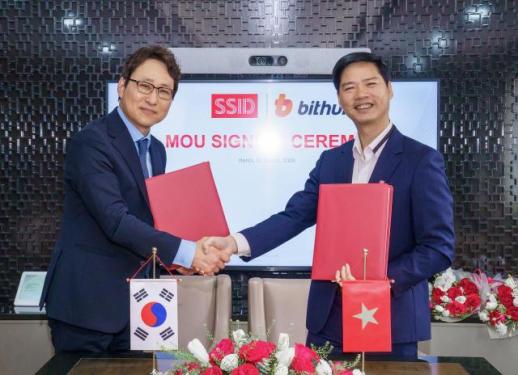 Bithumb Signs MOU With Vietnam’s SSID to Pursue Crypto Exchange Venture Bithumb is expanding cooperation with overseas financial firms as it builds a base for global business. Bithumb said May 7 it signed a broad memorandum of understanding with SSID, a subsidiary of SSI Securities, Vietnam’s largest securities firm, to pursue a virtual-asset exchange business. Attendees at the signing included Bithumb CEO Lee Jae-won, SSID CEO Nguyen Khac Hai and SSI Securities Chairman Nguyen Duy Hung, the company said. The MOU aims to build a strategic partnership to establish and operate an exchange in Vietnam. Subject to regulatory approval for virtual assets in Vietnam, the agreement also leaves open the possibility of a strategic equity investment by Bithumb in an SSID-designated entity. The companies plan to cooperate on technology architecture and development, wallet and custody systems, security and risk management, regulatory support and knowledge transfer, business and product development, and institutional business. Vietnam’s government last month put into effect a resolution allowing coin trading and the establishment of exchanges through a virtual-asset pilot program to be implemented over the next five years. The pilot limits foreign investor ownership stakes, making joint ventures with local financial firms and IT companies important for domestic exchanges. A Bithumb official said cooperation with SSI Securities and SSID reflects international recognition of Bithumb’s exchange operations and transparency. The official said Bithumb will prioritize strict compliance with Vietnam’s regulatory environment and work with its partners to build safe virtual-asset trading infrastructure.* This article has been translated by AI. 2026-05-07 09:41:28
 -
 KB Kookmin Bank Expands Support for Youth Leaving Care Through KB Dream Home Program KB Kookmin Bank is expanding inclusive-finance efforts, including support for youth preparing to live independently after leaving care. The bank said May 7 it has selected sites for its KB Dream Home program, which supports these young people. KB Dream Home is a corporate social responsibility initiative that offers capacity-building programs such as job counseling and help obtaining professional certificates. The goal is to help participants build a foundation for independence while living in a more comfortable housing environment. The program is part of KB Financial Group’s “KB National Happiness Hope Project.” The bank said it completed renovation work last year at independent-living facilities in five regional areas, starting with South Chungcheong Province and including Gwangju, Mokpo, Daejeon and Jeonju. This year, the bank plans to continue support for facilities nationwide. One facility in Seoul and four in regional areas — including Wonju in Gangwon Province and Cheongju in North Chungcheong Province — were selected for upgrades. The bank said it will carry out tailored remodeling based on on-site inspections. The bank has also continued other youth-support programs. Last month, it said it would support 200 young people for one year with independence assistance funds, along with career exploration, certificate training and job consulting throughout the employment process. A bank official said the KB Dream Home program is intended to provide “a solid foundation” for young people beginning independent lives, adding that the bank will continue to expand inclusive-finance support so that “all people, including youth,” can be happier.* This article has been translated by AI. 2026-05-07 09:13:05
 -
 KOSPI Closes Above 7,300 as Chip Stocks Lead Rally; Government, Elections and Fund Updates Semiconductor exports jump 139% while non-chip exports rise 11% South Korea posted its largest-ever first-quarter exports, helped by an artificial intelligence boom and a recovery in the semiconductor cycle. But the surge also deepened concerns about overreliance on a narrow set of items, especially memory chips, raising questions about the stability of the export structure. The Ministry of Trade, Industry and Energy said Tuesday that first-quarter exports rose 37.8% from a year earlier to $219.9 billion, the highest for the period. The ministry cited expanded investment in AI servers and strong semiconductor conditions as factors boosting competitiveness. The concentration risk remains, officials said. First-quarter semiconductor exports rose 139% from a year earlier to $78.5 billion.* This article has been translated by AI. 2026-05-06 21:54:20
 -
 CMA CGM Ship Hit While Transiting Strait of Hormuz; Iran Suspected France’s CMA CGM, the world’s third-largest shipping company, said one of its vessels was attacked while transiting the Strait of Hormuz. According to Yonhap News Agency and Reuters, CMA CGM said in a statement Tuesday that its ship San Antonio was hit, injuring crew members and damaging the vessel. The company said the injured crew were evacuated and are receiving medical care. “We are closely monitoring the situation and are doing everything possible in response alongside our crew,” CMA CGM said. The attacker was not identified, but the ship was reported to have come under an Iranian missile strike. A day earlier, the naval command of Iran’s Revolutionary Guard warned on X that any vessel seeking to pass through the Strait of Hormuz must use routes designated by Iran, and said those that do not would face a military response. Separately, at about 8:40 p.m. on May 4 (Korea time), a fire broke out after an explosion on the port side of the engine room of the HMM Namu while it was anchored north of Sharjah in the United Arab Emirates, inside the Strait of Hormuz. * This article has been translated by AI. 2026-05-06 21:51:15
 -
 Lee Calls for Accountability in Review of Illegal Stream and Valley Facilities President Lee Jae-myung said a joint safety inspection by relevant agencies to verify follow-through on a renewed review of illegal occupation facilities along streams and valleys must be conducted thoroughly, warning that any omissions after repeated crackdowns would be a serious problem. Lee made the remarks Tuesday on X, formerly Twitter, while sharing a related post by the Ministry of the Interior and Safety. "We must conduct a thorough inspection and completely restore public trust in the officials in charge," Lee wrote. "If they failed to properly detect and crack down even after being given two chances, then as previously warned, we must strictly hold the responsible public officials accountable for dereliction of duty." Earlier, Lee raised the issue at a Cabinet meeting after Interior and Safety Minister Yoon Ho-jung reported that the number of illegal facilities along streams and valleys exceeded 33,000, calling it "a matter of trust in state administration." Lee said the government must not let the issue slide, warning that people would criticize it as another case of authorities looking the other way. He added that while 880 illegal valley business facilities had been cited when officials were asked to report them, the figure rose to 33,000 once a full effort began. Lee ordered inspectors to focus on which officials allowed the facilities to remain and, if necessary, to have cases investigated for dereliction of duty.* This article has been translated by AI. 2026-05-06 21:09:14
 -
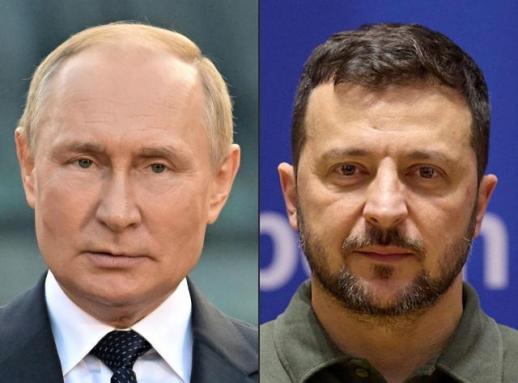 Zelenskyy Vows ‘Same Response’ After Russian Strikes Ahead of Victory Day 러시아의 제2차 세계대전 승리기념일(5월 9일)을 앞두고 러시아와 우크라이나가 공방을 계속 이어가고 있다. 6일 연합뉴스와 AFP통신 등에 따르면 우크라이나 당국은 휴전 발효 시점인 키이우 시간 6일 0시 이후에도 러시아군이 자포리자의 기반 시설을 공격했다고 밝혔다. 이고르 클리멘코 내무부 장관은 이날 공격으로 28명이 사망하고 최소 120명이 다친 것으로 파악됐다고 언급했다. 러시아 국방부는 전술기, 공격용 무인기(드론), 미사일, 포병대 등을 동원해 우크라이나의 고정익 드론 조립공장, 연료 저장소, 우크라이나군 및 외인 용병 주둔지 등을 타격했다고 밝혔다. 앞서 지난 4일 러시아 국방부는 전승절을 맞아 8~9일 휴전하겠다는 계획을 발표했으나, 우크라이나는 러시아가 휴전 발효 이후에도 공격을 이어갔다고 주장했다. 볼로디미르 젤렌스키 우크라이나 대통령은 성명에서 "우크라이나는 러시아가 모스크바 열병식 기간 휴전을 촉구한 것을 고려해 우리도 같은 방식으로 대응할 것임을 분명히 밝힌 바 있다"며 "우리는 러시아가 휴전 체제를 위반했음을 확인하며 군과 정보기관의 저녁 보고를 바탕으로 향후 조치를 결정하겠다"고 말했다.* This article has been translated by AI. 2026-05-06 20:33:16
 -
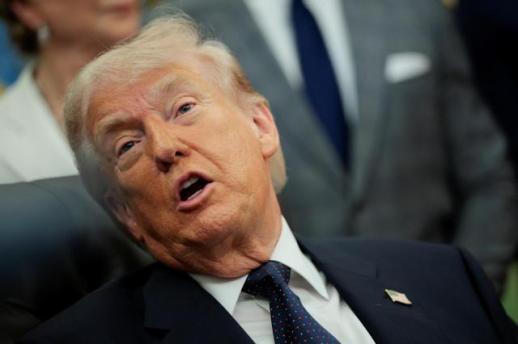 U.S., Iran Near One-Page MOU on Nuclear Enrichment Pause and Steps to End War The United States and Iran are said to be close to a one-page memorandum of understanding outlining positions on the nuclear issue as part of efforts to end the war. According to Yonhap News Agency and U.S. online outlet Axios on the 6th, the draft MOU contains 14 items setting basic principles for ending the war and for detailed nuclear talks. The White House is waiting for Iran’s response on key issues within 48 hours. While a final agreement has not been reached, the two sides are reported to have come to terms since the war began in February. The MOU includes a temporary moratorium on Iran’s nuclear enrichment; U.S. relief from sanctions on Iran and the partial release of frozen funds; a gradual easing of Iran’s restrictions on passage through the Strait of Hormuz; and a gradual easing of the U.S. maritime blockade of Iran. The talks are seen as gaining momentum after President Donald Trump abruptly suspended the “liberation project” in the Strait of Hormuz. Trump said on his social media platform Truth Social on the 5th that he would temporarily halt the project, citing “requests from Pakistan and other countries,” what he called “tremendous military achievements” during operations against Iran, and “big progress” toward a “complete and final agreement” with an Iranian delegation.* This article has been translated by AI. 2026-05-06 19:39:14
 -
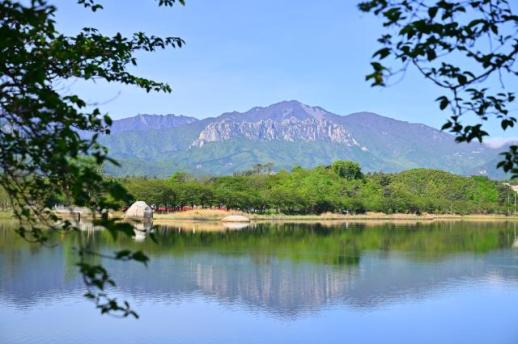 South Korea Forecast: Mostly Cloudy Thursday With Scattered Rain, Big Temperature Swings Thursday the 7th is expected to be mostly cloudy nationwide, with rain developing in scattered areas from the afternoon, mainly in central regions. According to the Korea Meteorological Administration on the 6th, morning lows will range from 9 to 18 degrees Celsius, with daytime highs of 18 to 27 degrees. From afternoon into the night, about 5 millimeters of rain is forecast for the Seoul metropolitan area, inland and mountainous parts of Gangwon, northern South Chungcheong Province and central to northern North Chungcheong Province. From night, parts of the Chungcheong and Jeolla regions and western and northeastern inland and mountainous areas of North Gyeongsang Province may see trace drizzle of less than 0.1 millimeter. Expected rainfall totals are: about 5 millimeters for Seoul, Incheon and Gyeonggi Province; the five West Sea islands; and inland and mountainous Gangwon; and less than 5 millimeters for northern South Chungcheong, the southern South Chungcheong west coast, central to northern North Chungcheong and western North Jeolla. Ulleungdo and Dokdo are forecast to receive less than 5 millimeters between the 7th and 8th. Elsewhere in the Chungcheong and Jeolla regions and along the mid-to-northern Gangwon east coast, some areas may get brief nighttime drizzle of less than 0.1 millimeter. Gusts of around 55 kilometers per hour are also possible, mainly in central regions and the Jeolla area. Fine dust levels are expected to range from “good” to “moderate” nationwide.* This article has been translated by AI. 2026-05-06 18:00:21
 -
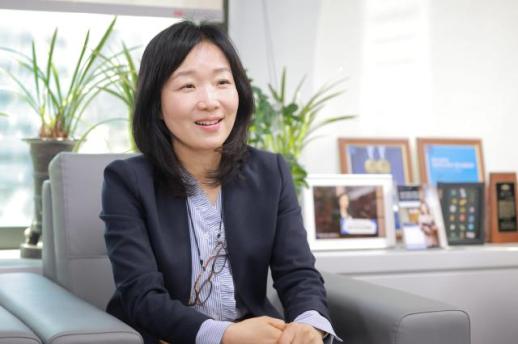 IBK Research Chief Warns Small Firms Face Failures; Calls for More Productive Lending 최근 고환율·고유가 등 대외 여건이 악화되면서 한국 경제의 허리인 중소기업들이 전례 없는 위기에 직면했다. 조달 비용 상승으로 마진은 줄고 이자조차 감당하기 어려운 한계기업이 속출하고 있다. Seo Gyeong-ran, head of the IBK Economic Research Institute, said the biggest challenge facing South Korea is what she called a “downward chain reaction of polarization.” She said global bloc tensions are widening the gap between export industries and domestic-demand industries, deepening differences in companies’ ability to recover and ultimately affecting people’s livelihoods. “Small firms’ survival is the banks’ survival,” Seo said, calling on lenders to balance productive finance and inclusive finance by learning to assess value beyond financial statements. The following is a Q&A with Seo. -최근 대내외 경제 여건이 녹록지 않다. 한국 경제를 짓누르는 가장 큰 부담 요인은 무엇인가. “Rising exchange rates and oil prices,” she said. Companies that import raw materials to process and export face higher procurement costs, squeezing already thin margins. More firms cannot cover interest with operating profit, which can lead to loan delinquencies, she said. Zombie firms with an interest coverage ratio below 1 have increased for three straight years since 2023 and are expected to rise again this year, she said. -기업 가운데 중소기업의 연체율이 급등하고 있다. 원인은 무엇인가. Seo cited three structural problems: shrinking scale, aging and polarization. Large companies are export-oriented, while small and medium-sized enterprises rely on domestic demand, she said, making it hard to build resilience and lowering survival rates. The average lifespan of long-lived companies has recently fallen to 10 years, she said. She also pointed to aging industrial infrastructure and management. Industrial complexes built for small firms in the late 1960s are now 50 to 60 years old, with high vacancy rates and weak productivity, she said. Many CEOs are 60 or older, but succession and business shifts are difficult, and young workers are no longer coming in, she said. As conditions worsen, corporate lending has concentrated in stronger, high-tech sectors, creating a financing divide that contributes to small-firm failures, she said. -올해 중소기업들의 건전성 회복은 어려울까. Small firms’ distress was delayed for about two to three years during the COVID-19 period due to government support, but delinquencies began rising again in 2022, she said. With Middle East war-related risks and tariff policy issues added this year, a prolonged period could increase pressure on soundness and delinquency rates, she said. -이런 상황에도 은행권은 생산적 금융 차원에서 기업 대출을 늘려야 한다. 어떻게 해야 기업에 도움이 되고 은행도 건전성을 지킬 수 있을까. Seo said companies can be grouped into four levels by technology: high, upper-middle, lower-middle and low. Bank funding is concentrated in upper-middle and lower-middle firms because that ecosystem is largest and often has collateral such as real estate and factories, she said. High-level firms include many technology-driven companies, while low-level firms include declining sectors such as textiles and apparel, she said. She said the institute’s role is to identify where funding is concentrated and where it is lacking and to encourage financial support accordingly. She added that the institute is also focusing on research to help banks find ways to support the upper-middle and lower-middle segments while appropriately hedging risk. -정부와 금융권, 중소기업이 어떻게 역할을 분담해야 시너지가 커질까. Seo said productive finance and inclusive finance should be pursued together in corporate lending. Narrowly, inclusive finance supports credit recovery for low-income borrowers, she said, but broadly it can include companies facing temporary difficulties due to credit ratings or the business cycle — including firms that temporarily struggle to pay interest. She said the government should design support systems that reflect these varied situations. The financial sector, she said, should be able to provide funding by assessing nonfinancial factors such as technological capability and CEO competence even when financial ratings are low. Companies also need to present long-term visions, concrete business plans and future directions such as industry shifts, she said. Firms should first seek consulting to raise productivity, with financing attached to build a sustainable structure, she said. -생산적 금융 싱크탱크 역할을 하며 어떤 것을 최우선 과제로 보고 있나. Seo said the Industrial Bank of Korea was founded in 1961 and evolved into a specialized lender for small firms as the need for SME support grew. Its creation itself marked the start of inclusive finance, she said. SMEs that were once the target of inclusive finance have grown into key players in productive finance, while some still need inclusion, she said. Finding the right balance between productive and inclusive finance is IBK’s core task, she said. -기업은행만의 차별화된 지원책은. Seo said IBK operates the largest corporate consulting center, providing free management diagnostics and connecting companies to policy funds. Based on the belief that small firms’ fortunes are tied to the bank’s, IBK is investing in nonfinancial services, she said. She added that IBK carries a heavy responsibility because it is, in her words, unique worldwide as a listed company dedicated to SME finance that reinvests its profits back into small firms. -올해 경제성장률은 어떻게 전망하나. Seo said the International Monetary Fund’s estimate for South Korea’s economic growth this year is 1.9%, below the global average of 3.1%. Many research institutions are warning of downside risks, she said. The institute analyzed five industries closely tied to energy supply chains — coal and petroleum products, electricity, chemical products, nonmetallic minerals, and transportation and warehousing — and found their sales all fell from a year earlier and by more than the overall industry average, she said. She said restoring potential growth should start with raising productivity and innovation capacity across the broader corporate ecosystem, rather than relying on the performance of a few strong companies. -앞으로 한국 경제가 집중해야 할 과제는. Seo said South Korea is already an advanced economy by GDP size and trade volume, but still has unresolved issues in business efficiency, including labor-related challenges. The most urgent issue is demographics, she said. The working-age population began declining in 2020, and low birthrates are constricting the supply of human capital, she said. She called for considering measures such as expanding women’s participation in the workforce, adopting flexible work systems and using foreign labor.* This article has been translated by AI. 2026-05-06 17:07:28
 -
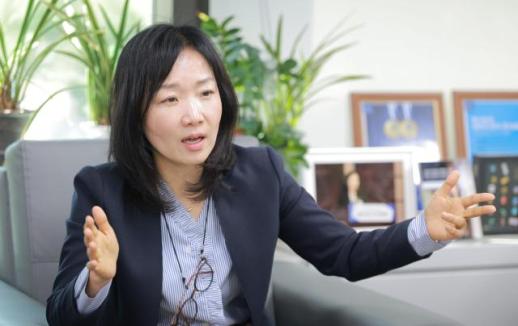 IBK Economic Research Chief: AI-Driven Industry Shift Could Be Turning Point for SMEs Seo Gyeong-ran, head of the IBK Economic Research Institute, is known as a specialist with experience across finance and industry. Building on that background, she is pushing research beyond economic analysis to examine the role of policy finance and link it to the bank’s growth strategy. Seo earned a doctorate in business administration from the University of Seoul and began her career as a researcher at the Korea Development Institute, or KDI. For more than 20 years, she has analyzed financing for small and midsize enterprises and the broader business environment, offering policy recommendations to government and the financial sector. Last year, she also worked as an expert member of the current administration’s state affairs planning committee, gaining firsthand policy experience. She is now deeply involved in setting policy direction and mid- to long-term strategy at IBK, a policy lender specializing in SMEs. Her top research focus recently has been the sweeping changes artificial intelligence is bringing to finance. With global economic uncertainty persisting and AI-driven industrial restructuring accelerating, she said the moment could be a major turning point for both the South Korean economy and its SMEs. Seo said AI should be viewed not merely as a workplace tool but as a foundation for expanding finance’s role. She argued AI can create new industries while also being integrated into manufacturing, reshaping it. Korea’s shipbuilding, auto and steel sectors, she said, should not decline in the face of AI but instead build new competitiveness by adopting it — a shift she sees as essential to sustaining the country’s potential growth rate. She expects finance to expand toward supporting corporate decision-making as AI adoption spreads. Using AI-based evaluation systems, lenders could more precisely assess growth potential and risks based on sales trends and productivity data, then design and supply tailored financial products. More customized consulting that reflects a company’s specific situation would also become possible. Seo said the success of the AI transition will hinge on data. “We are focusing on building a system that selects useful information from the vast amount of continuously generated data and links it organically,” she said. She added that “beyond simple adoption, developing business models that can generate profitability is essential,” underscoring IBK’s deliberations over its artificial intelligence transformation, or AX, roadmap.* This article has been translated by AI. 2026-05-06 17:06:08