

Journalist

Jinkyu, Myung
hisunny20@ajunews.com
-
 Anthropic to open office in southern Seoul as it expands Asia presence SEOUL, May 12 (AJP) - American artificial intelligence (AI) company Anthropic is expected to open its office in South Korea in the first half of this year. According to industry watchers, the developer of the AI assistant Claude reportedly met with South Korean government officials recently to discuss its plans. The development comes after Anthropic earlier told foreign media outlets including Reuters that it planned to open an office in southern Seoul. In July last year, the San Francisco-based company established a local entity under the name of "Anthropic LLC," laying the groundwork for its entry into the South Korean market, and listed several Seoul-based job postings on its website. Anthropic earlier opened an office in India in February this year, after establishing its presence in Japan in October last year. 2026-05-12 16:07:17
 -
 Samsung SDS Consortium Selected as Private Partner for National AI Computing Center The Ministry of Science and ICT announced on May 11 that the Samsung SDS Consortium has been selected as the private partner for the establishment of the National Artificial Intelligence (AI) Computing Center. The ministry plans to invest a total of 2.5 trillion won (approximately $2 billion) through a public-private partnership special purpose company (SPC) to build a national AI infrastructure capable of supporting 15,000 advanced AI semiconductors by 2028. The consortium includes Samsung SDS, Naver Cloud, Samsung C&T, Kakao, Samsung Electronics, KT, Clush, Jeollanam-do, and the Southwest Coast Enterprise City Development. The government conducted a public bidding process from September to October last year, with the Samsung SDS Consortium being the sole bidder. After undergoing technical and policy evaluations and financial reviews, the consortium was selected as the preferred negotiation partner in March. The funding procedures have also been finalized. Last month, the National Growth Fund's investment committee approved the SPC's funding for the National AI Computing Center project, confirming an initial investment of 400 billion won, which includes 116 billion won from public sources and 284 billion won from private sources. On the same day, the ministry signed an agreement for the project plan and a shareholder agreement for the establishment and operation of the SPC. The government and the consortium plan to establish the SPC in the second quarter of this year and begin construction of the center in the third quarter. Additional funding will be secured to gradually build the AI computing center, reaching a total investment of 2.5 trillion won. The National AI Computing Center aims to provide high-performance AI computing resources to domestic companies and research institutions at competitive prices. The center will particularly support small and medium-sized enterprises, startups, and academia by offering discounts and usage rights to reduce the financial burden of AI development. It will also provide technical consulting, commercialization support, and educational programs to bolster the domestic AI ecosystem. Fostering a domestic AI semiconductor ecosystem is also a key objective. The government plans to create an R&D zone within the center to provide an environment for designing and validating domestic AI semiconductors, as well as supporting the demonstration and reliability verification of near-commercial neural processing units (NPUs). Subsequently, verified domestic AI semiconductors will be applied in real service environments through a separate NPU zone to support the formation of an initial market. Minister of Science and ICT Lee Baek-hoon expressed hope that the National AI Computing Center will serve as a representative example of public-private joint investment, stimulating domestic AI infrastructure investment. He emphasized the government's commitment to actively support South Korea's growth as an AI infrastructure hub in Asia. The establishment of the National AI Computing Center faced challenges, having been unsuccessful in two previous bidding rounds. The first round, held from January 23 to May 30 last year, was canceled due to a lack of bidders by the deadline. A second round from June 2 to June 13 of the same year also failed to attract any participating companies.* This article has been translated by AI. 2026-05-12 03:46:27
 -
 Korean AI Safety Institute Partners with Anthropic on AI Security Initiative The Korea Artificial Intelligence Safety Institute (AISI) is emerging as a global partner for AI safety and security with the American AI company Anthropic. The Ministry of Science and ICT has proposed establishing a security cooperation framework centered on AISI, suggesting that South Korea's AI safety policies and cybersecurity responses may soon align with global AI safety governance. According to the Ministry of Science and ICT on May 11, the government has suggested a plan to build an AI safety and cybersecurity cooperation system centered on AISI to Anthropic. AISI, which was launched in November 2024 as an organization under the Korea Electronics and Telecommunications Research Institute (ETRI), is South Korea's sixth dedicated AI safety agency established after the AI Seoul Summit held in May of the same year. It is responsible for AI risk assessment, policy research, and building global cooperation systems, and is currently working towards gradual independence from ETRI. This proposal is gaining attention as it aligns with Anthropic's global security partnership initiative, Project Glasswing. Project Glasswing is a collaborative security initiative in the industry that uses AI to detect and patch software security vulnerabilities worldwide. Led by Anthropic, the initiative reportedly includes participation from major global tech companies such as Amazon Web Services (AWS), Google, Microsoft, Apple, and NVIDIA. Among foreign public institutions, the UK AI Safety Institute is the only one involved. Additionally, companies in security, infrastructure, and finance, including Cisco, CrowdStrike, Broadcom, Palo Alto Networks, Cloudflare, and JPMorgan Chase, are also listed as partners. At the core of the project is Anthropic's proprietary AI model, Claude Mythos. Anthropic has stated that this model outperforms most humans, except for top security experts, in vulnerability detection. Mythos has reportedly identified vulnerabilities in OpenBSD that had gone undetected for 27 years and in the open-source video processing software FFmpeg that had persisted for 16 years. Notably, the FFmpeg vulnerability was not discovered despite over 5 million automated security tests. Experts believe that South Korea's participation in Project Glasswing could enhance its integration into the global AI security cooperation framework, thereby accelerating its response to vulnerabilities. Eom Heung-yeol, a professor in the Department of Information Security at Soonchunhyang University, stated, "The key to AI-based security is ultimately a race against time in detecting and patching vulnerabilities. By participating in Glasswing, we can receive advance information on vulnerabilities and patches from global tech giants, significantly shortening our domestic response time." He added, "Given the likelihood that North Korea and others will develop AI-based security and attack models, the nation that discovers vulnerabilities first and establishes a defense system will gain an advantage. It is crucial to reduce the current vulnerability sharing and patch response time from months to a matter of days or weeks."* This article has been translated by AI. 2026-05-11 16:33:23
 -
 South Korea Proposes AI Safety and Cybersecurity Collaboration with Anthropic The South Korean government has proposed a collaboration with the American AI company Anthropic, focusing on AI safety and cybersecurity through the AI Safety Research Institute (AISI). According to the Ministry of Science and ICT, a meeting took place on the morning of May 11 in the Gwanghwamun conference room in Seoul, attended by Deputy Minister Ryu Je-myung, AISI Director Kim Myung-joo, Korea Internet & Security Agency (KISA) Director Oh Jin-young, and Anthropic's Global Policy Lead Michael Selitto. Representatives from the Ministry of Foreign Affairs, the National Intelligence Service, the Financial Services Commission, and the Financial Security Institute were also present. This meeting was organized as a follow-up to discussions between Deputy Prime Minister and Minister of Science and ICT Bak Hoon and Anthropic CEO Dario Amodei during the '2026 India AI Impact Summit' held in February. At that time, both parties discussed the influence of agent AI, AI safety and security collaboration, and strengthening global leadership. The Ministry proposed establishing a collaboration framework centered on AISI for verifying the safety of AI models and enhancing cybersecurity. They emphasized the need for a system to share information that would allow South Korea to proactively respond to global vulnerabilities and security patches. Both sides agreed to continue practical discussions regarding the cybersecurity applications of AI models. Additionally, discussions were held regarding the domestic AI regulatory environment, including the AI Basic Act and AI safety policy directions. A ministry official stated, "There were discussions on AI safety policies, the direction of the AI Basic Act, and global AI security collaboration systems," adding that Anthropic showed significant interest in the South Korean government's AI policies and regulatory framework. Deputy Minister Ryu remarked, "As the performance and application scope of frontier-level AI models rapidly expand, it is crucial to create an environment where citizens and businesses can safely utilize AI. We will actively collaborate with leading global AI companies to enhance the safety of AI models and cybersecurity capabilities."* This article has been translated by AI. 2026-05-11 15:27:27
 -
 K-AI Integrates into Daily Life with Practical Services Domestic artificial intelligence (AI) companies are accelerating the integration of proprietary AI models into practical services across various sectors, including communication, translation, education, and finance. This shift goes beyond mere technological development, contributing to the establishment of a 'K-AI ecosystem' that citizens can experience firsthand. The Ministry of Science and ICT unveiled K-AI case studies centered around companies participating in the Independent AI Foundation (독파모) on May 11. LG AI Research and LG Uplus have applied the AI model 'EXAONE' to the lifestyle-oriented AI agent 'ixi-O.' ixi-O offers features such as context-based call summaries and real-time detection of potential voice phishing risks. Lee Min-hyung, a senior official at LG Uplus, stated, "ixi-O has evolved beyond simple transcription to understand conversation context and suggest subsequent actions. We aim to contribute to social safety by addressing the increasingly sophisticated methods of voice phishing." Kim Yoo-cheol, head of strategy at LG AI Research, emphasized the significance of EXAONE becoming closer to the daily lives of citizens through ixi-O, stating, "The moment technology seamlessly integrates into people's lives is when the most refined AI emerges." Upstage and Flitto have implemented their proprietary AI model 'Solar Open' in real-time AI translation services. The two companies plan to enhance translation quality and processing speed while expanding real-world applications of domestic AI technology. SK Telecom (SKT) is targeting the future mobility market with its vehicle AI agent 'A.X Auto,' based on its proprietary AI model 'A.X.' A.X Auto supports voice-only navigation, music playback, vehicle control, and information searches. SKT intends to broaden the application of AI agents across various industries in the future. Motif Technologies and Mathpresso are working to apply their proprietary AI model to the math learning service 'QANDA.' The focus is on supporting self-directed learning by analyzing and explaining students' problem-solving processes step by step. Lee Sung-min, head of the AI group at Motif Technologies, explained, "We are focused on implementing human thought processes rather than just simple calculations, and we expect it to serve as an AI learning mentor that fosters students' critical thinking skills." Naver Cloud has supplied the Bank of Korea with a finance and economics-specialized generative AI platform called 'BOKI (Bank of Korea Intelligence).' This platform supports data retrieval, summarization, Q&A, and economic issue analysis, marking it as the first instance of a generative AI platform being implemented among central banks worldwide. The Ministry of Science and ICT plans to conduct a second-stage evaluation of the Independent AI Foundation in August, focusing on global benchmark performance and enhancing the scoring for technological independence. 2026-05-11 10:48:20
 -
 Concerns Rise in MVNO Sector Ahead of LTE and 5G Unified Pricing Plans As the Ministry of Science and ICT prepares to introduce a unified pricing plan for Long-Term Evolution (LTE) and 5G next month, concerns are mounting within the mobile virtual network operator (MVNO) sector. There are fears that if the new pricing structure, which includes 5G data and a Data Assurance Option (QoS) at LTE price levels, is implemented, it could weaken the competitive edge of the LTE-focused MVNO market. According to industry sources, the three major telecom companies—SK Telecom, KT, and LG Uplus—are in the final stages of discussions to launch the LTE and 5G unified pricing plan. Currently, the telecom market is experiencing a decline in LTE subscribers while 5G subscribers are on the rise. The Ministry of Science and ICT reported in April that as of the end of February 2026, there were 18.35 million LTE subscribers and 38.75 million 5G subscribers. Compared to six months ago, the number of LTE subscribers has decreased by approximately 970,000, while 5G subscribers have increased by about 1 million. On a monthly average, this translates to a reduction of around 160,000 LTE subscribers and an increase of approximately 165,000 5G subscribers. However, the MVNO market remains predominantly LTE-focused. As of February this year, there were 9.7 million LTE subscribers among MVNOs, while the number of 5G subscribers was only 551,593, accounting for about 5% of the total MVNO subscriber base. MVNOs are concerned that the implementation of the unified pricing plan could further disrupt this market structure. While the existing low-cost LTE plans have provided a competitive advantage for MVNOs, the introduction of pricing plans that include 5G data and QoS at LTE price points could diminish this price differentiation. The growth of the MVNO market is also showing signs of slowing down. According to the Korea Telecommunications Operators Association (KTOA), the number of MVNO subscribers decreased by 7,353 last month. The number of subscribers switching from the three major telecom companies to MVNOs has also declined. The number of subscribers moving from SK Telecom to MVNOs fell by 21.5% compared to the previous month, while KT and LG Uplus saw decreases of 20.6% and 18.8%, respectively. Analysts suggest that the expansion of mid-range 5G pricing plans from the major telecom companies is weakening the competitive position of LTE-focused MVNOs. In particular, the Data Assurance Option (QoS), which is a key feature of the unified pricing plan, could further reduce the price and service differentiation between MVNOs and major telecom companies. If all data is exhausted under any plan, users will still have access to additional data at a speed of 400 kbps, which could undermine the competitiveness of existing low-cost MVNO plans. An industry insider stated, "The mid-range pricing market has traditionally been an area where MVNOs have shown their competitiveness, but the government's push for pricing reforms centered around major telecom companies is rapidly eroding market boundaries. In the long term, there is a possibility that the MVNO ecosystem itself could be weakened."* This article has been translated by AI. 2026-05-11 08:09:21
 -
 KT fined for failing to properly inform customers over phone pre-orders SEOUL, May 8 (AJP) - Telecom provider KT was fined 640 million won (about US$460,000) for failing to properly inform customers about available benefits and subscription-related terms when accepting pre-orders for Samsung's handsets in January last year, the Korea Media and Communications Commission said on Friday. After a meeting at the government complex in Gwacheon in Gyeonggi Province, the communications watchdog decided to impose the fine along with corrective orders, citing damage to customers' rights and harm to their interests. The punitive measures came more than a year after the commission launched its investigation in February last year. It found that KT had misled customers by telling them benefits were available to all when accepting pre-orders for Samsung's flagship Galaxy S25, although they were limited to the first 1,000 customers. KT blamed the incident on a clerical error by staff. But the commission also found that KT had unilaterally canceled some 7,127 pre-orders placed through certain online platforms for some reason. The commission ordered KT to clearly inform customers of all terms and conditions including pre-order details, and to make the process more transparent. "There were shortcomings in our pre-order process at the time, but all related procedures have since been improved," a KT staffer said. "We will continue to closely monitor for any false or exaggerated ads and promotions to minimize inconvenience for customers using mobile services," the commission's chairman Kim Jong-cheol pledged. 2026-05-08 17:08:14
 -
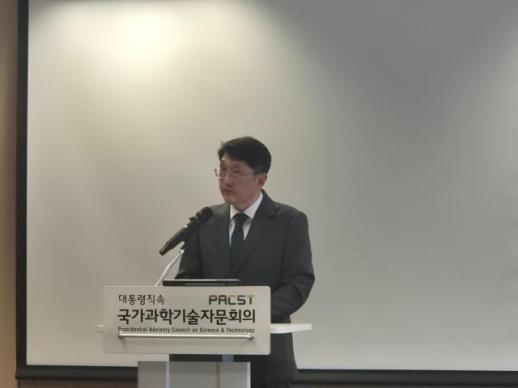 AI Can Identify Vulnerabilities in 10 Minutes, South Korea's Ministry of Science Says The Ministry of Science and ICT is examining the need for developing security-focused AI models to counter evolving AI-based cyber threats. During a briefing on May 8 in Gwanghwamun, Seoul, Choi Woo-hyuk, head of the Cybersecurity Policy Division, stated, "There was a consensus that the current information security system is insufficient to address threats based on AI models. We discussed the necessity of a dedicated AI model specialized in cybersecurity." Earlier that day, the ministry held a meeting with experts from academia and industry to discuss responses to global AI companies' cybersecurity projects. Participants included firms involved in developing independent AI foundation models, such as SK Telecom, Upstage, and Motif Technologies, as well as key AI companies, the president of the Korean Society for Information Security, and chief information security officers (CISOs) from major corporations. The ministry's position is to enhance the performance of currently available security-focused models in the short term while considering the establishment of a security response system based on independent AI models in the medium to long term. Choi noted, "There was a consensus on utilizing independent AI models to create a security-focused AI system. We are not at the stage of finalizing a plan but are in the process of discussing its necessity." He added that a new direction for the information security paradigm will be explained between late May and early June. The meeting also showcased a demonstration of AI-based penetration testing. The ministry and the Korea Internet & Security Agency (KISA) used Anthropic's Opus model to identify vulnerabilities in specific corporate services, leading to account theft and unauthorized access. Choi explained, "There was a case where AI found a way to generate a new password without knowing the existing one. We confirmed the process of AI identifying vulnerabilities and accessing services after securing accounts." According to the ministry and KISA, the test revealed a total of seven vulnerabilities. Notably, AI was able to perform what would typically take professional hackers several days in just about ten minutes. Choi remarked, "AI identified vulnerabilities that would take professional hackers days to find manually in a short time. While it is currently not at a level that general users can easily utilize, the speed of attacks could increase as professional hackers become more adept at using prompts." Meanwhile, on May 11, Deputy Minister Ryu Je-myung is scheduled to meet with representatives from Anthropic to discuss strategies for addressing AI-based cybersecurity threats. Choi stated, "The need for a response related to Mitos has been raised, prompting the government to request cooperation in advance."* This article has been translated by AI. 2026-05-08 16:23:28
 -
 Korea's Broadcasting and Communications Commission Fines KT 640 Million Won Over Galaxy S25 Pre-Order Issues The Broadcasting and Communications Commission (BCC) has imposed a fine of 640 million won on KT for misleading users during the pre-order process of the Galaxy S25 and for restricting some subscriptions. On May 8, during its seventh meeting of 2026 held at the Government Complex in Gwacheon, the BCC announced that it had decided to impose the fine along with a corrective order for violations of the Telecommunications Business Act by KT. The BCC determined that KT infringed on user rights by providing misleading information about additional benefits and subscription conditions during the Galaxy S25 pre-order process. An investigation into the matter has been ongoing since February of last year. The investigation revealed that while conducting a pre-order event for the Galaxy S25 on its official online store, KT.com, the company stated that "benefits could be provided unless otherwise indicated." However, it was found that some benefits were limited to the first 1,000 customers. KT explained that the omission was due to a simple mistake by an employee. KT was also found to have unilaterally canceled contracts for 7,127 users who pre-ordered through the YouTube channel 'Orait Studio' and the Genie TV channel (6,192 from YouTube and 935 from Genie TV). The BCC concluded that KT unjustly restricted subscriptions despite these users having completed the service agreement procedures, including identity verification and payment method input. The BCC identified the following violations under the Telecommunications Business Act: misleading users about important matters such as the limit on the number of pre-orders and restricting subscriptions for users who completed the contract process. The commission also issued a corrective order requiring KT to clearly disclose additional benefits and conditions during the pre-order process for users. A KT representative stated, "There were some deficiencies in the notifications during the operation at that time, and we have improved the related procedures." Kim Jong-cheol, chairman of the BCC, emphasized the need for thorough inspections of misleading or omitted information regarding important matters in mobile service subscriptions, stating, "We will continuously monitor the implementation of this measure to ensure that the public does not face any inconveniences." Meanwhile, Shin Seung-han, the BCC's market research and review officer, explained during a briefing after the commission meeting that KT's violations occurred in February of last year, followed by a review and investigation process that continued until recently, leading to the final corrective action approved by the commission. Regarding the background of KT's unilateral contract cancellations for users who pre-ordered through the YouTube channel Orait Studio and Genie TV, he stated, "KT claimed that they had planned to limit the benefits to the first 1,000 customers, and the omission was due to a simple mistake by staff. However, upon verifying the facts, it was found that the actual number of benefits provided exceeded 1,000." He added, "The BCC confirmed a total of 7,127 cases of unilateral cancellations and made its judgment based on the final confirmed cancellation numbers."* This article has been translated by AI. 2026-05-08 15:49:08
 -
 OpenAI Added to List of Companies Required to Disclose Information Security Practices OpenAI has been newly included in the list of companies required to disclose information security practices due to a surge in domestic users. Platforms such as AliExpress, Musinsa, Tving, and CJ Olive Young, which have rapidly expanded their user bases in South Korea, are also on the list. On May 8, the Ministry of Science and ICT announced the 693 companies that are obligated to disclose their information security practices for 2026. This requirement, established under the Information Protection Industry Promotion Act, aims to encourage corporate investment in information security and enhance user protection by mandating disclosures regarding security investments, dedicated personnel, and related activities. Companies are selected annually based on criteria such as business sector, revenue, and user numbers. This year, the number of obligated companies increased by 27 compared to the previous year, totaling 693. Notably, 13 companies were added based on revenue criteria, and 10 companies met the requirement of having over one million users. The new additions include OpenAI, AliExpress, Musinsa, Tving, and CJ Olive Young. The inclusion of OpenAI is attributed to the rapid increase in domestic users of its generative AI services. According to Mobile Index, the number of ChatGPT users in South Korea surged by 341% from January to December last year, with active devices totaling 19.49 million. ChatGPT was also the most installed app on smartphones in South Korea last year, with 16.57 million installations. Companies required to disclose their information security practices must submit their security status to the comprehensive disclosure portal by June 30. Lim Jeong-kyu, Director of Information Security Network Policy at the Ministry of Science and ICT, stated, "The information security disclosure system is an important framework that allows the public to verify companies' information security status through transparent disclosures. We will continue to promote the right to know for the public and encourage voluntary investments in information security by companies, striving to enhance the overall level of information security in the country." 2026-05-08 12:35:17