
Journalist

Choe In-heok
inhyeok31@ajunews.com
-
 South Korea, Singapore agree to upgrade free trade deal SEOUL, March 2 (AJP) - The leaders of South Korea and Singapore agreed on Monday to begin negotiations to upgrade their free trade agreement, as part of efforts to strengthen cooperation between the two countries. The agreement was reached as South Korean President Lee Jae Myung, who arrived in Singapore the previous day, sat down for talks with Prime Minister Lawrence Wong for the first time in several months since they last met in Seoul in November. In a joint press statement after the summit, the two leaders said both sides discussed upgrading their decades‑long bilateral FTA, which has been in effect since 2006, to "fully reflect evolving trade and economic security environments." The statement highlighted that the two countries had demonstrated resilience by turning limited resources and geopolitical challenges into a foundation for growth, becoming "model middle powers." The two leaders also affirmed that the two countries can serve as "reliable partners" as they navigate "another challenge" in what they described as an era of uncertainty in the early 21st century. They also signed a series of memorandums of understanding to enhance cooperation in the science and technology sectors, including artificial intelligence (AI)-related technologies, intellectual property measures, joint use of environmental satellites, and other areas. Lee said South Korea could also learn from Singapore's housing policies and the integrity of its civil service and also expressed interest in expanding cooperation in future-oriented advanced fields. He also said he would work closely with Singapore to implement the vision of the Comprehensive Strategic Partnership (CSP), established in October 2024 as a regional development initiative, as Singapore prepares to assume the rotating chair of the Association of Southeast Asian Nations (ASEAN) next year. Lee also recalled that Singapore played a key part eight years ago by hosting the historic summit between the U.S. and North Korea in 2018, calling on Singapore to continue supporting peace and stability on the Korean Peninsula through a constructive role. Later in the day, Lee is scheduled to attend a joint business forum with entrepreneurs and business leaders from both countries in AI-related sectors, before heading to his next itinerary in the Philippines on Wednesday. 2026-03-02 16:13:54
 -
 Cheong Wa Dae expresses regret over canceled meeting with DP, PPP leaders SEOUL, February 12 (AJP) - Cheong Wa Dae on Thursday expressed "regret" over the cancellation of a planned luncheon meeting hosted by President Lee Jae Myung with the leaders of the leading parties. "It is very regrettable that the meeting was canceled," said Hong Ik-pyo, senior presidential secretary for political affairs. "It was meant to improve communication and bipartisan cooperation on key state affairs, but the chance to fulfill that purpose was lost." Lee's planned meeting with the ruling Democratic Party (DP)'s leader Jung Chung-rae and the main opposition People Power Party (PPP)'s leader Jang Dong-hyeok was called off earlier in the day after Jang abruptly decided not to attend. Criticizing Lee's proposal for talks as a "mere photo-op" to distract from his wrongdoings, Jang cited a couple of reasons he could not attend. Among them was a DP-led bill to increase the number of Supreme Court justices, which opponents argue would undermine judicial independence by stacking the top court with ideologically like-minded and favorable judges. But Hong said Cheong Wa Dae would continue to seek cooperation and pursue dialogue to improve people's livelihoods. 2026-02-12 15:36:17
 -
 Korean conglomerates vow nearly $200 bn over 5 years for regional growth SEOUL, February 05 (AJP) -South Korea’s major business conglomerates have pledged to invest about 300 trillion won ($186 billion) across non-capital regions over the next five years, responding to President Lee Jae Myung’s call for more inclusive growth and balanced regional development. “As our companies work hard and the economy gradually begins to recover, I hope the fruits of growth will be shared more broadly,” Lee said at a meeting with conglomerate chiefs at Cheong Wa Dae on Tuesday. “Those benefits should spread evenly to small and medium-sized businesses, regional communities and the younger generation.” It was the first dinner hosted for conglomerates by the president. Federation of Korean Industries Chairman Ryu Jin said the nation’s top 10 conglomerates plan to invest 270 trillion won in regional cities and provinces over the next five years. Combined with other corporate investment plans, the total is expected to reach around 300 trillion won. According to the FKI, if fully implemented, the pledged investment could generate up to 525 trillion won in production and 221 trillion won in added value. The move reflects growing concern over widening economic polarization. While large exporters have posted record earnings, many small and medium-sized firms continue to struggle amid weak domestic demand. Government data showed that the manufacturing production index for large companies rose 3.0 percent last year to a record 118.8, while that of small firms fell 3.3 percent to 98.3, the lowest level on record. Advanced industries such as semiconductors and batteries remain concentrated in the Seoul metropolitan area, accelerating youth outflows and deepening regional disparities. “The economy is like an ecosystem,” the president said. “Just as grass, grasshoppers and rabbits are needed for tigers to thrive, smaller firms, regional communities and young people must also prosper.” Major investment projects will focus on semiconductor facilities, battery research and production, carbon-neutral infrastructure and renewable energy. Samsung Electronics has pledged to newly hire 60,000 workers domestically and invest 450 trillion won over five years, including in R&D and facilities. The company plans to expand hiring in semiconductors, biotechnology and artificial intelligence. SK hynix will invest 19 trillion won in an advanced packaging plant in Cheongju, with total employment effects expected to exceed 10,000 jobs. It is also preparing to launch its M15X plant for next-generation memory production. Hyundai Motor Group has announced a 125.2 trillion won domestic investment plan for 2026–2030, including hydrogen infrastructure and electric vehicle facilities in Ulsan and the southwest region. LG Group plans to invest 100 trillion won domestically over five years, with LG Innotek expanding operations in Gwangju and Gumi. POSCO Group will invest about 5 trillion won this year in steel, battery materials and LNG projects, including hydrogen-based steelmaking facilities. Other groups, including Hanwha Aerospace and GS Group, are expanding investments in defense, wind power, LNG and small modular reactors. Lee said the government plans to foster five major regional hubs and three special self-governing provinces, urging companies to align their investment strategies with national development plans. “The government will create new centers of growth in regions and invest intensively,” he said. “I hope companies will move in step with these efforts.” He added that special legislation will be introduced to support renewable energy clusters and energy cities, while giving greater weight to non-capital regions in fiscal allocations. Advances in transportation and digital infrastructure have narrowed the gap between Seoul and regional areas, making regional investment increasingly attractive, Lee said. During the meeting, conglomerates also shared plans to hire a combined 51,600 workers this year, including 12,000 at Samsung and 8,500 at SK, presidential spokesperson Lee Kyu-yeon said. Samsung and SK hynix both posted record operating profits last year, driven by surging demand for artificial intelligence chips. 2026-02-05 08:02:45
 -
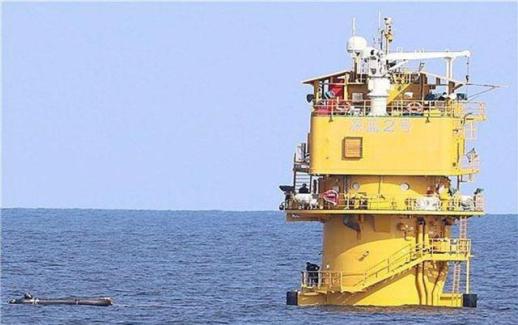 Seoul hails Beijing's move to dismantle dubious structure in West Sea SEOUL, January 28 (AJP) - South Korea on Wednesday welcomed China's decision to remove one of a couple of structures installed along the West Sea, calling it "meaningful progress." In a statement, Cheong Wa Dae said the government "has continued talks with Beijing" over the dubious steel structures on the submerged shelf of Ieodo in the West Sea, which overlaps with maritime zones of both South Korea and China. "While actively protecting our maritime rights, we will continue our efforts to maintain peace in the West Sea for shared prosperity," it added. The decision to remove the structure comes shortly after President Lee Jae Myung held a summit with Chinese President Xi Jinping earlier this month. In a possible step toward improving bilateral relations, Beijing appeared to decide to remove one of three such structures, which resembled an oil-drilling rig and raised concerns here that it could be used for military purposes. 2026-01-28 14:35:41
 -
 Team Korea heads for Canada for final push in $41 bn submarine bid SEOUL, January 26 (AJP) - President Lee Jae Myung’s chief of staff Kang Hoon-sik departed for Canada on Monday as a special envoy for strategic economic cooperation, seeking to support South Korea’s bid to secure Canada’s major submarine procurement project estimated at up to 60 trillion won ($40.9 billion). Kang left Incheon International Airport for Toronto as South Korean shipbuilder Hanwha Ocean competes for Canada’s Canadian Patrol Submarine Project (CPSP), after being shortlisted as one of the final two contenders alongside Germany’s Thyssenkrupp Marine Systems (TKMS). “The bidders for the Canadian submarine project have now been narrowed down to Korea and Germany,” Kang told reporters before departure. “During this visit, we will meet senior Canadian officials to explain the advanced capabilities of Korean submarines and convey the Korean government’s commitment to expanding security and industrial cooperation between the two countries.” Kang is accompanied by Industry Minister Kim Jung-kwan and Defense Acquisition Program Administration (DAPA) Commissioner Lee Yong-chul, along with senior executives from Hanwha Ocean, Hyundai Motor Group and HD Hyundai. The CPSP involves the acquisition of up to 12 conventionally powered submarines of around 3,000 tons, along with long-term maintenance, repair and overhaul services, making it one of the largest submarine procurement programs currently under way. Kang stressed the need for pan-government support for the bid, noting that South Korea faces strong competition from Germany, a global manufacturing powerhouse and a country that previously transferred submarine technologies to South Korea. “Large-scale defense projects of this nature cannot be pursued by individual companies alone,” Kang said. “We will directly deliver the Korean government’s commitment to broadening industrial and security cooperation with Canada.” Following his Canada visit, Kang will travel to Norway to discuss expanding defense cooperation. It will mark his second trip to Norway after an earlier visit in October, when he delivered a personal letter from President Lee. In Norway, Hanwha Aerospace is seeking to secure a major long-range rocket procurement project with its K239 Chunmoo multiple rocket launcher system. Kang said a decision on the Norwegian deal is expected “in the near future.” Kang added that the government is also preparing to expand defense cooperation with Saudi Arabia, the United Arab Emirates, Indonesia and Peru. Kang was appointed as President Lee’s special envoy for strategic economic cooperation in October, as part of the administration’s goal to position South Korea among the world’s top four arms exporters. 2026-01-26 10:58:24
 -
 Lee reaffirms conciliatory stance toward North Korea SEOUL, January 21 (AJP) - President Lee Jae-myung on Wednesday reaffirmed his conciliatory approach toward North Korea to help reduce tensions on the Korean Peninsula. In a televised press conference marking the new year at Cheong Wa Dae in central Seoul, Lee pledged to "move forward without wavering toward a future of peaceful coexistence and shared growth," adding that peace-backed stable growth could enable the economy to "take another leap." He added that he will step up diplomatic efforts to resume inter-Korean talks, with South Korea playing a role as a "pacemaker" to bring North Korea to the dialogue table with the U.S. To prevent "accidental clashes" along the border, Lee added that he plans to restore the inter-Korean military pact signed in 2018 as part of efforts to ease military tensions between the two Koreas. The pact was effectively suspended in 2024 as inter-Korean relations sharply worsened under the previous administration's firm stance toward the North. He also pledged to seek "creative solutions" for mutually beneficial peace and "feasible measures" to ease tensions on the Korean Peninsula, adding that any thaw in inter-Korean relations would take time. Citing North Korea's growing nuclear arsenal, Lee stressed a "pragmatic and gradual approach" to halt the North's nuclear weapons program, with the ultimate goal of denuclearization in the long term. 2026-01-21 11:03:48
 -
 Lee–Takaichi Nara summit strikes light tone with K-pop drums, sidesteps thorny issues SEOUL, January 13 (AJP) -South Korean President Lee Jae Myung and Japanese Prime Minister Sanae Takaichi held a summit Wednesday in Japan’s ancient city of Nara, reaffirming their commitment to what they described as a new 60 years of bilateral relations while striking an unusually light-hearted tone that emphasized cultural rapport over sensitive disputes. After their talks and joint press statements, the Japanese side arranged an unannounced cultural event during a closed-door follow-up meeting. Wearing matching blue uniforms bearing their names and national flags, the two leaders sat side by side at a Pearl drum kit and performed an impromptu duet, playing “Golden” from the Netflix series K-Pop Demon Hunters and BTS’ global hit “Dynamite.” Lee called the moment a personal milestone. “Today I fulfilled a lifelong dream,” he said, according to his office. “Since I was young, I wished to play the drums.” Takaichi, who is known to have played heavy-metal drums in college, guided Lee through the performance and led the session. The two leaders later exchanged drumsticks signed by each of them. Presidential spokesperson Kim Nam-joon said the event was specially prepared by Japan to symbolize trust and rapport between the leaders, turning the informal meeting into a cultural exchange rather than an extension of negotiations. Japan’s reception of Lee also drew attention for its warmth and protocol. Takaichi made an unscheduled appearance to greet Lee in person outside his lodging upon arrival, and Japanese authorities provided top-level security arrangements throughout the visit. The Nara meeting marked the first time in 15 years that a South Korean president has visited a Japanese city outside Tokyo for a bilateral summit. Nara is Takaichi’s hometown and political constituency. During formal talks, which lasted about 90 minutes, the two leaders reaffirmed the importance of bilateral ties and agreed to expand future-oriented cooperation through continued “shuttle diplomacy,” including reciprocal leader-level visits. Lee also emphasized the need for trilateral cooperation among South Korea, Japan and China, as well as continued coordination among Seoul, Washington and Tokyo on regional security and North Korea. Sensitive historical and territorial issues were discussed but not highlighted publicly. Lee described agreements on working-level cooperation — including efforts to identify remains of Korean forced laborers at a wartime coal mine site in Japan — as “small but meaningful progress.” Lee said the two countries, which normalized diplomatic ties in 1965, should build on past reconciliation to shape the next six decades of relations. Takaichi echoed the sentiment, expressing hope that Lee’s visit would further elevate Seoul-Tokyo ties amid growing geopolitical uncertainty. * This article, published by Aju Business Daily, was edited by AJP. 2026-01-13 22:39:39
 -
 Lee arrives in Japan for summit with Japanese PM in her hometown SEOUL, January 13 (AJP) - President Lee Jae Myung arrived in Osaka, Japan for a summit with Japanese Prime Minister Sanae Takaichi, Cheong Wa Dae said on Tuesday. For the summit later in the day, Lee moved further south to the nearby city of Nara, which is Takaichi's hometown and Japan's ancient capital during the early imperial era. Their talks, followed by a welcome reception and dinner, mark their second summit, after the two met in late October on the sidelines of the Asia-Pacific Economic Cooperation (APEC) summit in the southeastern city of Gyeongju in South Korea. During his two-day trip to the island country, Lee is expected to discuss various regional and global issues with her as well as ways to expand practical cooperation, as part of shuttle diplomacy aimed at strengthening bilateral ties. 2026-01-13 14:30:04
 -
 South Korea's Lee to hold summit with Japan's Takaichi in Nara SEOUL, January 13 (AJP) -South Korean President Lee Jae Myung will make a one-night, two-day visit to Japan starting Tuesday for summit talks with Japanese Prime Minister Sanae Takaichi, as Seoul seeks to advance pragmatic, national interest-focused diplomacy amid escalating U.S.-China tensions. The presidential office said Lee will depart from Seoul Air Base for Japan’s Nara Prefecture, Takaichi’s hometown, at her invitation. The visit comes days after Lee’s state visit to China and underscores Seoul’s effort to balance ties with both Tokyo and Beijing. During the trip, Lee and Takaichi will hold a one-on-one meeting, followed by expanded talks, a joint press statement, a private discussion and a working dinner. National Security Adviser Wi Sung-lac said the two leaders are scheduled to communicate “a total of five times” during the short visit, holding frank and substantive discussions. This will mark the second South Korea–Japan summit since Lee took office, following their first meeting on the sidelines of the Asia-Pacific Economic Cooperation (APEC) leaders’ meeting in Gyeongju last October. The reciprocal visits come just over three months after Takaichi took office, raising expectations that “shuttle diplomacy” between the two countries could become more regularized. On Wednesday morning, the two leaders will visit Horyuji Temple, a UNESCO World Heritage site, where they are expected to discuss ways to revitalize regional economies and strengthen the role of local governments. Lee will also meet ethnic Koreans living in the Kansai region, including Osaka, before returning home. The presidential office said the visit aims to deepen trust through shuttle diplomacy, expand practical cooperation, pursue humanitarian cooperation on historical issues and enhance coordination on the Korean Peninsula, as well as regional and global affairs. Wi said the leaders will broadly discuss cooperation in areas closely tied to daily life, including protection of intellectual property, future industries such as artificial intelligence, countering cross-border crimes such as online scams, social challenges and people-to-people exchanges. Humanitarian cooperation on historical issues is also expected to be on the agenda, including efforts related to the Chosei undersea coal mine, where 136 Korean forced laborers died in a 1942 flooding incident. The Lee administration has pursued a “two-track” approach of expanding future-oriented cooperation while continuing to address unresolved wartime history issues stemming from Japan’s 1910–45 colonial rule of Korea. Regional and global security issues, including North Korea, are also likely to be discussed. Lee has welcomed Takaichi’s stated interest in engaging Pyongyang over the long-standing abduction issue and has indicated Seoul’s willingness to help facilitate dialogue between Tokyo and North Korea. Economic issues may also surface, including South Korea’s restrictions on seafood imports from eight Japanese prefectures imposed after the 2011 Fukushima nuclear disaster. In a recent interview with Japan’s NHK, Lee said easing the restrictions would take time until public concerns are addressed but noted that the issue remains an important diplomatic agenda item as Seoul seeks Tokyo’s support for its bid to join the Comprehensive and Progressive Agreement for Trans-Pacific Partnership. In the interview, Lee stressed that South Korea’s relations with Japan are “as important as relations with China,” adding that tensions between Tokyo and Beijing over Taiwan are not matters Seoul intends to “engage in or intervene in.” 2026-01-13 07:35:26
 -
 Italian PM first foreign leader to visit Seoul after relocation of Cheong Wa Dae SEOUL, January 9 (AJP) - President Lee Jae Myung has invited Italian Prime Minister Giorgia Meloni to visit Seoul, Cheong Wa Dae said on Friday. She is expected to stay in Seoul for three days starting Jan. 17 for talks with Lee. Her trip will be the first visit by a European leader since Lee took office last year and the first foreign guest since the presidential office returned to Cheong Wa Dae in central Seoul. The two leaders are expected to exchange views on various issues to strengthen bilateral cooperation and discuss international affairs. Italy is South Korea's fourth-largest trading partner in the European Union and a popular tourist destination, visited by about 1 million South Koreans each year. Separately, Lee will seek support and attention for the safety of South Korean athletes who will compete at the Winter Olympics in Cortina d'Ampezzo and Milan, scheduled to kick off early next month. 2026-01-09 14:16:19