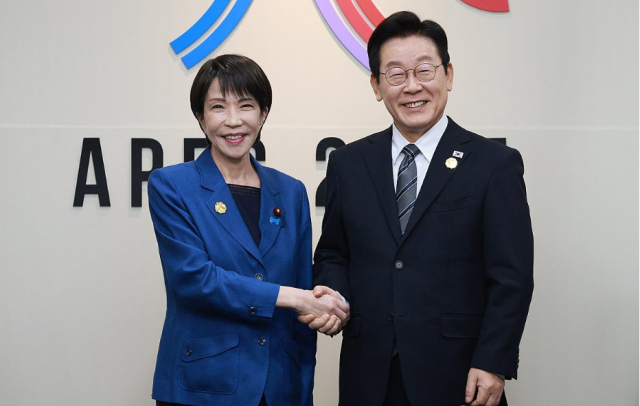
SEOUL, January 13 (AJP) -South Korean President Lee Jae Myung will make a one-night, two-day visit to Japan starting Tuesday for summit talks with Japanese Prime Minister Sanae Takaichi, as Seoul seeks to advance pragmatic, national interest-focused diplomacy amid escalating U.S.-China tensions.
The presidential office said Lee will depart from Seoul Air Base for Japan’s Nara Prefecture, Takaichi’s hometown, at her invitation. The visit comes days after Lee’s state visit to China and underscores Seoul’s effort to balance ties with both Tokyo and Beijing.
During the trip, Lee and Takaichi will hold a one-on-one meeting, followed by expanded talks, a joint press statement, a private discussion and a working dinner. National Security Adviser Wi Sung-lac said the two leaders are scheduled to communicate “a total of five times” during the short visit, holding frank and substantive discussions.
This will mark the second South Korea–Japan summit since Lee took office, following their first meeting on the sidelines of the Asia-Pacific Economic Cooperation (APEC) leaders’ meeting in Gyeongju last October. The reciprocal visits come just over three months after Takaichi took office, raising expectations that “shuttle diplomacy” between the two countries could become more regularized.
On Wednesday morning, the two leaders will visit Horyuji Temple, a UNESCO World Heritage site, where they are expected to discuss ways to revitalize regional economies and strengthen the role of local governments. Lee will also meet ethnic Koreans living in the Kansai region, including Osaka, before returning home.
The presidential office said the visit aims to deepen trust through shuttle diplomacy, expand practical cooperation, pursue humanitarian cooperation on historical issues and enhance coordination on the Korean Peninsula, as well as regional and global affairs.
Wi said the leaders will broadly discuss cooperation in areas closely tied to daily life, including protection of intellectual property, future industries such as artificial intelligence, countering cross-border crimes such as online scams, social challenges and people-to-people exchanges.
Humanitarian cooperation on historical issues is also expected to be on the agenda, including efforts related to the Chosei undersea coal mine, where 136 Korean forced laborers died in a 1942 flooding incident. The Lee administration has pursued a “two-track” approach of expanding future-oriented cooperation while continuing to address unresolved wartime history issues stemming from Japan’s 1910–45 colonial rule of Korea.
Regional and global security issues, including North Korea, are also likely to be discussed. Lee has welcomed Takaichi’s stated interest in engaging Pyongyang over the long-standing abduction issue and has indicated Seoul’s willingness to help facilitate dialogue between Tokyo and North Korea.
Economic issues may also surface, including South Korea’s restrictions on seafood imports from eight Japanese prefectures imposed after the 2011 Fukushima nuclear disaster.
In a recent interview with Japan’s NHK, Lee said easing the restrictions would take time until public concerns are addressed but noted that the issue remains an important diplomatic agenda item as Seoul seeks Tokyo’s support for its bid to join the Comprehensive and Progressive Agreement for Trans-Pacific Partnership.
In the interview, Lee stressed that South Korea’s relations with Japan are “as important as relations with China,” adding that tensions between Tokyo and Beijing over Taiwan are not matters Seoul intends to “engage in or intervene in.”
Copyright ⓒ Aju Press All rights reserved.