SEOUL, Feb 27 (AJP) - From eye-popping KOSPI gains — more than doubling since the start of 2025 — to growth rebounding toward a potential rate of around 2 percent, South Korea’s economy appears, at first glance, to be regaining momentum.
But strip away the semiconductor effect, and the underlying picture remains fragile.
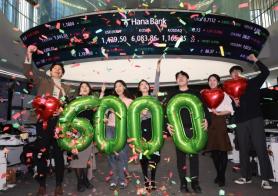
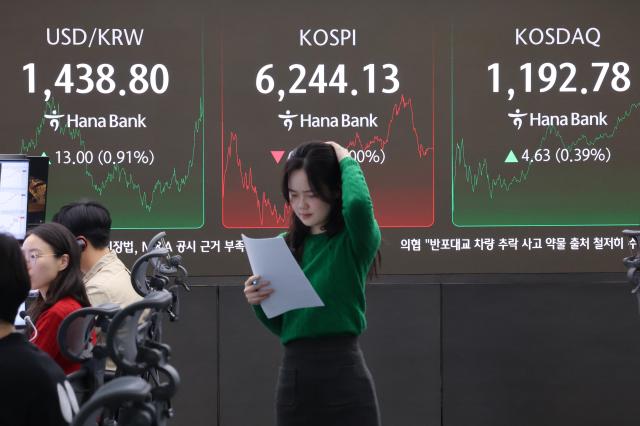
After an almost uninterrupted rally since year-end, the benchmark KOSPI briefly traded above 6,300 this week — only a month after celebrating the 5,000 milestone. It ended Friday at 6,244.13, taking a modest breather after a near 50 percent surge in the first two months of the year.
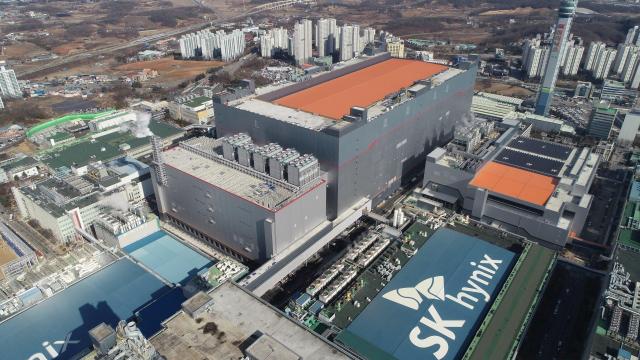
The rally has been driven overwhelmingly by semiconductor bellwethers. Samsung Electronics is trading around 200,000 won ($141) per share, while SK hynix has crossed 1 million won ($709). Both companies are projected to post more than $100 billion in operating profit amid explosive demand for high-bandwidth memory powering artificial intelligence infrastructure.
Growth upgraded — but narrowly based
The semiconductor boom has lifted broader growth forecasts.
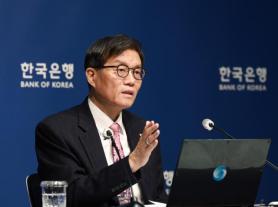
The Bank of Korea (BOK) on Thursday revised up its 2026 growth estimate to 2 percent from 1.8 percent, following 1 percent growth in 2025. The IMF and OECD have also projected expansion near 2.1 percent.
Yet the structure of that growth is increasingly concentrated. Excluding the IT sector, growth would slow to around 1.4 percent, according to the BOK.
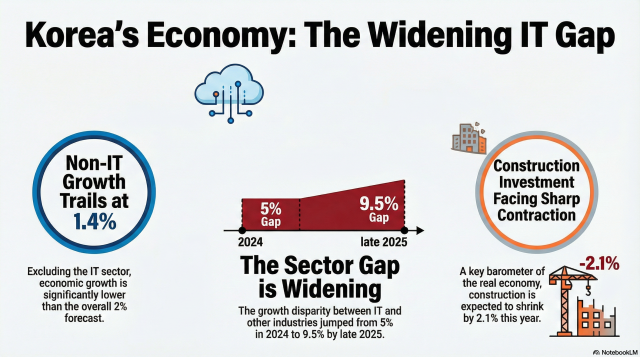
The growth gap between the IT sector and other industries widened from roughly 5 percentage points in the second half of 2024 to 9.5 percentage points by the third quarter of 2025.
Construction investment — a key gauge of domestic demand — is projected to contract 2.1 percent this year.
As high-value jobs cluster in semiconductors and other advanced manufacturing, income disparities are widening. Wages in IT manufacturing have risen since 2025, while pay levels in other sectors have stagnated or declined.
The stock market reflects the same imbalance.
On Wednesday, when the KOSPI broke through 6,000, Samsung Electronics rose 1.75 percent to 203,500 won and SK hynix gained 1.3 percent to 1,018,000 won. Yet nearly 60 percent of listed stocks — about 1,400 issues — declined that day.
Together, Samsung Electronics and SK hynix now account for roughly 40 percent of total KOSPI market capitalization with valuation topping 2,000 trillion won. When President Lee Jae Myung took office on June 4, their combined market cap stood near 700 trillion won. Samsung Electronics on Thursday joined the exclusive $1-trillion market-cap club.
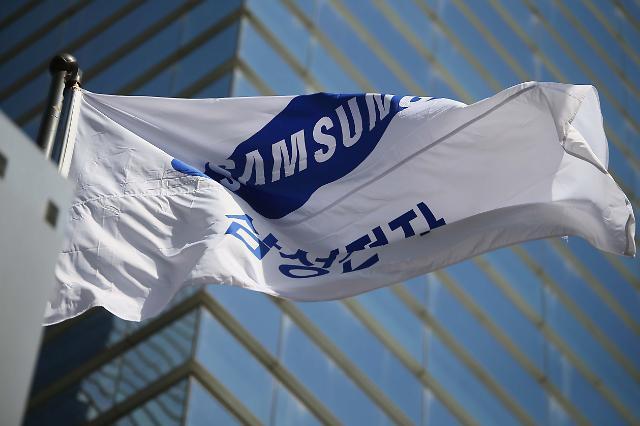
Such concentration raises vulnerability concerns.
“South Korean stocks could fluctuate more significantly than those of other nations in the event of a global slowdown or supply chain disruption,” the Korea Center for International Finance (KCIF) warned Friday, citing excessive semiconductor concentration in the domestic market.
K-shaped growth in focus
Policymakers are increasingly acknowledging the imbalance.
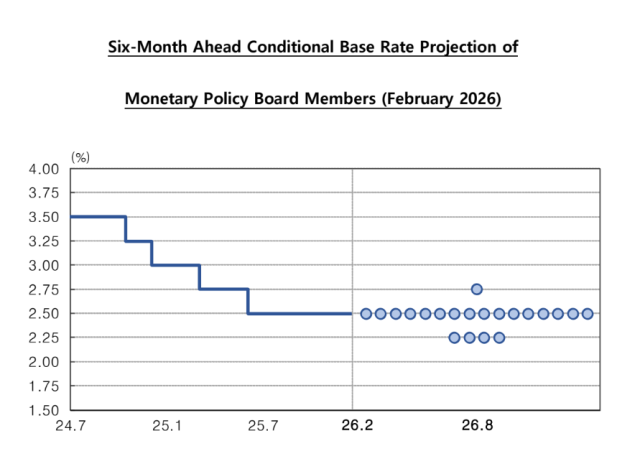
In the BOK’s latest six-month dot plot, four out of 21 rate projections pointed to a 25-basis-point cut to 2.25 percent. While most members favored holding rates steady, the presence of easing signals suggests that some policymakers are weighing sectoral weakness beneath headline growth.
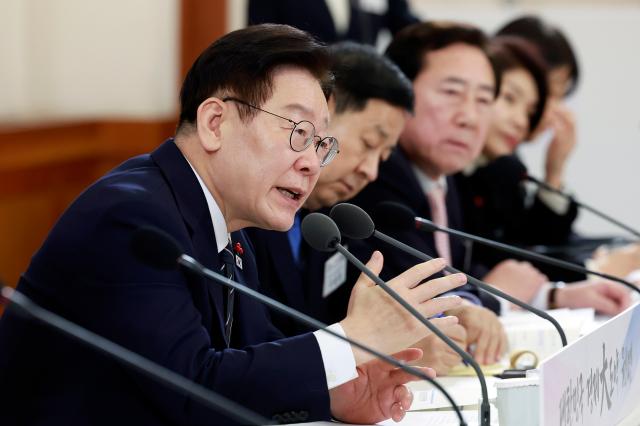
“Our economy appears to be moving toward 2 percent growth based on outward indicators, but a closer look reveals the challenge of K-shaped growth,” President Lee Jae Myung said at a growth strategy meeting on Jan. 9.
Governor Rhee Chang-yong noted that stagnation in non-IT sectors remains a concern. “There were arguments that the stagnation of other industries due to K-shaped growth must be taken into account,” he said, without specifying individual committee views.
Economists warn that divergence between sectors could translate into deeper polarization.
“The gap in economic growth leads to a gap in the stock market, which in turn widens income and asset disparities,” said Kim Gwang-suk, head of the Economic Research Office at the Korea Institute for Industrial Economics & Trade (KIET). “Support should focus on non-semiconductor industries such as agriculture and chemicals, rather than sectors that have already achieved self-sustainability.”
Others argue that boosting productivity through technological innovation may offer a longer-term solution.
“Physical AI — applying software intelligence to physical industrial environments — can significantly enhance productivity if implemented effectively,” said Yoo Seung-joo, professor of computer engineering at Seoul National University.
Korea possesses a strong industrial base capable of adopting such solutions, said Hwang Soo-wook, a researcher at Meritz Securities, adding that broader AI deployment across manufacturing sites could narrow productivity gaps.
Copyright ⓒ Aju Press All rights reserved.