

There is a phrase South Koreans invoke with quiet pride: bbaly bbaly — "quickly, quickly." It describes a national temperament forged in crisis, the same urgency that rebuilt a war-ravaged nation into an industrial titan within a single generation.
But urgency alone, as Kwon Seok-jun, a semiconductor scholar at Sungkyunkwan University, recently warned, will not be enough for what comes next. The artificial intelligence age demands not just speed, but vision.
South Korea stands at an inflection point that will look, in retrospect, as decisive as the 1960s industrialization drives that gave the world Hyundai and Samsung.
The country holds world-class memory chip manufacturing — its two giants, Samsung Electronics and SK hynix, dominate the high-bandwidth memory market that powers today's AI data centers. And yet, as Professor Kwon put it, Korea remains a semiconductor power, not yet an AI power. The distinction is not semantic. It is existential.

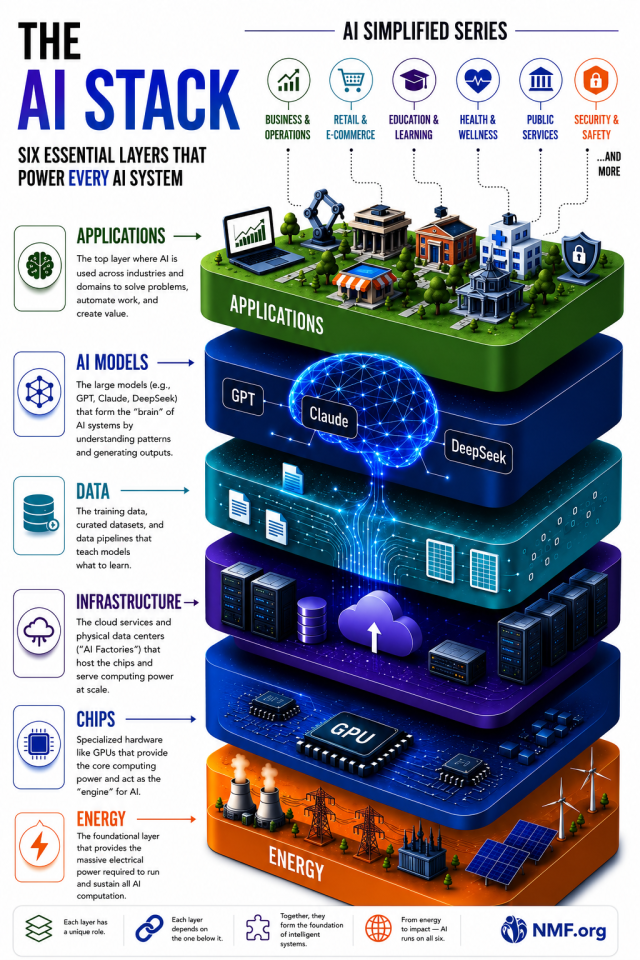
Generative AI has redrawn the map of strategic resources. Where iron ore and oil once defined national advantage, memory — the capacity of machines to store, recall, and contextualize vast knowledge — now does. GPT-class models require exponentially more memory with each generation. The country that controls that memory infrastructure wields, in effect, an indispensable key to the intelligence economy. South Korea possesses that key. The question is whether it knows what door to unlock with it.
To understand the moment, consider the four powers now jostling for position in what may become the defining geopolitical contest of this century. America commands the full AI stack — frontier models from OpenAI and Google, hardware from Nvidia, capital from Silicon Valley. China presses forward with state-backed determination and the data exhaust of 1.4 billion citizens, despite the chokehold of American export controls.
Taiwan's TSMC manufactures the world's most advanced chips, making it simultaneously indispensable and alarmingly vulnerable — a single strait separating civilization's nervous system from catastrophe. And Japan, once sovereign over the global semiconductor industry, now bets on its unmatched mastery of materials and precision equipment.
South Korea sits in the interstices of all four. It is America's ally and China's largest trading partner. It manufactures what Taiwan designs and supplies materials Japan refines. It is, in the language of supply chains, a critical node — which is both a strategic asset and a dangerous dependency.
"Korea has mastered the survival mind. The AI era demands something rarer: the great mind — the ambition not merely to endure, but to define what comes next." said according to Kwon.
The architecture of computing itself is shifting beneath Korea's feet.
For eighty years, the von Neumann paradigm — separating calculation from storage — governed hardware design.
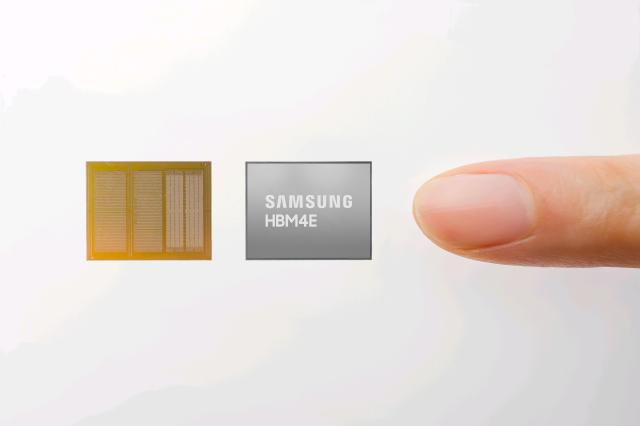
Today, as processors outrun memory bandwidth, a bottleneck known to engineers as the "memory wall" has become the central constraint of AI performance. High-bandwidth memory, or HBM, is the current answer. Korean companies built it. But the real prize is a comprehensive memory ecosystem spanning DRAM, NAND flash, and next-generation architectures — a prize Korea is uniquely positioned to claim.
And yet hardware is not destiny. The uncomfortable truth confronting Korean policymakers is that the country has historically been stronger at manufacturing than at origination, better at refining foreign blueprints than at drawing its own. The software platforms that capture the value generated by AI — the operating systems, the foundation models, the application ecosystems — remain overwhelmingly American. Korea builds the picks and shovels of the AI gold rush. It has not yet staked a claim of its own.
What could change that calculus? The answer, increasingly, lies in what technologists call physical AI: the fusion of machine intelligence with the material world. Robots, autonomous vehicles, smart factories, AI-enabled logistics — the digital made tangible.
This is terrain where Korea's industrial structure offers a rare advantage. No other nation of comparable size combines deep capabilities in shipbuilding, automotive manufacturing, battery technology, telecommunications, and advanced semiconductors.
Korea does not merely participate in these industries; in several, it sets the global standard. The physical AI wave, if Korea positions itself correctly, could be the country's defining contribution to the next industrial order — not merely adopting AI within its factories, but exporting the model of AI-enabled manufacturing to the world.
That optimistic scenario requires confronting obstacles that are as much political as technological. Korean universities produce talented engineers, but the country's rigid corporate hierarchies and risk-averse culture have historically struggled to retain the kind of ambitious, iconoclastic talent that builds transformative platforms.
Chaebol dominance, for all the efficiency it provided in the catch-up era, may now be a brake on the creative destruction that frontier AI demands. And then there is politics: Korea's democratic system, vibrant and combative, has produced policy gridlock at precisely the moment when the country needs a coherent, long-horizon national AI strategy.
The window is not indefinite. The United States and China are moving fast; Korea's structural advantages will erode if they are not converted into ecosystem leadership within this decade.
History is not indifferent to preparation. The industrial revolution rewarded the nations that had done the institutional groundwork — the property rights, the capital markets, the engineering education — before steam power arrived. The information revolution rewarded those that had built the network infrastructure and the legal frameworks for venture capital. The AI revolution will be no different.
South Korea has pulled off three modern miracles: industrialization, democratization, and the information economy, each transforming the country within a generation.
The fourth — becoming not just a supplier to the AI age but an architect of it — is harder precisely because it cannot be achieved through the survival mind alone. It requires a different kind of ambition: the willingness to define standards rather than meet them, to export ideas rather than components, to compete not at the bottom of the value chain but at its very top.
Korea's time has not run out. But the clock, for perhaps the first time in its modern history, is running faster than the country's famous urgency can match.

Copyright ⓒ Aju Press All rights reserved.
