

SEOUL, May 29 (AJP) - "Jeju's wind is harsh, but people learn to bend instead of break."
The line from the hit Netflix drama When Life Gives You Tangerines celebrates the resilience of people on South Korea's southern island. In reality, however, the wind has become harsh enough to drive many young Jeju residents away altogether.
As Jeju recorded a second consecutive year of net population loss, young islanders told AJP that a lack of quality jobs, limited career opportunities and a narrower cultural scene compared with Seoul are pushing them to leave their hometown in search of a future on the mainland.
South Korea's premier resort island is now confronting a demographic reversal after years of rapid growth fueled by an "in-migration boom." According to the "2025 Domestic Migration Trends in the Honam and Jeju Regions" released Thursday by the Honam Regional Statistics Office, 77,588 people moved into Jeju in 2025 while 81,861 moved out, resulting in a net population loss of 4,273 people.
The decline follows a net loss of 1,808 people in 2024 and marks a stark turnaround from more than a decade of uninterrupted growth. Jeju's population expanded from 577,000 in 2010 to more than 700,000 in 2023 as retirees, remote workers and lifestyle migrants flocked to the island.
Young adults accounted for much of the outflow. The net migration rate among people in their 20s stood at minus 3.2 percent, while teenagers and people in their 30s also posted negative migration rates.
Statistics indicate that employment and education are the main drivers. About 18,000 people moved from Jeju to the Seoul metropolitan area last year, while roughly 16,000 moved in the opposite direction, resulting in a net outflow of around 2,000 people to greater Seoul.
Jobs were cited as the leading reason for leaving the island, accounting for 35.5 percent of departures. Education-related moves represented 12.7 percent, well above the national average of 9.2 percent.
The trend is especially pronounced among young singles. One-person households accounted for 86.8 percent of interregional departures from Jeju, reflecting young people relocating alone for work or study.
"There are no jobs unless young people become civil servants, work at public corporations or get jobs at banks, so many young people from Jeju move to the Seoul metropolitan area," said a Jeju native in her 30s who is preparing to seek employment in Seoul and requested anonymity.
"There's nowhere for young people to hang out."
She said career options outside government service, teaching and a handful of professional occupations remain limited, pushing many residents toward the capital region.

Another Jeju native in her 30s who now works as a civil servant in Seoul said living in the capital during university fundamentally changed her perception of the island.
"After experiencing Seoul's infrastructure during college life, life in Jeju felt frustrating," she said.
Lee, a 27-year-old pharmacist born and raised in Jeju until high school, spent about seven years in Seoul and said the gap extends beyond jobs.
"Jeju offers fewer opportunities for young people to gain experiences," Lee said. "There are especially fewer opportunities in cultural life and employment."
She recalled having to fly to Seoul whenever her favorite group, Davichi, held a concert, requiring additional costs for flights and accommodation.
"There are so many events in Seoul," she said. "Seoul is vibrant and full of youthful energy."
Lee said policymakers should focus on attracting major corporations and high-value industries to the island.
Many of her longtime friends from Jeju have already relocated to the Seoul area for work.
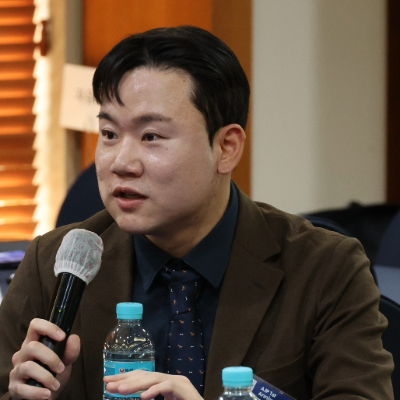
Kim Sung-bum, a parliamentary candidate for Seogwipo, argued that the exodus reflects structural economic challenges rather than declining attachment to the island.
"I believe young people are leaving their hometown not because they lack affection for the region, but because there are not enough quality jobs where they can build their future," Kim told AJP.
Asked how he would address the issue if elected, Kim said attracting future industries and creating stable, well-paying jobs would be central to the effort.
"We will work closely with the central and local governments to secure relevant budgets so that we can overhaul the regional economic structure through future industries and provide quality jobs and stable living conditions," he said.
For many young Jeju residents, the problem is not a lack of affection for the island. It is that while Jeju remains a dream destination for visitors and retirees, it increasingly struggles to offer the opportunities that young people believe they need to build their lives.
Copyright ⓒ Aju Press All rights reserved.
