

Journalist
Lee Jung-woo이정우
cannes2030@ajupress.com
ReporterMinistry of Unification & North Korea, Politics, Foreign Affairs
I studied philosophy in college, and sociology and journalism in graduate school. I cover North Korea, South Korean politics, foreign affairs and films. I enjoy Nordic cinema, Indian cuisine and Japanese detective novels. I have a cat and like bright, acidic coffee.
"Were it left to me to decide whether we should have a government without newspapers, or newspapers without a government, I should not hesitate a moment to prefer the latter."
"Were it left to me to decide whether we should have a government without newspapers, or newspapers without a government, I should not hesitate a moment to prefer the latter."
Latest by Lee Jung-woo
-
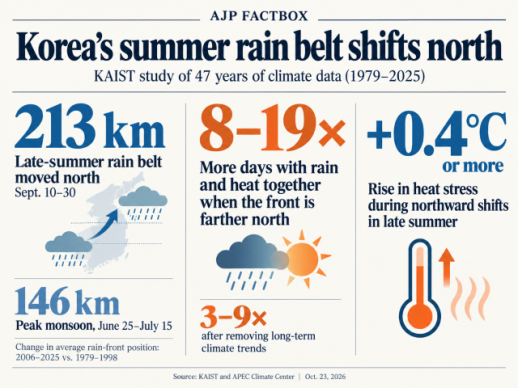 AJP Factbox: Korea's summer rain belt shifts north 2026-10-23 17:00:56
 -
 South Korea's rain belt shifts north at accelerating pace SEOUL, October 23 (AJP) - South Korea's summer rain belt has shifted more than 200 kilometers north over a 47-year period from 1979 to 2025, sharply increasing the likelihood of heavy rainfall and extreme heat occurring simultaneously, according to a study released on Friday. Researchers from the Korea Advanced Institute of Science and Technology (KAIST) and the APEC Climate Center found that the East Asian summer front has steadily migrated northward, bringing wetter and hotter conditions to the Korean Peninsula. The research team, led by KAIST professor Kim Hyung-jun and APEC Climate Center researcher Moon Su-yeon, analyzed 47 years of climate data from 1979 to 2025. The findings suggest that summer seasons here are increasingly likely to bring weather patterns associated with warmer, more humid climates, raising concerns about flooding and heat-related illnesses. According to the study, the average position of the summer rain front between Sept. 10 and 30 during the most recent 20-year period, from 2006 to 2025, was approximately 213 kilometers farther north than during the earlier period from 1979 to 1998. During the peak monsoon season, from June 25 to July 15, the front shifted northward by an average of 146 kilometers. In previous decades, the late-summer rain belt typically remained over China's Yangtze River basin or waters south of Jeju Island. In recent years, it has extended into the southern Korean Peninsula. The northward movement has altered the geographical distribution of rainfall and heat, bringing more precipitation to northern areas while intensifying heat stress farther south. Researchers found that when the late-summer front moved north, days with both above-normal precipitation and heat stress occurred approximately eight to 19 times more frequently than in years when the front remained farther south. Even after accounting for long-term climate trends, the frequency remained three to nine times higher, suggesting that the relationship cannot be explained solely by rising temperatures and increasing rainfall. The study also found that the northward shift was associated with an increase of more than 0.4 degrees Celsius in wet-bulb globe temperature, an index that measures heat stress by accounting for factors including temperature and humidity. Higher humidity makes it harder for sweat to evaporate, increasing the risk of heat exhaustion and heat stroke. Researchers attributed the movement of the rain front to a combination of factors, including warming sea surface temperatures and changes in atmospheric circulation. Warmer ocean waters supply additional moisture to the atmosphere, while changes in wind patterns influence the movement of the boundary between warm and cold air masses. The research team used high-resolution climate data from the European Centre for Medium-Range Weather Forecasts, tracking the position of the East Asian summer front at six-hour intervals. The findings were published in npj Climate and Atmospheric Science, a peer-reviewed journal published by Springer Nature on Oct. 11. "Not only the intensity but also the position of fronts is changing," Kim said, explaining that rainfall and extreme heat are increasingly affecting different locations and periods of the summer. Kim warned that September, traditionally receiving less attention in summer disaster preparedness, now requires greater consideration. He called for a comprehensive climate adaptation strategy that treats late-summer heavy rainfall and extreme heat as interconnected hazards rather than separate threats. 2026-10-23 16:54:58
 -
 Seoul mayor's acquittal puts presidential ambitions back in play SEOUL, October 23 (AJP) - Seoul Mayor Oh Se-hoon’s presidential ambitions gained fresh momentum Friday as an appeals court overturned a political funding conviction that had threatened to cut short his tenure and remove a potential standard-bearer for South Korea’s conservative opposition. The Seoul High Court ruled that the testimony of Myung Tae-kyun, a political broker at the center of the case, was not sufficiently credible to support the charges against Oh. "The statements made by Myung concerning the charges in this case are, taken as a whole, difficult to accept at face value," the court said. The acquittal lifted an immediate threat to the five-term mayor’s political career and preserved the conservative People Power Party’s (PPP) field of potential presidential contenders. Prosecutors immediately vowed to challenge the ruling at the Supreme Court, which could take up the case as early as coming January. The judges noted that Myung began making detailed allegations about Oh's involvement in illegal political funding in December 2024, after the mayor publicly indicated that he intended to sue him. The ruling reversed a July decision by a lower court that found Oh guilty of arranging illegal payments for opinion polls conducted ahead of Seoul's April 2021 mayoral by-election. Oh had been accused of receiving the results of 10 opinion polls conducted by Myung, including three released publicly and seven kept private, and arranging for a political supporter to cover approximately 33 million won ($25,000) in expenses. Prosecutors alleged that Oh used Kang Cheol-won, a former senior Seoul city official who worked on his election campaign, to arrange payments by businessman Kim Han-jung, an Oh supporter. The lower court found that five of the 10 polls had been commissioned on Oh's behalf and that Kim had covered approximately 21 million won in expenses. It fined the mayor 10 million won and ordered the recovery of 21 million won. The case carried unusually high political stakes because of South Korea's strict campaign finance laws. Under the Political Funds Act, elected officials whose convictions for illegally receiving political funds become final with a fine of at least 1 million won must leave office. They are also barred from holding public office for five years. Had the original conviction been upheld by the Supreme Court, Oh would have lost his position as mayor of the capital and been disqualified from seeking the presidency during that period. Lawmakers from both the ruling Democratic Party (DP) and the opposition PPP stressed that the case's political implications would remain uncertain until the judicial process was completed. "The first- and second-instance rulings are contradictory, making the Supreme Court's final decision crucial," Rep. Jin Seong-joon of the DP said. "Both the ruling and opposition parties will watch cautiously until then," he added. Rep. Kim Dae Sik of the PPP said the legal dispute had become politically charged, making its ultimate outcome difficult to predict. "Legal experts tell me he is not guilty, but the trial has taken on a political character, so I don't know what the final outcome will be," Kim said. "If a conviction becomes final, the conservative camp will lose a potential presidential candidate," he added. Another PPP lawmaker, Rep. Ahn Sang-hoon, emphasized the significance of Oh's political survival for the conservative opposition. "We need a ruling that allows him to remain mayor so that capable conservative presidential hopefuls can compete fairly and bring about a change in government," Ahn said. Rep. Kim Gunn, also of the PPP, cautioned against treating the appellate decision as the end of the case. "Today's ruling is not the end. We still have to watch what happens at the Supreme Court," Kim said. The case is among several political funding controversies involving Myung, whose opinion polling activities and connections with prominent conservative politicians have been examined by investigators. On Oct. 7, the same appellate court panel acquitted former President Yoon Suk Yeol of political funding charges involving opinion polls allegedly provided free of charge by Myung. The allegations against Yoon differed from those involving Oh, which centered on payments allegedly arranged through a third party. 2026-10-23 15:16:07
 -
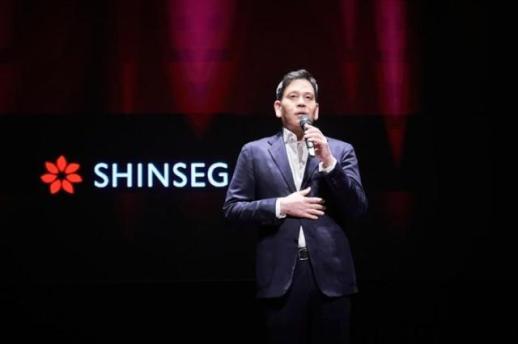 Shinsegae chairman returns to E-Mart helm amid Starbucks fallout SEOUL, October 23 (AJP) - Shinsegae Group Chairman Chung Yong-jin was named co-CEO of E-Mart on Friday as the retail conglomerate unveiled a sweeping management reshuffle aimed at strengthening accountability and internal oversight, five months after a Starbucks Korea marketing controversy sparked nationwide criticism and a consumer boycott. The appointment, part of the group's regular executive reshuffle for 2027, puts Chung on course to return to the management of E-Mart, South Korea's largest discount-store chain, 13 years after he stepped down as a registered director in March 2013. Chung will share leadership of E-Mart with Kim Hong-geuk, currently CEO of Shinsegae Casa, who has also been tapped to head the group's online shopping platform SSG.com. The appointments will require approval through the relevant corporate procedures, including a shareholders' meeting. Chung had announced plans in June to take direct responsibility for E-Mart and Shinsegae Property following criticism that he exercised substantial influence over group companies without serving as a registered director accountable to shareholders. The management overhaul also includes changes at SCK Company, the operator of Starbucks Korea, which has struggled to recover from a promotional campaign that drew accusations of trivializing two defining episodes in South Korea's democratic history. SCK Company has established a new digital management division and an information security center to strengthen oversight of marketing content, digital platforms and internal approval procedures. The company has also consolidated its operations divisions and reorganized its beverage, food and merchandise development functions to streamline decision-making. The changes follow a controversy that erupted on May 18, the anniversary of the 1980 Gwangju Democratic Uprising, when Starbucks Korea promoted a tumbler discount event using the phrase "Tank Day." The wording provoked outrage because it coincided with the commemoration of the military crackdown on pro-democracy protesters in Gwangju, during which hundreds of civilians were killed. The promotional material also featured the phrase "with a thud on the desk," which critics said evoked the police's notorious explanation for the death of student activist Park Jong-chol in 1987. Police initially claimed that Park had suddenly died after an officer struck a desk during questioning, concealing the fact that he had been tortured to death. The controversy triggered calls for a Starbucks boycott, with consumers posting videos of themselves destroying Starbucks merchandise and civic organizations in Gwangju staging protests against the company. The commercial repercussions have continued for months. According to BC Card transaction data obtained by Democratic Party lawmaker Hwang Jung-a and released on Oct. 12, Starbucks sales through the card provider fell 23.5 percent in the week immediately following the controversy compared with the preceding week. Sales declined year-on-year in 19 of the 20 weeks examined following the incident. During Oct. 1-7, transaction sales were 11.7 percent lower than in the corresponding period a year earlier and 4.9 percent below the May 11-17 period immediately preceding the controversy. The figures cover transactions processed by BC Card rather than Starbucks Korea's total revenue, and do not independently establish how much of the decline was caused by the boycott. The broader Shinsegae reshuffle extends beyond Starbucks. E-Mart and Shinsegae's hotel businesses have strengthened their information security organizations, while convenience-store chain E-Mart24 has established dedicated compliance and information security units. The group has also appointed Choi Taek-won, previously CEO of SSG.com, to oversee management support functions, including personnel and auditing, while Park Seung-hak has been named head of external relations. Hur Min-ho, a former CEO of beauty and health retailer CJ Olive Young, has been recruited to lead Shinsegae Casa. The conglomerate promoted 36 employees to executive positions, while the proportion of executives in their 40s reached a record 18 percent, reflecting a broader generational shift in management. Shinsegae said the appointments were intended to address pressing business challenges, strengthen its core retail operations and accelerate expansion into artificial intelligence, lifestyle, content and entertainment businesses. 2026-10-23 14:00:58
 -
 Can a president consult an AI oracle? SEOUL, October 23 (AJP) - ChatGPT and Claude vie for headlines and users with faster and smarter upgrades, but in South Korea Gemini suddenly came into focus as an AI sage after President Lee Jae Myung disclosed he had consulted the Google chatbot on a matter of state. Lee, an avid social media user, wrote earlier this week that he had asked Gemini whether the heads of new prosecutorial and investigative agencies should attend weekly Cabinet meetings. He shared what he described as Gemini’s conclusion: arguments against their attendance were constitutionally unreasonable and contradicted the president’s authority to supervise government agencies. The disclosure brought a familiar technology into more sensitive territory. Seeking an answer from a chatbot is now routine. Citing that answer to defend the exercise of presidential authority raises a different question: where does advice end and authority begin? Kim Ji-yong, the inaugural head of the Serious Crimes Investigation Agency, attended Tuesday’s Cabinet meeting at Cheong Wa Dae, drawing objections that the appearance could compromise the political neutrality expected of an investigative chief. Lee argued that investigative bodies should not be treated differently from other government agencies, citing Gemini’s response. A presidential spokesman said Lee had consulted AI to clarify legal ambiguities, rather than to make a judgment or decision. The distinction lies at the heart of the debate. A chatbot may offer a second opinion, but how much weight should a president give its words — and does quoting them lend a machine the wisdom of Solomon? A similar question surfaced in Europe last year. In August 2025, Swedish Prime Minister Ulf Kristersson faced criticism after revealing that he regularly consulted AI chatbots, including OpenAI’s ChatGPT and the French-developed Le Chat, for alternative perspectives on government matters. “I use it myself quite often. If for nothing else than for a second opinion,” Kristersson told Swedish business newspaper Dagens industri. His admission drew objections from technology researchers and commentators who questioned whether AI systems could offer meaningful political judgments. His spokesperson said the prime minister did not enter security-sensitive information into the systems. In South Korea, the debate comes as generative AI becomes an increasingly ordinary part of working life. The country’s generative AI usage rate surpassed 40 percent and recorded the fastest growth in Microsoft’s AI Economy Institute’s second-quarter 2026 Global AI Diffusion Report. A recent SpaceAdd survey of 881 office workers found that 95.2 percent used AI for work, with 62.4 percent paying for AI services. Lawmakers are no exception. “I use it for searches and research,” said Son Myoung Soo of the ruling Democratic Party. Some ruling party lawmakers argued that a president seeking to make South Korea an AI powerhouse should be familiar with the technology. “It is desirable for the president supporting sovereign AI foundation model to use generative AI,” said Kim Hyun, also of the Democratic Party. Opposition lawmakers acknowledged using the same tools, while questioning the weight a president should attach to their answers. “I use AI myself, but only as a reference,” said Jung Sung-kook of the People Power Party. “AI tends to understand the user’s intentions and provide tailored answers. A president must therefore exercise even greater caution when using AI,” Jung said. “AI should play a supporting role. It must not dominate human insight and judgment,” he added. Such concerns cross party lines. “We have reached a point where the scope and extent of AI use should be strictly regulated,” said Min Hong-chul, a Democratic Party lawmaker. “AI is a tool intended to benefit humanity and enhance human dignity. We must prevent a reversal of roles in which humans become dominated or subjugated by AI and lose what makes them human,” Min said. Fellow Democratic Party lawmaker Chung Chinook said that however sophisticated the technology became, the president and presidential aides must retain responsibility for thinking through decisions. “As AI becomes more advanced, presidents will grow more dependent on it. At that point, we will need a public debate about the limits of its use,” he said. International scholars interviewed by AJP offered differing views on where those limits should lie — in the technology itself, the arguments it produces or the institutions that hold leaders accountable. Lawrence Lessig, the Roy L. Furman Professor of Law and Leadership at Harvard Law School, challenged the notion that citing AI in a dispute over executive authority was inherently problematic. “I do not think it is democratically problematic to cite AI’s interpretation in a dispute over executive authority. It is only problematic if the argument cited is a bad one,” Lessig said. The law and technology scholar compared AI assistance with the professional advice politicians have long received from lawyers and other experts. “Public officials do not need to declare which lawyers advise them in doing their work before AI. They do not need to declare what the political views of those lawyers are or what law review articles those lawyers read,” Lessig said. Asked what constitutional rule should govern presidential use of generative AI, he rejected the need for technology-specific restrictions. “I don’t think there should be a constitutional democracy rule for the use of technology in doing the work of a government official,” he said. “I think the rule should be that the government official should do their work well. We should test their work. We should evaluate whether it is true, whether its arguments are supported.” Simon Chesterman, the David Marshall Professor of Law at the National University of Singapore, drew a sharper distinction between consulting a system and conferring authority on it. “Used carefully, AI can be another source of advice, but it cannot become a source of authority: an elected leader remains accountable for the judgment exercised, especially where the system being consulted is privately designed, trained, and operated,” Chesterman noted. His concern extends beyond whether a chatbot gets a particular answer right. It also involves the private companies that build the systems on which governments increasingly rely. Chesterman examines that shift in his paper “Silicon Sovereigns: Artificial Intelligence, International Law, and the Tech-Industrial Complex.” “My concern with what I have called ‘silicon sovereigns’ is precisely that political power is already shifting towards a small number of unelected companies that control the infrastructure, models, and information environment on which governments increasingly depend,” he said. If officials outsource judgment as well as infrastructure to those companies, he warned, political power could move beyond the reach of the mechanisms designed to hold it accountable. Joanna Bryson, professor of ethics and technology at the Hertie School in Berlin, placed the emphasis on the institutions surrounding the person making the decision. “The more powerful and important their decisions, the more important it is that they are immersed in a network that holds that power to account,” Bryson said. Her research, “Human-Centred Control of AI Is Both Possible and Necessary,” examines how people can retain meaningful oversight of AI systems, including in sensitive security settings. “There’s no simple way to surveil for good use. We need to be vigilant in ensuring our political systems are safe and effective.” For a president invoking an AI oracle, that scrutiny must also reach beyond the chatbot’s answer to the evidence behind it. “I believe it is always important to say where knowledge derives from, so people can check your sources and ensure they agree with your interpretation,” Bryson said. 2026-10-23 11:07:26
 -
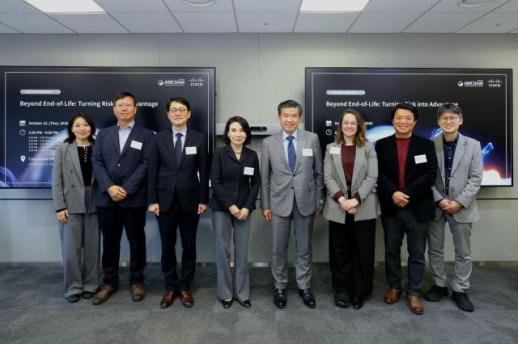 South Korea urged to 'modernize' aging IT systems SEOUL, October 23 (AJP) - South Korea needs to step up efforts to "modernize aging IT infrastructure" to address growing cybersecurity threats and maintain its digital competitiveness, according to a forum hosted by the American Chamber of Commerce in Korea (AMCHAM) and Cisco this week. The AMCHAM said Friday that it held a closed-door roundtable with the U.S. technology company at its Seoul office the previous day, bringing together business executives and cybersecurity experts to discuss risks associated with outdated technology that has reached the end of its operational life. The discussions focused on so-called end-of-life (EOL) equipment, including hardware and software that no longer receives security updates or technical support from manufacturers. Such systems can become vulnerable to cyberattacks, particularly as artificial intelligence accelerates the discovery and exploitation of security weaknesses. The event featured opening remarks from AMCHAM Chairman and CEO James Kim and Cisco Korea President Ji Hee Cathy Choi, followed by a keynote address from Jin Young Oh, vice president of the Korea Internet Security Agency (KISA). "Modernizing aging systems is part of that effort," said Kim, emphasizing the importance of strengthening digital infrastructure to support Korea-U.S. technology cooperation and long-term business competitiveness. "As businesses transition into the AI era, leaving EOL equipment in place after official security updates and technical support have ended can pose a critical threat to business continuity," said Choi. She stressed that companies should identify vulnerable systems and adopt phased modernization strategies that take into account their budgets and operational priorities. The meeting also examined findings from a Cisco-sponsored report published by the Australian Strategic Policy Institute (ASPI) in July. The report, titled "Past its use-by-date: Turning end-of-life technology risk into national advantage," examined aging technology risks in Korea, India and the Philippines, as well as Australia. It identified South Korea's rapid digitalization and government technology mandates as factors that can contribute to dependence on legacy systems, making replacement difficult and costly. The report proposed a five-part framework addressing technology lifecycle visibility, risk-based standards, procurement reform, accountability and transition planning. It argued that unsupported systems should not remain in operation without clearly assigned responsibility, documented safeguards and a funded replacement plan. Sarah Sloan, Cisco's head of cybersecurity policy for Asia Pacific, presented the report's findings and led a scenario-based exercise in which participants considered how to prioritize technology upgrades while maintaining essential business operations. Jae Bom Ok at Cisco Korea also outlined approaches to modernizing aging infrastructure and improving IT asset management. AMCHAM said it would continue facilitating discussions among businesses, technology experts and policymakers to address emerging cybersecurity threats and support South Korea's digital competitiveness. 2026-10-23 09:54:53
 -
 Yonsei University data breach affects over 10,000 people SEOUL, October 22 (AJP) - More than 10,000 people, including students and alumni of Yonsei University in Seoul, have had their personal information exposed in a cyberattack on the institution's online portal, the university announced Thursday, marking the latest in a series of data breaches across South Korea. In a notice issued on Thursday, the university's Office of Information and Communications confirmed that unauthorized external access to its Yonsei Portal Service had compromised personal information belonging to members of the university community. The leaked information included student identification numbers, mobile phone numbers, email addresses and certain system management data. Yonsei said it had blocked the unauthorized access route and requested an investigation by law enforcement authorities. The university also apologized to those affected and pledged to strengthen security measures to prevent similar incidents. Further details, including the specific types of information exposed for individual users, are scheduled to become available on the university's official website from 1 p.m. Thursday. The incident follows a major cybersecurity breach at Sogang University, another private university in Seoul, where approximately 180,000 personal information records involving students, graduates and university employees were compromised in August. According to Sogang University, unauthorized access occurred on Aug. 11, but the institution detected suspicious activity three days later. The exposed information included names, student and employee identification numbers, departmental affiliations, email addresses, phone numbers and encrypted passwords. The breach also affected former President Park Geun-hye, a Sogang University graduate. Yonsei had issued a cybersecurity warning just 10 days before announcing the latest breach. In an Oct. 12 notice, the university recommended stronger authentication procedures, the removal of inactive accounts and tighter restrictions on external access, citing recent cyberattacks targeting financial and educational institutions. The growing number of incidents has extended well beyond university campuses. On Oct. 19, coffee chain Hollys disclosed that approximately 2.76 million customer information records had been compromised following unauthorized access to its cloud-based membership system. The exposed data included names, birth dates, phone numbers, addresses, email addresses and passwords. The figure includes duplicate records and does not necessarily represent the number of individuals affected. South Korea's financial sector has also faced a wave of cyberattacks. On Oct. 14, the Financial Services Commission reported that 16 financial institutions, including Shinhan Bank, KB Kookmin Bank and Hana Bank, had experienced cybersecurity breaches, with approximately 100,000 personal information records exposed. The commission said an emergency inspection of 555 financial institutions had identified security deficiencies at 130 companies, including inadequate authentication procedures, outdated software and insufficient monitoring systems. Financial authorities have since announced plans to strengthen cybersecurity oversight, expand vulnerability assessments and increase the accountability of corporate executives for security failures. 2026-10-22 10:52:28
 -
 Brunson urges fortified supply chain to sustain Korea-U.S. military edge SEOUL, October 21 (AJP) -U.S. Forces Korea Commander Gen. Xavier Brunson called Wednesday for a “fortified allied supply chain” combining American military capabilities with South Korean manufacturing strength to preserve the alliance’s regional advantage amid mounting security threats. “Our mission remains immovable: to defend the Republic of Korea,” Brunson said at a special luncheon hosted by the American Chamber of Commerce in Korea at the Mondrian Seoul Itaewon hotel. With controversy still simmering over his recent remarks on territorial jurisdiction and wartime command, Brunson kept his address focused on the industrial foundations of deterrence, steering clear of the disputes over the Demilitarized Zone and the transfer of wartime operational control. “We need to forge a fortified allied supply chain, an unbroken network of production,” he told the business audience. “When our industries integrate that closely, you create strategic endurance.” The luncheon brought together Brunson and U.S. Ambassador Michelle Park Steel with about 200 business representatives to discuss the alliance’s security and economic priorities. It marked the 250th anniversary of American independence. Brunson’s appeal placed South Korean factories and shipyards at the center of the alliance’s ability to keep forces equipped, repaired and ready without waiting for supplies to cross the Pacific. “Do not wait for a slow boat to move across the Pacific,” he said. “We must fix forward. We must sustain forward.” He pointed to maintenance and overhaul work at Korean shipyards that allows American naval vessels to return to sea ahead of schedule, calling it “operational deterrence.” “Deterrence does not begin and end with a platform. I think it’s built on people and is sustained by the industrial and technological foundation that stands behind it.” His argument reflected a security environment increasingly strained by military cooperation between North Korea and Russia and activities intended to pressure the allies without provoking outright conflict. “We see dangerous, deepening defense cooperation between Pyongyang and Moscow, and we see persistent gray zone activities intended to test our resolve and challenge regional stability,” he said. The purpose of the alliance, he added, was to make an adversary weigh the consequences of confrontation and decide against it. “It’s to ensure an adversary looks at our alliance, calculates the cost and says, ‘Not today.’” Addressing the businesses whose production and technology would underpin that readiness, Brunson said: “The alliance has always been our greatest asymmetric advantage in this region. Today that advantage rests wholly in your hands.” A discussion moderated by AMCHAM Chairman and CEO James Kim also explored South Korea’s potential to become a regional military logistics hub, drawing on its defense and manufacturing capabilities, according to the chamber. Other topics included regulatory predictability and fair competition in digital industries, investment in U.S. energy and liquefied natural gas cooperation. Kim said economic and national security had become inseparable, with cooperation extending across shipbuilding, semiconductors, batteries, aerospace and defense. The emphasis on shared interests came as criticism of Brunson’s earlier comments continued in Seoul. At an Oct. 14 forum in Washington, Brunson said that, from the United Nations Command’s perspective, South Korea begins at the southern fence of the DMZ. Ruling party lawmakers accused him of calling South Korean territorial sovereignty into question. Brunson also heads the UNC, which oversees compliance with the Korean War armistice, and the South Korea-U.S. Combined Forces Command. Seoul conveyed its concerns through diplomatic and military channels. The UNC subsequently said South Korea’s sovereignty was beyond question and that Brunson had been describing his military and administrative responsibilities under the armistice. A separate dispute concerns his assertion at the same Washington forum that evolving threats require “new standards” for transferring wartime operational control to a South Korean commander. Seoul seeks to complete the handover before President Lee Jae Myung’s term ends in 2030. The agreed conditions cover South Korea’s ability to lead combined defense, the alliance’s capacity to counter North Korean nuclear and missile threats, and a security environment conducive to the transition. Brunson’s reference to new standards raised concerns in Seoul that additional requirements could delay the handover indefinitely. The differences are expected to be discussed at the annual Security Consultative Meeting between the allies’ defense chiefs. The meeting could be pushed back to December from its customary late-October or early-November window, although South Korea’s Defense Ministry has said no specific date has been finalized. Brunson acknowledged the backlash with a joke at Wednesday’s luncheon, referring to a sign near the U.S. Embassy telling him to go home. “I don’t live in Seoul. I live in Pyeongtaek,” he said. On military readiness, his message was more direct. “Our forces are prepared and ready to answer anything that’s necessary for them,” he said. “That’s our only job.” 2026-10-21 13:01:49
 -
 Youth pension subsidy sparks debate over cost and fairness SEOUL, October 20 (AJP) - South Korean President Lee Jae Myung's call to reconsider the application requirements for a new government-funded pension subsidy for young people has sparked a debate among lawmakers over fairness, fiscal responsibility and the fundamental principles of the country's pension system. The dispute emerged Tuesday after Lee questioned whether requiring young people to apply for their first month's pension contribution would unfairly exclude those who were unaware of the program or unable to navigate the application process. Under the initiative, scheduled to take effect on Jan. 1, 2027, the government will cover one month of National Pension Service (NPS) contributions for eligible young people, allowing them to establish an early contribution record and potentially increase their retirement benefits. The program will initially cover those born in 2009 who turn 18 next year. They can apply between the ages of 18 and 26, with the government providing an estimated 42,000 won ($30) toward their first month's contribution. The Ministry of Health and Welfare has earmarked 18.9 billion won for the program in its proposed 2027 budget. Advance applications began on Oct. 1. The subsidy is intended to address a longstanding gap in Korea's pension system. Young people who remain outside the workforce while studying, serving in the military or preparing for employment often begin contributing later, reducing the number of years credited toward their eventual retirement benefits. Establishing an initial contribution record at 18 could also allow beneficiaries to make retrospective payments for certain periods when they were unable to contribute, potentially increasing their future pensions. But the program has exposed a dilemma: Whether the government should automatically extend the benefit to eligible young people, potentially increasing public expenditure, or retain an application system that could leave some of the intended beneficiaries behind. Lee raised the issue during a Cabinet meeting at Cheong Wa Dae on Tuesday, arguing that an application-based system could produce substantive inequality by favoring people who have sufficient time, information and resources to seek government assistance. He also questioned whether it was appropriate for the government to design a program around the expectation that some eligible citizens would never claim the benefit. Lawmakers interviewed by AJP offered sharply different assessments of the policy. Rep. Yoo Sang-bum of the opposition People Power Party (PPP) questioned whether government-funded contributions were consistent with the principles underpinning the National Pension system. "The basic principle of the National Pension is that individuals pay their own contributions and receive benefits after reaching retirement age," Yoo told AJP. "Fundamentally undermining that principle in the name of supporting young people amounts to populism. Can those who have been paying into the pension system accept that?" The National Pension is primarily a contributory system in which retirement benefits are linked to contribution records, although employers share the cost for salaried workers and the government already subsidizes certain low-income contributors. Rep. Choi Bo-yoon, another PPP lawmaker and a member of the National Assembly's Health and Welfare Committee, emphasized the need to balance support for younger generations with fiscal discipline. "Both addressing gaps in pension coverage among young people and maintaining the soundness of public finances are important policy considerations," Choi told AJP. "We are carefully examining the optimal approach that would provide meaningful assistance to the younger generation while remaining financially sustainable." Rep. Kim Yoon of the ruling Democratic Party suggested a compromise that would preserve the application system while protecting those who fail to claim the benefit before the age limit. "One possible approach would be to retain the application-based system as the basic framework, while allowing those who have not applied by the age of 27 to receive credit for one month of pension coverage even at a later date," Kim told AJP. Such an arrangement could address Lee's concerns about unequal access without necessarily requiring the government to make immediate payments on behalf of every eligible young person. The sharpest criticism came from Rep. Ahn Sang-hoon of the PPP, a former presidential senior secretary for social affairs who serves on the National Assembly's special committee on pension reform. "With a hole of more than 1,500 trillion won in pension finances, all they can think about is handing out money. This is textbook populism," Ahn told AJP. "It's laughable to see the person who poured pension fund money into the domestic stock market, leaving it stuck buying at the top, now pretending to worry about fiscal responsibility." Ahn's characterization of a massive financial shortfall comes amid continuing concerns over the long-term sustainability of Korea's pension system. The NPS reported that its accumulated fund reserves stood at 1,684.2 trillion won at the end of July 2026. However, the National Assembly Budget Office projected in June that the fund could be depleted in 2069 under its baseline assumptions, despite reforms designed to strengthen the system's finances. The proposed subsidy would be financed through the government budget, rather than through direct withdrawals from the pension fund's investment assets. The broader pension system is already undergoing reform. Contribution rates began rising this year from their previous level of 9 percent and are scheduled to reach 13 percent by 2033, reflecting mounting pressure from Korea's rapidly aging population and shrinking workforce. The new subsidy therefore raises questions extending beyond the relatively small amount involved in the first month's contribution. "It is questionable for the government to dictate policy to the National Pension Service. One possible alternative would be to provide differentiated subsidies to young people based on their income levels," Yang Joon-suk, an economics professor at the Catholic University of Korea, told AJP. 2026-10-20 17:31:45
 -
 World Bank unveils first digital strategy at Seoul summit SEOUL, October 20 (AJP) - The World Bank Group aims to expand digital opportunities to 1 billion people worldwide by 2030 through its first digital strategy, harnessing artificial intelligence to create jobs and accelerate economic growth. The development lender set out the initiative at its inaugural Global AI and Digital Summit in Seoul, where President Ajay Banga said “digitalization democratizes market opportunity.” “Digitalization is such an enabler of jumping over the standard ways of development,” Banga said. The strategy has four priorities: expanding internet connectivity, making digital devices and services more affordable, strengthening digital ecosystems and preparing countries to adopt AI. Its implementation targets include 600 million people using broadband internet and 400 million using digitally enabled services by 2030. “That means 1 billion people with a better chance to learn, earn, build a business and find a job,” said Kim Sangbu, the group’s vice president for digital and AI. “The impact goes beyond individual opportunity. It can transform economies,” he added. The initiative comes as developing economies face tightening financial constraints and a rapidly growing working-age population. About 1.2 billion young people will reach working age in those countries over the next 10 to 15 years, while their economies are projected to create only 420 million jobs, according to World Bank estimates. Kim said digital technologies could help narrow the gap by raising productivity, attracting private investment and opening new markets. “We bring together financing guarantees, policy reform, technical expertise and private capital at scale, helping countries build full digital ecosystems, not isolated systems,” he said. Banga said digital tools could lower the cost of entering markets, enabling individuals and small businesses to compete without the resources traditionally needed to build large-scale operations. But he warned that advances in AI could deepen inequality if countries lack the infrastructure and resources to benefit. “You don’t want other countries to get left behind,” he said. “You certainly don’t want inequality to expand.” Computing power, electricity, data, skilled workers and capital are essential to developing large AI models, Banga said, noting that few countries possess all five at sufficient scale. Developing economies should therefore avoid assuming they must compete to build the most sophisticated systems. Instead, he advocated “small AI”—practical applications that address specific problems using local data, languages and relatively inexpensive technology. For lower-income economies, Banga said, his principal concern was the opportunity to create jobs being lost if countries failed to adopt AI, rather than simply the displacement of existing workers. “This is how you take this amazing power, this amazing capability and bring it to life for a farmer, for a healthcare worker, for a teacher, for a student,” he said. He cited farmers in India using mobile phones to identify crop diseases and obtain agricultural advice, and AI tools in El Salvador that assess students’ language skills and support classroom instruction. Successful applications should move beyond pilots, he said. “Take that and put it to work in 100 countries,” Banga said, describing how an educational AI program could be adapted for wider use. Anna Bjerde, the group’s managing director of operations, cautioned that AI could not compensate for a lack of reliable electricity, internet connectivity or effective institutions. “It’s easy to overestimate what AI can do when you only see it working in places where the basics are already in place,” she said. “Around 2.2 billion people remain offline globally,” she said. Many others live within network coverage but cannot afford smartphones or digital services. “Digital economies cannot grow without reliable, affordable electricity.” Bjerde pointed to the bank’s Mission 300 initiative, which aims to provide electricity access to 300 million people in Africa by 2030. The program had already connected 59 million people, she said. She also highlighted applications that do not require countries to develop costly computing infrastructure. “Countries should not have to build everything from scratch,” she said. “Small AI offers a practical starting point.” Citing an AI tutoring initiative in Peru, Bjerde said: “The point is not the sophistication of the technology, it’s whether the technology solves a real problem.” Public trust would be equally important. “People will only use digital systems if they know their information and money are protected,” she said. The World Bank separately announced an AI Infrastructure and Readiness Initiative to help emerging economies obtain affordable computing capacity through shared infrastructure, rather than building individual national data centers. The initiative will initially focus on Africa and Latin America, with technology partners including Nvidia and Cassava Technologies. South Korea, co-hosting the summit through its Ministry of Finance and Economy and Ministry of Science and ICT, pledged to share its technological experience. Deputy Prime Minister and Finance Minister Lee Hyoung-il said Korea’s transformation from aid recipient to advanced economy demonstrated the value of sustained investment in technology and infrastructure. “Today, AI is opening a new chapter in the global economy and international development,” Lee said. Countries lacking infrastructure, technological capabilities and effective institutions risked falling further behind, he warned. “This is why we must work together to ensure that the technology gap does not become a development gap.” Lee outlined plans for a global AI hub in Korea bringing together AI cooperation centers from six multilateral development banks, including the World Bank. The hub would combine their financing and development expertise with Korea’s technological capabilities. He also promoted the proposed K-AI package, designed to offer developing countries AI solutions suited to their economic conditions and infrastructure. “Korea’s use of AI in water treatment plants is a good example,” Lee said, describing how the technology can analyze water quality and improve the efficiency of public infrastructure. The government hopes to develop such applications into larger World Bank-supported projects. “This way successful solutions can reach more countries and benefit more people,” he said. The Korea–World Bank Group AI and Digital Knowledge Center, established in December 2025, is expected to help transfer that expertise. “Korea shows what sustained investment in people, infrastructure, and institutions can achieve,” Kim said. The summit brings together government officials, development experts and technology executives, with discussions continuing through Thursday on applications in agriculture, healthcare, education and other sectors. The goal, Banga said, is to use technology to “bring dignity and hope to young people.” 2026-10-20 16:02:45