

Journalist
Lee Jung-woo이정우
cannes2030@ajupress.com
ReporterMinistry of Unification & North Korea, Politics, Foreign Affairs
I studied philosophy in college, and sociology and journalism in graduate school. I cover North Korea, South Korean politics, foreign affairs and films. I enjoy Nordic cinema, Indian cuisine and Japanese detective novels. I have a cat and like bright, acidic coffee.
"Were it left to me to decide whether we should have a government without newspapers, or newspapers without a government, I should not hesitate a moment to prefer the latter."
"Were it left to me to decide whether we should have a government without newspapers, or newspapers without a government, I should not hesitate a moment to prefer the latter."
Latest by Lee Jung-woo
-
 Economist Ha Joon-kyung named policy chief in Lee's staff reshuffle SEOUL, October 01 (AJP) - President Lee Jae Myung appointed economist Ha Joon-kyung as his new policy chief on Thursday, filling a key presidential post that had been vacant for a month. Ha, who had served as senior presidential secretary for economic growth, succeeds Kim Yong-bum, whose resignation was accepted by Lee on Sept. 1. The policy chief is one of the president’s most senior aides, coordinating major economic and social policy. Cheong Wa Dae said Ha has combined policies aimed at economic growth with efforts to reduce inequality and is expected to oversee areas including welfare, employment, education and housing. Before joining the Lee administration, Ha was an economics professor at Hanyang University and previously worked at the Bank of Korea and the Korea Institute of Finance. He received a doctorate in economics from Brown University. Lee also appointed Moon Shin-hak, the first vice minister of trade, industry and resources, as senior presidential secretary for economic growth, replacing Ha. Moon is a veteran bureaucrat specializing in industrial and energy policy and has worked on policies involving advanced industries, including semiconductors and artificial intelligence. Cheong Wa Dae said the appointments were intended to strengthen the administration’s ability to translate economic growth into improvements in people’s livelihoods while reinforcing its broader policy implementation capacity. Lee also named lawmakers Song Young-gil and Kim Byung-joo as special presidential advisers for peace diplomacy and defense policy, respectively, as part of the personnel reshuffle. AJP Takeaways - President Lee Jae Myung appointed Ha Joon-kyung as presidential policy chief on Oct. 1, filling a post left vacant since Kim Yong-bum’s departure a month earlier. - Ha, previously Lee’s senior secretary for economic growth, will coordinate major economic and social policies, including welfare, employment, education and housing. - Lee also named Vice Industry Minister Moon Shin-hak as the new senior secretary for economic growth as part of the reshuffle. 2026-10-01 14:59:16
 -
 Seoul loses appeal vs Elliott over Samsung merger SEOUL, October 01 (AJP) - An international arbitration tribunal has reaffirmed South Korea's liability to U.S. investment firm Elliott Investment Management over government intervention in the controversial 2015 merger of Samsung C&T and Cheil Industries. The remand tribunal ruled on Wednesday that the government's intervention in the merger vote was causally linked to losses suffered by Elliott, then a minority shareholder in Samsung C&T. South Korea was ordered to pay Elliott about $48.49 million in damages, the same amount awarded in the original arbitration, plus interest. Elliott said the total amount now due, including damages, interest and legal and litigation costs, stands at about $113 million. The dispute stems from the 2015 merger, when the National Pension Service, a major Samsung C&T shareholder, voted in favor of the deal. The tribunal previously ruled in June 2023 that the South Korean government had violated the Korea-U.S. Free Trade Agreement through its intervention in the NPS vote. South Korea later challenged the award in a British court, which sent the case back to the tribunal to determine whether the government's conduct had caused Elliott's losses regardless of the NPS's legal status. In its supplemental award, the tribunal concluded that the NPS would have voted against the merger without the government's intervention, according to Elliott. Elliott welcomed the ruling and urged Seoul to accept the award, saying further delays would continue to increase the burden on South Korean taxpayers. The Justice Ministry said it would closely analyze the ruling with relevant government agencies, outside experts and its legal representatives before deciding on further steps. AJP Takeaways - An international tribunal reaffirmed South Korea’s liability to Elliott over government intervention in the 2015 Samsung C&T-Cheil Industries merger. - South Korea was ordered to pay about $48.49 million in damages, while Elliott says the total amount due with interest and legal costs is now about $113 million. - The tribunal found that the National Pension Service would have opposed the merger without government intervention, strengthening Elliott’s claim that Seoul’s actions caused its losses. 2026-10-01 11:09:57
 -
 U.S. Ambassador Steel calls for deeper Korean investment in U.S. SEOUL, October 01 (AJP) - U.S. Ambassador to South Korea Michelle Steel on Wednesday urged Korean companies to expand their investment in the United States, saying the decades-old alliance between the two countries has grown from a security partnership into an increasingly important economic relationship. Steel made the remarks at the AMCHAM-KCCI Doing Business in the U.S. Seminar 2026, held at the Grand Hall of the Korea Chamber of Commerce and Industry in central Seoul. Jointly hosted by the American Chamber of Commerce in Korea and KCCI, the eighth annual seminar brought together more than 300 government officials, business leaders and investment professionals from South Korea and the United States. This year’s event was held as a special “Freedom 250” edition marking the 250th anniversary of U.S. independence. “We want Korean companies to succeed in America,” Steel said. She said the bilateral relationship now stretches across sectors including semiconductors, batteries, automobiles, healthcare, beauty, food, technology and advanced manufacturing, while emphasizing that Washington wants to help Korean companies prosper in the U.S. market. The U.S.-Korea alliance began as a commitment centered on defense and security, Steel said, but has since developed into an economic partnership in which the two countries increasingly work together to solve common problems. “Our economic partnership will only grow stronger,” she said. Steel concluded part of her remarks in Korean, saying, “If all else is equal, I ask that you invest in the United States. Let’s go together.” Steel also highlighted Korean companies’ contributions to U.S. employment, innovation and economic growth and reaffirmed the U.S. Embassy’s commitment to supporting their success in the American market. AJP Takeaways - U.S. Ambassador to South Korea Michelle Steel urged Korean companies to expand investment in the United States, saying Washington wants Korean firms to succeed in the American market. - Steel said the U.S.-Korea alliance has evolved beyond defense and security into a broad economic partnership spanning semiconductors, batteries, automobiles, healthcare, food and advanced manufacturing. - Speaking at the AMCHAM-KCCI Doing Business in the U.S. Seminar 2026 in Seoul, Steel said the bilateral economic partnership would continue to grow stronger and closed with a Korean appeal: “If all else is equal, I ask that you invest in the United States. Let’s go together.” 2026-10-01 10:03:19
 -
 Seoul's spy agency claims Ukraine asked POW transfer keep sealed SEOUL, September 30 (AJP) - Ukraine handed over two captured North Korean soldiers in respect for their wishes without any conditions attached and asked the transfer kept discreet, Seoul's spy agency told lawmakers Wednesday. In a closed-door briefing to the National Assembly Intelligence Committee, the National Intelligence Service (NIS) confirmed Kyiv had requested strict secrecy from the early stages of consultations, according to People Power Party lawmaker Yoo Yeong-ha. Ukraine was concerned that disclosure could have a negative impact on future prisoner-exchange negotiations with Russia, the agency said. The revelation comes as Seoul and Kyiv remain locked in a diplomatic dispute over Ukrainian President Volodymyr Zelenskyy's disclosure at the U.N. General Assembly on Sept. 23 that the two North Korean prisoners had been transferred to South Korea. Seoul says the disclosure violated an agreement between the two governments to keep the transfer secret, while Ukraine has denied that such an agreement existed. South Korea's presidential office has demanded an official explanation and apology, saying Kyiv's denial damaged trust between the two governments. The Foreign Ministry also summoned Ukraine's acting ambassador in Seoul on Sept. 28 to lodge a formal protest. As of Wednesday, Ukraine had not apologized or expressed regret over the disclosure, according to the NIS. The two arrived in mid-September in healthy state, according its account. AJP Takeaways - Ukraine was the first to request that the transfer of two captured North Korean soldiers to South Korea be kept confidential, Seoul’s spy agency told lawmakers. - An Intelligence Committee member, speaking on condition of anonymity, separately confirmed to AJP that Kyiv had initiated the secrecy request. - The disclosure adds pressure to an escalating Seoul-Kyiv dispute after Ukraine publicly revealed the transfer, which South Korea says breached a confidentiality agreement. 2026-09-30 16:45:43
 -
 Crisis Group warns DMZ blast raises escalation risks SEOUL, September 30 (AJP) - A recent land mine explosion in the Demilitarized Zone has underscored the risk of unintended escalation between the two Koreas at a time when Seoul and Washington are exploring renewed diplomacy with Pyongyang, experts at the International Crisis Group said Wednesday. Christopher Green, senior adviser for the Korean Peninsula at Crisis Group, said there was only so much South Korea could do in response to the incident, which occurred on Sept. 21 south of the Military Demarcation Line and injured three South Korean soldiers, two of them seriously. South Korea’s military has said North Korean mines were highly likely to have caused the explosions. “Accidental escalation is always just a few steps away,” Green said at a Crisis Group media briefing in Seoul. The remarks came during a Crisis Group media briefing titled “South Korea in Asia’s Security Shake-Up,” held in Seoul on Wednesday. The discussion examined South Korea’s position amid shifting regional security dynamics, including North Korea’s growing military relationship with Russia, China’s renewed engagement with Pyongyang, tensions over Taiwan, the South Korea-U.S. alliance and the prospects for renewed diplomacy with Kim Jong-un. Green said the incident should be seen against Pyongyang’s broader effort to harden the inter-Korean border following North Korean leader Kim Jong-un’s declaration that the two Koreas are hostile states. North Korea has laid mines, erected barriers and carried out other fortification work along the border in recent years. Green warned that the lack of meaningful communication between the two Koreas leaves open the possibility that a border incident could spiral beyond what either side intends. The United Nations Command said Wednesday that a North Korean antipersonnel mine had been discovered south of the Military Demarcation Line during a joint investigation with the South Korean military and determined that the incident constituted a violation of the Korean War armistice. North Korea, however, denied responsibility for the blast. Kim Yo-jong, the influential sister of Kim Jong-un, dismissed Seoul’s investigation as a “farce” and warned that Pyongyang would retaliate if South Korean troops opened fire on North Korean forces conducting work near the border. Green said South Korea had become a “very powerful military country” and had performed well in several key areas, while describing the Lee Jae Myung administration’s emphasis on “pragmatic diplomacy” as, so far, “more buzzword than substance.” Asked by AJP how the DMZ explosion could affect inter-Korean relations and the prospect of another summit between U.S. President Donald Trump and Kim, Green cautioned against placing too much weight on diplomatic rhetoric. “Words are one thing and actions are the other,” he said. Trump has expressed interest in meeting Kim again, reviving speculation about a possible return to the leader-level diplomacy that produced summits in Singapore, Hanoi and the inter-Korean border village of Panmunjom during Trump’s first term. Green said any renewed engagement would have to take into account how much the strategic environment has changed since those meetings, including Pyongyang’s closer relationship with Moscow and its hardened stance toward Seoul. North Korea’s military relationship with Russia also featured prominently in Wednesday’s briefing. Asked by AJP whether Moscow had given Kim enough economic, military and diplomatic room that he no longer needed better relations with Seoul or Washington, Green said North Korea’s long-term strategic priority has been diversification. “Diversity brings security,” he said, arguing that Pyongyang has historically sought relationships with multiple powers rather than becoming excessively dependent on a single partner. He said North Korea could eventually seek to diversify again if changing geopolitical conditions made its heavy reliance on Russia less advantageous. Crisis Group analysts also discussed China’s role in any future diplomatic opening with Pyongyang. William Yang said Beijing had become more proactive toward North Korea after years of relatively strained leadership-level relations under Chinese President Xi Jinping. Yang noted that recent diplomatic signals had included less emphasis on denuclearization, which he described as a carefully calculated gesture toward Pyongyang. He also pointed to the absence of North Korean denuclearization language in the U.S. readout of the recent Trump-Xi summit as a development worth watching. The International Crisis Group is an independent, non-profit and non-governmental organization focused on preventing and resolving deadly conflict through field-based research and policy advocacy. Founded in 1995, the organization deploys analysts in or near conflict-prone regions and produces policy recommendations for governments and international organizations. Wednesday’s discussion also touched on a potential Taiwan contingency, South Korea’s relations with China and Japan, the future of regional military cooperation and the implications of North Korea’s expanding ties with Russia. Despite South Korea’s growing military capabilities, Green said the DMZ explosion illustrated a fundamental constraint facing Seoul because it cannot fully control developments originating on the northern side of the border. That leaves crisis management and communication particularly important, he said, as the two Koreas confront one another across one of the world’s most heavily fortified frontiers. AJP Takeaways - A recent DMZ mine explosion has heightened concerns over unintended escalation between the two Koreas, with Crisis Group expert Christopher Green warning that accidental escalation remains “always just a few steps away.” - Green said Seoul has limited options when incidents originate from North Korea, even as South Korea has become a “very powerful military country” and the Lee Jae Myung administration pursues what it calls pragmatic diplomacy. - Crisis Group experts said any renewed Trump-Kim Jong-un diplomacy would unfold in a markedly different environment, shaped by North Korea’s deeper ties with Russia, Beijing’s renewed engagement with Pyongyang and the breakdown of inter-Korean communication. 2026-09-30 12:27:32
 -
 Washington's silence leaves Seoul fretting over first U.S. investment pick SEOUL, September 28 (AJP) - Now it is Seoul’s turn to fret and wait. Washington which had openly pressed Seoul to move faster on its $350 billion investment package has gone quiet since South Korea announced its first proposed project, fueling speculation over the delay. Formal confirmation of the first project under South Korea’s $200 billion strategic investment commitment to the United States has been held up as Seoul awaits a final selection by U.S. President Donald Trump. Six days have passed since the Korean government briefed lawmakers on its preferred project. The Ministry of Trade, Industry and Resources told the National Assembly on Sept. 22 that Seoul plans to pursue a $22.3 billion combined-cycle gas power plant in Encinal, Texas, as the program’s first project. Neither Washington nor Seoul has formally announced the project, despite expectations that a U.S. announcement would follow shortly after the briefing. South Korean officials say no new dispute has emerged and that working-level consultations between the two countries are effectively complete. Under the bilateral framework, the U.S. Investment Committee recommends potential projects after consulting with South Korea. The U.S. president then selects an investment target. Under South Korean law, the Strategic Investment Steering Committee makes the final decision on the investment and its execution after the U.S. selection. Seoul has done its part of the homework. The next decisive step rests with Washington. “I spoke with the minister for trade this morning. He said it has been pushed back a little because of circumstances in the United States, including the U.S.-China summit, and that an announcement is likely soon,” Kim Sung-won, chair of the National Assembly’s Trade, Industry, Energy, SMEs and Startups Committee and a lawmaker from the main opposition People Power Party, told AJP. Kim was referring to Minister for Trade Park Jung-sung, who has led Seoul’s trade negotiations since August. Without clear explanation, Seoul officials can only assume the delay owes to Trump’s packed diplomatic schedule. Chinese President Xi Jinping visited the United States from Sept. 23 to 25 for a state visit centered on talks with Trump. Trade, technology and other economic and security issues were high on the agenda. The White House said the visit concluded Friday. With the summit over, Seoul expects Washington to move toward an announcement soon, particularly as Trump seeks economic achievements ahead of the Nov. 3 U.S. midterm elections. The Federal Election Commission lists Nov. 3 as the date of the 2026 federal general election. The Encinal project is planned as a 6.3-gigawatt gas-fired power complex to supply electricity to artificial intelligence data centers and semiconductor facilities in Texas. It would be the first concrete deployment under the $200 billion strategic investment portion of a broader $350 billion Korea-U.S. investment package agreed as part of last year’s trade deal. Another $150 billion is earmarked for shipbuilding cooperation. The agreement helped lower U.S. tariffs on South Korean goods to 15 percent. Seoul and Washington are also discussing the construction of as many as eight large nuclear reactors in the United States. The proposal under discussion includes six reactors using Westinghouse’s AP1000 technology and two using South Korea’s APR1400 design. South Korea is separately negotiating a possible stake in Westinghouse and continuing talks on potential participation in the Alaska liquefied natural gas project. Neither has been selected as a confirmed investment project. The government told lawmakers last week that the Texas power project was the first it intended to pursue and that it viewed the investment as commercially viable. Under South Korea’s special law governing the program, projects deemed commercially reasonable must be reported in advance to relevant National Assembly committees. Investments pursued for national security or supply-chain reasons despite lacking commercial viability face additional parliamentary requirements. AJP Takeaways - Seoul is waiting on President Donald Trump to formally select the first project under South Korea’s $200 billion strategic investment commitment after completing working-level consultations with Washington. - South Korea has proposed a $22.3 billion, 6.3-gigawatt gas-fired power complex in Encinal, Texas, and officials attribute the delayed U.S. announcement largely to Trump’s recent diplomatic schedule, including his summit with Chinese President Xi Jinping. - The Texas project would mark the first deployment of the broader $350 billion Korea-U.S. investment package, while Seoul and Washington are separately discussing up to eight U.S. nuclear reactors, a possible South Korean stake in Westinghouse and participation in the Alaska LNG project. 2026-09-28 17:25:32
 -
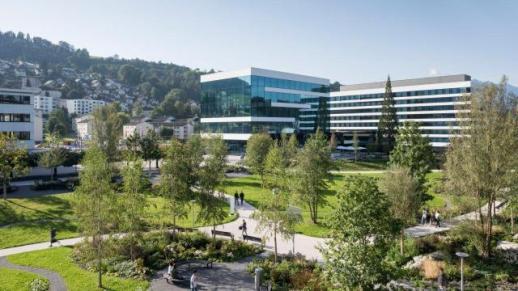 South Korea secures final victory in Schindler ISDS case SEOUL, September 28 (AJP) - South Korea’s victory in an investor-state dispute settlement case brought by Schindler Holding AG has finalized as the Swiss elevator company has not challenged the ruling within the legal deadline, the Justice Ministry said Monday. Schindler did not file an appeals action with the Paris Court of Appeal to annul the March 14 arbitration award within the prescribed period, according to the ministry. An arbitral tribunal administered by the Permanent Court of Arbitration dismissed all of Schindler’s claims against South Korea in March, rejecting its demand for about 325 billion won ($238 million) in damages. Schindler, then the second-largest shareholder of Hyundai Elevator, launched the case in 2018 under an investment agreement between South Korea and members of the European Free Trade Association. The Swiss company alleged that Korean regulators failed to properly investigate and supervise a series of capital increases and other transactions involving Hyundai Elevator, causing losses to its investment. The tribunal found that Korean authorities had acted within their lawful powers and conducted sufficient investigations and reviews. The government was also awarded about 9.6 billion won in legal costs, which the Justice Ministry said it fully recovered from Schindler in April. 2026-09-28 15:19:33
 -
 Washington must not be pushed to Beijing's 'correct' stance on Taiwan: congressman SEOUL, September 25 (AJP) -President Donald Trump should resist pressure from Beijing to alter longstanding U.S. policy toward Taiwan, a senior Democratic lawmaker said, after Chinese President Xi Jinping used his state visit to Washington to call on the United States to adopt what Beijing described as the “correct” position against Taiwan independence. “I would hope President Trump upholds our decades-long commitments to the ‘one China’ policy,” Rep. Ami Bera, a California Democrat and co-chair of the Congressional Taiwan Caucus, told AJP in a video interview ahead of the Trump-Xi summit. “Our goal is to maintain the status quo. Our goal is to avoid confrontation,” he said. “I would hope he would emphasize maintaining peace and stability in the region.” Bera’s warning gained immediacy after Xi explicitly raised Taiwan in his White House talks with Trump on Thursday. China’s state-run Xinhua News Agency quoted Xi as saying Beijing’s position on “national reunification and territorial integrity” was clear and that Washington should “adhere to the correct position of opposing ‘Taiwan independence’” and handle the issue cautiously. Xinhua highlighted the Taiwan demand in a separate dispatch shortly after the summit. The formulation goes beyond Washington’s own longstanding language. The United States recognizes the People’s Republic of China as the sole legal government of China while maintaining unofficial relations with Taiwan under a framework that includes the Taiwan Relations Act, the three U.S.-China joint communiqués and the Six Assurances. Bera and Republican Rep. Andy Barr, the two co-chairs of the Congressional Taiwan Caucus, pressed Secretary of State Marco Rubio in June over reports that Taiwan arms sales had been paused following discussions with Beijing. Rubio reaffirmed that the United States continued to adhere to that longstanding framework and that arms-sale decisions were not subject to negotiation with Beijing, according to a statement from the lawmakers. That distinction has taken on greater significance as Trump seeks agreements with Xi on trade, artificial intelligence, critical minerals and other issues while Beijing intensifies pressure over Taiwan. Washington had yet to release a detailed separate account of Thursday’s summit as of early Friday in Asia. Trump also avoided giving a substantive answer when reporters asked after the meeting whether Taiwan had been discussed. Ahead of the summit, Bera and Republican Rep. Young Kim, chair of the House Foreign Affairs Subcommittee on East Asia and the Pacific, urged Trump in a bipartisan letter to uphold established U.S. policy toward Taiwan, support its self-defense and reduce Beijing’s leverage over critical mineral supply chains. Xi, meanwhile, repeatedly framed the broader relationship around “mutual benefit,” equality and what Beijing calls “win-win” cooperation. Xinhua said Xi told Trump that recent economic and trade talks had produced a new arrangement and that a stable commercial relationship required the two countries to expand areas of cooperation while reducing points of friction. Xi also said China and the United States, as leading powers in artificial intelligence, had more reason to cooperate even as they compete. The messaging reflected a broader theme running through Xi’s visit: preserve stability in economic relations while pressing Washington on issues Beijing regards as fundamental to sovereignty. Taiwan sits at the center of that tension. The Trump administration approved an $11 billion arms package for Taiwan in December, while another package worth about $14 billion has remained delayed. Trump said after meeting Xi in Beijing in May that the second package was being held in abeyance and described arms sales as leverage in negotiations. For Bera, Taiwan should not become part of a wider transaction with Beijing. He said Trump should use his talks with Xi to reaffirm the existing U.S. framework rather than reopen the basic terms of Washington’s relationship with Taipei. Bera extended the same argument to another pillar of U.S. strategy in Asia — the military alliance with South Korea — after Trump ordered a sharp reduction in joint military exercises last month. “What Congress should do is reaffirm our commitments,” Bera said, recalling bipartisan moves during Trump’s first term to constrain the administration’s ability to substantially reduce the number of U.S. troops stationed in South Korea. “President Trump right now is not asking for Congress to weigh in, so I think we proactively have to reaffirm our commitments to the Korean people,” he said. Trump on Aug. 16 ordered the Pentagon to “substantially reduce” the annual Ulchi Freedom Shield exercise with South Korea, arguing that the drills were costly and sent an “inappropriate and hostile” signal to North Korea. The exercise, originally scheduled to run for 11 days from Aug. 17 through Aug. 27, was shortened to five days. Some live-training events were canceled or converted to simulations, although the Pentagon said essential readiness would be preserved. Bera said the move risked sending a broader strategic signal. “I think what President Trump did by cutting short the exercises does send a wrong message both to China and North Korea,” he said. “Nobody wants a war. Nobody wants fighting to occur. The reduction in exercises sends the wrong message.” The pullback has not produced an obvious diplomatic opening with Pyongyang. North Korea has continued ballistic missile tests and recently reiterated that its nuclear status was irreversible. Trump has said he intends to meet North Korean leader Kim Jong Un later this year, seeking to revive the personal diplomacy that produced three face-to-face encounters during his first term but no agreement eliminating North Korea’s nuclear arsenal. Bera said he supported Trump’s willingness to engage Kim during his first term but questioned another summit without prior coordination with Seoul and clearly defined objectives. “At this particular moment in time, I don’t think it is a good idea,” he said. “I am not against another meeting,” Bera added. “I don’t believe he has sat down with Korean leadership and said, ‘Here’s what this would look like’ and ‘Here are our objectives.’” The strategic environment has also changed since Trump and Kim last met in 2019. North Korea and Russia signed a mutual-defense treaty in 2024, and Pyongyang has since sent troops to support Russia’s war in Ukraine. “I also think the calculus has changed because today there is the North Korea-Russia alliance as well,” Bera said. “I would want that to be part of any summit.” Without consultation with U.S. allies and a defined agenda, he said, “I would be very much against it at this moment.” Bera also called on Washington to reinforce assurances that its nuclear umbrella over South Korea remains credible amid persistent debate in Seoul over whether the country should acquire its own nuclear deterrent. At a House hearing in March, Bera questioned a senior State Department official about implementation of commitments under the 2023 Washington Declaration, which established the bilateral Nuclear Consultative Group and sought to strengthen U.S. extended deterrence. “We have to continue to do rotations of nuclear assets through Korea to demonstrate to the people we are firmly committed,” he said. Bera said he understood why North Korea’s growing arsenal had fueled support among some South Koreans for an independent nuclear capability but warned that such a step could trigger wider proliferation pressures in Northeast Asia. “We support the Korean military building up its own defensive capabilities, but on the nuclear side, we are your nuclear deterrent,” he said. Bera has represented a Sacramento-area district in Congress since 2013. He is the ranking Democrat on the House Foreign Affairs Committee’s East Asia and Pacific Subcommittee, serves on the House Intelligence Committee and co-chairs both the Congressional Taiwan Caucus and Congressional Korea Caucus. His involvement with South Korea has spanned successive administrations. He visited Seoul in March 2024 as part of the Congressional Study Group on Korea and returned in March this year with another bipartisan delegation for talks with President Lee Jae Myung. “We are treaty allies,” Bera told AJP. “We have a treaty. We should firmly commit to honor the treaty.” AJP Takeaways - Rep. Ami Bera urged Trump to preserve longstanding U.S. policy toward Taiwan and keep the island outside any broader bargain with Beijing. - Bera said Trump’s reduction of South Korea-U.S. military exercises sent the wrong signal to both North Korea and China, while calling for stronger congressional reaffirmation of the alliance. - Bera also cautioned against another Trump-Kim summit without coordination with Seoul and clear objectives, while stressing the credibility of U.S. extended deterrence for South Korea. 2026-09-25 10:52:26
 -
 For Gen Z, adulthood comes in small treats SEOUL, September 22 (AJP) - Once a week, a 28-year-old nurse working at a small hospital in central Seoul walks into a gift shop in Jongno-gu and buys herself something small. It has become a ritual since she changed jobs two years ago. She does not drink or have particularly expensive hobbies. After rent, student loan payments, food, transportation and her phone bill, she says there is little left to save. The life she once imagined for 28 looked very different. “When I moved from North Gyeongsang Province to Seoul for college 10 years ago, I thought that by my age, I would have a small home of my own in Seoul,” she told AJP. Her first paycheck put that expectation out of reach. “When I graduated from college, got a job at a hospital and received my first salary, I realized I probably wouldn’t be able to buy a home in Seoul before I became a grandmother,” she said. So she buys small luxuries, spending about 100,000 won ($73.6) a month at shops like the one in Jongno-gu. A home remains a distant prospect. A small gift is something she can give herself now. “If I lived without even giving myself this much of a present, I think life would be too sad,” she said. Across South Korea and the United States, young consumers facing expensive housing and uncertain employment are delaying milestones such as homeownership, marriage and buying a car. Yet they continue to spend on more attainable pleasures: coffee, desserts, cosmetics, jewelry and capsule toys. The pattern has acquired a name in the United States: the “little treat economy.” Bank of America Institute used the term in its August analysis of Gen Z spending. Its transaction data showed that the generation had the lowest savings-to-spending ratio of those tracked, yet spending remained resilient in discretionary categories including beauty, jewelry, coffee and travel. The bank said the pattern suggested younger consumers were prioritizing products and experiences offering immediate gratification. Gen Z’s median savings-to-spending ratio was just under 0.5. Yet its jewelry spending was nearly 11 percent higher in June than a year earlier, while travel spending rose 8.5 percent. Young consumers are hardly oblivious to their financial circumstances. A Bank of America survey conducted by Ipsos in February found that 42 percent of American Gen Z adults aged 18 to 29 were living paycheck to paycheck. Nearly half, 49 percent, identified the high cost of living as a major obstacle to financial success, while almost 30 percent cited housing and rent. Forty percent had cut back on eating out, 24 percent had skipped events with friends and 16 percent had picked up side work. Money was reshaping bigger decisions, too. Twenty-four percent said their finances had caused them to delay moving a romantic relationship forward. Fifty-one percent reported spending nothing on dates in a typical month. Even so, 92 percent said they still bought themselves small treats, and 52 percent did so at least weekly. The appetite for those purchases did not mean they had abandoned saving. Asked what they would do with an extra $300 a month, 54 percent said they would save it, a higher share than among millennials, Gen X or baby boomers. The responses suggest that financial restraint and small indulgences can coexist. Young adults may cut back on social outings and postpone larger commitments while protecting a modest purchase that makes the week more bearable. South Korea has no comparable measure of a “little treat economy,” but changes in its shopping districts offer signs of demand for inexpensive entertainment. At the end of June, the country had 3,996 businesses classified as toy stores, up 20.3 percent from 3,323 a year earlier, according to National Tax Service data. The agency linked much of the growth to the spread of collectible figure stores and gacha shops, where vending machines dispense toys in capsules. Over the same period, the number of beer pubs fell 9.1 percent nationwide, while small drinking establishments declined 9.2 percent. The figures do not establish that spending has shifted directly from alcohol to toys, but they point to a changing retail landscape. In Seoul’s Mapo-gu, home to the Hongdae shopping and nightlife area popular with young people, toy stores increased from 49 to 70 in a year, a 42.9 percent rise. A turn at a capsule-toy machine generally costs between 2,000 and 7,000 won. Customers do not know exactly which character they will receive until the capsule drops. For a few thousand won, the purchase offers anticipation and an immediate reward against a backdrop of less certain prospects. South Korea’s youth unemployment rate reached 5.4 percent in August. Small indulgences during difficult times are hardly new. The decades-old “lipstick effect” describes consumers continuing to buy relatively inexpensive luxuries while cutting back on major purchases. Beauty sales offer one indication of that resilience. L’Oréal reported adjusted like-for-like sales growth of 6.7 percent in the first quarter, its fastest quarterly growth in two years. North American sales rose 7.6 percent and European sales increased 5.5 percent. Such spending has also long supplied an easy explanation for why young adults struggle to build wealth. “A decade ago, avocado toast was blamed for low homeownership and less financial well-being among young adults. Today it may be fancy coffees or desserts,” Emily Rauscher, a professor of sociology at Brown University, told AJP. Rauscher rejects the idea that small discretionary purchases explain the broader problem. “But the real reason is structural,” she said. “The economy is not providing opportunities that used to be available to young adults.” Traditional markers of adulthood retain their economic and social importance, said Rauscher, whose research focuses on inequality and demography. Young adults still feel pressure to secure homes and stable careers, even as those goals become harder to reach. The distance between those expectations and what they can afford can give a small purchase significance beyond its price. “Discretionary purchases could be seen as a burst of economic independence,” Rauscher said. “If economic independence is beyond the reach of most young people, a brief feeling of that independence may be well worth the price of a treat.” The relief, however, can wear off long before the financial pressure does. “Unfortunately, a brief indulgence is only temporary and cannot address the underlying issue,” Rauscher said. “The treats could therefore become repetitive or even addictive.” For the nurse in Jongno-gu, the weekly gift does not bring a home of her own any closer. It makes the life she can afford a little easier to live. AJP Takeaways - Young adults in South Korea and the United States are delaying costly milestones while preserving small, affordable pleasures. - Bank of America data show Gen Z combines financial restraint with regular spending on treats such as coffee, beauty products and jewelry. - Brown University sociologist Emily Rauscher says structural economic pressures, not small indulgences, are the deeper barrier to young adults building wealth. 2026-09-22 17:21:38
 -
 A South Korean bill seeks to shield domestic abuse victims' addresses SEOUL, September 22 (AJP) - A bill to require courts to shield domestic violence victims’ addresses and other contact details has been introduced in South Korea following the killing of a woman who went into hiding from her violent husband. People Power Party Rep. Kim Gunn, a member of the National Assembly’s Gender Equality and Family Committee, said Tuesday he had introduced an amendment to the Family Litigation Act to prevent victims’ new addresses or contact information from being disclosed to alleged abusers during divorce and other family lawsuits. Under existing law, a party to a family lawsuit can ask a court to protect personal information in court records if disclosure could endanger that person’s life or physical safety. Kim’s bill would require courts to act without a request when a domestic violence victim is already covered by an emergency order, restraining order, temporary protection order or victim protection order. Courts would also be allowed to initiate protections when there are substantial grounds to believe a victim faces physical harm. Kim’s office cited a recent case in Gwangju, Gyeonggi Province, in which a woman who had moved with her young daughter to escape domestic violence was killed after her new address was reportedly disclosed to her husband during divorce proceedings. The woman had received a temporary protection order and a police-issued smartwatch. “There must be no protection gap that allows a victim’s information to be exposed to an abuser during litigation,” Kim said. “I will do my utmost to eliminate blind spots that expose victims’ addresses and ensure their safety comes first.” The proposal follows another victim-protection bill Kim introduced on June 18. That amendment to the Stalking Punishment Act would require authorities to notify stalking victims of developments involving offenders — including investigations, trials, imprisonment and release — without requiring a separate request from victims. The bill remains under review by the National Assembly’s Legislation and Judiciary Committee. 2026-09-22 15:03:31