

Journalist
Lee Jung-woo이정우
cannes2030@ajupress.com
ReporterMinistry of Unification & North Korea, Politics, Foreign Affairs
I studied philosophy in college, and sociology and journalism in graduate school. I cover North Korea, South Korean politics, foreign affairs and films. I enjoy Nordic cinema, Indian cuisine and Japanese detective novels. I have a cat and like bright, acidic coffee.
"Were it left to me to decide whether we should have a government without newspapers, or newspapers without a government, I should not hesitate a moment to prefer the latter."
"Were it left to me to decide whether we should have a government without newspapers, or newspapers without a government, I should not hesitate a moment to prefer the latter."
Latest by Lee Jung-woo
-
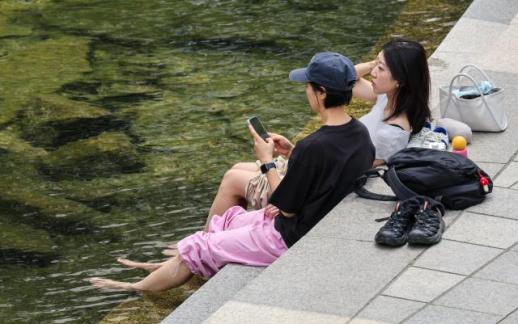 Seoul tightens public drinking rules with Seoul Station plaza ban SEOUL, October 12 (AJP) -Seoul is poised to become less lenient on drinking in public spaces. Seoul Station Plaza will become an alcohol-free zone on Nov. 9, with violators facing fines of 50,000 won ($35) starting March 1, 2027, Seoul’s Jung-gu district announced Monday. The move comes as the Seoul Metropolitan Government considers fines for drinking along Cheonggye Stream, part of a broader push by local governments across South Korea to curb drinking in parks, plazas and other shared spaces. Jung-gu cited persistent complaints about daytime drinking, noise and disruption to pedestrians around the station. The designation will cover approximately 13,283 square meters of outdoor space, excluding indoor businesses, subway entrances and nearby pedestrian passages. The district said 96.4 percent of 1,238 people surveyed supported the restriction. Authorities will run public awareness campaigns and issue warnings through February before beginning to impose fines in March. Similar restrictions are taking effect elsewhere in the capital. Eunpyeong-gu designated 34 children’s parks as no-drinking zones on Oct. 1, with fines of 100,000 won set to take effect in January. Gangnam-gu designated six parks in July, with enforcement beginning Oct. 31. Outside Seoul, Bucheon in Gyeonggi Province designated a lawn area outside Bucheon Station as an alcohol-free zone on Oct. 1. Jeonju in North Jeolla Province introduced similar restrictions at Pungnammun Gate Square in September. Both cities plan to begin imposing fines of 50,000 won in January 2027. The measures reflect a broader push by local governments to curb public drinking and improve safety in parks, plazas and other shared spaces. 2026-10-12 11:52:57
 -
 Sejong's letters find a world of new readers SEOUL, October 08 (AJP) - At Seoul’s must-visit Gwanghwamun Square, two imposing tenants loom over the crowds — one standing and one seated. The seated figure is Sejong the Great, the 15th-century monarch who gave Koreans their own alphabet. South Korea marks the 100th anniversary of Hangeul Day on Friday, a national holiday honoring his creation of a writing system that has traveled far beyond the kingdom for which it was invented. Sejong and his Gwanghwamun neighbor Admiral Yi Sun-sin remain among Korea’s most revered historical figures. Sejong also graces the 10,000-won banknote, making his face familiar even to those who have never visited the square. He would have reason to be proud of how far his letters have traveled. From classrooms in Europe to convenience stores in Central Asia, Hangeul is gaining recognition as Korean attracts new learners and companies turn its distinctive characters into a marketing advantage. Nearly six centuries after its creation, an alphabet intended to give ordinary Koreans a voice is finding readers in places its inventor could never have imagined. The government-funded King Sejong Institute Foundation recorded 239,020 enrollments in 2025, including online courses, up from 210,374 a year earlier and more than double the 2020 figure. Its network has expanded to 273 institutes in 89 countries, with Greece, Rwanda and Sri Lanka joining the map this year. Korean is also gaining ground in ordinary school timetables. At the end of 2025, 2,777 primary and secondary schools in 47 countries offered Korean classes, according to Education Ministry figures. That was 54 percent more schools than in 2021, with enrollment reaching 236,089. Uzbekistan accounted for 68 schools added between 2024 and 2025, the largest increase in any country over that period. For learners without a nearby classroom, there is the phone. Korean overtook Italian to become Duolingo’s sixth most-studied language worldwide in 2025. The platform’s expansion of courses into more learners’ native languages helped widen access. K-pop, dramas and films offer an obvious invitation. A favorite song can prompt a first lesson; a television series can turn subtitles into something viewers would rather do without. But the reasons for continuing increasingly extend beyond entertainment. Korean also offers a route toward university study, employment and professional connections. The language that brings fans closer to a singer may eventually bring students to a campus or applicants to a job interview. Businesses, meanwhile, are discovering that customers do not always need to read Korean for its letters to make an impression. For years, English branding offered Korean companies an international look. Now some are putting their Korean identity front and center. Nongshim opened a Shin Ramyun food experience near Peru’s Machu Picchu in 2025, using the Korean word bunsik, a term for inexpensive casual foods such as noodles and snacks. Similar experiences followed in Tokyo’s Harajuku district and Ho Chi Minh City. Burger chain Lotteria put its name in prominent Korean lettering at its first U.S. restaurant in Fullerton, California, which opened in August 2025. The company said the sign emphasized the brand’s Korean identity. The approach extends to snack packaging and fashion. Orion has used Korean lettering on products in Vietnam, Lotte Wellfood on products introduced in Kazakhstan, and Matin Kim on clothing that replaces its familiar English-language logo with Korean characters. Even Coca-Cola has joined in. Its 2024 K-pop-inspired K-Wave drink featured “코카-콜라” on packaging released in 36 markets, including the United States, France and Japan. The letters signal an association with Korean culture before a customer sounds out a syllable. On a drink can or a shopfront, the script itself has become part of the appeal. That commercial afterlife would have been far removed from Sejong’s original purpose. When he developed the alphabet in 1443, educated Koreans relied heavily on Chinese characters. Mastering them required years of study, and they were ill-suited to expressing the sounds and grammar of everyday Korean. Sejong, the fourth ruler of the Joseon Dynasty, wanted people beyond the educated elite to be able to express themselves in writing. In 1446, the new system was formally introduced through Hunminjeongeum, meaning “The Proper Sounds for the Instruction of the People,” the name given both to the script and the document explaining it. Its design remains part of its fascination. The basic consonants reflect the positions of speech organs, including the tongue and mouth. The original vowel shapes drew on the philosophical elements of heaven, earth and humanity. Rather than running in a line of separate letters, consonants and vowels fit together into syllable blocks. What may look to a beginner like a collection of complex symbols is an alphabet assembled into compact units. The original system had 28 letters. Modern standard use centers on 24 basic letters, comprising 14 consonants and 10 vowels. Almost five centuries after its introduction, the alphabet acquired renewed significance as a symbol of identity. In 1926, under Japanese colonial rule, Korean language scholars organized its first anniversary celebration. They called it Gagya Day, after the opening sounds traditionally used to teach the letters. That first observance took place on Nov. 4. It became Hangeul Day in 1928, and the date was later settled as Oct. 9 after the discovery of a historical manuscript helped establish the timing of the alphabet’s promulgation. An observance born of efforts to preserve Korean language and culture eventually became a national holiday. A century after those scholars gathered, the task looks very different. Korean is taught in schools across continents, while its letters appear on restaurant signs, clothing and phone screens far beyond the peninsula. Back in Gwanghwamun Square, Sejong remains seated with his book open and one hand raised. Visitors from around the world stop beneath his bronze throne, many carrying phones filled with the very characters he created. His letters have traveled farther than he ever could. Designed to help Koreans put their thoughts into words, they are now helping new readers find their way into Korea. 2026-10-08 17:55:16
 -
 South Korea, Egypt elevate ties to strategic partnership SEOUL, October 08 (AJP) - South Korea and Egypt elevated their diplomatic relations to a strategic partnership on Thursday and announced the start of negotiations for a comprehensive economic agreement, as their leaders pledged closer cooperation in trade, defense and regional security. South Korean President Lee Jae Myung and Egyptian President Abdel Fattah el-Sisi announced the agreement following a summit at Cheong Wa Dae, the presidential office in Seoul, during Sisi's three-day state visit from Wednesday to Friday. The two countries issued a joint statement formalizing the diplomatic upgrade and agreed to begin negotiations on a Comprehensive Economic Partnership Agreement (CEPA), which would cover trade in goods and services, investment and broader economic cooperation. Lee said the agreement would establish a stronger institutional foundation for bilateral trade and investment, expressing hope that negotiations could be concluded swiftly. The leaders also oversaw the signing of a social security agreement designed to prevent workers temporarily assigned to the other country from having to pay pension contributions in both countries. The arrangement is expected to reduce costs for companies operating across the two markets. The two governments agreed to expand cooperation in clean energy, environmentally friendly shipbuilding, science and technology, as well as defense manufacturing. Sisi welcomed the expanded partnership and pledged to support South Korean companies seeking to enter or expand operations in Egypt. The Egyptian leader met representatives of 23 major South Korean companies in Seoul on Wednesday, proposing the establishment of a Korean industrial zone within the Suez Canal Economic Zone. He presented Egypt as a potential manufacturing and export base for Korean companies seeking access to markets in Africa, the Middle East and Europe. Defense cooperation was another major item on the agenda. Lee called for bilateral cooperation to extend beyond arms sales to include local manufacturing and technology transfers that could strengthen Egypt's industrial capabilities. The two countries already have substantial defense ties. In 2022, South Korean defense manufacturer Hanwha signed an approximately $1.7 billion agreement to supply Egypt with K9 self-propelled howitzers and supporting military vehicles. The deal includes local production and technology transfers. Energy and infrastructure have also become important pillars of the relationship. In August 2022, state-run Korea Hydro & Nuclear Power secured a $2.25 billion contract to supply equipment and construct turbine buildings for Egypt's El Dabaa nuclear power project, which involves four Russian-designed reactors. South Korea and Egypt established diplomatic relations on April 13, 1995, and upgraded their ties to a comprehensive cooperative partnership in 2016, when Sisi visited Seoul. The latest summit marked another step in that relationship, coming nearly 11 months after Lee visited Egypt in November 2025, when the two leaders agreed to pursue a broader economic partnership. Egypt is an important regional partner for South Korea because of its strategic position linking Africa, the Middle East and Europe through the Suez Canal. Bilateral merchandise trade exceeded $1.6 billion in 2024, according to Egypt's Finance Ministry. South Korea exports vehicles, machinery and electrical equipment to Egypt, while Egypt supplies products including fuel, fertilizers and garments. The leaders also discussed security challenges affecting the Korean Peninsula and the Middle East. Lee praised Egypt's diplomatic efforts toward peace in Gaza, while Sisi expressed support for Seoul's efforts to reduce tensions and promote peaceful coexistence on the Korean Peninsula. Both sides reaffirmed the importance of safe navigation and uninterrupted international maritime trade, an issue of particular significance to Egypt, which controls the Suez Canal, one of the world's busiest shipping routes. Cultural exchanges also featured in the summit. The two governments designated 2027 as a year of mutual cultural exchanges, pledging to strengthen cooperation in education, cultural activities and people-to-people ties. Sisi's visit was the first by an Egyptian president to South Korea in a decade. Seoul extended full state-visit honors, including an aerial escort by South Korean FA-50 light combat aircraft and a formal welcoming ceremony. Lee also prepared a premium road bicycle as a gift for Sisi, an avid cyclist, while a state luncheon featured dishes combining Korean ingredients with Egyptian culinary traditions. AJP Takeaways - South Korea and Egypt elevated ties to a strategic partnership and launched negotiations for a Comprehensive Economic Partnership Agreement (CEPA). - The two countries pledged deeper cooperation in defense, nuclear energy, shipbuilding and technology, building on existing multibillion-dollar projects. - The leaders also discussed security challenges in the Middle East and on the Korean Peninsula, while seeking to expand trade and investment. 2026-10-08 13:32:20
 -
 South Korea is a de facto abolitionist state – or is it? SEOUL, October 07 (AJP) - Fifty-two people remain on death row, growing old under sentences the state has left unfulfilled for nearly three decades. Their average age is 58.7. Among them are serial killers Yoo Young-chul and Kang Ho-soon, who killed 20 and 10 people, respectively. As the World Day Against the Death Penalty approaches on Oct. 10, South Korea remains caught between its long suspension of executions and a public largely unwilling to abandon them. A September survey commissioned by Amnesty International Korea and conducted by Korea Research Center found that 52.9 percent of 1,000 respondents supported retaining the death penalty and carrying it out when necessary. Another 34.3 percent wanted to keep capital punishment in law while continuing the moratorium. Just 8.5 percent favored abolition. Yet 70.9 percent knew that most countries had abolished executions in law or practice. The divide appears to reflect more than unfamiliarity with the international abolition movement. Many South Koreans understand that shift but remain unconvinced they should follow it. A series of brutal crimes has sharpened that tension, including the killing of 17-year-old Lee Chae-won in Gwangju. Prosecutors sought the death penalty for Jang Yoon-gi, 23, citing a high risk of further violent or sexual offenses if he returned to society. A Gwangju court instead sentenced him to life imprisonment on Sept. 30, stressing that the sentence should not be understood as leniency and that he should remain behind bars without parole. The case revived a related debate: whether South Korea needs a formal sentence of life imprisonment without parole as an alternative to execution. For many supporters of capital punishment, the central concern is what would replace it. In the Amnesty survey, 26.6 percent identified the need to punish heinous crimes as the most important factor shaping their position. Asked what should take priority in any discussion of abolition, respondents’ leading concerns included preventing serious crime and protecting public safety, followed by alternative punishments such as life without parole. International human rights standards ranked much lower. The findings suggest a debate rooted as much in punishment and public confidence as in principle. If execution disappears, can society be certain that someone who commits an exceptionally brutal crime will never walk free? And would imprisonment alone satisfy the demands of justice for victims and their families? Rep. Yoo Sang-bum of the conservative People Power Party, a former senior prosecutor, said the public’s sense of justice remained a compelling reason to retain capital punishment. “I believe retaining the death penalty is reasonable,” Yoo told AJP. “The public still strongly believes that the state must respond forcefully to brutal murders. Punishment is based on the realities of the times and public perceptions, and I therefore believe the death penalty should be retained in South Korea today.” Rep. Ahn Sang-hoon, also of the People Power Party, went further. “For clearly established heinous criminals, I believe retaining the death penalty is right,” Ahn said. “Despite the importance of respecting life, there are cases where punishment is necessary to make an example. The death penalty is a necessary evil.” Their position rests on an enduring argument: some crimes are so destructive that the state must retain its most severe punishment. Opponents question whether any justice system can impose an irreversible sentence with sufficient certainty and impartiality. Kim Woong, a lawyer, former prosecutor and author of the bestselling Diary of a Prosecutor, said studying the history of criminal law changed his position. “I initially supported retaining the death penalty, but after studying the history of criminal law, I came to believe abolition is somewhat better for society,” Kim told AJP. He identified three concerns: capital punishment can be politically abused; wrongful executions cannot be corrected; and the punishment can encourage society to place responsibility for crime entirely on individuals while overlooking social conditions that may contribute to it. The possibility of error is central to the abolitionist argument. Brandon L. Garrett, the David W. Ichel Distinguished Professor of Law at Duke University School of Law, told AJP that murder investigations can be particularly vulnerable. Witnesses may be unavailable, confessions false or coerced, and forensic findings misleading. Garrett cited nearly 200 people exonerated after being sentenced to death in the United States, including more than 20 whose cases involved post-conviction DNA testing. He also pointed to the prevalence of severe mental illness, brain injuries and childhood abuse among defendants in capital cases. The American experience does not translate directly to South Korea, which has a different legal system and history. But Sheri Lynn Johnson, a Cornell Law School professor who has studied capital punishment and racial bias for decades, said the underlying vulnerabilities extend beyond any one country. The American death penalty falls disproportionately on racial minorities, the poor, people with little education and those with mental illnesses, she said. “These are problems that beset every society,” Johnson told AJP. “Everywhere there are outcasts with whom most people do not identify, and cannot feel compassion for.” “The process of sentencing someone to death ultimately is deciding that they are less than human, and I don't think that decision can be made without bias.” Johnson described how discretion and bias can compound each other throughout a criminal case. In the United States, prosecutors decide which cases warrant seeking death and which prospective jurors to exclude. People categorically opposed to capital punishment can be barred from serving on capital juries. Such “death-qualified” juries tend to be more likely to convict, she said, while the selection process can disproportionately exclude racial minorities. South Korea does not share that history of racial discrimination in jury selection. The broader question, however, is relevant wherever prosecutors and judges exercise discretion: how far can a justice system prevent poverty, education, mental health, social status or public outrage from influencing who receives its harshest sentence? For nearly three decades, South Korea has accommodated both sides through an uneasy compromise. The death penalty remains legal. Prosecutors can seek it, courts can impose it and politicians can invoke it after shocking crimes. But the state has carried out no executions since Dec. 30, 1997. Amnesty International has classified the country as “abolitionist in practice” since 2007. Supporters can point to the punishment’s continued existence. Opponents can point to the absence of executions. Successive governments have avoided the politically costly choice between formal abolition and a return to the gallows. That accommodation leaves a question unresolved: what purpose does a death sentence serve if the state indefinitely declines to carry it out? For those who regard execution as indispensable to justice and public safety, almost 30 years without it require an explanation. For those who consider it too fallible or inhumane to use, keeping it in law leaves open the possibility that a future government could resume executions. The polling suggests that any path toward abolition will depend heavily on public confidence in the alternative. Life imprisonment without parole speaks directly to the fear that a convicted murderer could eventually return to society. The Jang case illustrates the distinction: prosecutors sought execution, while the court imposed life imprisonment and emphasized permanent isolation. Its stated intention, however, also highlights the question of whether existing sentencing provisions can guarantee that outcome. Public anger after a horrifying crime is real, as is the suffering of victims and their families. An argument for abolition that fails to address punishment and safety is unlikely to persuade those whose support for capital punishment rests on both. The risks raised by opponents are equally difficult to set aside. Evidence can be wrong, confessions false and decision-makers biased. Political circumstances can change. An execution forecloses any possibility of correcting the outcome. South Korea’s debate therefore turns on more than whether a crime can be terrible enough to deserve death. It also turns on whether the public trusts the state to make that irreversible decision — and whether it trusts the alternatives enough to relinquish it. AJP Takeaways - South Korea has not carried out an execution since 1997, but the death penalty remains legal and 52 people are still on death row. - A September survey found 52.9 percent support retaining and using capital punishment, while just 8.5 percent favor abolition. - The debate increasingly centers on whether life without parole can protect public safety while avoiding the irreversible risks of execution. 2026-10-07 16:26:00
 -
 South Korea's Nuri rocket delivers 15 satellites to orbit SEOUL, October 07 (AJP) - South Korea's homegrown Nuri rocket successfully carried 15 satellites into orbit Wednesday, completing its fifth flight and extending a run of successful launches that has become central to the country's effort to build an independent space industry. The three-stage rocket lifted off from the Naro Space Center in Goheung, about 400 kilometers south of Seoul, at 12:25 p.m. and completed its flight roughly 20 minutes later. It successfully separated its stages and reached an altitude of about 575 kilometers before releasing five primary Earth-observation satellites and 10 smaller CubeSats, according to the Korea AeroSpace Administration, or KASA. The launch was Nuri's most complicated satellite deployment yet. Unlike earlier missions, in which the rocket carried only one primary satellite, Nuri had to release five main satellites one after another while changing the orientation of its upper stage to keep the spacecraft from colliding. The five satellites, known as NEONSATs, were released individually at intervals of about 35 to 40 seconds. Ten CubeSats — small spacecraft built around standardized dimensions and commonly used for research and technology demonstrations — were then deployed in pairs. The mission marked the first time Nuri had attempted to place several primary satellites performing the same mission into orbit during a single flight. The mission was significant for more than simply getting another rocket off the ground. A launch vehicle must not only reach space but also deliver its payloads to the intended orbit with enough precision for the satellites to perform their missions. The five NEONSAT spacecraft each weigh less than 100 kilograms and are designed to observe the Korean Peninsula and surrounding areas. Their cameras can produce black-and-white images with a ground resolution of about 1 meter and color images at about 4 meters. They are part of a planned constellation of 10 mass-produced satellites intended to provide more frequent images for national security and responses to disasters such as wildfires and floods. Five more NEONSATs are scheduled to fly on Nuri's sixth mission next year. Once the full constellation is operating, officials expect it to photograph the Korean Peninsula at least three times a day and revisit the same location within 24 hours during emergencies. Nuri, also known as the Korea Space Launch Vehicle II, is South Korea's first space rocket developed largely with domestic technology. The 47.2-meter rocket weighs about 200 tons at launch and was designed to place satellites weighing roughly 1.5 tons into low Earth orbit. Its first launch, in October 2021, fell short when the third-stage engine shut down too early to place a dummy payload into orbit. The rocket succeeded on its second flight in June 2022 and has now completed four successful launches in a row. Its payloads have also become progressively more demanding, shifting the program from proving that South Korea can build and launch its own rocket toward using Nuri as a regular means of transporting working satellites into space. The mission also reflected another transition in South Korea's space program: a growing role for private industry. Nuri was developed under the leadership of the state-run Korea Aerospace Research Institute with participation from hundreds of South Korean companies. Hanwha Aerospace has gradually taken on a larger role in producing and operating the rocket and participated extensively in Wednesday's launch-control operations. The government plans to use repeated Nuri launches to transfer more manufacturing and launch expertise to the private sector, following a broader global shift in which companies increasingly handle services once performed almost entirely by national space agencies. AJP Takeaways - South Korea’s Nuri rocket successfully completed its fifth flight, placing 15 satellites into orbit. - The mission marked Nuri’s most complex deployment yet, with five primary satellites released sequentially. - The launch also highlighted the expanding role of private companies in South Korea’s space program. 2026-10-07 15:04:33
 -
 South Korea ups depopulation zones to 92 as Seoul's pull grows SEOUL, October 07 (AJP) -South Korea has added three localities to its list of depopulation zones, bringing the total to 92 as the country struggles with a shrinking population and the growing concentration of people and jobs around Seoul. The Ministry of the Interior and Safety said Wednesday that the newly designated areas are Geumjeong District in the southeastern port city of Busan; Dongducheon, north of Seoul; and Tongyeong, a coastal city in South Gyeongsang Province. The designation, introduced in 2021, identifies cities, counties and districts facing particularly severe demographic pressures and makes them eligible for additional central government funding, tax incentives and regulatory support. The government initially designated 89 areas five years ago. Wednesday’s revision marked the first comprehensive reassessment since then. South Korea’s population peaked at about 51.84 million in 2020 and has since declined. The contraction has been particularly severe outside the Seoul metropolitan area as younger people continue to move toward the capital for education and employment. Under the revised system, the government assessed localities using nine indicators covering population size and structure, economic conditions and social activity. These include population growth, aging, the share of children, birth rates, youth migration, fiscal independence, urbanization and employment. The ninth measure is the “living population,” which includes people who regularly spend time in an area even if they are not registered as residents. South Jeolla and Gwangju together have the most designated areas at 16, followed by North Gyeongsang Province with 15. South Gyeongsang and Gangwon each have 12, while North Jeolla has 10 and South Chungcheong nine. Dongducheon’s addition brings the number of designated areas within the Seoul metropolitan region to five, underscoring demographic disparities even within the capital region. The other four are Ganghwa and Ongjin counties in Incheon and Gapyeong and Yeoncheon counties in Gyeonggi Province. Seoul’s districts are excluded from designation under existing regional development rules. The ministry also designated 18 localities as “areas of concern,” a separate watch list for places at heightened risk of future population decline. Geumjeong, Dongducheon and Tongyeong moved from that category into the more serious depopulation designation. Busan’s Buk District and Yecheon and Chilgok counties in North Gyeongsang were newly added to the watch list. The government operates a Local Extinction Response Fund worth about 1 trillion won ($747 million) a year to support projects in shrinking regions. Designated areas are also eligible for dozens of special measures, including tax breaks for second homes, expanded acquisition-tax exemptions for young first-time homebuyers and eased employment and residency requirements for some foreign nationals. The ministry said areas whose demographic conditions improve enough to leave the decline or watch categories will for the first time be classified as “Population Vitality Plus” regions. They will continue receiving existing support for another five years to prevent an abrupt withdrawal of assistance from reversing their recovery. Interior Minister Yun Ho-jung said the revised designations were intended to better reflect demographic and economic changes over the past five years while ensuring that recovering regions do not lose government support too quickly. The government plans to draw up a second national population-decline response plan covering 2027 through 2031. AJP Takeaways - South Korea has added Geumjeong-gu in Busan, Dongducheon in Gyeonggi Province and Tongyeong in South Gyeongsang Province to its list of “population decline areas,” bringing the total to 92. - The designation makes local governments eligible for additional state funding, tax incentives and regulatory support as demographic decline intensifies outside the Seoul metropolitan area. - The government operates a 1 trillion won ($747 million) annual Local Extinction Response Fund and plans to introduce a new national population-decline response plan covering 2027 through 2031. 2026-10-07 14:54:59
 -
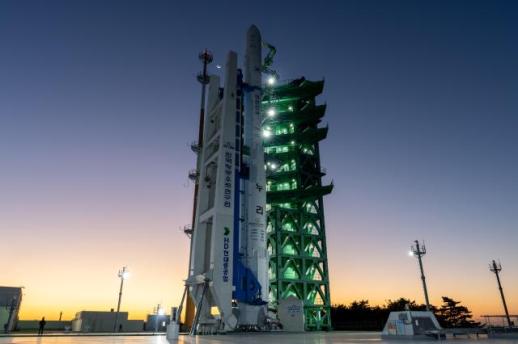 South Korea's Nuri rocket faces precision test in fifth launch SEOUL, October 07 (AJP) - South Korea’s homegrown Nuri rocket is set to lift off at 12:25 p.m. Wednesday on its fifth flight, carrying 15 satellites in what officials say will be one of the launch vehicle’s most technically demanding missions yet. The Korea AeroSpace Administration, or KASA, confirmed the launch time Wednesday morning after reviewing the rocket’s technical condition, weather, space weather and possible collision risks with satellites and space debris. No technical problems had been detected, and weather conditions at the Naro Space Center in Goheung, on South Korea’s southern coast, were within launch limits. The main thing to watch will come about 13½ minutes after liftoff. For the first time, Nuri will attempt to deploy five primary satellites in succession. The NEONSAT microsatellites, Nos. 2 through 6, are to be placed into an orbit roughly 570 kilometers above Earth, with each released about 35 to 40 seconds apart. Ten smaller CubeSats, compact satellites built to standardized specifications, will follow. KASA Administrator Oh Tae-seog described the five-satellite deployment as the key challenge of the mission, saying the rocket must change its orientation and separate each spacecraft accurately without allowing them to interfere with one another. Nuri’s first stage is expected to separate about two minutes after launch, followed by fairing separation and then the second stage. Satellite deployment is scheduled to begin about 13 minutes and 30 seconds after liftoff, with the entire flight lasting just under 20 minutes. KASA is expected to announce its initial assessment of the mission roughly 90 minutes after launch. The five NEONSAT spacecraft are part of a planned constellation designed to repeatedly observe the Korean Peninsula and surrounding areas for purposes including disaster response and national security. Another five are expected to fly on Nuri’s sixth mission next year. Once completed, the constellation is expected to be capable of imaging the Korean Peninsula more than three times a day. Before liftoff, Nuri is scheduled to enter fully automated launch operations at 12:15 p.m. Its onboard computer will continuously check the vehicle’s condition, and the launch can still be halted automatically if an abnormality is detected. The first-stage engines are scheduled to ignite four seconds before liftoff. If the launch is postponed, KASA has designated Oct. 8 through 14 as backup dates. The latest flight follows Nuri’s successful fourth launch in November 2025, when it placed 13 satellites into orbit. It also marks another step in South Korea’s effort to shift its launch program toward greater private-sector participation, with Hanwha Aerospace taking an expanded role in preparing and operating the vehicle. The upcoming launch will test not merely whether Nuri can reach space again, but whether South Korea’s rocket can demonstrate the precision needed to deploy multiple satellites in sequence. AJP Takeaways - South Korea’s Nuri rocket is scheduled for its fifth launch at 12:25 p.m. Wednesday, carrying 15 satellites into orbit. - The mission’s biggest technical challenge is deploying five NEONSAT microsatellites in succession, roughly 35 to 40 seconds apart, at an altitude of about 570 kilometers. - The launch marks another step toward more precise satellite deployment and greater private-sector involvement in South Korea’s space program. 2026-10-07 10:13:43
 -
 Seoul wired first $2.4 bn to back Texas energy project SEOUL, October 06 (AJP) -South Korea has wired an initial $2.4 billion under its $200 billion investment commitment to the United States to help fund a $22.3 billion natural-gas power complex in Encinal, Texas, designed largely to supply electricity to an adjacent artificial intelligence data-center campus. Deputy Prime Minister and Finance Minister Lee Hyoung Il told lawmakers Tuesday that the money was transferred on Oct. 1, the same day South Korea and the U.S. announced their first projects under the strategic-investment pact. The payment is earmarked for Project Star, a $22.3 billion natural-gas power complex in Encinal, Texas, designed largely to supply electricity to an adjacent artificial-intelligence data-center campus. Lee’s confirmation provided the clearest indication yet that South Korea’s investment pledge to President Donald Trump has moved beyond negotiations and project announcements and into implementation. It came the same day the Bank of Korea reported that the country’s foreign-exchange reserves fell by $1.72 billion in September to 440.56 billion dollars, their first monthly decline in four months. The central bank said the drop reflected several factors, including a decline in foreign-currency deposits held by financial institutions, valuation effects from a stronger dollar and the transfer of assets to the Korea-U.S. Strategic Investment Corp., the government entity created this year to finance and manage the investments. The September reserve figures don’t include the $2.4 billion payment itself, which was made on Oct. 1. But they illustrate how preparations for the investment program are beginning to affect the management of Korea’s stockpile of foreign assets. The government has said it intends to use earnings generated from the country’s foreign reserves, rather than draw down the reserve principal itself, to help fund U.S. projects. Proceeds from foreign-currency-denominated Foreign Exchange Stabilization Fund bonds can also be used. If those sources prove insufficient, Seoul plans to raise additional dollars through government-guaranteed foreign-currency debt rather than tap the reserve principal. That distinction matters in South Korea, where foreign reserves are closely watched as a buffer against currency and financial-market shocks. The Bank of Korea said the transfer of assets to the investment corporation reduced reported reserves because money committed to longer-term investment no longer meets the liquidity requirements for classification as official reserve assets. The government has committed to invest as much as $200 billion in U.S. strategic industries under a memorandum signed with Washington last year. A separate $150 billion shipbuilding investment program brings the broader package associated with the bilateral trade deal to $350 billion. Under legislation enacted this year to implement the agreement, annual strategic investment is capped at $20 billion. The law also requires projects to meet a standard of “commercial reasonableness” before Korea commits money. That phrase has a specific financial meaning under Korean regulations: expected income distributed to South Korea over the life of a project must be sufficient to cover the principal and interest tied to Korea’s investment. Lee told lawmakers Tuesday that the Texas project had cleared that test. “We believe the requirements have been met,” he said after an opposition lawmaker questioned whether the government had sufficiently established the project’s commercial viability before sending the money. Lee said the project had gone through the required committee reviews and had been reported to the National Assembly before its inclusion in the bilateral announcement. Project Star calls for 6.472 gigawatts of combined-cycle natural-gas generation in Encinal, in South Texas. The plants would directly supply an adjacent data-center complex being developed by Related Digital with as much as five gigawatts of computing capacity. Related Companies and NextEra Energy Resources are leading development of the generation facilities, while Lewis Energy Group is expected to provide the site, natural gas, water and related infrastructure. The developers say the power project would also be able to send electricity that isn’t consumed by the data centers into the Texas grid. Initial generating capacity is expected to enter commercial operation as early as 2029, subject to permitting and regulatory approvals, with the full complex targeted for operation by 2032. The developers estimate the project could employ about 8,400 workers at the peak of construction and support roughly 170 permanent jobs once operating. For South Korea, the prospective payoff extends beyond financial returns. Seoul said the agreement is intended to create opportunities for Korean companies to provide power-generation equipment, engineering and construction work and long-term operations and maintenance services. U.S. officials have also indicated a willingness to open opportunities for Korean-made equipment, including turbines, in other American power projects. The project is being propelled by one of the biggest changes in the U.S. electricity market in decades: the rapid rise in power consumption expected from AI data centers. The Korean government said its commercial assessment took into account the participation of established U.S. developers, rising data-center electricity demand in Texas and expected power prices. The conclusion contrasts sharply with Seoul’s position on another project Trump has championed: Alaska LNG. Trump said last week that South Korean investment would help finance roughly 54 billion dollars of development in Alaska as part of the $200 billion package. South Korean officials have been considerably more cautious. Lee said Tuesday that Project North, as the Alaska initiative is known in the bilateral framework, is only at the beginning of a review. “We need to examine its commercial viability,” he said, adding that Seoul would continue looking at ways to improve the project’s economics. South Korea’s industry ministry has likewise said no investment decision has been made and that the project would move forward only if it satisfies the commercial-reasonableness requirements of the investment agreement and Korean law. The Alaska LNG proposal would transport natural gas from Alaska’s North Slope through an approximately 800-mile, or 1,300-kilometer, pipeline to an LNG terminal in Nikiski on the Kenai Peninsula. The project is estimated to cost between $44.5 billion and $54.5 billion and would be capable of producing about 20 million metric tons of LNG annually. Glenfarne Group, which took over as lead developer this year, owns 75 percent of the venture, with the state-owned Alaska Gasline Development Corp. holding the remaining 25 percent. Its size is one reason the economics have drawn scrutiny. At the upper end of current estimates, the upfront cost for each million tons of annual LNG capacity would be more than double the average for a number of recently developed U.S. Gulf Coast export projects. Unlike Gulf Coast LNG terminals that can draw on existing pipeline networks, Alaska LNG would require construction of the long pipeline as well as a gas-treatment facility and the liquefaction terminal. The developer argues that the comparison understates Alaska’s advantage once transportation is considered. Glenfarne says shipping LNG from Alaska to Asia could cost at least 65 percent less than moving cargoes from the Gulf Coast, because Alaska is substantially closer to major buyers in Japan, South Korea and other Asian markets. The company has secured preliminary commitments covering about 13 million metric tons a year and is seeking commitments for roughly 16 million tons to underpin project financing. Most remain preliminary rather than final long-term purchase contracts. Vice President JD Vance acknowledged Monday that unresolved issues remain. “You still got to work out some of the details,” Vance said while discussing South Korea’s role in the project, though he predicted the pipeline would ultimately be built. 2026-10-06 14:36:19
 -
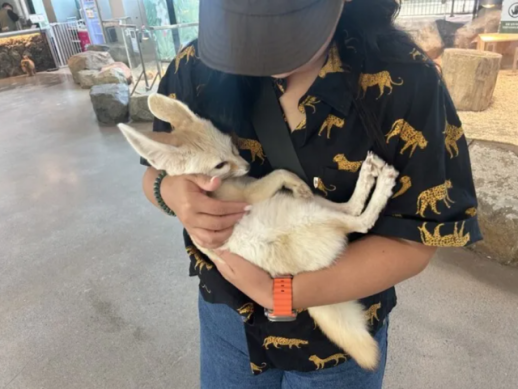 Animal encounters persist at Korean zoos despite tighter rules SEOUL, October 06 (AJP) - Nearly eight in 10 privately operated zoos in South Korea are still allowing visitors to feed, touch or otherwise interact with animals under an educational exemption to restrictions intended to curb stressful animal encounters, government data showed Tuesday. Of the country’s 91 private zoos, 70 had submitted educational plans allowing them to operate programs involving their animals as of September, according to data the Ministry of Climate, Energy and Environment provided to Rep. Lee Hack-young of the ruling Democratic Party. That amounts to about 77 percent of private zoos. South Korea tightened its zoo regulations in December 2023, shifting from a registration system to a permit system and prohibiting activities including riding, touching and feeding when they are conducted for public entertainment and inflict unnecessary pain, fear or stress on animals. But the rules contain an exception. Zoos may conduct such activities if they are included in an approved educational plan involving their animals. The provision has emerged as a broad pathway through which hands-on animal programs have continued nearly three years after the restrictions took effect. An investigation by Korea Animal Rights Advocates, an animal welfare group, found substantial differences between what zoos promised regulators and what visitors encountered in practice. The organization inspected 23 private zoos between January and September and found that 16, or nearly 70 percent, were running animal-interaction programs that differed from the educational plans they had submitted. Two facilities were operating such programs without having submitted an educational plan at all. Programs conducted without the required exemption can violate the Zoo and Aquarium Act. Violations of the provision governing entertainment-related animal interactions can carry an administrative fine of up to 5 million won ($3,720). The investigation also raised concerns about the condition of animals used in the programs. At an indoor zoo in Gapyeong, northeast of Seoul, two capybaras suffering from extensive hair loss and apparent skin problems were allowed to come into contact with visitors for nearly a month in January, according to the animal rights group. Investigators said the zoo also departed from the duration of interaction sessions specified in its educational plan and at times allowed visitors to touch animals without direct staff supervision. At another facility that had not submitted an educational plan, a meerkat escaped its indoor exhibition area and reached an outdoor space before staff noticed. A fennec fox suspected of having a leg ailment was also kept in a feeding-experience area even as it repeatedly bit at the affected part of its body. The findings echo concerns raised earlier this year by AWARE, another animal welfare organization. Its examination of 16 zoos found visitors could continue buying food and feeding animals without meaningful limits at the facilities it surveyed. The group also reported animals competing aggressively for food and displaying behavior associated with soliciting food from visitors. The government’s own guidance says programs should avoid indiscriminate feeding without controls on the amount of food, location or duration, according to Aware. Animal advocates say enforcement has lagged behind the tougher language of the law. Responsibility for enforcement is divided between the central government and local authorities, which approve and oversee zoo operations. But the investigation found that regulators did not have a comprehensive picture of whether zoos had filed educational plans or whether the programs they actually operated matched those plans. The 2023 overhaul of the law was intended to strengthen animal welfare standards and gave regulators broader authority over zoo operations. The legislation says zoos should promote wildlife conservation and research, provide accurate information about animals and improve the welfare of animals in their care. AJP Takeaways - Nearly 77% of South Korea’s private zoos have filed educational plans allowing hands-on animal programs despite tighter rules on feeding, touching and riding animals. - Animal welfare groups found widespread gaps between zoos’ approved plans and actual practices, including unsupervised contact, unrestricted feeding and interactions involving animals with apparent health problems. - Advocates say the educational exemption has weakened the 2023 reform and are calling for stricter standards, inspections and penalties. 2026-10-06 10:57:35
 -
 Vance softens Alaska LNG push after Trump tariff threat SEOUL, October 06 (AJP) - Washington and Seoul still need to "work out" details of the long-delayed Alaska liquefied natural gas project, U.S. Vice President JD Vance said Monday, striking a more measured tone days after President Donald Trump threatened to double tariff retaliation should South Korea fail to commit to the Alaska project. “The pipeline is something that we really want to see happen and a lot of our Asian friends want to happen as well,” Vance said, according to a White House pool report. “It’s not just the South Koreans. The Japanese would love to see this pipeline.” He said, “So I think it’s something that’s going to happen.” “Obviously, you still got to work out some of the details and the South Koreans, you know, have spoken to that.” The remarks appeared to acknowledge a gap between Washington and Seoul over how far negotiations have progressed. Trump said Friday that South Korea would face higher charges if it failed to join the project soon. “If they don’t want to do it, that’s OK with me. I’ll just charge them more,” Trump told reporters. “Tell them if they don’t sign shortly, I’m going to double it up.” Trump did not specify what he intended to double. South Korea has repeatedly stressed that no final investment decision has been made. The government said Seoul and Washington have agreed only to begin reviewing the Alaska project and that participation would depend on “commercial reasonableness” and compliance with domestic legal procedures. The caution reflects longstanding questions over the economics of one of the largest proposed energy infrastructure projects in the United States. Alaska LNG, majority-owned and developed by Glenfarne Group, is estimated to cost between $44.5 billion and $54.5 billion. It would carry North Slope gas through an approximately 807-mile, or 1,300-kilometer, pipeline to a liquefaction and export terminal on the Kenai Peninsula, with planned capacity of about 20 million metric tons of LNG a year. The project has been discussed in various forms for more than a decade. ExxonMobil, BP, ConocoPhillips and the state of Alaska were among the participants when an LNG export application was filed in 2014, before the project went through years of delays and restructuring. Glenfarne became the lead developer and acquired a 75 percent stake in 2025. Commercial momentum has since increased. Glenfarne says it has preliminary long-term agreements covering about 13 million tons of LNG annually with buyers including companies in South Korea, Japan, Taiwan and Thailand. It is targeting contracts covering 16 million tons to support project financing. POSCO International has separately entered a strategic partnership with Glenfarne that includes proposed LNG purchases and steel supplies for the pipeline, but that corporate arrangement is distinct from any South Korean government commitment to finance the broader project. Supporters argue Alaska LNG would give Asian importers a shorter Pacific shipping route than U.S. Gulf Coast terminals. Critics, however, point to its enormous upfront cost and the largely preliminary nature of its existing customer commitments. Vance said strong Asian demand could ultimately overcome those obstacles. “When there’s a demand for this stuff and there really is strong demand for American natural gas, I think we’re going to be able to get it done,” he said. AJP Takeaways - Vance says Washington and Seoul still need to work out details of the Alaska LNG project, striking a more measured tone than Trump’s recent warning. - Seoul says participation remains conditional on commercial viability and domestic procedures, despite Washington portraying Korean investment as more advanced. - The $44.5 billion-to-$54.5 billion project has gained Asian buyers but still faces major financing and cost questions after years of delays. 2026-10-06 09:56:36