

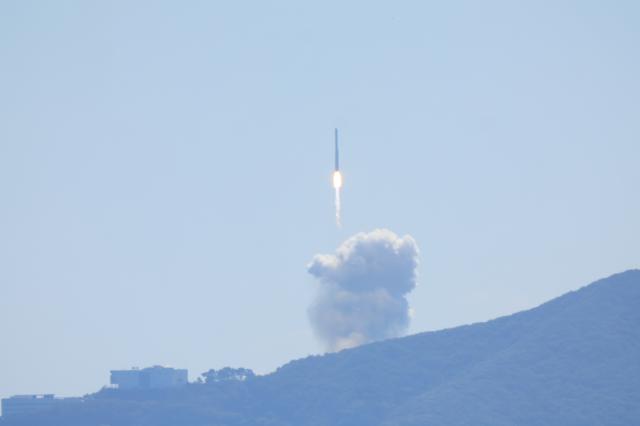
SEOUL, October 07 (AJP) - South Korea's homegrown Nuri rocket successfully carried 15 satellites into orbit Wednesday, completing its fifth flight and extending a run of successful launches that has become central to the country's effort to build an independent space industry.
The three-stage rocket lifted off from the Naro Space Center in Goheung, about 400 kilometers south of Seoul, at 12:25 p.m. and completed its flight roughly 20 minutes later.
It successfully separated its stages and reached an altitude of about 575 kilometers before releasing five primary Earth-observation satellites and 10 smaller CubeSats, according to the Korea AeroSpace Administration, or KASA.
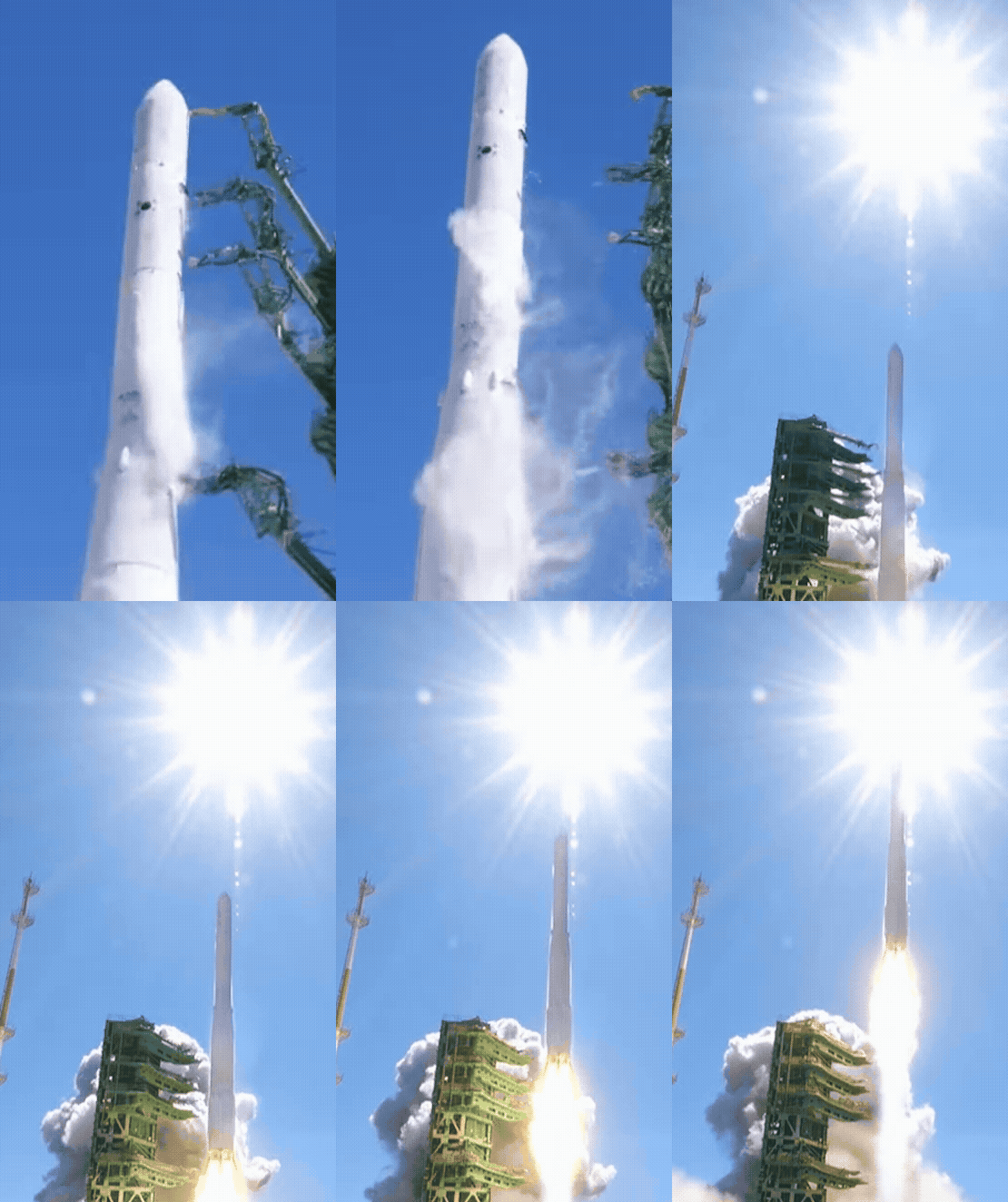
Unlike earlier missions, in which the rocket carried only one primary satellite, Nuri had to release five main satellites one after another while changing the orientation of its upper stage to keep the spacecraft from colliding.
The five satellites, known as NEONSATs, were released individually at intervals of about 35 to 40 seconds. Ten CubeSats — small spacecraft built around standardized dimensions and commonly used for research and technology demonstrations — were then deployed in pairs.
The mission marked the first time Nuri had attempted to place several primary satellites performing the same mission into orbit during a single flight.
The mission was significant for more than simply getting another rocket off the ground. A launch vehicle must not only reach space but also deliver its payloads to the intended orbit with enough precision for the satellites to perform their missions.
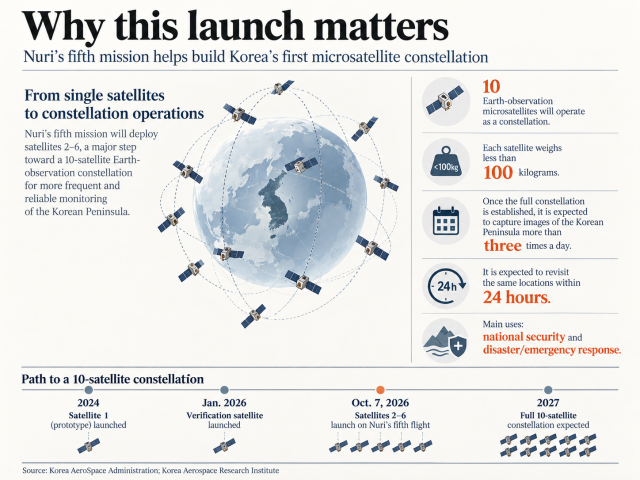
The five NEONSAT spacecraft each weigh less than 100 kilograms and are designed to observe the Korean Peninsula and surrounding areas. Their cameras can produce black-and-white images with a ground resolution of about 1 meter and color images at about 4 meters.
They are part of a planned constellation of 10 mass-produced satellites intended to provide more frequent images for national security and responses to disasters such as wildfires and floods.
Five more NEONSATs are scheduled to fly on Nuri's sixth mission next year. Once the full constellation is operating, officials expect it to photograph the Korean Peninsula at least three times a day and revisit the same location within 24 hours during emergencies.
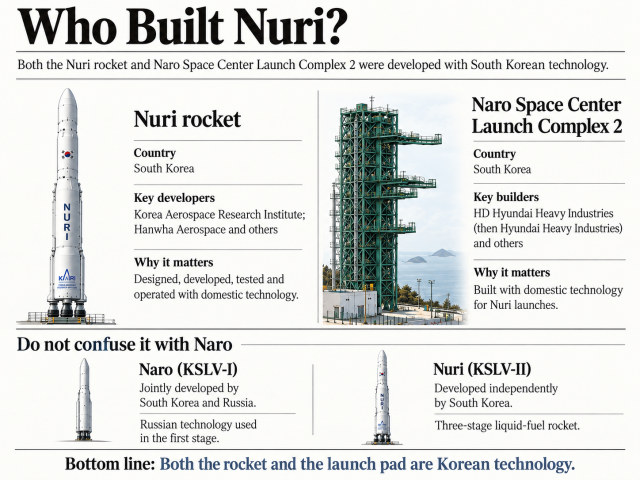
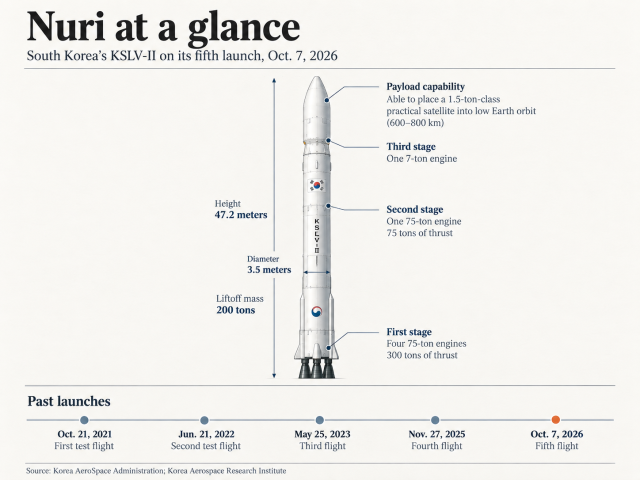
Nuri, also known as the Korea Space Launch Vehicle II, is South Korea's first space rocket developed largely with domestic technology. The 47.2-meter rocket weighs about 200 tons at launch and was designed to place satellites weighing roughly 1.5 tons into low Earth orbit.
Its first launch, in October 2021, fell short when the third-stage engine shut down too early to place a dummy payload into orbit.
The rocket succeeded on its second flight in June 2022 and has now completed four successful launches in a row. Its payloads have also become progressively more demanding, shifting the program from proving that South Korea can build and launch its own rocket toward using Nuri as a regular means of transporting working satellites into space.
The mission also reflected another transition in South Korea's space program: a growing role for private industry.
Nuri was developed under the leadership of the state-run Korea Aerospace Research Institute with participation from hundreds of South Korean companies. Hanwha Aerospace has gradually taken on a larger role in producing and operating the rocket and participated extensively in Wednesday's launch-control operations.
The government plans to use repeated Nuri launches to transfer more manufacturing and launch expertise to the private sector, following a broader global shift in which companies increasingly handle services once performed almost entirely by national space agencies.
AJP Takeaways
- South Korea’s Nuri rocket successfully completed its fifth flight, placing 15 satellites into orbit.
- The mission marked Nuri’s most complex deployment yet, with five primary satellites released sequentially.
- The launch also highlighted the expanding role of private companies in South Korea’s space program.
Copyright ⓒ Aju Press All rights reserved.
