

Journalist
Lee Jung-woo이정우
cannes2030@ajupress.com
ReporterMinistry of Unification & North Korea, Politics, Foreign Affairs
I studied philosophy in college, and sociology and journalism in graduate school. I cover North Korea, South Korean politics, foreign affairs and films. I enjoy Nordic cinema, Indian cuisine and Japanese detective novels. I have a cat and like bright, acidic coffee.
"Were it left to me to decide whether we should have a government without newspapers, or newspapers without a government, I should not hesitate a moment to prefer the latter."
"Were it left to me to decide whether we should have a government without newspapers, or newspapers without a government, I should not hesitate a moment to prefer the latter."
Latest by Lee Jung-woo
-
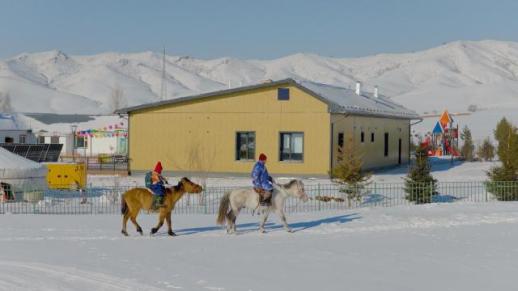 In Mongolia, school can mean leaving home at six: UNICEF representative SEOUL, October 20 (AJP) - Few children like going to school, but for a six-year-old girl in rural Mongolia the reason can be more straightforward as going to one costs her time with her family for much of the year. For rural herders, sending children to school often means sending them away. More than 36,000 children in Mongolia live apart from their families for up to nine months of the school year, according to UNICEF. "The price they are paying for good education is a very high price," Beate Dastel, UNICEF representative in Mongolia, told AJP during an interview at the UNICEF Korea Committee headquarters in Seoul. The Austrian national, who assumed her post in February after more than two decades in international development, is working to secure the essentials of childhood in a country where distance and climate deprive children of basic necessities like education, warmth, clean water and healthcare. Mongolia's population is scattered across enormous distances. Some nomadic families live hundreds of kilometers from the nearest school, leaving their children little choice but to move into dormitories or stay with relatives. Separation can begin as early as six when children enter school. Dastel worries that its consequences can follow them into adolescence and adulthood. "They could be neglected, they could live in isolation, and they could experience mental and psychological trauma," she said. UNICEF and Mongolia's Ministry of Education are trying to bring the classroom closer to home through the "One Bagh, One School" initiative. A bagh is the country's smallest administrative unit, sometimes encompassing widely dispersed households rather than a conventional village. The initiative establishes primary schools in sparsely populated rural communities so younger children can remain with their families during their foundational years of learning. Five schools have opened with support from private-sector partners. Dastel said UNICEF hopes to expand the network to 65 within five years and potentially 200 within a decade. But public budgets for education and healthcare are stretched, and expansion will require substantial investment from richer neighbors like Korea. The schools are nevertheless intended to become part of Mongolia's regular education system, with the government taking responsibility for teachers, training and long-term operations. For children who can stay at home, other hardships await. Winter temperatures in parts of Mongolia can plunge to minus 50 degrees Celsius or lower. Families living in gers — traditional circular tents — often depend on a central coal stove to heat their shared living space and cook their meals. In Ulaanbaatar's densely populated ger districts, smoke from thousands of households feeds the city's winter smog. According to UNICEF, more than 800,000 children in Mongolia are exposed to harmful levels of air pollution. Research cited by the agency has found substantially lower lung function among children in heavily polluted urban areas than among their rural counterparts. Dastel described a threat that reaches beyond respiratory illness to children's education and long-term development. One response has come from South Korea. BGF Retail, which operates the CU convenience store chain, has supported UNICEF's Cooking, Heating and Insulation Products (CHIP) initiative through the UNICEF Korea Committee since 2021. The program helps families replace coal-burning stoves with cleaner alternatives and improve insulation and ventilation, reducing energy consumption and dependence on coal. According to the UNICEF Korea Committee, the partnership has supported 483 households and 16 kindergartens, benefiting 2,722 children and adolescents. "We are really grateful to our private-sector partners for their tremendous support, especially the people of Korea and the companies," Dastel said. But a warmer, cleaner home cannot shut out the air around it. A UNICEF assessment published in January 2026 documented improvements in household comfort, energy efficiency and some measures of indoor air quality. It also found persistent exposure to fine particulate pollution from contaminated outdoor air. Asked about those findings, Dastel acknowledged that improvements in individual homes cannot resolve the wider pollution crisis without much broader adoption. "We are still at a point where we need to see how we can scale up from this pilot," she said. The upfront cost of replacing heating systems remains prohibitive for many low-income families, making financial support essential. "Only when this reaches a certain point will we have a real impact on air pollution," she said. UNICEF is also working with Mongolia's environment and energy authorities to extend cleaner technology to schools, hospitals and other public institutions. Beyond the capital's smog, a different environmental pressure is building. Falling groundwater levels threaten access to safe drinking water in remote communities, where households, livestock owners and extractive industries increasingly compete for limited supplies. In August, Ulaanbaatar hosted COP17, the 17th Conference of the Parties to the United Nations Convention to Combat Desertification, drawing international attention to land degradation, drought and water security. For Dastel, keeping countries at the negotiating table mattered at a time of considerable strain on multilateral cooperation. "For me, the key achievement was that countries were able to communicate with each other," she said. For UNICEF, the gathering was also an opportunity to connect the debate over dwindling water resources with children's daily needs. The agency has supported smart water kiosks that dispense drinking water through automated systems. These can shorten the journeys families make to collect water, although expansion requires infrastructure investment and sustainable financing. "Since groundwater levels are shrinking, this dialogue for the benefit of children will become much more important," Dastel said, referring to cooperation among competing water users. For herding families, climate extremes can also wipe out the means to support a child. Mongolia periodically experiences dzud, a severe winter disaster in which extreme cold, snow and ice make it difficult for livestock to survive. Some families can lose half their herds or more, Dastel said. "As soon as this livestock is lost, it's like losing your bank account," she said. The losses can undermine children's nutrition, schooling, healthcare and security. Alongside emergency assistance, UNICEF is working with the Mongolian government to strengthen social protection programs that support vulnerable children before disaster strikes. Reliable energy offers another layer of protection. In Arkhangai Province, UNICEF has supported solar-powered healthcare facilities that can maintain essential services during electricity outages. Dastel said dependable power is particularly critical for maternity wards and facilities treating infants and young children. "Without power, a hospital cannot function. No health center can function," she said. Technology may also help narrow the educational divide that forces so many children to leave home. UNICEF has been working with Mongolia's AI education initiatives and engaging teachers in discussions about the technology's potential. Digital learning could help communities where qualified teachers are difficult to recruit. Dastel estimated that Mongolia faces a shortage of about 5,000 qualified teachers, compounded by low salaries and the difficulty of attracting educators to isolated regions. But technology has limits. "A teacher, with a heart, soul and hands to take care of a child, cannot be replaced by AI," she said. Nor are digital opportunities evenly distributed. Many children in remote communities lack reliable internet access or the money needed to use advanced technology. "Rural Mongolia and urban Mongolia are two different environments," she added. She urged donors and Korean partners to direct investment toward children in underserved communities, helping lift them out of poverty rather than concentrating opportunities where infrastructure is already more developed. "We have to invest in bringing education to children and not the other way around," Dastel said. 2026-10-20 13:16:41
 -
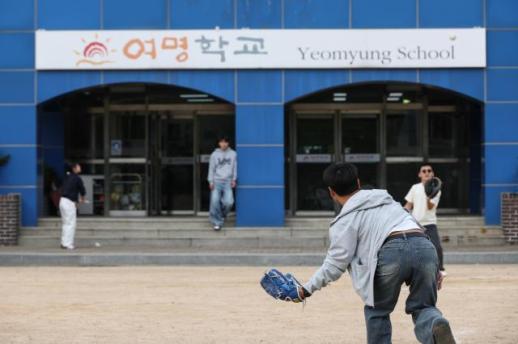 Korea's own children, still waiting to belong SEOUL, October 19 (AJP) - High school senior Kim Min-jeong is like many other university applicants in South Korea — hopeful about what comes next and anxious about getting there. For relief, she turns to her favorite K-pop group, ATEEZ. Her face lights up as she talks about the band and shows off its dance moves to their latest hit "BAD." Her family history is something she has been taught to share less freely. “My mother always tells me, ‘Never tell other people that you have family in North Korea. Just live as a Korean,’” Kim said. Born in 2006 and raised in Yanji, a city in northeastern China’s ethnic Korean region, Kim is an ethnic Korean from China, known in Korean as Joseonjok. Her mother fled North Korea. “I think she says that because she was hurt by the prejudice she experienced as a North Korean defector. She’s very afraid that people will look down on me because of that background.” At Yeomyung School in western Seoul, Kim has found a community where that background needs no apology. The accredited alternative middle and high school serves young people who fled North Korea or whose parents did. But the school that gives them a place to belong is still struggling to secure a home of its own. More than two decades after opening, Yeomyung faces another neighborhood dispute over its search for a permanent campus. For students who have already endured separation, displacement or rejection, the opposition reaches beyond arguments over land and buildings. “Even when they leave the school gates, many of our students feel intimidated,” Vice Principal Hwang Heui-gun told AJP. “Many still think of themselves as outsiders.” At a public briefing on Sept. 17, Principal Cho Myeong-sook knelt before residents and appealed for support for the new campus. Some responded angrily and demanded that the school leave. Counseling teacher Choi Yeon-jeong said students began worrying about their teachers’ safety. “Some even told me, ‘Teacher, if anything like that happens, you have to call the police immediately,’” she said. Others had a quieter question. “Some ask me, ‘Will I be able to graduate from the new school?’” For now, a permanent campus remains years away. The Seoul Metropolitan Office of Education announced on Oct. 15 that construction would begin in 2028, with the new school scheduled to open in March 2029. Yeomyung’s authorization to occupy its current building — a former elementary school in Seoul’s Gangseo district — expires in February 2027. Officials are discussing temporary classrooms to cover the intervening period. The school has moved among temporary facilities since its founding in 2004. A planned relocation to Seoul’s Eunpyeong district collapsed in 2019 after residents objected. The latest proposal would allow it to put down roots at its current site, where it moved in March 2023. Under a July agreement involving the Unification Ministry, the Seoul education office, Hyundai Motor Group and the school foundation, Hyundai pledged 6 billion won ($4.5 million). The foundation committed about 10 billion won raised through donations. Opponents have cited insufficient consultation, traffic, safety and the use of public land previously designated for early-childhood education. Their objections do not speak for the entire neighborhood. Hwang said some residents have welcomed the school and offered encouragement. On Oct. 7, a coalition of 261 civic, educational and religious organizations urged authorities to proceed. Still, the renewed uncertainty has stirred an old feeling among students: that their place here remains conditional. Yeomyung’s classrooms reflect how the lives of North Korean families can stretch far beyond the divided peninsula. As of July, only seven of its 95 students had been born in North Korea. The other 88 were born in third countries, often to North Korean mothers who had fled their homeland. Birthplace alone says little about the upheaval that brought them to the school. “These are children who were born in North Korea, children whose mothers or fathers are defectors, and children born in China or Russia after their parents fled North Korea,” Hwang said. Many have experienced poverty, separation from parents or interrupted schooling. Some have endured detention, human trafficking or the deaths of family members. Arrival in South Korea can bring another difficult adjustment. Children reunited with mothers they have not seen for years may discover that those mothers have remarried or established new families. “They have to adjust to the mother they haven’t seen for years, but also to this entirely new family,” Choi said. Even a shared language can conceal how much there is to learn. A student who chats comfortably in Korean may struggle with the vocabulary of a textbook or the demands of a written assignment. Accredited in 2010, Yeomyung offers recognized middle and high school qualifications, opening a route to university. It supplements the national curriculum with Korean-language instruction, counseling and support for settling into South Korean life. Some students arrive after being hurt in mainstream schools. Choi recalled teachers disclosing their North Korean backgrounds without permission, exposing them to classmates’ questions about hunger, accents and life in North Korea. “Students would come up to them and bombard them with these questions in an unfamiliar environment. Many told me it was terrifying,” she said. Hwang believes schools must make room for what students have lived through, rather than demand that they immediately fit in. “It is an act of violence for South Korean society to build a fence and then force these children to enter it,” he said. He learned early in his time at Yeomyung how easily distress could hide behind an apparently carefree face. Around 2009, while studying sports marketing in graduate school, Hwang joined the school as a part-time instructor. At a school camp, his energy quickly won students over. They spent the day playing and laughing together. That night, he heard children calling out in their sleep. “Mom, run.” “Mom, hide.” “Mom, don’t die.” He believed the nightmares echoed traumatic experiences some had endured while fleeing North Korea. By morning, they were laughing and playing again. “I felt so sorry for them,” he recalled. “I thought, these children really have no one to talk to about their pain.” He decided to become someone they could turn to without formality. Other teachers already filled the roles of parents or uncles. He would be an older brother. “A badass bro,” he said with a laugh. That attachment helps explain his frustration when people assume students born in China or speaking Chinese will eventually leave South Korea. “These children are our children. They are children of the Republic of Korea,” he said. “Some people think, ‘Aren’t they all going to leave for China eventually?’ But that’s simply not true.” Their citizenship circumstances vary, but Hwang said many intend to build their lives in South Korea. He hopes the permanent campus will become a source of pride for the neighborhood. For Choi, who has worked at Yeomyung since its founding, those lives should not be defined only by what the students have suffered. She sees in them an attentiveness to loneliness that others might miss. “Since our children have spent so much time feeling lonely, they can immediately recognize someone else who is lonely. Since they’ve been hurt so much themselves, they have a kind of radar that other people don’t have. They can immediately sense when someone else is hurting,” she said. “I think that radar is an extraordinary asset. It’s an incredibly valuable ability.” Kim is beginning to imagine what she might do with that understanding. “After coming to Yeomyung School, I realized how much fun it was to be around other people,” she said. “Now, being alone actually feels boring. I’ve become much brighter and more positive.” She lives in a dormitory while her parents run a small business in Seosan, southwest of Seoul. Awaiting university admission results, she hopes to study creative writing and help readers understand the importance of Korean unification. Her mother’s instinct has been to protect her by urging silence about the past. Kim hopes to find a future in telling stories. “I don’t want people to remember me simply as someone who needed healing and recovery,” she said. “I want them to remember me as someone who experienced healing and recovery, and then helped other people heal, recover and become happy.” 2026-10-19 16:07:41
 -
 South Korea can help close AI divide: World Bank VP SEOUL, October 15 (AJP) - South Korea’s digital expertise, manufacturing strength and rapid modernization make it well placed to help narrow a global wealth divide that artificial intelligence could deepen, a senior World Bank executive said. “What we call Big AI is an ecosystem dominated by just a handful of advanced countries — not even all advanced countries — and a small number of global corporations,” said Kim Sangbu, the World Bank Group’s vice president for Digital and AI. “That makes it difficult for low- and middle-income countries to participate actively.” The imbalance creates a clear role for South Korea, Kim told AJP in a Zoom interview ahead of his visit to Seoul for next week’s Global AI and Digital Summit. For developing economies, he argued, the greatest opportunity lies in applying affordable AI to everyday problems rather than competing to build the world’s most powerful models. Korea’s experience offers practical lessons in everything from managing water to helping small businesses use data. “The greater value lies not necessarily in building those systems, but in how effectively countries use them to strengthen their own industrial capabilities.” The Oct. 19–22 summit, jointly hosted by the World Bank Group and South Korea’s ministries of finance and economy and science and ICT, will examine how digital technologies can create jobs, raise productivity and improve services in developing economies. Kim said it would be the first time the World Bank had taken the event outside Washington, where the previous two gatherings were held. “There has been considerable interest in the independent, sovereign AI models being pursued by the Korean government and Korean companies,” he said. “At the same time, many of the practical AI applications being developed in Korea align very closely with the World Bank’s policy priorities.” The aim is to help developing countries identify technologies and policies they can adapt to their own circumstances. Several initiatives and potential cooperation projects will be introduced or discussed at the summit, although Kim declined to disclose details ahead of the event. He singled out South Korea’s digital water management as a promising model for countries struggling with food insecurity, natural disasters and inadequate infrastructure. “Water is an especially critical resource in developing countries,” Kim said. “It is closely connected to agriculture and food security, while effective water management can improve productivity, create jobs and prevent disasters.” He cited systems developed by the Korea Water Resources Corporation, commonly known as K-water, to monitor and manage water resources. “If we can successfully adapt Korea’s digital and AI-based water management systems to developing countries and integrate them into their own water management frameworks, that would be a highly rewarding example of successful development cooperation,” he said. Success, he stressed, should be measured by how many people benefit and what improves in their lives, rather than simply how many Korean technologies are introduced abroad. Agriculture offers another opportunity, particularly for smallholder farmers with limited access to finance, equipment and specialist advice. “Applying AI to agriculture goes far beyond simply telling farmers when it will snow, rain or flood,” Kim said. Applications can identify crop diseases and pests, assess soil conditions and recommend pesticides or the appropriate types and quantities of fertilizer. Digital platforms can also connect farmers with small loans to buy seeds and supplies, or with nearby machinery rental services. “A farmer who would otherwise spend a month plowing a field could rent a machine and finish the work in a single day,” he said. “These applications are producing truly remarkable results in improving agricultural productivity.” Such uses illustrate what Kim calls “Small AI”: affordable tools adapted to local needs that can operate with relatively limited infrastructure and data, including on smartphones. The distinction matters for countries without the resources to compete with global technology companies developing ever-larger models. Similar applications in health care and education could help communities with too few doctors and teachers. But making them useful requires reliable local information. “Local AI applications have to understand local languages, local climate conditions and local circumstances,” Kim said. “That requires the capacity to collect and analyze local information, but it does not necessarily require enormous computing power.” Governments need to make public data accessible and establish frameworks that allow businesses to develop services, he said. Market forces alone will not be enough. The World Bank is seeking to address those gaps through its “@A Billion” initiative, which aims to reach one billion people by 2030: 600 million using broadband internet and 400 million using digitally enabled services. The program focuses on access, affordability, digital ecosystems and countries’ readiness to adopt and adapt AI. About 2.2 billion people worldwide still do not use the internet, while less than 1 percent of global AI traffic flows to low-income countries, according to the World Bank. Asked where a finance minister with limited resources should invest first — AI, data centers, electricity, internet access or education — Kim chose electricity. “Fundamentally, the power grid would come first,” he said. “Without electricity, you cannot use the internet. Even if you have a mobile phone, you cannot charge it.” But governments should not wait until an entire national power network is complete before investing in other areas. Cities, businesses and communities already able to use digital services need skills, infrastructure and practical applications alongside the expansion of basic utilities. “Even when there is a clear sequence of priorities, it would not be desirable to concentrate on just one area until everything there is completed,” he said. The employment stakes are substantial. The World Bank estimates that about 1.2 billion young people will reach working age in developing countries over the next 10 to 15 years, while those economies are projected to create only about 420 million jobs. Its 2026 World Development Report, “The Promise of Artificial Intelligence,” estimates that 4.5 percent of jobs in low- and middle-income countries are at risk of automation by generative AI. By comparison, 16.2 percent could see meaningful productivity gains. “We expect the improvements in productivity to outweigh the reduction in jobs,” Kim said. “Existing jobs should generate greater value, improving their quality, while new jobs can also be created.” He pointed to shortages of doctors, nurses and teachers, where AI could help existing professionals serve more people. Higher agricultural productivity could also support new businesses and employment. Those gains, however, depend on reliable electricity, digital infrastructure, education and effective government policies. Kim rejected the idea that Korea’s development experience is useful only to countries that already have strong institutions, advanced education systems and extensive infrastructure. Many of Korea’s present strengths were themselves products of its development, he argued. “If you look back 20, 30 or 40 years, Korea was not necessarily in a substantially different position from many of today’s developing countries, particularly middle-income countries,” he said. “I am convinced that the fundamental lessons from Korea’s rapid development can be applied elsewhere.” He identified government policy capabilities and investment in education as central to that transformation. Digital literacy campaigns and data voucher programs, which help startups and small businesses access data, offer more specific lessons. AI could help developing countries build skills and improve government capabilities faster than Korea did during its industrialization. Yet rapid adoption without adequate safeguards could expose citizens to privacy breaches, cyberattacks and misuse of personal information. “Without basic data protection mechanisms, the risks can be extremely serious,” Kim said. Privacy legislation is only a starting point, he added. Governments also need the institutions and expertise to enforce it. For Korean companies, the development agenda opens business opportunities that extend beyond technology exports. “Digital and AI industries include many small and medium-sized companies,” Kim said. “If they strengthen their understanding of overseas markets and local regulatory and labor conditions, I believe they will find many more opportunities.” But importing technology alone will not give developing economies the expertise, skilled workers and capacity for innovation they need. “If a country simply imports foreign technologies without developing its own capacity for innovation, it risks remaining dependent on imports,” he said. Kim urged Korean businesses to view developing countries as long-term investment destinations. He singled out Africa, where population growth will create demand for goods, services and jobs. “That means the markets of the future are there,” he said. “If Korean capital and technology can be combined to support economic development in those countries, it could create greater value both locally and in Korea.” That approach also informs the Korea–World Bank Group AI and Digital Knowledge Center, launched in December 2025 to share Korean expertise and support digital development. Kim acknowledged that the center had yet to produce major concrete results, partly because policy development and implementation take time. Several projects have recently been selected and begun receiving support. Their eventual success will be judged by the policies countries adopt, the impact of those policies and the number of people who benefit. Kim brings experience from both government and business to that task. His career spans South Korea’s former Ministry of Information and Communication, the Korea Communications Commission and the presidential office, followed by senior roles at LG Uplus and Google. He joined the World Bank’s leadership in September 2024 after working on telecommunications policy, broadband expansion, digital literacy and technology partnerships — areas that now underpin his effort to help developing economies find their own path into the AI era. 2026-10-15 17:07:22
 -
 Defense chair warns against security gaps in Gwangju relocation SEOUL, October 15 (AJP) - The head of South Korea's parliamentary defense committee warned Thursday that relocating a major military air base to make way for a massive semiconductor manufacturing complex must not compromise national security or military readiness, as President Lee Jae Myung's administration accelerates plans to establish a new chipmaking hub in the country's southwest. Rep. Jin Seong-joon, a lawmaker from the ruling Democratic Party and chair of the National Assembly's National Defense Committee, made the remarks during an on-site inspection of the Air Force's 1st Fighter Wing in Gwangju, where the government plans to develop the Honam semiconductor cluster. "There must not be even the slightest gap in national security or military readiness during the relocation of Gwangju's military air base and the temporary redeployment of its forces," Jin said. He described the semiconductor project as an important initiative for strengthening South Korea's advanced industrial competitiveness and promoting regional development, while emphasizing the challenges involved in relocating an operational military installation. "This is not simply a matter of moving a military unit. It requires comprehensive consideration of military readiness, operational activities, pilot training and coexistence with local communities," Jin said. The committee inspected the base's runways, major equipment and other military facilities as part of its annual parliamentary audit. Most of the inspection was conducted behind closed doors. The visit comes as the Lee administration presses ahead with plans to transform the Gwangju air base into a semiconductor manufacturing hub, a central component of its broader strategy to expand industrial investment beyond the Seoul metropolitan area. In June, the government unveiled plans for Samsung Electronics and SK hynix, two of the world's leading memory-chip manufacturers, to build four semiconductor fabrication plants, or fabs, in the Honam region under long-term investment plans valued at roughly 800 trillion won ($593 billion). The government subsequently designated approximately 8.3 million square meters of land occupied by the Gwangju military air base as a candidate site for a national industrial complex. Officials aim to begin semiconductor production at the new complex in 2030, although the schedule depends heavily on relocating military facilities and securing the electricity and industrial water required to operate the factories. The government intends to begin preparing land currently occupied by military ammunition facilities before the entire air base is vacated, allowing semiconductor construction and military relocation work to proceed simultaneously. The relocation has become an increasingly urgent issue for the administration. At a government meeting on Sept. 29, Lee ordered the Defense Ministry to review ways to accelerate the temporary relocation of military operations, saying the existing target of mid-2028 was too late. The military has been preparing to temporarily distribute the 1st Fighter Wing's personnel, aircraft and functions among existing air bases in Yecheon, Seosan and Jungwon, near Chungju, before completing a permanent relocation. The wing operates T-50 advanced jet trainers used to prepare fighter pilots, as well as TA-50 light attack aircraft assigned to operational and training missions. The planned redistribution has raised questions about whether the military can maintain pilot training schedules, operational readiness and air defense coverage while accommodating additional aircraft at other bases. Gwangju is also one of the facilities designated for the deployment of American air assets under ROK-U.S. military arrangements, making coordination with Washington another consideration in the relocation process. The longer-term destination is Muan, southwest of Gwangju, where the Defense Ministry selected the Mangun-myeon area as a candidate relocation site in August. The government aims to complete the new military air base by 2032. The selection does not constitute final approval. The relocation process still requires a local referendum and additional administrative procedures. Moving the air base has been a longstanding regional controversy, with residents of potential host communities expressing concerns about aircraft noise, environmental disruption and compensation. South Korea enacted special legislation in 2023 to facilitate the relocation of the Gwangju military air base, including provisions for government financial support. The government has since outlined a support package worth at least 1 trillion won for Muan as part of efforts to secure local consent. The semiconductor project has added economic urgency to a relocation effort that had struggled for years to overcome disagreements among local authorities and residents. On Oct. 9, SK Group Chairman Chey Tae-won visited the proposed semiconductor site alongside local officials and SK hynix executives, expressing his intention to accelerate construction in response to rapidly growing demand for memory chips. Chey said the company was reviewing how quickly it could begin construction, even if supporting infrastructure such as electricity and water facilities was not yet fully completed. Defense Minister Kang Shin Chul also visited the Gwangju base on Wednesday, instructing military commanders to maintain air defense readiness while carrying out the relocation and supporting the government's industrial development initiative. Jin said Thursday that the Defense Committee would continue monitoring preparations to ensure that national security and regional economic development could advance without undermining each other. 2026-10-15 14:25:01
 -
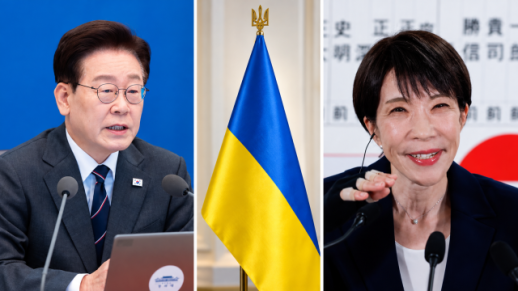 Ukraine war poses different stakes for South Korea, Japan SEOUL, October 14 (AJP) - The Russia-Ukraine war is nearing the five-year mark with little sign of an exit, with both sides expanding attacks on energy infrastructure and extending the war’s repercussions to draw East Asian countries closer to the epicenter. Japan has entered a defense deal with war-engaged Ukraine to purchase battlefield-tested Ukrainian interceptor drones. South Korea is equally engaged with Kyiv but in the opposite direction — a diplomatic spat triggered by Ukraine’s disclosure of the transfer of two North Korean prisoners of war to Seoul. The contrast reflects different calculations about what the war means for security at home. Tokyo sees Ukraine as a source of technology and operational experience for a possible confrontation involving China. Seoul faces a more immediate concern as its principal threat is gaining combat experience alongside Russian forces. Seoul has recalled its ambassador in protest at Kyiv’s muted response to its complaints of diplomatic disrespect and the widening dispute with Kyiv risks complicating South Korea’s access to precisely the battlefield knowledge it needs. Ukrainian Foreign Minister Andrii Sybiha offered dialogue but said Ukraine considered the matter closed, attributing the disagreement to differing interpretations of confidentiality arrangements during the transfer process. President Lee Jae Myung has framed the dispute as a matter of national standing. “When the president of the Republic of Korea expressed regret with the utmost courtesy, they denied that an agreement existed, making the head of state of another country out to be a liar,” Lee wrote on social media on Oct. 2. “When asked to acknowledge the agreement and apologize, Ukraine instead spoke of an imminent military clash between the two Koreas, as if hoping for war on the Korean Peninsula. I express serious regret. “If they continue to refuse to acknowledge the facts and apologize publicly, we will take further measures. This concerns the dignity of the Republic of Korea and its people, and cannot be overlooked.” While Seoul presses for an apology, Tokyo is pursuing practical gains from cooperation with Kyiv. Japan looks to the battlefield Japanese Defense Minister Shinjiro Koizumi confirmed on Oct. 9 that his ministry had signed a contract to acquire interceptor drones from Ukrainian manufacturer SkyFall. He sought rapid delivery but did not disclose the quantity, value, model or delivery schedule. The purchase gives concrete form to a strategic argument Japan has made since the invasion. “The big strategic picture for Japan, as Prime Minister Kishida argued as early as 2022, is that the European and Asian theatres have now become conjoined with Russia’s invasion of Ukraine, and this has only been further confirmed by North Korea’s enhanced cooperation with Russia in Ukraine and in Northeast Asia,” Chris Hughes, professor of international politics and Japanese studies at the University of Warwick, told AJP. Former Prime Minister Fumio Kishida distilled that concern into a warning: “Ukraine today may be East Asia tomorrow.” “Japan calculates, most crucially, that if Russia were to prevail in Ukraine that this would only embolden China in its territorial ambitions vis-à-vis Taiwan and Japan itself,” Hughes said. Yoshihiko Okabe, a professor at Kobe Gakuin University and director of its Matsuguchi Tadashi Anniversary Ukraine Research Center, traced the relationship to shared concerns about Russia. “Looking at Russia from a central perspective, its western neighbor is Ukraine and its eastern neighbor is Japan; this geopolitical similarity lies in the background,” Okabe told AJP. Japan’s engagement has expanded from economic and governance assistance after Russia’s initial intervention in 2014 to a 10-year support and security cooperation agreement signed in June 2024. At a Sept. 22 meeting in New York, Prime Minister Sanae Takaichi reaffirmed support for Ukraine, while President Volodymyr Zelenskyy offered to share wartime experience and technology. Ukraine’s appeal lies partly in its ability to counter expensive threats with relatively inexpensive systems — and improve them quickly. SkyFall manufactures the P1-SUN family of interceptors, designed to destroy incoming Russian attack drones at a fraction of the cost of conventional air-defense missiles. The company says its original model has destroyed more than 5,500 Shahed-type drones since entering service in November 2025. Reuters said it could not independently verify the claims. Koizumi highlighted Ukraine’s rapid battlefield feedback, with new capabilities emerging every two or three weeks, as a lesson for Japan’s defense industry and production base. “Ukraine’s mastery of drones operationally, and its ability to rapidly innovate and manufacture drones is of vital importance to Japan’s own defense strategy,” Hughes said. Japan remains constrained in supplying weapons directly to Ukraine. Koizumi said Tokyo was not currently considering transfers classified as weapons under Japanese law. Buying Ukrainian technology, however, opens another avenue for cooperation. From aid recipient to technology supplier Early in the invasion, Ukrainian troops improvised weapons from commercially available drones. That effort has grown into a network of manufacturers, software developers and military technology startups. “An incredibly rapid, civil-military collaborative ecosystem is currently being built in Ukraine, driven primarily by AI, robotics, cybersecurity, and drones,” Okabe said. Brave1, a government-backed defense innovation platform established in 2023, connects developers with military requirements, battlefield testing and financing. Its ecosystem encompasses about 2,500 companies and more than 5,000 products and technological solutions. The platform said in September that it had awarded more than 1,000 grants totaling 6.2 billion hryvnias. Developers can test prototypes with military units, incorporate feedback and move successful products toward mass production. European governments are pursuing joint production and innovation programs with Kyiv. Ukraine is increasingly becoming a supplier of military equipment and knowledge as well as a recipient of assistance. Battlefield success does not guarantee a ready fit elsewhere. Japan must assess Ukrainian systems against its own operational needs, maintenance standards and procurement rules. The innovation process may prove as valuable as the equipment itself. Seoul’s immediate stakes South Korea has reasons for caution that Japan does not share to the same degree. North Korea has deployed thousands of troops to support Russia since late 2024, alongside artillery ammunition and ballistic missiles. Seoul must assess both what those forces are learning and what military technology Moscow could provide in return. Japan also faces North Korean missiles and shares concerns about Russia and China. But it does not confront North Korean ground forces across an armistice line or bear primary responsibility for responding to another Korean war. Seoul has maintained restrictions on supplying lethal weapons directly to Ukraine while providing humanitarian assistance and developing extensive defense-industrial ties with European countries, including Poland. A deeper rupture with Moscow could further complicate efforts to discourage Russian technology transfers to Pyongyang. The prisoners’ transfer brought those sensitivities into sharp relief. Ukrainian forces captured the two North Korean soldiers in Russia’s Kursk region in January 2025. Both expressed a wish to resettle in South Korea rather than return to the North, where they could face persecution. They arrived in South Korea in September after months of consultations. Seoul withheld an announcement, citing their safety and the vulnerability of relatives remaining in North Korea. Zelenskyy disclosed the transfer in his Sept. 23 address to the United Nations General Assembly. Lee expressed regret the following day, saying Ukraine had breached a confidentiality agreement. Ukrainian officials disputed that account, prompting Seoul to demand an explanation and apology. Foreign Minister Cho Hyun subsequently said a message from Sybiha contained an apology but fell short of Seoul’s expectations. For Kyiv, the soldiers provided evidence of North Korea’s involvement in Russia’s war. For Seoul, their resettlement was a sensitive humanitarian and national security operation with consequences extending to their families. Those concerns help explain Seoul’s response. They do not diminish the strategic value of continued cooperation. Ukraine has firsthand information about North Korean units, their battlefield performance and their interaction with Russian forces. Such observations could help Seoul assess how combat experience and possible technology transfers are changing the threat on the peninsula. Restoring a reliable diplomatic channel would require clearer arrangements for handling sensitive information, including advance consultation over disclosures involving North Korean personnel. Beyond intelligence exchanges, South Korea’s defense manufacturers and electronics companies could explore cooperation in counter-drone detection, electronic warfare, unmanned systems and infrastructure protection. Technical exchanges with Japanese and Ukrainian specialists could also help determine which battlefield lessons apply to East Asian conditions. These remain possibilities. Export controls, intelligence safeguards and political differences would have to be addressed. “If Japan and South Korea can support Ukraine by leveraging their respective areas of expertise, it would serve as an excellent precedent for a global challenge that South Korea and Japan can collaborate to resolve,” Okabe said. For Japan, the question is how quickly Ukraine’s battlefield lessons can become usable defense capabilities. For South Korea, it is whether the dispute with Kyiv can be resolved before it obstructs cooperation on a threat already taking shape. 2026-10-14 11:16:45
 -
 SK chairman's ex-wife forgoes appeal in $700 million divorce SEOUL, October 14 (AJP) - Roh Soh-yeong, the daughter of former South Korean President Roh Tae-woo, has decided not to challenge a court ruling awarding her 944 billion won ($744 million) in her divorce settlement with SK Group Chairman Chey Tae-won, leaving the billionaire's appeal as the sole challenge before the Supreme Court. Roh, 65, director of Art Center Nabi, a Seoul-based arts institution, did not file a cross-appeal before the midnight deadline on Tuesday. Her former husband, Chey, 66, had already appealed the ruling in August. The decision means Roh will not independently seek to increase her share of the couple's assets, although the Supreme Court must still examine Chey's objections to the settlement. In July, the Seoul High Court ordered Chey to pay Roh 944 billion won in cash after determining that the couple's divisible assets were worth approximately 2.9 trillion won, including 2 trillion won in SK shares. The court allocated 66.6 percent of the assets to Chey and 33.3 percent to Roh. Chey, who leads SK Group, one of South Korea's largest family-controlled conglomerates, has since narrowed his appeal. His lawyers said he would not contest 700 billion won of the settlement but would challenge the remaining 244 billion won. His legal team argues that the court overestimated Roh's contribution to the couple's accumulated wealth, particularly after an earlier Supreme Court ruling excluded alleged financial support from her father. The latest legal dispute has attracted attention beyond the size of the settlement because it touches on the historically close relationship between South Korea's political leadership and its powerful business conglomerates, known locally as chaebol. Roh Soh-yeong is the only daughter of Roh Tae-woo, who served as South Korea's president from 1988 to 1993 during the country's transition from decades of authoritarian rule toward democracy. Her father was a longtime friend and military ally of Chun Doo-hwan, the former army general who seized power following a 1979 military coup and ruled South Korea from 1980 to 1988. The two men had been friends since high school and attended the Korea Military Academy together. Roh supported Chun's seizure of power, and both were subsequently convicted over their involvement in the military takeover and corruption. Their military regime was also implicated in the bloody suppression of a pro-democracy uprising in Gwangju in May 1980. The family's political history became central to the divorce litigation because of longstanding questions over whether SK Group benefited from its connections to the Roh administration. Chey and Roh married in 1988, the year her father became president, establishing a family relationship between the presidential household and the industrial conglomerate then known as Sunkyong Group. SK expanded its business ambitions during Roh's presidency, particularly in finance and telecommunications, sectors that would become important to its subsequent growth. In 1992, the conglomerate was selected by the Roh administration as a new mobile telecommunications operator. However, it surrendered the license just one week later amid allegations of preferential treatment arising from its ties to the president. SK eventually acquired a controlling interest in Korea Mobile Telecommunications, the predecessor of SK Telecom, through a public share auction in 1994, after Roh had left office. The group has maintained that its expansion was driven by business decisions and competitive bidding rather than political favoritism. The controversy resurfaced during the divorce proceedings in 2024, when the Seoul High Court initially ordered Chey to pay Roh 1.38 trillion won. That court recognized the former president's alleged transfer of 30 billion won in secret funds to Chey's father, former SK chairman Chey Jong-hyon, as a contribution to the conglomerate's development and considered the family's political connections when calculating Roh's share of marital assets. However, in October 2025, the Supreme Court overturned the property division, ruling that funds allegedly accumulated through illegal activities could not be recognized as a legitimate contribution to marital wealth, even if the transfer had occurred. The top court upheld the divorce itself and a separate order requiring Chey to pay Roh 2 billion won in damages. When the case returned to the Seoul High Court this July, the judges reduced Roh's share from 35 percent to 33.3 percent, resulting in the 944 billion-won award. Chey's lawyers contend that the reduction was insufficient given the Supreme Court's earlier rejection of the alleged presidential slush fund as a factor in the settlement. They have also challenged the way the court accounted for rising SK share prices and its inclusion of shares in SK Siltron, a semiconductor materials company, that Chey acquired in 2017 after the couple's marriage had broken down. The case dates back to Chey's public acknowledgment in 2015 that he had an extramarital relationship and a child with another woman. He filed for divorce in 2017. Chey and Roh have three children together. The financial stakes extend beyond the former couple. SK Group controls major businesses including SK hynix, a leading manufacturer of advanced memory chips used in artificial intelligence systems, and SK Telecom, one of South Korea's largest mobile network operators. Although the latest ruling allows Chey to retain his SK shares, the scale of the cash payment has raised questions about how he would finance the settlement and whether it could affect his control of the conglomerate. The Supreme Court is expected to assign a justice to the case and begin examining Chey's appeal, extending a legal battle that has exposed the intersection of family wealth, corporate power and South Korea's authoritarian political past. 2026-10-14 11:04:12
 -
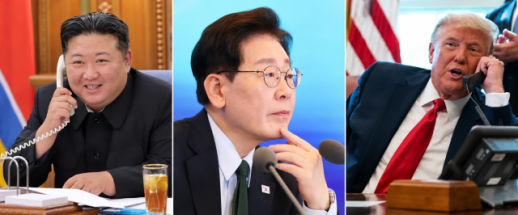 South Korea risks losing a seat in U.S.–North Korea mind games SEOUL, October 13 (AJP) - South Korea risks losing a seat at the negotiating table as Washington and Pyongyang size each other up for a possible return to summit diplomacy, leaving Seoul to confront a growing missile threat with diminishing influence over how it might be addressed. North Korea launched its 16th ballistic missile barrage of the year on Monday while U.S. President Donald Trump, on the other side of the Pacific, floated the possibility of meeting North Korean leader Kim Jong-un during his visit to Asia in November. Asked at the White House whether he planned to meet Kim, Trump replied, “I may,” before adding, “That’ll be exciting, won’t it? But I get along with him.” For President Lee Jae Myung, who has sought to encourage renewed U.S.–North Korea dialogue, the prospect presents a dilemma. Getting Trump and Kim back to the table could open a path toward easing tensions. It could also leave South Korea dependent on negotiations in which its security interests are not the overriding concern. Eric J. Ballbach, a Korea Foundation Fellow at the German Institute for International and Security Affairs, said Seoul’s traditional role as an intermediary has weakened as Washington and Pyongyang have developed a more direct relationship. “The main difference is that, in the past, North Korea often used diplomatic openings with South Korea in order to get to the US,” he told AJP. “Since the Trump administration has established a direct channel to North Korea, Pyongyang is no longer required to take the ‘detour’ via South Korea.” Lee has described his desired role as that of a “pacemaker,” helping create conditions for negotiations while Trump serves as the principal “peacemaker.” But facilitating talks does not necessarily secure Seoul a say in their outcome. “There is a realistic danger that, under Trump — should dialogue with North Korea take place — the U.S. will fail to take South Korea’s foreign and security policy interests into account in order to reach a ‘deal’, or will do so only inadequately,” Ballbach said. “The Trump administration pursues its own interests with regard to North Korea — and these do not necessarily coincide with those of South Korea.” The potential divergence carries direct military consequences. An agreement focused on intercontinental ballistic missiles capable of reaching the United States would not automatically address the shorter-range weapons threatening South Korean cities and military installations. Seoul could help bring about a diplomatic breakthrough without securing equivalent protection for itself. In a September interview with The New York Times, Lee proposed easing sanctions in exchange for Pyongyang halting the development of additional nuclear weapons and intercontinental ballistic missile technology. The proposal reflects his administration’s view that an immediate demand for complete denuclearization is unlikely to succeed and that smaller, reciprocal steps could create conditions for broader negotiations. Seoul has nevertheless maintained that North Korea’s ballistic missile launches violate international law. The difficulty is that Pyongyang approaches any potential talks with more options than it had during the previous round of summit diplomacy. Closer ties with Russia and China have strengthened its diplomatic position, while its involvement in Russia’s war in Ukraine has created opportunities to assess its weapons under combat conditions. “If Pyongyang can obtain economic resources, military assistance and diplomatic backing from Moscow, the incentives that previously encouraged it to seek sanctions relief from Washington become weaker,” Ballbach said. North Korea has supplied Russia with missiles, ammunition and military personnel. Its weapons’ performance against Ukrainian air defenses could provide information on accuracy, reliability and weaknesses that controlled tests alone cannot reveal. “The most important contribution may be the feedback North Korea is receiving from actual combat, rather than any single technological transfer,” Ballbach said. He cautioned, however, that the extent of direct Russian technological assistance remains difficult to establish. Attributing specific North Korean advances to Moscow would therefore be premature. Patrick Köllner, vice president of the German Institute for Global and Area Studies and director of its Institute for Asian Studies, also qualified how far the Russian relationship has changed Pyongyang’s calculations. North Korea may be in a somewhat stronger position than during its unsuccessful 2019 summit with Trump in Hanoi, particularly because of its intensified military cooperation with Moscow. But Russia cannot satisfy all its objectives. “Yet that cooperation does not help to achieve many other objectives beyond the military realm,” Köllner told AJP. “So, things like sanctions relief remain of interest to the DPRK.” “Most fundamentally, not much has thus changed with respect to the arms control agenda,” he said. The two assessments point to a North Korea with greater room to maneuver, but still with reasons to negotiate. The question is what concessions it would seek — and what Washington would be willing to accept. Pyongyang continues to build the military capabilities that would shape those negotiations. The state-run Korean Central News Agency reported Tuesday that Monday’s launch involved a tactical ballistic missile intended to verify improvements to a key weapons-system component. It described the test as a major technological success but disclosed few technical details. South Korea’s Joint Chiefs of Staff said several missiles of different types were launched from the Pyongyang area beginning at approximately 9:20 a.m., with at least one traveling more than 900 kilometers. The launches brought North Korea’s ballistic missile firing episodes this year to 16, compared with six throughout 2025. Those figures count launch occasions, each of which can involve multiple weapons. On Tuesday, KCNA also released images of Kim visiting a newly opened defense industry museum displaying weapons developed under his leadership, including the Hwasong-20 intercontinental ballistic missile. Ballbach identified three overlapping objectives behind the accelerated testing: military modernization, deterrence and diplomatic leverage. “Repeated launches allow North Korea to test weapons under different conditions, refine delivery systems, and potentially improve the reliability, readiness, and operational flexibility of its missile forces,” he said. A successful test does not automatically establish that a weapon is reliable or ready for deployment, he cautioned. Testing new technology and demonstrating an existing system’s operational readiness are different things. For Seoul, however, the immediate question is whether its defenses could withstand an attack involving several types of missiles at once. “The question is whether we can accurately determine the speed, range and missile-defense evasion capabilities of North Korea’s missiles, and whether we can detect and intercept them if the North launches simultaneous missile attacks,” Yoo Seong-min, a former chair of the National Assembly’s National Defense Committee, told AJP. The challenge is becoming more complex as both Koreas develop increasingly maneuverable hypersonic weapons. On Oct. 8, South Korea announced the successful flight test of its first domestically developed hypersonic glide vehicle, conducted by the Agency for Defense Development and observed by Lee. According to Cheong Wa Dae, the vehicle separated from its booster, maneuvered during flight and struck its designated target. The test demonstrated progress in South Korea’s offensive strike capabilities. It did not establish whether its missile defenses could intercept similar weapons launched by the North. Pyongyang had conducted its own intermediate-range missile test on Oct. 3, describing it as involving a hypersonic strategic weapon. South Korea’s military subsequently assessed that Monday’s launches were partly intended as a show of force in response to Seoul’s test. South Korea relies on a layered missile-defense network involving Patriot and domestically developed Cheongung-II interceptors, complemented by a U.S.-operated Terminal High Altitude Area Defense, or THAAD, battery. Deployment of its domestically developed L-SAM interceptor system is scheduled to begin in 2027. The South Korean systems form part of Korea Air and Missile Defense, the interception component of the country’s broader three-axis defense strategy, which also includes preemptive strike and retaliatory capabilities. Yet the effectiveness of that network depends on the number and availability of interceptors as well as their technical capabilities. “We do not have enough domestically developed interceptor missiles or Patriot systems, and the THAAD system belongs to U.S. Forces Korea. Our own military does not possess THAAD,” Yoo said. The precise inventory and operational readiness of South Korea’s interceptors are not publicly disclosed, making it difficult to independently assess whether existing defenses could withstand a sustained assault. Even successful detection would leave commanders facing another uncertainty. “Another problem is how we can determine whether a missile is carrying a nuclear warhead or a conventional one,” Yoo said. Some North Korean missile systems could potentially carry either. Radar can help establish a missile’s speed, trajectory and probable type, but cannot necessarily determine its payload. Those threats would remain central to Seoul’s security calculations even if Washington secured limits on weapons capable of reaching American territory. Ballbach considered another round of U.S.–North Korea negotiations plausible, but doubted that Kim would enter talks with the intention of giving up his nuclear arsenal. “While I think that another round of US-North Korea talks is realistically possible, I do not believe that Kim Jong-un would engage in a dialogue aimed at a full denuclearization of North Korea,” he said. Köllner questioned whether Washington had the political will and institutional capacity to sustain the negotiations required for a substantive arms control agreement. Trump was primarily interested in “quick newsworthy deals,” he argued, while officials responsible for implementing an agreement faced competing international demands and a shortage of capable personnel. A summit could be arranged far more readily than an agreement that could be negotiated, verified and sustained. For Lee, the challenge is therefore larger than helping Trump and Kim meet. It is ensuring that South Korea retains a voice in deciding which threats are addressed, which concessions are offered and what guarantees accompany any deal. The greatest risk to his “pacemaker” strategy may not be that talks fail to materialize. It may be that they succeed on terms that leave Seoul’s most immediate security concerns unresolved. Ballbach’s warning was succinct. “Be careful what you wish for.” 2026-10-13 15:27:10
 -
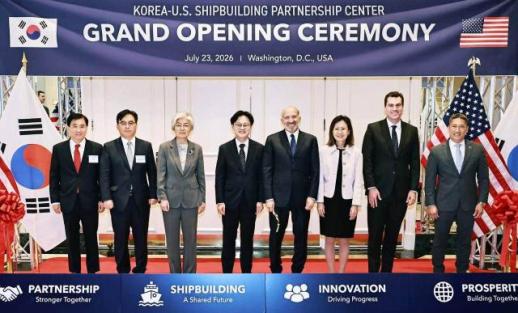 Seoul envoy says U.S. intelligence concerns remain unresolved SEOUL, October 13 (AJP) - South Korea's ambassador to the United States acknowledged Monday that Washington's concerns over intelligence cooperation remain unresolved despite efforts to address them, while admitting that communication with senior White House officials has fallen short of Seoul's expectations. Ambassador Kang Kyung-wha made the remarks during a parliamentary audit at the South Korean Embassy in Washington, describing intelligence cooperation as the most difficult issue currently facing the two allies. "Intelligence cooperation is what we have been discussing the most," Kang said. She confirmed that U.S. Secretary of State Marco Rubio had raised concerns about intelligence cooperation during a Sept. 18 meeting with South Korean Foreign Minister Cho Hyun. Asked whether Seoul had adequately addressed Washington's concerns, Kang acknowledged that the dispute had yet to be fully resolved. "I don't think the issue has been sufficiently resolved to meet U.S. expectations," she said. The remarks represent a rare public acknowledgment by a senior South Korean diplomat of continuing difficulties in one of the most sensitive areas of the alliance, which has formed the foundation of South Korea's security since the two countries signed a mutual defense treaty in 1953. The two governments share intelligence on North Korea's nuclear weapons, ballistic missiles, conventional military capabilities and cyber activities. South Korea relies partly on U.S. surveillance capabilities, including reconnaissance satellites, to monitor military developments across the heavily fortified border. The dispute emerged in March when South Korean Unification Minister Chung Dong-young publicly identified Kusong, a city in northwestern North Korea, as the location of a uranium enrichment facility. Chung said North Korea operated enrichment facilities in Kusong as well as Yongbyon and Kangson, two locations already widely associated with Pyongyang's nuclear program. Washington reportedly considered his remarks a disclosure of sensitive intelligence shared by the United States. In April, U.S. authorities restricted South Korea's access to certain satellite-derived intelligence concerning North Korea's nuclear facilities and related technologies. Chung has denied improperly disclosing U.S. intelligence, arguing that the information was already publicly available. During a news conference Monday, he said he had identified Kusong during his parliamentary confirmation hearing in July 2025, months before the remarks that prompted Washington's objections. The controversy widened after South Korea's National Intelligence Service (NIS), the country's main civilian intelligence agency, acknowledged last week that it had been excluded from a June trilateral working-group meeting with the United States and Japan on North Korean cyber threats. South Korean media reported that Washington had requested the agency's exclusion. The NIS said the incident resulted from a misunderstanding that had since been resolved. On Sunday, the agency rejected reports that the United States had reduced intelligence sharing with Seoul to information concerning North Korean missiles alone. It maintained that cooperation continued across a broad range of areas, including conventional military capabilities, cybersecurity, counterintelligence and developments inside North Korea. The agency also said the overall volume of intelligence received from Washington had not declined, despite restrictions in certain areas. A senior U.S. administration official, however, said Friday that Washington expected South Korea to uphold the standards of their decades-long alliance, particularly in intelligence and counterintelligence matters. Kang said the two countries' intelligence agencies had remained in contact and made progress toward addressing the dispute, although she did not suggest that Washington's concerns had been fully resolved. She also said Rubio had not specifically called for the dismissal of Chung or NIS Director Lee Jong-seok, despite demands from South Korea's opposition that both officials be removed over the controversy. Kang acknowledged a separate diplomatic challenge involving access to senior officials in President Donald Trump's administration. "I acknowledge that there are limitations in our communication with the White House," she said. Although she regularly meets with officials at the White House National Security Council, Kang said opportunities for discussions at the senior levels she wanted remained insufficient, describing the situation as frustrating. Nevertheless, she stressed that Washington's broader commitment to the alliance remained firmly established despite disagreements over individual issues. The intelligence dispute comes as Seoul and Washington attempt to implement a sweeping economic agreement reached last year, under which South Korea pledged $350 billion in U.S. investments in exchange for Washington reducing tariffs on South Korean goods to 15 percent. The package comprises $150 billion earmarked for shipbuilding cooperation and another $200 billion for strategic investments in sectors including energy and infrastructure. Kang said negotiations over those investments, including the proposed Alaska liquefied natural gas project, had previously been among the most difficult issues in bilateral relations before the first investment projects were announced. On Sept. 30, Trump unveiled plans involving a $22.3 billion gas-fired power complex in Texas, a framework for constructing eight nuclear reactors in the United States worth an estimated $120 billion, and potential South Korean participation in the Alaska LNG project. South Korea's finance minister subsequently confirmed that Seoul had transferred an initial $2.4 billion toward the Texas project on Oct. 1. The Alaska project remains subject to further review, however, with Seoul emphasizing that participation must satisfy commercial viability requirements and South Korean law. Another issue under discussion concerns South Korea's efforts to secure greater authority to enrich uranium and reprocess spent nuclear fuel. Kang said the two governments were examining several options, including revising their bilateral civil nuclear cooperation agreement, commonly known as the Section 123 Agreement, or adopting supplementary arrangements. The agreement, established under Section 123 of the U.S. Atomic Energy Act, governs the conditions under which U.S.-origin nuclear materials, equipment and technology can be used by South Korea. On North Korea, Kang said there had been no concrete progress toward another summit between Trump and North Korean leader Kim Jong-un, despite the American president's repeated expressions of interest in renewed dialogue. She described President Lee Jae Myung's suggestion of initially freezing North Korea's nuclear development as a pragmatic approach to preventing further expansion of Pyongyang's capabilities. Kang stressed, however, that complete denuclearization of North Korea remained the stated objective of both governments. 2026-10-13 10:30:06
 -
 Seoul warns Coupang as controversies deepen SEOUL, October 12 (AJP) - South Korea's antitrust chief urged Coupang on Monday to do more to protect the smaller businesses that sell on its platform. The U.S.-listed e-commerce company already faces scrutiny over its treatment of suppliers, a massive data breach, workplace safety and its lobbying in Washington. "Coupang should fulfill its social responsibilities in proportion to its growth and become a company that protects the rights of weaker parties," said Ju Biung-ghi, who chairs the Korea Fair Trade Commission (KFTC), during a parliamentary audit at the National Assembly. He was responding to Democratic Party lawmaker Kang Jun-hyeon, who pointed to a sharp rise in dispute mediation cases between Coupang and small businesses. Ju acknowledged that Coupang had grown quickly and benefited consumers, but warned that restricting the KFTC's investigative powers could seriously undermine the enforcement of laws meant to protect economically vulnerable businesses. On Aug. 19, KFTC investigators went to Coupang's headquarters to examine allegations that the company had shifted the cost of its price-matching discount coupons onto suppliers. Coupang refused to cooperate, arguing that it had not received the seven days' written notice it says the law requires, and sued two days later to cancel the inspection. Ju told lawmakers on Aug. 26 that the refusal was unprecedented and that the KFTC planned to file a criminal complaint. The Seoul High Court rejected Coupang's request to suspend the inspection on Sept. 23, and the company appealed to the Supreme Court. In June, the Personal Information Protection Commission fined Coupang a record 624.7 billion won ($467.9 million) over a breach affecting about 37.5 million people and the collection of about 11.17 million users' activity on other websites and apps without a proper legal basis. The previous record was 134.8 billion won, imposed on SK Telecom. The commission found that the breach resulted from basic security failures, including poor management of authentication keys and access controls. The exposed information included names, phone numbers, delivery addresses and, in some cases, building entrance access codes. On Oct. 7, Coupang filed two lawsuits with the Seoul Administrative Court seeking to cancel the fines. When the penalties were announced in June, the company said its measures to prevent further harm had not been sufficiently reflected in the decision. In March, the Ministry of Employment and Labor launched an industrial safety inspection of Coupang and its logistics subsidiaries following allegations of worker deaths, excessive workloads and the possible concealment of workplace accidents. Among the cases under scrutiny was the death of delivery worker Jeong Seul-gi in May 2024. Authorities examined allegations that Coupang had pressured his family not to seek industrial accident compensation. Labor groups have also accused the company of downplaying the circumstances surrounding the death of Jang Deok-jun, a logistics center worker who died of a heart attack in 2020 after an overnight shift. In August, a forklift operator at a Coupang logistics center in Gwangju, Gyeonggi Province, was critically injured after being pinned against a structure, and police and labor authorities later searched the facility. The labor allegations remain under investigation, and the company's legal responsibility has not been established in all cases. In Washington, Coupang reported spending $1.28 million on lobbying in the second quarter of 2026, according to U.S. federal lobbying disclosure filings, up from $1.09 million in the first quarter and about $500,000 a quarter last year. Its filings list contacts with the White House, Congress and the Office of the U.S. Trade Representative. On July 1, the Republican-led U.S. House Judiciary Committee released a report accusing South Korean authorities of discriminating against Coupang. Seoul rejected the claim, and Ju told lawmakers on July 28 that the KFTC applies the same standards to domestic platforms like food delivery app operator Baemin and web portal service giant Naver. South Korean Ambassador to the United States Kang Kyung-wha returned to Seoul on July 15 for five days of consultations, on instructions from Foreign Minister Cho Hyun. Speaking to reporters at the Foreign Ministry that day, she called Coupang "a much longer-running issue than I had thought." Coupang has denied using its lobbying to pressure the South Korean government, saying in April that it focused on economic cooperation, investment, job creation and cross-border commerce. National Security Adviser Wi Sung-lac said on July 22 that Coupang had been discussed during Kang's visit and that any tariffs Washington imposes under Section 301, a U.S. trade law used against practices it deems unfair, were not expected to exceed the rates the two countries had already agreed. 2026-10-12 17:41:21
 -
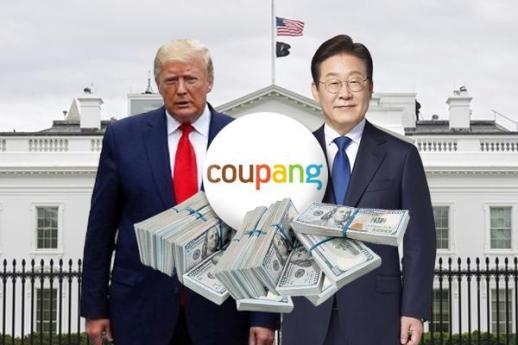 South Korea weighs lobbying registration and disclosure rules SEOUL, October 12 (AJP) - South Korea's Justice Ministry is reviewing a proposal to introduce a formal lobbyist registration system requiring individuals and organizations seeking to influence legislation to disclose their activities. The ministry commissioned a study on lobbying regulations from Hong Wan-sik, a law professor at Konkuk University, and received the findings in June. The report recommends requiring lobbyists to register and publicly disclose their activities, initially focusing on the National Assembly and local councils before gradually extending the regulations to central and local government agencies. The proposal would mark a significant shift in South Korea, where lobbying takes place through businesses, industry associations, law firms and other interest groups without a comprehensive legal framework requiring lobbyists to register and disclose their activities. Although lobbying itself is not categorically illegal, the absence of a dedicated regulatory system has long raised questions about transparency and the distinction between legitimate advocacy and improper influence. Hong argued that interactions between interest groups and public officials were already widespread and that leaving such activities without systematic oversight could encourage corruption. The ministry's review follows discussions at a Cabinet meeting in December 2025, when Justice Minister Jeong Seong-ho called for a system under which registered lobbyists could operate within clearly defined legal boundaries. Previous attempts to regulate lobbying have failed. Civic groups proposed mandatory registration and disclosure requirements as early as 2000, while several related bills were introduced during the 17th National Assembly, which served from 2004 to 2008. None became law. The debate comes as other major economies have adopted different approaches to political lobbying. In the United States, the Lobbying Disclosure Act requires covered lobbying firms and organizations to register and submit quarterly reports identifying their clients, lobbying issues, government institutions contacted and lobbying income or expenditures. Germany introduced a federal lobbying register in 2022, requiring covered interest representatives seeking to influence the Bundestag or federal government to disclose information about their activities, policy interests and finances. Japan, however, has no comparable comprehensive national lobbyist registration system. The Organization for Economic Cooperation and Development (OECD) has identified gaps in Japan's lobbying regulations and recommended greater disclosure of interactions between public officials and interest groups. The U.S. system has also drawn attention in South Korea because of the lobbying activities of Coupang, the U.S.-listed e-commerce company whose principal market is South Korea. According to U.S. federal lobbying disclosures, Coupang reported $2.27 million in lobbying expenditures in 2025 and another $2.37 million in the first half of 2026. The figures include expenses associated with outside lobbying firms, as required under U.S. disclosure rules. The company's lobbying activities have involved Congress, the White House and federal agencies, including the Office of the U.S. Trade Representative. In the second quarter of 2026 alone, Coupang paid $250,000 to Ballard Partners, a lobbying firm with close ties to U.S. President Donald Trump, according to a federal disclosure report. 2026-10-12 17:30:06