

Journalist
Lee Jung-woo이정우
cannes2030@ajupress.com
ReporterMinistry of Unification & North Korea, Politics, Foreign Affairs
I studied philosophy in college, and sociology and journalism in graduate school. I cover North Korea, South Korean politics, foreign affairs and films. I enjoy Nordic cinema, Indian cuisine and Japanese detective novels. I have a cat and like bright, acidic coffee.
"Were it left to me to decide whether we should have a government without newspapers, or newspapers without a government, I should not hesitate a moment to prefer the latter."
"Were it left to me to decide whether we should have a government without newspapers, or newspapers without a government, I should not hesitate a moment to prefer the latter."
Latest by Lee Jung-woo
-
 Aichi-Nagoya Asian Games begin 16-day run SEOUL, September 19 (AJP) - The 20th Asian Games officially open in Japan on Saturday, launching 16 days of competition across Aichi Prefecture and other parts of the country as Japan hosts the continental sporting event for the first time in 32 years. The opening ceremony is scheduled to begin at 6 p.m. at Paloma Mizuho Stadium in Nagoya and run for about two hours. Nagoya-born director Yukihiko Tsutsumi is overseeing the ceremony, built around a “Heartbeat” concept symbolizing the unity of athletes across Asia and combining the region’s history and culture with advanced technology. The Asian Games were previously held in Japan in Tokyo in 1958 and Hiroshima in 1994, making Aichi-Nagoya the country’s third edition of the event. The flames lit in Tokyo and Hiroshima were combined at Nagoya Castle last month before being carried through 40 municipalities in Aichi Prefecture. The identity of the final torchbearer has been kept secret. Athletes from 45 national Olympic committees will compete across 43 sports, with 469 gold medals at stake. South Korea has sent a 1,051-member delegation across 41 sports and is targeting 40 to 45 gold medals while seeking to remain among the top three in the overall standings. Table tennis star Shin Yu-bin and veteran rower Kim Dong-yong will carry the South Korean flag at the opening ceremony. Competition is already underway in several sports, while Korea’s women’s handball team begins its campaign against Hong Kong at 10 a.m. Saturday in Inazawa, hours before the opening ceremony. Korea, which won consecutive Asian Games titles in 2014 and 2018 before taking silver behind Japan in Hangzhou in 2023, is seeking its first Asian Games gold in eight years. Korea has held a clear advantage in its recent senior-level matchup with Hong Kong. The teams’ most recent meeting in a major Asian competition came at the 2019 Asian Olympic qualification tournament, when Korea won 41-13 on its way to securing a place at the Tokyo Olympics. Korea will also have a chance to secure a medal in teqball, one of the sports making its Asian Games debut, with Lee Jun-seok competing in the men’s singles semifinals Saturday. Separately, the Aichi-Nagoya Asian Games organizing committee formally apologized to South Korea after North Korea’s national anthem was mistakenly played before the South Korean men’s hockey team’s group-stage match against Bangladesh on Friday at Green Stadium in Kakamigahara, Gifu Prefecture. Two organizing committee officials visited the South Korean delegation’s office at around 9 p.m. that day to apologize for the error. The South Korean delegation had demanded an explanation immediately after the incident and sent a formal protest letter under the name of delegation chief Lee Sang-hyun. It also called for a formal apology, a thorough investigation into how the mistake occurred and measures to prevent a recurrence. AJP Takeaways - The 20th Asian Games open in Nagoya on Saturday with a “Heartbeat”-themed ceremony. - Japan is hosting the Summer Asian Games for the first time since 1994. - Korea sends 1,051 delegation members and targets 40 to 45 gold medals. 2026-09-19 10:18:21
 -
 Seoul, Washington discuss Hormuz, investment and North Korea SEOUL, September 19 (AJP) - South Korean Foreign Minister Cho Hyun and U.S. Secretary of State Marco Rubio agreed Friday to deepen cooperation on the Strait of Hormuz and Korean investment in the United States, a day after President Lee Jae Myung ruled out any deployment that could draw Seoul into the Middle East war and said parts of a nearly completed U.S. investment deal remained difficult to accept. Cho and Rubio reaffirmed their commitment to the U.S.-South Korea alliance and agreed to work toward a successful outcome in ongoing talks over South Korean strategic investment projects in the United States, according to Seoul's Foreign Ministry. They also agreed to continue implementing agreements reached between the two countries' leaders, including their 2025 Joint Fact Sheet. The U.S. State Department said Rubio stressed the need for swift execution of investment commitments under the Joint Fact Sheet. He also called for a fair, transparent and equitable business environment for U.S. companies in South Korea, stronger supply chains for critical industries and continued cooperation in strategic sectors including semiconductors. On the Strait of Hormuz, Rubio emphasized cooperation to secure freedom of navigation, while Cho told him that Seoul was willing to make a practical contribution toward restoring free passage through the strategically vital waterway, which carries a significant share of global energy shipments. The two ministers also reaffirmed their commitment to North Korea's complete denuclearization. Seoul said Cho pledged to actively support a resumption of dialogue between Washington and Pyongyang, while the U.S. readout highlighted continued trilateral cooperation among the United States, South Korea and Japan on regional security. At a news conference in Seoul on Thursday, Lee said there would be no troop deployment that involved South Korea in the war, although the government was considering stronger measures to protect Korean citizens, commercial vessels and energy routes. On U.S. investment, he said negotiations were close to agreement but that there were still “parts that are not easy to agree to,” adding that any deal must protect South Korea's national interests and meet standards of commercial rationality. AJP Takeaways - Seoul and Washington agreed to keep working on Hormuz security and Korean investment in the United States. - Rubio called for swift investment implementation, while Cho signaled a practical Korean contribution to freedom of navigation. - The talks followed Lee's rejection of war-related deployment and his call for commercially rational U.S. investment terms. 2026-09-19 09:53:19
 -
 Former envoy says Trump could propose Pyongyang summit SEOUL, September 18 (AJP) - Former U.S. Deputy Secretary of State Stephen Biegun said President Donald Trump could propose a meeting with North Korean leader Kim Jong-un after the Asia-Pacific Economic Cooperation summit in China in November, with Pyongyang potentially emerging as a venue despite slim prospects for an immediate diplomatic breakthrough. Speaking at the West Coast Exchange conference hosted by Korea Risk Group in Incheon on Thursday, Biegun said North Korea's restrained response to Trump's repeated signals of interest in talks suggested Pyongyang was “not closing the door” to renewed diplomacy. Biegun said it “would not be a surprise at all” if Trump proposed a meeting with Kim following the APEC summit, adding that such a meeting could even take place in Pyongyang. Biegun viewed renewed diplomatic engagement as unlikely but cautioned against ruling it out. The remarks come amid renewed speculation over leader-level diplomacy. Reuters reported last month that Trump was pressing aides to arrange a meeting with Kim as early as this fall and had privately discussed holding one during an Asia trip tied to the APEC summit in Shenzhen. Trump later publicly said he planned to meet Kim this year. Pyongyang, however, has continued to harden its public stance on its nuclear arsenal. North Korean officials this week reiterated that the country's nuclear status was irreversible and pledged to continue expanding its nuclear deterrent. Biegun served as Washington's special representative for North Korea during Trump's first term and played a central role in negotiations with Pyongyang before being promoted to deputy secretary of state. He delivered the keynote address at the three-day Korea Risk Group conference, which opened in Incheon on Sept. 17. AJP Takeaways - Stephen Biegun says Trump could seek another meeting with Kim after November's APEC summit. - Biegun says Pyongyang is “not closing the door” to renewed U.S.-North Korea diplomacy. - A future Trump-Kim meeting could even take place in Pyongyang, according to Biegun. 2026-09-18 16:34:34
 -
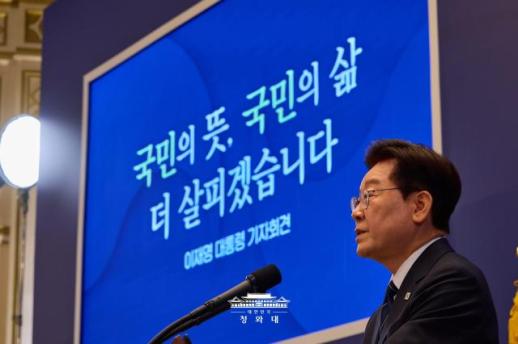 Korea's Lee rules out Gulf combat role, reelection bid SEOUL, September 18 (AJP) - South Korean President Lee Jae Myung on Friday sought to clear up two sources of uncertainty and debate, articulating a clear “no” to South Korean combat involvement in the Gulf conflict and to any intention of seeking a second presidency. “There will clearly be no troop deployment that involves or intervenes in a war,” Lee told a live press conference at the Cheong Wa Dae. “There is no change in that principle.” Lee, however, left room for Seoul to expand non-combat maritime-security operations, saying South Korea must carry out a minimum level of activity needed to protect its commercial vessels, crude-oil routes and citizens. The government is considering strengthening the role of the Cheonghae Unit, which has operated in waters off the Middle East since 2009, he said. An assessment team recently visited the United Arab Emirates to examine security and logistical conditions as Seoul weighs its response to calls for a greater contribution to maritime security around the Strait of Hormuz. Lee was equally categorical on a domestic controversy over constitutional revision and the possibility of extending his presidency. “I have absolutely no intention of seeking reelection,” he said. Lee said any constitutional amendment allowing a president to serve two four-year terms could not apply to him and rejected suggestions that his support for constitutional revision was intended to extend his time in office. South Korea's current Constitution limits presidents to a single five-year term. The president said constitutional revision was nevertheless necessary to reflect changes since the current charter was adopted in 1987, citing stronger basic rights, greater decentralization and a possible four-year renewable presidency. He said the details should be decided through bipartisan debate in the National Assembly and public consensus. Lee also acknowledged that negotiations with Washington over South Korea's planned $350 billion investment in the United States remain unresolved despite a series of visits by senior Korean officials. “I was told that we were almost at an agreement, but when I looked at the details, there were parts that were difficult for me to agree to, so we are discussing them again,” Lee said. The investment package forms part of a bilateral trade agreement under which Washington capped tariffs on South Korean imports at 15 percent. Seoul has sought to ensure investments meet a standard of “commercial rationality,” with outstanding issues including how profits, losses and investment returns would be handled. Asked about U.S. pressure for more semiconductor production on American soil, Lee noted that Samsung Electronics and SK hynix were already investing there and said additional expansion should reflect both corporate judgment and South Korea's broader industrial strategy. On North Korea, Lee said another summit between U.S. President Donald Trump and North Korean leader Kim Jong-un could not be ruled out and disclosed that Seoul was continuing behind-the-scenes coordination aimed at creating conditions for U.S.-North Korea dialogue. Lee dismissed concerns that South Korea could be sidelined if Washington and Pyongyang resume direct talks, saying Seoul would still have a role in any broader process involving peace and security on the Korean Peninsula. The wide-ranging press conference came as Lee sought to reset his domestic agenda after a prolonged fall in public support. A Gallup Korea survey released Friday put positive assessments of Lee's job performance at 37 percent, down one percentage point from the previous week and the lowest recorded by the pollster since his inauguration. Negative assessments rose five points to 56 percent. Real estate policy, personnel appointments and economic and livelihood issues were the most frequently cited reasons for negative evaluations. The survey of 1,002 adults was conducted Sept. 15-17 and had a margin of error of plus or minus 3.1 percentage points at a 95 percent confidence level. Addressing the public while standing throughout the 100-minute session, rather than sitting as in his previous news conferences, Lee struck a more contrite tone than in many of his past public appearances as he acknowledged shortcomings in communication and his failure to fully grasp public frustration over some policies and appointments. After reflecting on the decline in public support, Lee said his conclusion was that “the people are always right,” and attributed the setback to his own lack of attentiveness, consideration and communication. He nevertheless made clear that the change in tone would not mean abandoning his core policy agenda. Lee pledged to press ahead with prosecutorial and police reform, stabilize housing prices and put greater emphasis on improving household livelihoods. He also reiterated a decentralization drive under which Seoul would serve as the country's economic capital and Sejong as its administrative capital. “I will communicate more, listen more and show greater respect,” Lee said in closing, while adding that he would not give up on the policy goals his administration had set out to pursue. AJP Takeaways - Lee ruled out any Hormuz deployment that could involve South Korea in war but left open an expanded maritime-security role. - Seoul's $350 billion U.S. investment package remains under negotiation, with Lee saying some proposed terms are still difficult to accept. - Lee backed efforts to revive Trump-Kim dialogue as he sought to reset his presidency amid a record-low 37 percent approval rating. 2026-09-18 15:10:46
 -
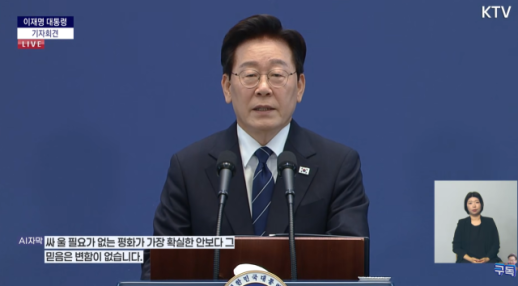 Lee rules out troop deployment involving Korea in war SEOUL, September 18 (AJP) - President Lee Jae Myung on Friday ruled out sending South Korean troops on any mission that would involve the country in a war, amid debate over a possible deployment to the Strait of Hormuz. "There will clearly be no troop deployment that involves or intervenes in a war," Lee said. 2026-09-18 11:27:21
 -
 North Korea's nuclear tests reactivated dormant faults, study finds SEOUL, September 18 (AJP) - North Korea's underground nuclear tests reactivated dormant faults beneath Mt. Mantap, triggering years of seismic activity, a new study published Thursday in the U.S. academic journal Science found. Researchers led by Kim Kwang-hee, a professor of geological sciences at Pusan National University, and Xingli Fan of Chengdu University of Technology analyzed 17 years of continuous seismic data collected in South Korea and northeastern China. In an extensive study of 1,399 local earthquakes around Mount Mantap between 2008 and 2025, researchers found that seismic activity began increasing about three weeks after North Korea's sixth and largest nuclear test at the Punggye-ri nuclear test site in North Hamgyong Province in September 2017, rather than fading as is commonly seen after underground explosions. The earthquakes then became more frequent and stronger, with most occurring along two fault structures running roughly north-northwest. Kim estimated that a simultaneous rupture along the roughly 24-kilometer fault system could potentially produce an earthquake of around magnitude 6.4. The researchers concluded that repeated nuclear explosions progressively damaged the shallow crust and redistributed stress around Mt. Mantap, gradually pushing pre-existing faults that were already close to failure toward renewed movement. Most of the earthquakes occurred at unusually shallow depths, within about a kilometer of the surface. North Korea carried out six declared underground nuclear tests at Punggye-ri between 2006 and 2017. The tests took place in October 2006, May 2009, February 2013, January and September 2016 and September 2017. The final test was by far the largest, with an estimated yield of 100 to 250 kilotons and seismic signals equivalent to a magnitude 6.3 earthquake. The researchers said the findings raise a new geological concern for North Korea's nuclear program and could affect nuclear test verification, as earthquakes triggered by underground explosions may continue for years and become difficult to distinguish from natural seismic activity. The study also suggests that the effects of human activity on existing fault systems should be monitored long after underground construction, energy extraction and other activities that change stress in the Earth's crust have ended. The latest findings came just days after Kim Yo-jong, the powerful sister of North Korean leader Kim Jong-un, repeatedly vowed this week to expand its nuclear arsenal. She said in an statement released on Friday that Pyongyang would make no change to its course of strengthening its nuclear deterrent, accusing U.S.-led military exercises involving South Korea and Japan of worsening tensions on the Korean Peninsula. AJP Takeaways - North Korea's underground nuclear tests at Punggye-ri reactivated dormant faults beneath Mount Mantap. - Seismic activity intensified after the 2017 nuclear test and has persisted for years. - Researchers say the findings could affect CTBT monitoring and broader assessments of human-induced seismic risks. 2026-09-18 10:13:49
 -
 South Korea is aging fast. The jobs can't keep up – or live up SEOUL, September 17 (AJP) - South Korea is a super-aged society, with people 65 and older making up more than 22 percent of the population and the country aging among the fastest in the world. That may partly explain the surprise appeal of a movie about a man in his 70s landing an entry-level office job rather than the cleaning or security work more commonly available to Koreans his age. The Korean remake of the 2015 Hollywood movie of the same title opened Wednesday and immediately topped the box office, knocking Christopher Nolan's "The Odyssey" out of first place after a roughly six-week run. Real life for older Koreans is considerably harsher. South Korea's elderly poverty rate is close to 40 percent, the highest in the OECD and about 2.7 times the organization's average. The aT Center in Seocho-gu, southern Seoul, was packed with gray-haired job seekers Thursday as the Seoul Senior Job Fair 2026 opened its doors. The city had brought together 81 employers offering positions in caregiving, logistics, education, services, transportation and office administration, among other fields. Organizers expected about 3,500 people at the fair, which was open to job seekers age 60 and older. But for many people in their 70s wandering the exhibition hall, the choices were hardly abundant or varied. Security guard. Cleaner. Then another security guard. Yu Joo-chan, 79, had traveled from Guro-gu on the other side of Seoul with only a few possibilities on his checklist. "What kind of work did you do before?" an employment counselor asked him. "What certificates do you have?" "Can you drive?" Then came the polite letdown. "Because of your age, it could take a very long time," she told him. Yu had worked for telecommunications companies when he was younger. Two of them went bankrupt. "Since then, nothing has really gone the way I wanted it to," he said. He later found work managing apartment buildings. The company that employed him recently went bankrupt, too. These days, Yu survives partly through what he calls "security-guard part-time work." "I'm barely getting by," he said. He had hoped to find another building-management job, but came to the fair with a sober understanding that few employers would hire him. Even apartment security, long one of the most visible sources of work for elderly Korean men, is becoming more competitive, he said. "There are a lot of 'young' security guards in their 50s and 60s now," Yu said. "I have to compete with them. Who is going to hire someone who is almost 80?" Koreans live a long time and work to unusually advanced ages. Yet many reach those years with too little income and find that the jobs available to them bear little resemblance to the careers they spent decades building. By August, 11.28 million of South Korea's 51.08 million registered residents were 65 or older, or about 22.1 percent of the population, according to Interior Ministry data. The country crossed the 20 percent threshold associated with a "super-aged" society in 2025. They are also likely to live for years after conventional retirement. South Korea's life expectancy reached 83.7 years in 2024. A Korean who reaches 65 could expect, based on 2023 data, to live another 21.5 years on average. Financing those decades is a different matter. South Korea has the highest old-age relative poverty rate in the OECD. About 40 percent of Koreans over 65 live on incomes below half the national median, compared with an OECD average of about 15 percent, according to the OECD's latest pension comparison. Among Koreans over 75, the rate rises to 54 percent. Older Koreans' disposable income averages just 68 percent of that of the overall population, compared with 87 percent across the OECD. Korea's old-age safety-net benefits were equivalent to only about 7 percent of average earnings in 2024, versus an OECD average of 21 percent. The result is that retirement often doesn't mean retirement. In 2024, 57 percent of Koreans ages 65 to 69 were employed, more than double the OECD average of 26 percent and, alongside Japan, the highest rate in the organization. Post-retirement work has become more necessity than choice. Statistics Korea found that 57.6 percent of people ages 65 to 79 wanted to continue working in 2025. More than half, 51.3 percent, said they needed the money for living expenses. Yu Byung-sun, 69, who spent 24 years running a raw-fish restaurant, was looking for custodial or cleaning work so he could have some extra money to give his grandchildren. "What I felt after coming here and getting counseling today is that finding a job when you're old is difficult," he said. His wish was simple. "If I can get a job, I want to save the money and give some spending money to my grandchildren," Yu said. The fair itself offered a broader spectrum of work. Seoul officials highlighted positions in caregiving, transportation, logistics, education, services and administration, and provided résumé clinics, one-on-one consultations and artificial-intelligence demonstrations. "Digital helpers" were stationed around the venue to assist older visitors with registration, kiosks, smartphones and interview reservations. At a booth operated by Cleaning Lab, a company that dispatches workers to clean homes and offices, an employee said many older visitors liked the idea of cleaning work — until they heard that getting assignments required using a smartphone. The company operates somewhat like Uber, the employee said: Customers who need cleaning are connected through a digital platform with people willing to do the work. The average hourly wage is about 13,500 won ($9.77). "Many elderly people tell us that the jobs available to them are limited to things like cleaning and janitorial work," the employee said. But when staff explained that the work required using a smartphone, another reaction often followed. "A lot of them say, 'I don't think I can do this job.'" Technology is spreading through precisely the kinds of flexible jobs that could otherwise accommodate an aging workforce. Internet use among South Koreans 65 and older reached 76.9 percent in 2024, but comfort with digital tools varies widely, particularly among people well into their 70s and 80s. Not everyone left discouraged. Jeon Sun-ok, 74, had spent much of her working life running a small business and had been out of work for a little over a year. She said the fair had shown her possibilities she had not considered. "This is such a good system," she said. "You can look for jobs at so many booths, and you learn about work you hadn't thought of before." She had trained as a caregiver but had not fully understood how she might turn that qualification into employment. "I learned more concretely today that I could work as a caregiver and help other people," Jeon said. Her experience was the optimistic case Seoul officials hoped to replicate: matching accumulated experience and overlooked skills with a labor market increasingly short of younger workers. For others, the arithmetic of age remained harder to overcome. Outside the aT Center, Kim, a 75-year-old man who asked to be identified only by his surname, smoked one cigarette after another. Until recently, he operated a screen-golf business near COEX, the sprawling convention center in southern Seoul. Business weakened as fewer people came to play, he said, and he eventually handed the operation over to someone else. He came to the fair hoping to find something he could still do responsibly for eight hours a day. No luck. "Jobs for elderly people are all either security or cleaning," Kim said. "I'm not saying I can do extremely hard physical work. But I would like a job where I can work eight hours a day and take responsibility for what I do. I came here and found there really isn't much like that." Security work brought its own problem. Apartment guards often work rotating shifts. Under a two-shift system, Kim said, that can mean 12-hour stretches and regular overnight work. "How are old people physically supposed to do that?" he said. "There should at least be three shifts." Then there is the technology gap. "What do old people know how to do on computers?" he said. "You have to take their physical strength and health into consideration." Policy discussions often bundle everyone above 60 into a single category. Kim said that made little sense from where he stood. "Sixty and 70 are completely different," he said. He had just spoken with another man looking for work at the fair. "He told me he was 64," Kim said. "I thought, 64? At my age, that sounds practically young." Kim gave a short laugh. Then he remembered what the younger man had told him. "He said he couldn't find anywhere to work either." Outside the building where thousands of older Koreans had come looking for their next job, Kim took a long drag from his cigarette. 2026-09-17 17:48:34
 -
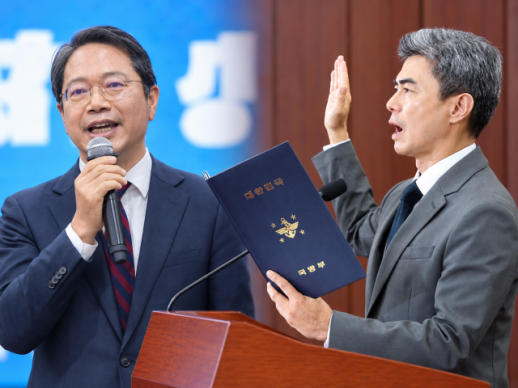 Cabinet picks rubber-stamped ahead of Lee press conference SEOUL, September 17 (AJP) -Ruling-dominant National Assembly committees adopted confirmation hearing reports for Justice Minister nominee Kim Seung-won and Defense Minister nominee Kang Shin-chul on Thursday over opposition objections, escalating a personnel dispute on the eve of South Korean President Lee Jae Myung’s press conference. The Legislation and Judiciary Committee adopted Kim’s report two days after his confirmation hearing. Lawmakers from the main opposition People Power Party (PPP) walked out 12 minutes after the meeting began, arguing that allegations surrounding Kim had not been resolved. The National Defense Committee later adopted Kang’s report, also without the participation of PPP lawmakers. Unlike a prime minister, Cabinet ministers in South Korea do not require parliamentary consent to take office. Confirmation hearings and committee reports give lawmakers a formal opportunity to scrutinize nominees, but the final decision on their appointment rests with the president. Kim, a two-term DP lawmaker and former judge, has been at the center of the latest Cabinet controversy over allegations that he improperly intervened in the regulatory review of an experimental COVID-19 treatment in 2021. Kim contacted the head of the Ministry of Food and Drug Safety after receiving a request from a broker to speed up the review of a clinical trial plan submitted by pharmaceutical company Genencell. The plan was approved about two weeks later. Prosecutors investigated allegations that Kim had been promised up to 5 million won ($3,600) in political donations in return, although the money was never delivered. They issued a deferred-prosecution disposition in December 2024, and Kim has challenged the decision before the Constitutional Court. The case has since drawn renewed scrutiny, with police reopening an investigation into the allegations. Kim has consistently denied improper lobbying, saying he merely relayed a legitimate public-interest petition and did not demand approval of the drug or preferential treatment. During Monday’s hearing, he said he came from a liberal-arts background and lacked the expertise to assess the treatment’s scientific performance or allegations involving manipulated animal-test data. He later said the remark was not intended to evade responsibility. “None of the allegations and issues raised during Kim Seung-won’s confirmation process have been resolved,” five-term PPP lawmaker Yoon Sang-hyun told AJP. “Kim says he did not know because he comes from a liberal-arts background, but that is no excuse,” Yoon said. “Based on the facts already known, I believe he is unfit to serve as justice minister and oppose his appointment,” he added. “I urged President Lee to withdraw the nomination as soon as possible.” The DP maintains that Kim adequately addressed the allegations during the hearing. Public opinion has added to the political pressure. A Korea Society Opinion Institute survey released Wednesday found 52.1 percent opposed Kim’s appointment, compared with 25.1 percent who supported it. The automated phone survey of 1,001 adults nationwide was conducted Sept. 14 and 15 and had a margin of error of plus or minus 3.1 percentage points at a 95 percent confidence level. Kim was also fined 700,000 won for drunk driving in 2008, a record for which he has apologized. Kang faced a less politically explosive but still contentious confirmation hearing Wednesday, with opposition lawmakers questioning him over his family’s receipt of special housing allocations for displaced residents and his son’s purchase of commercial property worth about 700 million won, which was omitted from Kang’s initial asset disclosure. Kang apologized for failing to properly check the disclosure but said there had been no illegal conduct. DP lawmakers defended the retired four-star general, citing his experience as deputy commander of the South Korea-U.S. Combined Forces Command and his support for government priorities including the transfer of wartime operational control and integration of the Army, Navy and Air Force academies. PPP lawmakers said questions surrounding his son’s property purchase and the family’s housing allocations remained unresolved and criticized the hearing for proceeding without witnesses. The personnel fight now moves directly into Lee’s press conference Friday. Lee is scheduled to meet reporters at 10 a.m. at Cheong Wa Dae’s Yeongbingwan, or state guest house, in Seoul for his seventh press conference since taking office in June 2025. The roughly 90-minute event comes as the president faces disputes over his Cabinet choices, constitutional revision and the presidential term system, a possible South Korean contribution to security operations in the Strait of Hormuz and persistent concerns over housing policy. About 150 domestic and foreign journalists are expected to attend. A Realmeter survey of 2,515 adults conducted from Sept. 7 through 11 put Lee’s job approval rating at 33.8 percent, down 3.6 percentage points from the previous week and the lowest since he took office. His disapproval rating rose 3.8 percentage points to 63.3 percent. The survey had a margin of error of plus or minus 2 percentage points at a 95 percent confidence level. Cheong Wa Dae has said Lee intends to use the press conference to clearly explain his positions on major national issues and communicate directly with the public. 2026-09-17 17:30:35
 -
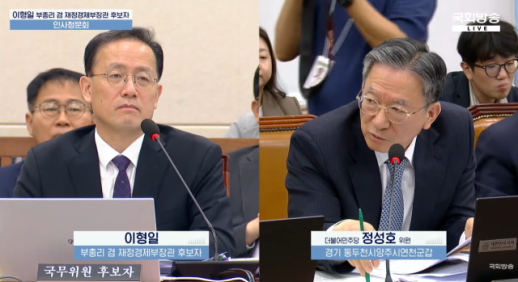 Finance nominee set to take post after clearing parliamentary hearing SEOUL, September 17 (AJP) - Lee Hyung-il, nominee for deputy prime minister and minister of finance and economy, moved a step closer to taking the post as the National Assembly's finance committee adopted his confirmation hearing report on Thursday. The move makes Lee the first of six ministerial nominees tapped by President Lee Jae Myung in his second Cabinet reshuffle on Aug. 30 to clear the parliamentary confirmation process. The committee convened at 9:30 a.m. and adopted the report after Lee underwent a roughly 12-hour confirmation hearing the previous day. During the hearing, lawmakers scrutinized him over a Gwacheon apartment he has owned for about 17 years despite living there for only about four months. Lawmakers from the ruling and opposition parties also clashed over the government’s proposed 164 trillion won ($118.8 billion) fund aimed at addressing future economic challenges. Lee, 55, is a career economic bureaucrat who passed the country's civil service exam for senior government positions in the finance and economics track in 1992 before beginning his career at the Finance Ministry. He later served in a string of senior posts including director-general of the Economic Policy Bureau, deputy minister, presidential secretary for economic policy and commissioner of Statistics Korea before becoming first vice minister of finance and economy. He earned a bachelor's degree in economics from Seoul National University and a doctorate in economics from Texas A&M University. Meanwhile, confirmation hearings for the remaining nominees for the justice, defense, gender equality and family, land and transport, and SMEs and startups ministries are still pending. AJP Takeaways - South Korea's parliament adopted Lee Hyung-il's confirmation hearing report with bipartisan support. - Lee became the first nominee from President Lee Jae Myung's second reshuffle to clear this stage. - A career economic bureaucrat, Lee passed the civil service exam's finance track in 1992. 2026-09-17 10:49:48
 -
 Lee proposes new 'Silk Road' partnership with Central Asian countries SEOUL, September 16 (AJP) - South Korean President Lee Jae Myung on Wednesday called on the five Central Asian nations to build a "new Silk Road," proposing deeper cooperation in trade, critical minerals and infrastructure as Seoul hosted the first multilateral summit with leaders from the region. Speaking at the Korea-Central Asia Business Summit in Seoul, Lee said the region's rich reserves of lithium, uranium and other critical minerals could be combined with South Korea's advanced manufacturing capabilities to compete in global markets. "We need to strengthen full-cycle cooperation in critical minerals, going beyond simple raw-material trade to exploration, smelting, high-value-added materials processing and finished-product manufacturing," Lee said. He added the government would support joint research and development and training for specialists through rare-metals centers being established at key locations in Central Asia. He also called for closer infrastructure cooperation in transportation, energy and logistics, describing South Korean companies as well suited to participate in the region's infrastructure development. Lee also urged the two sides to broaden trade and investment into consumer goods, biotechnology and digital industries. Seoul plans to establish "Korea Desks" in all five Central Asian countries to help South Korean companies address difficulties in doing business there. The business gathering followed the inaugural summit attended by the presidents of Kazakhstan, Uzbekistan, Turkmenistan, Kyrgyzstan and Tajikistan as well as business leaders. The meeting marked the elevation of a regional cooperation framework that began with the Korea-Central Asia Cooperation Forum in 2007 from the ministerial to the leaders' level. Lee also presented each of the five Central Asian leaders with Samsung Electronics' latest foldable smartphone to commemorate the summit. Cheong Wa Dae said the handset was selected to symbolize South Korea's commitment to mutually beneficial and future-oriented cooperation with Central Asia. Each phone was engraved with the recipient leader's name in his country's own language as a gesture of respect. The leaders' spouses received South Korean beauty products and cosmetics devices. Cheong Wa Dae said the gifts were intended to showcase the country's industrial technology and consumer products while helping pave the way for South Korean companies to expand into the rapidly growing Central Asian market. AJP Takeaways - President Lee Jae Myung called for a "new Silk Road" linking South Korea and Central Asia through trade, infrastructure and technology. - Lee proposed full-cycle cooperation in critical minerals, from exploration and refining to advanced materials and finished products. - The inaugural Korea-Central Asia Summit elevated regional cooperation to the leaders' level, with Seoul also highlighting Korean technology through symbolic gifts. 2026-09-16 17:04:11