

Journalist
Lee Jung-woo이정우
cannes2030@ajupress.com
ReporterMinistry of Unification & North Korea, Politics, Foreign Affairs
I studied philosophy in college, and sociology and journalism in graduate school. I cover North Korea, South Korean politics, foreign affairs and films. I enjoy Nordic cinema, Indian cuisine and Japanese detective novels. I have a cat and like bright, acidic coffee.
"Were it left to me to decide whether we should have a government without newspapers, or newspapers without a government, I should not hesitate a moment to prefer the latter."
"Were it left to me to decide whether we should have a government without newspapers, or newspapers without a government, I should not hesitate a moment to prefer the latter."
Latest by Lee Jung-woo
-
 Fairness backlash jolts Lee, lifts conservative opposition SEOUL, September 14 (AJP) - President Lee Jae Myung is facing a sharp erosion of support among young South Koreans, with controversies surrounding former Gender Equality and Family Minister nominee Yong Hye-in and Justice Minister nominee Kim Seung-won turning questions of fairness into a political liability for the administration’s second Cabinet reshuffle. A Realmeter survey released Monday showed Lee’s approval rating among respondents aged 18 to 29 at just 18.6 percent, down 10.2 percentage points from the previous week. Support stood at 19.6 percent among young men and an even lower 17.6 percent among young women. The same polling series showed the ruling Democratic Party, or DP, at 36.1 percent nationwide, while the main opposition People Power Party, or PPP, rose to 42.1 percent. Among voters in their 20s, the contrast was far more dramatic: the DP drew 15.0 percent, compared with 61.5 percent for the PPP. “I’m very worried,” DP lawmaker Jeon Yong-gi told AJP when asked about the numbers. The slide has unfolded as Lee’s second round of Cabinet nominations became engulfed in disputes over whether politicians who have built careers around reform and fairness have themselves benefited from political privilege. Yong, a 1990-born Basic Income Party lawmaker who had been tapped to head the Ministry of Gender Equality and Family, withdrew her nomination Sunday after days of controversy over her plan to retain her proportional-representation National Assembly seat while serving as a Cabinet minister. She also faced allegations that her small party had effectively become a family-run political organization, including criticism over her husband’s senior party role, government-backed employment subsidies received by the party and questions over its organizational practices. Yong rejected accusations of improper favoritism, arguing that her husband’s appointment followed party procedures and that retaining a parliamentary seat while serving in the Cabinet was permitted by law. For many critics, however, the dispute landed on particularly sensitive terrain for younger voters: whether people with political connections are playing by the same rules as everyone else. “The decline in the president’s job approval and the rise in PPP support can largely be attributed to the Lee Jae Myung administration’s failed vetting of ministerial nominees, regulation-centered housing policies that run counter to what the public wants, and a worsening economy that people can actually feel,” PPP lawmaker Lee Hun-seung told AJP. “Yong Hye-in has stepped down as gender equality minister nominee, but allegations of hypocrisy and double standards surrounding Justice Minister nominee Kim Seung-won continue to emerge,” Lee said. “With loan restrictions pushing up housing costs while making home ownership even harder, the sense of frustration among young people could only further damage support for the Lee administration.” Kim, a DP lawmaker nominated to lead the Justice Ministry, has been confronted with several separate controversies. The opposition has alleged that Kim improperly pressed the Ministry of Food and Drug Safety in 2021 over approval for a COVID-19 treatment clinical trial involving biotech firm Genencell. Kim has said he simply relayed a public grievance and asked regulators to conduct a fair review, denying that he sought guaranteed approval or knew that problems had been alleged with animal-test data. The controversy widened after reports of suspected unfair stock trading involving people connected to companies around Genencell. Those allegations do not in themselves establish that Kim participated in stock manipulation, and Kim and the DP have rejected attempts to tie him directly to such trading. Questions of fairness also arose over a social cooperative run by Kim’s wife that provides services to children with developmental disabilities. PPP lawmakers alleged that the organization employed two of the couple’s children after beginning to receive government-funded voucher revenue, raising questions about preferential hiring. Kim’s confirmation team rejected the accusations, saying both children performed genuine education and care work for which they were qualified and were paid accordingly. “The hypocrisy and unfairness Yong Hye-in displayed, together with the abolition of prosecutors’ supplementary investigative powers, shattered the illusion among women in their 20s and 30s that Lee Jae Myung was doing a good job,” PPP lawmaker Yoo Sang-bum told AJP. “The hollowness of what the DP calls reform is being exposed, and its support is plunging,” Yoo said. “With no alternative other than the People Power Party, the PPP is benefiting almost by default.” The reference to supplementary investigations points to another issue that has generated unease among some younger women. The DP pushed through an amendment to the Criminal Procedure Act eliminating prosecutors’ authority to directly conduct supplementary investigations while strengthening their power to order police to conduct additional investigative work. The measure was promulgated in August and is scheduled to take effect Oct. 2 as part of a broader restructuring designed to separate investigation from prosecution. Supporters say the change is essential to ending decades of excessive prosecutorial power. Critics, however, have argued that removing a second layer of investigation could hurt crime victims when police investigations are inadequate. The Women’s Party staged a protest in August arguing that the change ignored victims of violence against women. Victims of serious crimes, including the woman attacked in the widely known Busan roundhouse-kick case, have also publicly opposed abolishing prosecutors’ supplementary investigation authority. That debate is politically significant because young women have been among the DP and Lee’s most important sources of support in recent national elections. In the 2022 presidential election, a joint exit poll by South Korea’s three major terrestrial broadcasters found that 58.0 percent of women in their 20s supported Lee, then the DP presidential candidate, compared with 33.8 percent for conservative Yoon Suk Yeol. The pattern strengthened during the political turmoil that followed Yoon’s Dec. 3, 2024, martial law declaration. Young women carrying K-pop light sticks became one of the defining images of the demonstrations demanding Yoon’s impeachment, a movement sometimes described as the “Candlelight Revolution.” Academic research on the protests has identified women in their 20s and 30s as a central force in transforming light sticks into symbols of political solidarity. When Lee won the 2025 presidential election, exit polling again showed 58 percent of women in their 20s and 57 percent of women in their 30s backing him, making young women a crucial part of the coalition that brought the DP back to the presidency. Against that history, Lee’s current 17.6 percent job approval among women in their 20s stands out as a particularly severe warning sign for the ruling camp. “The Lee Jae Myung administration is making appointments and pursuing policies that run counter to fairness, which is the highest priority for people in their 20s,” PPP lawmaker Kim So-hee told AJP. “People in their 20s aren’t driven by progressive or conservative ideology. If you go against their most important value, they turn their backs on you.” PPP lawmaker Ahn Sang-hoon similarly linked the shift to economic anxiety and perceptions of unequal opportunity. “Policies on housing and jobs are kicking away the ladders for younger generations, while the DP is cutting deals with the KCTU and people in their 40s and 50s, fueling anger among people in their 20s and 30s,” Ahn said. “Reforms to save future generations from mounting pension and welfare debt are being led by the PPP, including myself,” he added. “Most recently, Yong Hye-in’s unfair, preferential form of youth politics caused anger among the 2030 generation to explode.” But the PPP’s rebound has also opened a separate argument inside the conservative camp: how much credit belongs to Han Dong-hoon. Han, a former justice minister and former PPP leader, was expelled from the party in January and now serves in the National Assembly as an independent. He has nevertheless emerged as one of the most aggressive figures attacking Kim’s nomination, repeatedly releasing recordings and allegations connected to the drug-approval controversy. His Facebook output has itself become a political story. One media count found that Han published nearly 100 Facebook posts in the nine days following Kim’s nomination, with more than 20 posts on his busiest day. PPP lawmaker Jeong Yeon-wook argued that Han’s political presence is helping the party regardless of his formal status. “The rise in PPP support is both a reflexive benefit from the DP’s tyranny and a reflection of the ‘Han Dong-hoon effect,’” Jeong told AJP. “Even though Han was expelled, there is a public perception that he effectively still belongs to the PPP. Jang Dong-hyeok is simply the party leader. He is not the driving force behind the rise in support.” Other PPP lawmakers sharply disagreed. “That’s quite a stretch,” PPP lawmaker Lee Cheol-kyu told AJP when asked about the claimed “Han Dong-hoon effect.” PPP lawmaker Choi Soo-jin offered an equally terse explanation. “It’s because there is no internal division,” Choi said of the PPP’s rising support. “Han Dong-hoon is an independent.” The disagreement underscores an awkward reality for the opposition: Han has no PPP membership but remains deeply entangled with the party’s political fortunes, while his campaign against Kim has often been more visible than the attacks coming from the PPP leadership itself. The longer-term question is whether the current movement among young voters, and particularly young women, represents a lasting conservative shift or a rejection of the ruling party over specific issues of fairness, housing and criminal justice. Former PPP Supreme Council member Kim Jong-hyuk argued that part of the answer lies in changing memories of the gender politics that once made conservatives deeply unpopular with younger women. “Young people have become disgusted with the hypocrisy and shamelessness of the party of the 1980s activist generation,” Kim told AJP. “In the case of women, there was resistance to conservatives because of Lee Jun-seok’s politics of division, but that feeling has faded over time,” he said. “In particular, I think they have become angry at the Democratic administration’s position on prosecutors’ supplementary investigative powers.” That history remains important. During the 2022 presidential campaign, then-PPP leader Lee Jun-seok was widely credited with a strategy aimed at expanding conservative support among young men. After reconciling with Lee following an internal feud, Yoon posted the seven-word Korean pledge “Abolish the Ministry of Gender Equality and Family” on Facebook, a move interpreted at the time as a direct appeal to male voters in their 20s. The strategy helped Yoon dominate among young men, but it also produced a mirror-image backlash among young women. AJP Takeaways - President Lee Jae Myung’s approval among voters aged 18 to 29 fell to 18.6 percent, while the ruling DP’s support among voters in their 20s dropped to 15.0 percent. - The PPP surged to 61.5 percent among voters in their 20s, as opposition lawmakers linked the shift to fairness controversies, housing pressure and debate over prosecutors’ supplementary investigative powers. - The rebound has also exposed divisions inside the PPP, with lawmakers split over whether former leader Han Dong-hoon deserves credit for the party’s rising support. 2026-09-14 17:50:11
 -
 Netflix hit meets reality as Korea seeks protection for teachers SEOUL, September 14 (AJP) -The Netflix series Teach You a Lesson, in which a fictional government agency steps into troubled schools to restore teachers’ authority when students and parents cross the line, created a splash this summer and raised a sober question that brought teachers and judges together Monday to seek real-world solutions for restoring dignity in the classroom. The show, which topped Netflix’s non-English TV chart after its June release, struck a nerve in South Korea, where teachers say the real system still leaves many of them exposed to abusive complaints and lawsuits. The divide between fiction and reality was on display Monday as teachers and judges gathered at the National Assembly in Seoul to discuss how South Korea should protect educators from what are commonly called “malicious complaints,” while preserving parents’ legitimate right to raise concerns. The meeting was co-hosted by Reform Party lawmakers Cheon Ha-ram and Lee Ju-young. Cheon said fear of complaints and legal action has increasingly shaped ordinary school activities, from field trips to lunchtime sports. “‘If you do nothing, nothing happens’ must not become the highest truth in education,” Cheon said, arguing that teachers should not be forced to bear legal and administrative risks alone. The concern has persisted despite a series of reforms introduced since the July 2023 death of a young teacher at Seoul’s Seoi Elementary School. Her death, later recognized by the government as work-related, triggered massive teacher rallies and a national debate over parental complaints, child-abuse accusations and declining classroom authority. Police found no criminal wrongdoing by parents in the Seoi case, but education authorities said student discipline, parental complaints and workload appeared to have contributed to the pressures she faced. The backlash prompted revisions to five major laws governing education and teacher protection. Among other changes, the measures strengthened protections for legitimate classroom discipline and created a system allowing superintendents to submit opinions when teachers face child-abuse allegations. Teachers, however, say much of the burden still falls on individuals. Kang Seok-jo, head of the Elementary School Teachers’ Union, told Monday’s meeting that a March survey of 987 elementary school teachers found 78 percent believed attempts to channel complaints through a single official school contact either did not work or existed only on paper. At schools with complaint-response teams, 71.5 percent said teachers themselves were members of those teams. Kang described cases in which a parent sought out a teacher who was on special bereavement leave and complained for more than 40 minutes, and another in which a drunken parent sent incoherent messages at 11 p.m. Other complaints concerned mosquito bites, the temperature of soup served at school lunches and even a teacher’s messaging style. One teacher, he said, was asked about her pregnancy plans. “The law says schools should receive complaints,” Kang said. “But it does not clearly say whom the school should put on the front line.” He called for teachers to be removed entirely from complaint-handling duties and for schools to block complaints from reaching educators through personal phone numbers or other private channels. The anxiety also extends to child-abuse accusations. Education Ministry data cited by teacher groups show 1,870 abuse reports were filed against teachers between September 2023 and February this year. Of 993 cases that had been concluded, 90.4 percent ended either before a formal police investigation or with prosecutors declining to indict. Judges at Monday’s meeting stressed that stronger teacher protections must be balanced against citizens’ right to file legitimate complaints. Presiding Judge Kim Min-cheol said the challenge begins with defining where an ordinary complaint ends and an abusive one begins. “Litigation is a citizen’s right,” Kim said, warning that penalties aimed at abusive complainants could also discourage people with legitimate grievances. He suggested schools could reduce legal uncertainty by developing clearer internal rules, noting that courts consider school regulations when reviewing disputes. Presiding Judge Moon Jung-heum, meanwhile, pointed to Supreme Court precedent recognizing that teachers exercise broad professional discretion in educating students and that their educational judgments should generally be respected. Lee suggested more formal safeguards for parent-teacher consultations, including designated times and places and, where appropriate, recordings or other records of what was said. Pressure for such measures is spreading beyond the National Assembly. Gyeonggi Superintendent of Education An Min-seok, who took office in July, has launched a superintendent-led teacher rights protection task force designed to shield educators from abusive complaints and lawsuits. The system, which formally began operating in August with 300 designated teacher-rights protection officers, is intended to ensure that the education office — rather than individual teachers — takes responsibility for serious complaints from the initial response through resolution. AJP Takeaways - Netflix hit Teach You a Lesson has sharpened debate over classroom authority, as teachers and judges gathered at the National Assembly to seek real-world protections against abusive complaints and lawsuits. - Teachers say reforms introduced after the 2023 Seoi Elementary School case still leave individuals exposed, with complaint-response systems often requiring teachers themselves to handle grievances. - Child-abuse allegations remain a major source of anxiety: Of 993 concluded cases cited by teacher groups, 90.4 percent ended before formal police investigation or without indictment. 2026-09-14 17:38:14
 -
 Seoul ready to launch medical aid to North Korea SEOUL, September 14 (AJP) - South Korea is ready to provide 166 types of medical equipment to North Korea as soon as Pyongyang agrees to accept the assistance, having already secured a U.N. sanctions exemption and arranged funding for the project, the Unification Ministry said Monday. "We received an exemption from U.N. Security Council sanctions in May. If the North responds positively, we plan to launch the project immediately," a ministry spokesperson said. Seoul maintains the principle that humanitarian projects should proceed regardless of political or military circumstances, he added. The assistance would be financed through the Inter-Korean Cooperation Fund, although the ministry said it could not confirm the planned amount of support at this stage. The government plans to provide 166 types of essential equipment for diagnosis, surgery and treatment to Kangdong County Hospital in Pyongyang under what it calls a "health care cooperation package," according to information submitted by the ministry to the National Assembly. The health initiative is one of the Unification Ministry's four peace and exchange projects. The others involve tourism at North Korea's Wonsan-Kalma resort, a Seoul-Beijing high-speed railway proposal and cooperation linked to the Greater Tumen Initiative. Kangdong County Hospital was inaugurated in November 2025 and began treating patients at the end of that year. It was the first modern regional hospital completed under North Korean leader Kim Jong-un's regional health care development drive. AJP Takeaways - South Korea is ready to send 166 types of medical equipment to North Korea once Pyongyang agrees to accept the aid, with a U.N. sanctions exemption already secured. - The assistance would target Kangdong County Hospital in Pyongyang and be financed through the Inter-Korean Cooperation Fund. - Seoul says humanitarian cooperation should continue regardless of political or military tensions, making the medical package part of a broader push to revive inter-Korean exchanges. 2026-09-14 11:20:00
 -
 Lee holds five bilateral talks before Central Asia summit SEOUL, September 14 (AJP) - President Lee Jae Myung will begin three days of back-to-back diplomacy with the leaders of five Central Asian countries from Monday, ahead of South Korea’s first multilateral summit with the region. Lee will hold a bilateral summit with Uzbek President Shavkat Mirziyoyev on Monday afternoon, followed by talks with the leaders of Turkmenistan and Kazakhstan on Tuesday and Tajikistan and Kyrgyzstan on Wednesday. He is also scheduled to meet Asian Development Bank President Masato Kanda on Monday morning. The inaugural Korea-Central Asia Summit will take place in Seoul on Wednesday, bringing together the leaders of Kazakhstan, Kyrgyzstan, Tajikistan, Turkmenistan and Uzbekistan. The summit will mark the first time South Korea and the five Central Asian countries have brought their long-running multilateral cooperation to the leaders’ level. Seoul launched the Korea-Central Asia Cooperation Forum in 2007 as a regular dialogue mechanism, and established a permanent secretariat in 2017. The government now plans to adopt a “Seoul Declaration” laying out a longer-term vision for cooperation. The summit is expected to focus on critical minerals, energy and supply-chain diversification, combining Central Asia’s abundant resources with South Korea’s technology and industrial capabilities. Seoul is also seeking stronger cooperation on infrastructure, regulations and intellectual property to help Korean companies expand into the region. A Korea-Central Asia business summit attended by around 500 government and corporate representatives is scheduled to follow the leaders’ meeting. 2026-09-14 10:57:43
 -
 Korean Gen Z takes to streets to protest U.S. call for Hormuz support SEOUL, September 12 (AJP) - On most Saturdays, Gwanghwamun Square belongs to tourists, families, street performers and the assortment of political groups that regularly claim a patch of downtown Seoul for their causes. This Saturday brought another one: opposition to President Donald Trump’s repeated demands that South Korea help secure the Strait of Hormuz as the United States confronts Iran. Many in the crowd were not the veteran anti-American or progressive activists familiar from demonstrations past. They were young Koreans, part of Gen Z that has become an increasingly visible political force across Asia. By 5 p.m., the plaza facing the U.S. Embassy was still filled with families browsing a flea market and foreign tourists taking photographs. Then another sound pushed through the weekend crowd. “Stop the war of aggression.” “Stop considering troop deployment.” “Reject pressure to deploy troops.” Hundreds of protesters moved down Sejong-daero, past shoppers and tourists and the U.S. Embassy, their chants carrying through the center of Seoul as they headed toward Cheong Wa Dae. An hour earlier, the “Citizens’ March Against the Hormuz Deployment” had begun in Jongno. The march was organized by a coalition of about 540 civic groups opposed to South Korea sending military personnel or assets to the Strait of Hormuz. The rally came as President Lee Jae Myung’s government weighs whether, and how, South Korea should contribute to efforts to secure one of the world’s most important energy waterways amid mounting pressure from Washington. But before the march began, many of those taking the microphone asked a simple question - Who would actually be sent into danger? Ko Geon introduced himself as “a young worker who will be attending reserve forces training the day after tomorrow.” “I feel a deep sense of betrayal and anger that the Lee Jae Myung government, which was born out of the ‘Vigil Candlelight Revolution,’ is considering an overseas troop deployment that even Yoon Suk Yeol did not dare undertake,” Ko said. Then he raised his voice. “Did we hold light sticks in Gwanghwamun and Hannam-dong in that freezing cold just to see this?” Cheers rose from the crowd. “Was the ‘New World’ we dreamed of in ‘Into the New World’ really a world like this?” he asked. For many younger South Koreans, the references needed little explanation. The “Candlelight Revolution” is a term used by Lee’s ruling Democratic Party and its supporters for the civic resistance that followed former President Yoon Suk Yeol’s Dec. 3, 2024, declaration of martial law and ultimately led to his removal from office. Young protesters became one of the defining images of those demonstrations, many carrying glowing light sticks normally reserved for K-pop concerts. The Democratic Party has described Lee’s administration as a government born from the “Light Revolution.” Among the songs closely associated with the demonstrations was Girls’ Generation’s 2007 debut single “Into the New World.” For Ko, those memories made the prospect of another overseas military deployment particularly bitter. Addressing Lee directly, he said: “Please do not send troops, so that this country, where I will live for decades to come, does not get swept into a war.” Yoo Eun-bi, an activist with the Korea YWCA, also focused on the generation that would bear the consequences. “The people who will have to carry the weight of a deployment are our young people,” Yoo said. “Where are the young people at the table where they are deciding whether to send troops?” Sitting in the front row was Ha Ji-won, a 23-year-old philosophy student at Soongsil University. “I had been watching this war of aggression without justification and thinking that something completely absurd was happening,” Ha said. “Then talk began about our country sending troops to the Iran war. I came here today because I wanted to add my voice to the opposition.” A few seats away was Lee A-ran, 24, who had come with three friends. She had already joined a weekday peace march opposing deployment and said she was frustrated by the way police had handled demonstrators. “I took part in a peace march against the deployment during the week, but the police obstructed the march while trampling on rights guaranteed under the Assembly and Demonstration Act,” Lee said. “I thought a small number of people would not be enough, so I came today to help make this march bigger.” She was also troubled by what she saw as attempts to extract economic or political benefit from a war. “I have a problem with the government trying to put its spoon into a war and profit from it,” Lee said. For those who support sending South Korean forces to Hormuz, she had a more direct message. “If you want to go to Hormuz and fight a war that badly, don't send young people. You go.” The anger extended beyond students and people in their 20s. Heo Woo-jin, 34, and his wife, Song Hwa, 35, sat together at the rally. The self-employed couple said they had come because they wanted the government to see that opposition was real and visible. “We came out to show the government that there are many people who oppose sending troops,” they said. Song said she was disturbed by arguments that deployment could be justified in the national interest. “I thought it was violent to drive citizens onto a battlefield on the grounds that it would benefit the national interest,” she said. “I'm worried because there seem to be far too many people around the world now who defend war or say that war is necessary.” Her husband pointed to what he saw as the fundamental imbalance behind decisions to go to war. “The people who decide on war and the people who actually fight in it are not the same people,” Heo said. “The people who would actually have to pick up guns in the Iran war are young people. Considering a deployment is far too irresponsible.” For Lee Sang-hoon, 41, the argument was also about the image South Korea has built abroad since its political upheaval. “What kind of country is South Korea in the world today?” he asked. “It is a country where citizens, through the Light Revolution, drove an unjust government from power and gave democratic inspiration and courage to people around the world. A country like that must not participate in a war of aggression.” He turned next to another source of Korean influence: its culture. “At a time when Korea is spreading its style and spirit around the world through the Korean Wave, if it sends troops to the Strait of Hormuz, young people around the world who listen to BTS and BLACKPINK, who dream and find comfort through their music, will be enormously disappointed in Korea,” Lee said. “Think especially about the pain young people in the Middle East would feel.” He said he was ashamed that deployment was even under consideration. “I am ashamed that there is talk of sending troops in our country,” Lee said. “If South Korea becomes an accomplice in this illegal war, peace on the Korean Peninsula will also be put at risk.” A war thousands of kilometers away On the streets of Seoul, the arguments were emotional and direct. Inside government, the calculation is more complicated. The U.S.-Israeli war with Iran began on Feb. 28 and has gone through ceasefires, lulls and renewed fighting. The Strait of Hormuz has become a focal point of the conflict as commercial shipping faces threats and U.S. and Iranian forces repeatedly confront one another in and around the waterway. Washington has pressed Seoul to help secure freedom of navigation. Trump has publicly criticized South Korea for declining to join U.S. efforts, while Iran has warned Seoul of serious consequences if South Korean forces take part in U.S.-led operations. For South Korea, which relies heavily on energy supplies moving through the strait, the stakes are unusually high. Seoul has not made a final decision. A South Korean government assessment team sent to the United Arab Emirates to examine military bases, ports, logistics and security conditions returned Thursday. The government has said possible contributions could include maritime patrol aircraft, mine-clearing capabilities, search-and-rescue forces or other noncombat assistance. Cheong Wa Dae has also stressed that technical assistance without deploying personnel remains an option. Any overseas military deployment would require approval from the National Assembly. The issue has divided the public. A National Barometer Survey released Thursday found 45 percent of respondents opposed sending assets such as maritime patrol aircraft or logistics support vessels to Hormuz. For one man at Saturday’s rally, however, the war was not a matter of polling percentages, alliance management or shipping lanes. Tehran is home Siavash Saffari, a professor of West Asian studies at Seoul National University’s Department of Asian Languages and Civilizations, stood among the protesters with a deeply personal reason for being there. His parents, both in their 70s, live in Tehran. Early in the war, a police station on their street was bombed. Saffari called the war an “illegal, illegitimate and destructive war” and urged South Koreans to oppose their country’s participation. Iran is suffering from serious shortages of medicine, he said, and he worries constantly about whether his parents, who need heart medication, will be able to get it. The war has also struck places woven into his memories of home. The police station hit on March 18 stood along the route his mother regularly took to a nearby park — the same walk Saffari had taken with her during his last visit to Tehran in 2017. Other places hit in the fighting were part of his childhood: Ferdowsi Square, where his family went shopping, and an area near Mehr Hospital, where he was born. His mother had already lived through one war. During the Iran-Iraq War in the 1980s, Saffari recalled, many people fled Tehran. She stayed. When a bomb struck the police station near her home two days before Nowruz, the Persian New Year, she eventually managed to call her son in Seoul. Rather than dwell on the bombing, she told him about the food she had prepared and the holiday she and her husband had celebrated. Her message was simple. Life goes on. Six months into another war, her son was standing thousands of kilometers from Tehran, asking the country where he teaches not to move any closer to it. Two hours to say no Among the youngest protesters was 21-year-old Hur Sun-yu. He had left Wonju in Gangwon Province earlier that day, taking an express bus and then the subway for about two hours to reach Jongno. An international relations major, Heo said he hoped a larger anti-deployment movement would force the government to reconsider. “I came here to pressure the government through public opposition to the deployment,” he said. Like several young protesters around him, he returned to the question that had run through the afternoon. Who would pay the price? “The only people who suffer from troop deployment are young people,” Heo said. “It is a deployment with neither justification nor practical benefit.” Then the speeches ended and the crowd began to move. The protesters left the rally site and filled Sejong-daero, marching through Seoul’s political center. They passed the U.S. Embassy, their chants bouncing between the buildings around Gwanghwamun Square, and continued north toward Cheong Wa Dae. The flea market stayed open. Tourists kept taking photographs. Buses rolled through downtown traffic. For a few hours, the rhythms of an ordinary Seoul Saturday and a war thousands of kilometers away occupied the same street. By evening, the march was over. Heo headed back toward the bus terminal, preparing to retrace the two-hour journey he had made from Wonju that morning. Before leaving, the 21-year-old had one final message for the president. “I hope the Lee Jae Myung government will make a decision for young people and for peace.” Then he boarded his bus home. 2026-09-12 21:21:46
 -
 Recent missing-person cases cast shadow over Jeju tourism SEOUL, September 11 (AJP) - Jeju was long celebrated as the "island of three absences," or Sammu in Korean, a traditional expression meaning there were no thieves, no beggars and no front gates because residents had little reason to fear one another. That image of trust and safety is now being shaken as a botched missing-person investigation, revelations of falsified police case records and a wave of crime fears raise concern that the resort island's reputation could begin to hurt its tourism industry. South Korea's resort island of Jeju is facing growing concern that a scandal over a falsely closed missing-person case and mounting fears about crime could inflict fresh damage on its tourism industry, as travelers post about canceling trips and the island struggles to defend its long-cultivated image as a safe holiday destination. The anxiety has intensified since the case of Jang Mi-ran, a 37-year-old woman who disappeared from Hallim-eup in Jeju City in May and was found dead 104 days later after the police officer initially assigned to her disappearance falsely closed the case. Jang left the accommodation where she had been staying at about 10:15 p.m. on May 12. Her boyfriend reported her missing three days later. But the officer handling the case told the boyfriend that he had contacted Jang and that she was safe but did not want her location disclosed. Investigators later found that no such call had taken place. The officer closed the case about 2 1/2 hours after the report and deleted Jang from the police missing-person profiling system. When Jang's boyfriend tried to report her missing again in July, the earlier record hindered a new report. Her family subsequently filed another report, triggering a renewed search, but by then much of the nearby CCTV footage that could have reconstructed her movements had been automatically erased. Her body was eventually found Aug. 24 at a palm-tree farm roughly 1 kilometer from the accommodation. Police formally confirmed her identity the following day. Investigators have said they consider the possibility of foul play low and believe she may have died shortly after disappearing, with evidence suggesting death by hanging. The scandal became more serious after police found that Jang's case was not an isolated instance of improper handling. The same officer was accused of falsely closing the disappearance of a man in his 60s, who was also later found dead. A review of 298 missing-person cases handled by the officer uncovered 25 additional suspicious cases, according to the Jeju Provincial Police Agency. In 10, the officer allegedly closed cases without actually confirming the missing person's whereabouts. In another 15, police said false reasons for closure were entered into the system. The officer was sent to prosecutors in custody on Sept. 1 on charges including dereliction of duty, falsifying official electronic records and obstruction of official duties. The revelations landed particularly hard on Jeju because tourism depends not only on beaches, volcanic landscapes and resort infrastructure, but also on perceptions of personal safety. Online reaction shows how quickly that perception can change. Korean media monitoring social networks and online communities found users saying they were reconsidering or canceling planned trips. One post said the writer intended to cancel a September family trip, while others said they would avoid isolated volcanic cones, coastal roads and sparsely populated areas and would stay inside their accommodations after dark. A pension in Hallim reportedly received more than 10 cancellations in about a week after the Jang case drew widespread attention. Some of the reaction has gone much further. An AI-generated Instagram video portraying Jeju as a crime-filled version of the video game "Grand Theft Auto" drew more than 200,000 views, while the term "Gyulbodia" began circulating online, combining gyul, the Korean word for mandarin orange, with Cambodia in an apparent reference to recent crime fears associated with that country. Unsubstantiated claims have also spread that about 1,000 adults disappear on Jeju each year or that an organ-trafficking organization operates on the island. Authorities and media fact checks have found no evidence supporting such claims. The distinction is important because the official numbers present a more complicated picture than either side of the online debate suggests. Jeju does, in fact, record the highest crime rate among South Korea's 17 provinces and metropolitan cities under the government's standard population-based measure. In 2024, Jeju recorded 4,539.6 crimes per 100,000 people, according to government statistics based on prosecution crime data. That was about 36 percent above the national average of 3,342.9 and substantially higher than South Jeolla Province, the second-highest region at 3,859.8. Busan recorded 3,845.8, while Ulsan had the lowest figure at 1,727.4. Yet that calculation divides crimes committed on the island by its resident population, without adding the millions of tourists who visit each year to the denominator. That matters in Jeju more than almost anywhere else in South Korea. The island has fewer than 700,000 residents but receives well over 10 million visitors annually, meaning tourists contribute both to the population exposed to crime and potentially to the number of crimes recorded, without being counted as residents when the crime rate is calculated. A recent SBS analysis of 2024 police data also found that the picture changed when crime was examined at a more granular local level. Jeju remained relatively high overall but ranked 27th for serious offenses such as murder, robbery and rape, while fraud and offenses including assault, threats and property damage were major contributors to its overall crime figures. That does not erase the island's crime problem, but it complicates social-media descriptions of Jeju as exceptionally dangerous to visitors. The immediate economic concern is whether perception overtakes that nuance. Jeju recorded about 1.07 million domestic visitors in August, down 2.5 percent from a year earlier. Domestic tourism had already fallen year on year for four consecutive months, dropping 7.2 percent in May, 11.5 percent in June, 5.2 percent in July and 2.5 percent in August. That timeline means the downturn cannot simply be attributed to the missing-person scandal. Reduced airline capacity, higher travel costs and growing demand for overseas travel had already been weighing on Jeju. Still, the pattern late in August has attracted attention. Domestic arrivals were lower than a year earlier for seven consecutive days from Aug. 25 through the end of the month, with declines widening to about 12 to 13 percent over the final three days, shortly after Jang's body was discovered and the police scandal dominated national news. There is not yet enough evidence to establish a causal relationship. Tourism officials have therefore warned against interpreting the latest decline solely as a crime-driven flight from Jeju. Figures for Aug. 1-29 showed total tourist arrivals still up 1.1 percent year on year as foreign arrivals offset a 1.9 percent decline among domestic travelers. Industry officials also said there had been no evidence of mass cancellations across the island. But the risk to Jeju is less about a single month's visitor count than about its reputation. Jeju authorities have begun monitoring online discussion of crime and safety and announced measures aimed at improving protection for visitors, including faster reporting systems involving lodging and rental-car businesses and expanded emergency and location information at tourist destinations. The task is complicated by the fact that authorities are fighting two problems at once: a genuine failure of police oversight that has damaged public trust, and an expanding body of online rumors that exaggerate unrelated deaths or unverified claims into a narrative of an island overrun by crime. For an economy heavily dependent on visitors, even an inaccurate perception can carry a real price. The question for Jeju is whether it can restore trust in its policing quickly enough to prevent its safety problem from becoming a tourism problem. AJP Takeaways - Jeju's tourism industry faces fresh reputational risks as recent disappearance cases, allegations of police misconduct and viral crime-related content fuel perceptions that the island has become less safe. - Despite the growing public anxiety, official crime statistics do not show Jeju as exceptionally dangerous compared with other major regions of South Korea. - Tourism officials and local authorities face pressure to restore confidence in Jeju, whose image as a peaceful "Sammoo" island has long been central to its tourism brand. 2026-09-11 18:01:49
 -
 Seoul issues new dress code for govt job interviews: come casual SEOUL, September 11 (AJP) - South Korea's government agency in charge of managing the civil service has drawn attention after announcing that applicants who show up for government job interviews wearing neckties will be told to take them off. The Ministry of Personnel Management said Thursday that it will begin strongly discouraging suits at national civil service interviews from October, instead urging applicants to come in casual clothing including jackets, shirts, knitwear, slacks, jeans and sneakers. Under the new guidance, both male and female applicants are advised to avoid suits, while neckties and formal dress shoes are prohibited. Applicants who arrive wearing a tie will be asked to remove it, while those wearing dress shoes will have shoe covers placed over them. The ministry said the unusual measures were necessary because previous efforts to encourage more relaxed interview attire had largely failed. "The Ministry of Personnel Management has recommended 'simple clothing that does not interfere with one's ability to demonstrate one's capabilities, such as everyday clothes and no tie' as interview attire," the ministry said in its notice. "However, despite the recommendation, most applicants continue to attend interviews in suits, creating an unnatural interview atmosphere, while noise from dress shoes has also disrupted the operation of the examinations." The ministry said it was reiterating its call for casual attire to reduce the burden on applicants and allow them to take part in interviews in a more comfortable and natural atmosphere. Its examples of appropriate clothing include jumpers, shirts, knit tops, slacks, cotton pants, jeans, flats and sneakers. Hiking clothes, tracksuits, shorts, sleeveless tops, high heels and slippers are among the items candidates are advised to avoid. The ministry also released AI-generated images showing examples of acceptable interview outfits, including a white T-shirt paired with jeans and a knit top worn with beige trousers. The guidelines will apply to interviews administered by the ministry beginning in October. The Ministry of Personnel Management is South Korea's central government agency responsible for personnel policy for national civil servants. Its responsibilities include recruitment, pay, human resource development, welfare and pensions, as well as ethics and disciplinary policies. It also administers the country's major open competitive examinations for Grade 5, Grade 7 and Grade 9 national civil service positions. Competition for government jobs remains intense in South Korea. This year's Grade 9 national civil service examination drew 108,718 applicants for 3,802 planned openings, producing a competition rate of 28.6 applicants per position. The number of applicants rose 3.4 percent from a year earlier. The Grade 7 examination attracted 25,650 applicants for 668 positions, or 38.4 applicants per opening. The new dress guidelines will first affect some of the country's most competitive government recruitment interviews. A combined 11,903 people applied this year for 381 positions in the Grade 5 civil service examination and the diplomatic candidate selection examination, a competition rate of 31.2 to 1. Their final interviews are scheduled to begin in October. AJP Takeaways - South Korea will discourage suits, neckties and dress shoes at national civil service interviews starting in October. - The Ministry of Personnel Management says most applicants still wear formal attire despite earlier recommendations for casual clothing. - More than 108,000 people applied for this year’s Grade 9 national civil service exam, underscoring the scale of Korea’s government recruitment system. 2026-09-11 17:09:22
 -
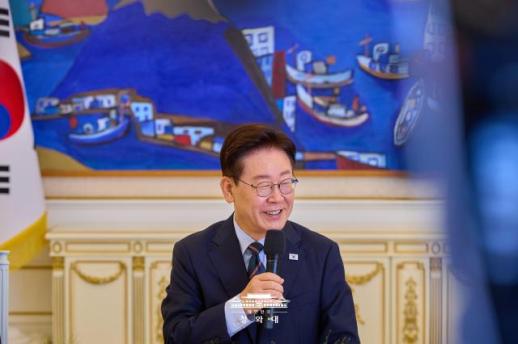 Lee pushes to expand food aid for underprivileged SEOUL, September 11 (AJP) - President Lee Jae Myung on Friday welcomed the nationwide expansion of a government program that provides food and daily necessities to people struggling to make ends meet without requiring them to first prove their eligibility. Lee said on X that the "Geunyang Dream" program, first launched in Gyeonggi Province, would now be available across the country. The program's Korean name, "Geunyang Dream," literally means "just giving," reflecting its principle of providing food and daily necessities first without requiring recipients to prove their eligibility. "A society where an elderly person steals bread makes all of us guilty," Lee wrote, saying the sentiment had stayed with him and inspired the initiative. The program provides food and basic necessities immediately to people facing financial hardship before connecting those who need further help with welfare services. The Ministry of Health and Welfare said the program will expand this month from 175 cities and counties to all local governments nationwide including Ulleungdo, an Island located near the easternmost Dokdo islets. About 210,000 people have used the service since its pilot launch at 57 locations last December. Of them, 44,712 received welfare consultations and 4,437 were connected to programs including basic livelihood assistance and emergency welfare support. The figures suggest that some households in South Korea still struggle to get enough food. A recent survey found that 98.3 percent of households had enough food in 2024, while about 1.7 percent did not have enough to meet their basic needs. Among the lowest-income households, 94.8 percent had enough food in 2024, although the government does not provide a nationwide figure for the number of people who struggle to get enough food. AJP Takeaways - President Lee Jae Myung backed the nationwide expansion of the "Geunyang Dream" program, which provides food and basic necessities to people in financial distress without requiring proof of eligibility first. - About 210,000 people have used the service since its pilot launch, with thousands later connected to welfare programs and emergency assistance. - Food insecurity remains a concern in South Korea, where 1.7 percent of households failed to meet the government’s food-security benchmark in 2024. 2026-09-11 16:55:19
 -
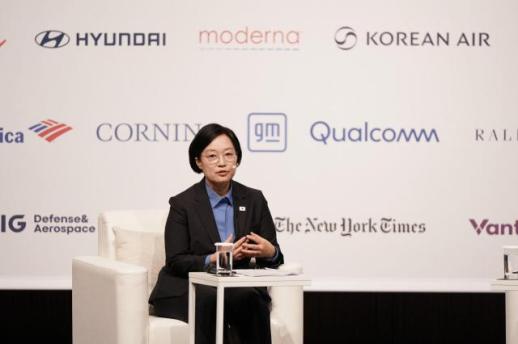 PM Han rejects claims Korea discriminates against U.S. firms SEOUL, September 11 (AJP) - Prime Minister Han Seong-sook on Friday rejected claims that South Korea discriminates against U.S. companies, saying the country's laws and regulations apply equally to domestic and foreign businesses. “I can say clearly that we do not discriminate against companies based on nationality,” Han told foreign business executives in her first appearance as prime minister at an American Chamber of Commerce in Korea event at The Shilla Seoul. Han cited enforcement actions against some of Korea's biggest companies to argue that regulators do not distinguish between Korean and foreign businesses when applying the law. She reached back to her years at Naver, where she served as chief executive. “When I was at Naver, eBay Korea, which was an American company, filed a complaint against Naver with the Fair Trade Commission, and we ended up facing a hefty fine,” Han said. The case dates to 2018, when eBay Korea, then owned by U.S.-based eBay, complained to the Korea Fair Trade Commission that Naver's shopping search system favored products sold through its own platform or linked to Naver Pay. The antitrust watchdog imposed penalties totaling about 26.7 billion won on Naver in 2020 over its shopping and video search algorithms. The case remains legally unsettled, however, after the Supreme Court last October overturned a lower-court ruling that had upheld the shopping-related sanction and sent it back for reconsideration. Han also pointed to SK Telecom, South Korea's largest mobile carrier. The Personal Information Protection Commission last year imposed a 134.79 billion won penalty on SK Telecom after concluding that inadequate security measures contributed to a massive leak of subscriber information. SK Telecom separately offered a 50 percent discount on one month's mobile bill to its customers as part of a compensation package. Han stressed that the measure was taken voluntarily by the company rather than ordered by the government. Han's lengthy defense underscored how sensitive the question of regulatory discrimination has become as Coupang emerges as a new source of friction between Seoul and Washington. Korea's privacy regulator in June imposed a record 625 billion won ($464 million) fine on Coupang over a massive data breach and unauthorized collection of customer information. The following month, a U.S. House Judiciary Committee report accused South Korean authorities of discriminating against Coupang and other foreign companies. Seoul rejected the allegations, saying its regulatory actions were based on Korean law rather than the nationality of the company. During an onstage conversation, AMCHAM Chairman and CEO James Kim said he frequently encounters concerns in Washington that U.S. companies are being treated unfairly in Korea. "Korea's laws and regulations protect free and fair business activity and apply equally to Korean and foreign companies," Han said. Han acknowledged, however, that Seoul needs to do a better job explaining its policies when foreign companies perceive Korean regulations as unfair. She also said regulations must keep pace with artificial intelligence and other emerging technologies without unnecessarily hindering innovation. AI is becoming infrastructure for virtually every industry, Han said, adding that Korea's manufacturing and digital strengths could complement U.S. leadership in AI, semiconductors and advanced technology. The discussion also turned to South Korea's $350 billion investment commitment in the United States. A special law governing the program took effect June 18, when Seoul launched the state-backed Korea-U.S. Strategic Investment Corp. Of the total commitment, $200 billion is earmarked for strategic investment and $150 billion for shipbuilding cooperation. Han said negotiations were progressing but emphasized that investment projects must deliver clear benefits to both countries. "Since it is an investment, profitability has to be properly secured," she said. Kim also raised Korea's longstanding struggle to attract the Asia-Pacific headquarters of multinational companies. AMCHAM has estimated that Singapore hosts more than 5,000 multinational regional headquarters and Hong Kong about 1,400, compared with fewer than 100 in Korea. Han said Korea needs to give foreign investors greater opportunities to participate in major projects, offer more competitive incentives and make the country easier for foreign executives and their families to live in. Foreign direct investment pledges in Korea reached $14.3 billion in the first half of 2026, up 9.1 percent from a year earlier, while actual inflows surged 42.6 percent to $10.7 billion. Han closed by saying the government's role should increasingly be to help businesses invest, innovate and take risks rather than stand in their way. "We will stand with companies so they can invest more boldly, innovate more freely and achieve even greater success in Korea," she said. AJP Takeaways - Prime Minister Han Seong-sook rejected claims that South Korea discriminates against U.S. companies, saying regulations apply equally to domestic and foreign businesses. - Han cited penalties against Naver and SK Telecom as evidence of equal enforcement as Seoul faces U.S. criticism over its regulatory actions against Coupang. - Han stressed profitability in South Korea's $350 billion U.S. investment commitment and pledged stronger incentives to attract multinational regional headquarters. 2026-09-11 15:37:29
 -
 Lee reshuffle reignites South Korea election reform debate SEOUL, September 10 (AJP) - President Lee Jae Myung's second Cabinet reshuffle is spilling into a broader debate over electoral reform in South Korea, as controversy surrounding a ministerial nominee has revived calls across the political spectrum to overhaul a voting system blamed for encouraging satellite parties and distorting voter choice. People Power Party (PPP) floor leader Jeong Jeom-sig on Thursday formally proposed that the ruling Democratic Party (DP) begin negotiations to abolish the country's semi-linked proportional representation system, seizing on the controversy surrounding Gender Equality and Family Minister nominee Yong Hye-in. "The fundamental cause of all this is the fundamentally flawed semi-linked proportional representation system," Jeong said at a PPP Supreme Council meeting at the National Assembly. Jeong argued that the DP bore responsibility for Yong's political rise, saying the party had effectively enabled her to win proportional representation seats twice and helped keep her minor Basic Income Party represented in parliament. Yong, currently the Basic Income Party's sole lawmaker, won proportional representation seats in both 2020 and 2024 through electoral alliances led by the DP. In 2024, she entered parliament through the Democratic Alliance of Korea, a DP-led satellite party, before returning to her own party after the election. The controversy intensified after Yong indicated that she intended to retain her parliamentary seat if appointed minister. South Korean law permits lawmakers to concurrently serve as Cabinet ministers, but proportional representation lawmakers have traditionally resigned their parliamentary seats upon joining the Cabinet so the next candidate on their party list can take over. Yong has said her resignation would leave the Basic Income Party without parliamentary representation. Yong defended her position at a press conference Thursday, saying lawmakers are legally permitted to serve concurrently as Cabinet ministers and arguing that proportional representation lawmakers should not be held to a different standard. She added that she was open to a broader legislative debate over whether lawmakers should be allowed to hold Cabinet posts at all. "If left-wing parties that fall short of the necessary standards gather around the DP, their 'host party,' like pop-up parties whenever an election approaches, they enter the National Assembly after receiving proportional representation rankings through the DP's choice rather than the people's choice and then act as the DP's front line," Jeong said. "It is time to get rid of such a low-quality system." Jeong also attacked the circumstances under which the semi-linked system was introduced, calling it "an evil law born from a backroom trade over the establishment of the Corruption Investigation Office for High-ranking Officials" after breaking what he described as the longstanding practice of changing electoral rules through bipartisan agreement. The electoral reform bill and legislation creating the anti-corruption agency were in fact placed together on a legislative fast track in April 2019 by a DP-led bloc. The election bill passed on Dec. 27, 2019, over fierce resistance from the then-main opposition Liberty Korea Party, the predecessor of today's PPP, while legislation establishing the corruption investigation agency passed three days later. Whether the measures amounted to a political "trade" is a partisan characterization by the PPP. Jeong's proposal has opened a wider debate that extends well beyond whether the current semi-linked formula should simply be abolished. South Korea's 300-member National Assembly currently combines two electoral systems. Of the total, 254 lawmakers are elected from single-member constituencies under a simple plurality system, meaning the candidate with the most votes wins the seat. The remaining 46 lawmakers are elected through closed party lists using proportional representation. Voters therefore cast one ballot for a constituency candidate and another for a political party. Under the semi-linked proportional system, the number of constituency seats a party has already won is taken into account when allocating proportional seats. In simplified terms, if a party's share of seats won in constituencies falls short of what its nationwide party vote would justify, the system attempts to compensate for part of that gap, with a 50 percent linkage rate. Parties generally qualify for proportional seats by winning at least 3 percent of the nationwide party-list vote or at least five constituency seats. The mechanism was intended to reduce the gap between parties' nationwide vote shares and their representation in parliament, particularly benefiting smaller parties that struggle to win first place in individual constituencies. Instead, critics say it gave the two major parties an incentive to create separate satellite parties devoted to contesting proportional seats. A major party expecting to win many constituencies could place its proportional candidates in an allied party, allowing the allied list to compete for proportional seats without being penalized for constituency victories by the parent party. Both major political camps used such arrangements in the 2020 and 2024 general elections, one of the central reasons the system has remained controversial. But lawmakers interviewed by AJP showed that there is little agreement over what should replace it. Rep. Jin Seong-joon, a three-term DP lawmaker, advocated the most fundamental departure from the present system. "There are various practical difficulties, but I believe that abolishing constituency-based representation and completely shifting to a regional party-list proportional representation system would be consistent with the principle of proportionality," Jin said. Under a regional party-list proportional representation system, the country would be divided into several large electoral regions, with parties presenting lists of candidates for each region and seats distributed largely according to each party's vote share within that region. Unlike South Korea's current system, which elects most lawmakers individually from single-member districts and uses a single nationwide proportional ballot to fill a much smaller number of seats, such a model could make party vote shares much more directly reflected in parliamentary representation. Regional proportional representation is not a new idea in South Korea. The National Election Commission proposed a six-region model in 2015, while a reform debate under former National Assembly Speaker Kim Jin-pyo in 2023 also considered various combinations of regional proportional representation and single- or multi-member constituencies. PPP Rep. Yoon Sang-hyun, a five-term lawmaker, agreed that the semi-linked system should go but cautioned against eliminating proportional representation itself. "I believe the semi-linked proportional representation system should be abolished. But eliminating proportional representation itself is not the answer," Yoon said. "We must not close off the channel through which regional representation and the diverse voices of the people can be reflected in the National Assembly," he said. "Although further social discussion and careful institutional design are still necessary, the alternative I am considering is a regional parallel proportional representation system." A parallel system, unlike the semi-linked model, would allocate proportional seats independently of how many constituency seats a party had already won. Yoon said that would eliminate both the complicated linkage formula and much of the incentive to create satellite parties. "Constituency election results should stand on their own, while proportional seats should be allocated honestly according to each party's share of the party vote," Yoon said. He also called for changing how candidates are selected for proportional lists. "We also need to move away from a closed-list system in which party leadership effectively distributes the rankings," Yoon said. "We should move toward open or semi-open lists that substantially reflect the choices of voters and party members, so proportional representation candidates themselves are subject to public scrutiny and evaluation." Yoon said legislation should explicitly prohibit arrangements between parent parties and satellite parties involving joint nominations, exchanges of candidate-list positions, shared organizations or accounting, joint command of campaigns and payment of campaign expenses. He also floated an urban-rural hybrid model under which larger cities could gradually introduce multi-member constituencies while sparsely populated rural areas retained single-member districts to protect local representation. PPP Rep. Yoo Sang-bum, a two-term lawmaker, also pointed to regional proportional representation as a possible alternative. "We must not see any more 'satellite parasite parties' like the Basic Income Party," Yoo said. “Regional proportional representation was discussed during National Assembly Speaker Kim Jin-pyo's term, but the talks were suspended. I think it could be considered an alternative.” PPP Rep. Ahn Sang-hoon went further, calling for an overhaul of the constituency system itself. "We should use this opportunity to completely change the National Assembly election system," Ahn said. "I think large multi-member districts are the answer. Satellite parties are nothing more than a trick." "The current single-member district system also ties lawmakers to local constituent demands and makes them indifferent to the country's bigger issues," he said. "If we elected 10 lawmakers from each of 30 districts nationwide, lawmakers would be able to devote themselves to the major affairs of state." "If the single-member district system is retained, another option would be to establish a separate upper house that could filter legislation passed by the lower house from the perspective of the country as a whole," Ahn said. South Korea's current semi-linked system dates to the most significant recent overhaul of parliamentary election rules, passed by the National Assembly on Dec. 27, 2019 and promulgated in January 2020. It was first used in the April 2020 general election. For that election alone, the 50 percent linkage formula was limited to 30 of the then-47 proportional seats, with the remaining 17 distributed under the old parallel method. That temporary "30-seat cap" expired afterward. The 2024 election retained the semi-linked system without the cap, meaning the linkage formula applied across the proportional allocation. The most recent statutory adjustment came on Feb. 29, 2024, just 41 days before that year's general election. Parliament increased constituency seats from 253 to 254 and reduced proportional seats from 47 to 46 while keeping the total number of lawmakers at 300. It did not replace the underlying semi-linked proportional formula. The latest debate therefore amounts to something potentially far larger than another redrawing of constituency boundaries. The proposals now range from returning to a simpler parallel proportional system to introducing regional party lists, opening proportional candidate lists to voters, creating large multi-member constituencies or even eliminating the existing constituency-based structure altogether. Yong's Cabinet nomination may have provided the immediate trigger, but the differences among lawmakers suggest that agreeing that the current system is flawed could prove far easier than agreeing on what should replace it. 2026-09-10 17:20:28