

Journalist
Lee Jung-woo이정우
cannes2030@ajupress.com
ReporterMinistry of Unification & North Korea, Politics, Foreign Affairs
I studied philosophy in college, and sociology and journalism in graduate school. I cover North Korea, South Korean politics, foreign affairs and films. I enjoy Nordic cinema, Indian cuisine and Japanese detective novels. I have a cat and like bright, acidic coffee.
"Were it left to me to decide whether we should have a government without newspapers, or newspapers without a government, I should not hesitate a moment to prefer the latter."
"Were it left to me to decide whether we should have a government without newspapers, or newspapers without a government, I should not hesitate a moment to prefer the latter."
Latest by Lee Jung-woo
-
 Teacher rights violations remain high despite recent decline SEOUL, September 04 (AJP) - South Korean education authorities reviewed more than 4,000 cases of alleged violations of teachers' rights last year, more than triple the level recorded five years earlier, data showed Friday. Teacher Rights Protection Committees reviewed 4,034 cases during the 2025 school year, about 3.4 times the 1,197 cases recorded in 2020, according to data published by the Korean Educational Development Institute. The number rose to 2,269 in 2021, 3,035 in 2022 and a peak of 5,050 in 2023 before falling to 4,234 in 2024 and 4,034 last year. Despite the two consecutive annual declines, the figure remained more than three times the 2020 level. Detailed data for the 2024 school year showed that middle schools accounted for 2,503 cases, or 59.1 percent of the total, followed by high schools with 942 and elementary schools with 704. Students were responsible for most cases at middle and high schools. At elementary schools, however, parents or guardians were involved in 211 of the 704 cases, or 30 percent. All 23 cases reported at kindergartens involved parents or guardians. Among violations involving students, intentionally disrupting educational activities by refusing legitimate disciplinary guidance was the most common type at 32.4 percent, followed by insults or defamation at 26 percent and physical assault or injury at 13.3 percent. For parents and guardians, repeated or unjustified interference with legitimate educational activities was the largest category at 24.1 percent. The issue of teachers' rights became a major national concern after a young teacher at Seoul's Seoi Elementary School died in July 2023, prompting large-scale demonstrations by teachers and calls for stronger protections against excessive parental complaints and interference in classroom activities. In response, South Korea strengthened legal and administrative protections for teachers, including revisions to education-related laws and new guidelines giving teachers clearer authority to discipline students and respond to disruptive behavior. The government has since expanded measures aimed at protecting legitimate educational activities from unfounded child-abuse complaints and other forms of interference. AJP Takeaways South Korea reviewed 4,034 cases of alleged violations of teachers’ rights in 2025, more than triple the 1,197 cases recorded in 2020. Middle schools accounted for nearly 60 percent of reported cases in 2024, while parents and guardians were involved in 30 percent of elementary school cases. Teachers’ rights became a major national issue after the 2023 death of a Seoul elementary school teacher, prompting stronger legal protections against excessive complaints, classroom disruption and unfounded child-abuse accusations. 2026-09-04 10:44:42
 -
 Yasukuni visit casts shadow over Seoul Defense Dialogue SEOUL, September 04 (AJP) - Japanese Defense Minister Shinjiro Koizumi is expected to skip next week's Seoul Defense Dialogue amid controversy over his visit to the Yasukuni Shrine, cooling a recent run of high-level defense exchanges between the two neighbors. Japan will instead send a vice-minister-level official to the 15th Seoul Defense Dialogue, an annual multilateral security forum hosted by South Korea's Ministry of National Defense from Sept. 7 to 9, as the ministry itself undergoes a leadership transition following President Lee Jae Myung's nomination of retired four-star Gen. Kang Shin-chul to replace Defense Minister Ahn Gyu-back. Seoul's defense ministry said Ahn will represent Seoul regardless of the reshuffle and a change in his Japanese counterpart. The exact reason for Koizumi's absence has not been disclosed, but it comes less than three weeks after he visited the Yasukuni Shrine on Aug. 15, the anniversary of Japan's surrender in World War II and South Korea's Liberation Day. Koizumi later acknowledged the visit during an Aug. 25 press conference. South Korea's Foreign Ministry condemned visits and offerings by senior Japanese figures to the shrine, saying Japanese leaders should face the country's wartime past and demonstrate sincere reflection through their actions. The Yasukuni Shrine honors Japan's war dead, including 14 Class-A war criminals convicted after World War II, and visits by senior Japanese officials have repeatedly drawn protests from South Korea and China. Koizumi's absence stands out after a series of defense exchanges that had signaled improving security ties between Seoul and Tokyo. South Korean Defense Minister Ahn Gyu-back and Koizumi met in Yokosuka, Japan, in January and agreed to promote reciprocal visits and regular defense ministerial meetings. They met again on the sidelines of the Shangri-La Dialogue in Singapore on May 30. Koizumi then visited South Korea on June 27-28 for another round of talks with Ahn. Japan's Defense Ministry said at the time that the two sides reaffirmed bilateral defense cooperation as well as trilateral security cooperation with the United States. Last year, then-Japanese Defense Minister Gen Nakatani attended the Seoul Defense Dialogue in Seoul, making Koizumi's absence this year a step down in the level of Japanese representation. The Seoul Defense Dialogue, launched in 2012, brings together senior defense officials and security experts to discuss regional and global security issues. Japanese Defense Minister Shinjiro Koizumi is expected to skip next week's Seoul Defense Dialogue due to controversy surrounding his visit to the Yasukuni Shrine, sending his deputy on his behalf instead. The 15th Seoul Defense Dialogue, an annual multilateral security forum hosted by South Korea's Ministry of National Defense, is set to take place in Seoul from Sept. 7 to 9. Koizumi visited the Yasukuni Shrine on Aug. 15, the anniversary of Japan's surrender in World War II and South Korea's Liberation Day. He later acknowledged the visit during an Aug. 25 press conference. South Korea's Foreign Ministry condemned visits and offerings by senior Japanese figures to the shrine, saying they reflected a failure to face Japan's wartime past and calling on Japanese leaders to demonstrate sincere reflection through their actions. The Yasukuni Shrine honors Japan's war dead, including 14 Class-A war criminals convicted after World War II, and visits by senior Japanese officials have repeatedly drawn protests from South Korea and China. The dispute comes after a series of high-level defense exchanges between Seoul and Tokyo this year. South Korean Defense Minister Ahn Gyu-back and Koizumi met in Yokosuka, Japan, in January and agreed to promote reciprocal visits and regular defense ministerial meetings. They met again on the sidelines of the Shangri-La Dialogue in Singapore on May 30. Koizumi then visited South Korea on June 27-28 for another round of talks with Ahn. Japan's Defense Ministry said at the time that the two sides reaffirmed cooperation between South Korea and Japan as well as trilateral security cooperation with the United States. Last year, then-Japanese Defense Minister Gen Nakatani traveled to Seoul for the Seoul Defense Dialogue and held talks with Ahn during the visit. 2026-09-04 10:30:28
 -
 TVING data breach exposes 40 million user accounts SEOUL, September 03 (AJP) - Personal information of some 39.5 million users of South Korean streaming service TVING was leaked through a cyberattack, the government said Thursday. The information breach is the biggest among a recent series of cyberattacks in the country. A joint public-private investigation team under the Ministry of Science and ICT said the compromised information included names, birth dates, mobile phone numbers, email addresses and connecting information, covering 20 categories and 70 types of data. Passwords had been protected by one-way encryption and could not be decrypted. Still, encryption keys for phone numbers and email addresses were also stolen, meaning that data were effectively exposed in plaintext, according to the investigators. The attackers also stole 361 development projects containing source code and other technical assets totaling about 30.35 gigabytes. Investigators found that hackers gained access to TVING's internal systems after stealing a developer's access key. The investigation cited inadequate key management, insufficient monitoring and security personnel, along with the company's failure to address vulnerabilities identified in a 2024 penetration test. TVING detected the breach on May 31 but reported it to the Korea Internet & Security Agency, the country's internet watchdog, more than 24 hours later, exposing it to a fine of up to 30 million won ($22,000). The incident follows a string of major data breaches in South Korea last year. SK Telecom suffered a cyberattack that compromised USIM-related information belonging to about 23.24 million users, while recruitment platform Incruit lost personal data belonging to about 7.28 million members. Lotte Card later confirmed that personal credit information belonging to about 2.97 million customers had been leaked, while Coupang disclosed in November that personal information linked to about 33.7 million customer accounts had been exposed. South Korea received 447 personal data breach reports in 2025, up 45.6 percent from 307 a year earlier, according to the Personal Information Protection Commission and the Korea Internet & Security Agency. AJP Takeaways A cyberattack on South Korean streaming platform TVING exposed personal data tied to about 39.54 million user accounts, including names, birth dates, phone numbers and email addresses. Hackers also stole 361 development projects containing source code and other technical assets after gaining access through a developer’s compromised access key, according to a government investigation. The breach comes amid a surge in major cyberattacks in South Korea, as the National Assembly expands the National Intelligence Service’s role in economic and cyber security, including responses to suspected state-backed hacking groups. 2026-09-03 17:04:00
 -
 Trump renews pressure on Korea, Japan over Alaska LNG SEOUL, September 03 (AJP) - U.S. President Donald Trump renewed pressure on South Korea and Japan on Wednesday (local time) to participate in Alaska energy development, again speaking as though the two Asian allies were already moving toward involvement in one of his administration’s signature energy projects. “You have Japan, you have South Korea, you have all these people now going to Alaska to load up with fuel, load up with oil, build pipelines, everything else,” Trump said at the White House on Sept. 2 while discussing Alaska and Republican Sen. Dan Sullivan, whom he plans to campaign for ahead of the November midterm elections. Although Trump did not explicitly name the Alaska LNG project in those remarks, they came against the backdrop of his administration’s sustained push for South Korea and Japan to invest in, supply equipment for and purchase gas from the massive project. The Alaska LNG project is designed to bring natural gas from Alaska’s North Slope across the state to Nikiski on the Kenai Peninsula, where it would be liquefied and shipped primarily to Asian markets. The roughly $44 billion project includes a pipeline running about 800 miles, or 1,300 kilometers, across Alaska and an LNG export terminal with planned capacity of 20 million metric tons a year. Glenfarne Group, which owns a 75 percent stake in the project, has targeted a final investment decision on the pipeline in 2026 and another on the export terminal in early 2027, with LNG exports expected to begin in 2031. The project has gained new momentum amid disruptions to Middle Eastern energy supplies. Glenfarne said in March that it had lined up preliminary commitments covering about 13 million tons of LNG annually and needed agreements for another 3 million tons before reaching the 16-million-ton threshold — 80 percent of capacity — it wants covered by binding contracts to support financing. Japan’s JERA and Tokyo Gas have reached preliminary agreements to buy a combined 2 million tons of LNG annually, while Glenfarne has said buyers in South Korea, Japan, Taiwan and Thailand have all signed up for volumes. Trump’s latest comments marked his second public reference in 2026 linking both South Korea and Japan to the Alaska project. At a White House briefing marking the first anniversary of his second term on Jan. 20, Trump touted the Alaska pipeline as a project aimed at exporting natural gas to Asia and said trade agreements with South Korea and Japan had provided unprecedented levels of funding. Alaska Gov. Mike Dunleavy subsequently highlighted Trump’s claim that South Korea and Japan would provide funding as he promoted progress on the project. But the January remarks were not Trump’s first-ever attempt to draw the two Asian allies into the project. “My administration is also working on a gigantic natural gas pipeline in Alaska,” Trump told a joint session of Congress on March 4, 2025, adding that “Japan, South Korea and other nations want to be our partner.” He claimed at the time that the countries would make investments worth “trillions of dollars each.” Trump continued to raise the idea in the months that followed. In April 2025, after speaking by phone with then-South Korean acting President Han Duck-soo, Trump said the two sides had discussed a “large-scale purchase of U.S. LNG” and South Korea’s proposed joint venture with Japan in an Alaska pipeline. He returned to the subject during South Korean President Lee Jae Myung’s White House visit on Aug. 25, 2025. “We’re dealing with South Korea, as you know, in Alaska, and we’re going to be making a deal, a joint venture with South Korea,” Trump said, adding that Japan was “also very strongly involved.” South Korean experts said Seoul should exercise caution in participating in the project. "Given the time frame and costs involved, the Alaska LNG project falls considerably short in terms of commercial viability," said Kang In Soo, a trade expert and professor of economics at Sookmyung Women's University. "It would not be desirable for Seoul to participate in the project simply because it is being pressured by Washington," Kang said. "A detailed feasibility study should come first." "South Korea should not participate in this project," said Rep. Kim Joon-hyung of the Rebuilding Korea Party. "The project would not yield significant benefits for South Korea and also lacks commercial viability," Kim said. "For the project to become commercially viable, substantial infrastructure investment from the U.S. side will also be necessary, so I hope companies and governments in South Korea, the United States and Japan will engage in close consultations and produce productive results," said Rep. Kim Gunn of the People Power Party. "At a time when energy security is increasingly important, I understand that South Korean companies are also showing interest in the project," Kim added. AJP Takeaways U.S. President Donald Trump renewed pressure on South Korea and Japan to participate in Alaska energy development, again suggesting on Sept. 2 that the two Asian allies were moving toward involvement in the Alaska LNG project. The $44 billion Alaska LNG project would transport North Slope gas through an 800-mile pipeline to an export terminal in Nikiski, with Glenfarne targeting LNG shipments to Asian markets from 2031. South Korean experts and lawmakers remain divided over participation, with critics questioning the project’s commercial viability while others say closer U.S.-South Korea-Japan cooperation could strengthen energy security. 2026-09-03 16:55:42
 -
 Will America risk New York for Seoul? SEOUL, September 03 (AJP) - U.S. President Donald Trump wants to meet North Korean leader Kim Jong-un and ordered scale-back in U.S.-South Korea military drills that anger Pyongyang and cost Washington heavily, reigniting a long-running question in Seoul: Should South Korea arm itself with nuclear weapons? Once taboo, the idea is gaining broader public acceptance. Sixty-five percent of South Koreans support the country possessing nuclear weapons, while 30 percent oppose it, according to the latest Gallup Korea survey. Support was particularly strong among conservative voters but extended well beyond the political right. AJP asked diplomatic and security experts, along with lawmakers from across South Korea's political spectrum, whether the U.S. nuclear umbrella remains credible, whether an independent arsenal would actually make the country safer and what alternatives lie between dependence on Washington and building the bomb. Is the U.S. nuclear umbrella still credible? “One of the key arguments against South Korean proliferation was that the U.S. commitment to South Korea makes it unnecessary,” Eric Grynaviski, professor of political science and international affairs at George Washington University, said. “As the Trump administration casts doubt on those commitments, the case for nuclear weapons in South Korea becomes stronger.” But Grynaviski said the American commitment remains stronger than it may appear. South Korea itself functions as a “trip wire,” he said, because U.S. troops are stationed in the country and large numbers of American civilians visit every year. A major North Korean attack would therefore almost certainly kill Americans and generate overwhelming domestic pressure on any U.S. administration to respond. Bhubhindar Singh, professor at the S. Rajaratnam School of International Studies at Nanyang Technological University, likewise said U.S. extended deterrence remains credible, even though South Koreans have repeatedly been reminded that the guarantee is no longer necessarily “ironclad” and ultimately depends on the president. “The current Trump administration is highly transactional and seems to defer more to authoritarian strongmen rather than democratic allies,” Brad Williams, professor in the Department of Public and International Affairs at City University of Hong Kong, said. Still, Williams said support for the alliance across the broader U.S. military and political establishment would make it difficult for even the Trump administration to remain on the sidelines if North Korea attacked South Korea. Ja Ian Chong, professor of political science at the National University of Singapore, said the problem runs deeper than the reduction of any particular military exercise or movement of American weapons. U.S. forces and resources have shifted before, he said. What has changed is that uncertainty over Washington's commitment is now compounded by questions about its military capacity to respond to simultaneous crises. “Whereas U.S. capability was less uncertain before even if there were debates about commitment, now the discussion about the U.S. position is about both commitment and capability,” Chong said. Officially, Washington's extended-deterrence policy toward South Korea has not changed, Chong noted. But inconsistency elsewhere in U.S. foreign policy means even truthful assurances can now be discounted. “There probably needs to be more consistency in U.S. positions across the board for assurance signals to be more credible,” he said. Rep. Boo Seung-chan of the Democratic Party, a former Air Force officer, took a similar view from Seoul. “Emotionally, I support possessing nuclear weapons, but rationally and from the standpoint of the national interest, I do not,” Boo said. He argued that the U.S. nuclear umbrella has so far performed well under the three traditional requirements of deterrence — capability, credibility and communication. That, he said, helps explain why other U.S. allies protected by the American nuclear umbrella have not rushed to build their own weapons. “I believe the argument for independent nuclear armament is just a political agenda,” Boo said. “The reason South Korea did not pursue independent nuclear armament under the Lee Myung-bak and Park Geun-hye governments was that national policy decisions are made on the basis of the national interest, not emotion.” Would a South Korean bomb actually make the country safer? Supporters of nuclear armament argue that an independent arsenal would eliminate the ultimate uncertainty inherent in extended deterrence: Seoul would no longer have to depend on another country's president to authorize nuclear retaliation. “Nuclear weapons will strengthen the Republic of Korea’s national security,” Singh said. While South Korea would face international backlash, Singh said he did not expect it to be as severe as the reaction to India and Pakistan becoming nuclear powers, arguing that North Korea's nuclear behavior has given Seoul a degree of legitimacy for considering the option. Rep. Park Choong-kwon of the People Power Party was more unequivocal. “South Korea needs its own nuclear weapons,” Park said. Whenever Washington raises changes to the role of U.S. Forces Korea, restrictions on its role in defending against North Korea or reductions in joint exercises, Seoul should be prepared to raise nuclear armament in response, he added. Rep. Park Sun-won of the Democratic Party took a more conditional view. “If South Korea could acquire its own nuclear weapons without any adverse consequences or burdens, I think that would be a good thing,” Park said. “The problem is that South Korea’s nuclear armament conflicts with the South Korea-U.S. alliance.” Rep. Sung Il-jong of the PPP, a former chair of the National Assembly's Defense Committee, went further. “If credible U.S. nuclear sharing is impossible, South Korea should consider developing independent nuclear weapons as a matter of national survival,” Sung said. Others see the calculation very differently. “South Korea does not need independent nuclear weapons, and they would not serve the national interest,” Rep. Jin Seong-joon of the DP, chair of the National Assembly's Defense Committee, said. “South Korea is already under the U.S. nuclear umbrella and can respond to North Korea’s nuclear threat through the U.S. extended deterrence strategy, so there is no reason for South Korea to pursue its own nuclear weapons,” Jin said. “The moment South Korea moves to acquire nuclear weapons, it will face international sanctions and pressure,” he said. “A chain reaction of nuclear arms competition involving neighboring countries such as Japan and Taiwan would begin, making the security environment even more unstable.” Rep. Kim Gunn of the PPP said it was natural for South Koreans to demand their own nuclear deterrent as North Korea deploys tactical nuclear weapons and threatens preemptive nuclear use. Such calls, he said, reflect a public demand for a more certain answer to North Korea's nuclear threat. “Nuclear armament could legitimize and perpetuate North Korea’s possession of nuclear weapons, while South Korea would violate the international norm of nuclear nonproliferation and could face sanctions from the international community,” Kim said. “Because we can strengthen deterrence through stronger alliance-based extended deterrence and by enhancing South Korea’s own capabilities, including nuclear-powered submarines and the three-axis system, we should be cautious about adopting independent nuclear armament as a policy option,” he added. Grynaviski also warned that a bomb could paradoxically weaken South Korea's strategic position. If Washington concluded that a nuclear-armed South Korea could handle its own security, it could accelerate reductions in U.S. forces and eventually remove one of the central pillars of the alliance, he said. Nuclearization could also encourage military buildups by neighboring countries and complicate South Korea's relations with them. Joseph Yi, professor of political science at Hanyang University, said an independent arsenal is, at least for now, more likely to weaken than strengthen South Korea's overall security. “The argument is simple: if the ally looks unreliable, acquire the ultimate weapon yourself,” Yi said. “That is a Trump-style answer to a complicated security problem.” “Nuclear weapons do not remove insecurity; they replace one set of risks with another,” he added. The NPT question: Could South Korea legally walk away? Any decision to build nuclear weapons would immediately collide with South Korea's obligations under the Nuclear Non-Proliferation Treaty. But leaving the treaty is not legally impossible. Article X explicitly recognizes a party's sovereign right to withdraw if extraordinary events connected to the treaty have endangered its “supreme interests.” The treaty requires three months' notice to the other parties and the U.N. Security Council, accompanied by an explanation of those extraordinary events. Its key language says a party has “the right to withdraw from the Treaty” when extraordinary events have jeopardized its supreme interests. Yoo Seong-min, a former Defense Committee chair and conservative presidential candidate in 2017, said that clause has become directly relevant to South Korea. “Reading Article X of the NPT, it almost feels as if it was written for today’s Republic of Korea,” Yoo said. “South Korea, which lives with North Korean nuclear weapons hanging over its head, should continue to emphasize both domestically and internationally that its withdrawal from the NPT would be justified under Article X,” he said. Yoo linked the nuclear issue to what he sees as a deeper deficit of trust in the alliance. “What damages the South Korea-U.S. alliance is not the argument for nuclear armament but unstable mutual trust,” Yoo said. He argued that the level of trust between South Korea and the United States — countries that fought alongside each other in the Korean and Vietnam wars — is weaker than the trust Washington has built with Japan despite the two having fought each other in World War II. Yoo pointed to differences between the U.S.-South Korea and U.S.-Japan civil nuclear agreements as another manifestation of that gap. “Washington may harbor suspicions that South Korea could someday reunify with North Korea or side with China,” Yoo said. “I believe those suspicions have been further amplified by the pro-North Korean and pro-China tendencies of the left-wing governments of Kim Dae-jung, Roh Moo-hyun, Moon Jae-in and Lee Jae Myung since Kim took office in 1998,” he said. “The absence of comparable pro-North Korean or pro-China tendencies in Japanese politics may be one reason for the difference in the level of trust.” For Boo, however, the decisive obstacle is not whether withdrawal is technically permitted but whether South Korea could absorb what followed. The country depends heavily on exports, he said, making it uncertain whether it could withstand the economic sanctions and diplomatic costs that could accompany NPT withdrawal and nuclear weapons development. Chong said international rules themselves are also becoming harder to evaluate in a world where major powers increasingly erode international law and institutions. The experiences of Ukraine, Iraq, Iran and Libya can be read as evidence that states without nuclear weapons may find themselves more vulnerable, he said. Nuclear sharing, tactical weapons — or a latent nuclear capability? Between the existing U.S. nuclear umbrella and an independent South Korean bomb lies a spectrum of intermediate options. They include stronger joint nuclear planning, NATO-style nuclear sharing, redeployment of U.S. nuclear weapons, expanded South Korean enrichment and reprocessing capabilities and stronger conventional deterrence. Yoo has advocated nuclear sharing for nearly a decade. “I adopted NATO-style nuclear sharing as a presidential campaign pledge in 2017, and my position is that we should pursue NATO-style nuclear sharing until independent nuclear armament becomes possible,” Yoo said. His 2017 presidential platform called for turning U.S. nuclear forces relevant to the Korean Peninsula into what he described as joint South Korean-U.S. assets. The proposal included nuclear information sharing, joint decision-making in a contingency, joint command-and-control arrangements, the use of South Korean assets for nuclear delivery missions, joint nuclear operational planning and combined nuclear exercises and training. “I will demand from the United States, immediately through a summit and defense and foreign ministers’ meetings, a level far closer than cooperation between the United States and NATO,” Yoo said when unveiling the plan on April 5, 2017. Yoo now argues that even NATO's model may no longer be sufficient for the Korean Peninsula. “NATO uses a system in which gravity bombs are carried and dropped by aircraft, but South Korea would need a tactical nuclear missile system,” Yoo said. Under nuclear sharing, he noted, the weapons would still remain under American control. “Even then, the nuclear weapons would be placed under U.S. control, and we cannot know when the United States might change its mind,” Yoo said. Boo favored a different form of hedging. Instead of immediately possessing nuclear weapons, South Korea should consider seeking rights to enrich uranium and reprocess spent nuclear fuel so that it could acquire the capability to manufacture nuclear weapons within a short period if the strategic environment deteriorated, he said. Williams favored strengthening conventional deterrence while securing explicit assurances of continued U.S. extended nuclear deterrence from supportive civilian and military officials in Washington. Given the Korean Peninsula's geography, he argued, nuclear weapons are particularly problematic because North Korean forces and South Korean territory are in such close proximity. Yi favored exhausting alliance-based options before crossing the nuclear threshold. Seoul and Washington can deepen nuclear planning, improve conventional deterrence and missile defense, expand intelligence and surveillance capabilities and strengthen rapid reinforcement arrangements, while also discussing nuclear sharing, he said. If the security environment deteriorates so dramatically that South Korean nuclear weapons become necessary, the decision should still be coordinated with Washington and closely with Tokyo rather than undertaken unilaterally, Yi said. AJP Takeaways South Korea’s nuclear weapons debate is gaining momentum as confidence in U.S. extended deterrence faces renewed scrutiny. President Donald Trump’s push to scale back U.S.-South Korea military exercises and reengage North Korean leader Kim Jong-un has intensified questions over whether Seoul can continue relying on Washington’s nuclear umbrella. Public support for an independent South Korean nuclear arsenal has risen sharply, but experts and lawmakers remain divided over whether nuclear weapons would actually make the country safer. A Gallup Korea survey found 65 percent support for possessing nuclear weapons, while critics warn that nuclearization could weaken the U.S.-South Korea alliance, trigger sanctions and accelerate a regional arms race involving Japan and Taiwan. South Korea could legally invoke Article X of the Nuclear Non-Proliferation Treaty to withdraw, but the economic and diplomatic consequences could be severe. The NPT allows withdrawal when extraordinary events jeopardize a country’s “supreme interests,” while opponents of nuclear armament warn that export-dependent South Korea could struggle to absorb international sanctions and diplomatic isolation. NATO-style nuclear sharing, U.S. tactical nuclear weapons and a South Korean latent nuclear capability are emerging as alternatives to immediately building a bomb. Proposals range from deeper South Korea-U.S. nuclear planning and missile defense to uranium enrichment and spent-fuel reprocessing rights that could give Seoul the ability to develop nuclear weapons rapidly if its security environment deteriorates. 2026-09-03 16:39:00
 -
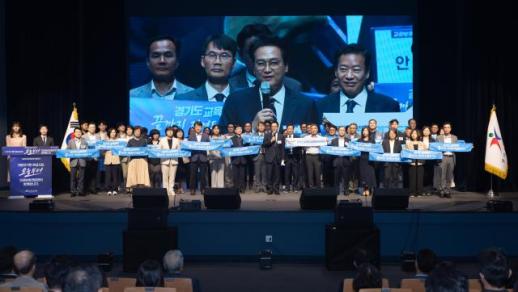
 Gyeonggi brings in real-life 'Teach You a Lesson' experts SEOUL, September 03 (AJP) - The Gyeonggi Provincial Office of Education has launched a 300-member team of specialists to support and defend South Korea teachers exposed to malicious complaints, harassment and attacks from students and parents. The initiative takes a cue from the Netflix drama “Teach You a Lesson,” which depicts a fictional government agency created to restore teachers’ authority in schools. Gyeonggi Superintendent of Education Ahn Min-seok has made stronger protection of teachers one of his signature policies since taking office in July. Yet despite repeated pledges to strengthen teachers’ rights, educators continue to face abuse both inside schools and online. On Wednesday, a video showing a fifth-grade student at an elementary school in Cheongju kicking and punching a teacher went viral, again drawing attention to violence against educators. Education authorities immediately separated the student from the teacher and suspended the student from attending school. The 300 teacher-rights protection officers include psychiatrists, lawyers, current and former police officers, counselors and conflict-resolution specialists, as well as a former investigator at the National Human Rights Commission of Korea. They will assist teachers from the initial stage of a case through its conclusion, providing legal advice, psychological counseling, recovery assistance and follow-up support. The team consists of 110 teachers, 30 Gyeonggi residents and 160 specialists. Interest in the program was far stronger than expected. The education office initially planned to recruit 50 officers but received 1,823 applications, prompting it to expand the final selection to 300, the office added. AJP Takeaways: · Gyeonggi education authorities launched a 300-member teacher-protection team of lawyers, psychiatrists, police officers and counselors to respond to abuse and malicious complaints. ·The initiative was inspired by Netflix drama “Teach You a Lesson,” which features a fictional government agency created to restore teachers’ authority. ·The rollout comes as violence against teachers remains a concern, highlighted by a viral video of a fifth-grade student assaulting a teacher in Cheongju. 2026-09-03 10:35:32
 -
 Uzbekistan looks to its Islamic golden age to build a new future SEOUL, September 02 (AJP) - The Center for Islamic Civilization, sprawling across a site roughly the size of 14 soccer fields, embodies in its glittering magnificence and grandeur what “New Uzbekistan” envisions: ushering a young, increasingly digital population into the AI age while keeping it firmly anchored in Islamic heritage and spirituality. The sprawling cultural and research complex cost about $161.8 million to build, according to a government construction directorate. Its three-story building offers more than 42,000 square meters of usable space beneath a 65-meter dome. Its exhibitions trace the territory's history from the pre-Islamic era through what Uzbekistan calls its First and Second Renaissances before culminating in a section titled “New Uzbekistan — the Foundation of the Third Renaissance.” At its heart sits the ancient Uthman Quran, surrounded by manuscripts, archaeological discoveries and artifacts documenting centuries of Islamic scholarship. In the official narrative, the First Renaissance refers roughly to the ninth through 12th centuries, when Central Asian scholars including Muhammad al-Khwarizmi, al-Biruni and Ibn Sina made foundational contributions to mathematics, astronomy, medicine and philosophy. The Second Renaissance is associated with the Timurid period and figures including astronomer and ruler Ulugh Beg. The Third, President Shavkat Mirziyoyev argues, should happen now. The Center for Islamic Civilization gives that ambition a physical home. It has also quickly become an international stage. Forums bringing scholars, journalists and cultural figures from around the world to Tashkent have put the building at the center of the government's effort to introduce Uzbekistan's Islamic heritage to a wider audience. Mirziyoyev elevated that message further during celebrations marking the country's 35th anniversary of independence. Some 6,000 people filled a vast open-air amphitheater in New Tashkent on Aug. 28, four days before Independence Day. Speaking before the crowd, Mirziyoyev moved through economic development, education and national identity before turning to the country's Islamic heritage. “We have built unique scientific and educational institutions such as the Center for Islamic Civilization and the Imam Bukhari and Burhaniddin Marginani memorial complexes,” Mirziyoyev said. The audience rose in sustained applause. The scene illustrated the role Islamic civilization has come to play in Mirziyoyev's vision of “New Uzbekistan”: not primarily as a story of religion, but of science, scholarship, enlightenment and modernization. A museum of the 'Third Renaissance' Mirziyoyev formally opened the Center for Islamic Civilization on March 17. Its galleries are arranged almost as a physical version of the historical narrative his government has promoted since he took power in 2016. Visitors move from ancient Uzbekistan into the Islamic golden age, through the Timurid period and eventually into modern independent Uzbekistan. The final destination is not the past at all, but the government's proposed future: the “Third Renaissance.” Mirziyoyev has described the center as one of its foundations while stressing that the institution should be scientific, secular and modern. The message is straightforward: the same land that produced scholars who transformed world knowledge should produce another generation capable of succeeding in science, technology and education. That connection was apparent in his Aug. 28 independence speech. After mentioning the Center for Islamic Civilization and the reconstructed Imam Bukhari complex, Mirziyoyev turned almost immediately to young people, education and the country's next decade of development. He described the coming 10 years as a period of “national rise” and said the first of seven planned national programs would seek to make knowledge and skills the country's principal capital. Al-Khwarizmi's mathematics, Ibn Sina's medicine, Ulugh Beg's astronomy and Imam Bukhari's religious scholarship are thus being assembled into a single civilizational inheritance that the government wants today's Uzbekistan to translate into universities, research, artificial intelligence and innovation. Recovering what independence restored Mirziyoyev also used the independence anniversary to place the center in a longer story of national recovery. He told the crowd that the roots of Uzbekistan's independence stretched back more than 3,000 years and invoked al-Khwarizmi, Ahmad al-Fergani, al-Biruni, Ibn Sina, Ulugh Beg and Alisher Navoi. “Independence, above all, returned to us our honor and dignity, our sacred religion, our mother tongue and our forgotten national values,” he said. That helps explain why a newly built institution occupies such a prominent place in the country's official story. Its layout advances an argument: Uzbekistan possessed a great civilization, independence allowed the country to reclaim that inheritance, and “New Uzbekistan” can use it as the foundation of another period of intellectual and economic development. The center had received about half a million domestic and international visitors by June 1, just two and a half months after opening, averaging around 6,000 visitors a day, according to the presidential office. From Tashkent to Samarkand The same philosophy is visible hundreds of kilometers away at the Imam Bukhari Memorial Complex near Samarkand, another institution Mirziyoyev singled out in his independence speech. Imam Bukhari, born near Bukhara in the ninth century, compiled Sahih al-Bukhari, regarded by Sunni Muslims as one of the most authoritative collections of sayings and actions of the Prophet Muhammad. Uzbekistan has rebuilt his burial site on a monumental scale. The 45-hectare complex now includes a grand mausoleum, a mosque for 10,000 worshippers, four 75-meter minarets, a museum and research and educational facilities. Its capacity has risen to as many as 65,000 visitors a day from around 12,000 previously. The government separately allocated 570 billion soums for hotels and trade and service facilities around the pilgrimage center. The development includes one four-star hotel, two three-star hotels and 22 family guesthouses. More than 1 million domestic and international visitors had passed through the complex by early May, according to the government. Like the Tashkent center, the Imam Bukhari project ties Islamic history to research, education and tourism rather than treating the site solely as a religious shrine. Defining the Islam Uzbekistan wants to promote The projects also reveal the boundaries of the government's approach. Uzbekistan is not simply encouraging a greater public role for Islam in every form. It is promoting a carefully defined interpretation centered on knowledge, tolerance, scholarship and peace. The government frequently summarizes that philosophy with the slogan “Enlightenment Against Ignorance.” In the first half of this year, Uzbekistan's Committee on Religious Affairs said more than 223,000 educational and preventive activities were conducted under that framework, including programs involving young people, vulnerable families and labor migrants. The idea stretches back to Mirziyoyev's address to the United Nations in 2017, when he argued that ignorance and intolerance could create conditions for extremism and called for education and the humanistic traditions of Islam to play a greater role in combating radicalization. The Center for Islamic Civilization grew out of that thinking. Mirziyoyev said when announcing the project at the United Nations that Islam should be associated with goodness, peace and enlightenment rather than violence. The center therefore represents a specific state-backed interpretation of Islamic civilization: scholarly rather than radical, educational rather than political and compatible with modernization. Islamic heritage inside a secular state Uzbekistan has sought international cooperation on manuscripts, digitization, historical research and cultural heritage, while opening an office of the Islamic World Educational, Scientific and Cultural Organization, or ICESCO, in Tashkent. Mirziyoyev has ordered officials to promote the center in 55 countries and organize presentations about it and scholars including Imam Bukhari, Imam Maturidi and Imam Tirmidhi at U.N. offices in New York and Geneva as well as UNESCO headquarters in Paris. International forums and press tours held at the center fit directly into that strategy. Rather than presenting Uzbekistan abroad primarily as an Islamic state, Tashkent is positioning it as a historic center of Islamic civilization whose claim to influence rests on scholars, manuscripts, scientific achievement and cultural heritage. That message can reach Muslim-majority countries while remaining compatible with secular international institutions. Uzbekistan's Constitution nevertheless draws a clear legal line. It defines the country as a “sovereign democratic, legal, social and secular state,” while Article 75 states that religious organizations are separated from the state. A religious-policy concept adopted under a 2025 law also reaffirmed both freedom of conscience and the country's secular character. The prominence of the Center for Islamic Civilization therefore does not necessarily signal an Islamization of the Uzbek state. Instead, it shows how Mirziyoyev's government is bringing Islamic civilization into the national story of a secular Uzbekistan — connecting a celebrated scholarly past with the technological and economic future it wants to build. AJP Takeaways Uzbekistan’s Center for Islamic Civilization is a flagship of President Shavkat Mirziyoyev’s “New Uzbekistan” vision, linking Islamic heritage with science, education, artificial intelligence and modernization. The Tashkent center presents Uzbekistan’s history as a progression from the First and Second Renaissances toward a state-backed “Third Renaissance,” drawing on scholars including al-Khwarizmi, al-Biruni, Ibn Sina and Ulugh Beg. Uzbekistan is investing heavily in Islamic cultural heritage, including the Center for Islamic Civilization and the expanded Imam Bukhari Memorial Complex near Samarkand, while promoting both sites internationally as centers of scholarship, research and tourism. Mirziyoyev’s government promotes a carefully defined vision of Islam centered on enlightenment, tolerance and knowledge while maintaining Uzbekistan’s constitutional identity as a secular state and keeping religious organizations formally separate from government. 2026-09-02 18:07:08
 -
 Coupang logistics center raided over workplace accident SEOUL, September 2 (AJP) - As friction over Coupang increasingly strains relations between South Korea and the U.S., authorities raided one of the e-commerce giant's logistics centers on Wednesday over a workplace accident that left a worker in his 40s critically injured. The Gyeonggi Nambu Provincial Police Agency and the Seongnam branch of the Ministry of Employment and Labor began searching the logistics center in Gwangju, Gyeonggi Province at around 9 a.m. Thirteen investigators from the police agency and 15 labor inspectors were deployed to the site. Investigators seized computers, storage devices and documents related to the accident as they seek to determine its cause and whether legally required safety measures were properly implemented. Police have booked two officials including the head of the logistics center on suspicion of professional negligence resulting in injury. Labor authorities are also separately investigating possible violations of relevant labor laws. The accident occurred at around 12:45 p.m. on Aug. 23, when the worker's neck became trapped between a forklift and a structure while he was operating the vehicle. He was taken to a hospital in cardiac arrest and had yet to regain consciousness as of Wednesday. The raid comes as Coupang has emerged as a source of friction between Seoul and Washington. U.S. lawmakers have accused South Korean authorities of unfairly targeting the Seattle-headquartered, U.S.-listed company through investigations and regulatory penalties, while the South Korean government has rejected the allegations and said its actions were based on domestic law. AJP Takeaways • South Korean police and labor authorities raided a Coupang fulfillment center in Gwangju, Gyeonggi Province, after a workplace accident left a worker in his 40s critically injured. • Investigators are examining whether Coupang complied with legally required workplace safety measures, while police have booked two officials on suspicion of professional negligence resulting in injury and labor authorities are investigating possible Occupational Safety and Health Act violations. • The raid adds to tensions between South Korea and the United States over Coupang, as U.S. lawmakers accuse Seoul of unfairly targeting the U.S.-listed e-commerce company while the South Korean government says its investigations and regulatory actions are based on domestic law. 2026-09-02 14:50:21
 -
 Police scandals test Korea's sweeping prosecution reform SEOUL, September 02 (AJP) - South Korea carried out a sweeping reshuffle of senior police officials Tuesday, replacing 14 of the country's 18 regional police chiefs, as public distrust of police investigations deepens over a scandal on Jeju Island involving the false closure of missing-person cases. The shake-up came before South Korea's 78-year-old Prosecution Service is set to disappear on Oct. 2, adding urgency to questions over how police investigations will be checked under a new criminal justice system that will strip prosecutors of the power to conduct supplementary investigations themselves. Those concerns have been further fueled by a botched murder investigation in Gwangju. The scandals have erupted at a particularly sensitive moment for the country's criminal justice system, as the government prepares to dismantle the Prosecution Service, established in 1948, and redistribute its investigative and indictment functions between separate agencies. Neither case was caused by the prosecution reform itself, and supporters of the overhaul stress that the new system contains mechanisms allowing prosecutors to scrutinize police investigations and demand additional investigative work. Still, the cases have intensified a broader debate over how police should be checked once prosecutors lose the power to conduct supplementary investigations themselves. The first controversy centers on Jang Yoon-gi, who was accused of killing a high school girl in Gwangju in May. Police initially sent the case to prosecutors on a murder charge, but a subsequent prosecutorial investigation led to Jang being indicted on a more serious rape-murder charge. Prosecutors also uncovered circumstances suggesting possible collusion between members of the original police investigation team and Jang's father, himself a police officer, as well as alleged evidence concealment. The case immediately became ammunition for critics of eliminating prosecutors' supplementary investigative authority, who argued that crucial allegations might never have surfaced without a second layer of investigation. The second scandal broke on Jeju, where a police officer was arrested after allegedly closing missing-person cases without properly confirming the whereabouts of those reported missing. Jeju police reviewed 298 missing-person cases the officer had closed while serving on a missing-persons team between March 2025 and July this year and identified 25 additional cases suspected of having been falsely closed. In 10 of them, the cases were allegedly closed even though police had not contacted the missing people. In another 15, people who were alive were recorded as dead in the police missing-person profiling system. All 25 people identified in the additional review were eventually confirmed to be safe. The officer told investigators that he had regarded the missing people as ordinary adults who would likely return on their own and that he felt burdened by the work required to keep cases open and hand them over, according to Jeju police. The revelations followed nationwide outrage over the handling of the disappearance of Jang Mi-ran, 37, whose case was closed only hours after she was reported missing in May after the officer falsely claimed that police had contacted her. She was later found dead. Another missing man whose case was handled by the same officer was also subsequently found dead. The Democratic Party (DP), however, rejects suggestions that the incidents demonstrate a fundamental flaw in its prosecution reform. "The Jang Yoon-gi case in Gwangju and the false closure of the missing-person case in Jeju have nothing to do with prosecution reform," Rep. Seo Young-kyo of the ruling DP, chair of the National Assembly's Legislation and Judiciary Committee, said. "Under the Democratic Party's amendment to the Criminal Procedure Act, if police officers do something wrong, they are punished, and if a police investigation is insufficient, prosecutors can request supplementary investigation," Seo said. "Police conduct the investigation in the first instance, and prosecutors then request supplementary investigation and review the facts before deciding whether to indict, followed by a trial," she said. "We have designed the system with multiple layers of scrutiny." The DP's legislation abolishes prosecutors' authority to personally conduct supplementary investigations but retains and strengthens their authority to request that police perform additional investigation. Under the legislation, police are required to comply with prosecutors' requests for supplementary investigation and report the results, while prosecutors also retain mechanisms to seek corrective measures or reinvestigation. Critics argue that being able to order police to investigate further is fundamentally different from allowing prosecutors to directly pursue overlooked evidence themselves. "I have also criticized prosecutors' monopoly over investigative authority, but I oppose completely stripping them of their supplementary investigative authority because that would create another monopoly — a police monopoly over investigations," Yoo Seong-min, a former four-term lawmaker of the main opposition People Power Party (PPP), said. "Investigative authority is an immensely powerful state power that has a profound impact on people's lives, safety and fundamental rights," Yoo said. "Police officers have not received the same specialized legal education as prosecutors, so there is a greater possibility of abuse of investigative authority outside the bounds of the law, disregard or distortion of due process, or cases being buried," he said. "The public will bear the consequences." "The only solution is to restore prosecutors' supplementary investigative authority," Yoo added. The debate stands in contrast to the U.S. criminal justice system, where prosecutors and law enforcement agencies frequently work together during investigations and prosecutors can demand additional investigation before deciding whether to bring charges. "In white-collar cases — fraud, corruption, etc. — I can't imagine a prosecutor not being integrally involved in an investigation from the very beginning," said Daniel Richman, the Paul J. Kellner Professor of Law at Columbia Law School and a former federal prosecutor in the U.S. Attorney's Office for the Southern District of New York. "Generally, in street crime cases, the investigation is largely done by the police," Richman said. But the relationship changes as cases become more complex. "For big cases, like homicides, the bigger prosecutors' offices often have their own squads of detectives, since the police's view of what evidence is sufficient may be quite different from a prosecutor's," he said. Drawing on his experience at the Southern District of New York, one of the United States' most prominent federal prosecutor's offices, Richman said prosecutor involvement from the outset was standard in sophisticated cases. "In my old office, the Southern District of New York U.S. Attorney's Office, which is nationally known for its white-collar expertise, it would be extremely uncommon for a prosecutor not to be involved from the start," he said. Asked whether American prosecutors have powers comparable to South Korea's concept of supplementary investigation, Richman said they do. "If a prosecutor thinks the evidence is insufficient to go before a jury, she will almost invariably tell the police that she can't proceed without further investigation, unless she wants to simply decline to prosecute," he said. U.S. prosecutors also have powerful tools to develop evidence themselves or to direct how evidence is obtained, particularly in federal investigations. "Prosecutors completely control the grand jury process," Richman said. "Indeed, agents generally, with some exceptions involving administrative subpoenas, lack the legal power to force disclosure of evidence or testimony on their own." Prosecutors also generally seek search warrants from judges based on information supplied by federal agents, he said. When prosecutors conclude that a police investigation is inadequate, there is little ambiguity about what they can do. "They can send the case back, or simply decline to prosecute," Richman said. Richman placed particular emphasis on the benefits of prosecutors and investigators approaching the same case from different institutional perspectives. "Each side brings a critical perspective — the police are closer to the facts, the prosecutor is closer to the courts," he said. "Neither can function without the other, and each can check the other, identifying blind spots, even corruption." The relationship becomes especially important in complex investigations, Richman said, because U.S. prosecutors exercise control over legal mechanisms that investigators alone cannot deploy. "Particularly because, in sophisticated cases, prosecutors control important investigative tools — search warrants, grand juries, and the charges that can be used to obtain information from conspirators — complete separation, at least in the U.S., would mean the end of corruption, fraud, and many national security cases," he said. Richman also pointed beyond the United States, saying other countries have recognized the value of close cooperation between prosecutors and investigators, citing collaboration in rape cases in Britain. His comments were an explanation of how the U.S. system operates and the risks of completely separating investigation from prosecution, rather than a direct assessment of South Korea's legislation, which preserves prosecutors' power to request additional police investigation. That distinction is now at the center of Korea's debate: whether the power to review an investigation and send it back to police is sufficient to protect suspects and victims — or whether prosecutors must retain the ability to pursue missing evidence themselves. With the current Prosecution Service due to disappear on Oct. 2, the Gwangju and Jeju scandals have turned that institutional question into an immediate test of public confidence in Korea's new criminal justice system. AJP Takeaways South Korea’s prosecution reform faces renewed scrutiny after botched police investigations in Gwangju and Jeju raised concerns over how police will be checked once the 78-year-old Prosecution Service is abolished on Oct. 2. The ruling Democratic Party says prosecutors will retain strong oversight powers, including the authority to demand supplementary police investigations, while critics argue that requesting further investigation is fundamentally different from prosecutors being able to pursue missing evidence themselves. U.S. legal practice offers a contrasting model in which prosecutors and investigators often work closely on complex cases, with Columbia Law School professor and former federal prosecutor Daniel Richman stressing that each side can check the other and identify investigative blind spots or corruption. 2026-09-02 11:26:40
 -
 Foreign workforce hits record high amid rising manufacturing demand SEOUL, September 2 (AJP) - South Korea's foreign resident population rose 6.3 percent from a year earlier to more than 2.9 million as of July, while the number of foreign workers living and working in the country reached a record high. A total of 287,424 foreign workers holding E-9 non-professional employment visas were staying in South Korea as of July, according to data from the Ministry of Employment and Labor released on Wednesday. The figure has steadily increased from 159,463 in 2021 to 203,121 in 2022, 247,191 in 2023, 271,925 in 2024 and 282,839 last year. Manufacturing accounted for the overwhelming majority, with 229,844 workers or 80 percent of the total. Agriculture and livestock farming followed with 33,878 workers, or 11.8 percent, while 15,441 worked in fisheries and 6,724 in construction. Only 1,410 or 0.5 percent were employed in the service sector. South Korea allows small and midsized companies that have difficulty finding local workers to hire foreign workers. The annual quota for foreign workers increased sharply after the coronavirus pandemic worsened labor shortages, rising from 69,000 in 2022 to 120,000 in 2023 and 165,000 in 2024. The quota was later cut to 130,000 last year and 80,000 this year as labor demand weakened amid the economic slowdown. But industry-level mismatches remain pronounced. As of July, employers applied for permits to hire 38,998 foreign workers, with permits issued for 31,986, or 82 percent. In the service sector, however, only 333 of 564 applications were approved, for an issuance rate of 59 percent. AJP Takeaways • South Korea's E-9 foreign worker population reached a record 287,424 as of July 2026, as the country's total foreign resident population surpassed 2.9 million. The number of E-9 visa holders has risen nearly 80 percent from 159,463 in 2021, highlighting South Korea's growing reliance on foreign labor amid persistent workforce shortages. • Manufacturing employs 80 percent of South Korea's E-9 foreign workers, making factories the biggest users of the Employment Permit System. Of the 287,424 E-9 visa holders in the country, 229,844 work in manufacturing, followed by 33,878 in agriculture and livestock farming, 15,441 in fisheries and 6,724 in construction. • South Korea cut its 2026 E-9 foreign worker quota to 80,000 as the economy slowed, but labor shortages and industry mismatches remain. Employers received permits for 82 percent of foreign worker applications as of July, while the service sector recorded a much lower approval rate of 59 percent. 2026-09-02 11:24:42