

Journalist
Lee Jung-woo이정우
cannes2030@ajupress.com
ReporterMinistry of Unification & North Korea, Politics, Foreign Affairs
I studied philosophy in college, and sociology and journalism in graduate school. I cover North Korea, South Korean politics, foreign affairs and films. I enjoy Nordic cinema, Indian cuisine and Japanese detective novels. I have a cat and like bright, acidic coffee.
"Were it left to me to decide whether we should have a government without newspapers, or newspapers without a government, I should not hesitate a moment to prefer the latter."
"Were it left to me to decide whether we should have a government without newspapers, or newspapers without a government, I should not hesitate a moment to prefer the latter."
Latest by Lee Jung-woo
-
 Will Trump's joint drill reduction revive talks with North Korean leader? SEOUL, August 20 (AJP) - U.S. President Donald Trump's abrupt call to scale back a joint military exercise with South Korea has quickly moved from presidential rhetoric to security concerns, amid growing signs that he is seeking another face-to-face meeting with North Korean leader Kim Jong-un. The annual Ulchi Freedom Shield exercise (UFS), which began earlier this week and was originally scheduled to run for 11 days through Aug. 27, is being cut to five days and end on Friday. South Korea and the U.S. have also agreed to reduce some field training. The shortened schedule effectively eliminates a second phase that had been scheduled for next week and focused on counterattack operations after an initial defensive phase. Fourteen battalion-level or larger combined field training drills had originally been planned. The development comes after Trump ordered the Pentagon on Aug. 16 to make a "substantial" reduction in the exercise. Trump cited the cost of the exercise, his close personal relationship with Kim and Seoul's refusal to support a U.S. request for help in its war against Iran. Foreign Minister Cho Hyun told lawmakers last Wednesday that neither South Korean nor U.S. officials had known about the order in advance, an unusual breakdown in coordination over an exercise at the heart of the alliance's combined defense structure. The military move has been accompanied by increasingly explicit diplomatic signals from Trump. On Monday, he said Kim had responded to his overtures without elaborating. On Wednesday, Trump went further, saying he expected to meet Kim later this year and asserting that North Korea possessed 57 "very powerful" nuclear weapons. The Wall Street Journal reported that Trump has been pressing aides to arrange a meeting as early as this fall, possibly around his trip to China for the APEC summit in Shenzhen. The APEC Economic Leaders' Meeting is scheduled for Nov. 18-19. No formal summit preparations have been announced. The nuclear stakes were underscored on Thursday when South Korean Defense Minister Ahn Gyu-back told lawmakers that estimates by private institutions put North Korea's stockpile at roughly 80 to 120 nuclear warheads, while cautioning that Seoul's military could not verify an exact figure. Pyongyang, meanwhile, has sent deliberately mixed signals. Kim Yo-jong, the North Korean leader's powerful sister, denied that there had been recent communication between Washington and Pyongyang and argued that reducing the exercise did not fundamentally change what North Korea sees as hostile U.S. policy. At the same time, she said that the personal relationship between Trump and her brother remained "excellent," leaving open at least the possibility of renewed high-level diplomacy. Taken together, the rapid sequence has raised a broader question in Seoul. Is Trump using the reduction in the joint exercise as a tactical gesture to bring Kim back to the negotiating table, as he did during his first term, or does the decision signal a deeper reassessment of the U.S.-South Korea alliance? Three motives — and a warning from Yoo Seong-min Former conservative lawmaker Yoo Seong-min, who previously chaired the National Assembly's National Defense Committee, sees a potentially much broader and more dangerous convergence. Yoo told AJP that he believes three factors may have driven Trump's decision: a desire to stage another high-profile encounter with Kim after the Singapore, Hanoi and Panmunjom meetings of 2018 and 2019; resentment that South Korea has not joined U.S. military efforts in the Iran war; and frustration over the slow implementation of Seoul's $350 billion U.S. investment pledge while South Korean President Lee Jae Myung pushes ahead with a massive semiconductor cluster in Jeolla provinces. Seoul's $350 billion commitment was made as part of last year's trade agreement with Washington. South Korea launched a state-backed investment corporation in June to manage the package including $200 billion in strategic investments and $150 billion in shipbuilding-related investment, but no individual projects had been finalized at the time. Cho said Wednesday that implementation had been slower than Washington wanted because Seoul had to consider commercial viability and legal procedures. Separately, Samsung Electronics and SK hynix have pledged a combined 800 trillion won ($573.8 billion) in investment for four memory-chip fabrication plants as part of the government-backed semiconductor cluster in Gwangju and the wider southwestern region. There is no public evidence that Trump personally linked the project to his decision on military exercises and Yoo presented that connection as his own assessment. Trump himself publicly cited the Iran issue, the cost of the exercise and his relationship with Kim. South Korea's foreign minister, however, also said that he believed Trump's message was partly aimed at pressuring Seoul over the Iran war and unresolved investment issues. "Trump always tends to speak first and act first, so there has been an argument that we should watch his actions rather than his words," Yoo said. "But in this case, UFS was cut in half immediately after Trump's instruction, and the counterattack portion that had been conducted every year was dropped. I think it would be complacent to dismiss this as mere verbal intimidation." Yoo warned that repeated or permanent reductions in combined training could eventually raise more fundamental questions about the practical roles of the South Korea-U.S. Combined Forces Command, the United Nations Command and U.S. Forces Korea. "A drastic reduction in South Korea-U.S. joint military exercises could ultimately lead to questions about the reason for the existence of the Combined Forces Command, the United Nations Command and U.S. Forces Korea, and could lead to a process of weakening or dismantling the alliance," Yoo said. His concern also extends to Seoul's push to regain wartime operational control or OPCON from Washington. That connection is not merely theoretical. Before Trump's intervention, the allies said this year's UFS would specifically support preparations for the conditions-based OPCON transition. Seoul is in the second phase of a three-stage process, and the exercise has been used to assess South Korea's capacity to lead the future combined command. President Lee has said his administration wants to complete the transition during his term while strengthening South Korea's ability to defend itself. Yoo also pointed to Lee's Aug. 15 Liberation Day address, delivered just one day before Trump's exercise directive. Lee proposed discussions among relevant parties to formally end the Korean War, transform the armistice regime into a peace regime and find "effective measures" to halt further advances in North Korea's nuclear capabilities. He said peace on the Korean Peninsula could become a milestone toward "a world without nuclear weapons." Yoo argued that Trump's willingness to reduce military pressure and Lee's peace-oriented approach could reinforce each other in ways that increase centrifugal pressure on the alliance. Kim Gunn sees a diversion, not yet a diplomatic breakthrough PPP Rep. Kim Gunn, a member of the National Assembly's Foreign Affairs and Unification Committee and a former diplomat, took a considerably more cautious view. "It is still unclear how this will develop," Kim told AJP. Kim said Kim Yo-jong's reaction was particularly important because her denial of recent U.S.-North Korean communication casts doubt on the idea that Trump reduced the exercises as the result of an already functioning back channel with Pyongyang. "Judging from Kim Yo-jong's response, it does not appear that the exercises were scaled back because some communication is already taking place between the United States and North Korea," Kim said. "At this point, it looks more like a diversionary tactic by President Trump." Kim's comments highlight the gap between Trump's claims and North Korea's statements. Trump said Kim had responded to his efforts to contact him, but Kim Yo-jong later said she was not aware of any recent communication between the two leaders. U.S. and British scholars urge caution Theda Skocpol, the Victor S. Thomas Professor of Government and Sociology at Harvard University, was even more skeptical that Trump’s decision could be interpreted through a conventional policy framework. "Who knows why he does anything?" Skocpol told AJP. She pointed instead to Trump's frustration over the Iran war and weakening domestic political standing as possible context for the timing. "The U.S. president is frustrated he is not in control of the Iran war and increasingly unpopular at home," Skocpol said. The Iran conflict remains unresolved nearly six months after U.S.-Israeli attacks began on Feb. 28. A Reuters/Ipsos poll released Aug. 17 put Trump's approval rating at 33 percent, the lowest of his presidency, while 80 percent of respondents said they expected the Iran war to be prolonged. U.S. military resources have also been pulled toward the Middle East, including the redeployment of the USS George Washington aircraft carrier from the Pacific. Skocpol also cautioned Seoul against interpreting Trump’s conduct as being uniquely unfavorable toward South Korea. "South Korea should realize that Trump treats all allies this way," she said. "Not specific to South Korea." Asked what Seoul should watch for next, she offered an equally stark assessment. "With Trump, nothing remains consistent." Michael Zürn, professor of international and transnational relations at the Hertie School in Berlin, saw Trump's move as part of a broader pattern in his dealings with U.S. allies. "There is a general pattern of collaborating with authoritarians to shift the burden onto allies," Zürn told AJP, pointing to Trump's approach toward NATO, his treatment of Ukrainian President Volodymyr Zelenskyy and now South Korea. While such an approach could produce "short-term success in reducing American costs," Zürn warned that its longer-term consequences could be far more profound. He said the systemic effect could ultimately be "the end of the Non-Proliferation Regime," reversing what he described as one of the most important U.S. foreign-policy objectives since World War II. Andrew Hom, senior lecturer in international relations at the University of Edinburgh, identified two plausible explanations but said the evidence is not yet strong enough to conclude that Washington has adopted a new Korea strategy. Hom said the decision was most likely driven either by pressure on U.S. munitions and military hardware from the ongoing war in Iran or by a broader shift in Washington's "Asia pivot," although he cautioned that the latter explanation would require much more evidence. Hom said the exercise reduction "could" indicate a deliberate effort by Trump and his team to reengage Kim, but warned against extrapolating a durable policy shift from one presidential decision. "No one would be surprised if he were to qualify his statement, alter, or reverse course in the near future," Hom said. On deterrence, Hom assessed the immediate impact as relatively limited, arguing that major exercises are partly signaling mechanisms within the broader structure of long-term and extended deterrence. But he drew a sharp distinction between a one-off reduction and an enduring change in U.S. force posture. If Trump's decision marks "the beginning of a significant shift in U.S. policy toward the Korean Peninsula," Hom said, the consequences could become "multiple, complex and possibly dangerous." A familiar Trump-Kim playbook — in a more dangerous environment Trump has used joint exercises as diplomatic currency before. After his first summit with Kim in Singapore on June 12, 2018, Trump surprised both allies and U.S. officials by moving to suspend what he called expensive "war games" with South Korea. The Singapore declaration called for new U.S.-North Korean relations, a peace regime on the Korean Peninsula and work toward denuclearization. A second summit in Hanoi in February 2019 collapsed without an agreement after Washington and Pyongyang failed to bridge differences over sanctions relief and nuclear dismantlement. Trump and Kim met a third time at Panmunjom on June 30, 2019, when Trump became the first sitting U.S. president to step across the military demarcation line into North Korea. Those meetings produced extraordinary images but no lasting agreement curbing North Korea's nuclear arsenal. Trump has recently returned to those images. On Aug. 15, he posted a photograph of himself and Kim at Panmunjom on Truth Social, writing that although they did not look particularly friendly in that particular image, there were many pictures of them smiling and adding that he and Kim "get along GREAT!" But the strategic environment in 2026 is substantially different from that of 2018. North Korea's nuclear and missile forces are larger and more sophisticated, while Pyongyang has developed a far deeper security relationship with Moscow. North Korean forces have also gained battlefield experience through their involvement in Russia's war against Ukraine, a factor the U.S. military itself said it was incorporating into this year’s UFS scenarios. From Venezuela to Greenland, Iran — and now North Korea Trump's renewed focus on the Korean Peninsula also fits a striking pattern in his second term: the center of his foreign-policy attention has repeatedly shifted among dramatically different geopolitical theaters. The progression is not perfectly linear. In particular, Trump revived his Greenland campaign in July even while the Iran war was continuing. But the administration's headline focus has ricocheted in a matter of months from Venezuela to Greenland, then to the war with Iran and now back to North Korea. The pace of the shifts has been striking. On Jan. 3, U.S. forces carried out a surprise operation in Venezuela that captured Nicolás Maduro, marking Washington's most dramatic military intervention in Latin America in decades. Barely a day later, Trump renewed his push for U.S. control of Greenland, telling The Atlantic that the United States "absolutely" needed the territory for defense. His administration subsequently said military options remained on the table. By Feb. 28, the administration's attention had shifted to Iran, as the United States and Israel launched major attacks that triggered a conflict still unresolved as of Aug. 20. Yet Greenland had not disappeared entirely from Trump's agenda. On July 8, while the Iran war was still underway, Trump again raised the issue at the NATO summit in Ankara, saying Greenland should be controlled by the United States and calling the dispute "a big problem." Those were the most recent direct public comments by Trump on Greenland that AJP could verify through Aug. 20. By mid-August, North Korea had moved rapidly back to the center of Trump's foreign-policy attention. On Aug. 15, he posted a photograph of himself with Kim from their 2019 Panmunjom meeting and emphasized that the two leaders still had a good relationship. The following day, Trump ordered a substantial reduction in U.S.-South Korean joint military exercises. On Aug. 17, he said Kim had responded to his overtures, and on Aug. 19, Trump said publicly that he planned to meet the North Korean leader later this year, while reports indicated that he was pressing aides to explore a summit around his planned trip to Asia in November. The July 8 Greenland remarks are particularly revealing about the overlap among Trump's foreign-policy campaigns. At the same NATO summit where he again pressed for U.S. control of Greenland, Trump also lashed out at European allies for failing to help Washington in the Iran war. What would show that this is more than a one-off? Hom said the decisive evidence would come not from Trump's next statement but from whether the administration follows through institutionally. "I would need to see significant follow-through from the Trump team and the U.S. military to conclude that this moment marks the start of a sea change in U.S.-Korean relations," Hom said. Among the signs he would watch are long-term reductions in U.S. troop deployments to South Korea and the wider region, an actual Trump-Kim summit, and whether the Pentagon and Congress replenish depleted U.S. weapons stocks and redirect military systems back toward East Asia. 2026-08-20 17:52:14
 -
 South Korea to trial selective volunteer military recruitment next year SEOUL, August 20 (AJP) - South Korea will recruit about 3,000 technology-focused noncommissioned officers (NCOs) next year on a voluntary basis, Defense Minister Ahn Gyu-back said Thursday. The move is part of efforts to attract more skilled personnel through voluntary-based, selective recruitment. During a parliamentary hearing in Seoul, Ahn said the government plans to begin selective recruitment in 2027, with about 3,000 volunteers to be trained as technology-focused NCOs capable of operating advanced weapons systems. But the country will keep its current mandatory military service while giving eligible men the option of serving as regular soldiers or applying for technology-focused NCO positions with a three- or four-year service period. The NCOs would specialize in advanced fields such as manned-unmanned teaming, cybersecurity and artificial intelligence (AI). The plan is a key defense initiative of President Lee Jae Myung, who said last week that the country's persistently low birthrate is making it difficult to maintain its current manpower- and infantry-focused military structure. Lee called for the military to become a "smart, elite and powerful force" centered on advanced equipment and technology. The Defense Ministry is expected to unveil more detailed plans by the end of this year, with the new recruitment set to begin next year and be adjusted as needed. Rep. Jin Seong-joon of the ruling Democratic Party (DP), who chairs the National Assembly's National Defense Committee, told AJP, "It's about time it was introduced," referring to the proposal for selective volunteer recruitment. "I believe it should be implemented to secure the skilled military personnel our armed forces lack," Jin added. Meanwhile, during the hearing, Ahn estimated that North Korea has 80 to 120 nuclear weapons, higher than the 57 cited by U.S. President Donald Trump a day earlier. When asked about the discrepancy, Ahn said the figures "appear to be slightly different," adding that it was difficult to provide an exact figure. He stressed, however, that Seoul does not officially recognize North Korea as a nuclear-armed state. 2026-08-20 14:51:19
 -
 Chief justice faces mounting pressure for impeachment amid political rift SEOUL, August 20 (AJP) - The nomination of two Supreme Court justices by chief justice Cho Hee-dae earlier this week has escalated into a broader political confrontation, with ruling Democratic Party (DP) lawmakers calling for his resignation and some raising the possibility of impeachment. The controversy is intensifying on Thursday after newly-elected DP leader Kim Min-seok said the previous day that he had ordered the party to put up banners nationwide calling for Cho's resignation. One of the banners says Cho, whom the DP accuses of undermining the rule of law, should step down. The move followed Kim's demand a day earlier that the chief justice resign over what he called an abuse of judicial authority. The confrontation stems from Cho's decision last Tuesday to recommend Son Bong-gi, a senior judge at the Daegu District Court, and Kim Seong-su, a senior judge at the Seoul High Court, to President Lee Jae Myung as Supreme Court justice nominees. They were recommended to fill vacancies left by former justices Noh Tae-ak and Lee Heung-gu. Unlike previous practice, Cho submitted the recommendations in writing without holding an in-person meeting with Lee, after Cheong Wa Dae and the Supreme Court held discussions over the nominees for months but failed to reach an agreement. The DP has accused Cho of bypassing the president and breaking a longstanding practice under which the chief justice and president coordinate before Supreme Court nominees are formally recommended. The Supreme Court has rejected claims that Cho acted without consultation. Noh Kyung-pil, head of the National Court Administration, told the National Assembly's Legislation and Judiciary Committee on Wednesday that the court had sought a meeting with the president but was not given an opportunity to do so. He also said the method of submitting the nominations in writing had been discussed with the presidential senior secretary for civil affairs. Noh stressed that the Constitution gives the chief justice authority to recommend Supreme Court justices, while the National Assembly has the power to consent to their appointment and the president holds the authority to appoint them. The dispute has now moved beyond the nomination process to Cho's political and potentially constitutional accountability. DP lawmaker Choi Min-hee has called on the National Assembly to begin discussing Cho's future including possible impeachment. The Assembly's Legislation and Judiciary Committee also approved a motion demanding that Cho appear before the committee to explain the nomination process and the months-long delay in filling the vacancies. The legal question, however, centers on whether breaking a political or institutional convention can itself constitute grounds for impeachment. Article 104 of the Constitution states that Supreme Court justices are appointed by the president upon the recommendation of the chief justice and with the consent of the National Assembly. It does not explicitly require the chief justice to reach an agreement with the president before making a recommendation. Article 65, meanwhile, allows the National Assembly to impeach judges when they have violated the Constitution or other laws in the performance of their official duties. An impeachment motion against a judge requires the support of at least one-third of all lawmakers to be introduced and a majority of all lawmakers to pass. "Once the Democratic Party leadership election is over, I do not think the ruling party will be able to easily push ahead with impeachment without compelling grounds, as doing so could trigger public backlash," said Rep. Yoo Sang-bum of the main opposition People Power Party (PPP), a former chief prosecutor. "The four-month delay in recommending the Supreme Court justice nominees was merely the result of the presidential office's failure to coordinate the process," Yoo said. "I believe the impeachment call was made as a tactical move during the Democratic Party leadership race to win votes from hard-line supporters, who harbor strong antipathy toward Chief Justice Cho," he added. Ruling party lawmakers, meanwhile, expressed a strong determination to pursue Cho’s impeachment. "If Cho does not resign, we will impeach him," said Rep. Yang Bu-nam of the DP, also a former chief prosecutor. "Cho is not a judge but a politician," Yang said. "Regardless of whether his actions meet the legal requirements for impeachment, it would be appropriate for him to step down." "Lawmakers including myself, have begun discussing impeachment," said another DP lawmaker Kim Yong-min, a member of the National Assembly's Legislation and Judiciary Committee. "Cho exercised his authority to recommend Supreme Court justices through a written submission without even explaining why the process had been delayed," Kim said. "This amounts to disregarding South Korea's constitutional order, as well as the president's authority to appoint justices and the National Assembly's power to consent to their appointments." "I do not think it would be appropriate to discuss how we would respond in advance when impeachment has yet to take concrete shape," Rep. Kim Tae Kyu of the PPP, a former judge, told AJP when asked how the party would respond if an impeachment push against Cho moves forward. 2026-08-20 13:51:15
 -
 Finance minister denies discrimination against US firms amid business concerns SEOUL, August 19 (AJP) - Deputy Prime Minister and Minister of Finance and Economy Koo Yun-cheol said Wednesday that the South Korean government would never discriminate against foreign companies, stressing that businesses investing in the country should be treated the same as South Korean firms, regardless of where they are headquartered. At a luncheon meeting in central Seoul hosted by the American Chamber of Commerce in Korea (AMCHAM) in central Seoul, Koo made the remarks amid ongoing concerns in Washington over alleged "discriminatory treatment" of U.S. companies in South Korea including scrutiny of e-commerce giant Coupang and broader complaints involving major tech firms such as Apple, Google and Meta. U.S. lawmakers have argued that the country's regulatory actions may unfairly target American firms, while Seoul has consistently rejected the claims, saying all investigations are conducted in accordance with relevant laws regardless of nationality. Koo repeatedly emphasized the point throughout his speech, thanking foreign investors for their contributions to the South Korean economy. "We absolutely do not discriminate against companies," he said, adding that investors should be seen as "true Korean patriots." He also joked that AMCHAM "should be KOCHAM," arguing that companies operating in South Korea should be considered part of the domestic economy regardless of origin. Koo also outlined the government's so-called "3-4-5 Vision," which aims to raise the country's potential growth rate to 3 percent, make it one of the world's top four exporters and increase per capita income to US$50,000. The strategy is backed by three major initiatives focused on semiconductors, artificial intelligence (AI) data centers and physical AI. Koo also rejected concerns that Seoul was deliberately delaying its investment commitments to the U.S., saying there was "absolutely no intention" of doing so. AMCHAM Chairman and CEO James Kim said South Korea's growing global economic standing and the increasing prominence of companies such as Samsung and SK hynix underscored its potential to become a leading hub for investment, innovation, finance and business. Kim said realizing that potential would require continued efforts to address South Korea-specific regulatory barriers and bring its rules more closely in line with global standards. He also said AMCHAM's recent meetings in Washington showed that the next phase of the U.S.-Korea economic partnership should be built on tangible investment in strategic sectors, deeper technology cooperation and greater regulatory alignment, particularly in the digital economy. He added the bilateral relationship was increasingly being defined not only by the security alliance but also by investment, innovation, technology and public-private cooperation. Koo reiterated that foreign companies would continue to be treated equally. "The South Korean government views AMCHAM member companies not as foreign companies, but as members of the South Korean economy," he said. 2026-08-19 14:54:32
 -
 AJP Fact Check: Trump's claims about two Koreas SEOUL, August 19 (AJP) - U.S. President Donald Trump ordered a reduction in joint military exercises with South Korea last Sunday, signaling the possibility of another summit with North Korean leader Kim Jong-un. The order came shortly before the Wall Street Journal reported that Trump was pushing for another meeting with Kim, a move that could revive the personal diplomacy that defined his first term. Many observers see the push as driven by the upcoming U.S. midterm elections amid his sliding approval ratings. Against that backdrop, AJP fact-checked Trump's recent claims about Kim, North Korea's nuclear program and related issues on the Korean Peninsula. 2026-08-19 11:38:06
 -
 South Korea, US cut short joint exercise after Trump order SEOUL, August 19 (AJP) - South Korea and the U.S. will end their annual Ulchi Freedom Shield (UFS) exercise nearly a week earlier than planned, Seoul's Joint Chiefs of Staff (JCS) said on Wednesday. The development follows U.S. President Donald Trump's order to scale back the exercise. The JCS said the allies agreed to adjust the UFS schedule to run from Aug. 17 through Aug. 21. The exercise had originally been scheduled to continue through Aug. 27. The decision came after Trump said last Sunday that he had instructed the Pentagon to "substantially" reduce the exercise with South Korea. The allies will also scale back some of combined field-training drills as part of the UFS exercise, while Seoul and Washington continue to discuss further details. South Korea and the U.S. had initially planned about 14 such drills at the battalion level or above during this year's UFS. The annual exercise, which began Monday with about 18,000 South Korean troops participating, is designed to strengthen the allies' combined defense posture and rehearse responses to potential security contingencies on the Korean Peninsula. 2026-08-19 10:15:07
 -
 Trump pushes for meeting with North Korean leader this fall SEOUL, August 19 (AJP) - U.S. President Donald Trump's order to scale back a joint U.S.-South Korea military exercise comes as he pushes aides to arrange another meeting with North Korean leader Kim Jong-un as early as this fall, the Wall Street Journal reported on Tuesday. Trump has privately discussed meeting Kim during his next trip to Asia, potentially in November when leaders are expected to gather for the Asia-Pacific Economic Cooperation (APEC) summit in Shenzhen, China, according to the daily, which cited U.S. officials. But there is apparently no formal planning underway for a summit. The renewed push follows Trump's announcement last Sunday that the U.S. would reduce a joint military exercise with South Korea, citing in part his "very good relationship with ." Trump made similar concessions during his first term as he sought to lower tensions ahead of three meetings with Kim. A White House official told the daily that Trump and Kim would meet at an appropriate time. South Korea also welcomed the prospect of renewed dialogue, with its embassy in Washington saying it hoped the "friendly relationship" between the two leaders would contribute to meaningful talks and stability on the Korean Peninsula. Trump met Kim three times during his first term, beginning with their 2018 summit in Singapore. Their second summit in Hanoi in 2019 ended without an agreement after the two sides failed to bridge differences over sanctions relief and North Korea's nuclear program. A third meeting at the inter-Korean border later that year also failed to revive negotiations. Any new talks would take place under significantly different circumstances. North Korea has continued expanding its nuclear and ballistic missile capabilities while strengthening ties with Russia and China. Analysts cited by the WSJ said Pyongyang would therefore enter another round of diplomacy with greater leverage than it had during Trump's first term. 2026-08-19 10:01:44
 -
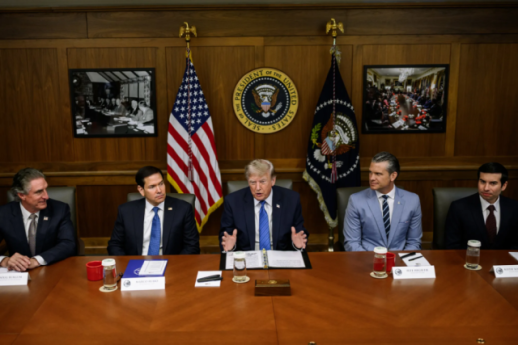 Trump's move to reduce military drills stirs debate in Seoul and Washington SEOUL, August 18 (AJP) - U.S. President Donald Trump's order last Sunday to "substantially" scale back a joint military exercise with South Korea has triggered political criticism on both sides of the Pacific, with Democrats in Washington blaming Trump for weakening a key alliance, while South Korea's conservative opposition faulted South Korean President Lee Jae Myung for allowing relations with Washington to deteriorate. Trump instructed the Pentagon to "substantially reduce" the annual Ulchi Freedom Shield exercise just hours before it was due to begin, citing its cost, his "very good relationship" with North Korean leader Kim Jong-un and Seoul's refusal to join U.S. military action against Iran. The exercise's computer-simulated drills and other training began Monday and are scheduled to run through Aug. 27. Former Secretary of State Hillary Clinton sharply criticized the move on X. "The president is making US policy friendlier to North Korea and Russia than Canada and Oman. Are you kidding me?" Clinton wrote. Democratic Sen. Tim Kaine of Virginia also said Trump's decision appeared to punish an ally even as Pyongyang continued its missile provocations. "North Korea tests ballistic missiles and Trump decides the problem is with... our ally, South Korea, because it has the sense to avoid joining Trump's disastrous war with Iran? Kim Jong Un couldn't buy a better deal," Kaine wrote on Facebook. The criticism crossed party lines. Republican Sen. Thom Tillis stressed South Korea's longstanding military partnership with the United States. "South Korea has been a solid military ally for over 70 years that possesses exquisite military capabilities," Tillis wrote on X, arguing that reducing the exercises would free up North Korean troops to support Russia's war in Ukraine. In Seoul, however, the main opposition People Power Party (PPP) directed its criticism at Lee rather than Trump, calling the reduction a "security disaster" brought about by the Lee administration's foreign policy. PPP Chairman Jang Dong-hyeok said the exercises were now at risk of disappearing altogether and accused Lee of failing to maintain Washington's trust. "President Trump was expressing his dissatisfaction with President Lee Jae Myung by scaling back the South Korea-U.S. joint military exercises," said Rep. Choi Soo-jin, the party's chief floor spokesperson. "Trump's Truth Social post showed that he is dissatisfied with the Lee administration," said Rep. Kim Gunn, a member of the National Assembly's Foreign Affairs and Unification Committee. "I believe the underlying frustration stems from the fact that South Korea's investment commitments in the United States are not being carried out at the pace he wants," Kim added. "What North Korea fears most is South Korea-U.S. joint military exercises," said Rep. Sung Il-jong, former chair of the National Assembly's National Defense Committee. "The United States and North Korea are likely engaged in behind-the-scenes negotiations at the moment," Sung said. "Investment in the United States is a matter that should be considered in light of commercial viability and South Korea's investment capacity. It should not be linked to the issue of joint military exercises," said Rep. Jin Seong-joon of the ruling Democratic Party, who chairs the National Defense Committee. "Given that South Korea is also seeking dialogue with North Korea, I believe we need to actively make use of the reduction in the exercises," Jin added, arguing that Seoul could turn the scale-back into an opportunity. The controversy comes as North Korea has launched two ballistic missiles since Aug. 6 and deepened military cooperation with Russia, raising concerns in Washington and Seoul over whether reduced allied training could weaken deterrence on the Korean Peninsula. 2026-08-18 17:29:07
 -
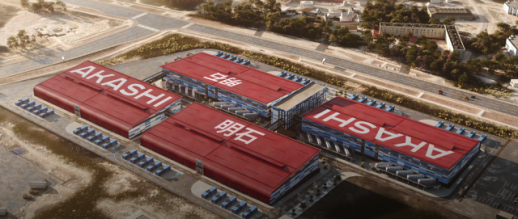 Central Asia emerges as South Korea's AI frontier SEOUL, August 13 (AJP) -South Korea wants to become one of the world's top three artificial-intelligence powers, and Central Asia may offer something lacking at home - ample space, energy and governments willing to build the physical infrastructure that AI requires. But Seoul is arriving at a market where U.S., Gulf, Chinese and Japanese players are already staking out positions. Kazakhstan is planning a data-center zone with eventual capacity of 1 gigawatt. Uzbekistan is courting billions of dollars for hyperscale computing. Kyrgyzstan is exploring AI data centers tied to hydropower and battery storage. Tajikistan is linking its AI ambitions with digital infrastructure, hydropower and mineral development, while Turkmenistan has made AI part of a new three-year digital-economy program. That makes the inaugural Korea-Central Asia Summit in Seoul on Sept. 16-17 more than another exercise in resource diplomacy. Artificial intelligence could become the thread connecting the traditional agenda of critical minerals and energy with a new contest over computing power, data centers, smart cities, digital government and the financing needed to build them. Korea's Ministry of Science and ICT has made becoming a global top-three AI power a national policy goal, with an "AI Highway" of computing infrastructure, homegrown models and nationwide AI adoption at the center of the strategy. Seoul's newly devised K-AI package is designed to attach Korean AI solutions and data centers to infrastructure financed through the Economic Development Cooperation Fund, with renewable-energy facilities potentially added to the package. Deputy Prime Minister and Finance Minister Koo Yun Cheol raised the model directly with Uzbek Deputy Prime Minister Jamshid Khodjaev this week, proposing cooperation stretching from critical-mineral exploration and processing to AI data centers and renewable energy. Seoul describes the K-AI package as linking AI solutions, data centers and power infrastructure to DCF-backed projects. Khodjaev agreed that AI data centers and critical minerals should become deeper areas of bilateral cooperation, while the two sides identified AI, supply chains, renewable energy, biotechnology and advanced infrastructure as areas to advance before the September summit. The business is straightforward. Central Asia has much of what Korea's AI expansion increasingly needs, while Korea has much of what Central Asian governments lack. The five countries offer combinations of electricity, land, critical minerals, hydrocarbons, hydropower and rapidly expanding digital markets. Korea brings semiconductor and memory technology, power equipment, engineering and construction, telecommunications networks, cooling systems, smart-city platforms and development finance. If those pieces can be assembled together rather than sold one by one, Central Asia could become a test ground for exporting a Korean AI infrastructure stack. Kazakhstan is moving fastest. Its new Digital Qazaqstan strategy through 2029 explicitly describes an "AI Economy Stack" extending from energy and infrastructure through computing power, data and language models to digital platforms and AI services. At the center is a sovereign AI hub built around the Data Center Valley in Ekibastuz, the coal-and-power city northeast of Astana. Kazakhstan plans to scale the cluster to 1 GW, bringing computing facilities, research institutions and technology companies onto one platform. The government estimates the broader Data Center Valley could eventually attract about $30 billion of investment. A first 125-megawatt data center and supporting engineering infrastructure are targeted for completion by the first half of 2027, with later phases taking the cluster toward 1 GW. Already, Kazakhstan has announced a separate $10 billion package involving U.S.-based Firebird and Nvidia technology that envisages computing capacity using as many as 100,000 advanced GPUs, including GB300 and Vera Rubin chips. The scale matters for Korea. Rather than competing only to sell servers or build individual facilities, Korean companies could enter at the level of the entire industrial system - substations and transmission, renewable generation and storage, liquid cooling, data-center construction, networking, AI memory, security and operating platforms. No Korean names have so far appeared in Kazakh projects. Uzbekistan is following a similar path. President Shavkat Mirziyoyev's AI strategy through 2030 calls for greater AI computing capacity, more AI-based public services and wider deployment in healthcare, agriculture, finance, customs and energy. The government has already built a $24 million GPU-based AI infrastructure platform and plans additional computing equipment, while Mirziyoyev has repeatedly framed AI and digitalization as strategic tools for economic competitiveness rather than simply an IT-sector policy. Saudi Arabia's DataVolt has begun implementing a $3 billion, 500-MW data-center project, according to the Uzbek presidency. The country plans to add more than 17 GW of renewable generation by 2030 and expand its high-voltage transmission network as electricity demand rises. That combination — data centers plus power generation plus grid expansion — closely resembles what Korea's K-AI package is intended to assemble. Korea already has a beachhead. KT acquired Uzbek fixed-line operator East Telecom in 2007, and the companies subsequently developed a Tier III-class data center in Tashkent. East Telecom described the project as a 6,000-square-meter facility with more than 300 racks and plans for a broader Central Asian data-center network. But it remains small beside the hundreds-of-megawatts projects now under discussion. Daewoo E&C and state-backed Korea Overseas Infrastructure & Urban Development Corp., or KIND, have also been asked to examine a data center linked to Tashkent's planned Aerocity development. That remains at the proposal stage rather than a committed hyperscale investment. The gap illustrates Korea's challenge. It has relevant companies, but not yet a Central Asian project structure that combines them. Kyrgyz investment authorities this year discussed an AI data center that would draw on the country's hydropower potential, incorporate battery energy storage and reuse heat generated by computing facilities. Its government has also called for regional access to computing capacity through data centers as part of wider AI cooperation. Tajik President Emomali Rahmon has identified artificial intelligence and digital infrastructure alongside hydropower, mining and mineral processing as prospective areas for foreign investment. Dushanbe has also promoted the idea of a regional AI center and is developing its own AI ecosystem. Turkmenistan, meanwhile, adopted a digital-economy program running through 2028 that includes development of a national AI strategy and the use of AI technologies across industries. Those ambitions point toward a possible division of labor across Central Asia rather than five isolated national markets. Kazakhstan can offer large-scale power and land for compute. Uzbekistan brings the region's largest population, industrial demand and aggressive investment drive. Kyrgyzstan and Tajikistan offer substantial hydropower potential. Turkmenistan brings energy resources. For Korea, the more valuable prize may therefore be a regional AI-energy-resource corridor, rather than a single data-center contract. AI infrastructure requires not only GPUs and high-bandwidth memory but enormous quantities of electricity, electrical equipment, copper, construction materials, cooling equipment and network infrastructure. Korea is strong in the manufactured end of that chain but remains highly dependent on imported energy and raw materials. A package that combines Korean technology with local resources could therefore give both sides more than a conventional mining agreement. AI could be used inside the mines, grids and processing plants themselves — for geological analysis, predictive maintenance, power optimization, automated industrial control and logistics — while the same energy and mineral base supports data centers and computing infrastructure. The upcoming summit's business agenda is therefore likely to be dominated by four overlapping questions: where to build computing capacity, how to power it, how to connect it with critical-mineral supply chains, and who will finance the package. The last question may be Korea's biggest weakness. Japan has already demonstrated how a coordinated national package can work in Uzbekistan. Toyota Tsusho, Internet Initiative Japan, NEC and NTT Communications won a project from state-owned Uzbektelecom covering data centers in Tashkent, Bukhara and Kokand as well as domestic and international telecommunications networks. Toyota Tsusho acts as prime contractor, IIJ supplies containerized data-center systems and cloud infrastructure, NEC provides network equipment and NTT supports international connectivity. Financing is backed by the Japan Bank for International Cooperation, MUFG Bank and Nippon Export and Investment Insurance. Japan had begun building that financing-and-technology chain years earlier, including a JBIC-backed Uzbek telecommunications project in 2019. A Ministry of Finance and Economy official cautioned that the government's push is still at an early stage, admitting no concrete public-private projects that have taken shape yet. The Sept. 16-17 leaders' gathering will be Korea's first summit with Kazakhstan, Kyrgyzstan, Tajikistan, Turkmenistan and Uzbekistan together. Officials have placed its economic component under a broader goal of building an “innovative and prosperous future” while institutionalizing the C5 relationship and producing visible cooperation projects. AJP Takeaways: Central Asia is emerging as a potential AI infrastructure partner for Korea, offering power, land, critical minerals and governments seeking sovereign computing and digital industries. Kazakhstan and Uzbekistan are moving at hyperscale, with Kazakhstan targeting a 1-GW Data Center Valley and Uzbekistan attracting a $3 billion, 500-MW project from DataVolt. Korea's new K-AI package could link AI solutions, data centers, power infrastructure and development finance, turning traditional resource cooperation into a wider AI-energy-minerals partnership. The September Korea-Central Asia summit will test Korea's ability to build a coordinated public-private consortium, an area where Japan has already demonstrated a financing-plus-technology model in Uzbekistan. 2026-08-13 14:50:24
 -
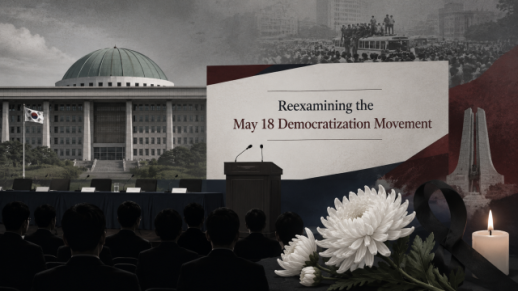 PPP lawmaker hosts forum with group downplaying May 18 massacre SEOUL, August 12 (AJP) - Days after police raided Starbucks Korea over a marketing campaign accused of insulting the memory of the May 18 Gwangju Democratization Movement, People Power Party lawmaker Lee Jin-sook is set to co-host a forum with a right-wing group that disputes describing the 1980 bloodshed as a massacre planned by state authorities. Lee will hold the forum, titled “Reexamining the May 18 Democratization Movement,” with the New History National Movement at the National Assembly Library on Thursday. The event will examine the origins and course of the uprising, the historical meaning of the so-called “Gwangju spirit” and its influence on South Korean politics since democratization in 1987. The group, whose first stated principle is “Liberate Gwangju,” refers to the May 18 Democratization Movement as the “Gwangju Incident.” It argues that the casualties during the uprising resulted from a combination of circumstances and that it is inappropriate to characterize them as a massacre deliberately planned by state violence. Speakers include New History National Movement co-leader Lee Young-hoon, PenNMic senior journalist Kim Yong-sam and former PPP Gwangju official Joo Dong-sik. Joo is scheduled to speak under the title “May 18 as the main culprit behind the contamination and degeneration of the 1987 system.” Lawmakers from the ruling Democratic Party of Korea whose constituencies are in Gwangju criticized Rep. Lee Jin-sook. “Lee appears to be trying to strengthen her political standing by relying on far-right forces,” said Rep. Cho In-chul, criticizing Lee. “Her intentions are highly impure.” “During the 2024 confirmation hearing for the chair of the Korea Communications Commission, I asked Lee, who was then the nominee for the position, whether she thought it was correct to define it as the ‘May 18 Democratic Uprising,’ but she could not answer,” Cho said. The forum is “a clear distortion of history disguised as an academic event and a clear challenge to the democratic history of the Republic of Korea,” said Rep. Jung Joon-ho. The forum amounts to “secondary victimization,” Jung said. “It is infuriating that they are trying to turn the National Assembly, the hall of the people’s will, into a ‘free-for-all of historical distortion.’” Voices of criticism also emerged from within the People Power Party. “It is truly concerning that Lee is disparaging the May 18 Democratic Uprising and distorting history,” said former lawmaker Yoo Seong-min, who served four terms as a People Power Party lawmaker. “A political group that claims the Holocaust was not a massacre would have no place in Germany, the United States, Canada or any other country,” Yoo said. “The People Power Party, the main opposition party, should not allow one of its lawmakers to refer to the ‘Gwangju incident.’” “Politicians would be better off refraining from actions that unnecessarily cause conflict among the public,” said Rep. Woo Jae-jun, a member of the party’s Supreme Council. As of 1 p.m. Wednesday, 17 related news reports could be found online. According to the Korea Press Foundation, South Korea had more than 8,000 newspaper outlets as of Dec. 31, 2024. AJP contacted Rep. Lee Jin-sook and her aide for comment but did not receive a response. 2026-08-12 14:38:32