

Journalist
Lee Jung-woo이정우
cannes2030@ajupress.com
ReporterMinistry of Unification & North Korea, Politics, Foreign Affairs
I studied philosophy in college, and sociology and journalism in graduate school. I cover North Korea, South Korean politics, foreign affairs and films. I enjoy Nordic cinema, Indian cuisine and Japanese detective novels. I have a cat and like bright, acidic coffee.
"Were it left to me to decide whether we should have a government without newspapers, or newspapers without a government, I should not hesitate a moment to prefer the latter."
"Were it left to me to decide whether we should have a government without newspapers, or newspapers without a government, I should not hesitate a moment to prefer the latter."
Latest by Lee Jung-woo
-
 Daughter seen as North Korea's Kim successor, spy agency SEOUL, September 1 (AJP) - North Korean leader Kim Jong-un's daughter Ju-ae appears to be moving closer to formally becoming his successor, South Korea's spy agency said Tuesday, citing her increasing frequency and prominence in state media. During a closed-door briefing to the National Assembly's intelligence committee, the National Intelligence Service (NIS) offered the assessment amid growing speculation over North Korea's succession plans, fueled by Ju-ae's increasing visibility. She has taken on an increasingly prominent public role this year, making frequent appearances in North Korean state media including firing a weapon, driving a new main battle tank and standing alongside her father at major events. The speculation also comes as U.S. President Donald Trump has stepped up overtures toward Kim, saying he expects to meet the North Korean leader later this year while reiterating their "very good" relationship. The NIS believes Pyongyang may be deliberately exposing Ju-ae to the public to establish her image among North Koreans as a future leader. Ju-ae has taken on a more prominent public role this year. North Korean state media have shown her firing a weapon and personally driving a new main battle tank. She also appeared alongside her father at a concert in Pyongyang in July marking the 73rd anniversary of what North Korea calls its victory in the Korean War. Rep. Han Ki-ho of the People Power Party (PPP) said Kim is likely to keep putting his daughter in the public eye to strengthen her position as a possible successor. "Kim can trust no one but his own children, but she is still young and a girl, so he will continue trying to familiarize the North Korean people with Kim Ju-ae," Han said. Some lawmakers, however, cautioned that it is still too early to conclude that Ju-ae has been chosen as Kim's successor. "It is still too early to draw that conclusion," said Rep. Kwon Young-se of the PPP, a former unification minister. Rep. Kim Gunn of the PPP, a former special representative for Korean Peninsula peace and security affairs at the Ministry of Foreign Affairs, also urged caution. "We still need to watch the situation further," Kim said. "There are certainly signs that make her look like a successor, but I do not see why the relatively young North Korean leader would already designate the young girl as his successor." Kim Jong-un is 42, while Ju-ae is believed to be 13. Rep. Kim Joon-hyung of the Rebuilding Korea Party, a former chancellor of the Korea National Diplomatic Academy, said he disagreed with the NIS assessment. "At this point, it would be a stretch to conclude that Ju-ae has been confirmed as the successor," he said. AJP Takeaways • North Korea's Kim Ju-ae is moving closer to being formally designated as Kim Jong-un's successor, according to South Korea's National Intelligence Service. The NIS cited her increasingly frequent appearances in state media and growing involvement in military and political events. • Kim Jong-un appears to be building public recognition of his daughter as a potential future North Korean leader. Ju-ae, believed to be 13, has recently been shown firing a weapon, driving a new main battle tank and accompanying her father at major state events. • South Korean lawmakers remain divided over whether Ju-ae has already been chosen as North Korea's next leader. While the NIS sees growing signs of succession planning, lawmakers including Kwon Young-se, Kim Gunn and Kim Joon-hyung said it is still too early to conclude that the 42-year-old Kim Jong-un has formally selected his daughter as his successor. 2026-09-01 16:23:02
-
 Seven in 10 Koreans back age limits on children's social media SEOUL, September 01 (AJP) -More than seven in 10 South Koreans favor age-based limits on minors' access to social media, showed a poll that may influence whether Seoul joins governments around the world in tightening restrictions on children's use of social media. According to a report by the Korea Press Foundation's Media Research Center, 70.7 percent of respondents supported restricting social media use based on age, while 29.3 percent opposed such a policy. Of the total, 28.7 percent said they strongly supported restrictions and 42 percent said they somewhat supported them. The report, titled Public Perceptions of Creating a Safe Social Media Environment for Youth, was published Tuesday. The survey found a sharp generational divide. Among teenagers aged 14 to 18, only 41 percent supported age-based restrictions, compared with 59 percent who opposed them. By contrast, 77.5 percent of adults with children aged 5 to 18 and 78.3 percent of adults without children in that age group supported the restrictions. The online survey was conducted from Aug. 14 to 19 among 1,000 people aged 14 to 58. The findings come as countries step up efforts to protect minors online. Australia has required major social media platforms since Dec. 10, 2025, to take reasonable steps to prevent users under 16 from creating or maintaining accounts, with platforms facing penalties of up to 54.6 million dollars for noncompliance. Britain announced in June that it would also bar social media companies from providing services to children under 16, with the rules expected to take effect in spring 2027. The government also plans default restrictions on personalized feeds, autoplay and overnight use for 16- and 17-year-olds. The European Union, rather than imposing a bloc-wide age ban, has issued guidelines under the Digital Services Act calling for minors' accounts to be private by default, safer recommendation systems and the disabling of features such as autoplay and push notifications that can encourage excessive use. The Korean survey, however, suggested that respondents did not see age restrictions as the only solution. When asked whether greater emphasis should be placed on limiting access or making platforms themselves safer, 59.8 percent chose stronger platform responsibility, compared with 40.2 percent who prioritized age-based access restrictions. Among teenagers, 72 percent favored making platform features and environments safer. More than nine in 10 respondents also said social media companies were responsible for safely managing minors' privacy settings, preventing exposure to harmful content and examining how recommendation algorithms affect young users. “The Democratic Party has introduced a bill aimed at regulating teenagers’ use of social media and is discussing additional legislation,” said Rep. Kim Hyun of the Democratic Party, a member of the National Assembly’s Science, ICT, Broadcasting and Communications Committee. AJP Takeaways More than 70% of South Koreans support age-based social media restrictions for minors, but teenagers are far less supportive. A Korea Press Foundation survey found 70.7 percent of respondents favored age limits on children's social media use, while only 41 percent of teenagers aged 14 to 18 supported such restrictions. South Koreans favor making social media platforms safer over simply banning minors from accessing them. Nearly 60 percent of respondents said stronger platform responsibility should take priority over age-based restrictions, with 72 percent of teenagers supporting safer social media features and environments. South Korea is considering tighter social media rules for teenagers as Australia, Britain and the European Union strengthen online child-safety policies. Democratic Party lawmakers are discussing legislation on minors' social media use, while governments overseas are imposing age limits and restrictions on algorithms, autoplay, personalized feeds and other potentially addictive features. 2026-09-01 12:47:02
-
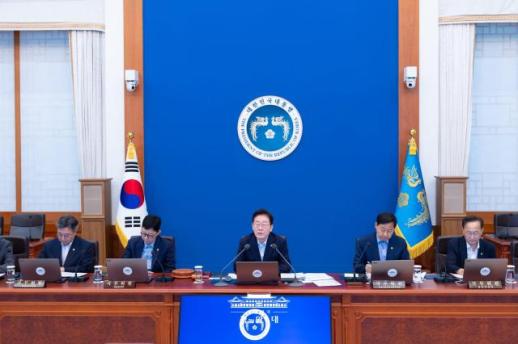 Lee's policy chief bows out and joins reshuffle SEOUL, September 01 (AJP) -President Lee Jae Myung's outspoken policy chief Kim Yong-beom bowed out Tuesday, just two days after surviving a broad reshuffle of the economic team amid mounting pressure over housing policy and controversial single-stock leveraged exchange-traded funds. Lee accepted Kim's resignation as the president's approval rating sank to a record-low 38.9 percent in the latest Realmeter survey, extending its decline to a seventh consecutive week. Kim tendered his resignation Monday, a day after the Cabinet reshuffle, and Lee accepted it Tuesday, presidential spokesperson Kang Yu-jung said at an emergency briefing at Cheong Wa Dae. "Presidential policy chief Kim Yong-beom expressed his intention to resign yesterday, Aug. 31," Kang said. "President Lee Jae Myung accepted his resignation today." His abrupt departure widens a shake-up of Lee's economic policy team. On Sunday, Lee nominated new chiefs for six ministries, including finance, land, justice and defense, while also overhauling his senior AI policy team. Kim, despite persistent opposition calls for his removal, had initially retained his post. Kim, a veteran economic bureaucrat who previously served as first vice finance minister and vice chairman of the Financial Services Commission, became the Lee administration's first presidential policy chief shortly after Lee took office in June 2025. During his 15 months in the post, he emerged as one of Lee's trusted aide in shaping economic, industrial and fiscal policy and playing central roles in U.S.-Korea tariff negotiations and Lee's flagship three mega projects. But his outspoken style and prominent role in economic policymaking also made him a natural target as public frustration mounted over the government's handling of the economy. Opposition parties had increasingly demanded that Kim take responsibility for soaring housing prices in Seoul and the surrounding metropolitan area, as well as controversy over the government's introduction of highly speculative single-stock leveraged ETFs. Housing in particular has become a political liability for Lee. Realmeter's latest poll, conducted Aug. 24-28 among 2,509 adults, showed Lee's job approval falling 1.3 percentage points from the previous week to 38.9 percent, its lowest level since he took office and the first reading below 40 percent. Realmeter cited worsening public sentiment over housing prices and jeonse rental costs among several factors behind the decline. Kim's exit, following the replacement of both the finance and land ministers, effectively clears out much of the senior lineup that had been steering Lee's economic and housing agenda. It could also intensify speculation over whether Lee will extend the reshuffle to other senior presidential aides as his administration seeks to arrest the prolonged slide in public support. Kim could not be reached for comment. AJP Takeaways Kim Yong-beom resigns: President Lee Jae Myung accepted the resignation of his policy chief on Sept. 1, only two days after Kim survived a six-ministry Cabinet reshuffle. Housing and leveraged ETFs: Kim had faced mounting political pressure over Seoul-area housing prices and controversy surrounding South Korea's introduction of single-stock leveraged ETFs. Lee approval hits record low: Lee's Realmeter approval rating fell for a seventh straight week to 38.9 percent, the lowest since his inauguration and the first reading below 40 percent. 2026-09-01 10:50:00
-
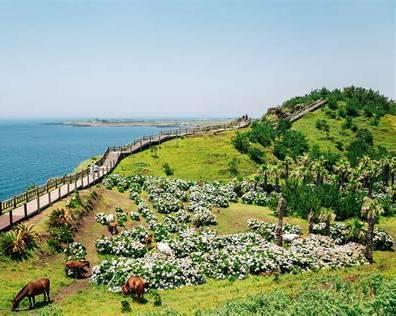 Jeju deaths cast shadow over Korea police power shift SEOUL, August 26 (AJP) - Jeju, long known as South Korea's favorite resort island, has lately been making headlines for grimmer reasons: missing-person cases ending in death, abandoned searches and allegations of police misconduct. The string of cases has turned a local policing scandal into a broader reckoning over whether South Korea's already powerful police force is ready to take on even greater investigative authority. With the country set to abolish its current prosecution service on Oct. 2, repeated cases of botched police investigations and alleged manipulation of official records are sharpening concerns over who will keep police power in check once prosecutors lose their supplementary investigation authority. At the center of the latest controversy is the case of 37-year-old Jang Mi-ran, who disappeared on Jeju in May. A police officer allegedly closed her missing-person case just hours after it was reported, claiming to have contacted Jang and saying she did not want her location disclosed to her boyfriend. Investigators later found no record of such a call. The officer also entered "death in a traffic accident" as the reason for closing the case in a police database, effectively removing Jang from the list of people being actively sought. Jang was later found dead. Authorities are investigating whether the false entry was intended to conceal the mishandling of the case. The officer was arrested Tuesday on charges including dereliction of duty. The case became still more troubling after police failed to preserve a recording of the initial emergency call. The recording was automatically deleted after its three-month retention period expired, even though the officer had already been booked five days earlier, raising questions over why potentially important evidence was not secured. Jeju's missing-person cases have landed at an especially sensitive moment for South Korea's criminal justice system. The current prosecution service is due to disappear on Oct. 2 as part of President Lee Jae Myung's prosecution reform drive. Prosecutors will also lose the power to conduct supplementary investigations themselves, leaving them to request further police investigation when they find shortcomings in cases sent for indictment. The change has revived a long-running debate over whether stripping prosecutors of investigative authority will curb abuses by an institution once criticized for wielding excessive power or simply shift too much authority to the police. President Lee himself acknowledged the danger Tuesday. He said problems involving lax police discipline and irresponsibility in public safety had become "serious" and warned that the police could soon wield the greatest power among state agencies. Lee called for a new government body to oversee police reform, arguing that greater authority must come with greater accountability. The opposition People Power Party (PPP) seized on the Jeju case to renew its attack on the ruling Democratic Party's decision to eliminate prosecutors' supplementary investigation authority. "Even with supplementary investigation authority still in place, police have carried out botched investigations into missing-person cases and filed false reports. I am concerned that such problems will become even more serious once prosecutors lose their supplementary investigation authority and can no longer keep the police in check," said Rep. Yoo Sang-bum, a former chief prosecutor. Rep. Kang Myoung-gu, the PPP secretary on the National Assembly's Public Administration and Security Committee, called the Jeju case "a collapse of Korea's investigative system." "The police have exposed systemic failures and continue to lose public trust. No matter how much the police try to reform themselves internally, such reforms will have little practical effect without an external system of checks and balances," Kang said. He said he would scrutinize the issue during the upcoming parliamentary audit and called for the abolition of prosecutors' supplementary investigation authority to be reconsidered "from the ground up." Rep. Jin Jong-oh, another member of the committee, accused the Democratic Party of trying to repair a problem created by its own prosecution reform. "The Democratic Party, which pushed through the abolition of prosecutors' supplementary investigation authority, is now engaging in a self-defeating farce by setting up a task force to improve police investigations," Jin said. "I condemn the Democratic Party for its hasty policymaking, the consequences of which will ultimately be borne entirely by the public," he added. The ruling party argues that the answer lies not in preserving prosecutors' old powers but in building stronger checks on police. Rep. Kim Young-bae of the Democratic Party, also a member of the committee, said the Jeju case should be treated as a systemic failure rather than the misconduct of a single officer. "The Jeju case is not merely a matter of individual misconduct but a problem with the system for handling missing-person cases, and it must be addressed promptly," Kim said. "We are aware of public concerns that prosecution reform could lead to an excessive concentration of power in the police," he said. "As the president has also called for police reform, we will use the upcoming parliamentary audit to closely examine shortcomings in Korea's criminal justice system and work to address them." The Jeju cases have therefore opened a difficult second front in South Korea's prosecution reform. The government set out to dismantle a prosecution system long accused of concentrating too much investigative and prosecutorial power in one institution. The deaths and alleged failures on Jeju are now forcing policymakers to confront the other side of that reform - how to prevent the concentration of power from simply moving elsewhere. The public-security fallout is adding to worsening sentiment toward the government. Lee's approval rating fell below 40 percent for the first time since he took office in June last year, with a Jowon C&I poll released Wednesday putting support at 38.9 percent and disapproval at 57.9 percent, underscoring the political stakes as concerns grow over police accountability and the government's criminal-justice overhaul. AJP Takeaways Jeju missing-person cases ending in deaths and allegations of falsified police records are intensifying scrutiny of South Korea's police ahead of a major redistribution of investigative power. South Korea will abolish its current prosecution service on Oct. 2, while prosecutors will lose supplementary investigation authority and become more dependent on police to correct shortcomings in criminal investigations. President Lee Jae Myung has warned that police could become the country's most powerful state agency and called for a new police reform body as concerns grow over accountability and oversight. 2026-08-26 17:19:30
-
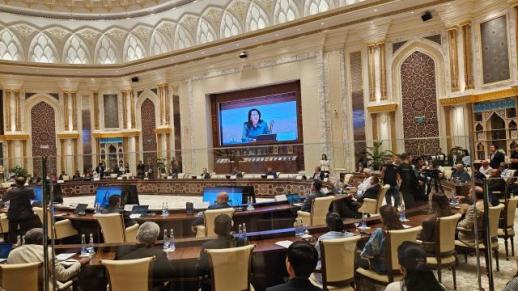 Uzbekistan turns Islamic heritage into cultural diplomacy TASHKENT, August 26 (AJP) -Uzbek officials highlighted the country's rapid modernization and deeper integration into the global community while stressing efforts to preserve its cultural roots and use its Islamic heritage as a bridge to the wider world. “Given the current geopolitical difficulties around the world, Central Asia is increasingly important to global progress,” Munira Aminova, adviser to Uzbekistan’s foreign minister, said Wednesday, highlighting the region’s growing role in international cooperation. “I want to ask you to pay attention to the little details of our transformation. Uzbekistan is changing very rapidly. Wherever you go, new buildings and new infrastructure are being built. This is just the beginning,” Aminova said. Speaking at the International Media Forum “Islamic Civilization: A New Perspective — New Discoveries” in Tashkent, Aminova said the presence of international journalists and experts was recognition that Uzbekistan was moving in the right direction. She said the Silk Road had historically been more than a trade route, serving as a channel for the exchange of knowledge between continents. The Center for Islamic Civilization, she added, was intended not only to preserve and present the past but also to serve Uzbekistan’s present and future as an instrument of cultural diplomacy. “Building trust between countries is related to culture,” Aminova said. She encouraged foreign participants to look beyond the center’s major exhibits and pay attention to the broader changes taking place across Uzbekistan. The forum later turned to efforts to preserve and reproduce historic Quran manuscripts, highlighting the painstaking work involved in protecting Islamic cultural heritage for future generations. Alexander Wilhelm, vice president of Austrian publishing house Mueller & Schindler, presented its “114 Qurans” project, which has brought together 114 Quran manuscripts to showcase the diversity and richness of Islamic calligraphy. Wilhelm said the manuscripts are being reproduced in high-quality publications designed to faithfully preserve the colors and visual details of the originals. Rustam Djabborov, scientific secretary of the Center for Islamic Civilization in Uzbekistan, discussed the lengthy restoration and research work surrounding the Kattalangar Quran. “We have not even completed half of the work yet,” Djabborov said, underscoring the scale of the preservation project. Alexei Telnov, director general of the St. Petersburg Documentary Film Studio, also introduced an upcoming documentary titled “Mosque,” part of a project exploring the shared historical heritage of Uzbekistan and Russia. Telnov said around 1 million Uzbeks live in Russia, describing them as “our brothers.” He said the documentary, filmed by an Uzbek cinematographer, is expected to be released soon. AJP Takeaways Uzbekistan is positioning Central Asia as an increasingly important region for global cooperation, with Munira Aminova, adviser to Uzbekistan’s foreign minister, highlighting cultural diplomacy and the Silk Road’s legacy at an international media forum in Tashkent. The Center for Islamic Civilization in Uzbekistan aims to connect Islamic history with the country’s modern development, presenting cultural heritage as a tool for building international trust while showcasing Uzbekistan’s rapid transformation. Historic Quran preservation emerged as a major focus of the Tashkent forum, including Mueller & Schindler’s “114 Qurans” project and the Center for Islamic Civilization’s extensive restoration and research on the Kattalangar Quran. 2026-08-26 15:51:08
-
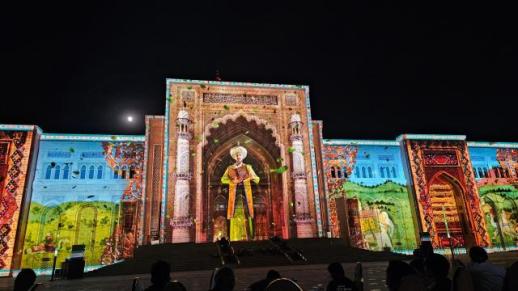 Tashkent turns Islamic heritage into living technology TASHKENT, August 26 (AJP) -For roughly 40 minutes Tuesday night, the massive façade of Uzbekistan's new Center for Islamic Civilization became a screen for a different telling of Islamic history. Astronomers, physicians, thinkers and poets appeared across the building in light, animation and digital imagery as music accompanied a narrative tracing the contribution of scholars from present-day Uzbekistan and the wider Islamic world to science, medicine, literature and other fields. The projection mapping show was followed by traditional Uzbek music and opera. The evening was more than an elaborate cultural performance staged for hundreds of foreign media executives, journalists, filmmakers and scholars visiting Tashkent. It distilled the ambition behind the center itself. Uzbekistan is seeking to present Islamic civilization not primarily through religion or monuments, but through a history of science, learning and intellectual exchange — and to use the tools of modern information technology to make that history understandable to a global generation raised on screens. Inside the same complex are ancient manuscripts and conventional museum collections alongside artificial intelligence avatars, immersive displays and a developing virtual-reality tour. The Center for Islamic Civilization, built on nearly 10 hectares beside Tashkent's historic Hazrati Imam complex, officially opened on March 17. Its galleries stretch from pre-Islamic Central Asia through what Uzbekistan describes as its first and second renaissances and toward President Shavkat Mirziyoyev's vision of a new "Third Renaissance." Mirziyoyev first presented the idea internationally at the United Nations General Assembly in September 2017, arguing that Islam should be associated with peace, human values and the pursuit of knowledge rather than violence and bloodshed. Construction began the following year. Eight years later, the question for Uzbekistan is no longer simply how to preserve that heritage, but to draw global attention. It is why the International Media Forum, "Islamic Civilization: A New Perspective — New Discoveries" was deliberately staged at the center by bringing in around 300 journalists, media executives, filmmakers, scholars and technology specialists from nearly 50 countries this week. And seen from inside the center, rather than through a government statement or museum brochure, the strategy becomes easier to understand. The building is intended not just as a repository of objects but as a communications platform. Imran Ahmad, regional representative for CNN International Commercial, told the forum that Uzbekistan did not lack stories. The difficulty was making those stories relevant to audiences elsewhere. Ahmad recalled visiting the country about two decades ago and again five years ago, saying the speed of modernization and a new sense of energy were immediately visible. Uzbekistan, he noted, occupied the heart of the ancient Silk Road and produced scholars who calculated the movement of the stars with extraordinary precision centuries ago. The question is how that history travels beyond Uzbekistan. Jahongir Ahmedov, first deputy culture minister and director of Uzbekistan's Cinematography Agency, said heritage should be something people can "see and hear and interact" with. Digital content, he said, would be particularly important in introducing younger Uzbeks to the achievements of earlier generations and turning that knowledge into a source of national confidence. The center provides a physical demonstration of what he meant. Visitors can move from manuscripts and historical exhibits into rooms where digital technologies attempt to reconstruct the people and ideas behind them. The same history can then be repackaged into films, books, immersive installations and online content. For Uzbekistan, that increasingly means treating cultural heritage not as a collection of objects to be viewed behind glass, but as an experience. The broader media forum has a similar ambition. Organizers say its central concept is to translate historical and spiritual heritage into the language of television, cinema, publishing, artificial intelligence and immersive museum technologies. Discussions this week cover the contributions of Islamic civilization to mathematics, astronomy, medicine, philosophy, literature, architecture and art. Ahmed Salim, founder of the British-based 1001 Inventions project, argued that doing so requires more than producing promotional material. "The most important message" is the stories societies choose to tell, he said, calling for what he described as "evergreen content" — films and other works that can continue to engage audiences across generations. Salim said the conventional historical narrative he encountered growing up in Britain moved from ancient Greece and Rome to Europe's so-called Dark Ages and then to the Renaissance, Galileo and Newton. That, he argued, presented an incomplete picture of human history. While scientific development slowed in parts of Europe, major advances were taking place elsewhere, including in the lands of present-day Uzbekistan and the wider Islamic world. Leaving those chapters out, Salim said, could foster both an inferiority complex among people whose history was ignored and a superiority complex among those taught that civilization advanced primarily through the West. Rediscovering those stories, he said, could produce not merely tolerance of other civilizations but "appreciation." Salim also emphasized "transmedia storytelling" — taking one historical story and redeveloping it across films, museum exhibitions, books, digital platforms and educational content. His organization has already been putting the idea into practice. Academy Award-winning actor Ben Kingsley narrates "Whispers of Wisdom," a film series created for the Center for Islamic Civilization about scholars and intellectual pioneers from Uzbekistan and the wider region. The production brings together the 1001 Foundation, Uzbek production company Spectre Films and director Shokhrukh Rasulov. Salim said one of his earlier productions on the history of science had reached an audience of more than 500 million people and continued to be shown in schools around the world — evidence, he argued, that historical content does not have to remain confined to museums or academic institutions. Rasulov told participants he had had the "privilege" of working with Kingsley in London on the first season of "Whispers of Wisdom." The series explores Uzbek scholars, historical figures and the legacies they left to the wider world. Rasulov said a second season was in preparation and that Benedict Cumberbatch, Ralph Fiennes, Liam Neeson, Mark Ruffalo and Antonio Banderas were among the actors being considered as its next host. Participants returning to the media forum next year could see the result, he said. Sergey Stanovkin, head of BBC Studios' commercial representation in Eurasia, approached the issue from the perspective of strategic communication. Uzbekistan's cultural heritage, he said, has the potential to become a source of national "soft power" if it is communicated internationally in ways that move beyond simply displaying a rich culture. That effort is increasingly extending into artificial intelligence. During the afternoon plenary session, Sirojiddin Ubaydullayev, director of Uzbek technology company NeoVex, demonstrated digital avatars being developed for the center. The project aims to allow visitors to speak directly with AI representations of historical scholars and figures rather than simply read descriptions about them. Ubaydullayev said the work began around two years ago and was initially complicated by inaccurate data and errors. Experts and researchers were therefore brought into the development process to improve the historical accuracy of both the avatars' appearance and their responses. "Our aim is to ensure visitors from all over the world" can interact with those ancestors, he said. The number of AI avatars at the center is now growing. A separate project is creating a 3D virtual tour accessible through mobile devices. Visitors using virtual-reality headsets will eventually be able to immerse themselves in reconstructed spaces, Ubaydullayev said, describing the current version as an initial prototype that is still being refined. The official forum program describes the projects as "Digital Avatar: Heroes of Islamic Civilization Speak to a New Generation" and "Uzbekistan 360°: A Living Heritage Platform." Yet technology was not presented as a replacement for more traditional ways of passing on knowledge. Hasanbey Kondu, chairman of Turkish publishing house Mega Basim, reminded participants that the forum was taking place at a time of geopolitical conflict and rapid technological change. Even in an age of artificial intelligence, he said, reading would never lose its importance. He pointed to "Iqra," meaning "Read," as a fundamental message of Islamic tradition, arguing that reading sharpens the mind and opens people to new perspectives. The symbolism is also built into the center itself. The word "Iqra" is inscribed on its Ulugh Beg Portal, which Mirziyoyev described at the center's March opening as reflecting the country's emphasis on science and education. During the day, participants debated how history can be translated into modern media without reducing it to promotion. At night, they watched one answer play across the building in light, sound and animation. Whether Uzbekistan can turn that spectacle into lasting global understanding remains an open question. AJP Takeaways Uzbekistan's Center for Islamic Civilization combines manuscripts and Islamic cultural heritage with AI avatars, virtual reality, film and immersive technologies to present Central Asia's historical contributions to science and learning to global audiences. • A nighttime multimedia show projected astronomy, medicine, literature and other achievements across the center's façade, visually capturing Uzbekistan's effort to link Islamic heritage with modern science and information technology. • International media and cultural figures at the Tashkent forum argued that Uzbekistan's challenge is not a shortage of historical material but turning overlooked Islamic and Central Asian scientific achievements into credible stories that global audiences can understand and appreciate. 2026-08-26 09:43:12
-
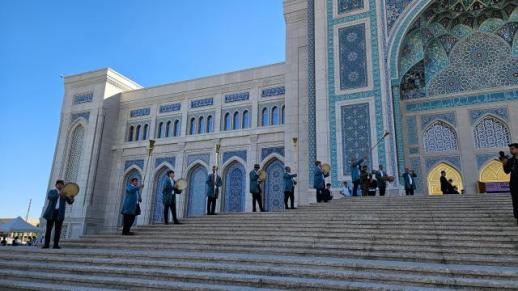 Uzbekistan marks independence through Islamic heritage SEOUL, August 25 (AJP) -Uzbekistan is marking the 35th anniversary of its independence by looking deeper into its Islamic heritage, bringing journalists, scholars and media executives from around the world to Tashkent for an international conference on the country's civilizational roots and their place in the modern world. The International Media Forum, titled “Islamic Civilization: A New Perspective — New Discoveries,” opened its main program Tuesday at the Center for Islamic Civilization in Uzbekistan, a major cultural and research complex in the capital. Held a week before Uzbekistan celebrates Independence Day on Sept. 1, the forum reflects a broader effort by the Central Asian nation to reconnect its post-Soviet national identity with the Islamic scholarship, culture and history that flourished in the region for centuries. The country declared independence from the Soviet Union in 1991, and the government has organized nationwide events this year under the theme marking three and a half decades of statehood. Uzbek presidential press secretary Sherzod Asadov, delivering remarks at the opening ceremony, tied the country's independence to its efforts to reclaim and present its history and cultural heritage to the outside world. He said the media now operate in an era in which traditional information boundaries have largely disappeared, while fake news, cyberattacks and information warfare have become global challenges. Artificial intelligence will not replace journalists, Asadov said, but will broaden the possibilities available to them. He stressed transparency, openness and human dignity as principles for the media at a time when freedom of speech faces growing pressures around the world. The media, he said, should carry the voices of ordinary people to policymakers and make communication a bridge between societies rather than reinforcing stereotypes. The forum comes as Uzbekistan increasingly uses its historical and Islamic heritage as a platform for international cultural diplomacy. The Center for Islamic Civilization, which took about nine years to complete, was officially inaugurated by President Shavkat Mirziyoyev on March 17. The complex, built near Tashkent's historic Hazrati Imam area, combines museum collections, manuscripts, scientific research and digital technology. Uzbek authorities describe it as both a research institution and an international cultural and educational platform. The project traces its roots to Mirziyoyev's address to the U.N. General Assembly in September 2017, when he said Islam calls for goodness and peace, the preservation of human values, and the pursuit of knowledge and enlightenment, rejecting attempts to associate the religion with violence. Firdavs Abdukhalikov, director of the Center for Islamic Civilization, said the institution was designed not simply as a museum but as an arena for science, national memory and international dialogue. “Islam is a religion of peace, goodness, tolerance and humility,” he said, arguing that misconceptions about Islam remain widespread in today's complex information environment. “The best weapon against ignorance is knowledge,” Abdukhalikov said. He said independence gave Uzbekistan an opportunity to restore its national memory, study its cultural and scientific heritage and present that history to the world “with our own voice.” More than 200 participants from 46 countries were attending the gathering. Organizers had earlier said the broader forum would draw about 300 media representatives and experts from nearly 50 countries, including executives from television networks, news agencies and digital platforms as well as filmmakers, producers, researchers and artificial intelligence specialists. Among the most prominent international speakers was Klaus Strunz, CEO and Editor-in-Chief of Euronews, who described the center as a “lighthouse” linking Central Asia more closely with Europe and the rest of the world. Strunz recalled that when he was growing up in Western Europe in the 1980s, Central Asia barely featured in classrooms, universities or television news. That has changed, he said, as Western media increasingly cover the Silk Road, the region's cultures and its rapidly changing societies. “Hello, West. This is Tashkent,” Strunz said, describing the message that the new center sends to audiences beyond the region. With that growing visibility comes responsibility for journalists, he said, including the obligation to report what is actually happening and to confront disinformation. Forums such as the gathering in Tashkent could help build bridges between Central Asia and Europe, Strunz said. The broader forum is examining documentary filmmaking, historical memory, publishing, artificial intelligence and digital approaches to cultural heritage. It also includes debates on how journalists can counter stereotypes, Islamophobia and misinformation. 2026-08-25 15:57:41
-
 Senior bureaucrat named new trade minister SEOUL, August 21 (AJP) - Senior trade official Park Jung-sung was appointed South Korea's new trade minister, Cheong Wa Dae said on Friday. In a press briefing, presidential spokesperson Kang Yu-jung said Park is "the right person to maximize the national interest while maintaining continuity in negotiations amid urgent trade issues with the U.S." Park's appointment comes about a week after his predecessor was sacked for unknown reasons, as Seoul faces mounting pressure from Washington to accelerate its US$350 billion investment commitment in the U.S., the threat of additional U.S. tariffs and a growing dispute over the treatment of U.S.-listed e-commerce giant Coupang. Park, who had been serving as deputy minister for trade at the Ministry of Trade, Industry and Resources, replaces Yeo Han-koo, who was abruptly dismissed last Saturday. Park is a longtime bureaucrat who most recently handled trade policy, supply chains and economic security as deputy minister for trade. He previously headed the ministry's trade and investment office and has been directly involved in recent negotiations with major trading partners, including the U.S. and the European Union. One of Park's most immediate tasks will be negotiations over Seoul's investment commitments under last year's broader trade deal with Washington. South Korea pledged to invest $350 billion in the U.S. as part of an agreement that lowered U.S. tariffs on South Korean goods to 15 percent, but the two sides have yet to settle the details of the first projects under a $200 billion strategic investment program. U.S. officials have pressed Seoul to move more quickly. Park will also have to navigate growing friction over Coupang. U.S. investors have filed a petition with the Office of the U.S. Trade Representative seeking action under Section 301 of the Trade Act, alleging that South Korean authorities have discriminated against the U.S.-listed company. The issue has increasingly become a key bilateral trade concern, alongside U.S. investigations into alleged overcapacity in South Korean manufacturing. Meanwhile, the reason for the dismissal of Yeo, Park's predecessor, who had overseen key negotiations with the U.S. including the tariff agreement and follow-up talks, still remains unknown, but officials have said it was unrelated to the Korea-U.S. tariff negotiations but rather personal matters. 2026-08-21 16:36:36
-
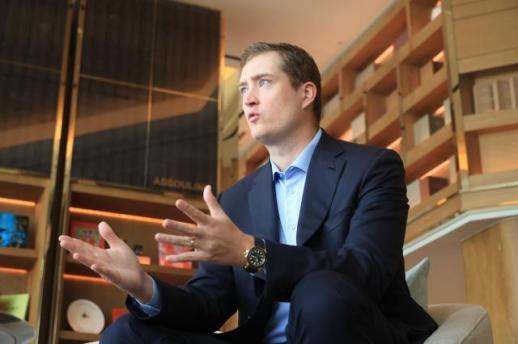 Former NSC chief urges Seoul to take Trump's latest moves seriously SEOUL, August 21 (AJP) - Former White House National Security Council chief of staff Alexander B. Gray urged Seoul to take U.S. President Donald Trump seriously on investment and the treatment of American companies while defending his "unconventional" approach to North Korea, which differs from previous presidents', in an AJP interview in Seoul earlier this week, two days after Trump abruptly ordered a substantial reduction in a joint military exercise with South Korea on Sunday. Trump cited the cost of the annual Ulchi Freedom Shield (UFS) exercise, among other reasons for its reduction, but many pundits speculated that the move was related to delays in implementing Seoul's US$350 billion U.S. investment commitment and Washington's complaints involving Coupang and other American companies. AJP interviewed Gray at Lotte Hotel Seoul on Tuesday as the allies were confronting an unusually broad set of challenges spanning military coordination, North Korea policy, trade and investment. Trump's Aug. 16 order had come only hours before the annual Ulchi Freedom Shield (UFS) exercise was due to begin and apparently without advance notice to officials in either Seoul or Washington. Foreign Minister Cho Hyun told lawmakers the following day that officials in both governments had been unaware of the order beforehand. At the time of the interview, Gray stressed that the exercise then underway had not yet been altered and argued that Trump's broader record demonstrated that Washington remained willing to use force when necessary to maintain deterrence. That changed within a day. South Korea and the U.S. subsequently agreed to end UFS about a week earlier than originally scheduled on Aug. 27, cutting the 11-day exercise to five days and reducing some combined field training drills. About 18,000 South Korean troops are participating in this year's exercise. Gray said Trump's decision should also be viewed in the context of his longstanding interest in personally engaging North Korean leader Kim Jong-un. Gary said Trump believes his unusual personal leverage could produce a diplomatic breakthrough that previous U.S. presidents failed to achieve. "His unique position as a global leader can achieve a diplomatic outcome with North Korea that has eluded every American president since Harry Truman," Gray said. "I think he's very committed to trying to do that," he said. "As he enters the final half of his presidency, I think he's going to look for ways to reshape global politics, and North Korea is a great opportunity to do that," he added. Events since the interview have reinforced signs that Trump is seeking another encounter with Kim. Trump said Wednesday that he expected to meet the North Korean leader later this year, while the Wall Street Journal reported that he had been pressing aides to arrange a meeting as early as this fall, possibly during a November trip to Asia. Trump met Kim three times during his first term, but their nuclear diplomacy broke down without an agreement after the 2019 summit in Hanoi. The nuclear challenge has also grown substantially since those meetings. Trump said Wednesday that North Korea had 57 "very powerful" nuclear weapons. South Korean Defense Minister Ahn Gyu-back told lawmakers the following day that private research estimates generally put Pyongyang's arsenal at between 80 and 120 warheads, although he stressed that the South Korean military could not officially verify an exact figure. Pyongyang, meanwhile, has offered little indication that Trump's latest gesture will immediately revive talks. Kim Yo-jong, the North Korean leader's influential sister, dismissed the scaled-back exercises as insufficient while still describing the personal relationship between Trump and Kim as "excellent." North Korea then fired about 10 short-range ballistic missiles toward its eastern waters on Thursday. Gray said Trump's complimentary language toward Kim should not necessarily be read as personal affection, but as part of his negotiating style. "If you want to have a positive relationship that leads to negotiations that serve U.S. interests, why would you intentionally be nasty to our adversaries?" Gray said. "President Trump thinks that there is no value in gratuitously criticizing people that we have to negotiate with," he said. "Kim Jong-un is ultimately going to have to sit across the table from President Trump and President Lee, and they are going to have to come up with a deal," he added. Gray said the same transactional approach lies behind Trump's demands on South Korea in the economic sphere. For decades, he argued, Washington was willing to tolerate trade arrangements that it did not necessarily regard as economically reciprocal because close alliances with South Korea and Japan produced larger geopolitical benefits. Trump, he said, now wants to change that bargain by coupling the security relationship with large-scale investment that creates jobs and industrial capacity inside the United States. South Korea committed to a $350 billion U.S. investment package as part of the bilateral trade agreement reached last year. The package consists of $200 billion for strategic investments and $150 billion for shipbuilding cooperation. Seoul launched the state-backed Korea-U.S. Strategic Investment Corporation in June to implement the pledge, but specific projects are still being selected. Gray warned that Seoul should not assume it could delay implementation until Trump leaves office in January 2029. He said Trump wants to see concrete projects being built and Americans employed while he remains in the White House, and that a lack of tangible progress over the coming year could create serious difficulties in bilateral relations. Looking beyond the immediate disputes, Gray said Washington still wants the alliance to broaden. "Number one, we want to see the alliance continue to grow and expand into new areas," Gray said. "We also want to see a broader consensus that China is a very serious threat to regional stability," he said. "The U.S. wants to see governments of both the left and the right in all of our partners and allies view China in a similar way," he added. Gray acknowledged that South Korea faces different economic realities because of its geographical proximity and extensive trade ties with China, leaving room for differences over tactics. But he said Washington would continue to seek broad strategic alignment from its allies regardless of which parties hold power. "The final thing is understanding that, as we talk about the investment package, we have to see some reciprocity," Gray said. "We have to see U.S. companies treated fairly," he said. "We have to see the investment deal that was made honored and turned into actual projects," he added. His comments come amid growing political pressure in Washington over the treatment of American businesses in South Korea. A report released last month by the Republican-led U.S. House Judiciary Committee alleged that South Korean regulators had engaged in discriminatory enforcement against American-owned companies, with particular attention to U.S.-listed e-commerce company Coupang and the Korea Fair Trade Commission. Seoul has rejected the broader allegation that it systematically discriminates against foreign companies. Gray was sharply critical of the regulatory environment. "If you look at the way U.S. digital companies are disproportionately receiving large fines, and the way in which the Korea Fair Trade Commission is targeting U.S. companies and going after them with very aggressive raids, frankly, some of the positions those employees have been put in are completely unfair," Gray said. "U.S. digital and tech companies right now are the backbone of the U.S. economy," he said. "They are driving our growth and productivity. They are the innovators," he said. "They have enormous economic heft in the United States," he added. Gray argued that Trump has increasingly treated major American technology companies as strategically important national assets and has shown a willingness to retaliate when he believes they are being unfairly targeted abroad. "The president has recognized that, and he has been very responsive when those companies have been treated unfairly, whether by Canada with a digital services tax or by the European Union with the Digital Markets Act," Gray said. "He has responded to every instance of unfair regulation by threatening tariffs, actually imposing tariffs or using other forms of trade retaliation," he said. "I would hate to see a situation in which Korea didn't take him seriously on this issue, didn't learn the lessons of Canada and the EU, and made the relationship more challenging by failing to understand the way in which we now view our tech companies as national champions," he said. "If they are being discriminated against, I don't think President Trump is going to stand for it," Gray added. The South Korean government publicly pushed back against that characterization a day after Gray's interview. Deputy Prime Minister and Minister of Finance and Economy Koo Yun Cheol told an American Chamber of Commerce in Korea luncheon in Seoul on Wednesday that the government does not discriminate against foreign businesses and regards foreign companies investing and operating in South Korea as Korean companies. Koo also rejected suggestions that Seoul was deliberately delaying the $350 billion investment package, saying project selection was moving forward and identifying energy as one area drawing particular interest. Gray nevertheless argued that the economic relationship could become a source of greater alliance strength if Korean manufacturing capacity is integrated with American technology and production. He pointed to investments by Samsung and SK in the United States and to growing U.S.-Korean cooperation in shipbuilding, including Hanwha's operations in Philadelphia. "I think combining Korea's exceptional manufacturing expertise with U.S. innovation and facilities in the U.S. that can directly support our industrial base is the way to make this not a dependency, but something that benefits both sides," Gray said. Gray also rejected the common portrayal of Trump's foreign policy as impulsive, arguing that unpredictability itself is a calculated negotiating tool. "The president has always said that the unpredictability he is perceived to have by both friends and foes is one of his greatest strengths," Gray said. "He has referenced a term used by President Nixon called the 'madman theory' repeatedly," he said. Gray said the same uncertainty could help deter China from attempting to change the status quo across the Taiwan Strait. "I have a lot of confidence that we are going to be able to get through President Trump's term without a major escalation in Taiwan because I don't think Xi Jinping wants to find out how President Trump would handle an invasion of the Taiwan Strait or other coercion," he said. Gray, who worked with Trump inside the White House during his first term, said his personal experience differed sharply from the image of presidential improvisation often presented publicly. "What I saw personally, though, is a little bit different," Gray said. "I saw a president who uses that ambiguity and the public uncertainty about how he communicates in a very strategic way," he said. "There is a public narrative that he says things without a larger strategy. My experience is that everything he says has been thought through, has been discussed with his advisers, and is communicated in ways that tie back to a larger U.S. interest or the direction he is trying to head," he said. "The public narrative in the U.S. and globally sometimes confuses an intentional tactic with something chaotic or shooting from the hip," he said. "I think it is more intended to look that way than it actually is," Gray added. Gray met political figures during his visit to South Korea. He told AJP that he met independent Rep. Han Dong-hoon, a former leader of the People Power Party, during his stay. Gray also said PPP Chairman Jang Dong-hyeok came to Lotte Hotel Seoul on Monday, Aug. 17, a day before the AJP interview, and that the two held talks. Gray is chief executive officer of American Global Strategies LLC, a Washington-based international strategic advisory firm he co-founded with Robert C. O'Brien, who served as Trump's national security adviser. Gray served as deputy assistant to the president and chief of staff of the White House National Security Council from 2019 to 2021, overseeing the day-to-day operations of the national security adviser's immediate office as well as the NSC's budget, personnel and security functions. He is also a senior nonresident fellow at the Atlantic Council. Before becoming NSC chief of staff, Gray served as special assistant to the president for the defense industrial base at the White House National Economic Council and as the NSC's first director for Oceania and Indo-Pacific security. He also served on Trump's 2016 presidential transition team at the State Department and was a defense policy adviser to Trump's 2016 presidential campaign. 2026-08-21 13:59:55
-
 North Korea fires multiple ballistic missiles as US-South Korea exercise winds down SEOUL, August 20 (AJP) - North Korea fired a dozen ballistic missiles toward the East Sea on Thursday, as the annual U.S.-South Korea military exercise neared an early end following U.S. President Donald Trump's order to scale it back, while Chinese Foreign Minister Wang Yi wrapped up a two-day visit to Seoul. The Joint Chiefs of Staff here said it detected about 10 short-range ballistic missiles launched at around 5 p.m. and that military authorities were analyzing their types, flight distances and other details. The latest provocation involving a barrage of ballistic missiles came about a week after its previous such launch. Pyongyang launched a short-range ballistic missile from Wonsan, Kangwon Province toward the East Sea on Aug. 6, followed by another launch of a ballistic missile from the same area on Aug. 12 that traveled more than 700 kilometers. Thursday's launch came during the annual Ulchi Freedom Shield (UFS) exercise, which began Monday. The exercise had originally been scheduled to run for 11 days through Aug. 27, but South Korea and the U.S. agreed to end it Friday, Aug. 21, and reduce some field training drills after Trump ordered the Pentagon on Aug. 16 to "substantially" scale back U.S. participation. Trump has cited the cost of the exercises and his relationship with North Korean leader Kim Jong-un in calling for their reduction, while also saying this week that he plans to meet Kim later this year. Kim's sister Yo-jong, dismissed the cut as insufficient, saying the exercise remains provocative despite being shortened. The launch also came as Wang concluded his two-day visit to Seoul. Wang held talks with Foreign Minister Cho Hyun the previous day and met President Lee Jae Myung on Thursday, with the Korean Peninsula and efforts to revive dialogue with North Korea among the key issues discussed. Wang said Beijing would continue to play a "constructive role" in promoting peace and stability on the Korean Peninsula. 2026-08-20 18:06:20