

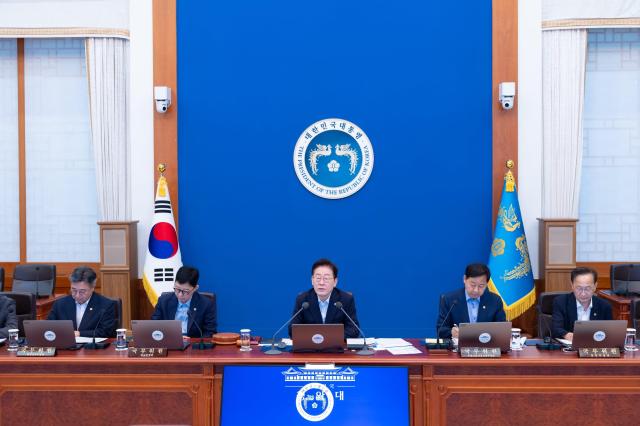
SEOUL, September 01 (AJP) -President Lee Jae Myung's outspoken policy chief Kim Yong-beom bowed out Tuesday, just two days after surviving a broad reshuffle of the economic team amid mounting pressure over housing policy and controversial single-stock leveraged exchange-traded funds.
Lee accepted Kim's resignation as the president's approval rating sank to a record-low 38.9 percent in the latest Realmeter survey, extending its decline to a seventh consecutive week.
Kim tendered his resignation Monday, a day after the Cabinet reshuffle, and Lee accepted it Tuesday, presidential spokesperson Kang Yu-jung said at an emergency briefing at Cheong Wa Dae.
"Presidential policy chief Kim Yong-beom expressed his intention to resign yesterday, Aug. 31," Kang said. "President Lee Jae Myung accepted his resignation today."
His abrupt departure widens a shake-up of Lee's economic policy team.
On Sunday, Lee nominated new chiefs for six ministries, including finance, land, justice and defense, while also overhauling his senior AI policy team. Kim, despite persistent opposition calls for his removal, had initially retained his post.
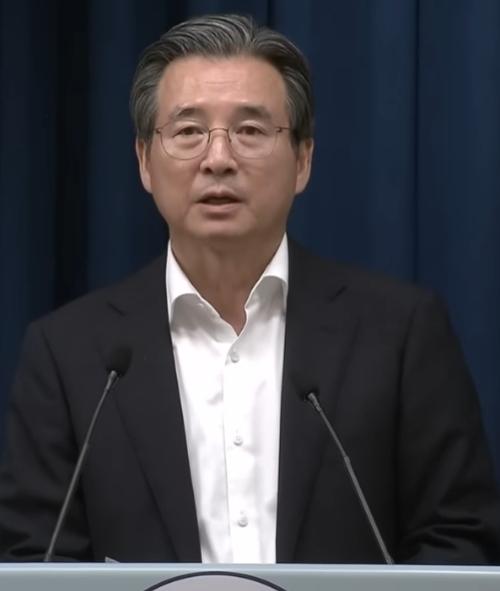
Kim, a veteran economic bureaucrat who previously served as first vice finance minister and vice chairman of the Financial Services Commission, became the Lee administration's first presidential policy chief shortly after Lee took office in June 2025.
During his 15 months in the post, he emerged as one of Lee's trusted aide in shaping economic, industrial and fiscal policy and playing central roles in U.S.-Korea tariff negotiations and Lee's flagship three mega projects.
But his outspoken style and prominent role in economic policymaking also made him a natural target as public frustration mounted over the government's handling of the economy.
Opposition parties had increasingly demanded that Kim take responsibility for soaring housing prices in Seoul and the surrounding metropolitan area, as well as controversy over the government's introduction of highly speculative single-stock leveraged ETFs.
Housing in particular has become a political liability for Lee.
Realmeter's latest poll, conducted Aug. 24-28 among 2,509 adults, showed Lee's job approval falling 1.3 percentage points from the previous week to 38.9 percent, its lowest level since he took office and the first reading below 40 percent.
Realmeter cited worsening public sentiment over housing prices and jeonse rental costs among several factors behind the decline.
Kim's exit, following the replacement of both the finance and land ministers, effectively clears out much of the senior lineup that had been steering Lee's economic and housing agenda.
It could also intensify speculation over whether Lee will extend the reshuffle to other senior presidential aides as his administration seeks to arrest the prolonged slide in public support.
Kim could not be reached for comment.
AJP Takeaways
- Kim Yong-beom resigns: President Lee Jae Myung accepted the resignation of his policy chief on Sept. 1, only two days after Kim survived a six-ministry Cabinet reshuffle.
- Housing and leveraged ETFs: Kim had faced mounting political pressure over Seoul-area housing prices and controversy surrounding South Korea's introduction of single-stock leveraged ETFs.
- Lee approval hits record low: Lee's Realmeter approval rating fell for a seventh straight week to 38.9 percent, the lowest since his inauguration and the first reading below 40 percent.
Copyright ⓒ Aju Press All rights reserved.
