

Trump cited the cost of the annual Ulchi Freedom Shield (UFS) exercise, among other reasons for its reduction, but many pundits speculated that the move was related to delays in implementing Seoul's US$350 billion U.S. investment commitment and Washington's complaints involving Coupang and other American companies.
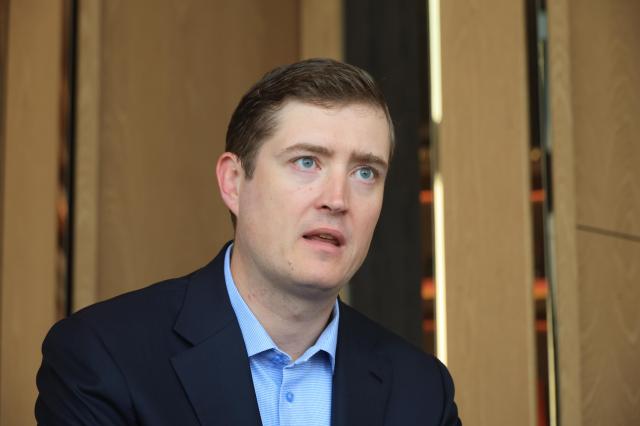
AJP interviewed Gray at Lotte Hotel Seoul on Tuesday as the allies were confronting an unusually broad set of challenges spanning military coordination, North Korea policy, trade and investment.
Trump's Aug. 16 order had come only hours before the annual Ulchi Freedom Shield (UFS) exercise was due to begin and apparently without advance notice to officials in either Seoul or Washington. Foreign Minister Cho Hyun told lawmakers the following day that officials in both governments had been unaware of the order beforehand.
At the time of the interview, Gray stressed that the exercise then underway had not yet been altered and argued that Trump's broader record demonstrated that Washington remained willing to use force when necessary to maintain deterrence.
That changed within a day. South Korea and the U.S. subsequently agreed to end UFS about a week earlier than originally scheduled on Aug. 27, cutting the 11-day exercise to five days and reducing some combined field training drills.
About 18,000 South Korean troops are participating in this year's exercise.
Gary said Trump believes his unusual personal leverage could produce a diplomatic breakthrough that previous U.S. presidents failed to achieve.
"His unique position as a global leader can achieve a diplomatic outcome with North Korea that has eluded every American president since Harry Truman," Gray said.
"I think he's very committed to trying to do that," he said.
"As he enters the final half of his presidency, I think he's going to look for ways to reshape global politics, and North Korea is a great opportunity to do that," he added.
Events since the interview have reinforced signs that Trump is seeking another encounter with Kim. Trump said Wednesday that he expected to meet the North Korean leader later this year, while the Wall Street Journal reported that he had been pressing aides to arrange a meeting as early as this fall, possibly during a November trip to Asia.
Trump met Kim three times during his first term, but their nuclear diplomacy broke down without an agreement after the 2019 summit in Hanoi.
The nuclear challenge has also grown substantially since those meetings. Trump said Wednesday that North Korea had 57 "very powerful" nuclear weapons. South Korean Defense Minister Ahn Gyu-back told lawmakers the following day that private research estimates generally put Pyongyang's arsenal at between 80 and 120 warheads, although he stressed that the South Korean military could not officially verify an exact figure.
Pyongyang, meanwhile, has offered little indication that Trump's latest gesture will immediately revive talks. Kim Yo-jong, the North Korean leader's influential sister, dismissed the scaled-back exercises as insufficient while still describing the personal relationship between Trump and Kim as "excellent."
North Korea then fired about 10 short-range ballistic missiles toward its eastern waters on Thursday.
Gray said Trump's complimentary language toward Kim should not necessarily be read as personal affection, but as part of his negotiating style.
"If you want to have a positive relationship that leads to negotiations that serve U.S. interests, why would you intentionally be nasty to our adversaries?" Gray said.
"President Trump thinks that there is no value in gratuitously criticizing people that we have to negotiate with," he said.
"Kim Jong-un is ultimately going to have to sit across the table from President Trump and President Lee, and they are going to have to come up with a deal," he added.
Gray said the same transactional approach lies behind Trump's demands on South Korea in the economic sphere. For decades, he argued, Washington was willing to tolerate trade arrangements that it did not necessarily regard as economically reciprocal because close alliances with South Korea and Japan produced larger geopolitical benefits. Trump, he said, now wants to change that bargain by coupling the security relationship with large-scale investment that creates jobs and industrial capacity inside the United States.
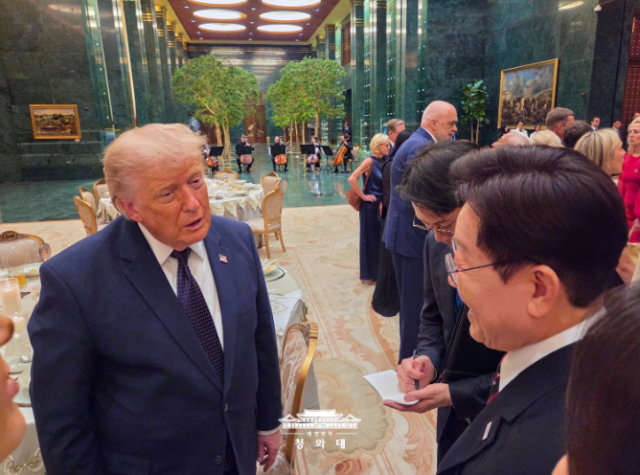
Gray warned that Seoul should not assume it could delay implementation until Trump leaves office in January 2029. He said Trump wants to see concrete projects being built and Americans employed while he remains in the White House, and that a lack of tangible progress over the coming year could create serious difficulties in bilateral relations.
Looking beyond the immediate disputes, Gray said Washington still wants the alliance to broaden.
"Number one, we want to see the alliance continue to grow and expand into new areas," Gray said.
"We also want to see a broader consensus that China is a very serious threat to regional stability," he said.
"The U.S. wants to see governments of both the left and the right in all of our partners and allies view China in a similar way," he added.
Gray acknowledged that South Korea faces different economic realities because of its geographical proximity and extensive trade ties with China, leaving room for differences over tactics. But he said Washington would continue to seek broad strategic alignment from its allies regardless of which parties hold power.
"The final thing is understanding that, as we talk about the investment package, we have to see some reciprocity," Gray said.
"We have to see U.S. companies treated fairly," he said.
"We have to see the investment deal that was made honored and turned into actual projects," he added.
His comments come amid growing political pressure in Washington over the treatment of American businesses in South Korea. A report released last month by the Republican-led U.S. House Judiciary Committee alleged that South Korean regulators had engaged in discriminatory enforcement against American-owned companies, with particular attention to U.S.-listed e-commerce company Coupang and the Korea Fair Trade Commission. Seoul has rejected the broader allegation that it systematically discriminates against foreign companies.
Gray was sharply critical of the regulatory environment.
"If you look at the way U.S. digital companies are disproportionately receiving large fines, and the way in which the Korea Fair Trade Commission is targeting U.S. companies and going after them with very aggressive raids, frankly, some of the positions those employees have been put in are completely unfair," Gray said.
"U.S. digital and tech companies right now are the backbone of the U.S. economy," he said.
"They are driving our growth and productivity. They are the innovators," he said.
"They have enormous economic heft in the United States," he added.
Gray argued that Trump has increasingly treated major American technology companies as strategically important national assets and has shown a willingness to retaliate when he believes they are being unfairly targeted abroad.
"The president has recognized that, and he has been very responsive when those companies have been treated unfairly, whether by Canada with a digital services tax or by the European Union with the Digital Markets Act," Gray said.
"He has responded to every instance of unfair regulation by threatening tariffs, actually imposing tariffs or using other forms of trade retaliation," he said.
"I would hate to see a situation in which Korea didn't take him seriously on this issue, didn't learn the lessons of Canada and the EU, and made the relationship more challenging by failing to understand the way in which we now view our tech companies as national champions," he said.
"If they are being discriminated against, I don't think President Trump is going to stand for it," Gray added.
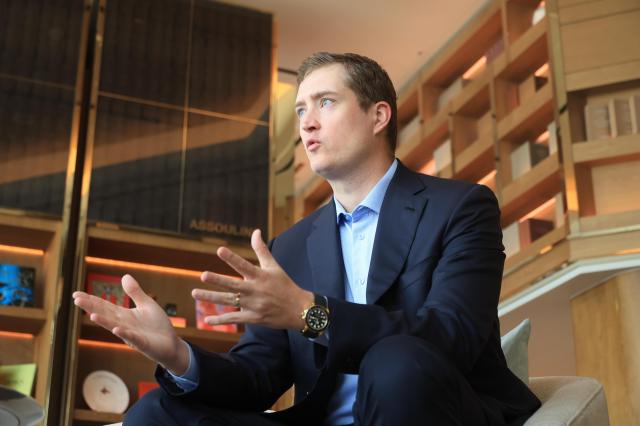
Gray nevertheless argued that the economic relationship could become a source of greater alliance strength if Korean manufacturing capacity is integrated with American technology and production. He pointed to investments by Samsung and SK in the United States and to growing U.S.-Korean cooperation in shipbuilding, including Hanwha's operations in Philadelphia.
"I think combining Korea's exceptional manufacturing expertise with U.S. innovation and facilities in the U.S. that can directly support our industrial base is the way to make this not a dependency, but something that benefits both sides," Gray said.
Gray also rejected the common portrayal of Trump's foreign policy as impulsive, arguing that unpredictability itself is a calculated negotiating tool.
"The president has always said that the unpredictability he is perceived to have by both friends and foes is one of his greatest strengths," Gray said.
"He has referenced a term used by President Nixon called the 'madman theory' repeatedly," he said.
Gray said the same uncertainty could help deter China from attempting to change the status quo across the Taiwan Strait.
"I have a lot of confidence that we are going to be able to get through President Trump's term without a major escalation in Taiwan because I don't think Xi Jinping wants to find out how President Trump would handle an invasion of the Taiwan Strait or other coercion," he said.
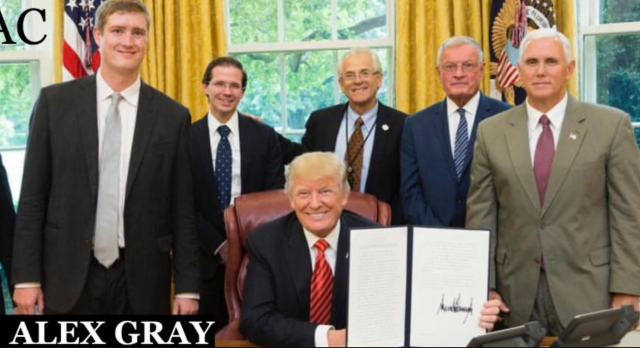
Gray, who worked with Trump inside the White House during his first term, said his personal experience differed sharply from the image of presidential improvisation often presented publicly.
"What I saw personally, though, is a little bit different," Gray said.
"I saw a president who uses that ambiguity and the public uncertainty about how he communicates in a very strategic way," he said.
"There is a public narrative that he says things without a larger strategy. My experience is that everything he says has been thought through, has been discussed with his advisers, and is communicated in ways that tie back to a larger U.S. interest or the direction he is trying to head," he said.
"The public narrative in the U.S. and globally sometimes confuses an intentional tactic with something chaotic or shooting from the hip," he said.
"I think it is more intended to look that way than it actually is," Gray added.
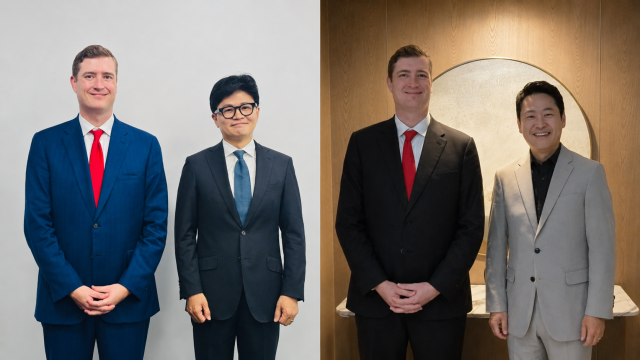
Gray met political figures during his visit to South Korea. He told AJP that he met independent Rep. Han Dong-hoon, a former leader of the People Power Party, during his stay.
Gray also said PPP Chairman Jang Dong-hyeok came to Lotte Hotel Seoul on Monday, Aug. 17, a day before the AJP interview, and that the two held talks.
Before becoming NSC chief of staff, Gray served as special assistant to the president for the defense industrial base at the White House National Economic Council and as the NSC's first director for Oceania and Indo-Pacific security. He also served on Trump's 2016 presidential transition team at the State Department and was a defense policy adviser to Trump's 2016 presidential campaign.
Copyright ⓒ Aju Press All rights reserved.
