

Journalist
Lee Jung-woo이정우
cannes2030@ajupress.com
ReporterMinistry of Unification & North Korea, Politics, Foreign Affairs
I studied philosophy in college, and sociology and journalism in graduate school. I cover North Korea, South Korean politics, foreign affairs and films. I enjoy Nordic cinema, Indian cuisine and Japanese detective novels. I have a cat and like bright, acidic coffee.
"Were it left to me to decide whether we should have a government without newspapers, or newspapers without a government, I should not hesitate a moment to prefer the latter."
"Were it left to me to decide whether we should have a government without newspapers, or newspapers without a government, I should not hesitate a moment to prefer the latter."
Latest by Lee Jung-woo
-
 Nearly half of South Koreans oppose Hormuz deployment, poll finds SEOUL, September 10 (AJP) - Nearly half of South Koreans oppose sending military assets to the Strait of Hormuz, a poll released on Thursday shows. The finding comes as Seoul considers contributing to maritime security in the strategic waterway, following the return of a government-led inspection team earlier in the day from the United Arab Emirates (UAE), where it assessed conditions for a possible deployment. The National Barometer Survey or NBS, found that 45 percent of respondents opposed deploying assets including maritime patrol aircraft and a logistics support ship, compared with 36 percent who supported the move. Another 19 percent said they did not know or declined to answer. Opposition was particularly strong among supporters of the ruling Democratic Party (DP), with 55 percent against deployment and 31 percent in favor. Among supporters of the main opposition People Power Party (PPP), 46 percent backed deployment while 40 percent opposed it. A team of inspectors from the Ministry of National Defense and other officials recently returned from the UAE after reviewing military facilities, logistics, and operational conditions relevant to a possible South Korean contribution in the region. They are expected to brief the National Security Council on their findings, but Seoul has stressed that the inspection does not mean a deployment will take place, as no decision has been made yet. Cheong Wa Dae said the government was considering various options including providing technical assistance instead of sending personnel. During his state visit to France earlier this week, President Lee Jae Myung also discussed maritime security and freedom of navigation in the Strait of Hormuz with French President Emmanuel Macron, though their talks did not cover any specific plans to deploy troops. The issue has gained urgency amid pressure from U.S. President Donald Trump, who has repeatedly criticized Seoul for declining to assist Washington in its offensive against Iran. Trump said in an Aug. 16 social media post that he had asked Lee whether South Korea wanted to join U.S. operations against Iran and claimed the South Korean president replied, "No thanks!" Trump elaborated the following day, saying he had asked Lee to "give us a little hand" with Iran and questioning why Washington should continue bearing the cost of defending South Korea if Seoul was unwilling to assist the U.S. Trump also linked Seoul's refusal to his decision to substantially reduce U.S.-South Korea joint military exercises. 2026-09-10 14:55:47
 -
 Korea-U.S. defense ties shift from one-sided to industrial partnership SEOUL, September 09 (AJP) - Defense industrial cooperation between South Korea and the United States largely ran one way for decades, with Seoul buying American weapons and relying heavily on U.S. military technology. The once-skewed relationship is becoming more reciprocal as Washington increasingly looks to Korean artillery, shipbuilding expertise and manufacturing capacity to fill gaps of its own. Hanwha Defense USA's entry into a U.S. Army artillery program has provided the clearest example yet of the shift, while growing U.S. interest in Korean shipbuilding is opening another avenue for the two allies to move from a traditional buyer-seller relationship toward joint development and production. "We now need to think about what Korea and the United States can develop and build together," Rep. Yu Yong Weon of the main opposition People Power Party said Wednesday, calling for a model in which the allies "develop together, produce together and maintain together." Yu, a member of the National Assembly's National Defense Committee and a longtime defense specialist, said South Korea has transformed from a major importer of U.S. weapons technology into a global defense exporter supplying countries including Poland and increasingly seeking a role in the U.S. market. "There are an enormous number of areas where the two countries can work together," he said. The comments came at the 2026 AMCHAM-National Assembly Policy Seminar, titled "The Future of U.S.-ROK Defense Industrial Cooperation," hosted by the American Chamber of Commerce in Korea and Yu's office at the National Assembly in Seoul on Wednesday. The seminar focused on moving bilateral defense ties beyond arms sales into co-development, co-production, maintenance, repair and overhaul, or MRO, sustainment and integrated supply chains. It was AMCHAM's first National Assembly policy seminar dedicated to bilateral defense industrial cooperation. The shift has gained momentum since the U.S. Army selected Hanwha Defense USA last month to supply prototypes for its Mobile Tactical Cannon program. The $100.3 million initial agreement covers six K9-based wheeled self-propelled howitzer prototypes. Options could expand the program to as many as 18 systems and raise its cumulative value to $262.9 million. The contract marked the first time a domestically developed South Korean weapons system entered a U.S. military acquisition program. Kim Il-dong, vice minister of the Defense Acquisition Program Administration, said the significance was difficult to overstate after more than three decades in the defense industry. "In more than 30 years working in the defense industry, this is the first time I have seen a completed Korean weapons system enter the U.S. market," Kim said. Brent Ingraham, the U.S. Army's top acquisition official, visited Hanwha Aerospace's production facility in Changwon on Aug. 26, inspecting the K9 production line and discussing cooperation related to U.S. Army modernization, according to the company. The development represents a reversal from the earlier decades of the alliance, when South Korea depended heavily on imported U.S. weapons and technology as it built its domestic defense industry. Korean companies are now seeking not simply to sell finished weapons to the United States but to become part of its defense production base. AMCHAM Chairman and CEO James Kim said the alliance, built over more than seven decades, is increasingly extending into defense, aerospace and industrial cooperation. "By combining Korea's manufacturing strength and growing global reach with American technology and innovation, our two countries can strengthen readiness, unlock investment and enhance shared economic security," Kim said. He said AMCHAM would seek to serve as a "trusted bridge" between policymakers and industry. Shipbuilding puts U.S. needs in sharper focus If the K9 represents the changing relationship on land, shipbuilding could prove a much larger test of how far the new industrial partnership can go. The United States is seeking to rebuild naval capacity while confronting shortages in domestic shipbuilding infrastructure, workforce and production capacity. South Korea, home to some of the world's largest and most technologically advanced shipyards, has increasingly emerged as a potential partner. Kim Il-dong cited the MASGA, or "Make American Shipbuilding Great Again," initiative, Korea's U.S. investment framework and the Korea-U.S. Shipbuilding Partnership Center as platforms that could turn political support for cooperation into concrete projects. South Korea and the United States opened the Korea-U.S. Shipbuilding Partnership Center in Washington on July 23 to support Seoul's planned $150 billion investment in the U.S. shipbuilding sector. The two sides also signed 15 memoranda of understanding covering supply chains, workforce development, joint research and other areas. Korean shipbuilders are already performing MRO work on U.S. naval vessels. HD Hyundai Heavy Industries completed maintenance on the U.S. Navy logistics vessel USNS Alan Shepard and secured another MRO contract this year involving the USNS Cesar Chavez. The opportunity is growing as Washington looks for ways to overcome constraints in its domestic yards. The U.S. Navy said in May that it operated 291 battle-force ships, below the 355 ships required under U.S. law. Earlier force-structure plans have called for 381 crewed battle-force ships and 134 large unmanned surface and underwater vessels, bringing the total to 515 naval platforms. The Trump administration has also created a potential route for foreign shipbuilders to participate more directly. President Donald Trump on Aug. 13 directed the Pentagon to apply what the administration calls the "Finland Model" to as many as three ship classes. Under the approach, a foreign shipbuilder making substantial investment in U.S. yards, training American workers and transferring shipbuilding techniques can temporarily build the first two vessels at its overseas parent yard before subsequent ships are constructed in the United States. The policy is aimed at addressing near-term U.S. capacity shortages while rebuilding the domestic shipbuilding industry. For South Korean shipbuilders, the model potentially creates a role that goes considerably further than repairing U.S. vessels or exporting ships. It could allow Korean companies to bring their production methods, workforce training and supply-chain expertise directly into the rebuilding of America's maritime industrial base. Aerospace looks toward propulsion Aerospace executives at the seminar pointed to another area where the relationship could become more deeply integrated. Kim Young-je, president of GE Aerospace Korea and general manager for Asia Pacific Defense & Systems, said South Korea is one of the company's key markets in the Asia-Pacific region. According to Kim, GE Aerospace works with more than 70 Korean companies and procures about $130 million worth of parts and components from Korean suppliers. He identified advanced propulsion as a potential area for the next stage of Korea's aerospace industry. Developing advanced engines requires capabilities spanning materials, thermal management, power systems, manufacturing, testing and validation, Kim said. GE Aerospace invests about $3 billion annually in research and development and has supplied more than 30,000 military engines to roughly 300 customers worldwide, including the U.S. Air Force, Army and Navy, according to his presentation. "Korea's aerospace industry has reached an important inflection point," Kim said, adding that GE could combine its technology and global experience with Korea's engineering and manufacturing capabilities. Lee Won-ik, country executive for Korea at Lockheed Martin, traced the company's relationship with South Korea from U.S.-built aircraft used during and after the Korean War to more recent industrial programs. He cited the KF-16, T-50 advanced trainer, KF-21 fighter, UH-60 helicopter and Aegis destroyers as examples of how bilateral defense cooperation has evolved. "Going forward, we will continue leveraging Korea's exceptional industrial capabilities and Lockheed Martin's technological leadership to create new opportunities for the defense sectors of both nations," Lee said. Sikorsky's Dylan Landis also outlined potential cooperation involving the X2 next-generation helicopter, including co-development, production and possible exports to third countries. The next step, participants said, will require overcoming barriers that remain between the two defense industries, including procurement rules, export controls, technology security, certification, access to technical data, skilled labor and the need for predictable long-term demand. They also discussed developing South Korea into a regional hub for MRO and military sustainment in the Indo-Pacific. Such a role would push the alliance further beyond the model that defined it for much of the past seven decades: one country supplying weapons and technology and the other buying them. Increasingly, both sides are looking at what each can build for — and with — the other. AJP Takeaways - Korea-U.S. defense industrial ties are becoming more reciprocal after decades dominated by U.S. weapons and technology transfers to Seoul - Hanwha's K9-based artillery system becomes the first domestically developed Korean weapon to enter a U.S. military acquisition program - U.S. shipbuilding constraints are opening another major avenue for Korean yards, investment and manufacturing know-how 2026-09-09 18:33:35
 -
 Seoul beats back fine dust, and the next test: ozone SEOUL, September 8 (AJP) - Ozone has become a bigger pollution headache than fine dust for South Korea. Its capital has sharply reduced particulate air pollution over the past decade, but ground-level ozone concentrations have risen nearly 50 percent, exposing a new challenge after years of policy focused heavily on fine dust. The annual average ozone concentration in Seoul rose from 0.022 parts per million in 2015 to 0.0326 ppm in 2025, an increase of more than 48 percent, according to the Seoul Metropolitan Government. Over the same period, the annual average concentration of PM10, commonly referred to in South Korea as fine dust, fell 29 percent to 32 micrograms per cubic meter from 45. PM2.5, or ultrafine dust, dropped about 22 percent to 18 micrograms per cubic meter from 23. The divergence has become increasingly visible in the number of high-ozone days. Seoul said ozone advisories were issued on 16 days in 2025, up from just three in 2015, a more than fivefold increase. The figures contrast with the substantial progress Seoul has made in tackling particulate matter over a longer period. PM10 concentrations fell 47 percent to 32 micrograms per cubic meter in 2025 from 60 in 2006, while PM2.5 declined 40 percent to 18 from 30 over the same period. The number of days classified as having "bad" PM2.5 levels also dropped to 32 from 108. But Rep. Kim Ju-young of the ruling Democratic Party warned that improvements in particulate pollution should not be treated as evidence that the broader air-quality problem has been solved. "We should not assume that the air our people breathe has become sufficiently clean and safe simply because fine dust and ultrafine dust levels have improved," Kim, a member of the National Assembly’s Climate, Energy, Environment and Labor Committee, told AJP Tuesday. "If Seoul's ozone concentration has increased by more than 48 percent over a decade, we now need to take a hard look at what has been left in the blind spots of our air-quality policies," Kim said. He called for a shift beyond South Korea's long-standing focus on particulate matter toward tighter management of the pollutants that produce ozone. "With heat waves and intense solar radiation likely to increase because of climate change, potentially making the ozone problem even more serious, the government needs to move beyond an air-quality policy centered on fine dust and systematically manage ozone precursors such as nitrogen oxides and volatile organic compounds," Kim said. "I will also examine the causes of the increase in ozone and the government's response system during this year's parliamentary audit," he added. "The ultimate measure of air-quality policy should not be the numerical level of a single pollutant, but how clean and safe the air people actually breathe is." Ground-level ozone differs from particulate matter because it is generally not emitted directly. It forms through photochemical reactions involving nitrogen oxides, or NOx, and volatile organic compounds, or VOCs, in the presence of sunlight. Vehicles, industrial facilities and the use of solvents and fuels are among the sources of those precursor pollutants. The World Health Organization says ground-level ozone is a major component of smog and excessive exposure can cause breathing difficulties, trigger asthma, reduce lung function and contribute to lung disease. Sunny weather favors its formation, making ozone particularly problematic during hot seasons. Seoul has begun responding to the shift. The city launched intensified seasonal measures targeting high ozone concentrations from May through August this year, including inspections of 1,030 businesses that emit VOCs, such as gas stations, painting facilities and dry cleaners. It is also strengthening checks on vehicle emissions and idling around terminals, depots and logistics centers. The pattern seen in Seoul is not unique. China has confronted a particularly similar problem. Aggressive air-pollution controls introduced from 2013 brought dramatic reductions in particulate matter, but ozone pollution initially worsened. A study using China's national monitoring network found that summertime mean PM2.5 concentrations across eastern China fell by about 50 percent between 2013 and 2019, while surface ozone steadily increased and reached the highest level of the study period in 2019. Researchers have pointed to the complicated atmospheric chemistry linking the two pollutants. A Nature Geoscience study found that PM2.5 fell by roughly 30 to 40 percent across China from 2013 to 2017 while surface ozone worsened, concluding that effective control required simultaneous reductions in pollutants including VOCs and NOx rather than a focus on particulate matter alone. Europe faces a similar challenge despite substantial reductions in emissions that contribute to ozone formation. The European Environment Agency said NOx emissions in Europe fell around 53 percent between 2005 and 2023 and non-methane VOC emissions declined about 35 percent. Yet while peak ozone concentrations decreased, annual mean ozone levels remained stable or increased. The agency warned that climate change is expected to aggravate European ozone pollution because more frequent and intense heat-related weather conditions favor ozone formation. It estimated that exposure to ozone contributed to about 63,000 premature deaths in the European Union in 2023. The United States, meanwhile, provides an example of longer-term ozone improvement alongside falling particulate pollution. U.S. Environmental Protection Agency data show national eight-hour ozone concentrations declined 24 percent between 1990 and 2024, while annual PM2.5 concentrations fell 46 percent between 2000 and 2024. Weather nevertheless remains a critical factor. The EPA notes that ozone forms more readily during warm, sunny and stagnant conditions, while cooler, cloudy or wetter weather suppresses its formation. After adjusting for weather variations, U.S. monitoring data show average warm-season ozone concentrations have fallen by about 10 parts per billion since 2002, demonstrating that reductions in precursor emissions can lower ozone even as meteorological conditions fluctuate. Seoul's experience shows that decades of progress in reducing particulate matter have addressed only part of the city's air-quality challenge. As hotter summers create conditions increasingly favorable to ozone formation, controlling NOx and VOC emissions is likely to become a bigger part of South Korea's effort to reduce the health risks of air pollution. 2026-09-08 17:21:45
 -
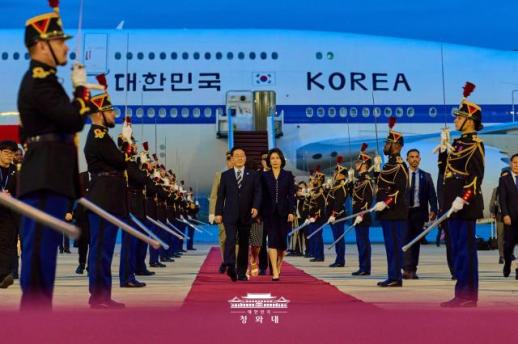 Lee second-term question looms over Assembly session SEOUL, September 08 (AJP) - South Korean President Lee Jae Myung may be in France this week, but back home the political heat is rising over a question the opposition wants him to answer himself. Will he rule out another presidential run if constitutional reform moves forward? Main opposition People Power Party (PPP) wants a clear answer before going into any discussion for constitutional revision. PPP floor leader Jeong Jeom-sig during his parliamentary address at the National Assembly Tuesday accused Lee of leaving open the possibility of extending his time in office through constitutional revision. “The president has also mentioned a constitutional amendment introducing a two-term presidency. But he never says, ‘I will not seek reelection’ or ‘I will stand trial,’” Jeong said. “Is the intention to extend his term through constitutional revision and use that to delay his trials?” Jeong went on to declare that his party would reject constitutional negotiations with the administration. “There will be no constitutional amendment under this government,” he said. “We will never discuss constitutional revision with forces that commit clear unconstitutional acts and seek private interests through constitutional revision.” The remarks marked one of the opposition’s strongest attempts yet to link the long-running debate over South Korea’s presidential system to Lee’s own political future. Earlier in the day, Hong Ihk-pyo, senior presidential secretary for political affairs, rejected suggestions that Lee was considering another presidential term. “The president has never even thought about such a thing,” Hong said during an appearance on the YouTube program “Kim Ou-joon’s News Factory,” expressing regret that the controversy continued despite explanations from the presidential office. Hong said Lee was expected to make his position clearer himself when an appropriate opportunity arose. Hong also said Lee had discussed the issue during an April meeting with then-Democratic Party (DP) leader Jung Chung-rae and PPP leader Jang Dong-hyeok. According to Hong, Lee said at the time that he had “no thoughts” of seeking another term and questioned the point of publicly declaring he would not do something he had no intention of doing. The dispute comes as constitutional revision has again moved toward the center of South Korean politics. DP leader Kim Min-seok said in his parliamentary group speech Monday that the ruling party would pursue “realistically achievable constitutional reform” reflecting changes in society and public demand, including possible changes to the country’s power structure. Lee has long supported replacing South Korea’s current single five-year presidential term with a system allowing presidents to serve more than one term. As a DP presidential candidate on Jan. 18, 2022, Lee said in an MBN interview that a four-year, two-term presidency with dispersed presidential powers was necessary to strengthen political accountability. “Five years is not enough time to plan policies, implement them and see the results,” Lee said, adding that he would be prepared to shorten his own term by one year if political agreement could be reached on constitutional revision. “If an agreement is possible now, even if I become president, I think it would be desirable to amend the Constitution in that way even if it means shortening my term by one year,” he said. Lee returned to the issue during the 2025 presidential campaign. On May 18 that year, he proposed a four-year presidency allowing consecutive reelection as part of a broader constitutional reform package intended to strengthen presidential accountability while dispersing presidential powers. He argued that allowing voters to judge an incumbent after four years would effectively create a midterm evaluation of the administration. Lee also said at the time that the change would not apply to the president elected in the 2025 election. “The current Constitution explicitly states that a constitutional amendment does not apply to the president serving at the time,” Lee told reporters in Gwangju after attending a May 18 pro-democracy commemoration. The issue resurfaced after Lee took office. On Aug. 14, Lee wrote on X that his position remained unchanged, saying the presidential term should be changed to either a four-year, two-term system or a four-year system allowing consecutive reelection so that voters could conduct an interim assessment of a president’s performance. He also called for transferring some presidential powers, including authority involving the Board of Audit and Inspection, the nomination of the prime minister and some appointments, to the National Assembly, while strengthening local autonomy and fundamental rights. “Changing the presidential term to a four-year two-term or four-year renewable system to enable responsible politics through an interim evaluation, while strengthening local autonomy and the fundamental rights of citizens, is my campaign pledge and has been my consistent position,” Lee said. He reiterated that he would accept shortening his term if necessary to achieve constitutional reform, saying that had been his official position during the 2022 presidential campaign and remained unchanged. Lee’s use of both “two-term” and “consecutive reelection” systems has helped fuel the latest political dispute. In Korean constitutional debate, a two-term system can allow a former president to return after leaving office, while a consecutive-term system refers specifically to an incumbent immediately running for another term. The legal barrier to Lee benefiting from such a change is substantial under the current Constitution. Article 128, Paragraph 2 of the Constitution states that an amendment extending a president’s term or allowing presidential reelection “shall not be effective for the President in office at the time of the proposal” for the amendment. That means a constitutional amendment proposed while Lee is serving as president could not, under the current provision, simply give him the right to extend his existing term or seek reelection under the newly created system. The Constitution also requires an amendment to win support from at least two-thirds of all National Assembly members before being put to a national referendum, making cooperation across party lines effectively indispensable. AJP Takeaways - PPP sets condition for constitutional reform talks: The People Power Party says it will not engage in constitutional revision discussions unless President Lee Jae Myung personally rules out seeking another presidential term. - Lee has consistently backed a two-term presidency: Lee has supported replacing South Korea’s single five-year term with a four-year system allowing reelection, while repeatedly saying any change should not benefit the sitting president. - Constitution itself limits Lee’s options: Article 128 bars constitutional amendments extending presidential terms or permitting reelection from benefiting the president in office when the amendment is proposed, while any revision would also require bipartisan support in the National Assembly. 2026-09-08 16:40:56
 -
 U.S. court seizes crypto linked to North Korean IT workers SEOUL, September 08 (AJP) - A U.S. federal judge has ordered the forfeiture of cryptocurrency tied to a North Korean overseas IT worker scheme, granting the Justice Department a partial victory in its effort to seize nearly 8 million dollars in virtual assets allegedly linked to Pyongyang’s sanctions-evasion network, according to NK News. The ruling comes as U.S. authorities intensify efforts to disrupt North Korea’s overseas IT workforce, which Washington says numbers in the thousands worldwide. The U.S. Treasury Department has estimated that such workers generated nearly 800 million dollars in revenue for the North Korean regime in 2024. NK News reported Monday that Judge Rudolph Contreras of the U.S. District Court for the District of Columbia ruled on Sept. 3 that funds held in a cryptocurrency wallet whose address begins with “0x81c4” should be forfeited to the U.S. government. The ruling was part of a civil forfeiture case brought by the Justice Department in June 2025. According to the court ruling, the wallet received approximately 158,123 USDC from at least 10 addresses used to receive payments for North Korean IT workers, as well as 54,574 USDT from at least four other worker payment addresses. Both USDC and USDT are stablecoins designed to maintain a value close to the U.S. dollar, putting the face value of those transfers at roughly $212,700. The Justice Department had sought forfeiture of a much larger pool of assets worth more than 7.74 million dollars, including cryptocurrency, nonfungible tokens and Ethereum Name Service domains allegedly connected to North Korean money laundering and sanctions-evasion operations. Contreras, however, granted the government's request only for assets linked to the 0x81c4 wallet. He denied the request for the remaining property without prejudice, finding that the government had failed to adequately identify those assets in its public forfeiture notice. The decision leaves prosecutors able to seek forfeiture of the remaining assets again after addressing the procedural deficiencies. The Justice Department said when it filed the case last year that the assets had been frozen or seized as part of an investigation into North Korean IT workers who obtained jobs at foreign companies using fraudulent or fraudulently obtained identification documents. The workers concealed their identities and locations from employers and in some cases received salaries in cryptocurrencies such as USDC and USDT, according to the department. They then allegedly moved the funds through multiple cryptocurrency addresses and other transactions designed to obscure their origin before sending the proceeds back to North Korea. Court documents say the proceeds were ultimately transferred in some cases to Kim Sang Man, the head of an organization subordinate to North Korea's Ministry of National Defense, or to Sim Hyon Sop, an official of North Korea's Foreign Trade Bank. Both are on the U.S. Treasury Department's list of Specially Designated Nationals. The FBI investigation found that the workers used designated payment addresses to receive earnings before transferring the funds to consolidation wallets, where revenue from multiple workers was commingled. The funds were then sent to cryptocurrency accounts connected to Kim and Sim, according to the ruling. The case highlights the growing importance of overseas IT work as a source of foreign currency for the heavily sanctioned North Korean government. The U.S. Treasury Department has said Pyongyang maintains a global workforce of thousands of highly skilled IT workers, with many operating from China and Russia. They frequently use stolen identities, forged documents, false online personas and proxy accounts to pose as workers of other nationalities and obtain remote employment at companies in wealthier countries. The workers can hold legitimate positions as software developers and other technology specialists while concealing their North Korean nationality and location. U.S. authorities say the North Korean government takes a large share of their earnings and uses the revenue to support its nuclear weapons and ballistic missile programs. In March, the Treasury Department said North Korean government-orchestrated IT worker schemes generated nearly 800 million dollars in 2024. It also sanctioned six individuals and two entities accused of facilitating networks that helped North Korean workers obtain jobs, move money and convert their earnings into funds usable by the regime. U.S. authorities have increasingly targeted not only the North Korean workers but also overseas facilitators who provide stolen identities, financial accounts or computers that allow them to appear to be working from the United States. In April, two U.S. nationals were sentenced for operating so-called “laptop farms” that enabled North Korean workers using stolen American identities to obtain jobs at more than 100 U.S. companies. The Justice Department said the scheme generated more than 5 million dollars for North Korea and involved the stolen identities of at least 80 Americans. Washington says the operations present a threat beyond sanctions evasion because workers who successfully obtain remote jobs can gain legitimate access to corporate networks and sensitive information, creating opportunities for data theft, extortion and other malicious cyber activity. 2026-09-08 12:59:43
 -
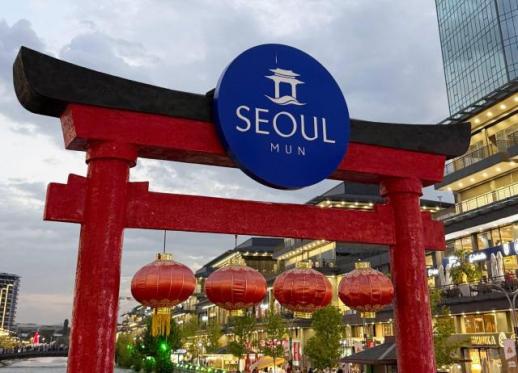 Japanese-style torii at Tashkent's Korea-themed landmark draws criticism SEOUL, September 08 (AJP) -Seoul Mun, a popular Korean Wave attraction in Uzbekistan's capital Tashkent, has come under scrutiny over a prominent structure resembling a Japanese shrine gate that critics say could confuse visitors about the site's Korean identity. Seo Kyoung-duk, a professor at Sungshin Women's University and a prominent campaigner for promoting Korean culture and history overseas, raised concerns Tuesday over the large structure resembling a Japanese torii, a traditional gate marking the entrance to a Shinto shrine. “I believe it is a serious mistake to have installed a large structure resembling a Japanese torii at Seoul Mun, a Korean Wave landmark in Uzbekistan, and even decorated it with Chinese-style red lanterns,” Seo told AJP. “The area has become a popular tourist attraction not only for Tashkent residents but also for many foreign visitors,” he said. “Above all, many foreign visitors regard the structure as a symbol of Seoul Mun and take photos and videos of it,” Seo said. “I believe it should be replaced immediately to avoid creating cultural confusion.” Seoul Mun has emerged as one of Tashkent’s most visible Korea-themed attractions and a symbol of growing cultural ties between South Korea and Uzbekistan. Built along a canal in the Uzbek capital, the sprawling commercial and cultural complex features architectural elements inspired by traditional Korean palace gates, tiled roofs and taegeuk motifs. The waterfront district is lined with restaurants, cafes and shops, including Korean restaurants, K-beauty stores and Korean-style dessert cafes. Its promenades, bridges and musical fountains draw crowds, particularly in the evening, with Korean pop music also featured in fountain performances. The popularity of Seoul Mun comes amid a broader rise of Korean culture in Uzbekistan, where K-pop, Korean dramas, cosmetics, food and the Korean language have developed a sizable following. A recent study of K-drama viewers in Uzbekistan found that viewers generally had favorable and familiar perceptions of Korean dramas and that such exposure contributed to a more positive image of South Korea and greater interest in visiting the country. The cultural connection is also underpinned by Uzbekistan’s large ethnic Korean community. The country is home to roughly 180,000 ethnic Koreans, known as Koryo-saram, one of the largest Korean diaspora communities in the former Soviet Union. Uzbekistan received about 11.7 million foreign visitors classified as tourists in 2025, up 46.8 percent from 2024, according to the country’s National Statistics Committee. Some 46,300 visitors came from South Korea. AJP Takeaways - Korean culture campaigner Seo Kyoung-duk criticized a torii-like structure decorated with Chinese-style lanterns at Seoul Mun, a Korea-themed landmark in Tashkent. - Seo told AJP the structure could confuse foreign visitors about Korean cultural identity and called for its immediate replacement. - The dispute comes as Korean culture gains popularity in Uzbekistan, home to roughly 180,000 Koryo-saram and a growing number of foreign tourists. 2026-09-08 11:13:33
 -
 South Korea, US plan 8 nuclear reactors under investment pact SEOUL, September 07 (AJP) - South Korea and the United States are set to include a plan to pursue the construction of eight nuclear power reactors in the United States in their bilateral strategic investment framework, a ruling-party lawmaker confirmed to AJP on Monday. The lawmaker, who serves on the National Assembly’s Trade, Industry, Energy, SMEs and Startups Committee, said the plan to pursue eight reactors would be included in the framework governing the two countries’ U.S. investment projects. The proposal is expected to be reflected in a memorandum of understanding that Seoul and Washington are expected to finalize as early as Sept. 18. The reference to eight reactors is expected to set out a broad direction for bilateral nuclear cooperation rather than identify individual sites, reactor models or construction schedules, according to people familiar with the discussions. If implemented, the nuclear projects could emerge as a major component of South Korea’s $200 billion commitment to invest in strategic industries in the United States. The $200 billion program forms part of Seoul’s broader $350 billion U.S. investment pledge agreed with Washington last year. A separate $150 billion has been earmarked for shipbuilding cooperation. The investment framework was established under a Korea-U.S. strategic investment MOU signed in November 2025 and later backed by legislation passed by South Korea’s National Assembly in March. The law requires investments to be commercially viable and consistent with South Korea’s national interests. The South Korean government has been carrying out domestic administrative procedures for the first round of investments, including reviews of their commercial feasibility and potential risks. The Ministry of Trade, Industry and Resources also briefed ruling-party lawmakers behind closed doors Monday on plans related to the first batch of U.S. investment projects. Energy projects are emerging as a central part of the investment package. Along with nuclear power, Seoul and Washington have been discussing gas-fired power generation in Texas and liquefied natural gas development in Alaska. A $22.3 billion gas-fired power project in Encinal, Texas, has been under consideration as the first project to receive funding through the investment framework. The proposed complex would have a generating capacity of about 6.3 gigawatts. The nuclear plan could create significant opportunities for South Korean companies with experience in reactor equipment, engineering and construction as Washington seeks to expand domestic power generation amid rapidly rising electricity demand. Details including the locations of the eight reactors, participating companies, reactor technologies and the division of financing between the two countries have yet to be finalized. AJP Takeaways - South Korea and the United States plan to include the construction of eight nuclear reactors in the U.S. in their first strategic investment agreement. - A ruling-party lawmaker on the National Assembly’s Trade, Industry, Energy, SMEs and Startups Committee confirmed the eight-reactor plan to AJP. - The nuclear projects could become a major pillar of Seoul’s $200 billion U.S. strategic investment program, alongside planned gas and energy projects. 2026-09-07 16:27:56
 -
 Coupang dispute to loom over Korea-U.S. ties beyond midterms SEOUL, September 07 (AJP) -South Korea’s dispute with e-commerce giant Coupang is likely to loom over ties with Washington beyond the U.S. midterm elections as concerns over Seoul’s regulation of American technology companies have taken root across party lines, South Korean lawmakers and policy experts observed Monday. “There is no guarantee the situation will improve even if the Democrats take the majority in the November midterm elections,” Woo Jeong-yeop, a senior fellow at the Hudson Institute, public think tank based in Washington D.C., said at a forum at the National Assembly Members’ Office Building in Seoul. Woo cautioned against viewing the mounting pressure from Washington simply as the product of Coupang’s lobbying, arguing that skepticism toward South Korean trade and regulatory practices had already been embedded in U.S. politics before the company became a bilateral flashpoint. “Coupang’s lobbying alone cannot explain how the current situation developed,” Woo said. “If we diagnose the problem that way, we will get the diagnosis wrong.” The forum dubbed “The South Korea-U.S. Alliance at a Crossroads,” was organized by Rep. Kim Gunn of the main opposition People Power Party (PPP) to discuss the future of the alliance following the U.S. midterm elections as well as North Korea, trade disputes and other sources of bilateral friction. Woo said the political narrative surrounding foreign regulation of U.S. technology companies had already been established through Washington’s earlier disputes with the European Union and Canada over digital taxes and related rules. The narrative was already in place before Coupang,” Woo said. The Coupang controversy began as a domestic data-privacy issue following a massive personal-data leak in November 2025 involving about 37.55 million people. South Korea’s Personal Information Protection Commission imposed a fine of about 624.7 billion won ($466 million) on the company in June. Coupang has challenged the penalty, while the dispute has expanded in Washington into questions over whether South Korean regulation discriminates against U.S. companies. The issue has since drawn scrutiny from Congress and the Trump administration, with potential investor-state dispute settlement proceedings and a Section 301 trade petition also being raised. Woo said the speed of that escalation reflected a broader political framework already operating in Washington. He noted that within about five months, a domestic controversy involving Coupang had developed into a bilateral trade issue involving a formal investigation by the U.S. House Judiciary Committee, a meeting with the U.S. vice president and letters from senators. Woo also recalled that Coupang itself had once attracted surprisingly little attention in Washington despite being listed in the United States. “U.S. experts who had visited Korea would come back and ask me why Koreans kept talking so much about Coupang and what kind of influence the Coupang issue actually had,” he said. “Even a high-ranking State Department official who had served at the US Embassy in Korea did not know that Coupang was an American company,” Woo added. “Washington itself did not have that much interest in Coupang.” The political environment has since shifted markedly. House Judiciary Committee Chairman Jim Jordan, an Ohio Republican, has become one of the most vocal U.S. lawmakers criticizing South Korea’s treatment of American companies. His committee opened oversight into Seoul’s regulatory practices and released an interim report in July accusing South Korea of discriminatory treatment of Coupang and other U.S.-owned companies. Woo noted that Jordan had raised concerns about the Korea Fair Trade Commission and South Korean trade practices before the Coupang dispute intensified. “Coupang did not create Jim Jordan,” Woo said. “He was already highly critical of South Korea’s trade practices.” Republicans have been particularly vocal partly because of President Donald Trump’s unusually strong grip on the party, Woo said, but a Democratic takeover of Congress would not necessarily reduce the pressure. Concerns about South Korea’s information-network rules and online-platform regulation were also present under the Biden administration, he said, suggesting that the issue has broader bipartisan roots. “The lobbying logic surrounding Coupang can be transplanted across party lines,” Woo said. “A strategy of simply waiting things out may be possible, but the fundamental solution is to change how the US political establishment views Korea.” Woo also stressed that lobbying should be understood as a long-term process built around relationships rather than a short-term attempt to influence individual decisions. “Lobbying is something everyone does,” Woo said. “It is difficult to succeed through a short-term approach. Relationships create access, and access creates influence.” South Korea, he said, should focus less on figures who are well known in Seoul and more on people who command credibility and influence in Washington. “We should use people Washington knows, rather than people we know,” he said. Former Trade Minister Jeong In-kyo said the Coupang dispute should be viewed as part of a broader pattern of simultaneous U.S. pressure on South Korea. Jeong identified five major sources of friction: tariffs and trade, Coupang and digital regulation, North Korea and joint military exercises, implementation of South Korea’s $350 billion U.S. investment commitment, and Washington’s demands related to Iran and the Strait of Hormuz. He described the situation as a form of “linkage” pressure in which disputes that might previously have been addressed separately increasingly affect one another. Trade friction can spill into investment negotiations, digital regulation and security burden-sharing, he said, creating a “ratchet” effect in which a concession in one area may lead to additional demands elsewhere. Jeong argued that Seoul should resist responding with similarly arbitrary measures and instead reinforce predictable rules, non-discrimination and proportionality. In the short term, South Korea should demonstrate progress on its first major U.S. investment project and use summit diplomacy to restore confidence, he said. Over the longer term, Seoul should seek to separate trade and security issues where possible while strengthening cooperation with other middle powers around common rules. Senior PPP lawmakers at the forum said the widening economic friction reflected broader strain in the bilateral alliance. “The South Korea-US alliance is being put to the test,” Kim said, citing tariffs, investment in the United States, joint military exercises and North Korea’s nuclear program. “Trade and security issues are becoming intricately intertwined,” Kim said. “Rather than conducting diplomacy that merely follows individual issues as they arise, we need an all-out diplomatic effort toward the United States.” PPP Rep. Yoon Sang-hyun said pressure from the Trump administration was intensifying and criticized Seoul for failing to move quickly enough on discussions over a possible military contribution related to the Strait of Hormuz. “Diplomacy is about timing,” Yoon said. “The discussion over deployment is already far too late.” Yoon called for the creation of a bipartisan strategic team bringing together leading South Korean foreign policy and security specialists, warning that renewed U.S.-North Korea negotiations would inevitably raise questions over management of Pyongyang’s nuclear arsenal. Former National Assembly Defense Committee Chairman Sung Il-jong said he expected dialogue between Washington and Pyongyang to resume soon. “I think talks between the United States and North Korea will take place shortly,” Sung said. “Judging from the signals, I think President Trump could even go to North Korea within September.” The lawmakers’ remarks underscored a broader concern that the Coupang dispute can no longer be treated as an isolated commercial or regulatory matter, with trade, technology, investment and security increasingly intertwined in Seoul’s dealings with Washington. AJP Takeaways - Coupang dispute becomes Korea-US trade issue: A privacy case that began with a massive data breach and a 624.7 billion won fine has expanded into a bilateral dispute over whether South Korean regulation discriminates against US companies. - Washington pressure goes beyond Coupang lobbying: Hudson Institute senior fellow Woo Jeong-yeop said US criticism of South Korean digital regulation predates the Coupang case and has bipartisan roots, warning that a Democratic victory in the midterm elections would not necessarily ease tensions. - Trade, investment and security pressures increasingly overlap: Former Trade Minister Jeong In-kyo said Washington is linking tariffs, digital regulation, South Korea’s $350 billion US investment pledge and security issues, forcing Seoul to respond to what he described as a broader “linkage” strategy. 2026-09-07 15:52:44
 -
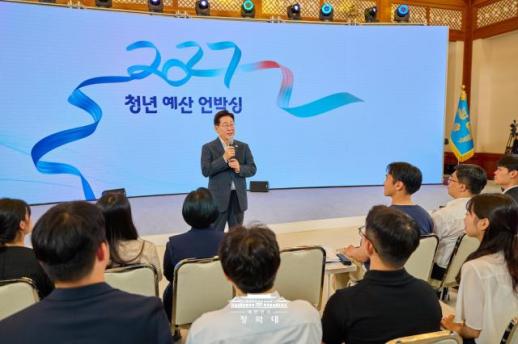 Cabinet reshuffle turns into political headache for South Korea's Lee SEOUL, September 04 (AJP) - The roster for President Lee Jae Myung’s 2.0 reshuffle has generated a rumpus before the nominees even arrive at South Korea’s legislative confirmation hearings, denting the already fragile popularity of the presidency. According to the latest Gallup Korea poll, 40 percent of respondents positively assessed Lee’s job performance, while 51 percent gave a negative assessment. The positive rating was the lowest since he took office, while the negative rating was the highest. Among respondents in their 20s, the negative rating stood at 51 percent, more than double the positive rating of 25 percent. The proportion of respondents who cited “personnel appointments” as a reason for their negative assessment rose ninefold to 9 percent from 1 percent in the previous survey. On Sunday, the presidential office named six Cabinet replacements, including new finance and land ministers through promotions from within the government, as Lee seeks to strengthen his economic team and tackle housing issues. What has struck the loudest discord, however, are the political recruits. Rep. Kim Seung-won of the Democratic Party (DP), the nominee for justice minister, is under fire over his previous support for withdrawing indictments against President Lee Jae Myung and a separate lobbying allegation. The withdrawal of indictments refers to prosecutors dropping indictments in criminal cases in which Lee had been charged. The five criminal trials involving Lee were suspended after he took office, but the indictments themselves remain in place. Kim served as a co-chair when a group of 105 DP lawmakers advocating withdrawal of the indictments was launched in February. “The justice minister does not have direct authority over the matter, and I have no intention of directing it through the prosecutor general,” Kim said Thursday when a reporter asked about his position on withdrawing the indictments as he arrived for the first time at his confirmation hearing preparation office in Jongno-gu, Seoul. “The fact that Kim cares more about the president than the people alone makes him unqualified to serve as justice minister,” Rep. Kim Tae Kyu of the People Power Party (PPP) said. “If he becomes minister, he will be nothing more than President Lee Jae Myung’s personal lawyer,” Kim said. “If Kim becomes justice minister and pushes ahead with withdrawing the indictments, there will be an enormous storm,” Yoo Seong-min, a former four-term lawmaker and former floor leader of the PPP, said. Kim Seung-won is separately facing renewed scrutiny over allegations that he lobbied the Ministry of Food and Drug Safety. Kim told reporters Monday that prosecutors had conducted an intensive three-year investigation starting in 2021 involving more than 10 prosecutors but ultimately decided not to indict him over the allegations. “I believe that was unfair because I should have been cleared of wrongdoing, but prosecutors instead suspended the indictment based on some of my actions,” Kim said. “I filed a constitutional complaint last year, and I understand that the Constitutional Court is currently reviewing the case,” Kim said. “I want to clear up the injustice to the very end.” “The allegations involving improper solicitation of the Ministry of Food and Drug Safety are decisive evidence that Kim is unfit to serve as minister,” Rep. Kim Tae Kyu of the PPP said. DP lawmakers defended Kim. "The person accused of making the solicitation was acquitted at trial, so it is clear that Kim was also innocent of any wrongdoing," said Rep. Jin Seong-joon, a three-term lawmaker of the DP. Another major controversy surrounds Yong Hye-in, a Basic Income Party lawmaker nominated for gender equality and family minister. Questions have centered on her decision to retain her proportional-representation National Assembly seat while serving as minister and accusations that her party has effectively been run as a “family-run party.” Yong was elected twice in a row as a proportional-representation lawmaker, in 2020 and 2024, through Democratic Party-led proportional coalition parties. She has said she will not give up her parliamentary seat even if she becomes minister, drawing criticism from the opposition and some in the broader progressive bloc that the arrangement would amount to excessive preferential treatment. Yong’s spouse worked as a party official for the Basic Income Party and received one of the highest salaries among party employees, while questions were also raised over the party awarding policy research projects to insiders. “Yong was never qualified to be a lawmaker in the first place, and her two terms as a proportional-representation lawmaker through tricks involving satellite parties and party withdrawals, along with running the party like a family business, make her a symbol of the hypocrisy and greed of the left,” Yoo Seong-min said. “As a member of the Gender Equality and Family Committee, I have been looking into nominee Yong Hye-in, and there are many problems,” Rep. Kim Gunn of the PPP said. Explaining why she intends to retain her proportional-representation seat, Yong cited the fact that she is the Basic Income Party’s only incumbent lawmaker. “If I, the party’s only National Assembly member, resign, the Basic Income Party would face the difficulty of becoming a party without parliamentary representation,” Yong said Monday. She also said she was aware of concerns that retaining her parliamentary seat could be seen as a privilege or benefit and asked for understanding of the circumstances facing a minor party. In response to criticism that she had received preferential treatment by being elected twice through Democratic Party-led proportional coalition parties, she said she had already informed her party that she would not run for a proportional-representation seat in the next general election. The party pushed back against the “family-run party” controversy surrounding Yong’s spouse. “This criticism goes beyond the minimum bounds of propriety,” Moon Mi-jung, acting leader of the Basic Income Party, said, explaining that Yong’s spouse had played a major role in the party’s growth since its founding. Jin also defended Yong against criticism over her parliamentary seat and her husband’s role in the party. "As for Yong, there is no particular reason why the issue of lawmakers concurrently seving as Cabinet ministers should be judged more strictly simply because she is a proportional-representation lawmaker," Jin said. "The controversy over the party being a 'family-run party' is also not difficult to understand, given the Basic Income Party is a small party with limited organizational capacity and resources and that both Yong and her husband has long been dedicated activist," Jin added. The other four nominees have attracted less controversy. Lee Hyoung Il, first vice minister of finance and economy, was nominated to serve as deputy prime minister and minister of economy and finance; Kang Shin-chul, former deputy commander of the South Korea-U.S. Combined Forces Command (CFC), was nominated for defense minister; Rep. Lee So-young of the DP was nominated for minister of SMEs and startups; and Hong Jee-sun, vice minister for transport, was nominated for minister of land, infrastructure and transport. “This Cabinet reshuffle has three key features: youth, expertise and stronger reformist-progressive solidarity,” DP leader Kim Min-seok said Sunday at the opening of Rep. Kim Yoon’s constituency office in Gyeonggi Province. “Taken together, they fit perfectly with our party’s push to broaden its focus on people’s livelihoods and pragmatism.” The opposition criticized not only individual nominees but also the overall scale and substance of the reshuffle. “At a time when President Lee Jae Myung’s approval rating is falling, a reshuffle that replaces only six ministers shows no sense of crisis and is complacent,” Yoo said. “Rep. Lee So-young is a perspicacious lawmaker, while the other three nominees are simply bureaucrats who are good at following the president’s orders,” Yoo added. “This reshuffle is disappointing,” five-term lawmaker Rep. Yoon Sang-hyun said. “The economic achievements of this administration were made possible by businesses, but the government mistakenly believes they were achieved through its own ability.” “The Lee Jae Myung administration mistook good fortune for competence, became arrogant and has now been hit by falling approval ratings,” Yoon said. Kim Seung-won and Yong Hye-in could not be reached for separate comments. Whether Kim and Yong make it through the confirmation hearings will depend partly on how convincingly they answer the allegations surrounding them. The political cost, however, may already be showing. Gallup’s latest survey suggests personnel appointments are becoming a more visible source of dissatisfaction with Lee, turning a reshuffle intended to refresh his government into another test for a presidency already struggling to hold public support. AJP Takeaways - President Lee Jae Myung’s approval rating fell to a record-low 40 percent as controversy over his second Cabinet reshuffle intensified. Gallup Korea found negative assessments rose to 51 percent, with personnel appointments increasingly cited as a reason for dissatisfaction. - Justice minister nominee Kim Seung-won and gender equality and family minister nominee Yong Hye-in have emerged as the most contentious picks. Kim faces criticism over past lobbying-related allegations and support for dropping indictments against Lee, while Yong has drawn scrutiny over proportional representation and claims that the Basic Income Party operates as a “family party.” - Democratic Party lawmakers have defended both nominees, arguing the allegations do not disqualify them from office. Jin Seong-joon said Kim should not be considered culpable after the person involved in the solicitation case was acquitted, while describing criticism of Yong as excessive given the Basic Income Party’s small size and limited resources. 2026-09-04 17:33:23
 -
 Lee, Macron to hold summit next week in France SEOUL, September 04 (AJP) -South Korean President Lee Jae Myung will make a state visit to France from Sunday to Wednesday as Seoul and Paris mark the 140th anniversary of diplomatic relations this year, Cheong Wa Dae said Friday. Lee will travel at the invitation of French President Emmanuel Macron, completing reciprocal state visits just five months after Macron came to Seoul in April, National Security Adviser Wi Sung-lac said at a briefing. The trip will begin in southern France, where Lee and Macron will co-chair the Lumière Summit, an international gathering on the future of film and moving images, in Saint-Paul-de-Vence on Monday. The summit will bring together political leaders, policymakers and film-industry figures to discuss challenges facing the global screen industry, including artificial intelligence, financing and competition from new digital platforms. Seoul said Lee's role as co-chair would also provide an opportunity to promote Korean content and expand opportunities for Korean companies in European and global markets. Lee will then begin the bilateral portion of his state visit in Paris on Tuesday, laying a wreath at the Tomb of the Unknown Soldier at the Arc de Triomphe before attending an official welcoming ceremony. He and Macron will hold a private luncheon at the Élysée Palace, followed by an expanded summit involving delegations from both countries. The talks are expected to focus on security and economic cooperation as well as advanced industries including artificial intelligence, space, nuclear energy and biotechnology. Lee will also attend a South Korea-France business roundtable involving about 20 companies from the two countries before joining a state dinner hosted by Macron and his wife at the Élysée Palace. On Wednesday, Lee is scheduled to meet French National Assembly President Yaël Braun-Pivet, attend a luncheon with members of the Korean community in France and meet OECD Secretary-General Mathias Cormann. Wi said the visit is intended to deepen the Global Strategic Partnership established when Macron visited Seoul in April and broaden South Korea's diplomatic engagement with Europe. France is the European Union's second-largest economy, a permanent member of the U.N. Security Council and this year's G7 chair. Seoul also sees room for greater cooperation between companies and research institutions in AI, space, nuclear energy and biotechnology, as well as expanded exchanges involving young people and scientists. Lee and Macron first met on the sidelines of the G7 summit in Canada in June 2025, shortly after Lee took office, and met again at the G20 summit in Johannesburg in November. Macron made a state visit to Seoul in April this year, when the two leaders agreed to elevate bilateral ties to a Global Strategic Partnership. They also met during the G7 summit in Évian, France, in June. AJP Takeaways - President Lee Jae Myung will make a state visit to France from Sunday to Wednesday as South Korea and France celebrate 140 years of diplomatic relations in 2026. - Lee and French President Emmanuel Macron will co-chair the Lumière Summit before holding bilateral talks in Paris focused on AI, space, nuclear energy and biotechnology. - The visit builds on increasingly close Lee-Macron ties, including Macron’s April state visit to Seoul, when the two countries agreed to elevate relations to a Global Strategic Partnership. 2026-09-04 13:10:01