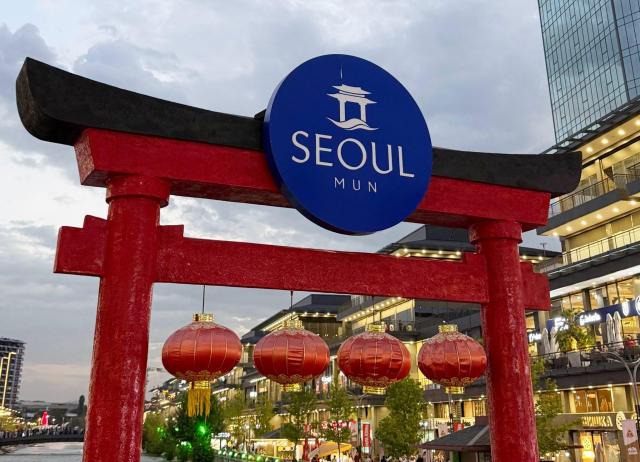
SEOUL, September 08 (AJP) -Seoul Mun, a popular Korean Wave attraction in Uzbekistan's capital Tashkent, has come under scrutiny over a prominent structure resembling a Japanese shrine gate that critics say could confuse visitors about the site's Korean identity.
Seo Kyoung-duk, a professor at Sungshin Women's University and a prominent campaigner for promoting Korean culture and history overseas, raised concerns Tuesday over the large structure resembling a Japanese torii, a traditional gate marking the entrance to a Shinto shrine.
“I believe it is a serious mistake to have installed a large structure resembling a Japanese torii at Seoul Mun, a Korean Wave landmark in Uzbekistan, and even decorated it with Chinese-style red lanterns,” Seo told AJP.
“The area has become a popular tourist attraction not only for Tashkent residents but also for many foreign visitors,” he said.
“Above all, many foreign visitors regard the structure as a symbol of Seoul Mun and take photos and videos of it,” Seo said.
“I believe it should be replaced immediately to avoid creating cultural confusion.”
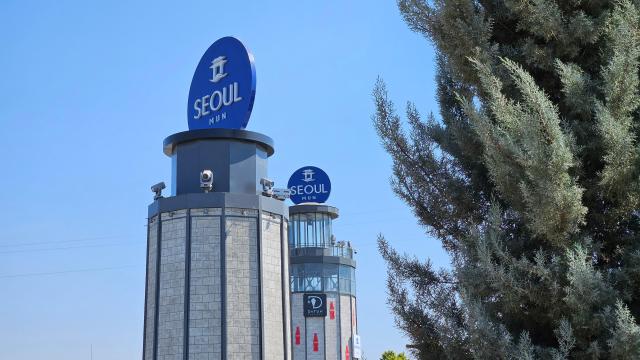
Seoul Mun has emerged as one of Tashkent’s most visible Korea-themed attractions and a symbol of growing cultural ties between South Korea and Uzbekistan. Built along a canal in the Uzbek capital, the sprawling commercial and cultural complex features architectural elements inspired by traditional Korean palace gates, tiled roofs and taegeuk motifs.
The waterfront district is lined with restaurants, cafes and shops, including Korean restaurants, K-beauty stores and Korean-style dessert cafes. Its promenades, bridges and musical fountains draw crowds, particularly in the evening, with Korean pop music also featured in fountain performances.
The popularity of Seoul Mun comes amid a broader rise of Korean culture in Uzbekistan, where K-pop, Korean dramas, cosmetics, food and the Korean language have developed a sizable following. A recent study of K-drama viewers in Uzbekistan found that viewers generally had favorable and familiar perceptions of Korean dramas and that such exposure contributed to a more positive image of South Korea and greater interest in visiting the country.
The cultural connection is also underpinned by Uzbekistan’s large ethnic Korean community. The country is home to roughly 180,000 ethnic Koreans, known as Koryo-saram, one of the largest Korean diaspora communities in the former Soviet Union.
Uzbekistan received about 11.7 million foreign visitors classified as tourists in 2025, up 46.8 percent from 2024, according to the country’s National Statistics Committee. Some 46,300 visitors came from South Korea.
AJP Takeaways
- Korean culture campaigner Seo Kyoung-duk criticized a torii-like structure decorated with Chinese-style lanterns at Seoul Mun, a Korea-themed landmark in Tashkent.
- Seo told AJP the structure could confuse foreign visitors about Korean cultural identity and called for its immediate replacement.
- The dispute comes as Korean culture gains popularity in Uzbekistan, home to roughly 180,000 Koryo-saram and a growing number of foreign tourists.
Copyright ⓒ Aju Press All rights reserved.