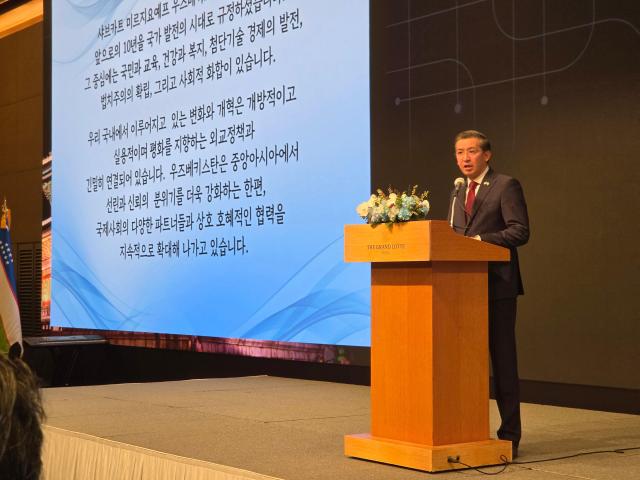
SEOUL, October 21 (AJP) - Uzbekistan's ambassador to South Korea invited Korean companies on Wednesday to help build New Tashkent, a planned new district of the Uzbek capital, and described the young Uzbeks studying and working in South Korea as the people who will hold the two countries together.
"In particular, we warmly welcome Korean companies in expanding the New Tashkent Project together," Ambassador Alisher Abdusalomov said at a Seoul reception marking the 35th anniversary of Uzbekistan's independence.
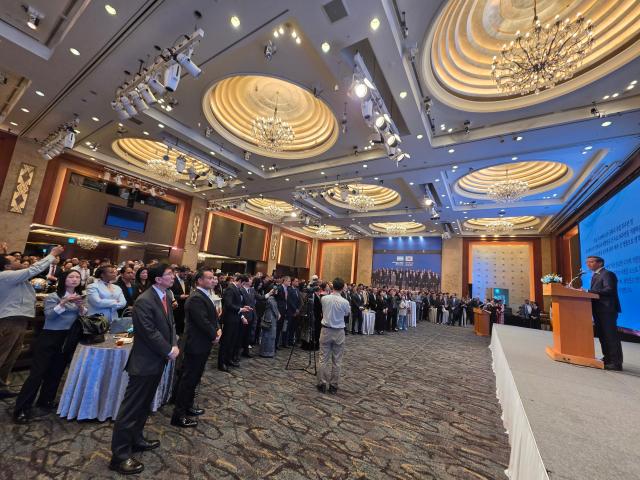
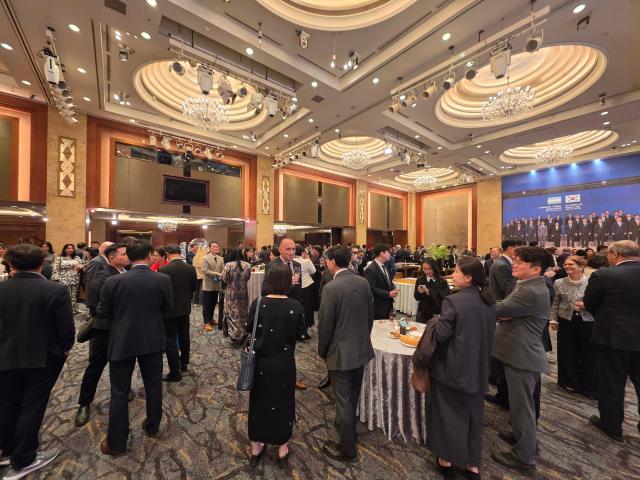
About 250 diplomats, scholars and business executives attended the event in the Crystal Ballroom of Lotte Hotel Seoul, which also marked 34 years of diplomatic relations between the two countries. Uzbekistan's Independence Day is Sept. 1. The embassy held its Seoul celebration on Oct. 21.
The Uzbek government is building New Tashkent on the eastern edge of the capital as a new administrative and business center, planned to house about 2.5 million people by 2045.
Abdusalomov placed the project alongside other openings he wants South Korean companies to pursue.
"Huge opportunities are opening up in modern infrastructure," he said, naming high-speed rail with Hyundai Rotem, airport modernization with Incheon International Airport Corporation, critical minerals and smart urban development.
His pitch follows a month of deals. President Shavkat Mirziyoyev made a state visit to Seoul from Sept. 13 to 16 and held talks with President Lee Jae Myung.
According to the ambassador, the two sides signed agreements worth about $12 billion at the Uzbekistan-Korea Business Forum during the visit. Another $8 billion in projects is backed by the Export-Import Bank of Korea, the state lender that finances South Korean companies' overseas deals.
Korean investment in Uzbekistan has passed $8 billion, and more than 700 South Korean companies operate there, he said.
On Sept. 16, President Mirziyoyev also joined President Lee and the leaders of Kazakhstan, Kyrgyzstan, Tajikistan and Turkmenistan for the first Korea-Central Asia Summit. The six leaders adopted the Seoul Declaration and agreed to meet every two years.
Abdusalomov said the declaration "laid out a clear roadmap for long-term collaboration in energy, transport, digital technology, green growth, and education."
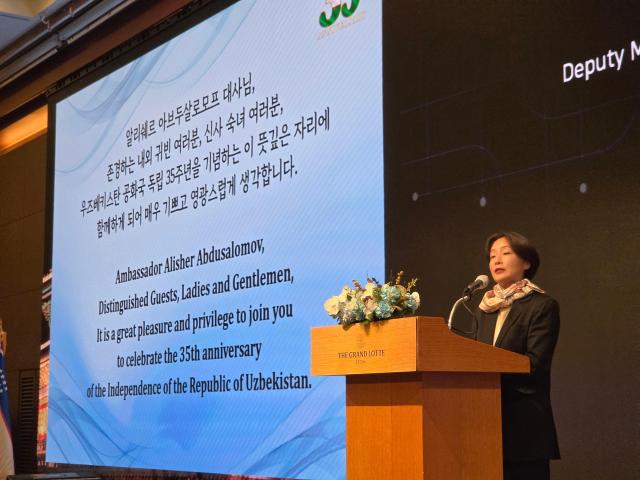
Chung Eui-hae, South Korea's deputy minister for political affairs, told the gathering the summit had "opened a meaningful new horizon for cooperation between Korea and Uzbekistan."
Chung, who has visited Tashkent, credited President Mirziyoyev's "bold reforms and openness" for the country's "high and impressive economic growth."
She said the two countries are moving beyond energy, transport and infrastructure into "critical mineral supply chains, healthcare, artificial intelligence, and advanced technology."
"By combining Korea's leading technology and experience with Uzbekistan's rich potential and dynamism, I am confident that we can create new growth opportunities and build a future of common prosperity," Chung said.
Abdusalomov then turned from money to people.
"At the end of the day, our partnership is really about people," he said.
More than 107,000 Uzbek citizens live and work in South Korea, including 22,000 students, according to the ambassador.
"These young people are our future professionals and the most genuine living bridge connecting our two societies," he said.
Abdusalomov said Uzbekistan wants to expand university exchanges, joint research and professional training with South Korea, especially in AI, digital technology, medicine and aviation.
The ties also run through an older generation. About 180,000 ethnic Koreans, known as Koryo-saram or Koryo-in, live in Uzbekistan. They descend from about 172,000 Koreans whom Soviet leader Joseph Stalin deported from the Russian Far East to Central Asia in 1937.
Chung said the diaspora, "warmly embraced and cared for by Uzbekistan," remains "a valuable bridge connecting our two nations."
Next year marks the 90th anniversary of that resettlement, which Abdusalomov said recalls "the solidarity, compassion, and kindness that helped Uzbekistan become a true home for generations of Koryo-in."
For Seoul, 2027 also brings 35 years of diplomatic relations.
"Next year carries special significance as we celebrate both the 35th anniversary of our diplomatic ties, as well as the 90th anniversary of the ethnic Korean settlement in Central Asia," Chung said.
She pledged that South Korea "will always remain a reliable partner, walking side by side with Uzbekistan toward development and shared prosperity over the next 35 years and beyond."
Chung ended her remarks by proposing a toast to the peace and prosperity of Uzbekistan and to lasting friendship between the two countries.
Copyright ⓒ Aju Press All rights reserved.