

Journalist
Lee Jung-woo이정우
cannes2030@ajupress.com
ReporterMinistry of Unification & North Korea, Politics, Foreign Affairs
I studied philosophy in college, and sociology and journalism in graduate school. I cover North Korea, South Korean politics, foreign affairs and films. I enjoy Nordic cinema, Indian cuisine and Japanese detective novels. I have a cat and like bright, acidic coffee.
"Were it left to me to decide whether we should have a government without newspapers, or newspapers without a government, I should not hesitate a moment to prefer the latter."
"Were it left to me to decide whether we should have a government without newspapers, or newspapers without a government, I should not hesitate a moment to prefer the latter."
Latest by Lee Jung-woo
-
 Korea to launch smaller prosecution service SEOUL, September 22 (AJP) -South Korea will launch a new prosecution service next month with around 80 to 85 percent of the country’s statutory prosecutor quota, in line with its diminished role. The Justice Ministry said Tuesday that the Cabinet approved revised decrees governing the organization and staffing of the new Prosecution Service, which will replace the current prosecution system on Oct. 2. The statutory quota currently stands at 2,292 prosecutors. The new agency is expected to begin operations with around 1,900 by not filling the vacancies created by prosecutors transferring to the newly established Serious Crimes Investigation Agency or leaving the service. The ministry also plans to seek a revision to the law governing the prosecutor quota to permanently reduce the number of prosecutors. The final scale of the reduction will be determined after an outside review of staffing and workloads following the new agency’s launch. Staffing cuts will be much steeper among investigators and other employees. The ministry plans to eliminate 2,048 criminal justice positions, equivalent to 68.6 percent of the current 2,986 positions, along with 477 other general-service posts. The total reduction in general-service personnel will reach 2,525, or about 30 percent. The restructuring is part of President Lee Jae Myung’s overhaul of South Korea’s prosecution system, built around separating investigative and prosecutorial powers. The existing prosecution office, established in 1948, will be abolished on Oct. 2 and replaced by two bodies. The Prosecution Service under the Justice Ministry will focus on indictments and prosecutions, while the Serious Crimes Investigation Agency under the Ministry of the Interior and Safety will take over investigations of major crimes. The government has described the overhaul as an effort to institutionalize the separation of investigation and prosecution and create checks between the two functions. The Prosecution Service Act passed the National Assembly on March 20, followed by the Serious Crimes Investigation Agency Act on March 21. Both laws were promulgated on March 24 and are scheduled to take effect on Oct. 2. AJP Takeaways - South Korea’s new Prosecution Agency will launch Oct. 2 with prosecutors capped at about 80–85 percent of the current statutory quota. - The Justice Ministry plans to further reduce the number of prosecutors after the agency begins operations, marking a significant downsizing of the prosecution system. - The revised organizational plan also cuts investigative personnel, abolishes three deputy prosecutor-level posts and eight departments, and renames several controversial units. 2026-09-22 14:56:10
 -
 Seoul ready to transfer $2.2 billion this month for first U.S. investment project SEOUL, September 22 (AJP) - South Korea is ready to transfer $2.2 billion this month to help fund a gas-fired power project in Texas once U.S. President Donald Trump gives the go-ahead, the Korean industry minister said Tuesday. The $22.3 billion project would be the first under Seoul’s $200 billion investment pledge to Washington. The Ministry of Trade, Industry and Resources briefed the National Assembly’s trade and industry committee on three candidate projects under a special act authorizing South Korea’s broader $350 billion U.S. investment commitment, which includes $150 billion earmarked for shipbuilding. The candidates are a combined-cycle gas-fired power plant in Encinal in South Texas, eight large nuclear reactors in the United States and a liquefied natural gas project in Alaska. Industry Minister Kim Jung-kwan told lawmakers that the government would proceed first with the Texas venture while further reviewing the other two proposals against the interests of both countries. The Encinal project is expected to have about 6.3 gigawatts of generating capacity. “The first project has been decided, while the second and third projects are still under review,” a member of the parliamentary committee told AJP. The nuclear proposal calls for eight reactors, including two that could use South Korea’s APR1400 design and six based on Westinghouse’s AP1000 technology. Seoul is also negotiating with Washington over acquiring a 5 percent to 10 percent stake in Westinghouse, according to the ministry’s briefing. The Alaska LNG project faces greater uncertainty. “The Alaska LNG project lacks commercial rationality,” a ruling Democratic Party lawmaker on the committee told AJP. The government has stressed that projects must meet commercial viability standards. Alaska LNG has faced questions over its massive infrastructure costs and expected returns. The government told lawmakers that the first transfer under the investment program was expected to total $2.2 billion and take place this month, according to parliamentary sources. Seoul and Washington have been discussing a framework for transferring funds following the conclusion of their agreement. Officials have said payment could be made within 45 days of a U.S. request. Seoul also reaffirmed that annual investments would be capped at $20 billion, with no further investment required once the cumulative total reaches $200 billion. The Trump administration has expressed frustration with the pace of Seoul’s implementation of its investment pledges. Japan has a similar investment arrangement with Washington in return for tariff relief, committing to a $550 billion framework for strategic investment and financing in the United States. Projects worth up to $109 billion have been officially announced under Japan’s framework. Initial and phased co-financing agreements totaling about $6.9 billion have been signed for five projects, according to publicly available data. 2026-09-22 13:23:34
 -
 Lee is without two key aides at Cheong Wa Dae SEOUL, September 21 (AJP) - South Korean President Lee Jae Myung is facing mounting speculation over replacements for two of his most senior aides after presidential chief of staff Kang Hoon-sik offered his resignation Monday, less than three weeks after the departure of his policy chief. Kang tendered his resignation to Lee on Monday morning, according to Cheong Wa Dae. A presidential official said the move was intended to take “comprehensive responsibility” for assisting the president amid falling approval ratings and a series of controversies surrounding recent personnel nominations. Lee has yet to decide whether to accept the resignation. Ruling Democratic Party lawmakers Han Jun-ho and Cheon Jun-ho are among the names being discussed as possible successors to Kang. “Rep. Han Jun-ho and Rep. Cheon Jun-ho are being mentioned as possible successors to Chief of Staff Kang Hoon-sik. If Rep. Cheon takes the chief of staff post, I think he would be the best fit,” a DP lawmaker told AJP. Attention is also turning to the vacant post of presidential chief of staff for policy, which has remained unfilled since Kim Yong-beom resigned on Sept. 1. Kim’s resignation was accepted by Lee the same day. Names being floated for the policy post include Industry Minister Kim Jung-kwan, Fair Trade Commission Chairman Ju Byung-gi, Financial Services Commission Chairman Lee Eog-weon and former DP lawmaker Hong Sung-kook. Hong, however, told AJP that he has never received an offer to serve as presidential policy chief. If Kang’s resignation is accepted, two of the three top presidential staff positions — chief of staff and chief of staff for policy — would be vacant, leaving only the national security adviser in place. Lee left Monday for a seven-day trip to the United States and Mexico, and a decision on Kang’s resignation and subsequent appointments could come after his return. AJP Takeaways - Presidential chief of staff Kang Hoon-sik’s resignation has triggered speculation over DP lawmakers Han Jun-ho and Cheon Jun-ho as possible successors. - A DP lawmaker told AJP that Cheon would be the “best fit” for the chief of staff position. - Kim Jung-kwan, Ju Byung-gi, Lee Eog-weon and Hong Sung-kook are being discussed for policy chief, but Hong told AJP he has received no offer for the post. 2026-09-21 17:43:11
 -
 Devil's in the details at Trump-Xi summit SEOUL, September 21 (AJP) - U.S. President Donald Trump and Chinese President Xi Jinping have a crowded table for their summit this week, ranging from trade, artificial intelligence and critical minerals to Taiwan and the wars in the Middle East and Ukraine. Both leaders also arrive with domestic and geopolitical pressures of their own, raising the stakes for a meeting where the easier task may be producing headline agreements and the harder one making them stick. The immediate test is whether the world's two largest economies can preserve the fragile trade truce struck in South Korea last October and due to expire Nov. 10. Trade, Taiwan, AI, critical minerals, fentanyl and the Iran war are among the issues expected to feature when Trump and Xi meet in Washington on Sept. 24. Plenty of tit-for-tat bargaining is expected. Washington is seeking progress on Chinese purchases of Boeing aircraft and U.S. agricultural products, while Beijing wants relief from technology restrictions and more predictable treatment of Chinese companies. U.S. officials are also pressing for better access to critical minerals. Meaningful breakthroughs extending beyond bilateral interests are far less certain. "Both leaders are likely to go small," David Fields, associate director of the Center for East Asian Studies at the University of Wisconsin-Madison, told AJP. "Banality with lots of flags will probably be the order of the day." Richard K. Betts, professor emeritus of international and public affairs at Columbia University and former director of national security studies at the Council on Foreign Relations, also cautioned against attaching too much significance to the frequency of leader-level meetings. "I don't believe there is great significance in the frequency of meetings," Betts said, adding that "what is discussed and what agreements may result" can matter. Dániel Balázs, senior research analyst at the Institute for China-Europe Studies, placed greater weight on the value of sustained contact. "High-level, sustained interaction demonstrates that both major powers value open channels of communication," Balázs told AJP. "Direct, face-to-face engagements allow leaders to clarify strategic intent, manage areas of friction, and inject a basic level of predictability in the relationship," he said. A long history of Trump-Xi summitry Xi's trip will be his first to the United States since November 2023, when he attended the Asia-Pacific Economic Cooperation summit in San Francisco and met then-President Joe Biden at the Filoli estate outside the city. Trump and Xi already have an extensive history of face-to-face diplomacy. They first met at Trump's Mar-a-Lago resort in Florida in April 2017 and again three months later on the sidelines of the Group of 20 summit in Hamburg. Trump traveled to Beijing for a state visit in November 2017, followed by meetings at the G20 summits in Buenos Aires in December 2018 and Osaka in June 2019. Those meetings repeatedly eased immediate tensions without removing the disputes driving the broader rivalry. Mar-a-Lago produced a 100-day economic action plan and new high-level dialogue mechanisms. Buenos Aires temporarily halted an escalating tariff confrontation and opened a 90-day negotiating period, while Osaka restarted stalled trade talks and postponed another round of U.S. tariffs. Summit diplomacy resumed after Trump returned to office. Trump and Xi met in Busan, South Korea, on Oct. 30, 2025, after months of tariff escalation. Washington reduced some trade pressure while Beijing agreed to measures involving fentanyl precursors, agricultural purchases and rare-earth export controls. The tariff suspension was eventually extended through Nov. 10, 2026. Trump then traveled to Beijing in May. The visit produced plans for additional economic engagement and announcements involving Chinese purchases of U.S. goods, including a proposed order for 200 Boeing aircraft, but many details remained unresolved. Reuters described the trip as heavy on pageantry and short on major policy breakthroughs. Thursday's summit therefore adds another chapter to a recurring pattern of leader-level diplomacy lowering the temperature while leaving the structural competition intact. Fields pointed to China's commitment to purchase 200 Boeing aircraft as an example of the difficulty of converting summit announcements into completed transactions. China agreed in May to buy 200 Boeing aircraft, but Boeing Chief Executive Kelly Ortberg played down expectations this month that a major order would be completed around the September summit. Trade remains the most immediately negotiable part of the agenda. "Probably trade will be the most important issue to the Trump administration, followed by Taiwan," Betts said. Balázs also expects Washington to seek tangible commercial commitments. "Following the extreme tariff escalation and subsequent pause last year, the underlying economic priority for Washington remains narrowing the trade gap and securing purchase commitments," he said. Potential commitments include aircraft, agricultural products and energy, while technology restrictions and supply chains remain central sources of friction. "China's dominant position in the processing and supply of rare earth elements gives it significant leverage in global manufacturing," Balázs said. Washington is seeking more reliable access to the materials after repeated export restrictions disrupted global supply chains, while Beijing continues to use licensing and export controls as leverage in trade negotiations. AI joins the bargaining table Artificial intelligence has emerged as another potentially important area of discussion. "While there is growing interest from technical experts and industry leaders in establishing bilateral guardrails around AI security, formal mechanisms remain difficult to achieve," Balázs said. "The heavy securitization of artificial intelligence makes binding agreements unlikely in the short term, though basic exploratory dialogues may still be pursued." U.S. Treasury Secretary Scott Bessent and Chinese Vice Premier He Lifeng discussed AI in New York ahead of the summit, with Washington proposing a notification mechanism for major AI safety incidents and continued dialogue on areas including critical infrastructure and weaponization. Beijing has not publicly committed to the proposal. Betts also placed AI near the top of the agenda, while questioning how far the Trump administration would be prepared to go on regulation. Competition over AI has intensified alongside disputes over semiconductor export controls, access to advanced chips and national-security risks. Taiwan poses a harder test Taiwan remains one of the most politically sensitive issues in the relationship. Beijing claims the democratically governed island as Chinese territory and has not renounced the use of force to bring it under its control. Washington maintains unofficial relations with Taipei and supplies defensive arms under longstanding U.S. policy. The issue has proved resistant to the transactional bargaining that can produce agreements on tariffs or commodity purchases. Trump's May visit to Beijing produced no major shift on Taiwan, with Washington maintaining its longstanding strategic ambiguity and Xi warning against mishandling the issue. Iran and the war in Ukraine could also enter the discussions because of Beijing's ties with Tehran and Moscow. Balázs expects both conflicts to feature but cautioned against anticipating major joint initiatives. The talks are "unlikely to be highly publicized and even less likely to produce formal joint agreements," he said. "It took a trade war, a pandemic, dozens of incidents of Chinese coercion, and nearly two decades of growing distrust between the US and China to get us to where we are today," Fields said. "This cannot be undone in one, or even many summits." Betts took a similarly cautious view of what summitry itself can accomplish. "The meetings are more significant as symbols of efforts to keep competition under control," he said. Domestic policy decisions in Washington and Beijing will ultimately carry greater weight, Betts said. "What matters is what decisions each of the two governments make internally," he said. "Negotiations are more likely to refine or clarify changes in policy than to produce them as a result of formal diplomatic dialogue." Balázs sees value even in an outcome that falls short of a major agreement. "Even without resolving core ideological or structural differences, this level of engagement signals directionality to global markets and third parties, allowing international actors to adjust their policies and mitigate global economic instability," he said. What South Korea should watch The consequences will reach well beyond Washington and Beijing, particularly for export-dependent economies such as South Korea that maintain deep economic ties with both powers. South Korean companies are exposed to U.S.-China competition across semiconductors, batteries, critical minerals and supply chains. Large purchasing agreements between Washington and Beijing could also redirect trade flows without explicitly targeting Korean companies. "Third parties need to focus on structural implications rather than just headline diplomacy," Balázs said. Greater U.S.-China economic and technological separation could leave third countries under stronger pressure to align with one side in sensitive industries, he said, while a more stable bilateral relationship would create greater room to engage both. Thursday's summit may ultimately be judged by narrower tests. Markets and U.S. allies will be watching whether the trade truce is extended, whether China provides more predictable access to critical minerals, whether aircraft and agricultural commitments move toward implementation, whether AI talks acquire a durable framework and whether either government adjusts its language on Taiwan. The existing tariff suspension is scheduled to run until Nov. 10. A comprehensive bargain remains difficult while Washington and Beijing disagree over technology, security and regional order. Keeping those disputes from repeatedly escalating into crises may prove the more attainable measure of success. The flags and handshakes will come on Thursday. The devil will emerge afterward, in whether either government carries out what was agreed. AJP Takeaways - Trump and Xi enter Thursday’s Washington summit with a broad agenda spanning trade, AI, critical minerals, Taiwan and global conflicts, but experts expect limited, transactional agreements rather than a sweeping reset. - Trade remains the most immediately negotiable issue, with Washington seeking Chinese purchases of aircraft and agricultural goods and more reliable access to critical minerals, while Beijing wants relief from technology restrictions. - The summit’s significance will depend less on headline announcements than on implementation, including whether the trade truce is extended, commercial commitments are fulfilled and both sides keep broader strategic competition from escalating. 2026-09-21 17:31:36
 -
 Lee embarks on weeklong trip to US, Mexico SEOUL, September 21 (AJP) - South Korean President Lee Jae Myung is set to leave for the U.S. and Mexico on Monday for a weeklong trip highlighted by a U.N. General Assembly address and a summit with Mexican President Claudia Sheinbaum. At a press briefing at Chong Wa Dae in central Seoul, National Security Adviser Wi Sung-lac said Lee will deliver an address at the U.N. General Assembly in New York on Tuesday afternoon, outlining his administration's vision for peaceful coexistence on the Korean Peninsula as well as proposals for U.N. reform and South Korea's role in addressing global challenges. The 81st General Assembly's general debate opens Tuesday and runs through Sept. 28. Lee is also scheduled to meet U.N. Secretary-General António Guterres and seek contacts with leaders from the United States, Australia and other countries on the sidelines of the gathering. "We plan to hold separate contacts in various formats with leaders of major countries, including the United States and Australia," Wi said. "Through these contacts, we aim to continue close exchanges between leaders and discuss ways to cooperate to advance our national interests." Attention will be focused on whether Lee meets U.S. President Donald Trump. Any encounter would come as Seoul and Washington remain in negotiations over implementation of South Korea's US$350 billion investment package in the U.S., while the two countries have also been discussing Seoul's role in maintaining freedom of navigation in the Strait of Hormuz. Lee will also attend a business forum in New York the following day, where he is expected to promote South Korea's artificial intelligence (AI)-related policies, capital-market reforms and investment environment to business and financial leaders. Later in the day, Lee will head to Mexico City for a state visit at the invitation of President Claudia Sheinbaum. The two leaders will hold one-on-one and expanded summit talks on Thursday, followed by the exchange of a slew of memorandums of understanding (MOUs), a luncheon and a joint press announcement. The visit will mark the first state visit to Mexico by a South Korean president since former President Lee Myung-bak visited in 2010. Seoul plans to seek deeper cooperation with Mexico in trade, investment and supply chains as well as energy, critical minerals, AI, aerospace and defense. Mexico is South Korea's largest trading partner in Latin America. Bilateral trade totaled about $20.6 billion in 2025, with South Korea exporting $12.1 billion and importing $8.5 billion, according to the Foreign Ministry. More than 500 South Korean companies operate in Mexico, while Seoul has also sought to restart negotiations on a bilateral free trade agreement. Lee is scheduled to leave Mexico on Saturday and return home on Sunday. 2026-09-21 14:27:17
 -
 South Korea taps Latin America for defense exports as Lee heads to Mexico SEOUL, September 21 (AJP) - South Korea is stepping up its push into Latin America's defense market as President Lee Jae Myung embarks on a state visit to Mexico this week, where expanding defense cooperation is expected to feature in talks with President Claudia Sheinbaum amid Mexico's military modernization drive. The strategy was highlighted at a public-private seminar on expanding defense exports to Latin America held on Monday at the National Assembly Members' Office Building in Seoul, hosted by the office of lawmaker Min Hong-chul and organized by the Korea Defense Industry Association. The push reflects Seoul's effort to diversify a defense export portfolio that expanded rapidly through major European deals following Russia's invasion of Ukraine. Latin America presents a different market: many governments face aging military equipment and limited procurement budgets while seeking technology transfers, domestic production and industrial development alongside new equipment. Peru has become the clearest testing ground for that model. Korea Aerospace Industries and Peru jointly produced 20 KT-1P trainer aircraft under a government-to-government contract signed in 2012. Four were built in Korea and 16 were produced in Peru with state-run aviation company SEMAN, alongside technology transfer and training. Cooperation has since expanded into naval and ground systems. HD Hyundai Heavy Industries signed a 640.6 billion won (US$460 million at the time) deal in 2024 with Peru's state-owned SIMA shipyard to jointly build four naval vessels - a frigate, an offshore patrol vessel and two landing ships - in Peru. The two sides later signed an agreement in December 2025 laying the groundwork for joint development and eventual local production of submarines. Peru has also pursued cooperation with Hyundai Rotem on K2 tanks and K808 wheeled armored vehicles. A strategic agreement signed in December 2025 laid out plans for their future acquisition and for greater participation by Peru's domestic defense industry. Kim Tae-gon, director general for international cooperation at the Defense Acquisition Program Administration, told the seminar that Latin America sits at the center of efforts to diversify both Korea's export destinations and product portfolio. "Defense exports are evolving beyond weapons sales into strategic partnerships that jointly design a road map for the partner country's defense-industry self-reliance," Kim said. He said Seoul's approach would include financing tailored to buyers with tight annual budgets, donations of retired military equipment linked to follow-on cooperation, support for local industrial capacity and closer government-to-government engagement. Min similarly said cooperation among government, industry and lawmakers would be critical if Korean companies are to establish a lasting presence in the region. "Cooperation among the private sector, government and political community is what the globalization of our defense industry should look like," Min said, adding that Korea should develop a stronger legal framework for defense-industry contracts. Industry officials said localization would be central to that expansion. HD Hyundai Heavy Industries Executive Vice President Song Woon-sung said the company's Peru project has exposed shortages of skilled workers in areas including design, welding, painting and electrical work. The shipbuilder is proposing a training center backed by Korean official development assistance to develop a local workforce and supplier base, turning the current shipbuilding program into a longer-term industrial partnership. KAI Executive Vice President Kim Jae-hong said the company hopes to build on the KT-1P program to sell FA-50 light combat aircraft in Peru and elsewhere in Latin America. He called for government-backed financing and G2G arrangements, saying countries such as Peru and Colombia have strong modernization demand but limited procurement budgets. Hyundai Rotem Executive Vice President Seo Jun-mo likewise said Latin American buyers tend to emphasize cost efficiency, financing and equipment capable of operating across mountains, jungles, deserts and poor road networks. He said Korean exporters would increasingly need to combine equipment sales with local industrial cooperation and government support. The regional push is already moving beyond Peru. During a Korea-Brazil summit in Brasilia on July 27, the two governments agreed to launch a bilateral defense industry joint committee in the second half of 2026 and pursue broader defense-industrial cooperation. 2026-09-21 14:16:14
 -
 Samsung Electronics union shifts to semiconductor-only membership SEOUL, September 19 (AJP) - Samsung Electronics’ largest labor union has voted overwhelmingly to restrict membership to employees in its semiconductor division, effectively splitting the organization along the company’s chip and consumer-electronics businesses after months of disputes over performance bonuses and bargaining strategy. The Samsung Electronics chapter of the Samsung Group United Union said Saturday that 27,618 of 28,680 members who voted, or 96.3 percent, approved a rule change limiting membership to employees of the Device Solutions, or DS, division, which oversees the company’s semiconductor operations. Turnout was 55.9 percent among 51,350 eligible voters. The change means employees in the Device eXperience, or DX, division, which includes Samsung’s smartphones, televisions and home appliances businesses, are expected to leave the union. The organization had previously represented workers from both divisions. Members also approved no-confidence motions against two DX-affiliated union officials. Vice Chairwoman Lee Song-yi’s removal received 95.7 percent support, while 96.2 percent backed the removal of Gwangju branch chief Lee Won-il. The union had accused the two of leaking information about transactions between union Chairman Choi Seung-ho and a company run by his father-in-law and of discussing efforts to remove Choi to prevent the DS-centered restructuring. The split follows months of internal friction stemming from Samsung’s 2026 wage negotiations. A deal approved by union members in May introduced a special performance bonus for semiconductor employees funded with 10.5 percent of the DS division’s business performance, while employees in the DX division stood to receive far less under the compensation structure. The agreement passed with 73.7 percent support and headed off a planned strike. The dispute subsequently widened into a disagreement over how Samsung’s unions should bargain with management. In August, the union said it would not form a joint bargaining group for the 2027 negotiations and would instead prepare demands focused on working conditions in the DS division. “Given the differences in business performance and working conditions between divisions, demands for the 2027 negotiations will inevitably have to reflect the circumstances of each division,” the union said at the time. AJP Takeaways - Samsung Electronics’ largest union voted 96.3 percent to limit membership to semiconductor workers. - The restructuring follows months of conflict over sharply different performance bonuses for DS and DX employees. - The union plans to pursue DS-focused bargaining rather than joint negotiations in 2027. 2026-09-19 17:18:54
 -
 Korea's Lee eyes youth policy body amid weak young support SEOUL, September 19 (AJP) - South Korean President Lee Jae Myung said Saturday that his administration is considering creating a dedicated body for youth policy, as his approval rating among South Koreans aged 18 to 29 has fallen to 18.6 percent. “We are considering whether we should create an organization dedicated to youth issues,” Lee said at a Youth Day ceremony at Cheong Wa Dae's State Guest House in Seoul. Lee said difficulties facing younger generations went beyond the interests of a particular demographic and posed a broader challenge to South Korea's ability to sustain growth and development. “The Prime Minister's Office is thinking about this, and so is Cheong Wa Dae,” Lee said, adding that the government was seeking policies that would respond more directly to conditions young people face. Lee also acknowledged a generational gap between senior policymakers and younger South Koreans. Referring to officials with significant policymaking authority, he said they were often “far removed from the problem” because they belonged to older generations. “We thought about how to bridge this gap and decided to give younger generations opportunities,” Lee said. He added, however, that finding candidates for senior positions could be difficult when experience and career credentials were taken into account. “I was once young, too, and I have family members who are young,” Lee said. “Let us work together so that young people can have hope.” The remarks come amid a sharp decline in Lee's support among younger voters. A Realmeter survey conducted Sept. 7 to 11 among 2,515 adults found his approval rating among respondents aged 18 to 29 at 18.6 percent, down 10.2 percentage points from the previous week. Support stood at 19.6 percent among men in their 20s and 17.6 percent among women in their 20s. Lee's overall approval rating stood at 33.8 percent, down 3.6 percentage points and marking a ninth consecutive weekly decline. The administration had already begun reviewing changes to youth policy before Saturday's remarks. At an Aug. 14 meeting with youth policy experts, Lee said young people today had substantially fewer opportunities than earlier generations and called for government programs to be designed from the perspective of those receiving them. AJP Takeaways - Lee is considering a dedicated government body to coordinate youth policy. - His approval among 18-to-29-year-olds fell to 18.6 percent in a recent poll. - Lee acknowledged a generational gap between senior policymakers and younger Koreans. 2026-09-19 16:22:20
 -
 Samsung joins $231 million bet on Dutch AI chips SEOUL, September 19 (AJP) - Samsung has co-led a $231 million funding round in Dutch semiconductor startup Euclyd, backing a young company developing an artificial intelligence chip system with an architecture different from Nvidia’s dominant graphics processing units. Euclyd said the Series A financing totaled more than €200 million and was co-led by Samsung, Somerset Capital Partners, the EQT-managed Scaleup Europe Fund and Innovation Industries. Denmark’s EIFO, imec.xpand, the Brabant Development Agency and Quadri also participated. Founded in 2024 by Bernardo Kastrup and Atul Sinha in Eindhoven, the Netherlands, Euclyd is focusing on AI inference — the process in which a trained AI model responds to requests — rather than primarily on training models. Its planned platform combines programmable computing, processor-memory co-design and data-center systems in an effort to lower energy consumption and computing costs. “Samsung can help us in more ways than money,” Kastrup told CNBC. “They are one of the biggest memory manufacturers in the world.” He said Samsung also brings extensive engineering expertise, knowledge of computing systems and supply chains, as well as a large global network. Samsung Electronics Senior Vice President Dede Goldschmidt, who heads the Samsung Semiconductor Innovation Center, said in Euclyd’s announcement that improving the efficiency and scalability of AI infrastructure would be critical as the technology develops. Euclyd’s technology has yet to be demonstrated at scale in commercial deployments. The company plans to begin rolling out physical chip systems in 2028 and aims to serve thousands of enterprise customers by 2030. It is pursuing both sales of hardware and rack systems for companies running AI on their own infrastructure and licensing of its technology to other chip developers. Former ASML President and CEO Peter Wennink has also joined Euclyd as chairman of its board, giving the two-year-old startup a prominent figure from Europe’s semiconductor industry as it prepares for commercial deployment. AJP Takeaways - Samsung co-led Euclyd’s more than €200 million Series A funding round. - Euclyd is developing inference chips using an architecture different from GPUs. - The Dutch startup targets physical chip deployments from 2028 and thousands of customers by 2030. 2026-09-19 13:19:01
 -
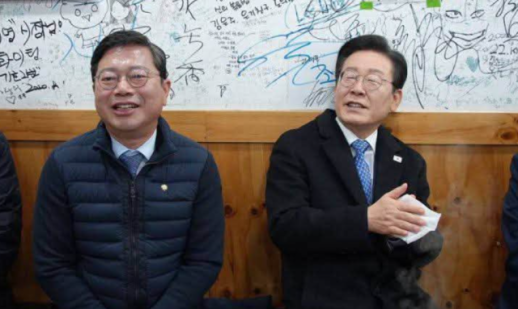 South Korea justice minister nominee Kim Seung-won resigns SEOUL, September 19 (AJP) -South Korean Justice Minister nominee Kim Seung-won withdrew Saturday, a day after President Lee Jae Myung said at a news conference that he had not reached a final decision on Kim’s appointment and would take public expectations into account. The move came as Lee’s approval rating fell to 37 percent, its lowest level since he took office. Kim, a second-term lawmaker from the ruling Democratic Party and a former judge, announced his withdrawal at the National Assembly, 20 days after Lee nominated him for the post on Aug. 30. Kim said he decided to step aside after “deep consideration,” adding that watching Lee’s news conference Friday had cemented his decision. He said he did not want to place an additional burden on a government that must focus on improving people’s livelihoods and carrying out reforms. Asked Friday whether he would appoint Kim, Lee said he had yet to reach a final conclusion and would make the decision carefully while considering “the public’s expectations.” Lee also said during the news conference that his administration would review its personnel system and listen more closely to public opinion following growing public dissatisfaction. Kim had faced scrutiny during his Sept. 15 confirmation hearing over allegations involving efforts to expedite regulatory review of a COVID-19 drug and claims that a social cooperative headed by his wife received preferential treatment. Kim denied wrongdoing and rejected the allegations against him. The National Assembly’s Legislation and Judiciary Committee adopted Kim’s confirmation hearing report Thursday with Democratic Party lawmakers alone after members of the main opposition People Power Party stayed away. The withdrawal comes as Lee faces his weakest approval numbers since taking office. A Gallup Korea survey conducted from Sept. 15 to 17 among 1,002 adults found that 37 percent approved of his job performance, down 1 percentage point from the previous week, while 56 percent disapproved, up 5 points to a record high for his presidency. The survey had a margin of error of plus or minus 3.1 percentage points at the 95 percent confidence level. Among respondents who disapproved of Lee’s performance, 20 percent cited real estate policy and 16 percent cited personnel appointments. At Friday’s news conference, Lee acknowledged public disappointment and pledged to take a more humble approach to governing and to reflect public opinion more closely in personnel and policy decisions. Kim said despite giving up the Cabinet nomination, he would continue efforts in the National Assembly to complete the government’s prosecution reform agenda. AJP Takeaways - Justice Minister nominee Kim Seung-won resigned 20 days after his nomination, saying President Lee’s Friday news conference helped cement his decision. - Lee had said he was still weighing Kim’s appointment and would consider public expectations while reviewing his administration’s personnel system. - Lee’s approval rating fell to a presidency-low 37 percent, while negative evaluations rose to 56 percent, according to Gallup Korea. 2026-09-19 11:44:23