

Record heat waves and large wildfires that have swept across Europe and the United States have now become a reality in South Korea. On July 12, the country issued its first-ever 'Extreme Heat Warning,' marking the onset of a new era of extreme summer conditions. Heat waves are no longer seasonal weather anomalies but have become a national disaster, posing new risks to energy, industry, and the economy.
The Korea Meteorological Administration issued the first Extreme Heat Warning at 10 a.m. in Pohang and Gyeongsan, where the daily perceived temperature is expected to exceed 35 degrees Celsius for more than two days, with a perceived temperature of 38 degrees Celsius or a maximum temperature of 39 degrees Celsius expected to last for at least one day. This highest-level warning was introduced this year to address 'life-threatening extreme heat' that could not be adequately conveyed through existing heat advisories.
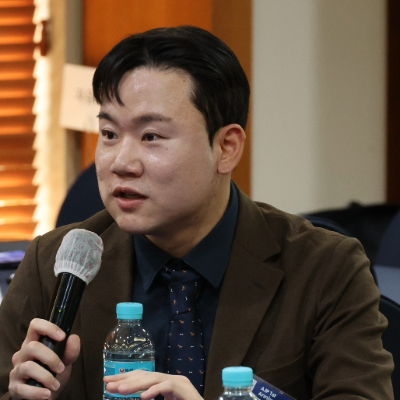
In an interview with Aju Economy at the Ministry of Foreign Affairs, Climate Change Ambassador Kwon Jong-ho assessed that while the direction for the international community to combat extreme weather is clear, the political leadership needed to drive this effort is weakening.
"The direction of the international community is clear. We are moving towards reducing carbon and protecting the Earth. Therefore, it is right for our country to take the lead in technology and innovation."
Ambassador Kwon noted that since the United States effectively withdrew from international climate negotiations, tensions between developed and developing countries have intensified.
"In the absence of the U.S., there is a vacuum in leadership to guide negotiations on the international stage. It would be beneficial if the European Union took a more leading role, but the EU is also facing economic challenges."
He mentioned that he felt this shift firsthand at a recent meeting of the UN Framework Convention on Climate Change in Bonn, Germany.
"In the past, we could reach agreements on technical issues, but now, almost every issue leads to clashes between groups."
UN climate negotiations require consensus from all parties. While the influence of the U.S. has diminished, developing countries, including China and Saudi Arabia, are participating in negotiations more actively and strategically than before.
"Developing countries are not what they used to be. Middle Eastern nations are showing negotiation power comparable to that of the EU."
Developing countries emphasize the historical responsibility of developed nations for carbon emissions during industrialization and demand climate finance and technology transfer. However, developed countries are finding it difficult to promise the same level of support due to economic slowdowns and financial burdens.
"There is a huge gap between the carbon reductions needed to achieve the 1.5-degree target and the actual commitments made by countries."
Ambassador Kwon also suggested that the ongoing conflicts in the Middle East could paradoxically accelerate the transition to renewable energy.
"This year's Middle East situation has made energy security a serious issue. Paradoxically, it has raised awareness about the need to reduce dependence on fossil fuels."
For South Korea, which imports most of its energy, climate policy and energy security are essentially aligned.
"To achieve energy independence, we must ultimately emphasize renewable energy. Our direction must be towards an electrified society and the expansion of renewable energy."
He expressed confidence that the government's goal of deploying 4.2 million electric vehicles and 300,000 hydrogen vehicles by 2030 is achievable.
"We have a competitive supply chain centered around Hyundai and Kia. The direction is correct, and compared to developed countries, our targets are not excessively high."
Ambassador Kwon predicted that the key agenda for the next international climate negotiations will be 'electrification.'
South Korea has been viewed as a country where climate action is challenging due to its high reliance on manufacturing and coal power. However, the recent coal phase-out policy has garnered international attention.
"South Korea is a manufacturing powerhouse, and few countries among manufacturing nations are as proactive in carbon reduction as we are. The announcement of our membership in the Powering Past Coal Alliance surprised the international community significantly."
He emphasized that carbon reduction should be seen not as a cost but as a new growth driver.
"If the international community is moving towards reducing carbon, it is right for us to take the lead in technology and innovation."
Climate policy is now intertwined with trade policy. The European Union has begun implementing the Carbon Border Adjustment Mechanism (CBAM) this year, and similar systems are being prepared in the UK and other countries.
Ambassador Kwon expressed concern that applying different standards in each country could increase the burden on businesses.
"Companies are already making efforts to reduce carbon from an ESG perspective. However, if each country enforces different methods, it could hinder private climate action. It could become a 'stumbling block' rather than a 'building block.'"
He proposed that future climate and trade norms should adhere to three principles: non-discrimination, consistency, and compatibility.
The absence of the U.S. is also changing China's role. South Korea and China recently resumed their climate change cooperation joint committee for the first time in seven years.
"With the U.S. absent from negotiations, the competition between the U.S. and China is not the focus. There is significant room for cooperation with China in areas such as reduction, trade, and adaptation."
South Korea's Environmental Integrity Group (EIG) plays a role in proposing compromises between developed and developing countries.
"South Korea must also propose more alternatives in the future."
Ambassador Kwon stated that climate negotiations are ultimately a form of diplomacy.
"You must read the other party's red lines. You cannot reach an agreement by only asserting what you want."
He shared a saying among diplomats.
"If you win a negotiation 100 to 0, you are a fool. You should win about 60 to 40 so that the other side can return to their country and explain the results."
However, he expressed concern that the international community is increasingly leaning towards confrontation rather than compromise.
Since becoming the climate envoy, he has been using public transportation instead of a personal vehicle.
"I practice BMW: Bus, Metro, Walk."
As record heat waves in Europe and South Korea's first Extreme Heat Warning illustrate the climate crisis as a current disaster rather than a future warning, Ambassador Kwon reiterated the need for South Korea to lead industrial and energy transitions rather than waiting for international consensus.
"The direction the world is heading is clear. Therefore, South Korea must take the lead in technology and innovation."
* This article has been translated by AI.
Copyright ⓒ Aju Press All rights reserved.