SEOUL, February 27 (AJP) - At a moment when the Korean Wave appears once again near its global crest — with artists climbing international charts and anticipation building ahead of BTS’s March 21 return at Gwanghwamun — a quieter, less comfortable current has begun to surface in one of Hallyu’s most enduring strongholds: Southeast Asia.
On Monday, an X user posted a terse declaration of disillusionment.
“I used to really like Korea. But what happened yesterday was too much. I’m no longer interested in this country. I even canceled my ticket and hotel for next month,” the user wrote, adding the hashtag #SEAbling.
The post offered no elaboration or any ties to the upcoming BTS event.
Attached was a stark image: a South Korean flag laid on the ground, stepped on by sneakers.
The image traveled quickly. The word did, too.
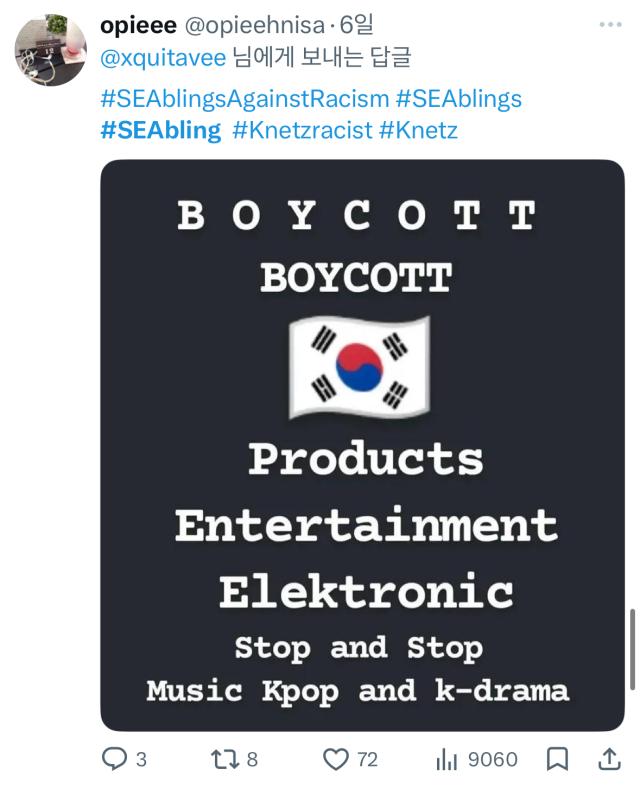
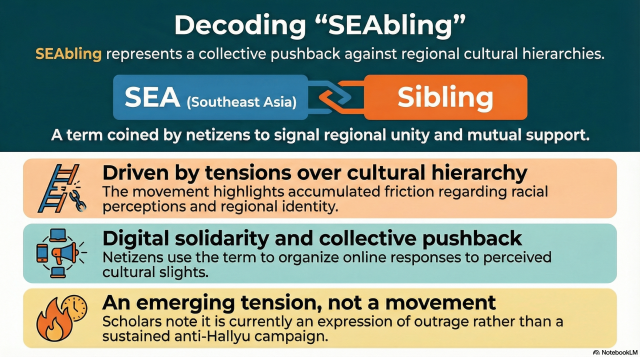
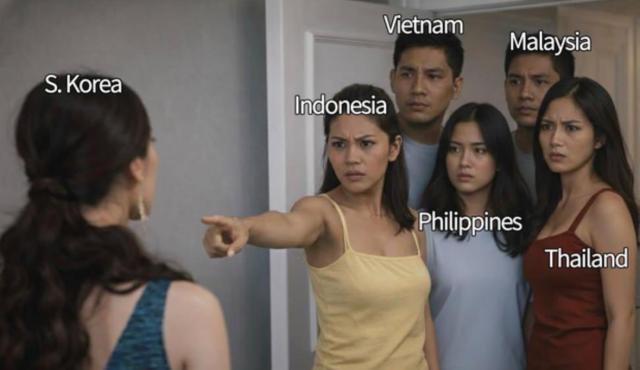
“SEAbling” — a portmanteau of “SEA” (Southeast Asia) and “sibling” — has surfaced across regional online communities in recent weeks, signaling solidarity among some Southeast Asian netizens who say they are pushing back against what they perceive as condescension or disrespect from Korean fans and internet users.
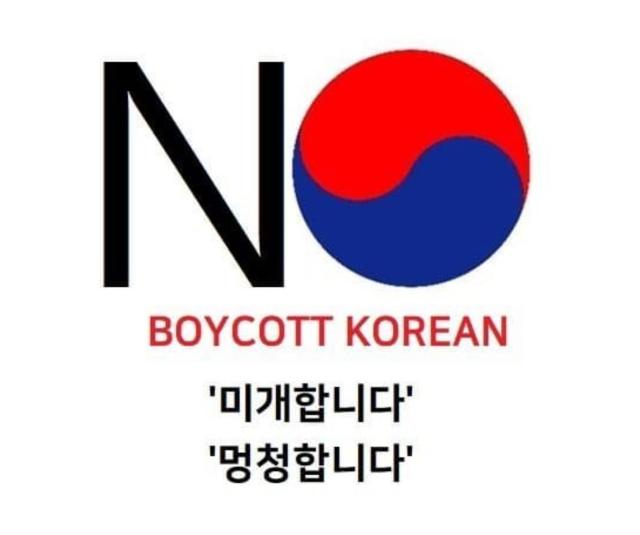
In some corners, calls for boycotts of Korean brands and cultural content have followed.
Whether this marks the beginning of a sustained backlash, however, remains an open question.
The spark, according to regional media reports including Singapore’s The Straits Times, appears to have been an incident at a January 31 concert by South Korean band DAY6 in Kuala Lumpur. A Korean fan was stopped by venue staff for allegedly attempting to use a prohibited telephoto camera. Video of the confrontation circulated widely online.
What began as a dispute over concert rules quickly escalated. Social media exchanges between Korean and Southeast Asian users grew heated. Some Korean users reportedly posted mocking comments about Southeast Asian fans’ appearance, culture and economic standing. In response, Southeast Asian users pointed to South Korea’s low birth rate, suicide statistics and cosmetic surgery culture.
The exchange revealed less about the initial incident than about accumulated sensitivities.
The question, then, is whether “SEAbling” reflects a passing digital flare-up — or a deeper undercurrent.
Kim Hyung-jun, professor of cultural anthropology at Kangwon National University, cautions against viewing the controversy in isolation.
“Before 2010, anti-Hallyu sentiment was not particularly visible,” he said. “But as Hallyu succeeded on a larger scale, it became inevitable that some would feel uncomfortable about its rise. Based on related data, roughly 20 percent may hold such sentiments.”
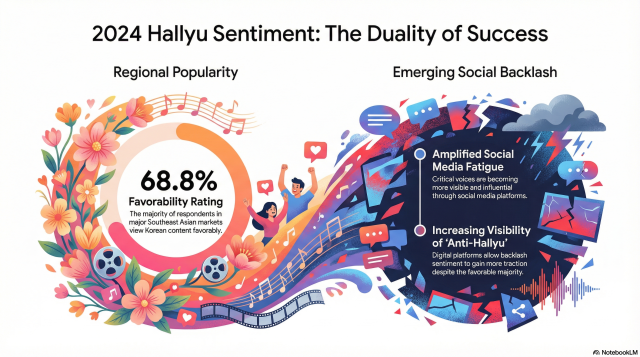
The Ministry of Culture, Sports and Tourism’s 2024 Overseas Hallyu Survey reported that 68.8 percent of respondents in major Southeast Asian markets held favorable views of Korean cultural content. The numbers suggest continued dominance rather than decline.
Yet dominance carries its own tensions.
Kim argues that those voicing dissatisfaction are not typically core Hallyu consumers.
“They are often on the periphery, observing the phenomenon rather than actively participating in it,” he said. “But they are not marginal. In some countries, these voices are more visible among university-educated and white-collar professionals who interpret Hallyu through a nationalist lens.”
In Indonesia, for example, Kim notes that some former enthusiasts have publicly distanced themselves from Korean culture, framing their disengagement almost as a personal reckoning.
“They post reflections that resemble confessions,” he said. “Others respond in solidarity — almost like narratives of recovery. Compared to the past, such sentiments are expressed more clearly and confidently.”
In this sense, the backlash may be less about music or television than about hierarchy — cultural, economic and symbolic.
The hashtag “SEAbling” suggests a unified Southeast Asian front. Kim, however, doubts that the sentiment will evolve into a sustained regional movement.
“In the past, such feelings remained largely within national boundaries,” he said. “Now, digital platforms allow sentiments that exist in varying degrees across Southeast Asia to appear simultaneous. That creates the impression of cross-border solidarity.”
But a cohesive regional identity strong enough to sustain coordinated backlash remains, in his view, still forming — if at all.
Historically, anti-Hallyu episodes have surfaced periodically in different countries, often fading as quickly as they appear.
“For now, these emotions may reflect envy,” Kim added carefully. “But they should not be dismissed. Complacency would be a mistake.”
Hyun Si-nae, professor at the Institute for Korean Studies at Inha University, situates the controversy within a broader Asian context.
“The term may be new, but discrimination toward Southeast Asians has long been an underlying issue,” she said. “What changed this time is that the issue was named — and amplified.”
Hyun suggests the debate reveals anxieties over perceived cultural hierarchy within Asia itself.
“In parts of Southeast Asia, there has historically been resentment toward larger regional powers, including China, over political and economic dominance,” she noted. “After the pandemic, the ‘Milk Tea Alliance’ demonstrated that online solidarity across borders is possible. What we are seeing now is not entirely unprecedented.”
In her reading, “SEAbling” is less an anti-Korean crusade than a symptom of unresolved regional asymmetries — economic gaps, labor migration patterns, racial perceptions and the uneasy pride of rising cultural exporters.
“At its core, this reflects a gap in mutual understanding,” she said. “Like many collective backlashes, its shape will continue to change.”
The Korean Wave, by most measurable standards, remains formidable. Southeast Asia continues to be one of its most enthusiastic markets. BTS’s return alone underscores the scale of global anticipation.
Whether “SEAbling” fades as another fleeting hashtag or signals a more sustained recalibration of regional sentiment will depend less on fandom than on something more enduring: how Korea navigates its growing cultural power — and how it listens when that power is questioned.

Copyright ⓒ Aju Press All rights reserved.