
Journalist

LEE JEE WON
jeewonlee@ajunews.com
-
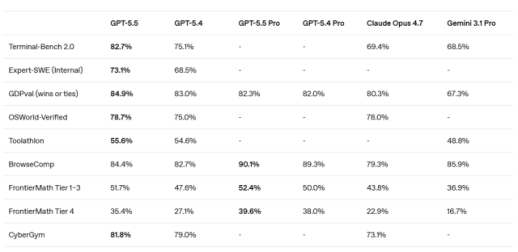 OpenAI Unveils GPT-5.5, Pushing Agent-Style AI and ‘Super App’ Strategy OpenAI has unveiled its latest artificial intelligence model, GPT-5.5, sharpening competition in generative AI and signaling a shift beyond incremental performance gains toward agent-style AI and a broader “super app” strategy. According to OpenAI on April 23 (local time), GPT-5.5 features markedly improved reasoning and autonomy. The company said capabilities for complex work such as coding, research and data analysis have advanced, with a key focus on “agent-style” task execution that can interpret a user’s intent and map out steps to solve a problem. OpenAI described GPT-5.5 as a core engine for its “AI super app” approach. The model can recognize what is on a screen and carry out computer actions such as clicking and typing, moving across tools in ways the company says bring it closer to collaborating with humans. OpenAI said this would push ChatGPT beyond a chat window into an integrated platform combining work, search and productivity tools. As an example, the company said that if a user asks it to analyze recent market trends, write a report and send it by email, GPT-5.5 can open a browser to gather information, draft the document and operate an email client to complete the task. The company framed this as a move from providing answers to acting as an executor of work. OpenAI also said it strengthened security guardrails to match the model’s capabilities, judging GPT-5.5 to fall into a “high-risk” category because of potential misuse such as cyberattacks. It said the model underwent an unprecedented level of red-team testing, or simulated attacks. The release comes as rival Anthropic has rolled out next-generation models including “Claude Mythos” and “Opus 4.7,” intensifying competition. In a report OpenAI released, GPT-5.5 outperformed Opus 4.7 on several key benchmarks. On “GDPval,” a measure of practical task performance, GPT-5.5 scored 84.9%, about 4 percentage points higher than Opus 4.7. On “Terminal-Bench 2.0,” which evaluates system-control capability, it scored 82.7%, about 13 points higher. On CyberGym, a security-related metric, it scored 81.8%, well above a competing model’s 73.1%. However, on SWE-Bench Pro, a coding benchmark, GPT-5.5 scored 58.6%, trailing Opus 4.7’s 64.3%. OpenAI also raised concerns about possible data memorization by the competing model and said it disagreed with aspects of the evaluation approach. OpenAI said GPT-5.5 will be integrated across its major services, including ChatGPT, accelerating its push toward an “AI super app” that handles a range of tasks on a single platform. As generative AI moves from a support tool to what the company described as a “digital colleague,” OpenAI said broad changes in productivity across companies and industries are expected. At a news conference, OpenAI President Greg Brockman said, “The biggest feature of this model is that it can do more with less instruction.” He added, “Its ability to interpret incomplete or ambiguous problems on its own and decide the next steps has improved significantly.” Brockman said it was “an important advance that will form the foundation for how computers are used in the future and for large-scale agent-style computation.” * This article has been translated by AI. 2026-04-24 11:14:03
 -
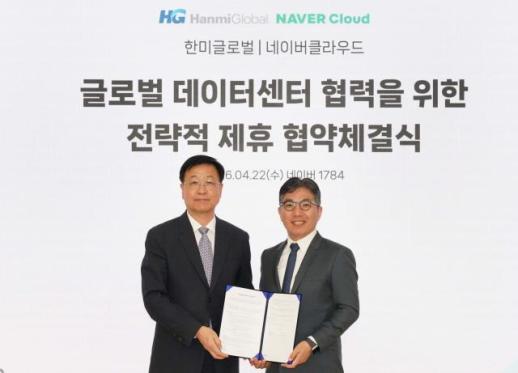 Naver Cloud, HanmiGlobal Partner to Pursue Saudi Data Center Projects 저 장 Naver Cloud and HanmiGlobal are teaming up to pursue data center opportunities in Saudi Arabia and other overseas markets. The companies said they signed a strategic memorandum of understanding on April 22 to jointly participate in large-scale data center projects. The agreement is aimed at meeting demand for digital infrastructure in the Middle East and other markets by combining cloud and AI technology with construction project management capabilities. Under the MOU, Naver Cloud will lead infrastructure technology strategy and service model design, drawing on its full-stack capabilities spanning data center construction and cloud and AI services. HanmiGlobal will handle project execution, including consulting on design and construction, schedule and cost management, and local licensing and permits in Saudi Arabia. Naver Cloud has expanded digital and AI cooperation in Saudi Arabia through “Naver Innovation,” a joint venture with the National Housing Co. (NHC), including work on digital twin development and a map-based super app. The company said the new partnership will extend that effort into infrastructure to strengthen its response to local digital transformation demand. HanmiGlobal has built experience in the region since entering the Middle East market in 2007, completing more than 50 projects, the company said. “Through establishing a local corporation and cooperating with key institutions, we have secured a foundation for execution,” Naver Cloud CEO Kim Yu-won said. “We will actively respond to demand for building digital infrastructure in the Middle East and emerging markets.” * This article has been translated by AI. 2026-04-24 09:13:53
 -
 NCSoft CEO Kim Taek-jin says insight is key in AI era, urges games built on instinctive fun NCSoft CEO Kim Taek-jin told newly hired employees that “insight” will be a core competitive edge in the age of artificial intelligence. NCSoft said it held a “Conversation with the CEO” event on April 23 at its Pangyo R&D center in Seongnam, Gyeonggi province, where Kim and this year’s new hires discussed competitiveness in the AI era and the direction of game development. “As AI technology advances rapidly, the human role moves further into more essential areas,” Kim said. “To stay competitive in the AI era, you need the insight to see through the essence and meaning of the work you are responsible for.” On game development, Kim stressed what he called “instinctive fun.” “The most ideal game delivers pure fun that is hard to explain in words,” he said. “Beyond logical explanations, we must create fun that stimulates users’ instincts.” Kim also urged new hires to grow quickly. “The new employees who were here 10 years ago are now at the center of the company,” he said. “I hope you grow even faster and lead NCSoft to the next stage.” NCSoft said it has used the “Conversation with the CEO” onboarding program since introducing open recruitment in 2006 to share the company’s philosophy and vision. 2026-04-24 09:00:11
 -
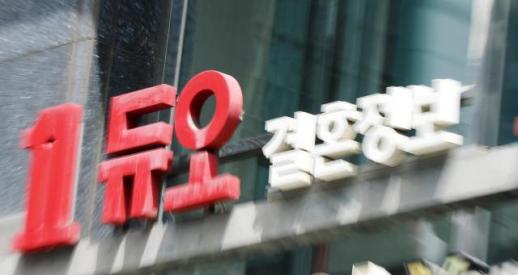 South Korea Fines Duo and Two Others After Data Leaks Expose Hundreds of Thousands South Korea’s privacy watchdog said it imposed a combined 4.7882 billion won (about $47.9 billion won) in administrative fines and 17.4 million won in penalties on three businesses, including matchmaking firm Duo Information Co., for violating personal data protection rules. The Personal Information Protection Commission said it made the decision at its seventh plenary meeting on the 23rd, also ordering corrective measures and public disclosure. Key violations included large-scale data leaks and the collection and storage of resident registration numbers without a legal basis. The biggest breach involved Duo. Investigators said a hacker in January infected a Duo employee’s work PC with malware, obtained database server account credentials and accessed the member database, leaking personal information of 427,464 full members. The leaked data included basic details such as names, dates of birth and contact information, as well as sensitive profile information that could reveal personal characteristics, including education, workplace, religion and marital history. Because matchmaking services handle broad, life-related details, authorities said the risk of secondary harm is high. The commission said Duo lacked basic access controls, such as blocking access after repeated authentication failures, and used weak encryption methods for resident registration numbers and passwords. It also collected and stored resident registration numbers without legal grounds and failed to destroy about 290,000 records after retention periods expired. Authorities also faulted Duo for delaying its report of the breach for more than 72 hours after recognizing the leak and for not notifying users. The commission fined Duo 1.197 billion won and imposed 13.2 million won in penalties, ordering it to notify affected individuals and prepare measures to prevent a recurrence. Two other companies were cited for inadequate safeguards: call center outsourcing firm KS Korea Employment Information and Geumreung Park Cemetery. KS Korea Employment Information was fined in the 3.5 billion won range after an administrator account was stolen, leading to the leak of personal data on about 40,000 employees and applicants and 50,000 personnel documents. Geumreung Park Cemetery was fined 54.2 million won after a website vulnerability exposed personal data of about 5,000 people. “Resident registration numbers must be handled only in limited cases where there is a legal basis,” the commission said, urging businesses to collect only the minimum necessary data and thoroughly implement security measures such as encryption. * This article has been translated by AI. 2026-04-23 20:39:21
 -
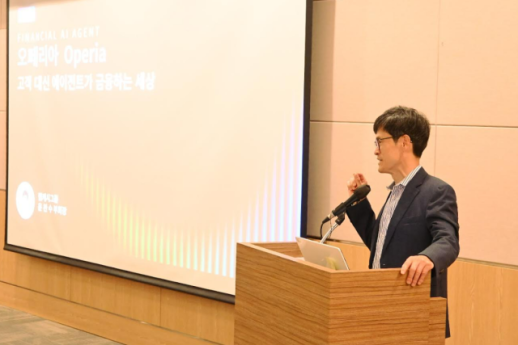 Webcash to Shift From Cash-Management Tools to Financial AI Agents First-generation South Korean fintech firm Webcash said it will move beyond basic cash-management software and reposition itself as a specialist in “financial AI agents” that can carry out banking tasks directly. Webcash on April 23 held the “Financial AI Agent Conference 2026” at FKI Tower in Seoul’s Yeouido district and outlined a commercialization strategy centered on its core technology, OPERIA. OPERIA is an “intelligent connector” that links general-purpose AI with financial institutions’ relational databases. It converts natural-language requests into standard query language, or SQL, then extracts data and executes tasks within banks’ information and core account systems, the company said. Webcash said the technology can be deployed while keeping existing systems in place, avoiding data migration and helping maintain security and stability. It also said internal tests showed about 99% accuracy. Based on OPERIA, Webcash said it will pursue three agent businesses: cash management, AI banking and management information. It plans to convert major products to an agent-based model in the first half of the year and apply natural-language AI to internet banking to enable “agent banking” that performs tasks such as inquiries, transfers and filings. At the event, Webcash introduced “Cash Management Agent V2” and disclosed use cases for key services including BranchQ. It said it is expanding deployments centered on NH NongHyup Bank and strengthening functions that analyze and forecast corporate cash flows. Webcash said it is conducting an agent-banking proof of concept with NH NongHyup Bank and running a management-information agent pilot with Gwangju Bank, expanding cooperation across the financial sector. Kang Nam-hoon, a vice representative director, said BranchQ has been upgraded to interpret the context of user questions and convert them to fit database structures, and that accuracy has been raised to about 99% by expanding validation data. He said the company has also adopted “context engineering,” moving away from coding-centered development to a prompt-based approach that reflects customer needs and allows faster creation and deployment of customized agents for each company. Vice Chairman Yoon said internet and mobile banking have led customers to handle tasks themselves, but the next shift will be to AI agents carrying out work based on natural-language instructions. “Adopting AI agents is not a choice but an inevitable trend,” he said.* This article has been translated by AI. 2026-04-23 14:54:20
 -
 Samsung SDS Q1 Operating Profit Falls 70.8% on One-Time Severance Charge Samsung SDS said its first-quarter operating profit fell sharply from a year earlier after it booked a one-time severance-related expense. In a regulatory filing on the 23rd, the company reported preliminary consolidated operating profit of 78.3 billion won, down 70.8% year over year. Revenue slipped 3.9% to 3.3529 trillion won. Samsung SDS said the results reflected a one-off 112 billion won retirement benefit expense tied to a change in severance calculation standards. By business, IT services revenue edged up to 1.6105 trillion won. Within that, cloud revenue rose 5.8% to 690.9 billion won, making it the largest share of IT services revenue, ahead of ITO (IT outsourcing). In cloud, the CSP business based on the Samsung Cloud Platform (SCP) grew 12% from a year earlier, supported by rising demand for public-sector AX projects, increased GPU-as-a-service (GPUaaS) use and expanded cloud network services. The managed services (MSP) business increased 4% on higher sales in finance and the public sector and stronger global partnerships. Logistics revenue fell 7.8% to 1.7424 trillion won. Sales from its digital logistics platform, Cello Square, rose more than 30%, but overall cargo volumes declined and freight rates fell, the company said. Samsung SDS forecast a recovery starting in the second quarter, citing growing public-sector demand for GPUaaS, expanding sales in financial services and wider adoption of intelligent AI services across government, which it expects to support cloud growth. Over the mid-to-long term, the company said it will accelerate a shift to an AI-centered business structure under an “AI full-stack” strategy spanning AI infrastructure, AX and AI services, and AI platforms and solutions. It plans to invest a total of 10 trillion won through 2031. Specifically, it will invest 5 trillion won in AI infrastructure to expand new facilities including the Gumi AI data center and the National AI Computing Center, and 1 trillion won to strengthen competitiveness in AX and AI services and platforms. The remaining 4 trillion won will be used for strategic mergers and acquisitions to secure new growth engines and expand globally. Separately, Samsung SDS said its data center build-and-operate (DBO) business is gaining momentum after winning a conceptual design contract for a data center project led by a major domestic asset manager.* This article has been translated by AI. 2026-04-23 13:10:07
 -
 MachinaRacks, Hyundai Motor to expand AI predictive maintenance to 1,400 factory robots · Physical AI company MachinaRacks is working with Hyundai Motor to roll out an AI solution tailored to robots on global production lines. MachinaRacks said April 23 that it is supporting Hyundai Motor’s shift to a software-defined factory (SDF) by expanding a robot-focused predictive maintenance solution to production sites in South Korea and overseas. The system is being introduced sequentially starting at the Asan plant, followed by major sites including Ulsan, Jeonju and India, with deployment planned for about 1,400 robots by the end of this year. The companies built a predictive health monitoring (PHM) system that applies deep-learning algorithms to robot motion data to forecast failures in advance. MachinaRacks said the system can detect anomalies about five days before a breakdown with accuracy above 90%, significantly reducing production-line downtime. The project stems from an eight-year partnership that began in 2018 through Hyundai Motor Group’s open innovation platform, ZER01NE. Hyundai Motor made a strategic investment in MachinaRacks at the time and has continued technical collaboration, with the latest work translating AI use into measurable results on the factory floor. The jointly developed Robot Predictive Maintenance Solution (RPMS) provides functions including drive-unit condition diagnosis, setup anomaly detection and alerts on changes in operating status. The companies said they plan to expand diagnostic items to minimize unexpected stoppages and improve maintenance efficiency. MachinaRacks said the scope has recently widened to electrification lines, including the Ulsan EV plant and Kia’s Hwaseong EV plant. A Hyundai Motor official said the company will standardize AI-based predictive maintenance across global production sites to secure process flexibility and defect-free quality and to achieve “hyper-productivity.” MachinaRacks CEO Yoon Seong-ho said Hyundai Motor has been a strategic partner and key customer since the company’s early growth. He said MachinaRacks will deepen cooperation as a trusted partner helping address manufacturing complexity and advance the SDF transition. * This article has been translated by AI. 2026-04-23 08:51:17
 -
 Samsung SDS, Google Cloud form partnership to expand AI, cloud and security push Samsung SDS has formed a strategic partnership with Google Cloud to step up its push into the artificial intelligence, cloud and security markets. Samsung SDS said it formally announced the expanded cooperation with Google Cloud at “Google Cloud Next 2026” in Las Vegas on April 23 (local time April 22). The companies plan to work mainly in generative AI and cloud services and to jointly identify new business opportunities in highly regulated, high-security industries such as the public sector and finance. A central focus is strengthening capabilities for high-security environments. Samsung SDS plans to use Google Distributed Cloud (GDC) to target industries with demanding requirements, including local data processing, regulatory compliance and ultra-low latency. The company said it aims to accelerate cloud adoption in regulated sectors such as government and finance. In AI, Samsung SDS said it is exploring ways to combine Google’s “Gemini Enterprise” with its Samsung Cloud Platform (SCP) to provide integrated agentic AI-based solutions to corporate customers, supporting companies’ AI transformation (AX). Samsung SDS also said it will expand its cloud business model by strengthening its managed service provider (MSP) business, combining Google Cloud Platform (GCP) with its own cloud and industry expertise to jointly pursue the market. The partnership also includes security cooperation. The companies plan to combine Google’s cloud security solution “Wiz” with Samsung SDS’ security and managed service capabilities to improve proactive threat response and raise cloud security levels. Ruth Sun, president of Google Cloud Korea, said, “Expanding our partnership with Samsung SDS will be a turning point for innovation in global regulated industries, based on agentic AI and sovereign cloud capabilities,” adding, “By combining our strengths, we will deliver secure and scalable next-generation enterprise intelligence.” Lee Ho-jun, executive vice president and head of Samsung SDS’ Cloud Service Business Division, said, “Through this cooperation, we will build AI and cloud environments centered on high-security and regulated industries and support companies’ AI transformation,” adding, “We will continue to expand AX innovation across a wide range of industries.”* This article has been translated by AI. 2026-04-23 08:42:18
 -
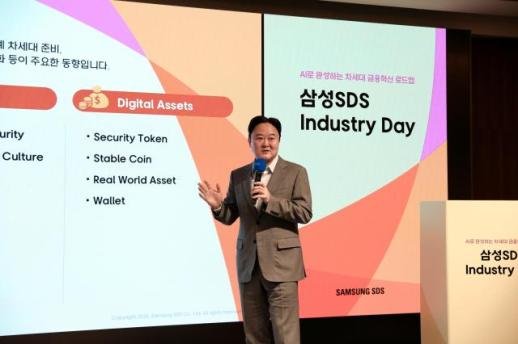 Samsung SDS touts AI coding agents to speed digital transformation in finance Samsung SDS on April 22 outlined a strategy to accelerate digital transformation in the financial sector by applying generative artificial intelligence across IT work, from coding automation to modernizing legacy systems. The company held an “Industry Day” seminar for financial clients, presenting its approach and case studies using generative AI and AI agents. Industry Day is a series that invites customers from key sectors — including finance, the public sector, manufacturing and retail, and defense — to share core solutions and real-world deployments. Samsung SDS said the session was organized as financial firms move faster to adopt AI, and it offered an execution plan aimed at advancing both business automation and IT system upgrades. The company said it has recently won projects including Woori Bank’s “AI agent banking” initiative and a mid- to long-term IT infrastructure optimization program. About 150 IT managers and decision-makers from banks, insurers and securities firms attended the event. In a keynote address, Lee Ji-hwan, head of the financial consulting team and a managing director, presented AI capabilities applicable to finance and described innovation cases, proposing a digital transformation strategy tailored to financial environments. Presentations also covered the next-generation insurance system NFC (NexFinance Core) 2.0, development automation using AI code agents, AI-based modernization of financial code, data platform buildout plans, and a collaboration model using the company’s Global Development Center, or GDC. Samsung SDS highlighted a code modernization case in which it used AI agents to convert a domestic securities firm’s C-language system to Java, positioning the approach as a way to address legacy upgrades that have been delayed by high costs and shortages of specialized staff. The company said its AI agent platform, FabriX, automates such code conversion to support system modernization. It also emphasized its GDC collaboration model, which it said operates about 5,000 personnel across China, Vietnam and India, as a way to ease IT staffing constraints and speed digital transformation. Samsung SDS said it plans to expand the series by industry — including manufacturing and distribution and services — following a public-sector seminar held in March, and to continue sharing AI-driven innovation strategies. “This seminar is a place to share AI innovation directions and execution cases that can be applied across the financial industry,” said Hwang Su-yeong, executive vice president in charge of financial services at Samsung SDS. “We will continue to support the financial industry’s digital transformation based on our technology and experience.”* This article has been translated by AI. 2026-04-22 10:16:39
 -
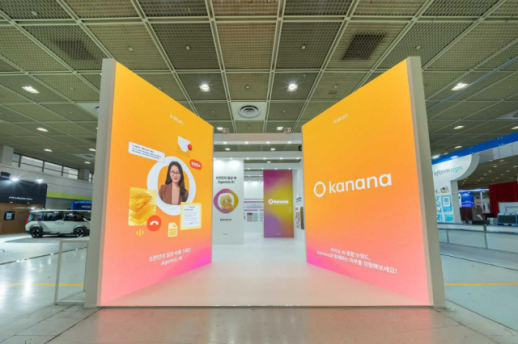 Kakao Showcases Kanana Agentic AI Services at World IT Show 2026 A Kanana agentic AI service experience zone on display at the 2026 World IT Show. Kakao is taking part in the 2026 World IT Show, highlighting agentic AI services built around its integrated AI brand, Kanana. Kakao said Tuesday it will join World IT Show 2026 under the theme, “A Day with Kanana, Agentic AI woven into the daily lives of 50 million.” Hosted by the Ministry of Science and ICT, the event runs from Tuesday through Thursday at COEX in Seoul under the slogan, “Beyond thought to action: AI moves reality.” Kakao said its exhibit is designed as an experience space where visitors can try agentic AI services tailored to everyday routines. The company said it presents, in a story-based format, how AI operates across a full day from morning to evening. The booth is divided into hands-on and video demonstration areas. In the “Kanana in KakaoTalk Experience Zone,” visitors can try features such as schedule briefings and personalized recommendations for places and gifts. The “Kanana Summarize Video Zone” introduces functions that automatically organize chat messages and call content. In the “Kanana in KakaoTalk Video Zone,” Kakao demonstrates on-device AI that understands conversation context in real time and acts after recognizing situations without a user request. The “Kakao Tools Video Zone” shows how requests are carried out through connections between Kakao services and external partner services. An “AI National Secretary Experience Zone” highlights AI use cases expanded into public services. In the final area, Kakao is also running an event using its in-house image generation model, “Kanana Collage,” to analyze visitors’ photos, generate the Kakao Friends character “Jjorudi,” and print the result on the spot. A Kakao official said the company aimed to show how AI can blend naturally into daily life through an integrated AI ecosystem linking services, platforms and technology. The official said the exhibit will offer a direct look at the direction of Kakao AI as it evolves toward agentic AI.* This article has been translated by AI. 2026-04-22 09:25:40