
Journalist

Lee Jee-won
jeewonlee@ajunews.com
-
 MachinaRacks, Hyundai Motor to expand AI predictive maintenance to 1,400 factory robots · Physical AI company MachinaRacks is working with Hyundai Motor to roll out an AI solution tailored to robots on global production lines. MachinaRacks said April 23 that it is supporting Hyundai Motor’s shift to a software-defined factory (SDF) by expanding a robot-focused predictive maintenance solution to production sites in South Korea and overseas. The system is being introduced sequentially starting at the Asan plant, followed by major sites including Ulsan, Jeonju and India, with deployment planned for about 1,400 robots by the end of this year. The companies built a predictive health monitoring (PHM) system that applies deep-learning algorithms to robot motion data to forecast failures in advance. MachinaRacks said the system can detect anomalies about five days before a breakdown with accuracy above 90%, significantly reducing production-line downtime. The project stems from an eight-year partnership that began in 2018 through Hyundai Motor Group’s open innovation platform, ZER01NE. Hyundai Motor made a strategic investment in MachinaRacks at the time and has continued technical collaboration, with the latest work translating AI use into measurable results on the factory floor. The jointly developed Robot Predictive Maintenance Solution (RPMS) provides functions including drive-unit condition diagnosis, setup anomaly detection and alerts on changes in operating status. The companies said they plan to expand diagnostic items to minimize unexpected stoppages and improve maintenance efficiency. MachinaRacks said the scope has recently widened to electrification lines, including the Ulsan EV plant and Kia’s Hwaseong EV plant. A Hyundai Motor official said the company will standardize AI-based predictive maintenance across global production sites to secure process flexibility and defect-free quality and to achieve “hyper-productivity.” MachinaRacks CEO Yoon Seong-ho said Hyundai Motor has been a strategic partner and key customer since the company’s early growth. He said MachinaRacks will deepen cooperation as a trusted partner helping address manufacturing complexity and advance the SDF transition. * This article has been translated by AI. 2026-04-23 08:51:17
 -
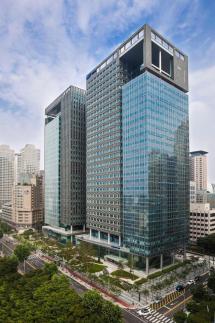 Samsung SDS, Google Cloud form partnership to expand AI, cloud and security push Samsung SDS has formed a strategic partnership with Google Cloud to step up its push into the artificial intelligence, cloud and security markets. Samsung SDS said it formally announced the expanded cooperation with Google Cloud at “Google Cloud Next 2026” in Las Vegas on April 23 (local time April 22). The companies plan to work mainly in generative AI and cloud services and to jointly identify new business opportunities in highly regulated, high-security industries such as the public sector and finance. A central focus is strengthening capabilities for high-security environments. Samsung SDS plans to use Google Distributed Cloud (GDC) to target industries with demanding requirements, including local data processing, regulatory compliance and ultra-low latency. The company said it aims to accelerate cloud adoption in regulated sectors such as government and finance. In AI, Samsung SDS said it is exploring ways to combine Google’s “Gemini Enterprise” with its Samsung Cloud Platform (SCP) to provide integrated agentic AI-based solutions to corporate customers, supporting companies’ AI transformation (AX). Samsung SDS also said it will expand its cloud business model by strengthening its managed service provider (MSP) business, combining Google Cloud Platform (GCP) with its own cloud and industry expertise to jointly pursue the market. The partnership also includes security cooperation. The companies plan to combine Google’s cloud security solution “Wiz” with Samsung SDS’ security and managed service capabilities to improve proactive threat response and raise cloud security levels. Ruth Sun, president of Google Cloud Korea, said, “Expanding our partnership with Samsung SDS will be a turning point for innovation in global regulated industries, based on agentic AI and sovereign cloud capabilities,” adding, “By combining our strengths, we will deliver secure and scalable next-generation enterprise intelligence.” Lee Ho-jun, executive vice president and head of Samsung SDS’ Cloud Service Business Division, said, “Through this cooperation, we will build AI and cloud environments centered on high-security and regulated industries and support companies’ AI transformation,” adding, “We will continue to expand AX innovation across a wide range of industries.”* This article has been translated by AI. 2026-04-23 08:42:18
 -
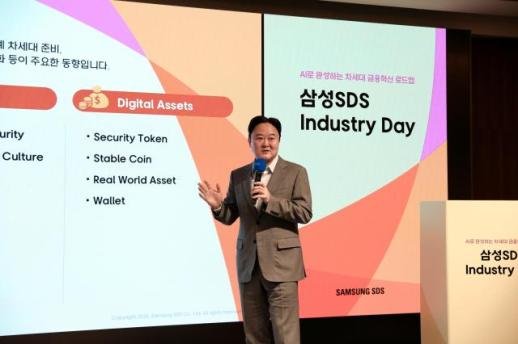 Samsung SDS touts AI coding agents to speed digital transformation in finance Samsung SDS on April 22 outlined a strategy to accelerate digital transformation in the financial sector by applying generative artificial intelligence across IT work, from coding automation to modernizing legacy systems. The company held an “Industry Day” seminar for financial clients, presenting its approach and case studies using generative AI and AI agents. Industry Day is a series that invites customers from key sectors — including finance, the public sector, manufacturing and retail, and defense — to share core solutions and real-world deployments. Samsung SDS said the session was organized as financial firms move faster to adopt AI, and it offered an execution plan aimed at advancing both business automation and IT system upgrades. The company said it has recently won projects including Woori Bank’s “AI agent banking” initiative and a mid- to long-term IT infrastructure optimization program. About 150 IT managers and decision-makers from banks, insurers and securities firms attended the event. In a keynote address, Lee Ji-hwan, head of the financial consulting team and a managing director, presented AI capabilities applicable to finance and described innovation cases, proposing a digital transformation strategy tailored to financial environments. Presentations also covered the next-generation insurance system NFC (NexFinance Core) 2.0, development automation using AI code agents, AI-based modernization of financial code, data platform buildout plans, and a collaboration model using the company’s Global Development Center, or GDC. Samsung SDS highlighted a code modernization case in which it used AI agents to convert a domestic securities firm’s C-language system to Java, positioning the approach as a way to address legacy upgrades that have been delayed by high costs and shortages of specialized staff. The company said its AI agent platform, FabriX, automates such code conversion to support system modernization. It also emphasized its GDC collaboration model, which it said operates about 5,000 personnel across China, Vietnam and India, as a way to ease IT staffing constraints and speed digital transformation. Samsung SDS said it plans to expand the series by industry — including manufacturing and distribution and services — following a public-sector seminar held in March, and to continue sharing AI-driven innovation strategies. “This seminar is a place to share AI innovation directions and execution cases that can be applied across the financial industry,” said Hwang Su-yeong, executive vice president in charge of financial services at Samsung SDS. “We will continue to support the financial industry’s digital transformation based on our technology and experience.”* This article has been translated by AI. 2026-04-22 10:16:39
 -
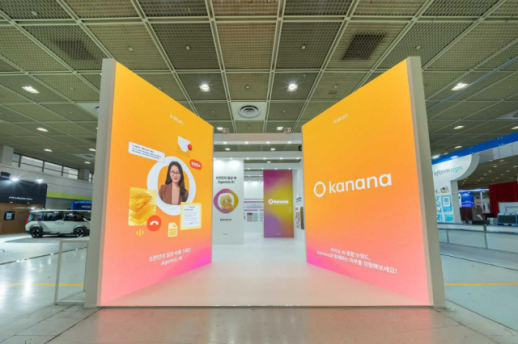 Kakao Showcases Kanana Agentic AI Services at World IT Show 2026 A Kanana agentic AI service experience zone on display at the 2026 World IT Show. Kakao is taking part in the 2026 World IT Show, highlighting agentic AI services built around its integrated AI brand, Kanana. Kakao said Tuesday it will join World IT Show 2026 under the theme, “A Day with Kanana, Agentic AI woven into the daily lives of 50 million.” Hosted by the Ministry of Science and ICT, the event runs from Tuesday through Thursday at COEX in Seoul under the slogan, “Beyond thought to action: AI moves reality.” Kakao said its exhibit is designed as an experience space where visitors can try agentic AI services tailored to everyday routines. The company said it presents, in a story-based format, how AI operates across a full day from morning to evening. The booth is divided into hands-on and video demonstration areas. In the “Kanana in KakaoTalk Experience Zone,” visitors can try features such as schedule briefings and personalized recommendations for places and gifts. The “Kanana Summarize Video Zone” introduces functions that automatically organize chat messages and call content. In the “Kanana in KakaoTalk Video Zone,” Kakao demonstrates on-device AI that understands conversation context in real time and acts after recognizing situations without a user request. The “Kakao Tools Video Zone” shows how requests are carried out through connections between Kakao services and external partner services. An “AI National Secretary Experience Zone” highlights AI use cases expanded into public services. In the final area, Kakao is also running an event using its in-house image generation model, “Kanana Collage,” to analyze visitors’ photos, generate the Kakao Friends character “Jjorudi,” and print the result on the spot. A Kakao official said the company aimed to show how AI can blend naturally into daily life through an integrated AI ecosystem linking services, platforms and technology. The official said the exhibit will offer a direct look at the direction of Kakao AI as it evolves toward agentic AI.* This article has been translated by AI. 2026-04-22 09:25:40
 -
 AWS to invest additional 7 trillion won in AI in South Korea by 2031 SEOUL, March 31 (AJP) - Amazon Web Services (AWS) will make a massive investment in South Korea over the next seven years to expand its infrastructure for artificial intelligence (AI)-related facilities and cloud services. According to industry data disclosed by the Korea Internet & Security Agency (KISA) on Tuesday, AWS plans to invest an additional 7 trillion (or US$4.6 billion) won by 2031. Combined with the 5.6 trillion won already invested, the total through 2031 would reach approximately 12.6 trillion won, making it the largest investment ever made by a global cloud computing company in the South Korean market. Citing the effectiveness and enhanced protection of its cybersecurity service launched in November last year, the company also outlined plans to fully deploy generative AI in security investigations to help companies and users adopt AI more safely. AWS emphasized that it is also strengthening its "zero-trust" approach to meet South Korean companies' security requirements, including making multifactor authentication mandatory for all users. 2026-03-31 10:08:28
 -
 Surge in Chinese travelers to South Korea boosts bilateral ties, Beijing's state daily says SEOUL, February 11 (AJP) - A surge in travel between South Korea and China is laying the groundwork for stronger bilateral ties, Beijing's state-run newspaper Global Times reported on Wednesday. Quoting South Korean Ambassador to China Roh Jae-heon, the English-language sister newspaper of the People's Daily said, "The number of Chinese visitors to South Korea is expected to exceed 6 million in 2026." The surge is "not merely a recovery in tourism statistics; it serves as a concrete indicator of the deepening economic and people-to-people ties between China and South Korea," it added. Earlier this week, Noh said the South Korean Embassy in China issued about 126,904 visas last month, up 64 percent from a year earlier. The development comes after Beijing began offering visa-free entry for South Koreans in November 2024, and Seoul followed suit with a similar program in September last year. "This trend is underpinned by natural advantages such as geographical proximity, as well as the extensive business exchanges fostered by deeply integrated industrial and supply chains. Furthermore, it reflects the continuous policy efforts of both sides to facilitate bilateral exchanges," the Global Times said. "Tourism is not merely an economic activity but also a process of cultural exchange and communication. Chinese tourists can gain a deeper understanding of South Korea through firsthand experience, while South Korean society enhances its understanding of China by hosting Chinese visitors," it wrote. Pointing to how economic growth has transformed consumers' spending habits in China, it added, "Overseas travel has become a regular lifestyle choice for many Chinese families." 2026-02-11 17:09:24
 -
 U.S. Treasury chief: No trade deal with South Korea until National Assembly approves U.S. Treasury Secretary Scott Bessent said there will be no trade agreement with South Korea until its National Assembly approves it. Bessent made the remarks in a CNBC interview on Tuesday local time when asked whether President Donald Trump was raising tariffs on South Korea because it had not approved a trade deal. His comments came as Trump has warned he could restore higher tariffs, citing delays in the National Assembly’s passage of a “special law on investment in the United States.” Bessent was seen as again urging lawmakers to act. “The signal from the Trump administration is: sign the trade agreement,” Bessent said. Asked whether South Korea would face a 25% tariff until parliamentary approval, he did not give a direct answer, saying, “I think this will help move things forward.” Earlier, Trump wrote on Truth Social on Sunday that because South Korea’s legislature had not enacted “our historic trade agreement,” he was raising reciprocal tariffs on autos, lumber, pharmaceuticals and “all other” items to 25% from 15%. But the next day, Trump said the two countries would “work out a solution,” suggesting the tariff increase could be put on hold through talks. * This article has been translated by AI. 2026-01-29 08:57:56
 -
 China suspends sanctions on Hanwha Ocean's US subsidiaries SEOUL, November 10 (AJP) - China has suspended sanctions on South Korean shipbuilder Hanwha Ocean for one year, Beijing's Ministry of Commerce said on Monday. The ministry said it decided to halt retaliatory measures against the shipbuilder's five U.S. subsidiaries, after the U.S. suspended its so-called Section 301 measures, which include punitive tariffs on Chinese maritime logistics and other goods. Earlier last month, China imposed sanctions on them to prohibit them from engaging in transactions with Chinese entities, citing their cooperation with the U.S. The affected subsidiaries were Hanwha Philly Shipyard, Hanwha Shipping, Hanwha Ocean USA International, Hanwha Shipping Holdings, and HS USA Holdings. The suspension, which temporarily lifts sanctions on them with immediate effect, came after Chinese President Xi Jinping and his U.S. counterpart Donald Trump agreed on several trade-related issues to ease tensions during a meeting on the sidelines of the Asia-Pacific Economic Cooperation (APEC) summit in South Korea's southeastern city of Gyeongju late last month. The shipbuilder expressed relief at the move, saying, "We welcome China's decision and hope the suspension will strengthen our partnerships with Chinese businesses." In particular, Hanwha Phil Shipyard is a key site for the country's "MASGA" (Make America Shipbuilding Great Again) project, which is part of a border tariff-related deal with the U.S. Despite Washington's requirement to use U.S.-made parts for security reasons, some experts had expressed worries that, if China's sanctions were to take effect, the shipbuilder could face difficulties in procuring certain components, such as ship valves, which are monopolized by Chinese companies. * This article, published by Aju Business Daily, was translated by AI and edited by AJP. 2025-11-10 15:50:44
 -
 China sanctions five Hanwha Ocean subsidiaries in US SEOUL, October 14 (AJP) - The Chinese government said on Tuesday it had imposed sanctions on five U.S.-based subsidiaries of Hanwha Ocean, a South Korean shipbuilding company, in retaliation for a U.S. investigation into China’s maritime and shipbuilding industries. The Chinese Ministry of Commerce said the move was a direct response to Washington’s Section 301 investigation, which Beijing described as “a violation of international economic and trade rules” that undermines the rights of Chinese companies. The sanctions target Hanwha Shipping LLC, Hanwha Philly Shipyard Inc., Hanwha Ocean USA International LLC, Hanwha Shipping Holdings LLC, and HS USA Holdings. The companies are now barred from conducting business or entering into joint ventures with Chinese firms, according to the ministry. Beijing accused the subsidiaries of “supporting and facilitating” U.S. policies that it said threaten China’s sovereignty and national security. Shares of Hanwha Ocean fell 5.76 percent at 103,100 won, Tuesday. Earlier in the session, it dropped as much as 9,600 won to 99,600 won after China announced sanctions against the firm. The announcement adds to escalating maritime trade tensions between the world’s two largest economies. In April, the U.S. Trade Representative imposed new port service fees on Chinese vessels, a move China has since mirrored by applying similar charges on U.S.-flagged ships. Hanwha Ocean, one of South Korea’s leading defense contractors, did not immediately comment on the impact of the sanctions on its operations. The company, formerly known as Daewoo Shipbuilding & Marine Engineering, has expanded its U.S. footprint in recent years through investments in shipyards and logistics subsidiaries. * This article, published by Aju Business Daily, was translated by AI and edited by AJP. 2025-10-14 14:40:04