

Journalist

Hwang Jin-hyun
jinhyun97@ajunews.com
-
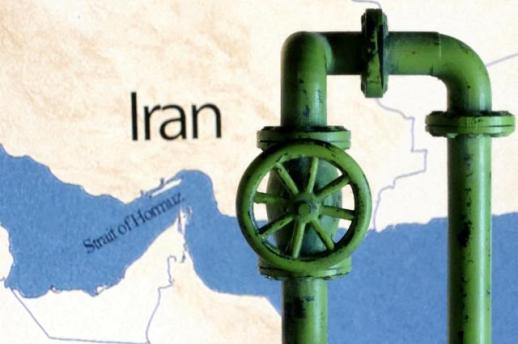 U.S.-Iran Peace Talks Fuel Plunge in Oil Prices, WTI Falls Below $100 Oil prices plummeted following comments from President Donald Trump indicating that U.S.-Iran peace negotiations are nearing completion. On May 20, Brent crude for July delivery fell 5.63% to close at $105.02 per barrel on the ICE Futures Exchange. Meanwhile, West Texas Intermediate (WTI) crude for July delivery dropped 5.66% to finish at $98.26 per barrel on the New York Mercantile Exchange. The decline in oil prices is attributed to Trump's statement that the U.S.-Iran negotiations are in the "final stages." However, he warned that further military action could occur if Iran does not agree to the terms. In response, Iran confirmed it has received a proposal from the U.S. Esmail Baghaei, spokesperson for Iran's Foreign Ministry, stated in an interview with state television, "We have received the U.S. perspective and are currently reviewing it closely." Baghaei added that the visit of Pakistan's Interior Minister to Tehran is aimed at facilitating communication between the two countries. Earlier, Iran's state-run IRNA news agency reported that Interior Minister Mohsin Naqvi visited Iran again on May 20, following a previous visit on May 16. Baghaei outlined key prerequisites for dialogue aimed at ending the conflict, including the release of frozen overseas assets and the cessation of U.S. maritime blockades. He emphasized, "At this stage, we are focused on ending the war on all fronts, including Lebanon. Our demands are clear: issues related to the release of Iran's frozen assets, acts of piracy, and disruptions targeting Iran's shipping have been stated from the beginning." Furthermore, Baghaei asserted, "Iran has participated in the dialogue with goodwill and sincerity, and the other party must also demonstrate sincerity." He concluded, "If this process proceeds based on Iran's legitimate demands, we can say diplomacy has succeeded; otherwise, if unjust demands persist, we will obviously not succeed." 2026-05-21 06:28:03
 -
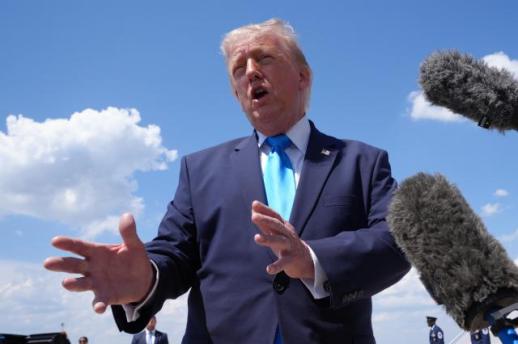 Trump Plans to Speak with Taiwan's President, Praises Xi-Putin Meeting Donald Trump, President of the United States, announced on May 20 that he plans to speak directly with Taiwan's President Tsai Ing-wen. According to Bloomberg News, Trump made the statement before boarding Air Force One at Joint Base Andrews in Maryland when asked by reporters if he would have a conversation with President Tsai. "I will talk to him. I talk to everyone," he replied, though he did not specify when the call would take place. He added, "We are managing that situation very well. I had a great meeting with President Xi," and stated, "We will resolve the Taiwan issue." However, it remains unclear whether Trump's mention of 'resolving' the issue refers to proceeding with arms sales to Taiwan or holding them off. The Trump administration has delayed a $14 billion arms package to Taiwan for several months, despite prior approval from Congress in January. Reports indicate that progress on a previously approved $11 billion arms package has also stalled. During Trump's visit to China from May 14 to 15, President Xi publicly reaffirmed that he would not tolerate U.S. intervention in Taiwan issues. It is reported that the arms sales to Taiwan were also discussed in private meetings. If Trump and President Tsai speak directly, it could provoke a strong reaction from China. Reuters noted that since the U.S. established diplomatic relations with China in 1979, no sitting U.S. president has spoken directly with a sitting Taiwanese president. Trump previously spoke with then-President Tsai Ing-wen in December 2016 while he was still president-elect. Although that conversation was informal, the Chinese government strongly protested to the U.S. Some analysts suggest that Trump's remarks may reflect dissatisfaction and pressure toward Xi. Trump has indicated that he could use U.S. arms sales to Taiwan as a bargaining chip in negotiations following the U.S.-China summit. Meanwhile, Trump commented positively on Russian President Vladimir Putin's visit to China and the China-Russia summit, stating, "President Xi told me he would do that. I think it's a good thing. I get along well with all of them." He added, "I don't know if their welcome event was as great as mine was when I visited China. I watched it, and I think we were ahead."* This article has been translated by AI. 2026-05-21 06:16:18
 -
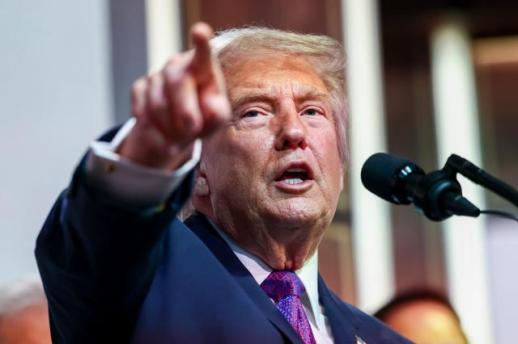 Trump Delays Iran Strike at Allies' Request, Leaves Military Option Open President Donald Trump has postponed plans for a military strike against Iran at the request of Middle Eastern allies. While the U.S. has kept the option of large-scale military action open in case negotiations fail, Iran has acknowledged the possibility of dialogue but insists it will not compromise on its legal rights. On May 18, Trump announced on social media platform Truth Social that he received requests from Qatar's Emir Tamim bin Hamad Al Thani, Saudi Crown Prince Mohammed bin Salman, and UAE President Mohammed bin Zayed Al Nahyan to hold off on the military action against Iran. He added that he instructed Defense Secretary Pete Hegseth and Chairman of the Joint Chiefs of Staff Dan Cain not to proceed with the planned attack on Iran scheduled for May 19. Trump stated, "These Middle Eastern leaders believe serious negotiations are underway, and they think an agreement will be reached that will be very acceptable to the U.S., the Middle East, and all other countries. This agreement will include, above all, a prohibition on Iran's possession of nuclear weapons." However, he also indicated that if a satisfactory agreement is not reached, he has directed military readiness for an immediate and large-scale attack on Iran. According to the Associated Press, Trump expressed optimism about the negotiations during an event at the White House focused on lowering drug prices. He remarked, "They seem to have a very good chance of reaching a deal. If we can do this without launching a major attack, I would be very happy." He noted that while a significant attack was planned, it has been postponed "for a while, hopefully, maybe forever," explaining that U.S. allies in the Gulf requested a few days to see if they could reach an agreement with Iran. Iran has not dismissed the possibility of dialogue but has made it clear that it will not engage in negotiations that imply capitulation to U.S. pressure. Iranian President Ebrahim Raisi stated on social media platform X (formerly Twitter), "Dialogue does not mean surrender. The Islamic Republic engages in dialogue based on dignity, authority, and the preservation of the rights of the people," adding that it will not back down from its legal rights under any circumstances. Ongoing Differences in Positions While the U.S. and Iran continue negotiations to end hostilities, significant differences remain between the two sides. Trump is using military options as leverage to pressure Iran into presenting a compromise that includes a substantial abandonment of its nuclear program. According to Axios, Iran recently submitted a revised proposal with 14 points to the U.S. through a mediator, Pakistan. The proposal reaffirms Iran's stance of having no intention to develop nuclear weapons while leaving the door open for a long-term suspension of its nuclear program. It reportedly includes plans to transfer some enriched uranium to Russia and gradually reopen the strategically important Strait of Hormuz. Iran's semi-official Tasnim news agency reported that the U.S. has agreed to suspend some sanctions on Iranian oil exports during the negotiation period. However, a senior U.S. official told Axios that Iran's new proposal contains only formal improvements compared to previous offers and does not represent meaningful progress. The U.S. views the suspension of uranium enrichment and the issue of existing enriched uranium as key demands, but noted that Iran's latest proposal lacks specific commitments on these points. The official warned, "Substantial and detailed discussions on the nuclear program are necessary; otherwise, we will end up talking through bombs," indicating the potential for military action. Iran remains resolute against the U.S.'s hardline demands accompanied by military threats. The Islamic Revolutionary Guard Corps (IRGC) has recently indicated it may introduce a permit system for internet cables passing through the Strait of Hormuz, attempting to create new leverage in negotiations.* This article has been translated by AI. 2026-05-19 16:43:09
 -
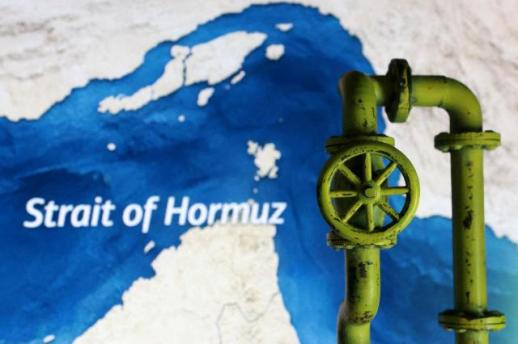 Iran Launches Bitcoin-Based Marine Insurance for Vessels in Hormuz Strait Iran has reportedly launched a Bitcoin-based marine insurance service aimed at its shipping companies navigating the Hormuz Strait. On May 18, Bloomberg News cited a document from Iran's Ministry of Economic Affairs and Finance, as reported by the semi-official Fars News Agency, stating that the service, named "Hormuz Safe," has been initiated. The Fars News report included a screenshot from the insurance company's website, which claims the service offers "fast and verifiable digital insurance to Iranian shipping companies and cargo owners." However, it did not clarify how the insurance operates or whether foreign shipping companies can also utilize it. According to Fars News, the Hormuz Safe website states that cryptographically verifiable insurance certificates will be provided for cargo passing through the Persian Gulf and the Hormuz Strait, with payments settled in Bitcoin. The coverage begins as soon as the cargo is verified, and a signed receipt will be issued to the cargo owner. This insurance service aligns with Iran's efforts to institutionalize control over the Hormuz Strait. Bloomberg noted that the Iranian government and the Islamic Revolutionary Guard Corps (IRGC) are working to formalize tolls and various fees for the strait, suggesting that the insurance service could serve as another means of securing funding. However, the practicality of a Bitcoin-based marine insurance system remains uncertain. Bloomberg pointed out that unlike stablecoins pegged to fiat currencies like the dollar, Bitcoin's high price volatility poses limitations for its use as a payment method. Since the onset of airstrikes by the U.S. and Israel on February 28, Iran has intensified its control over the Hormuz Strait. Reports indicate that the Iranian government and the IRGC have demanded fees of up to $2 million (approximately 30 billion won) from certain vessels. Additionally, on May 18, Iran's Supreme National Security Council officially launched the "Persian Gulf Authority" to manage navigation through the Hormuz Strait, claiming to be the legal representative body for overseeing strait navigation. It remains unclear how directly Hormuz Safe is connected to the IRGC or Iran's plans for an official toll system. However, given that Fars News has close ties to the IRGC, interpretations suggest that this report is not unrelated to Iran's control strategies for the strait. Meanwhile, Ebrahim Azizi, head of the Iranian Parliament's National Security Committee, stated that only vessels cooperating with Iran will benefit from the designated navigation system, adding that parties involved in the U.S.-Israel war against Iran will be prohibited from using the route.* This article has been translated by AI. 2026-05-19 14:51:53
 -
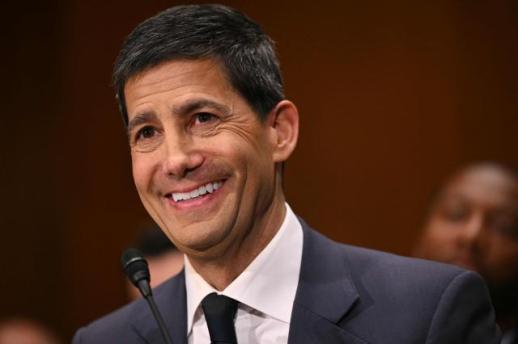 Kevin Warsh to be Sworn in as Next Fed Chair on May 22 Amid Inflation Concerns Kevin Warsh will be sworn in as the next chair of the U.S. Federal Reserve this week, beginning a four-year term. Reuters reported on May 18, citing White House officials, that Warsh is scheduled to take the oath of office on May 22, presided over by President Donald Trump. Warsh's confirmation passed the Senate on May 13 with a vote of 53 in favor and 45 against. He will chair his first Federal Open Market Committee (FOMC) meeting on June 16-17. A lawyer and financial expert, Warsh previously served as a Fed governor during the global financial crisis. He takes on the role amid inflation significantly exceeding the Fed's target of 2%. According to Reuters, while some Fed officials viewed tariff impacts as a one-time price increase, concerns about inflation have intensified due to energy price shocks stemming from the Iran conflict affecting a broad range of goods and services. Austan Goolsbee, president of the Chicago Federal Reserve Bank, stated in an interview with Fox Business, "We are facing an inflation problem," noting that the rising service prices may not solely be attributed to oil prices or tariffs. He added, "There are many issues to watch, and we need guidance from the chair." Markets are increasingly anticipating that the current benchmark interest rate of 3.50-3.75% will remain unchanged at the June FOMC meeting. However, with inflation indicators coming in higher than expected, there are speculations that the Fed may raise rates as early as December. Meanwhile, Jerome Powell, who led the Fed for eight years, completed his term on May 15. He served as interim chair until Warsh's official swearing-in and is expected to remain on the Fed board.* This article has been translated by AI. 2026-05-19 13:59:17
 -
 Apple Announces Schedule for WWDC, Expected to Feature AI Announcements Apple has unveiled the schedule for its annual Worldwide Developers Conference (WWDC), which is expected to be Tim Cook's last as CEO. On June 8, Apple announced that WWDC 2026 will take place from June 8 to June 12. WWDC is Apple's yearly developer event, typically showcasing the next generation of operating systems and software updates. Given Apple's recent announcement that it will adopt Google's generative AI model, Gemini, for the next version of Siri, this year's event is likely to emphasize AI-related announcements. Historically, Apple has unveiled new iPhone products in September, suggesting that this WWDC will focus more on software and AI functionality updates rather than hardware. Last year's WWDC featured a major update with the introduction of 'Liquid Glass,' a design overhaul inspired by glass textures. The keynote address will be held on June 8 at 10 a.m. Pacific Time (2 a.m. Korea Time on June 9) and will be streamed live on Apple's official website, the Apple TV app, and the Apple YouTube channel. On the same day at 1 p.m., the 'Platform State of the Union' event will also take place. This year's conference will include video sessions, guides, group labs, and the Apple Design Awards. The group labs will feature live online presentations and Q&A sessions led by Apple engineers and designers. WWDC 2026 is expected to be the last developer conference attended by Cook as CEO. In April, Apple announced that John Ternus, the senior vice president of hardware engineering, will take over leadership in September. Cook became CEO in 2011, succeeding Apple co-founder Steve Jobs. Under his leadership, Apple has experienced unprecedented growth, driven by the expansion of the iPhone and services. However, the company has faced criticism for lagging behind competitors in the AI sector. Although Apple introduced 'Apple Intelligence' at WWDC 2024, the rollout of related features has not met investor and consumer expectations. In contrast, Samsung and Google have rapidly integrated generative AI into smartphones, search engines, productivity tools, and mobile operating systems over the past two years, leading the AI device market.* This article has been translated by AI. 2026-05-19 12:12:46
 -
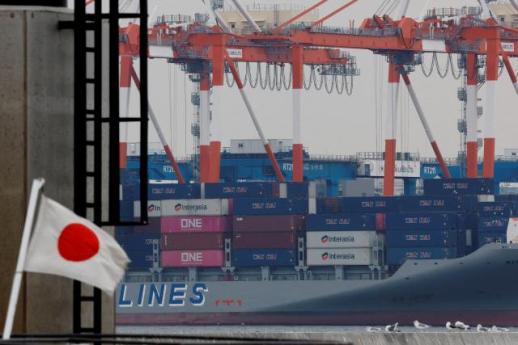 Japan's Q1 Economic Growth Rate Hits 0.5%, Exceeding Expectations Japan's real gross domestic product (GDP) growth rate for the first quarter of this year was 0.5%, marking the second consecutive quarter of growth despite risks from the Middle East. According to Nikkei Asia, the Japanese Cabinet Office announced that real GDP increased by 0.5% from the previous quarter and by an annualized rate of 2.1% from January to March. This figure surpasses the market forecast of 1.6% compiled by QUICK, a subsidiary of the Nikkei Group. Consequently, Japan's economy has continued to expand following a 0.8% annualized growth in the fourth quarter of last year. Private consumption, which accounts for more than half of GDP, led the growth with a 0.3% increase from the previous quarter. Business investment in equipment also rose by 0.3%. Exports grew by 1.7%, while imports increased by 0.5%. However, the larger increase in exports boosted net exports, contributing positively to the growth rate. Private residential investment also saw a 0.5% rise. Nonetheless, the GDP figures reflect only limited impacts from the conflict in the Middle East, which was triggered by the U.S. and Israel's attacks on Iran at the end of February. With rising raw material prices due to instability in the region, there are concerns that inflation and consumer spending may face increasing pressure on the Japanese economy in the future. Other economic indicators are already showing the effects of the conflict. Household consumption in Japan fell by 1.3% in March compared to the previous month, and government surveys indicated weakened consumer sentiment in March and April. Industrial production also decreased by 0.5% in March from the previous month, significantly impacted by concerns over the supply of key raw materials like naphtha, which affected the chemical sector's output. Experts predict that Japan's economic growth is likely to slow in the latter half of this year. A survey conducted by the Japan Economic Research Center among economists projected a growth rate of only 0.45% for the April to June period. The impact of rising raw material prices is expected to be reflected in various product prices after summer, potentially fueling inflation and constraining the growth of real wages, which could hinder consumer recovery. As a result, the Bank of Japan's monetary policy decisions are expected to become more complex. Nikkei Asia reports that the Bank of Japan may consider raising interest rates as early as June, but it faces the challenge of balancing concerns over slowing growth and inflationary pressures.* This article has been translated by AI. 2026-05-19 11:41:03
 -
 Shooting at San Diego Islamic Center Leaves Three Dead; Hate Crime Suspected Three men were killed in a shooting at a large Islamic center in San Diego, California, when two teenagers opened fire. The suspects were found dead in a nearby vehicle shortly after the incident, and police are investigating the case as a hate crime. According to reports from AP and CNN, the shooting occurred on May 18 at the San Diego Islamic Center located in the Clairemont area of San Diego County, resulting in the deaths of three adult men, including a security guard. San Diego Police Chief Scott Wahl stated that the suspects are believed to be 17 and 19 years old. They were discovered dead from self-inflicted gunshot wounds in a vehicle that had come to a stop in the middle of a nearby road. While the exact motive for the shooting is still under investigation, police indicated that a note left by one of the suspects and the firearms used contained evidence of "generalized hate expression," leading them to classify the incident as a hate crime. CNN reported that one of the firearms used in the attack had hate messages inscribed on it, and anti-Islam slogans were found in the suspects' vehicle. All children present at the Al Rashid School, which is affiliated with the Islamic center, were confirmed safe during the incident. The San Diego Islamic Center, the largest Islamic worship facility in the county, is located about 14 kilometers north of downtown San Diego and includes a school teaching Arabic, Islamic studies, and the Quran to students aged five and older. Imam Taha Hassan, the religious leader of the center, expressed outrage at the targeting of a place of worship during a press conference, stating, "It is extremely infuriating to target a place of worship. All places of worship in our beautiful city must always be protected." California Governor Gavin Newsom also released a statement expressing shock at the violent attack in a place where families and children gather peacefully to worship, asserting that "hate has no place in California, and we will not tolerate acts of terror or threats against faith communities."* This article has been translated by AI. 2026-05-19 10:59:10
 -
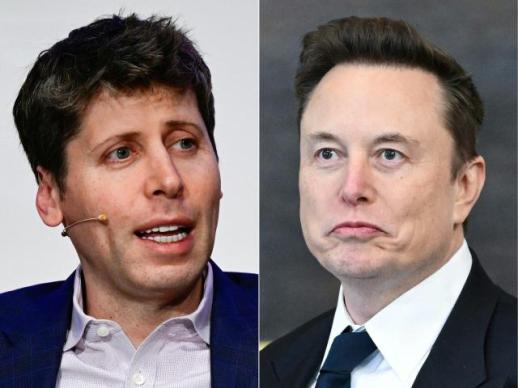 Elon Musk Loses Lawsuit Against OpenAI, Easing IPO Pressure Elon Musk, CEO of Tesla, has lost a lawsuit he filed against OpenAI. A jury determined that Musk had filed his lawsuit after the legal deadline, and the court accepted this finding, dismissing all of Musk's claims. This outcome is seen as a relief for OpenAI, which is planning to go public (IPO) later this year. On May 18, local time, a jury in the U.S. District Court in Oakland, California, unanimously ruled in favor of OpenAI. The jury concluded that Musk did not file his lawsuit within the legally mandated timeframe. Civil lawsuits have specific statutes of limitations for filing claims. In this case, Musk's allegations of 'breach of fiduciary duty' and 'unjust enrichment' had deadlines of three years and two years, respectively, starting from when the plaintiff became aware of the infringement. The jury found that Musk had already been aware of the issues before August 2021. Therefore, the court determined that Musk's formal filing in August 2024 was beyond the statute of limitations. Musk claimed that Sam Altman, CEO of OpenAI, had reassured him, causing him to delay filing the lawsuit. However, the jury did not accept this argument. After less than two hours of deliberation, the jury reached its verdict. While the jury's verdict is advisory, U.S. District Judge Yvonne Gonzalez Rogers accepted it immediately after the verdict was announced, dismissing all of Musk's claims. Judge Rogers stated, "There was substantial evidence supporting the jury's conclusion, and I was prepared to dismiss the case on the spot." Musk has alleged that OpenAI, along with Altman and Greg Brockman, deceived him into donating $38 million, subsequently attaching a for-profit entity to what was originally a nonprofit organization and raising billions from investors like Microsoft. In contrast, OpenAI argued that Musk's lawsuit was a "post hoc fabrication" unrelated to reality and a hypocritical attempt to undermine a competitor. With this verdict, OpenAI has alleviated a significant legal burden related to its IPO. Reuters reported that the ruling simplifies OpenAI's path to pursuing an IPO, which could be valued at $1 trillion (approximately 1,500 trillion won).* This article has been translated by AI. 2026-05-19 09:39:11
 -
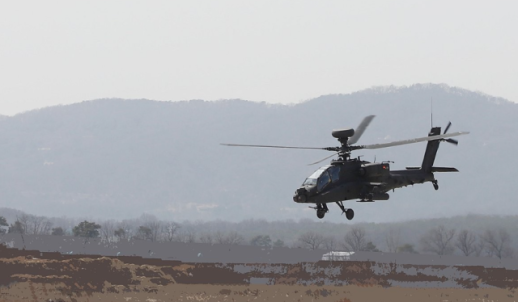 Trump Administration Approves $4.2 Billion Sale of Helicopters and Apache Upgrades to South Korea The Trump administration has approved the sale of military equipment to South Korea, including multi-role helicopters and upgrades for Apache helicopters, totaling $4.2 billion (approximately 6.3 trillion won). On May 18, the U.S. Department of State's Bureau of Political-Military Affairs announced on its website that it had approved a Foreign Military Sales (FMS) request from the South Korean government for 24 MH-60R multi-role helicopters and related weapons and equipment. The estimated cost of this sale is $3 billion. The sale includes 24 MH-60R helicopters, 24 airborne low-frequency sonars, eight M240D 7.62mm machine guns, AN/ALQ-210 electronic support measures, APS-153(V) multi-mode radars, night vision devices, missile warning systems, electronic countermeasures, spare and repair parts, and technical and logistical support. The State Department stated that this sale will enhance the South Korean Navy's multi-role helicopter capabilities and provide a reliable force to deter hostile actors, thereby improving South Korea's ability to respond to current and future threats. Additionally, the State Department approved an FMS for an $1.2 billion AH-64E Apache upgrade program. South Korea requested eight AN/APG-78 fire control radar mast assemblies, eight Longbow fire control radar electronic units, and 40 AN/ARC-231A ultra-high frequency radios. The Apache upgrade program includes small tactical terminals with Link 16 capability, a common missile warning system, manned-unmanned integrated systems, enhanced image intensifier cameras, communication and navigation equipment, software support, and training equipment. The State Department emphasized that this sale will strengthen the South Korean Army's attack helicopter capabilities and provide a reliable force to deter hostile actors, enhancing South Korea's ability to respond to current and future threats. It also highlighted that improving the security of key allies, which are important forces for political stability and economic progress in the Indo-Pacific region, supports U.S. diplomatic and national security goals. The department added that this equipment and support sale proposal will not alter the fundamental military balance in the region and will not negatively impact U.S. defense readiness.* This article has been translated by AI. 2026-05-19 08:51:50