

Journalist

Hwang Jin-hyun
jinhyun97@ajunews.com
-
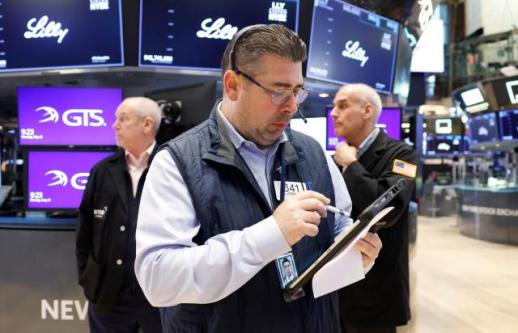 U.S. Semiconductor Stocks Reach Highest Overbought Levels Since Dot-Com Bubble U.S. semiconductor stocks are signaling the highest levels of overheating since the dot-com bubble. While expectations for increased investment in artificial intelligence (AI) infrastructure have driven a rally in semiconductor stocks, concerns are rising that the sector's growing weight could pose risks to the broader U.S. stock market. According to Reuters on May 13, the Philadelphia Semiconductor Index (SOX) surged 64% since late March. In comparison, the S&P 500 index rose about 17% during the same period. Notably, Micron and AMD saw their shares jump by 138% and 129%, respectively, while Intel's stock skyrocketed nearly 193%. Reuters noted that large capital expenditures for AI infrastructure have boosted semiconductor demand, resulting in an investment frenzy that has spread beyond Nvidia, which initially led the charge. Steve Edwards, a senior investment strategist at Morgan Stanley Wealth Management, described the situation as a "perfect combination," stating, "There is a solid fundamental story, and the technical momentum is quite strong." He added, "These two factors have created a very enthusiastic and optimistic investor base, driving momentum forward." However, even optimistic investors in semiconductor stocks are preparing for a potential cooling of the rally. Reuters reported that the recent surge in semiconductor stocks is being compared to the dot-com bubble of 1999-2000. Peter Tuz, president of Chase Investment Counsel, remarked, "Whenever you see something rising parabolically, you have to ask yourself, 'Is the mood getting too euphoric?'" He indicated that he has sold some Qualcomm shares in response. Technical indicators are also flashing warning signs. On May 8, the SOX's weekly Relative Strength Index (RSI) reached 85.5. The RSI is a technical indicator that shows overbought or oversold levels of an asset, and this figure marks the highest overbought level since the peak of the dot-com bubble in March 2000. Investor Michael Burry, known for his role in the film "The Big Short," has maintained his put option bets on the iShares Semiconductor ETF (SOXX). Put options give the holder the right to sell an asset at a predetermined price, typically used to bet on price declines. The overheating of semiconductor stocks is also seen as a burden on the broader U.S. stock market. Currently, semiconductor and semiconductor equipment stocks account for 18% of the S&P 500 index. According to institutional brokerage Johnstreead, 70% of the $5.1 trillion increase in market capitalization for the S&P 500 this year has come from gains in semiconductor and memory stocks. Michael O'Rourke, chief market strategist at Johnstreead, warned, "Now that they occupy such a large share of the S&P 500, any correction or disappointment could pose risks to the broader market." Continued Optimism Despite these concerns, optimism about the semiconductor sector remains strong. Market research firm Gartner forecasts that global semiconductor revenue will increase by 64% this year, reaching $1.3 trillion. Earnings for semiconductor and semiconductor equipment companies within the S&P 500 are also expected to rise by about 95%, significantly exceeding the initial forecast of 62% growth at the beginning of the year. King Lip, chief strategist at Baker Avenue Wealth Management, stated, "There is demand for AI infrastructure and computing and networking, which represents a multi-year capital expenditure cycle, and we see this as a very interesting trend for semiconductors." Ayako Yoshinaka, senior investment strategist at Wells Enhancement, added, "Considering the fundamentals driving many of these companies, I believe there is still room for growth."* This article has been translated by AI. 2026-05-14 12:00:54
 -
 Cisco to Cut 4,000 Jobs as It Shifts Focus to AI Investments Networking equipment manufacturer Cisco announced plans to reduce its workforce by fewer than 4,000 employees, representing less than 5% of its total staff, as part of a strategy to increase investments in artificial intelligence (AI). Following the announcement, Cisco's stock surged nearly 20% in after-hours trading. On May 13, during its quarterly earnings report, Cisco revealed its intention to cut the workforce in the fourth quarter of fiscal year 2026 (May to July). This decision aligns with the company's efforts to reallocate resources toward AI-related growth areas. Chuck Robbins, Cisco's CEO, stated on the company’s website, "The companies that will win in the AI era will be those that have the discipline to continuously shift their investments toward areas of focus, urgency, demand, and long-term value creation." Cisco explained that it is making strategic investments across various sectors, including silicon, optics, security, and employee AI utilization. The layoffs are seen as a restructuring effort to facilitate this shift in investment. The company reported third-quarter revenue of $15.8 billion, slightly above the market expectation of $15.6 billion, according to LSEG data. The demand for AI infrastructure has also contributed to this positive outlook. Cisco noted that it has secured $5.3 billion in AI infrastructure orders from hyperscalers, which are companies operating large-scale AI data centers. As a result, Cisco has significantly raised its overall AI infrastructure order forecast for the fiscal year from $5 billion to $9 billion. The revenue forecast has also been adjusted upward, with Cisco now expecting fiscal year 2026 revenue to be between $62.8 billion and $63 billion, higher than the previous estimate of $61.2 billion to $61.7 billion. Following the earnings announcement, Cisco's stock showed a notable increase in after-hours trading, reaching $122.00, up $20.13 (19.76%) from the previous trading day, as of 9:59 AM KST on May 13.* This article has been translated by AI. 2026-05-14 11:13:33
 -
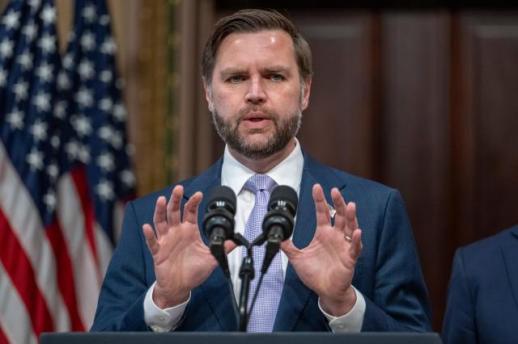 VP Vance: Progress in Iran Ceasefire Talks Depends on Trump's Red Line As President Donald Trump strongly criticized Iran's revised ceasefire proposal, Vice President JD Vance announced that progress is being made in ceasefire negotiations with Iran. On May 13, during a press conference at the White House, Vance stated, "I believe we are making progress" regarding the ceasefire talks with Iran. He emphasized that the fundamental issue is whether sufficient progress can be made to satisfy President Trump's red line. Vance explained, "The red line is very simple: we must have confidence that Iran will never possess nuclear weapons and that adequate safeguards are in place." His comments contrast sharply with Trump's hardline stance. Before departing for a meeting with Chinese President Xi Jinping, Trump labeled Iran's revised ceasefire proposal as "unacceptable" and "garbage." Additionally, Vance acknowledged concerns about inflation resulting from the conflict with Iran. The U.S. Department of Labor reported that the Producer Price Index (PPI) rose 6.0% in April compared to the same month last year, marking the highest increase since December 2022. The Consumer Price Index (CPI) for April also showed a 3.8% year-over-year increase, the highest in nearly three years since May 2023. Vance remarked, "Last month's inflation numbers were not good," adding that there is much work to be done to achieve the prosperity that Americans deserve. However, he stressed that Trump is well aware of the inflation issue. Vance refuted reports suggesting that Trump does not care about Americans' financial situations, stating that those reports were incorrect. Earlier, when asked whether Americans' financial situations would influence the negotiations with Iran, Trump replied, "Not at all. The only thing that matters is that they (Iran) cannot have nuclear weapons. I do not think about the financial situation of Americans." When asked about the upcoming presidential race against Secretary Marco Rubio, Vance responded jokingly, saying, "I don’t think it’s presidential to have a televised competition for succession." This remark appeared to reference Trump's role as a host on NBC's reality show "The Apprentice." While calling Secretary Rubio a "valuable friend," Vance emphasized that his focus should remain on his duties as Vice President.* This article has been translated by AI. 2026-05-14 09:09:42
 -
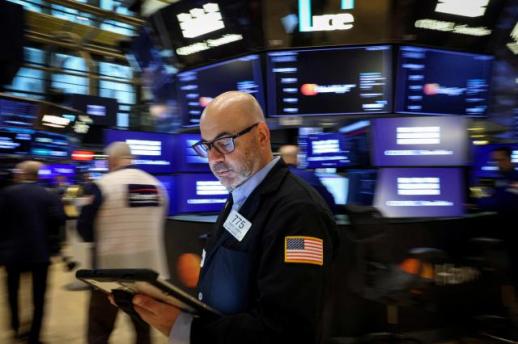 U.S. Stocks Rise Despite Inflation Concerns; S&P 500 and Nasdaq Hit Record Highs U.S. stocks showed strength on May 13, driven by a rally in semiconductor shares, despite concerns over inflation due to high oil prices. The Dow Jones Industrial Average closed down 67.36 points, or 0.14%, at 49,693.20. The S&P 500 index rose 43.29 points, or 0.58%, to finish at 7,444.25, while the Nasdaq composite gained 314.14 points, or 1.20%, closing at 26,402.344. Both the S&P 500 and Nasdaq set new all-time highs with their gains on this day. The surge in tech stocks was fueled by news that Jensen Huang, CEO of Nvidia, joined a delegation visiting China led by President Donald Trump. This development sparked increased buying interest in technology shares. Semiconductor stocks have continued to rise amid renewed enthusiasm for artificial intelligence (AI) investments. Among the 'Magnificent Seven' large tech stocks, Nvidia, a leader in AI, closed up 2.29% or $5.05 at $225.83. Other tech giants, including Alphabet (up 3.94%), Apple (up 3.28%), and Tesla (up 2.73%), also saw gains. In contrast, Microsoft fell 0.63%. Ford shares surged 13.18% as renewed attention on its partnership with Chinese battery manufacturer CATL emerged on Wall Street. However, financial stocks like JPMorgan Chase (down 1.52%), Visa (down 1.87%), and American Express (down 1.50%), along with retailers like Home Depot (down 2.55%), struggled due to inflation concerns. The U.S. Labor Department reported that the Producer Price Index (PPI) rose 1.4% in April compared to the previous month, marking the highest increase since March 2022 (1.7%). This figure significantly exceeded analysts' expectations of a 0.5% rise. Year-over-year, the PPI increased by 6.0%, the highest since December 2022 (6.3%). Peter Maluk, CEO of Creative Planning, told CNBC, "This bull market has been a long and sustained rally primarily led by tech stocks. This growth is based on expected earnings and is not a speculative bubble. There appears to be substantial demand remaining as supply struggles to keep up, indicating significant upward potential ahead." International oil prices fell, attributed to rising expectations surrounding negotiations on Iran issues following the U.S.-China summit. On the Intercontinental Exchange, July Brent crude futures settled at $105.63 per barrel, down 2.0% from the previous day. Meanwhile, June West Texas Intermediate (WTI) crude futures on the New York Mercantile Exchange closed at $101.02 per barrel, a decline of 1.1%.* This article has been translated by AI. 2026-05-14 08:18:16
 -
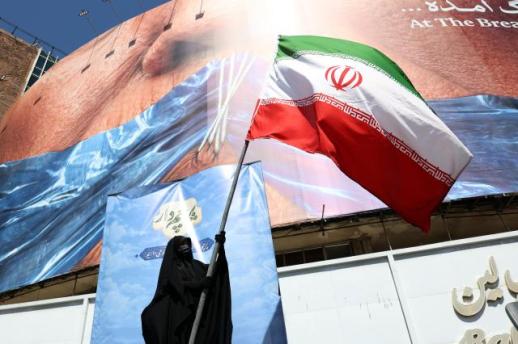 Saudi Arabia and UAE Conduct Secret Military Strikes Against Iran Amid ongoing conflict between the United States, Israel, and Iran, reports have emerged that Saudi Arabia and the United Arab Emirates (UAE) have secretly attacked Iran. While both countries have publicly maintained that they are not directly involved in the war, these covert military operations are seen as retaliatory measures against Iranian attacks, potentially escalating the conflict in the region. According to reports from Reuters and other foreign media on May 12, the UAE and Saudi Arabia have conducted undisclosed military strikes against Iran during the ongoing Middle East war. The UAE targeted Iran's oil facilities on Lavan Island in the Gulf in early April, while Saudi Arabia reportedly mobilized its air force to strike Iran at the end of March. This marks the first time Saudi Arabia has been reported to have carried out military actions directly on Iranian territory. Although specific strike locations have not been confirmed, Western officials suggest that Saudi Arabia's actions were in response to Iranian attacks aimed at the kingdom. There are also reports that the UAE coordinated some of its attacks with Israel. The Times of Israel, citing Bloomberg, reported that the UAE struck Iran around April 8, just before and after a ceasefire, with one operation being a coordinated response to an attack on Iran's Borouge petrochemical facility. These revelations indicate that the conflict, which began with U.S. and Israeli airstrikes on Iran on February 28, has expanded beyond what was publicly acknowledged. Since the outbreak of hostilities, Iran has launched missile and drone attacks against all six member states of the Gulf Cooperation Council (GCC), including Saudi Arabia and the UAE. Targets have included U.S. military bases, civilian infrastructure, airports, and oil facilities, disrupting global trade through the Strait of Hormuz. Escalating Tensions in the Middle East The Guardian reported that the UAE's previously undisclosed military actions against Iran suggest that some Gulf nations may become more deeply involved in conflicts with Iran. Newsweek noted that if the attacks by the UAE and Saudi Arabia are confirmed, it could provoke retaliation from Iran, leading to increased instability across the Gulf region. Indeed, tensions in the Gulf are spilling over into other countries. According to Al Jazeera, Kuwaiti authorities announced earlier this month that they had detained four members of Iran's Islamic Revolutionary Guard Corps (IRGC) who had infiltrated the island of Bubiyan. The Kuwaiti Foreign Ministry stated that these individuals had entered the country with hostile intentions, prompting them to summon the Iranian ambassador to lodge a protest. However, Iran has denied Kuwait's claims. The Iranian Foreign Ministry stated that allegations of planning hostile actions against Kuwait are baseless, asserting that the individuals entered Kuwaiti waters due to a malfunction in their navigation system while on a maritime patrol. On the same day, Bahrain's prosecution announced that over 20 individuals linked to espionage activities for the Iranian Revolutionary Guard had been sentenced to prison. As military and security tensions between Gulf nations and Iran continue to surface, regional instability is on the rise. Conversely, following Saudi Arabia's airstrikes on Iran, diplomatic channels have been activated, leading to a reduction in hostilities between the two nations. Some analysts argue that active retaliation by Middle Eastern countries could contribute to regional stability. Ali Vaez, head of the Iran Project at the International Crisis Group, noted that Saudi Arabia's attacks on Iran and subsequent negotiations demonstrate a shared interest in restraining the conflict before it escalates further in the region.* This article has been translated by AI. 2026-05-13 18:30:59
 -
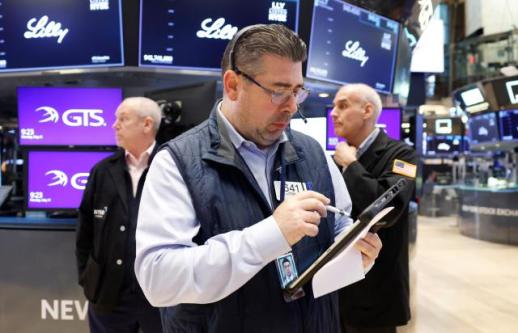 U.S. Stocks Rise Amid Middle East Tensions, S&P 500 Surpasses 7400 for First Time Donald Trump, the President of the United States, highlighted the precarious nature of the ceasefire with Iran, bringing renewed attention to tensions in the Middle East. Despite this, U.S. stocks closed slightly higher, buoyed by a rally in artificial intelligence (AI) stocks. On May 11, the Dow Jones Industrial Average finished up 0.19%, or 95.31 points, at 49,704.47. The S&P 500 index, which is heavily weighted toward large-cap stocks, rose 0.19%, or 13.91 points, to close at 7,412.84, marking its first-ever close above 7,400. The tech-heavy Nasdaq Composite Index increased by 0.10%, or 27.05 points, to finish at 26,274.13. Earlier, President Trump responded to questions about the ceasefire with Iran, stating, "It’s unbelievably weak, in the weakest state. It’s heavily reliant on life support, and the doctor says there’s about a 1% chance of survival." As tensions in the Middle East escalated, international oil prices also rose. Brent crude futures closed at $104.21 per barrel, up 2.9% from the previous trading day, while West Texas Intermediate (WTI) crude futures rose 2.8% to $98.07 per barrel. Despite geopolitical uncertainties, semiconductor and technology stocks showed strength. Qualcomm surged by 8.42%, while Micron Technology (6.5%), Western Digital (7.46%), and Seagate (6.56%) continued their upward momentum from the previous week. The Philadelphia Semiconductor Index increased by 2.6%. The performance of the seven major tech stocks, known as the "Magnificent 7 (M7)," was mixed. Nvidia (1.97%) and Tesla (3.89%) saw gains, while the other five—Alphabet, Amazon, Apple, Meta, and Microsoft—experienced declines. Jay Hatfield, founder and CEO of Infrastructure Capital Advisors, told CNBC, "The tech boom is so strong that rising energy prices are not allowed to affect the U.S. economy or the U.S. stock market. Everyone is tuning out the Middle East issues."* This article has been translated by AI. 2026-05-12 08:04:20
 -
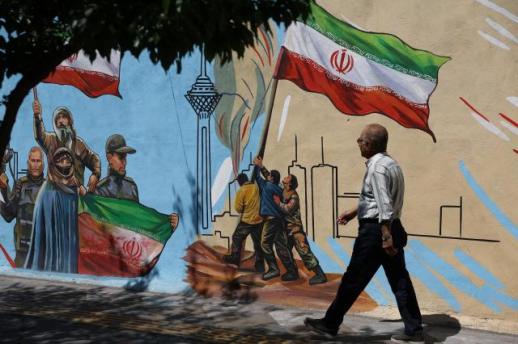 Iran Rejects U.S. Demands for Ending Hostilities Iran's government has officially stated that it cannot accept unilateral demands from the United States regarding recent proposals to end hostilities. On May 11, Esmail Baghaei, spokesperson for the Iranian Foreign Ministry, emphasized during a press conference that "our demands are not excessive and are entirely justified." He made it clear that the release of Iranian assets frozen in foreign banks is a prerequisite for any negotiations. Baghaei characterized the U.S. seizure of Iranian oil tankers as "piracy," asserting, "The U.S. must stop its illegal economic blockade and acts of piracy and cease its warlike behavior." In response to U.S. demands for the complete opening of the Strait of Hormuz as a condition for ending hostilities, he noted that Iran has also proposed measures to ensure safe navigation and regional security in the strait. He stated, "Ensuring safe passage through the Strait of Hormuz and establishing security in the region and Lebanon are additional demands from Iran, which should be seen as generous and responsible proposals for regional security." He criticized the U.S. for continuing to make unilateral claims. However, Iran has left the door open for diplomacy. Baghaei remarked, "We will fight whenever we are forced to, but we will seize every opportunity for diplomacy when it arises." He added, "However, diplomacy has its own rules, and decisions will be based on our national interests. Iran has proven its commitment to protecting the interests of its people." Previously, President Donald Trump expressed his disapproval of Iran's response to the proposal on his social media platform, Truth Social, stating, "I do not like this. It is completely unacceptable."* This article has been translated by AI. 2026-05-12 04:33:55
 -
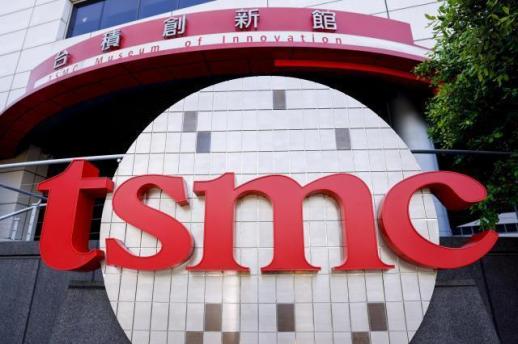 TSMC Faces Pressure as Apple Considers Chip Production Deal with Intel Reports that Apple plans to outsource some of its custom-designed chips to Intel have raised concerns about a potential shift in TSMC's exclusive partnership with Apple. However, experts believe TSMC will likely maintain its status as Apple's key partner for the foreseeable future, given its advantages in yield, power efficiency, and advanced packaging technology. On May 11, Taiwanese media outlets, including Focus Taiwan, reported mixed assessments within the industry regarding the potential collaboration between Apple and Intel. The Wall Street Journal had previously reported on May 8, citing multiple sources, that Apple reached a preliminary agreement to have Intel produce some of its custom-designed chips. Apple and Intel have reportedly been negotiating this partnership for over a year. In this context, Liu Peijian, a researcher at the Taiwan Institute of Economic Research, assessed that TSMC is likely to remain Apple's primary chip manufacturing partner. He noted that TSMC's advanced packaging technologies, including InFO (Integrated Fan-Out) and CoWoS (Chip on Wafer on Substrate), are still critical for the performance of Apple's A-series and M-series chips. Liu pointed out that both Intel and Samsung are currently behind TSMC in terms of yield and power efficiency, making it difficult for Apple to shift its flagship chip orders away from the Taiwanese foundry in the near term. He analyzed that the deep technological collaboration between Apple and TSMC over the years has created a high barrier to entry for competitors. Unless rivals achieve significant breakthroughs in 2-nanometer or Gate-All-Around (GAA) technology, TSMC is expected to remain Apple's preferred manufacturing partner. Intel is advancing its 18A process, while Samsung is exploring opportunities with its 2-nanometer GAA technology. However, Liu noted that both companies have faced issues with unstable yields and excessive power consumption in past large-scale production processes. Considering TSMC's stable delivery performance and extensive research and development capabilities, Liu assessed that the company's leading position remains difficult to challenge. He added that for Apple, moving core chip orders too soon could pose significant supply chain risks. Li Fangguo, chairman of President Capital Management, also told CNA that Apple's push for collaboration with Intel is not due to any technical issues with TSMC. Instead, he suggested that the growing demand for advanced processes from AI chip customers like NVIDIA has strained TSMC's production capacity. Li stated that this situation highlights TSMC's dominant position in the advanced chip manufacturing sector, noting that demand across the industry currently exceeds supply. Concerns About TSMC's Position Conversely, some experts believe that a partnership between Apple and Intel could pose challenges for TSMC. According to the China Times, financial and economic expert Luan Muhua recently expressed on social media that if the collaboration between Apple and Intel is formalized, it could heighten TSMC's sense of crisis. Luan assessed that if the partnership materializes, Apple would gain additional key options related to its supply chain, while Intel would secure a heavyweight customer in its foundry business revival. However, he pointed out that this could signify the practical end of TSMC's exclusive production era for Apple chips. Luan explained that it is currently unclear which Apple products Intel would produce chips for. However, he noted that even a slight adjustment in Apple's supply chain, given its massive annual shipments of iPhones, iPads, and Mac computers, could impact chip production facility allocations and market forecasts. He raised questions about whether Intel has the capacity to share production of Apple orders with TSMC. However, he acknowledged that the backing of the White House could change the dynamics, suggesting that this shift is reflected in the recent stock trends of Intel, Apple, and TSMC.* This article has been translated by AI. 2026-05-12 03:53:25
 -
 U.S.-China Summit Set for May 14, Trump to Pressure Xi on Iran Issues Amid stalled peace negotiations between the U.S. and Iran, President Donald Trump is expected to pressure Chinese President Xi Jinping for cooperation on Iran issues during their upcoming summit on May 14. According to a briefing by a U.S. official reported by the Financial Times on May 10, Trump is anticipated to exert pressure regarding China's support for Iran and Russia. The official stated, "The President is expected to apply pressure on this matter," adding that discussions will likely revisit China's involvement in supporting Iran and Russia. The official also noted, "Various sanctions have been issued by the U.S. in recent days, and I am confident they will be part of the conversation," which includes issues related to dual-use components and potential arms exports. Last Friday, the U.S. State Department imposed sanctions on three Chinese satellite companies for allegedly providing satellite imagery and other services that aided Iranian military attacks targeting U.S. forces in the Middle East. Additionally, the U.S. Treasury sanctioned Yushita Shanghai International Trade for assisting Iran in importing portable air defense missile systems, known as MANPADS. However, the Council on Foreign Relations (CFR), a U.S. think tank, predicts that China may have greater negotiating power than the U.S. during this summit, given that the conflict between the U.S. and Iran remains unresolved. The White House and the Chinese Foreign Ministry announced that Trump will make a state visit to China from May 13 to 15 at Xi's invitation. Trump is scheduled to arrive in China on May 13 and hold talks with Xi on May 14. Following their meeting, the two leaders will visit Beijing's Temple of Heaven Park and attend a state dinner that evening. Trump will return to the U.S. after a working lunch on May 15. Meanwhile, while the U.S. and Iran continue behind-the-scenes discussions regarding a peace agreement, negotiations are facing difficulties due to significant differences over key issues such as Iran's nuclear program and the reopening of the Strait of Hormuz. Earlier, Trump expressed his dissatisfaction with Iran's response to a peace proposal sent over the weekend via social media platform Truth Social, stating, "I just read the response from Iran's so-called 'representatives.' I do not like it. It is completely unacceptable." CNN reported that Iran's response included demands for recognition of its sovereignty over the Strait of Hormuz and compensation for war damages, citing Iranian state media IRIB. Iran has also reacted to Trump's rejection of its proposal. According to TASS, a source stated, "No one in Iran writes proposals to please Trump," emphasizing that the Iranian negotiating team bases its plans solely on the 'rights of the Iranian people.' The source added that if Trump is not satisfied with Iran's proposal, "then that is certainly for the better." As peace negotiations struggle, Trump is also escalating military pressure on Iran. In an interview with the U.S. news program 'Full Measure,' he stated, "We could go in and attack all targets in Iran in two weeks." He continued, "We had specific targets we wanted, and we have completed about 70% of them. However, there are other targets we could attack." He added, "Even if we do not do that, it is just cleanup work, and it will take them years to rebuild." Trump's comments came in response to a question about whether combat operations could be considered over. He clarified, "No, I did not say that. I said they have been defeated, but that does not mean it is over." 2026-05-11 15:48:28
 -
 Iran Demands Sovereignty Over Hormuz Strait and War Reparations in Response to U.S. Proposal Donald Trump, the President of the United States, has stated that he cannot accept Iran's response to the U.S. peace proposal. In that response, Iran reportedly demanded recognition of its sovereignty over the Strait of Hormuz and reparations for war damages. On May 11, CNN cited Iran's state broadcaster IRIB, reporting that Iran's response included demands for recognition of sovereignty over the blocked Strait of Hormuz and compensation for war damages. The response also reportedly called for the unfreezing of assets and the lifting of sanctions against Iran. Reuters, citing Iranian state television, reported that Iran is demanding a ceasefire on all fronts, including Lebanon. However, there has been no mention of Iran's nuclear program in the responses reported by Iranian state media so far. Iran's response was conveyed to the U.S. through Pakistan, the mediating country. Following this, President Trump stated on social media platform Truth Social that he finds Iran's proposal "completely unacceptable." The U.S. has set the prohibition of Iran's nuclear weapons and the lifting of the blockade on the Strait of Hormuz as key conditions. U.S. Ambassador to the United Nations Mike Waltz previously appeared on Fox News Sunday, stating that the latest U.S. proposal contains "very clear red lines." He added, "President Trump has made it clear that they will never be allowed to possess nuclear weapons and cannot hold the global economy hostage."* This article has been translated by AI. 2026-05-11 15:14:35