

Journalist

Hwang Jin-hyun
jinhyun97@ajunews.com
-
 Wall Street Rallies on Hopes for U.S.-Iran War-End Deal; S&P 500, Nasdaq Hit Records Expectations that the United States and Iran are nearing an agreement on talks to end the war lifted major U.S. stock indexes to a broad advance. On the 6th (local time), the Dow Jones Industrial Average rose 612.34 points, or 1.24%, to close at 49,910.59 on the New York Stock Exchange. The S&P 500 gained 105.90 points, or 1.46%, to 7,365.12, and the Nasdaq composite climbed 512.81 points, or 2.02%, to 25,838.94. The S&P 500 and Nasdaq both set fresh record highs with the gains. According to Axios and other foreign media, the United States and Iran are discussing signing a memorandum of understanding to end the war. The MOU is expected to include a temporary halt to Iran’s uranium enrichment, U.S. sanctions relief, and steps related to reopening the Strait of Hormuz, including Iran lifting a blockade of the waterway and the United States ending its maritime blockade of Iran, the reports said. Iranian Foreign Ministry spokesman Esmail Baghaei also said Iran is reviewing a U.S. proposal to end the war. In an interview with Iran’s ISNA news agency, Baghaei said, “Iran is still reviewing the U.S. plan and proposal, and after consolidating Iran’s position, it will be conveyed to the Pakistani side.” Bill Northey, chief investment officer at U.S. Bank Asset Management Group, told CNBC that if hostilities begin to slow or stop and the Strait of Hormuz reopens, some of the most economically sensitive regions hit hardest — such as Southeast Asia and Europe — could avoid their own economic strain. “That creates the conditions for a sharp rebound in the stock market,” he said. Oil prices fell on expectations of a war-ending deal and a reopening of the Strait of Hormuz. Brent crude futures for July delivery settled at $101.27 a barrel, down 7.83% from the previous session. U.S. West Texas Intermediate crude futures for June delivery settled at $95.08 a barrel, down 7.03%. In individual stocks, AMD surged 18.61% after reporting results that beat expectations. The company said it posted first-quarter earnings of $1.37 per share on revenue of $10.25 billion, above market forecasts for earnings of $1.29 per share and revenue of $9.89 billion. The major technology stocks known as the “Magnificent Seven” also mostly rose. Nvidia gained 5.77%, Alphabet 2.47%, Tesla 2.40%, Meta 1.31%, Apple 1.17%, Microsoft 0.63% and Amazon 0.53%.* This article has been translated by AI. 2026-05-07 08:18:58
 -
 Iran Denies Military Role in Fire on South Korean Ship in Strait of Hormuz Iran’s government has flatly denied allegations that its military was involved in a fire on a South Korean vessel in the Strait of Hormuz. In a statement issued Tuesday, the Iranian Embassy in Seoul said it “firmly rejects and completely denies all allegations” that the armed forces of the Islamic Republic of Iran were involved in the incident involving damage to a South Korean ship in the strait. The statement came as speculation grew over a possible Iranian attack after a fire broke out on the South Korean cargo ship HMM Namu while it was anchored in the Strait of Hormuz on May 4. Earlier, President Donald Trump said on May 4 local time on the social media platform Truth Social that Iran had attacked ships from several countries, including a South Korean vessel, and urged South Korea to join a Strait of Hormuz navigation-support operation called the “Liberation Project (Project Freedom).” The Iranian Embassy in Seoul, however, said that after U.S. and Israeli military actions against Iran, the Strait of Hormuz had become a key part of what it called a defensive geography against “invaders and their supporting forces,” and that navigation conditions in the waterway were being affected by heightened security. It said safe passage requires full compliance with relevant rules, close attention to Iranian warnings, use of designated routes and prior coordination with Iranian authorities. The embassy warned that ignoring stated requirements and operational realities in an environment affected by military and security tensions could lead to unintended accidents. “Those who insist on transiting or operating in the area without fully taking these considerations into account bear responsibility for the consequences,” it said. The embassy added that Iran has continued efforts to ensure the safety and security of maritime navigation in the region in line with international law and relevant regulations, and said it would keep doing so.* This article has been translated by AI. 2026-05-06 18:01:21
 -
 DeepSeek Plans First Fundraising Led by China’s ‘Big Fund,’ Valuation Seen at $45B China’s AI startup DeepSeek, which drew global attention last year with what was dubbed the “DeepSeek shock,” is planning its first fundraising round led by a major state-backed semiconductor fund, the Financial Times reported. The FT, citing four people familiar with the talks, said negotiations are being led by China’s largest state-owned semiconductor investment vehicle, the China Integrated Circuit Industry Investment Fund, known as the “Big Fund.” DeepSeek’s valuation, which was about $20 billion just weeks ago, is expected to rise to about $45 billion (about 65.38 trillion won) after the funding, the report said, as investor interest has surged. China tech giant Tencent is also discussing joining the round, though the final list of investors has not been set. DeepSeek gained worldwide notice in January last year after releasing its open-source large language model R1. The company said at the time the model was trained with far fewer computing resources than models from U.S. rivals such as OpenAI. The FT said investors are betting on DeepSeek’s technical potential even though the company has not moved aggressively to commercialize its technology. Founder Liang Wenfeng may also put personal money into the round, the report said. Company materials show Liang controls a total of 89.5% of DeepSeek through his personal stake and related companies. If the Big Fund invests, it would bolster DeepSeek’s standing as a leading developer of advanced AI models in China and could add momentum to efforts to build a domestic ecosystem combining Chinese AI models and software with semiconductors. The Big Fund was created to support China’s push for semiconductor self-reliance in response to U.S. technology controls. In raising its third fund in 2024, it collected $47 billion from China’s finance ministry, local governments and state-owned banks, with a focus on investing in semiconductor equipment and materials. The fund has backed key Chinese chipmakers including foundry SMIC and memory chip producer YMTC, but it has not publicly invested in a Chinese large language model company. DeepSeek has said its recently released V4 model was optimized to run on Huawei’s AI chips. With U.S. restrictions on advanced chip exports to China continuing, the reported investment is being seen as part of a broader push to speed up development of a homegrown AI-and-semiconductor ecosystem. Separately, OpenAI, Anthropic and SpaceX are also reported to be preparing initial public offerings this year, a move expected to intensify competition among global tech companies to raise capital. * This article has been translated by AI. 2026-05-06 17:55:47
 -
 Report: China Targets 70% Domestic Silicon Wafers for Chipmakers This Year China is aiming for domestic products to supply more than 70% of the silicon wafers used by its semiconductor manufacturers this year, according to a report. Nikkei Asia reported on May 5 (local time), citing multiple anonymous sources, that the target is part of an aggressive push to localize China’s semiconductor supply chain. The sources said the goal is being treated among Chinese chipmakers as an unspoken directive to use domestically made 12-inch (300mm) wafers. Unlike other self-sufficiency targets, they said, this one appears achievable and could become a major milestone in China’s semiconductor self-reliance strategy. One industry official said “only 30% of the market will still be open to foreign companies,” adding that some Chinese chipmakers are pursuing advanced chip production and that segment still needs support from leading foreign suppliers. For China’s domestic market focused on mature processes and legacy semiconductors, the official said, Chinese-made silicon wafers can already meet demand and required standards. Silicon wafers are the substrate used to produce most logic and memory chips and are considered a key semiconductor material. Twelve-inch wafers are mainly used for advanced logic and memory chips, while traditional 8-inch wafers are used for older-generation chips and some power semiconductors. China is widely seen as already able to supply a significant share of its needs for 8-inch wafers. Xi’an ESWIN Material Science and Technology, a Chinese silicon-wafer maker, said it expects to secure monthly capacity of 1.2 million wafers by 2026, enough to meet 40% of China’s demand for 12-inch silicon wafers. It also forecast its global market share would exceed 10%. Sources said ESWIN is building new plants in Xi’an, Shaanxi province, and Wuhan, Hubei province, and plans to add monthly capacity of 700,000 wafers this year. China’s foundries SMIC and Hua Hong Semiconductor, and memory makers YMTC and CXMT, are among ESWIN’s major customers. ESWIN said domestically made wafers are becoming the default option as new semiconductor plants are built and expanded in China. ESWIN also said it already supplies products to multiple global customers, including Micron and TSMC, and that Samsung Electronics and SK hynix, which have large production bases in China, are testing its products. David Dai, an analyst at Bernstein Research, said China was able to meet about 50% of its demand for 12-inch silicon wafers last year and that the share is expected to keep rising this year. Bernstein Research said Chinese companies’ share of the global silicon-wafer market by production capacity rose from 3% in 2020 to about 28% last year and is projected to expand to about 32% this year. The silicon-wafer market has traditionally been led by Japan’s Shin-Etsu Chemical and Sumco, Taiwan’s GlobalWafers, and some South Korean and European companies. But the market is shifting as Chinese firms rapidly catch up on the back of a large domestic market. Some observers have warned that aggressive capacity expansion by Chinese companies could lead to oversupply. However, demand is also rising due to increased investment in artificial intelligence infrastructure and growing demand for advanced packaging. SEMI forecast global silicon-wafer shipments will rise 13% this year from a year earlier.* This article has been translated by AI. 2026-05-06 16:45:16
 -
 Trump Halts Hormuz ‘Project Freedom’ After One Day as Iran Tightens Strait Controls U.S. President Donald Trump said he will temporarily halt “Project Freedom,” a U.S. operation to help ships exit the Strait of Hormuz, just a day after it began, citing the possibility of a final agreement with Iran. While Trump signaled a shift toward negotiations, he said the U.S. maritime blockade on Iran would remain in place, and Iran continued to reject U.S. demands, leaving the outlook uncertain. In a post Monday on Truth Social, Trump said Project Freedom would be paused “for a short period” to determine whether a deal can be “finally concluded and signed.” He said the decision reflected requests from Pakistan and other countries, what he called major U.S. military success against Iran, and “considerable progress” toward a complete agreement with Iranian representatives. Trump also said the maritime blockade on Iran would continue, maintaining the effort to cut off Iran’s funding by restricting oil exports. Bloomberg News noted it was unclear what progress Trump was referring to and that he did not provide details on any talks under way. Project Freedom had been presented as the next key step in the U.S. strategy toward Iran. The U.S. military said it supported two ships leaving the Strait of Hormuz the previous day and repelled multiple attacks by Iranian drones, missiles and irregular naval fast boats during the operation. Defense Secretary Pete Hegseth and Joint Chiefs Chairman Dan Caine said the Pentagon had deployed air-defense-capable guided-missile destroyers, more than 100 aircraft, 15,000 troops in the region, underwater platforms and various drone forces. Earlier Monday, Secretary of State Marco Rubio told reporters in the White House briefing room that “Operation Epic Fury is over. President Donald Trump has notified Congress,” adding, “That phase is over. We are now in Project Freedom.” He said the operation was needed because a closure of the Strait of Hormuz would hit the global economy, eventually affecting the U.S. economy, and could lead to similar disruptions in other international waterways if left unaddressed. Strait of Hormuz still not reopened Trump announced the pause only hours after senior U.S. officials described the military’s role in Project Freedom, adding to signs of confusion inside the U.S. government. New York Magazine criticized the episode, saying Trump should rename his Iran war “Project Chaos.” Bloomberg said Trump appeared to be signaling an intent to end the war, but that a deal to reopen the Strait of Hormuz remained distant. It reported that Iran last week, through mediator Pakistan, proposed discussing reopening the strait first and then moving to nuclear-related talks. Trump rejected that proposal, and the pause in Project Freedom further undercut prospects for reopening the waterway, the report said. Shipping company Hapag-Lloyd said in a statement that “nothing has changed” in the Strait of Hormuz and that passage remains impossible for its vessels. The BBC said what happens next is uncertain. Iran also maintained a negative stance toward U.S. calls for negotiations. Semi-official Fars News Agency reported that President Masoud Pezeshkian, in a phone call with Iraq’s prime minister-designate Ali al-Zaidi, said the problem is that the United States pursues a “maximum pressure” policy while expecting Iran to come to the table and ultimately yield to unilateral U.S. demands. “This is an impossible equation,” he said. Iran is also tightening control over the Strait of Hormuz. State-run Press TV reported that Iranian authorities have officially introduced new maritime rules requiring all ships transiting the strait to obtain prior passage permits. Under the rules, ships seeking to pass will receive guidance and transit regulations through an official Iranian email and must secure approval in advance. Trump had urged South Korea to take part in Project Freedom, but with the operation now paused, South Korea faces the need to weigh its next steps carefully. 2026-05-06 16:24:05
 -
 2 Killed, 3 Wounded in Shootings in Texas Koreatown; Police Cite Business Dispute Two people were killed and three others wounded in shootings in a Koreatown area near Dallas, Texas, authorities said. The Associated Press and Fox 4 reported that the shootings occurred May 5 (local time) at a shopping center in Koreatown in Carrollton, north of Dallas, and at a nearby apartment complex. Police said gunfire was reported about 10 a.m. near K-Town Plaza. When officers arrived, four adults had been shot. One man was pronounced dead, and two men and a woman were taken with injuries, the reports said. As investigators worked the scene, police received another shooting call at an apartment complex about 6 kilometers away. Officers found a man dead inside an apartment. Police identified the suspect as Han Seung-ho, 69, who operated a Japanese restaurant at K-Town Plaza. Police did not release his nationality or race, but he is believed to be Korean. Han fled after the shootings but was arrested near a grocery store, police said. During questioning, he admitted he was the shooter and said he was angry at the victims over a financial dispute tied to a business deal, according to police. Carrollton Police Chief Roberto Arredondo said investigators do not believe it was a random attack. "It was a known business relationship," he said. "We are still trying to determine what triggered his actions." The victims have not been identified. After the shooting, police and FBI agents responded to the K-Town Plaza area to collect evidence. Woo Sung-chul, president of the Dallas Korean Association, told Fox 4 he knew some of the victims. "They were all immigrants who came here and worked hard for their families," he said. Carrollton is a city of about 130,000 people about 32 kilometers north of Dallas. More than 4,000 residents are of Korean descent, according to the U.S. Census Bureau.* This article has been translated by AI. 2026-05-06 15:13:01
 -
 US Moves to Pursue Separate Digital Tariff-Free Deal as WTO Talks Stall WTO negotiations over whether to keep a moratorium on customs duties for e-commerce have remained deadlocked, and the United States plans to pursue a separate “digital tariff-free” arrangement with countries including South Korea and Japan, Reuters reported. Citing diplomats in Geneva, Reuters said on May 5 (local time) that there was little chance the standoff between the United States and Brazil and Turkey would be resolved ahead of a WTO General Council meeting in Geneva on May 6, and that Washington has prepared an alternative. The U.S. proposal is a plurilateral agreement under which participating WTO members would pledge not to impose tariffs on electronic transmissions between them. A draft text says that starting May 8, “we,” as co-sponsors of the document, will continue not to levy duties on electronic transmissions among ourselves. A senior diplomat told Reuters that if positions do not change at the General Council, the United States plans to press ahead with the agreement based on support so far from countries including South Korea, Japan, Australia and New Zealand. Reuters said it was not immediately clear how many WTO members would join the U.S. initiative. The e-commerce moratorium, often described as “digital tariff-free,” was first adopted at a WTO ministerial meeting in 1998 and has been renewed regularly. It bars tariffs on cross-border electronic transmissions such as music and movie streaming and software downloads. But an extension failed in March at a WTO senior-level meeting in Yaounde, Cameroon. The previous moratorium had been valid through March 31, but the collapse of talks meant the multilateral trade mechanism lost effect. The United States and other large digital-economy members including the European Union, Canada and Japan have argued the moratorium should be made permanent, saying it provides predictability for global digital trade. South Korea, too, has a growing share of exports in digital content such as webtoons, games and software, making the question of e-commerce tariffs a potentially important trade variable. Andrew Wilson, deputy secretary-general for policy at the International Chamber of Commerce, warned that failing to restore the multilateral moratorium would damage the WTO’s credibility. “This sends a clear signal that WTO rules are slowly weakening,” he said, adding that a plurilateral deal would be only a second-best option, would not apply universally and could add uncertainty for businesses.* This article has been translated by AI. 2026-05-06 14:00:07
 -
 OpenAI Expects to Spend $50 Billion on Computing Capacity This Year, Executive Says OpenAI, the developer of ChatGPT, expects to spend $50 billion (about 73 trillion won) this year to secure computing capacity for running its AI services and developing new models. Bloomberg News reported that OpenAI President Greg Brockman disclosed the estimate while testifying May 5 in a court proceeding tied to a legal dispute with Tesla CEO Elon Musk. The testimony came in litigation Musk filed against OpenAI. Musk alleges the company is abandoning its founding mission to develop AI for the public good and is seeking to shift toward a profit-driven structure. He sued CEO Sam Altman, Brockman and others. Brockman said OpenAI’s computing costs have surged from about $30 million in 2017 to tens of billions of dollars this year, reflecting the growing computing power needed to build more advanced AI models and serve more users. Since launching ChatGPT in late 2022 and helping ignite the generative AI boom, OpenAI has moved aggressively to secure AI chips and data centers. The company has not yet turned a profit, but it is widely seen as central to an AI infrastructure investment race involving major cloud providers and chipmakers. OpenAI previously told investors in February that it plans to spend about $600 billion through 2030. The company has also said it has committed to investing more than $1.4 trillion in AI infrastructure over the coming years. OpenAI recently raised $122 billion in funding, described as among the largest in Silicon Valley history, but concerns are growing about the financial strain from its massive AI infrastructure spending.* This article has been translated by AI. 2026-05-06 11:21:22
 -
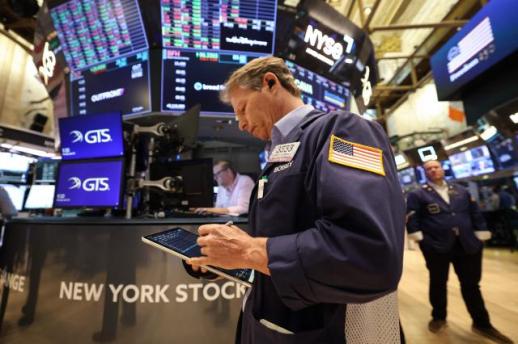 SEC Proposes Ending Quarterly Reporting Requirement, Allowing Semiannual Option U.S. securities regulators have unveiled a proposed rule change that would end the requirement for public companies to file quarterly earnings reports and allow them to opt for semiannual reporting instead. MarketWatch and other outlets reported that the Securities and Exchange Commission said in a statement on May 5 (local time) that it is proposing amendments to rules and forms so listed companies can choose semiannual reports in place of quarterly filings. Under current rules, U.S.-listed companies must file three quarterly reports and one annual report each fiscal year. If adopted, the proposal would let companies choose to file one semiannual report and one annual report instead of quarterly reports. Companies that choose semiannual reporting would file a new form, Form 10-S. The deadline would be set at 40 or 45 days after the end of the first half of the fiscal year, depending on the company’s filing status. The SEC said the changes are intended to give companies and investors flexibility to choose the reporting cycle that best fits their needs. It also said it plans to revise Regulation S-X, which sets financial statement requirements for periodic reports, registration statements and proxy disclosures, to reflect the new semiannual option and simplify existing requirements. SEC Chairman Paul Atkins said in the statement, “The rigidity of SEC rules has limited companies and investors from deciding for themselves which interim reporting cycle is most appropriate,” adding that if the proposal is finalized it would provide greater regulatory flexibility. The proposal will go through a 60-day public comment period after it is published in the Federal Register, and then be put to a vote by the SEC. President Donald Trump said in September last year that companies should not be forced to report quarterly and should report results semiannually. The Wall Street Journal reported in March that the SEC was preparing a related proposal. Some investors have raised concerns that fewer earnings reports could reduce corporate transparency and credibility. The Investment Company Institute said in a statement on May 5 that it is important to strike a balance between reducing unnecessary compliance burdens and maintaining the quality of the disclosure system that supports investor confidence.* This article has been translated by AI. 2026-05-06 10:24:15
 -
 U.S., Gulf Allies Renew Push for U.N. Resolution to Keep Strait of Hormuz Open The United States and its Gulf allies are renewing a push for a U.N. Security Council resolution demanding that Iran keep the Strait of Hormuz open, warning that additional steps, including sanctions, could be considered if Tehran does not comply. The U.S. State Department said Secretary of State Marco Rubio issued a statement on May 5 (local time) formally proposing the resolution to safeguard freedom of navigation through the strait. The draft was prepared by the United States with Bahrain and Gulf regional allies Saudi Arabia, the United Arab Emirates, Kuwait and Qatar. It calls on Iran to halt attacks on vessels, stop laying mines and cease collecting transit fees. It also demands that Iran disclose the locations of mines it has placed, cooperate in mine removal and work to establish humanitarian corridors. The new text takes a more cautious approach than a measure that failed last month. Reuters and other outlets reported the draft, mindful of Russia and China, removes language that would explicitly authorize military action. It retains the framework of Chapter VII of the U.N. Charter, leaving a basis for enforcement measures that could include sanctions and military steps. The resolution condemns alleged recent ceasefire violations by Iran and describes any attempt to close or obstruct navigation through the strait, or to impose transit fees, as a threat to international peace and security. It says disruptions from a blockade are affecting shipments of essential goods, including relief supplies and fertilizer, and urges Iran to cooperate in creating routes for humanitarian assistance. Under the draft, the U.N. secretary-general would report to the Security Council within 30 days on whether Iran is complying. If Iran fails to meet the demands, the council would reconvene to consider additional measures, including sanctions. The United States aims to circulate the text by May 8 and seek a vote next week. At a White House briefing, Rubio said, “Everyone doesn’t want this to be blocked by a veto again, and we adjusted the wording slightly.” He added, “I don’t know if we can avoid a veto,” and said he believes the effort is “a real test of whether the U.N. is actually a functioning body.” Reuters also reported the United States has proposed creating a multinational maritime coalition called the Maritime Freedom Construct (MFC). The MFC would work with a separate maritime mission led by the United Kingdom and France, aiming to fully resume transit through the Strait of Hormuz once conditions stabilize. About 30 countries are reported to be under discussion for participation in that maritime mission.* This article has been translated by AI. 2026-05-06 09:56:26