

Journalist

Hwang Jin-hyun
jinhyun97@ajunews.com
-
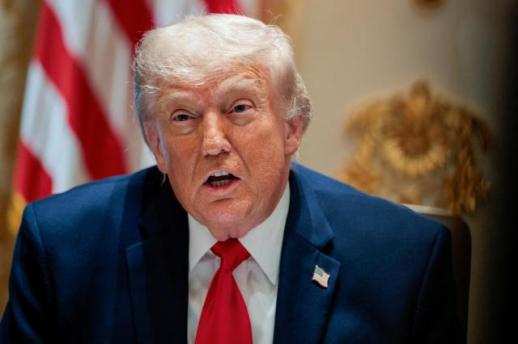 Trump Delays Approval of Iran Ceasefire MOU, Sends Revised Proposal President Donald Trump has reportedly withheld approval for a draft memorandum of understanding (MOU) aimed at ending hostilities between the United States and Iran. According to a report by The New York Times on May 30, citing three officials, Trump did not approve the draft MOU intended to formalize the cessation of war between the two nations. The report indicates that Trump has strengthened the terms of the ceasefire agreement and sent a revised document back to Iran. The specific changes made to the proposal have not yet been disclosed. However, officials noted that Trump has expressed concerns regarding the inclusion of measures to release Iran's frozen assets in the preliminary agreement. Additionally, he has voiced frustration over Iran's slow response to the U.S. proposals. One official suggested that Trump's issuance of a tougher new proposal might be aimed at pressuring Iran's Supreme Leader Ayatollah Seyyed Ali Khamenei to swiftly accept the existing offer. Earlier, Trump discussed the approval of the ceasefire MOU during a meeting in the White House Situation Room on May 29, but the meeting concluded without any announcement. The draft MOU reportedly includes provisions to extend the ceasefire between the U.S. and Iran for an additional 60 days, fully open the Strait of Hormuz, and reach agreements on Iran's denuclearization during the extended ceasefire period.* This article has been translated by AI. 2026-05-31 14:00:00
 -
 UN Faces Bankruptcy Risk Due to Unpaid Contributions from US and China The United Nations is facing a severe financial crisis due to unpaid contributions and delayed payments from the United States and China. According to the Wall Street Journal on May 30, the US and China, which together account for 42% of the UN's core budget, have delayed billions of dollars in payments, putting the organization at risk of bankruptcy. UN Secretary-General António Guterres warned that the UN is "heading toward bankruptcy" and stated that the likelihood of a financial collapse is very high. If current trends continue, the UN is projected to run out of cash by mid-August, coinciding with the process of selecting Guterres's successor. The US currently owes $4.284 billion, which includes $2.037 billion in regular budget arrears and $2.247 billion in peacekeeping budget arrears. The administration of President Donald Trump has characterized the UN as a bloated and inefficient organization, insisting that it will only pay its dues after significant restructuring. The US has called for further staff reductions, cuts to business-class travel, and increased use of machine translation. According to UN regulations, if a member state's arrears exceed the contributions for the previous two years, it loses its voting rights in the General Assembly. There are concerns that the US could lose its voting rights as early as 2027 if the arrears continue. China, the second-largest contributor to the UN, is also exacerbating the financial crisis. Recently, during Foreign Minister Wang Yi's visit to the UN, China paid $844 million for peacekeeping costs but still owes $455 million. The Wall Street Journal noted that while China presents itself as "effectively the largest financial contributor to the UN," it has delayed payments, worsening the UN's financial situation. Historically, China paid its dues within months at the beginning of each year, but since 2022, it has postponed payments until the end of the fiscal year. Some experts interpret the unpaid dues and delayed payments from both the US and China as a means to pressure the UN to meet their political demands. Jodi Herman, a senior director at the UN Foundation, stated, "The US is not paying its fair share of dues, and China has been exploiting the payment system for years." The Wall Street Journal reported that China is leveraging its alliance with the Group of 77, a coalition of developing countries, to exert influence during UN budget discussions. It also pointed out that China provides minimal funding for UN humanitarian programs. The UN's unique accounting rules are also contributing to the financial crisis. The UN refunds unspent funds based on member states' dues assessments by the end of the year. However, unpaid dues can also be treated as unspent budgets on the books, making them eligible for refunds. This year alone, $299 million in non-existent cash has been recorded as refundable credits, with projections suggesting this could rise to $400 million next year. Earlier this year, Guterres urged member states in a letter to reform these regulations, stating, "We are trapped in a Kafkaesque cycle of being asked to refund non-existent cash." In response to the financial crisis, the UN has initiated significant austerity measures. It plans to cut 3,000 staff positions, reduce interpretation hours, and postpone maintenance of its New York headquarters. Additionally, the UN is accelerating the withdrawal of peacekeeping forces from conflict zones in Africa, such as the Democratic Republic of the Congo, and is cutting peacekeeping budgets. Reimbursements to developing countries like Nepal and Bangladesh that have deployed troops for peacekeeping are also being delayed. There are growing concerns within the UN that if cash shortages materialize, staff salaries could be halted, and food and security programs could be paralyzed.* This article has been translated by AI. 2026-05-31 13:39:00
 -
 U.S. Defense Secretary Says Iran Has Sufficient Capacity to Resume War Pete Hegseth, U.S. Secretary of Defense, emphasized the need to counter China and increase defense spending among allies during the Shangri-La Dialogue in Singapore. He warned that the U.S. could resume military intervention if negotiations with Iran fail, while maintaining maritime blockades. On May 30, local time, Hegseth held a press conference at the U.S. embassy in Singapore after the Shangri-La Dialogue, stating, "We have the capability to resume military action if necessary, and our stockpiles are more than adequate both there and globally." He added, "This reflects how we balance precision weapons with ample ammunition." Hegseth also noted that the blockade operations against Iran are firmly in place, mentioning that the issue of the Strait of Hormuz was frequently discussed during bilateral meetings. He asserted, "The Strait of Hormuz will remain open, accessible to all, and free of tolls, as it should be." U.S. Defense Secretary Pressures Allies to Increase Defense Spending In his earlier speech at the Shangri-La Dialogue, Hegseth highlighted the importance of countering China and the necessity for allies to boost their defense budgets. He stated, "No nation, including China, can undermine the security of the U.S. and its allies through hegemonic actions," expressing justified concerns over China's military expansion in the Asia-Pacific region and beyond. He warned that if a hegemonic power dominates the Pacific, it would disrupt the regional balance of power, emphasizing, "What we seek is a truly stable equilibrium that benefits both the American people and our allies." However, he also showed a desire to avoid direct confrontation with China, saying, "We do not want unnecessary conflict in this region." He noted that U.S.-China relations are at their highest level in years since the Trump administration, and that military-to-military communication channels are open and more frequent. Hegseth stressed the need for allies to increase their defense spending, stating, "Regional security has relied too heavily on U.S. military power. Everyone must take responsibility to build a strong alliance. There will be no free riders." He added, "The era of the U.S. subsidizing defense spending for wealthy nations is over; we need partners, not dependents." He reiterated the U.S. commitment to a $1.5 trillion military investment, urging allies and partners to raise their defense budgets to 3.5% of their GDP. South Korea Receives Praise Hegseth particularly commended South Korea for pledging to increase its defense spending to 3.5% of GDP, saying, "I applaud the pragmatism and leadership shown by South Korea." He described it as "a breath of fresh air" that allies like South Korea are taking the lead in military operations. Regarding Taiwan, he reaffirmed that there is no change in the U.S. position, stating, "The core of the U.S. approach in the Pacific is to deny access across the First Island Chain (a hypothetical line connecting Japan, Okinawa, Taiwan, the Philippines, and the Malacca Strait)." He reiterated the necessity of defending Taiwan, but noted that future sales of U.S. weapons to Taiwan depend on decisions made by President Donald Trump. Meanwhile, China delivered a relatively restrained message at the conference. According to the Global Times, a state-run English newspaper, Meng Xiangqing, head of the Chinese delegation, stated during a session on "Managing Threats to Strategic Stability" that "hegemonism threatens regional security." He expressed hope that "China and the U.S. can move closer together" and that military relations between the two countries develop in a healthy, stable, and sustainable direction. In contrast, China strongly criticized Japan's military rearmament efforts. Meng warned, "The lessons of history remain vivid, and the world stands at a crossroads again," urging vigilance against the resurgence of militaristic thinking and the need to uphold the achievements of World War II and the post-war international order. He noted that this year marks the 80th anniversary of the Tokyo Trials and claimed, "Some forces are glorifying war crimes and distorting the history of World War II while trying to whitewash their history of aggression." On the Taiwan issue, he stated, "Taiwan independence forces cannot coexist with peace across the Taiwan Strait."* This article has been translated by AI. 2026-05-31 11:09:00
 -
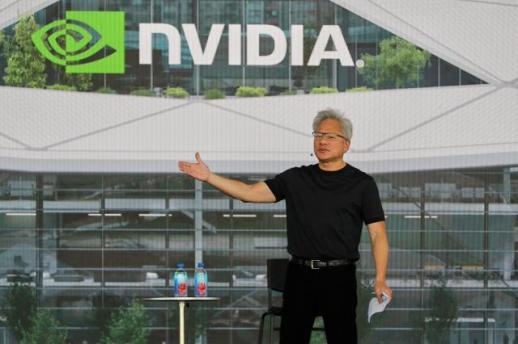 Jensen Huang Teases New Products, Predicts Record-Breaking Second Half for Nvidia Jensen Huang, CEO of Nvidia, announced that the company has an undisclosed new product and predicted that the second half of this year will be the largest ever for both Nvidia and Taiwan. On May 28, local media outlets in Taiwan, including the Central News Agency and Liberty Times, reported that Huang made these remarks after dining with executives from foundry company Quanta Computer the previous evening, where they discussed expanding production capacity and strengthening collaboration. "The main topic of discussion today was expanding production capacity. The second half of the year will be very busy, especially with new products like 'Grace Blackwell' and the next-generation AI accelerator, 'Vera Rubin,'" Huang said. He added, "We have an amazing new product that we haven't told anyone about yet, and we plan to announce it soon." Huang emphasized, "The second half of this year will be the largest ever for Nvidia and Taiwan." In response to concerns about potential supply shortages due to limitations in TSMC's 3-nanometer and 2-nanometer production capabilities, Huang stated, "TSMC is the best company in the world. TSMC can be very successful, and so can Nvidia. The two can coexist." Regarding potential equity investments in Taiwanese companies, he mentioned, "Currently, we don't have specific targets or plans, but we would like to if opportunities arise." Huang also noted that Nvidia's partnership network in Taiwan is rapidly expanding. "Just a few years ago, Nvidia had only 10 partners in Taiwan, but that number grew to 50 about five years ago, and now we have 150 partners," he said. During the groundbreaking ceremony for Nvidia's Taiwan headquarters, Huang praised Taiwan as the "epicenter of the AI revolution" and announced plans to significantly increase investments in the region. He stated, "Five years ago, our annual investment in Taiwan was between $10 billion and $15 billion, but now it will exceed $100 billion, reaching $150 billion." He emphasized, "Taiwan is the epicenter of the AI revolution, where chips, packaging, and AI supercomputers are all made." Nvidia's Taiwan headquarters is set to break ground this year, with completion targeted for 2030. Once finished, it will employ 4,000 people. Huang told employees, "In three to five years, Nvidia's market capitalization will be much higher than the current $5 trillion." Emphasis on Power Supply Huang also highlighted the importance of securing power supply, stating, "Just as human employees need food, AI employees need power. We need more power. Growth in the energy sector is crucial for Taiwan's GDP." In response, Taiwan's Minister of Economic Affairs Wang Mei-hua assured that there would be no issues with power supply until 2034, adding that if Nvidia has new major investment plans, they should inform the government in advance to facilitate planning. Since arriving in Taiwan on May 23, Huang has been meeting with leaders in the Taiwanese semiconductor industry, including a dinner with TSMC Chairman Mark Liu. He is also scheduled to attend Computex, Asia's largest IT expo, from June 2 to 5. Nvidia plans to strengthen its collaboration with TSMC while also expanding alliances with AI server manufacturers such as Foxconn, Wistron, and Quanta Computer.* This article has been translated by AI. 2026-05-28 17:24:00
 -
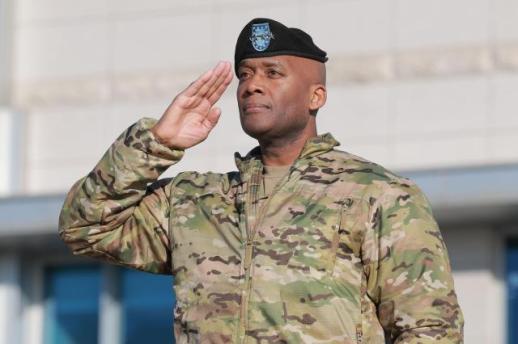 Chinese Embassy Criticizes US Forces Commander for 'Dagger' Comment The Chinese government has strongly criticized U.S. Forces Korea Commander Javier Brunson for describing South Korea and the U.S. military presence there as a "forward base" for countering China. On May 28, the Chinese Embassy in South Korea issued a statement in response to Brunson's recent public remarks, stating, "Your comments have clearly crossed the line." Brunson had previously likened South Korea to a "dagger" and a "fixed aircraft carrier" in the context of its geographical significance and the role of U.S. forces in deterring China. A spokesperson for the Chinese Embassy questioned, "Is referring to U.S. forces as an aircraft carrier or dagger an act of aggression, or is there an intention to take other countries hostage?" The spokesperson also referenced a recent agreement between U.S. and Chinese leaders to establish a "constructive and strategically stable relationship," asking Brunson whether his hostile remarks toward China were sanctioned by Washington or aimed at undermining the outcomes of the U.S.-China summit. Additionally, some South Korean media outlets have criticized Brunson's comments, urging him to respect regional countries and work harder to promote peace and stability in the area. This statement from the Chinese Embassy is seen as an effort to counter U.S. moves to expand the role of U.S. forces in South Korea beyond North Korean deterrence to include responses to regional conflicts such as those in the Taiwan Strait. China has recently reiterated the need for stability in U.S.-China relations. According to state-run Xinhua News Agency, Wang Yi, a member of the Political Bureau of the Communist Party of China and Foreign Minister, met with U.S. strategic and economic figures in New York on May 27, stating, "China-U.S. relations extend beyond bilateral ties and affect global peace and the future of humanity." Wang emphasized the need for both countries to quickly realize a "constructive strategic stability relationship." Regarding the Taiwan issue, he stated, "Taiwan independence and peace and stability in the Taiwan Strait are incompatible."* This article has been translated by AI. 2026-05-28 16:34:00
 -
 U.S.-Iran Negotiations Stalled Amid Renewed Military Clashes The Middle East situation, which seemed to be showing signs of resolution, has once again become uncertain. President Donald Trump stated that the U.S. has not yet reached a satisfactory level in negotiations with Iran regarding a ceasefire, coinciding with renewed military clashes between the two nations. On May 27, during a cabinet meeting at the White House, Trump remarked, "Iran is very eager to make a deal," but added, "so far, they have not reached a level that satisfies us." He expressed optimism that a satisfactory agreement could be achieved, but warned, "Either we reach an agreement, or we will just have to wrap things up ourselves." Trump clarified red lines on key negotiation topics, including the Strait of Hormuz and uranium processing. Regarding the Strait, he stated, "It will be accessible to all nations, and no one can control it under international regulations," adding, "We will monitor it." When asked if he would accept a proposal for Iran's enriched uranium to be processed by China or Russia, he replied, "No, that would make me uncomfortable." Previously, Trump had suggested the possibility of allowing the disposal of Iran's enriched uranium in Iran and three other countries, but he reversed course on this issue. This development comes as reports emerged that Iran is considering transferring 60% enriched uranium to China as part of ongoing ceasefire negotiations. The Jerusalem Post reported that Iran is reviewing this option, and China has not denied related reports, with the Chinese Foreign Ministry stating it will continue to play a constructive role in the political and diplomatic resolution of Iran's nuclear issues. In contrast, Iran has made it clear that it will not back down on key issues. Ebrahim Azizi, a member of Iran's Parliament National Security Committee, stated on social media platform X (formerly Twitter), "Iran will not retreat from its red lines regarding uranium enrichment rights, possession of enriched uranium, control over the Strait of Hormuz, and the lifting of sanctions." Renewed Military Clashes Amid these tensions, military clashes between the two countries, which are currently in a ceasefire, have resumed. On the same day, the U.S. Central Command announced it struck Iranian military facilities near Bandar Abbas that posed a threat to U.S. troops and commercial maritime traffic in the Strait of Hormuz. Additionally, U.S. forces intercepted and shot down several Iranian drones that posed similar threats. In response, the Islamic Revolutionary Guard Corps (IRGC) claimed to have attacked a U.S. airbase. According to the semi-official Tasnim news agency, the IRGC stated in a release, "The U.S. previously conducted airstrikes near Bandar Abbas airport," and added, "We responded at 4:50 a.m. local time." The IRGC characterized this as a retaliatory measure, warning that "if aggression is repeated, there will be a firmer response" and that "the responsibility for escalating tensions lies with the aggressor." However, details regarding the means of attack, launch points, target bases, and damage inflicted were not disclosed. Military tensions are also affecting neighboring countries. According to the Associated Press, the Kuwaiti military reported that its air defense systems intercepted missiles and drones, stating, "Explosions may be heard, which is due to interception operations." However, they did not disclose the targets, extent of damage, or the identity of the attacking forces. Kuwait, which hosts U.S. military bases, is considered a primary target for Iranian regional attacks. The U.S. is expanding its economic sanctions alongside military pressure. On May 27, the U.S. Treasury Department's Office of Foreign Assets Control (OFAC) announced on its website that it has added the Iranian Persian Gulf Shipping Association (PGSA) and all individuals or entities cooperating with it to the Specially Designated Nationals and Blocked Persons (SDN) list. Being placed on this list results in the freezing of assets in the U.S. and a ban on financial transactions. As both nations engage in ceasefire agreement negotiations mediated by Qatar, the outbreak of military clashes has once again plunged the Middle East situation into uncertainty. This is reflected in the nearly 3% rise in Brent and West Texas Intermediate (WTI) crude oil prices during Asian trading on May 28, following a sharp decline the previous day. Reuters noted, "As the U.S. and Iran exchange hostilities, hopes for reopening negotiations regarding the Strait of Hormuz are fading."* This article has been translated by AI. 2026-05-28 15:48:00
 -
 Jensen Huang Joins Tsinghua University Advisory Board Led by Tim Cook Jensen Huang, CEO of NVIDIA, is set to join the advisory board of Tsinghua University, which is chaired by Apple CEO Tim Cook. Huang is intensifying efforts to penetrate the Chinese artificial intelligence (AI) chip market through this advisory role. The Financial Times reported on May 28, citing multiple sources, that Huang accepted an invitation to join the advisory board of Tsinghua University's School of Economics and Management (SEM) after accompanying President Donald Trump on his recent visit to China. Located in Beijing, Tsinghua University is one of China's top science and engineering institutions, and it counts Chinese President Xi Jinping among its alumni. The SEM advisory board aims to strengthen the international network of the business school and support long-term strategic planning. In addition to Cook, the advisory board includes prominent figures from the U.S. tech industry such as Elon Musk, Michael Dell, Satya Nadella, CEO of Microsoft, and Mark Zuckerberg, CEO of Meta. Financial leaders like Jamie Dimon, CEO of JPMorgan, Larry Fink, CEO of BlackRock, and Jane Fraser, CEO of Citigroup, are also members. From China, notable participants include Jack Ma, founder of Alibaba, Pony Ma, chairman of Tencent, and Li Yanhong, CEO of Baidu. The FT noted that Huang's participation comes as NVIDIA faces ongoing restrictions on semiconductor exports to China, highlighting his efforts to maintain connections with Chinese academia and industry. Since April of last year, NVIDIA has faced significant limitations in the Chinese market. At that time, the Trump administration banned the export of NVIDIA's AI chip H20, developed for China, in accordance with existing export regulations. Earlier this year, limited sales of the more advanced H200 chip to select Chinese customers were approved, but the Chinese government imposed import restrictions to protect its domestic semiconductor industry. In a recent interview with CNBC, Huang stated that U.S. export controls have effectively ceded the Chinese market to local competitors like Huawei. He noted that China once accounted for over 20% of NVIDIA's global revenue but cautioned against expecting any short-term approvals for advanced chip sales, saying, "Don't expect anything." However, Huang reaffirmed his commitment to returning to the Chinese market, stating, "We would be very happy to serve that market. There are many customers and partners there, and we have been there for 30 years." The SEM advisory board was established in 2000 by former Chinese Premier Zhu Rongji. It is considered a rare high-level exchange channel for leaders from both the U.S. and China to meet amid escalating technological and economic tensions. Advisory board members typically hold annual meetings in Beijing, serving as a behind-the-scenes communication channel between Chinese policymakers and global business leaders. 2026-05-28 14:28:00
 -
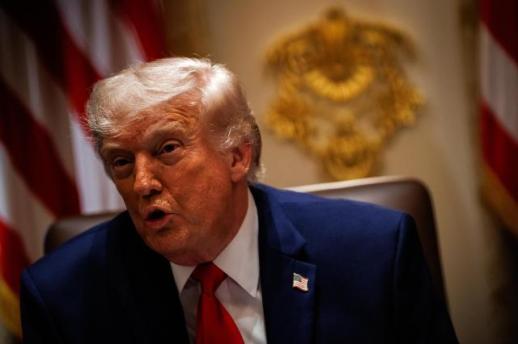 Trump Warns Oman Over Iran's Proposed Hormuz Toll Donald Trump, the President of the United States, issued a strong warning regarding Oman’s discussions with Iran about imposing a toll on ships passing through the Strait of Hormuz, even mentioning the possibility of military action. On May 27, during a Cabinet meeting at the White House, Trump stated, "Oman must act like other countries. Otherwise, we may have to blow them away." He added, "They understand that point. It will be fine." Earlier, Mohammad Aminnejad, Iran's ambassador to France, revealed in an interview with Bloomberg that Iran and Oman were discussing the establishment of a permanent toll system for vessels transiting the Strait of Hormuz. Politico reported that Trump rejected this proposal and threatened that Oman, a U.S. ally, could face severe consequences. The reopening of the Strait of Hormuz has emerged as a key issue in negotiations aimed at ending the conflict between the U.S. and Iran. The strait, located between Iran and Oman, could be completely blocked if the two nations reach an agreement. Therefore, Oman’s discussions with Iran regarding tolls could be seen as a thorn in the side of the U.S., which is currently pursuing the reopening of the strait through peace negotiations with Iran. Trump reiterated his stance that the Strait of Hormuz should not be under the control of any nation. He stated, "The strait must be open to everyone. It is international waters. No one will control it. We will monitor it, but no one can control it." Oman has played a crucial mediating role in the Iran nuclear negotiations and U.S.-Iran backchannel communications. While maintaining a friendly relationship with the U.S., Oman has not participated in Trump’s Abraham Accords. CNN noted that Trump’s remarks add Oman to the list of countries he has threatened or mentioned as potential targets during his presidency. Since taking office, Trump has conducted military actions in Iran, Iraq, Nigeria, Somalia, Syria, Venezuela, and Yemen, and has also mentioned the possibility of attacks on Canada, Colombia, Cuba, Greenland, Mexico, Panama, and Oman. However, CNN pointed out that not all of these threats and actions are of the same nature, with some being limited attacks aimed at specific terrorist groups. Analysts suggest that Trump employs a so-called "madman theory" in his foreign policy, using unpredictable rhetoric to pressure adversaries.* This article has been translated by AI. 2026-05-28 11:24:00
 -
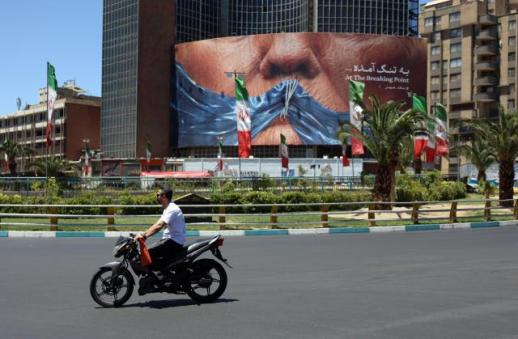 Iran Refuses to Back Down on Uranium Enrichment and Hormuz Control Iran's top security official has stated that the country will not compromise on key demands, including its right to uranium enrichment and control over the Strait of Hormuz, in negotiations with the United States. On May 28, Ebrahim Azizi, chairman of the Iranian Parliament's National Security Committee, posted on social media platform X, asserting, "Iran will not back down from its red lines regarding uranium enrichment rights, possession of enriched uranium, control over the Strait of Hormuz, and the lifting of sanctions." Azizi also criticized President Donald Trump, claiming that Trump oscillates between threatening Iran and begging for a deal to escape the strategic deadlock created by U.S.-Iran negotiations. Earlier, on May 27, Trump stated during a cabinet meeting that the Strait of Hormuz should not be controlled by any specific country and that the U.S. would monitor the situation. When asked if he would accept a proposal for China or Russia to handle Iran's highly enriched uranium, he responded, "No. That would make me uncomfortable." Regarding negotiations with Iran, Trump remarked, "Iran wants a deal very badly," but added, "So far, we have not reached a level that satisfies us." He emphasized, "We will be satisfied. If not, we will have to end things."* This article has been translated by AI. 2026-05-28 10:57:00
 -
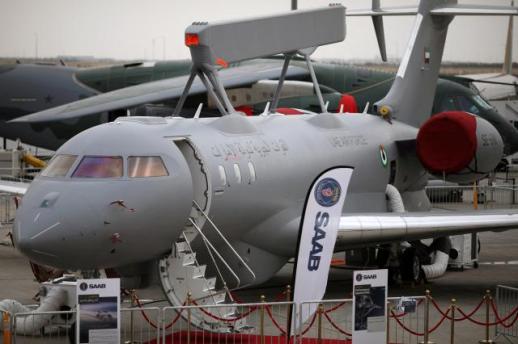 Canada Chooses Swedish Saab Over Boeing for Next-Gen Early Warning Aircraft The Canadian government has selected Sweden's Saab for its next-generation early warning aircraft program, opting for the GlobalEye model instead of the U.S. Boeing option. This decision reflects Canada's efforts to reduce its defense dependence on the United States amid strained relations since the Trump administration took office. On May 27, Canadian Prime Minister Mark Carney announced the plan to acquire Saab's GlobalEye during a defense conference in Ottawa. The GlobalEye is based on Bombardier's Global 6500 jet. Boeing's E-7 Wedgetail was also a contender for the project, but it was ultimately not selected due to delays in delivery and cost overruns. Reuters reported that this decision aligns with the Canadian government's strategy to lessen reliance on U.S. defense contractors. Carney stated, "Saab's GlobalEye, equipped with advanced sensors and mission systems, will be a key asset for the Canadian military to detect and deter threats across the Arctic region." While Canadian military officials did not disclose the specific contract value, they previously indicated plans to purchase six early warning aircraft. Saab has expressed intentions to invest in research and development in Canada if the contract is finalized. Historically, Canada has relied heavily on cooperation with the U.S. to monitor its vast Arctic territory, which spans over 4.4 million square kilometers. In March, Carney emphasized that Canada would take full responsibility for defending its Arctic territory. In light of the perception that the U.S. has become a relatively less reliable partner, Canada has shown a commitment to enhancing cooperation with Nordic countries on Arctic defense and security issues. Philip Lagassé, associate professor of international relations at Carleton University in Ottawa, told The Guardian that Canada's decision to purchase the GlobalEye is a significant test of the Carney government's policy to move away from reliance on U.S. military capabilities, affirming the relationship between Sweden and Canada as new NATO allies. Swedish Prime Minister Ulf Kristersson also commented on social media, stating, "GlobalEye is already creating jobs in Canada and collaborating with the Canadian supply chain. This decision will further strengthen the ties between our two countries." Saab is also pursuing sales of its Gripen fighter jets as part of Canada's fighter jet acquisition program. Canada has a contract to purchase 88 Lockheed Martin F-35 fighter jets, but following the imposition of tariffs on key Canadian imports by the U.S. last year, Carney instructed the military to consider reducing order sizes and exploring options for aircraft from other manufacturers. Meanwhile, Canada's reassessment of its reliance on U.S. weapons is evident in other procurement initiatives. According to military sources, the Canadian Armed Forces plan to acquire 250 armored combat vehicles within the next five years and upgrade existing Leopard 2 tanks. Notably, candidates to replace the U.S.-made M-113 armored personnel carriers include models from Germany, South Korea, and Sweden.* This article has been translated by AI. 2026-05-28 10:33:52