

Journalist

Joonha Yoo
joonhayoo94@ajunews.com
-
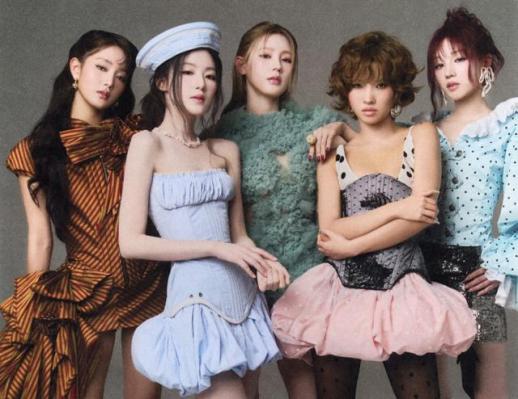 i-dle lands digital cover of U.S. magazine 'PAPER' ahead of July comeback SEOUL, May 28 (AJP) - K-pop girl group i-dle has been featured on the digital cover of U.S. magazine PAPER as the group prepares for a July comeback. PAPER released the cover shoot and interview with the five-member group — Miyeon, Minnie, Soyeon, Yuqi and Shuhua — on Tuesday. The feature comes as i-dle continues to expand its presence in North America through media appearances, festival stages and overseas promotions. In the cover images, the members reinterpret a 1990s-inspired angelic mood through vivid colors, ornate styling and romantic details, creating a softer but still highly stylized image for the group. PAPER described i-dle as a group that has grown more certain of its instincts and musical direction over time. The magazine said the group’s desire to strip away the unnecessary and move closer to the essential has come to define its music. The magazine also highlighted the group’s ability to build one of K-pop’s most distinctive creative worlds, balancing theatricality with emotional directness. The feature also looked at i-dle’s recent digital single “Mono (Feat. skaiwater),” released in January, describing it as a softer shift that still carries the confidence of artists no longer trying to prove themselves through noise. PAPER also drew attention to “Crow,” a new song first performed during the group’s 2026 world tour “Syncopation.” The magazine noted that the song reworks the image of the crow — often associated with death, disaster or bad omens — into a symbol of survival and endurance. The coverage adds momentum to i-dle’s upcoming activities in the United States. The group has recently appeared on NBC’s “Today” show, “The Kelly Clarkson Show” and “iHeart KPOP with JoJo” as part of its North American promotions. i-dle is also scheduled to perform at Lollapalooza in July, marking another major U.S. festival appearance for the group. In the feature, PAPER framed i-dle not simply as a K-pop act preparing another release, but as a group that has returned with a clearer sense of identity each time it has faced adversity. 2026-05-28 17:27:25
 -
 K-pop quartet's new album draws attention after their hit song 'Supernova' SEOUL, May 28 (AJP) - K-pop girl group aespa returned on Thursday with a new full-length album "LEMONADE," unveiling what the quartet described as a more mature musical identity and a new phase in the expanding universe that has defined their rise as one of K-pop's leading global acts. The 10-track album was released at 1 p.m. through major music-streaming platforms, marking aespa's first studio album since "Armageddon" in May 2024. The release arrives after a breakthrough period for the group. "Supernova," one of the double title tracks from "Armageddon," dominated South Korea's music charts in 2024, topping Melon's chart for 15 consecutive weeks and helping aespa win "Group of the Year" at Billboard Women in Music 2025. "We felt a lot of pressure because the first full-length album received so much love, but we prepared with excitement," leader Karina told reporters. "We consulted a lot with the company and worked hard to show a more grown version of ourselves." Since debuting under SM Entertainment in November 2020, aespa — consisting of Giselle, Karina, Ningning and Winter — have become one of the defining K-pop acts, combining a futuristic virtual-world concept with aggressive genre experimentation. "LEMONADE" features double title tracks "WDA (Whole Different Animal)" featuring rapper G-Dragon and "LEMONADE," alongside songs spanning dance, rock, hyperpop, R&B and pop-rock. The album also includes a collaborated song with American rapper Ty Dolla $ign. According to their agency, the album centers on "Complaexity," a concept describing intertwined parallel universes within aespa's ongoing fictional storyline. In the group's narrative, cracks formed between overlapping worlds become a metaphor for transforming disruption into opportunity. "I hope people feel like a new door has been opened when they listen to this album," Winter said. The two title tracks present sharply contrasting styles. "WDA" leans into darker industrial hip-hop with heavy synth bass and restrained vocals, while "LEMONADE" adopts a brighter electronic dance sound driven by acid-techno synth riffs, hardstyle beats and chant-like hooks. The performances also emphasize the contrast. "WDA" focuses on hip-hop-based choreography and controlled movement, while "LEMONADE" incorporates playful gestures, including a signature move mimicking the squeezing of a lemon. "WDA has a dark and overwhelming feeling, while LEMONADE is kitschy and playful," said Giselle. "The mood of the two songs is completely different." Winter described "LEMONADE" as the track that best captures aespa's personality and confidence. "No matter how dangerous or chaotic things get, we'll grind it all up and drink it our way," she said. Other tracks on the album include "Bite," "Camouflage," "Can't Help Myself," "My Plan," "Roll," "SHAKIN," "Switchblade" featuring Ty Dolla $ign, and "Til We Die." The group's debut "Black Mamba" set YouTube records for a K-pop debut music video at the time. The quartet later expanded their fictional "KWANGYA" universe through hits including "Drama," "Next Level," "Savage," "Spicy," and "Supernova." While the four girls initially drew attention for their AI-avatar concept and digital mythology, aespa's commercial rise has increasingly been driven by their musical evolution and global reach. "Supernova" became their biggest international hit, charting on Billboard's Global 200 and earning multiple "Song of the Year" awards in South Korea. To promote the new album, aespa will hold "aespa WEEK - MAKE IT LEMONADE" from May 29 to June 7, with events planned at Banpo Hangang Park, Yeouido Hangang Park and IFC Mall in Seoul. Pop-up events are also scheduled in Los Angeles, New York and Shenzhen, followed by additional promotions in Bangkok, Taipei, and Tokyo ahead of the group's upcoming "SYNK: COMPLaeXITY" world tour beginning in August. "More than anything, I hope people find energy in our music," Karina said. 2026-05-28 17:07:28
 -
 Retail money floods leveraged chip ETFs as Korea's chip rally finds new outlet SEOUL, May 28 (AJP) - South Korea's red-hot semiconductor rally spilled into the exchange-traded fund market Wednesday, as the country's first single-stock leveraged ETFs tied to Samsung Electronics and SK hynix drew explosive trading on their debut, giving retail investors a leveraged route into an already crowded chip trade. Sixteen leveraged and inverse ETFs linked to Samsung Electronics and SK hynix were listed simultaneously, generating a combined trading value of about 10.4 trillion won on their first trading day, according to Yonhap Infomax data. Their combined market capitalization reached nearly 5 trillion won. The strongest demand centered on products linked to SK hynix, the memory-chip maker that has become one of the biggest beneficiaries of global artificial intelligence investment. Samsung Asset Management's KODEX SK hynix Single Stock Leverage ETF posted the largest trading value among all domestic ETFs at 4.39 trillion won, rising 18.44 percent. Mirae Asset Global Investments' TIGER SK hynix Single Stock Leverage ETF followed with 2.07 trillion won in trading and a gain of 18.56 percent. Leveraged ETFs tied to Samsung Electronics also attracted heavy demand. Samsung Asset Management's KODEX Samsung Electronics Single Stock Leverage ETF logged 1.95 trillion won in trading, while Mirae Asset's competing TIGER product recorded 1.02 trillion won. The debut highlights a broader shift in Korea's equity market. Semiconductor heavyweights have already driven the benchmark KOSPI to record highs, leaving many investors wary of entering the trade directly after sharp gains and widening intraday swings. The new ETFs effectively opened another channel for investors seeking amplified exposure to the same stocks, allowing them to ride the chip rally through listed products rather than direct share purchases alone. The launch came as the KOSPI extended its record-breaking rally. The benchmark closed up 2.25 percent at 8,228.70 on Wednesday after briefly touching an intraday record of 8,450.26. Market participants said demand for the new leveraged products appeared to intensify the already heavy concentration of retail money in leading semiconductor shares. "Samsung Electronics and SK hynix, the underlying assets for the single-stock leveraged products, have recently shown daily price swings of around plus or minus 5 to 6 percent," Han Ji-young, an analyst at Kiwoom Securities, was quoted as saying. "As they are both market leaders and stocks with concentrated retail flows, the launch could amplify short-term money concentration." The new products drew immediate demand from retail investors who had watched from the sidelines as chip stocks surged, with some market participants pointing to fear-of-missing-out demand as one factor behind the rush into leveraged ETFs. The surge also pushed Korea's ETF industry past a major milestone. The combined market capitalization of locally listed ETFs exceeded 500 trillion won for the first time since ETFs were introduced in Korea in 2002, reaching 506.1 trillion won as of late Wednesday morning, according to the Korea Exchange. But the boom has also raised questions about whether speculative money is building too quickly around a narrow group of semiconductor-linked assets. On the same day, allegations surfaced that some liquidity providers may have engaged in wash trading to boost trading volume in the newly listed products. Securities firms and the broader financial investment industry denied the claims, while the Korea Exchange said trading volume alone was insufficient to determine whether wash trading had occurred. An exchange official said the credibility of the allegations was low based solely on execution volume, adding that account-level trading data from liquidity providers is recorded in the exchange database and monitored by its market surveillance division. SK Securities said wash trading was structurally impossible under its system because such orders are automatically blocked. Yuanta Securities also said it had merely carried out normal liquidity provision duties by narrowing bid-ask spreads and supporting investor protection during the listing process. The Korea Financial Investment Association said liquidity providers typically hedge opposite positions to manage losses that can arise while supplying liquidity. It also said incentives for liquidity providers were not large enough to create a strong motive for artificial trading. The intense ETF demand comes as investors are simultaneously parking record amounts of money in money market funds, suggesting that optimism over further stock gains is being matched by caution over extreme volatility. According to the Korea Financial Investment Association, MMF assets stood at 258.65 trillion won as of May 21, after hitting a record 262.01 trillion won on May 19. Corporate money accounted for more than 90 percent of the total. MMFs, which invest in short-term instruments such as Treasury bills, commercial paper and certificates of deposit, are widely used as cash parking vehicles because they allow flexible withdrawals and generate interest even over short holding periods. In a highly volatile market, they often function as waiting rooms for capital that has not yet committed to risk assets. That pattern is now visible in ETF form as well. Over the past month, money market ETFs collectively drew more than 430 billion won in net inflows, led by ACE Money Market Active and KODEX Money Market Active. The broader appetite for retail investment products was also visible in a separate government-backed fund. The National Growth Fund, which offers tax benefits and carries a government backstop covering up to 20 percent of sub-fund losses, had sold roughly 99.5 percent of its 600 billion won offering by Wednesday afternoon, according to the Financial Services Commission. Together, the flows show the unusual psychology of Korea's market. Investors are chasing upside through leveraged semiconductor ETFs, parking record amounts of money in cash-like funds and rushing into state-supported investment products at the same time. The pattern suggests that expectations for further gains, including fear-of-missing-out demand, are coexisting with deep caution over extreme volatility. Volatility remains elevated. The KOSPI recently saw an intraday swing of 675 points on May 15 and surged by 606 points in a single day on May 21. The VKOSPI, Korea's equivalent of the VIX and a widely watched measure of expected market volatility, remained at historically high levels, falling below 70 only after eight consecutive sessions above that threshold. A reading above 50 is generally regarded by market participants as a panic-level signal. Still, several brokerages have raised their KOSPI targets, with some projecting the index could reach 10,000 or higher this year. Nomura recently lifted its target range to 10,000–11,000, citing improving earnings and return on equity. Hyundai Motor Securities, KB Securities and Hana Securities have also presented bullish scenarios above the 10,000 level. Wednesday's debut made one thing clear: Korea's chip trade is no longer confined to the stock market. The same rally that has driven the KOSPI to record highs is now reshaping the country's ETF industry, cash management flows and retail investment behavior — drawing in investors who had stayed on the sidelines, even as large pools of short-term money remain on standby amid extreme volatility. 2026-05-28 09:30:05
 -
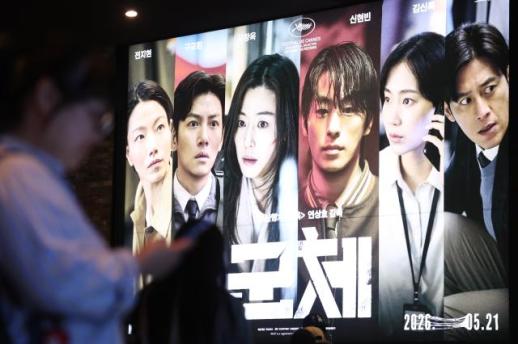 K-zombies are fast, vivid — and in "Colony," finally thinking SEOUL, May 27 (AJP) - Summer heat in Korea brings horror season, and this year's bar-raiser is "Colony," Yeon Sang-ho's latest zombie thriller, which drew more than 2.1 million admissions in its first six days. The film claimed 39.9 percent of advance reservations across 1,858 screens nationwide, prompting inevitable comparisons to Yeon's 2016 breakout "Train to Busan," which sold 11.5 million tickets and pushed Korean zombie cinema onto the global stage. Yeon, however, frames "Colony" as a rupture rather than a sequel in spirit. At a press conference at CGV Yongsan IPark Mall, the director said the film breaks from "Train to Busan," "Seoul Station" and "Peninsula" by training its lens on the zombies themselves. "In 'Seoul Station,' 'Train to Busan' and 'Peninsula,' the stories came from putting classic zombies into new spaces," he said. "'Colony' is about the zombies. In a sense, it's the first film I've made where they are the protagonists." The shift is more than perspectival. In "Colony," the infected mutate quickly, moving and communicating as a coordinated collective. "It's a confrontation between zombies with collective intelligence and humans," Yeon said. "The zombies begin in a primitive state and evolve rapidly, while humans devolve from civilization into savagery. What remains after that devolution — that, I thought, might be the core of humanity. That was the image I wanted to draw." If "Train to Busan" made Korean zombies famous for their speed, "Colony" makes them frightening for their coordination. The zombie is no longer simply an infected body. It is a network. For decades, Korean horror lived in the register of ghosts — resentment, unresolved grief, the vengeful woman in white, haunted school corridors, broken family homes. Gang Beom-gu's "A Monstrous Corpse," often cited as Korea's first zombie film, surfaced in the early 1980s, but the genre remained marginal for years. Its later ascent tracked the country's anxieties: the 1997 Asian financial crisis brought mass unemployment and a deep distrust of institutions, and popular culture began imagining collapse in collective rather than spectral terms. The pivot has only sharpened in recent years, with Korean horror trading supernatural vengeance for infection, social breakdown and mass panic. Set inside a sealed building during a mysterious outbreak, "Colony" follows survivors as they face infected beings whose behavior evolves unpredictably. The title nods to biology — a colony being a group of organisms functioning as a single unit. The film's quiet provocation is that the infected are not mindless. Aaron Kim, a 20-year-old university student from Edinburgh visiting Seoul, said he hadn't planned to see a Korean zombie film on his trip, but a Korean friend persuaded him. "In most zombie films I've seen, zombies have no mind. They just kill indiscriminately," Kim said. "In 'Colony,' they have intelligence. I realized how unsettling that could be." He found the film fresher than the genre fare he was used to abroad. "Zombie films overseas tend to follow a similar pattern," he said. "Korean zombies feel new. They run fast, and they're not simple." Kim gave the film an eight out of 10 and likened its central conceit to artificial intelligence. "The more people use AI, the more data feeds into one system, and the more powerful it gets," he said. "The zombies in 'Colony' felt like that. Each one seemed to be part of a larger circuit that kept learning." Jiyoon Lee, a 20-year-old student based in New York, said the film parts ways with predecessors like "Train to Busan" and "Kingdom." "In those, people turn into zombies because of a virus, and they attack aggressively but without thought," Lee said. "In 'Colony,' the zombies seem to have a clear purpose — to spread the virus. They build a kind of collective intelligence through their own communication network and move together. That was chilling." Both reactions point to one of the defining traits of Korean zombie cinema: speed. Since "Train to Busan," K-zombies have been fast, violent and physically overwhelming. But speed alone doesn't account for their pull. Korean zombie stories tend to plant contagion in dense, socially loaded spaces — trains, schools, apartment complexes, sealed buildings — amplifying the dread that there is nowhere to run because there is nowhere outside. That separates K-zombies from much of the Western tradition shaped by George A. Romero, which often asks what remains after civilization falls. Korean zombie stories ask the inverse: how quickly can a society unravel while everyone is still trapped inside it. Film critic Lee Ji-hye said K-zombie narratives draw much of their force from the emotional ties they implicate. "Korean zombie stories often hinge on the idea that a beloved family member or friend has become a monster," Lee said. "Existing bonds are woven into the narrative, which makes the story far more immersive." Grief and guilt, she said, are routinely fused to infection. "There's a tendency to attach collective guilt or sorrow to the fact that someone has become a zombie," Lee said. "The story makes room for mourning." That emotional undertow runs through the canon: "Train to Busan" wove family sacrifice into class friction; "Kingdom" set infection against royal politics, famine and state failure; "All of Us Are Dead" turned a high school into a theater of bullying and survival; "Happiness" used a quarantined apartment complex to dissect fear and hierarchy. Institutional collapse, Lee added, is rarely background scenery. "Korean zombie works tend to weigh the breakdown of social systems, the incompetence of government in a crisis, bureaucracy and human selfishness — not just zombies chasing people," she said. Unlike the jiangshi — the hopping corpse of 1980s Hong Kong cinema, rooted in Taoist folklore — Korean zombies are modern disaster figures, shaped by infection, institutions and the pressures of crowded urban life. With "Colony," the genre takes another step. The fear is no longer just the speed of the dead. It is an enemy that learns, coordinates and, in doing so, holds up a mirror to the society it consumes. 2026-05-27 17:50:29
 -
 KOSPI closes at record high as Korea outperforms Asian markets SEOUL, May 27 (AJP) - South Korean KOSPI lead the gain in major Asian markets Wednesday, with the KOSPI closing at a fresh record high above the 8,200 level, driven by a concentrated rally in semiconductor and artificial intelligence-linked large-cap shares. The benchmark KOSPI rose 2.25 percent, or 181.19 points, to close at 8,228.70. The index opened higher and climbed as much as 5.09 percent to 8,457.09, crossing the 8,400 level for the first time, before paring gains. Elsewhere in Asia, Japan’s Nikkei 225 ended nearly flat, rising 0.01 percent to 64,999.4. China’s Shanghai Composite fell 1.3 percent to 4,092.7, while Hong Kong’s Hang Seng Index dropped 1.2 percent to 25,289.3. On the main Seoul bourse, retail investors bought 406.5 billion won ($270.8 million) as institutions purchased 188 billion won. Foreign investors sold 449.8 billion won, extending their selling streak on the KOSPI to 14 consecutive sessions. The rally was led by Samsung Electronics and SK hynix. Samsung Electronics rose 2.68 percent to close at 307,000 won after its tentative wage agreement was approved in a union vote, easing immediate concerns over labor disruption. SK hynix jumped 9.31 percent to 2,243,000 won, pushing its market capitalization above $1 trillion for the first time. SK Square gained 8.04 percent to 1,276,000 won, as investors continued to seek indirect exposure to SK hynix through its parent company. Samsung Electronics’ preferred shares also rose 2.56 percent. IT service and software-linked shares advanced sharply. Samsung SDS soared 29.8 percent to 261,500 won, LG CNS jumped 14.1 percent to 94,600 won and Hyundai AutoEver surged 19.9 percent to 765,000 won. Hyundai AutoEver’s rally came as investors continued to price in expectations tied to Hyundai Motor Group’s robotics, software-defined vehicle and physical AI strategy. Other Samsung affiliates also gained, with Samsung Electro-Mechanics rising 3.69 percent and Samsung Life Insurance adding 1.87 percent. But the broader market remained weak. Hyundai Motor fell 1.16 percent to 681,000 won, Kia lost 1.38 percent and LG Energy Solution dropped 4.01 percent to 383,500 won. Doosan Enerbility declined 3.64 percent, HD Hyundai Heavy Industries slipped 0.13 percent, Samsung C&T edged down 0.12 percent and Hanwha Aerospace fell 0.56 percent. LS Electric dropped 8.3 percent to 261,500 won, while Samwha Capacitor fell 5.1 percent to 125,900 won and Daewoo Engineering & Construction declined 8.2 percent to 26,750 won. Despite the KOSPI’s record close, market breadth was extremely weak. Only 77 stocks advanced on the main bourse, while 826 declined, showing that the rally was concentrated in a narrow group of semiconductor, AI and IT service names. The junior KOSDAQ fell sharply as funds flowed out of smaller growth shares. The index dropped 3.36 percent, or 39.39 points, to close at 1,133.13. It opened at an intraday high of 1,173.80 but reversed course and fell as low as 1,128.75. Retail investors bought 642.5 billion won on the KOSDAQ, but foreign investors sold 85 billion won as institutions dumped 551.8 billion won. Battery, robotics and chip-equipment shares led the decline. EcoPro BM fell 2.95 percent to 313,500 won, while EcoPro lost 2.79 percent to 142,900 won. Rainbow Robotics dropped 5.18 percent, Ju Sung Engineering declined 2.35 percent, Sam Chun Dang Pharm fell 3.03 percent, HLB lost 2.67 percent and Leeno Industrial slid 7.49 percent. Jeju Semiconductor tumbled 11.6 percent to 105,100 won. Some biotech names bucked the downtrend. Alteogen rose 5.75 percent to 386,500 won, while D&D Pharmatech hit its daily upper limit. Peptreon climbed 6.28 percent and Nature Cell jumped 9.4 percent to 32,000 won after announcing three-year follow-up results for its degenerative arthritis stem-cell treatment. The Korean won strengthened slightly against the dollar. The dollar-won exchange rate was quoted around 1,500.9 won, down 0.4 percent from the previous session. Oil prices also moved lower. West Texas Intermediate crude fell 2.7 percent to $91.3 per barrel, while Brent crude declined 2.2 percent to $97.4. The session showed that Korea was the clear outperformer in Asia, but the KOSPI’s record close masked a deeply narrow rally driven mainly by semiconductor and AI-linked heavyweights. 2026-05-27 17:29:51
 -
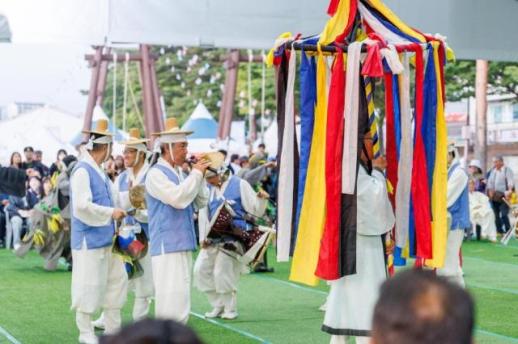 Historic folk festival set to return in Gangneung next month SEOUL, May 27 (AJP) - A folk festival with over 1,000 years of history, is set to return in Gangneng, Gangwon Province next month with eight days of ritual, performance and communal celebration along Namdaecheon, a stream running through the heart of the city. The festival, known as Gangneung Danoje, recognized as both a UNESCO Intangible Cultural Heritage of Humanity and a national intangible heritage of South Korea, runs from June 15 to 22 in the eastern coastal city. One of Korea's largest folk festivals, it draws around one million visitors each year. The weeklong festival centers on Dano, a traditional Korean holiday observed on the fifth day of the fifth lunar month, marking the height of spring. This year's theme is "Pulrini, Dano-da," a Korean phrase built around the idea of release and renewal during Dano. The concept reflects the festival's spirit of healing, with visitors traditionally letting go of sorrow and misfortune through shamanic rites and washing away bad luck with water infused with changpo or sweet flag, a plant traditionally believed to ward off evil spirits and bring good health. This year's program features over 70 events including ritual ceremonies, folk games and performances. A centerpiece is a silent mask play known as the "Gwanno mask drama," performed entirely through movement and gesture, with no spoken dialogue. The five-act performance tells the story of a masked nobleman and a young woman known as "Somaegaksi." Another highlight is a street parade on June 17, the third day of the fifth lunar month. The procession retraces the ritual journey of the festival's tutelary deity, moving through the central streets of Gangneung. Visitors are encouraged to wear hanbok, traditional South Korean gown, as this year’s official dress code. Those who do will receive a 10 percent discount at food courts and a commemorative badge. Gangneung Danoje traces its origins to harvest rituals and communal ceremonies of early Korean tribal states. Historical records including the Goryeosa chronicle and the collected writings of Joseon-era scholar Heo Gyun, document its more than 1,000-year history. The festival survived both the Japanese colonial period and the Korean War, preserving a layered tradition that blends Confucian rites, Buddhist elements and shamanic beliefs. In recognition of its historical depth and cultural value, Gangneung Danoje was inscribed on UNESCO's Representative List of the Intangible Cultural Heritage of Humanity in November 2005. 2026-05-27 13:55:09
 -
 Starbucks Korea boycott hits sales after "Tank Day" backlash SEOUL, May 27 (AJP)-Starbucks Korea under Shinsegae Group suffers commercial fallout on top of reputational damage from its “Tank Day” controversy, with payment volumes and new app installations dropping sharply in the week following the backlash over marketing tied to South Korea’s May 18 democratization movement. According to data released Wednesday by AI analytics firm IGAWorks’ Mobile Index, Starbucks Korea’s weekly payment volume fell to 23.69 billion won ($17.3 million) between May 18 and 24, down 26.3 percent from 32.16 billion won the previous week. The figure was also roughly 25 percent lower than the May 4-10 period. The U.S. coffee brand is South Korea’s largest coffee franchise, with annual sales exceeding 3 trillion won. New installations of the Starbucks app also dropped 23.6 percent over the same period to 36,994, with the brand falling from second to fifth place among food-and-beverage apps in weekly downloads. The data added to signs that the controversy has begun affecting consumer sentiment and brand trust, even as overall app users increased temporarily amid heightened public attention and customers checking notices, coupons and rewards balances. Executives also acknowledged the financial impact. Jeon Sang-jin, executive vice president overseeing corporate management, said sales had fallen “considerably” since the controversy, although the company declined to disclose specific figures. He said restoring public trust remained the priority. Amid deepening criticism, Shinsegae Group Chairman Chung Yong-jin on Tuesday delivered a second public apology in a nationally televised appearance, repeatedly bowing and pledging to rebuild trust “through actions, not words” following what the group described as a serious lapse in historical awareness. “I will not make any excuses. This is my fault,” Chung said during the five-minute apology. “We will regain the public’s trust not through words, but through actions.” The controversy erupted after Starbucks Korea promoted tumblers branded with the word “Tank” on May 18, the anniversary of the 1980 Gwangju Democratization Movement. Critics also condemned the use of the phrase “Tak! on the desk,” saying it evoked the infamous explanation once used to conceal the 1987 torture death of student activist Park Jong-chul. As public anger intensified, Starbucks Korea also temporarily eased refund rules for its prepaid Starbucks cards. The company said customers will be allowed to request full refunds on card balances regardless of usage conditions for two weeks from June 1 through June 14. Under existing terms, customers could only receive refunds after using at least 60 percent of the balance. Starbucks Korea said the temporary exception was introduced in response to growing refund demands following the controversy. The company added that some card-related convenience functions and recharge limits would be temporarily restricted to prevent abuse such as so-called “card cashing,” in which users load prepaid cards with credit cards and convert them back into cash. The backlash has also spread to online gift-card platforms. Starbucks gift certificates, long among the most popular products on KakaoTalk Gift, fell from the top two spots to sixth place in the platform’s exchange-voucher rankings over the weekend amid boycott campaigns linked to the controversy. Delivery app vouchers, Shinsegae gift certificates and Olive Young gift cards overtook Starbucks in the rankings. Starbucks products, however, still held the top three positions within KakaoTalk’s separate “cafe” category, indicating the brand retained substantial core demand despite the controversy. What initially appeared to be a marketing blunder rapidly escalated into one of the most serious reputational crises in Shinsegae Group’s recent history, triggering boycott campaigns, police complaints and criticism from political leaders, including President Lee Jae Myung. 2026-05-27 11:54:06
 -
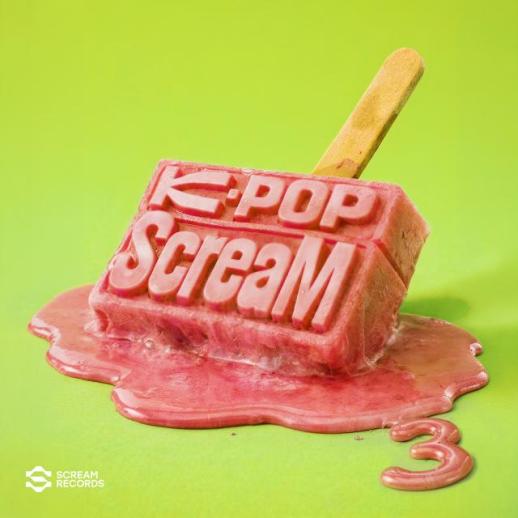 SM Entertainment's sub-label releases compilation album ahead of Europe tour SEOUL, May 27 (AJP) - ScreaM Records, a dance music label under talent behemoth SM Entertainment, released a compilation album on Wednesday ahead of a U.K. and Europe tour scheduled for next month. "K-POP ScreaM 3" reinterprets K-pop songs by SM Entertainment artists including RIIZE and NCT WISH into electronic dance music styles such as jungle, tech house, hard house, bass music and Jersey club. Jersey club is a percussion-driven genre that originated in New Jersey and gained wider popularity through club and online music communities. "K-POP ScreaM 3" is the third installment in the label's remix compilation series, which connects K-pop with club-oriented dance music. The latest release serves as a kickoff project for its planned tour of Europe. The album features four artists who will take part in the tour: ScreaM Records DJs IMLAY, 2Spade and Arkins, along with guest DJ yunji. According to SM Entertainment, the tracks serve as a kind of sneak teaser of the DJs' live mix sets in Europe. The tour will begin on June 2 with a showcase at XOYO, a London club, as part of SXSW London, the U.K. version of the annual South by Southwest music festival. The tour will then continue in the U.K. including stops in Sheffield and Brighton, before moving on to other European cities such as Barcelona in Spain and Cologne in Germany. ScreaM Records will also take part in live DJ mix broadcasts on U.K.-based independent radio stations including Planet Wax, Loose FM and MOT Radio during the tour. The label is also scheduled to join a session with electronic music label Anjunabeats and visit Armada Music Group as it seeks to build ties with the European dance music industry. 2026-05-27 11:18:02
 -
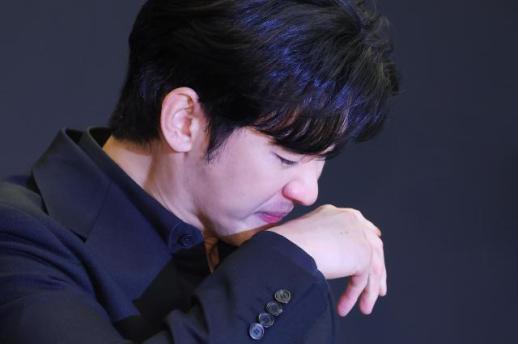 Kim Soo-hyun's agency welcomes YouTuber's arrest in defamation case SEOUL, May 27 (AJP) - Korean Actor Kim Soo-hyun's management agency, Gold Medalist, said Wednesday that the arrest of the head of a controversial YouTube channel marked a turning point in the actor's yearlong effort to counter allegations linking him to the death of late Korean actress Kim Sae-ron. The agency said in a statement that it was grateful to investigators for their efforts to uncover the truth based on objective evidence, adding that the case had now entered a stage in which the facts could be verified through legal procedures and a thorough investigation. "Kim Soo-hyun said at a press conference a year ago, 'I will not ask you to believe me. I will prove it,'" the agency said. " The past year has been a time spent solely to keep that promise." Kim Se-ui, head of the YouTube channel Garosero Research Institute, was arrested Tuesday after the Seoul Central District Court issued a warrant, citing concerns that he could destroy evidence or flee. Garosero Research Institute, often referred to as Gaseyeon in Korea, is a YouTube-based outlet known for publishing allegations and commentary about celebrities, politicians and other public figures. Kim Se-ui is accused of spreading allegedly false claims through YouTube and other online channels, including allegations that Kim Soo-hyun dated Kim Sae-ron when she was a minor and that pressure from Kim Soo-hyun's side over debt repayment was directly linked to her death. Kim Se-ui is also suspected of using artificial intelligence to manipulate Kim Sae-ron's voice in a way that allegedly damaged Kim Soo-hyun's reputation. Gold Medalist said it viewed the arrest as a sign that authorities were treating the case seriously, while maintaining that the allegations and materials presented by Garosero Research Institute against Kim Soo-hyun were false. The agency also said the court had recognized the seriousness of the case, including allegations of defamation and coercion. Kim Soo-hyun held a press conference in March last year to address the allegations. He acknowledged that he had been in a relationship with Kim Sae-ron but denied that the relationship took place when she was a minor. Kim Sae-ron, a former child actress who appeared in films and television dramas, had largely withdrawn from public view following a drunk-driving incident in 2022. Her death later triggered intense online speculation and renewed scrutiny of her private life. Kim Soo-hyun and his agency later filed complaints against Kim Se-ui and members of Kim Sae-ron's family, accusing them of spreading false information and damaging his reputation. The arrest does not amount to a conviction or a final determination of guilt, but it represents a significant procedural development in one of South Korea's most closely watched celebrity defamation cases. 2026-05-27 10:22:27
 -
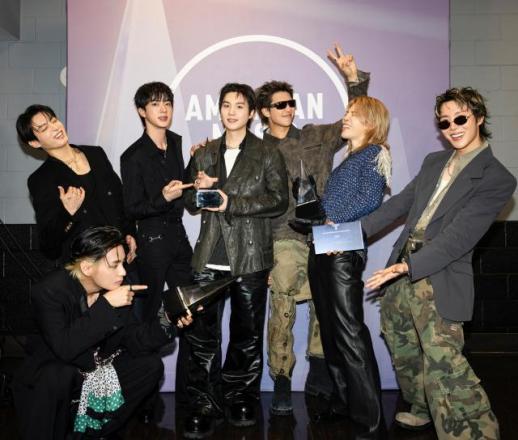 BTS opens comeback awards year with three-trophy sweep at 2026 AMAs SEOUL, May 26 (AJP) - BTS launched their comeback awards run in style on Monday, claiming three trophies at the 2026 American Music Awards in Las Vegas — including a second Artist of the Year win — in their first major awards showing since returning from a nearly four-year hiatus. The haul arrived less than a year after all seven members completed South Korea's mandatory military service, an obligation that effectively suspended full-group activity for roughly two years. Monday's result underscored that the group's global fanbase, known as ARMY, had remained mobilized through the pause. All seven members attended the ceremony at the MGM Grand Garden Arena, marking their first full-group appearance at the AMAs since 2021. "ARMYs, we made it once again," leader RM said in his acceptance speech. "Because this award is decided by fan votes, I sincerely express my gratitude and respect to ARMY, who have stood by us for 13 years." Busta Rhymes presented the top prize, with BTS edging a stacked field that included Bad Bunny, Bruno Mars, Harry Styles, Justin Bieber, Kendrick Lamar, Lady Gaga, Morgan Wallen and Sabrina Carpenter. Taylor Swift, the most-decorated artist in AMA history with 40 trophies, walked into the night with eight nominations and left empty-handed. J-Hope thanked fans around the world, while Jimin acknowledged the supporters who had joined the group's ongoing tour, switching to Korean to tell ARMY he was "truly grateful and full of love." BTS also won Song of the Summer for "Swim," the Billboard Hot 100-topping lead single from their comeback album ARIRANG. The group opened the broadcast with a pre-recorded performance of "Hooligan," filmed at Allegiant Stadium during their world tour. A third honor, Best Male K-Pop Artist, was announced after the main broadcast, bringing the night's tally to three. Accepting Song of the Summer, the members said they had spent the hiatus reflecting on what kind of music felt most authentic at this stage of their career. "The only thing we believed in was that we had to keep challenging ourselves and moving forward," they said. "To everyone who keeps swimming forward no matter the circumstances — we send our love and support." The AMA showing arrives amid sustained commercial momentum. ARIRANG debuted at No. 1 on the Billboard 200 in March with 641,000 equivalent album units in its first week, according to Luminate, giving BTS its seventh chart-topper on the U.S. albums chart. The record held the top spot for three weeks — the longest run for a group album since Mumford & Sons' Babel in 2012 — pointing to demand that has extended well beyond the initial wave of comeback interest. The accompanying ARIRANG World Tour has amplified that trajectory. Billed as the group's largest tour to date, the run spans 85 dates in 34 cities across 23 countries, having opened at Goyang Stadium on April 9 and completing 18 of its 85 shows to date, all to sold-out crowds, with the tour scheduled to continue through March 2027. The current Las Vegas residency at Allegiant Stadium overlapped with awards week, allowing the group to attend the ceremony mid-tour. Asia and Oceania legs are slated to follow later this year and into early 2027, with stops in Melbourne, Sydney, Kaohsiung, Bangkok, Kuala Lumpur, Singapore, Jakarta, Hong Kong and Manila. BTS's 2021 Artist of the Year win had marked the group's arrival as the first Asian act to claim the AMAs' top fan-voted honor. Introducing the band earlier in the evening, host Queen Latifah described them as "not just a big group — a global group," drawing a roar from the arena. Seven acts tied for the night's lead with three trophies each: Bruno Mars, BTS, Cardi B, KATSEYE, Sabrina Carpenter, HUNTR/X and Sombr. BTS was not the only Korean-linked act to make an impact. KATSEYE, the group formed through a HYBE–Geffen Records partnership, also took home three awards including New Artist of the Year, adding to a broader showing for K-pop and K-pop-adjacent acts at a ceremony where fan engagement carries unusual weight. The AMAs rank among the major U.S. music honors, with nominees determined by commercial metrics such as streaming, sales, radio airplay and touring, while winners — including Artist of the Year — are chosen through fan voting, a format that has historically favored acts with highly organized global fanbases. BTS first won at the show in 2018 with Favorite Social Artist, and later expanded their footprint into major categories including Tour of the Year and Favorite Pop Duo or Group. 2026-05-26 17:47:58