

Journalist

Joonha Yoo
joonhayoo94@ajunews.com
-
 KOSPI outperforms Asian peers with record point gain on Nvidia boost, Samsung labor deal SEOUL, May 21 (AJP) - South Korean stocks sharply outperformed regional peers Thursday, as Nvidia’s upbeat earnings and Samsung Electronics’ tentative labor deal triggered a powerful rally in Seoul’s chip-heavy market despite mixed trading across Asia. The KOSPI jumped 606.64 points, or 8.42 percent, to finish at 7,815.59, dwarfing other gains across Asia. Japan’s Nikkei 225 rose more than 3 percent, while Chinese and Taiwanese shares lost ground, underscoring the strength of Korea’s rebound. The daily point gain marked the largest on record, surpassing the previous record increase of 490.36 points set on March 5. It was also the first time since May 14 that the index closed above the 7,800 mark. The index opened 3.85 percent higher at 7,486.37 and extended gains throughout the session, touching an intraday high of 7,819.23. The rapid rally triggered buy-side sidecar curbs in both the KOSPI and KOSDAQ markets in early trading, the first simultaneous activation in both markets since April 8. The rebound was also supported by easing geopolitical concerns and a pullback in oil prices, after U.S. President Donald Trump said negotiations with Iran were in the “final stages,” raising hopes for a potential easing of Middle East tensions. U.S. Treasury yields also retreated overnight, helping restore risk appetite across global markets. Investor sentiment was also supported by stronger-than-expected earnings from Nvidia, widely seen as a bellwether for global artificial intelligence demand. Nvidia reported its 12th consecutive quarter of record revenue, while adjusted earnings per share came in at $1.87, above Wall Street’s estimate of $1.76. The results reinforced expectations that global AI infrastructure spending remains strong, lifting demand for Korean semiconductor shares tied to high-bandwidth memory and advanced AI chip supply chains. Samsung Electronics’ tentative wage agreement with its labor union further fueled the rally, easing concerns over a possible strike at the country’s largest chipmaker. The deal came late Wednesday, shortly before a planned walkout was set to begin. Institutional investors led the rally, buying 2.883 trillion won ($1.91 billion) worth of shares on the main bourse. Retail investors sold 2.647 trillion won, while foreign investors offloaded 233 billion won. Most large-cap shares ended sharply higher. Samsung Electronics jumped 8.51 percent to close at 299,500 won after the tentative labor deal eased concerns over production disruptions. SK hynix surged more than 11 percent to 1,940,000 won, reflecting renewed optimism over AI memory demand. SK Square also rallied, while Samsung Electronics preferred shares, Samsung Life Insurance and Samsung C&T gained strongly. Samsung Electro-Mechanics rose 13.48 percent, Samsung Life Insurance climbed 13.78 percent and Samsung C&T advanced 12.96 percent. LG Electronics hit the daily upper limit, soaring 29.83 percent to 235,000 won, as investors priced in expectations for growth in its robotics and physical AI businesses. Automakers also posted strong gains. Hyundai Motor jumped 12.50 percent to 666,600 won, while Hyundai Mobis surged 25.2 percent to 670,000 won on expectations that it could benefit from Hyundai Motor Group’s expansion into humanoid robots and physical AI. The tech-heavy KOSDAQ also rebounded after four consecutive sessions of losses, rising 49.90 points, or 4.73 percent, to close at 1,105.97. Foreign investors and institutions bought 137 billion won and 139 billion won, respectively, while retail investors sold 258 billion won. Semiconductor equipment and robotics shares led gains on the secondary market. Wonik IPS rose 11.97 percent, EO Technics climbed 18.8 percent and Rainbow Robotics advanced 16.5 percent. By sector, electronics products led the gains with a 29.1 percent rise, followed by auto parts with 17 percent and display panels with 16.1 percent. Among themes, major IT shares climbed 14.6 percent, major automakers rose 13.7 percent and electric wire-related stocks gained 13.1 percent. The dollar remained strong at 1,506.1 won after briefly retreating to the 1,490-won range earlier in the session. 2026-05-21 17:21:17
 -
 NCT's Taeyong begins 'WYLD' promotions with music shows, Seoul Jazz Festival SEOUL, May 21 (AJP) - Taeyong of K-pop group NCT will perform at the Seoul Jazz Festival this week as he begins promotions for his first full-length solo album "WYLD," SM Entertainment said Thursday. The 30-year-old rapper, dancer and songwriter is the leader of NCT and its subunit NCT 127. Taeyong will perform tracks from "WYLD" at the 18th Seoul Jazz Festival 2026, which runs from May 22 to 24 at Olympic Park in Seoul. The festival has grown into one of South Korea’s major outdoor music events by expanding beyond jazz to feature pop, R&B, hip-hop, indie and crossover artists. His festival setlist will include the first live performances of several album tracks. Taeyong will also appear on Mnet’s "M Countdown" on Thursday, followed by KBS2’s "Music Bank," MBC's "Show! Music Core" and SBS’ "Inkigayo" throughout the week, performing the album's title track. "WYLD," released on Monday, consists of 10 tracks, including songs Taeyong participated in the production stage. The hip-hop title track draws on the instinctive movements of wild animals, with choreography built around the contrast between restrained expression and explosive energy. Since its release, the album has topped domestic album and music charts. It also reached No. 1 on iTunes Top Albums charts in 10 regions and entered the top 10 in 18 regions, while the title track topped iTunes Top Songs charts in nine regions. Tracks from the album also occupied all top 10 spots on the real-time rising chart of AWA, a Japanese music streaming service, SM Entertainment said. 2026-05-21 16:20:05
 -
 AJP Watch: The night Suwon lost more than a ball match SEOUL, May 21 (AJP) - The rain never stopped in Suwon on Wednesday night. Cold rain swept across the stands, soaked the banners and turned the pitch slick beneath the floodlights. Still, hundreds of South Koreans remained in their seats in plastic ponchos, pounding balloon sticks and chanting for a North Korean football club playing in the South for the first time in years. By the end of the night, Suwon FC Women had lost more than a semifinal. Suwon FC Women, led by coach Park Kil-young, fell 2-1 to North Korea's Naegohyang Women's Football Club in the semifinals of the AFC Women's Champions League at Suwon Sports Complex. The defeat ended Suwon's run at the continental title and sent the Pyongyang-based club into Saturday's final against Japan's Tokyo Verdy Beleza. On paper, the football story itself was straightforward enough. Suwon dominated long stretches of the match and created the better chances early. Japanese striker Haruhi Suzuki struck the post with a header in the first half. Brazilian forward Milena Barreto de Oliveira rattled the woodwork again minutes later. Suwon finally broke through in the 49th minute when Suzuki chipped the ball over goalkeeper Pak Ju-gyong after a deflection in the box. The lead lasted only six minutes. Naegohyang equalized through Choe Kum-ok’s header from a set piece before captain Kim Kyong-yong completed the comeback in the 67th minute with another headed goal after Suwon failed to clear danger inside the penalty area. Then came the image that lingered long after the final whistle. Ji So-yun, the captain and enduring face of South Korean women's football, stepped up for a late penalty that could have rescued the match. The shot drifted wide of the left post. Ji covered her face and collapsed onto the wet grass as the rain continued to fall around her. It was a football moment. But it also felt like something larger. From before kickoff, this had never been treated as an ordinary club match. Senior officials attended. Civic groups organized a joint cheering squad. Welcome banners greeted the North Korean side. Television crews crowded the stadium hours before kickoff. The match carried the weight of inter-Korean symbolism before a ball had even been kicked. That was understandable. North Korean teams rarely visit South Korea anymore. The last major period of sports exchanges between the two Koreas now feels like another political era altogether — back when athletes marched together under a unification flag at the Olympics and players from both sides still spoke publicly about reconciliation and shared identity. Those scenes have largely disappeared alongside the collapse of diplomacy over North Korea's nuclear weapons program. Today, the peninsula feels colder. North Korean leader Kim Jong-un has declared South Korea a "hostile" state. Military tensions have escalated again. Cross-border exchanges have withered. Even symbolic gestures once considered routine now feel exceptional. Which is why Wednesday night drew such emotional attention. But watching the match unfold through the rain in Suwon, another question slowly emerged. At what point does the symbolism surrounding an inter-Korean event begin to overshadow the athletes actually competing in it? For Suwon FC Women, this was not a diplomatic exhibition. It was not a goodwill friendly arranged for political theater. It was an AFC Women's Champions League semifinal. A place in the final, club history, prize money and continental recognition were at stake. Yet as the night unfolded, the emotional center of the stadium seemed to drift elsewhere. The joint cheering section had announced that it would support both teams. In reality, the louder emotional response often came for Naegohyang. Chants of the North Korean club's name echoed through the rain after goals. The visiting side was welcomed not simply as an opponent, but as a rare historical guest. There was nothing inherently wrong with that. Naegohyang deserved respect. The North Korean side played disciplined, relentless football and punished Suwon's mistakes with ruthless efficiency. Their victory was earned. Still, there was an unmistakable awkwardness in watching the home side slowly lose emotional ownership of its own stadium. Home advantage is not only geography. It lies in the noise, rhythm, and the feeling that the stadium rises with you when the match turns difficult. On Wednesday night, Suwon had the address. Naegohyang often seemed to have the occasion. That distinction mattered. After the match, Park struggled to hide her frustration. "We are Suwon FC Women, a South Korean football team," she said quietly. "I was upset throughout the match, and my heart was heavy." Her reaction was understandable. Football players are not immune to atmosphere simply because diplomacy surrounds them. They hear the cheers. They feel momentum shift. They understand when the crowd belongs emotionally to the night itself rather than to the team trying to survive it. Suwon did not lose because of the crowd. That must be said clearly. The South Korean side lost because it missed chances, conceded soft goals and failed to convert a penalty. Two shots off the post are still missed opportunities. A missed penalty remains a missed penalty. But football is never played in emotional silence. And this particular silence — the strange feeling that the home team had become secondary inside its own stadium — lingered long after the match ended. There was another layer to the unease. The football itself carried traces of the broader freeze between the two Koreas. The match was physical from the start, full of hard challenges and sharp confrontations. The atmosphere around the teams felt tense rather than warm, competitive rather than sentimental. That, too, reflected how much the peninsula has changed. There was a time when South and North Korean women footballers posed together for selfies after tournaments. During the East Asian Cup in Wuhan in 2015, players from both sides laughed together casually after matches, joking about hairstyles and hometowns. "We're one people, one bloodline," one North Korean player said at the time. Eleven years later, those words feel impossibly distant. Now the interactions are colder, more cautious and edged with hostility. The deterioration of political relations has slowly seeped into the football itself. The pitch no longer feels like neutral ground separating politics from sport. Instead, politics hangs invisibly over every challenge, every chant and every celebration. In the 2014 Incheon Asian Games semifinal, South Korea also lost 2-1 to North Korea on home soil — the same narrow margin, the same familiar ache against a side that has long been organized, disciplined and ruthless when the moment turns decisive. Wednesday night in Suwon felt like an echo of that older wound. When Ji So-yun stood over the penalty in the 79th minute, the entire weight of the night seemed to narrow onto one spot on the rain-soaked pitch — the cold, the crowd, the history, the strange emotional atmosphere surrounding the match. She is South Korea's captain, its most celebrated women's footballer, the player who has carried the domestic women’s game through much of the last two decades. In that moment, she stood alone against more than a goalkeeper. The shot drifted wide. Ji covered her face and sank onto the wet grass. It was a human moment before it was a sporting one. And it was also a reminder that even when football becomes wrapped in diplomacy and symbolism, the players themselves remain painfully human. They hear the crowd. They feel the emotional temperature of a stadium. They know when the night is carrying them forward, and they know when it is not. Naegohyang earned its victory. The North Korean side was disciplined, composed under pressure and clinical in the moments that ultimately decided the match. Welcoming its players with dignity was right. Respecting the quality of the team was right. But respecting the visiting side should not mean making the home side feel like a supporting cast in someone else's occasion. That was the lingering unease of Wednesday night. Somewhere between the rain, the banners, the official attention and the louder emotional response to the North Korean goals, Suwon FC Women seemed to lose more than a semifinal. They seemed to lose the emotional center of their own stadium. And long after the final whistle, after the chants faded and the rain continued falling over Suwon Sports Complex, the harder question remained — one no scoreline alone can answer: How did a home game come to feel like someone else's occasion? 2026-05-21 16:18:33
 -
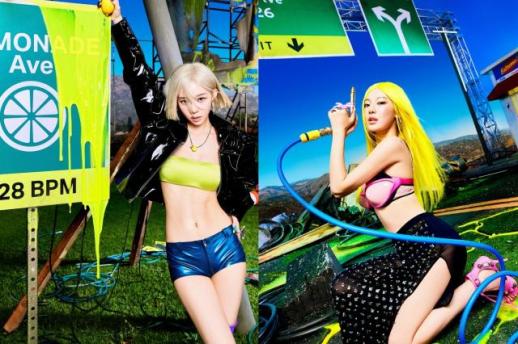 aespa maps emotional journey on upcoming album 'LEMONADE' SEOUL, May 21 (AJP) - K-pop girl band aespa has introduced additional tracks from its upcoming second full-length album "LEMONADE," highlighting an emotional arc that moves through freedom, self-protection, desire and connection, SM Entertainment said Thursday. The 11-track album is set for release at 1 p.m. (0400 GMT) on May 29 through major streaming platforms and will also be available as a physical album. “LEMONADE” marks aespa’s first full-length album in roughly two years group's first studio album "Armageddon," which was released in May 2024. Among the newly introduced tracks, "Can’t Help Myself" is a rock song driven by rough guitar sounds and the members’ clear vocals. The lyrics carry a message of choosing to live freely even in the face of rejection or criticism. "Camouflage" is a hyperpop song with dreamy synth textures. The track uses the image of camouflage to describe hiding one’s true feelings and presenting another version of oneself as a form of self-defense. “My Plan” is a mid-tempo R&B track about pursuing someone with a playful sense of confidence, while “‘Til We Die” is a pop-rock song about staying together with those who have offered strength and support. The album also includes the title track "LEMONADE," prerelease single "WDA (Whole Different Animal)," "Switchblade" featuring Ty Dolla $ign, and dance tracks "SHAKIN’," "Bite" and "Roll." Preorders are available through online and offline music retailers. 2026-05-21 14:34:01
 -
 Seoul and Tokyo equities fall, Asian currencies and debt tumble on inflation fears SEOUL, May 20 (AJP) - Seoul and Tokyo bourses extended losses in a broad Asian retreat as investors moved past AI euphoria toward a reality check on the economic toll of prolonged Gulf conflicts and renewed inflation fears. The benchmark KOSPI fell 0.86 percent to close at 7,208.95 after swinging between an intraday high of 7,324.52 and a low of 7,053.84. Foreign investors sold a net 2.9293 trillion won ($1.94 billion) worth of shares, while retail and institutional investors bought 1.7106 trillion won and 1.1053 trillion won, respectively. Large-cap technology shares showed mixed performances. Shares of Samsung Electronics edged up 0.18 percent to 276,000 won even after government-mediated wage talks with its labor union collapsed ahead of a planned general strike Thursday. The Central Labor Relations Commission officially declared its second mediation attempt unsuccessful Wednesday morning after the two sides failed to narrow differences over compensation for workers in loss-making semiconductor units, including System LSI and foundry operations. The union confirmed it would proceed with the strike as planned. President Lee Jae Myung appeared to indirectly criticize the union during a Cabinet meeting Wednesday, saying labor rights were not granted “to enforce the interests of a few through collective force.” The government has previously signaled it could invoke emergency arbitration powers should the strike materially disrupt the national economy. SK hynix closed flat at 1,745,000 won. Shipbuilding shares outperformed the broader market, buoyed by expectations that rising data center-related electricity demand would boost orders for power engines and related infrastructure. HD Hyundai Heavy Industries surged 6.35 percent to 636,000 won. Elsewhere on the KOSPI, losses were widespread. Mirae Asset Securities fell 6.63 percent to 62,000 won, while LG Electronics dropped 5.58 percent to 181,000 won. POSCO Holdings declined 5.33 percent to 417,000 won, while Korea Electric Power slid 5.49 percent to 37,000 won. Doosan Enerbility lost 4.43 percent to 101,300 won, while Doosan Robotics fell 4.6 percent to 95,500 won after a second large block sale of PRS-linked shares worth about 537.6 billion won. Naver retreated 3.33 percent to 191,500 won. The tech-heavy KOSDAQ dropped 2.61 percent to close at 1,056.07 after moving between an intraday high of 1,081.04 and a low of 1,038.23. Foreign investors bought a net 194.2 billion won worth of KOSDAQ shares, while retail and institutional investors sold 57.7 billion won and 130.7 billion won, respectively. High-valuation growth shares came under renewed pressure as rising global bond yields reduced investor appetite for risk assets. AI robotics, secondary-battery and biotech shares led the decline, with robotics-related names extending recent losses amid broader weakness in AI-linked sectors. Among KOSDAQ heavyweights, Alteogen fell 1.91 percent to 359,500 won, while Ecopro dropped 2.38 percent to 118,700 won. Ecopro BM slipped 3.12 percent to 176,700 won, while HLB declined 3.84 percent to 47,600 won. Samchundang Pharm plunged 5.06 percent to 347,000 won, while ABL Bio and Kolon TissueGene each lost 5.1 percent. The Korean won strengthened slightly, with the dollar trading at 1,506.30 won, down 0.1 percent from the previous session. Asian markets also closed broadly lower. Japan’s Nikkei 225 fell 1.23 percent to 59,804.41, while China’s Shanghai Composite slipped 0.18 percent to 4,162.18. The selloff was driven by a sharp rise in long-term U.S. Treasury yields, with the 30-year yield briefly topping 5.18 percent, its highest level since 2007. The Japanese government bonds hit levels not seen in nearly three decades. 2026-05-20 17:29:42
 -
 JYP Entertainment donates 100 mln won for children's rehabilitation treatment SEOUL, May 20 (AJP) - JYP Entertainment has signed a social contribution agreement with Seoul Rehabilitation Hospital and donated 100 million won to support rehabilitation treatment for children and young people with disabilities, the company said Monday. JYP Entertainment and Seoul Rehabilitation Hospital signed the agreement Monday at JYP Center in Seongnae-dong, Gangdong District, Seoul. Seoul Rehabilitation Hospital is a public children's rehabilitation hospital in the Seoul metropolitan area. The donation will be used to help patients aged 24 or younger cover rehabilitation treatment costs and purchase assistive devices. Byun Sang-bong, chief financial officer (CFO) and vice president of JYP Entertainment, said the company decided to partner with the hospital to extend its support beyond surgeries and medical treatment to rehabilitation care. "We hope this will help further develop the pediatric and adolescent rehabilitation system that Seoul Rehabilitation Hospital has built and allow its impact to reach broader communities," Byun said. Lee Ji-sun, director of Seoul Rehabilitation Hospital, said the funds will be used to provide practical support for patients and families in need of rehabilitation treatment and assistive devices. The donation is part of JYP's corporate social responsibility program EDM, short for "Every Dream Matters." Launched in 2020, the EDM medical expense support project has helped children in need of surgery and treatment. From 2020 to 2025, JYP donated a total of 7.92 billion won ($5.25 million) through the program, supporting medical expenses for 4,101 children across 10 countries, including South Korea. JYP Entertainment said it will continue EDM-related social contribution projects in 2026, including medical expense support, volunteer programs and its Love Earth environmental initiative. 2026-05-20 15:31:42
 -
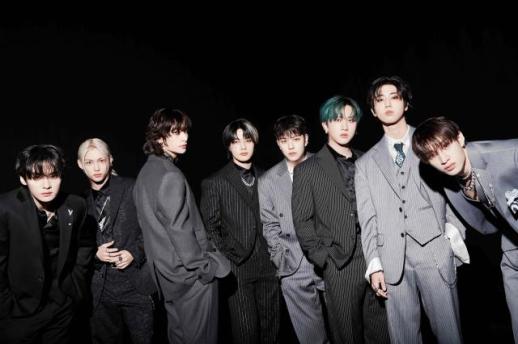 Stray Kids notch 20th music video with 100 million YouTube views SEOUL, May 20 (AJP) - K-pop boy group Stray Kids’ music video for “Walkin On Water” has surpassed 100 million views on YouTube, becoming the group’s 20th music video to reach the milestone, JYP Entertainment said Wednesday. The music video crossed the 100 million mark Tuesday afternoon. “Walkin On Water” is the title track of “合 (HOP),” a SKZHOP HIPTAPE project released by Stray Kids on Dec. 13, 2024. The video features large-scale choreography and visuals set against traditional and modern backdrops. Stray Kids now has 20 music videos with more than 100 million views on YouTube, the most among fourth-generation K-pop boy groups, according to JYP Entertainment. Previous titles to reach the mark include “God’s Menu,” “Back Door,” “MIROH,” “Hellevator,” “MANIAC,” “S-Class,” “LALALALA,” “Chk Chk Boom” and “MEGAVERSE,” among others. “合 (HOP)” became Stray Kids’ sixth consecutive album to top the Billboard 200, the main U.S. albums chart. “Walkin On Water” uses the image of walking on water and navigating rough waves as a metaphor for the group’s confidence on stage. Stray Kids is set to headline The Governors Ball Music Festival in New York on June 6 and Rock in Rio in Brazil on Sept. 11. 2026-05-20 15:31:26
 -
 LIGHTSUM's Nayoung releases cover of YOASOBI's 'Yoru ni Kakeru' SEOUL, May 20 (AJP) - Nayoung of K-pop girl group LIGHTSUM has released a cover video of Japanese duo YOASOBI's "Yoru ni Kakeru," according to a press release from Cube Entertainment. The video, uploaded to LIGHTSUM's official social media channels on Tuesday, features Nayoung performing the song at nighttime locations in Seoul, including Namsan and Hangang Bridge. The cover had drawn more than 22,000 views and 1,300 likes within about 14 hours of its release as of Tuesday evening. Nayoung is a member of LIGHTSUM, a six-member girl group that debuted under Cube Entertainment in June 2021. The group comprise of — Sangah, Chowon, Nayoung, Hina, Juhyeon and Yujeong — has promoted itself as a performance-driven girl group, building an image around bright energy, sharp choreography and youthful concepts. "Yoru ni Kakeru" is the debut single of YOASOBI, a Japanese duo consisting of composer Ayase and vocalist Ikura. The song, based on Mayo Hoshino's short story "Thanatos no Yuwaku," topped Billboard Japan's 2020 year-end Hot 100 chart and has surpassed 700 million streams on Spotify. 2026-05-20 14:36:19
 -
 aespa to open 'LEMONADE' pop-ups in Seoul, LA, New York and Shenzhen SEOUL, May 20 (AJP) - K-pop girl group aespa will open a series of pop-up events in Seoul and major overseas cities to celebrate the release of its second full-length album “LEMONADE,” SM Entertainment said Monday. The album is scheduled for release at 1 p.m. on May 29 on major streaming platforms and as a physical album. The pop-up campaign, titled “aespa WEEK - MAKE IT LEMONADE,” will run from May 29 to June 7 across Yeouido and Banpo in Seoul. In the capital city, events will be held at IFC Mall in Yeouido, the Moonlight Rainbow Fountain at Banpo Hangang Park and Yeouido Hangang Park. The sites will offer merchandise, photo booths, name sticker events, media wall installations and other album-related experiences. SM Entertainment said pop-ups will also open in Los Angeles, New York and Shenzhen, China, alongside the Seoul events. Additional events are planned in Bangkok, Tokyo, Taipei and other major cities. The campaign follows aespa’s prerelease single “WDA (Whole Different Animal) (Feat. G-DRAGON),” released ahead of the full album. aespa debuted in 2020 with “Black Mamba” and is known for its AI avatar and metaverse-themed concept, as well as hits including “Next Level,” “Savage,” “Spicy” and “Drama.” 2026-05-20 14:11:08
 -
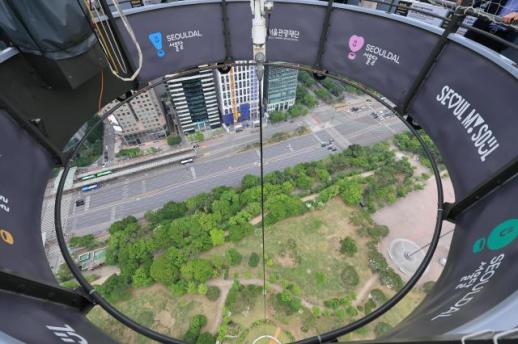 Rides to see and feel Seoul by water and sky SEOUL, May 19 (AJP) - The Han River has always cut Seoul in two. Rising from the Taebaek Mountains and emptying into the Yellow Sea, it served for millennia as Korea's commercial artery — grain barges, merchant boats, wartime supply lines threading through the heart of the peninsula. Then the expressways came, the subway came, and the river was quietly pensioned off into a parkland backdrop while the roads above filled up and stayed that way. Anyone who has sat on the Olympic-daero at 8 a.m. watching the minutes tick by knows exactly how that arrangement has worked out. Last September, Seoul decided the river had been idle long enough. The Hangang Bus — Seoul's new water transit service — connects seven docks stretching from Jamsil in the east to Magok in the west, running hybrid-electric vessels along a route that doubles, depending entirely on your disposition, as either a commute or a sightseeing cruise. The full end-to-end journey runs about 75 minutes; an express service linking Magok, Yeouido and Jamsil cuts that to around 54. The adult fare is 3,000 won — teenagers pay 1,800 won, children 1,100 won — and the service integrates with Seoul's T-money transit system and Climate Card, meaning you can transfer from the subway and barely notice the seam. Getting here wasn't entirely smooth sailing. The project was announced in late 2023, a joint operating company was incorporated in mid-2024, and most of 2025 was spent in trial runs and regulatory preparation before commercial operations finally began on September 18. Since then, more than 270,000 passengers have climbed aboard — enough to suggest that Seoul was, in fact, ready for this. On a Tuesday morning at Jamsil Dock, the floating terminal had the low-key energy of a platform unsure whether it was transit or tourism and had decided, sensibly, not to choose. Passengers stood with paper tickets and transit cards. Some looked out toward the water. The boat arrived at 9:45 with no particular fanfare, and by 10 a.m. it had slipped away from the dock without a horn or a whiff of diesel — just the city, suddenly visible on both sides at once. That, it turns out, is the whole trick. From the middle of the Han, Seoul reorganizes itself. The south bank presents its polished face: gleaming high-rises, newly built riverside towers, the architectural confidence of a city that has decided it likes what it's become. The north bank is quieter — older residential areas, large apartment complexes sitting less showily along the water. Most Seoulites see the river from one shore. From the Hangang Bus, you're the center line. The bridges overhead become landmarks rather than obstacles; the gaps between them, brief windows of open sky. The boat itself is closer to a commuter ferry than a leisure cruise. Seats are arranged in rows, a small snack counter divides the fore and aft sections, and an electronic display up front shows current location, weather, temperature and fine dust levels. Life jackets and emergency equipment line the floating gangway. It is, in other words, properly set up — neither a tourist novelty rigged for Instagram nor a purely functional workhorse. Somewhere usefully in between. Passing under Banpo Bridge, a sign read "7.75m." The concrete span filled the view for a long moment. The boat passed beneath with the unhurried confidence of something that does this every few hours and has stopped thinking about it. On board, the mood divided neatly between pragmatists and romantics. Lee Nu-rim, a 21-year-old soldier on leave, was using the service as an actual commute. He'd spotted it through a social media advertisement and realized his route home happened to match the Apgujeong-to-Yeouido leg. "It felt like I could enjoy the Han River and get home at the same time," he said. He probably wouldn't take it every day, he admitted — partly because not all vessels have the upper deck seen in promotional materials, and seats fill quickly — but the fact of it clearly pleased him. Foreign visitors skipped the ambiguity entirely and called it what it looked like. Kei, 32, from the UK, said it was "lovely" to travel by river through a new city — visitors usually move through streets and landmarks, he noted, and rarely get time to slow down and take the water in. Anna, 29, from Mexico, was quietly amazed by the price. "In my country, something like this would cost much more," she said, which is almost certainly true of most countries. Cristtel, 45, also from Mexico, put the whole proposition most cleanly: "People are used to moving fast now, so maybe it is not for everyone's daily commute. But if you are not in a rush and want to enjoy the scenery, this is exactly right." She could have written the brochure. Seoul Tourism could do worse than to hire her. By the time Yeouido came into view — the golden 63 Building catching the morning light and throwing it in long streaks across the water, doing what old landmarks do when they want you to remember them — the 70-minute ride had accomplished something Seoul's subway system, for all its legendary frequency and coverage, structurally cannot: it had slowed the city down. At nearby Yeouido Park, another novel ride in Seoul was waiting. Between KBS and the financial district, a giant white sphere stood over the grass. The words “SEOUL MY SOUL” and a smiling face were printed on its surface. From a distance, it looked like a piece of city branding. Up close, it resembled a childhood amusement park ride enlarged to an almost unreal scale. This was SEOULDAL, a tethered helium balloon that rises up to 130 meters above Yeouido. The official materials describe it as a 22-meter-wide full-moon-shaped gas balloon. Each ride takes about 15 minutes from boarding to landing, with a maximum capacity of 20 passengers depending on weather conditions. The adult fare is 25,000 won. Before boarding, staff explained the safety rules. The balloon cannot operate in poor weather or strong winds. That explanation felt abstract on the ground. It became much more concrete once the door closed. The passenger platform was shaped like a doughnut, open to views on all sides. That meant the ground was visible almost everywhere. For anyone afraid of heights, the design was not entirely comforting. As the balloon began to rise, the sound of heavy metal cables and machinery replaced the noise of the park below. The safety briefing that had sounded reassuring minutes earlier suddenly disappeared from memory. The plan to calmly film the view from above also faded quickly as sweaty hands gripped the railing. About five minutes later, the operator announced that the balloon had reached its highest point and that passengers could move around to enjoy the view. Only then did the city become visible again. The National Assembly building, the bridges over the Han River and the cars moving along Yeouido’s roads all looked unexpectedly small. Buildings that dominate the skyline from the ground appeared like miniatures. The river stretched out below, and the city, usually too close and too busy to take in, briefly became something that could be seen from a distance. For foreign tourists, Seoul Dal has already become searchable as a destination. Seoul Tourism Organization materials say foreign passengers account for about 44 percent of Seoul Dal riders. Milita, 34, and Carsten, 31, from Germany, had found the balloon through a travel app KLOOK, where it appeared as a recommended place to visit. They had arrived in Korea just one day earlier and were beginning a two-and-a-half-week trip that would take them from Seoul to Jeju, Busan and back to Seoul. The two had ridden hot air balloons before, but said this was their first time on a tethered helium balloon. They were looking forward to “seeing the city buildings from above,” they said. Seoul runs fast. It has always run fast. The transfers, the countdowns, the twelve-lane arterials — the entire urban rhythm is calibrated to velocity. The Hangang Bus and SEOULDAL offer very different experiences. One moves slowly across the river. The other lifts passengers vertically into the sky. But both change the usual angle from which people see Seoul. But the Han was never really about speed. For most of its history it moved goods and people at the pace the current allowed, and the city arranged itself around that. The expressways changed the equation. The Hangang Bus, in its modest, 3,000-won way, is suggesting it might be time to revisit the terms. The city is often experienced at speed — through subway transfers, road traffic, office towers and crowded sidewalks. On the river, that speed slows down. In the sky, the city briefly becomes small enough to observe. Travel Tip The Hangang Bus operates across seven docks from Magok to Jamsil, with stops at Mangwon, Yeouido, Apgujeong, Oksu and Ttukseom. Adult fare 3,000 won; youth 1,800 won; children 1,100 won. T-money transfers and Climate Card accepted. From March 2026, eastern (Jamsil–Yeouido) and western (Magok–Yeouido) routes operate as separate services — check timetables at the Hangang Bus website before boarding. 2026-05-19 21:29:52