

Journalist

Joonha Yoo
joonhayoo94@ajupres.com
-
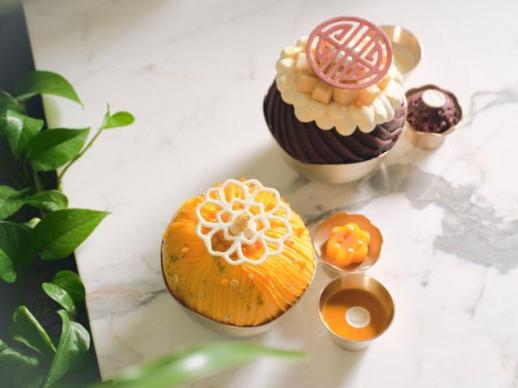 How shaved ice tells different stories across East Asia SEOUL, June 1 (AJP) - Shaved ice is a summer staple across Asia, but the same dessert has taken sharply different paths in South Korea, Japan and China. In South Korea, bingsu has become a luxury item, a social media prop and a marker of changing consumer habits. This summer, Four Seasons Hotel Seoul is selling its Jeju apple mango bingsu for 149,000 won, the highest price among major Seoul hotels. The Shilla Seoul charges 130,000 won for its signature apple mango bingsu at its lounge bar The Library, up 20,000 won from last year. At the other end of the market, budget cafe chain Ediya sells cup bingsu for around 4,500 won. The gap between the cheapest and most expensive shaved ice desserts in Seoul now stands at roughly 37 times. The price gap is a Korean story, but it also opens a wider question about how East Asia eats the same summer dessert in different ways. In Seoul, shaved ice can signal a hotel outing and a seasonal splurge. In Japan, kakigori still evokes summer festivals and childhood memory. In China, baobing and xuehuabing have become part of a fast-moving dessert culture shaped by street shops, toppings and social media. When the Shilla Seoul first introduced its apple mango bingsu in 2011, it cost 27,000 won. Fifteen years later, the price has increased nearly fivefold. Despite weak consumer sentiment and a shaky economy, demand for luxury hotel bingsu has remained strong, buoyed by the "small luxury" trend among consumers in their 20s and 30s. For Kim Hye-won, a 27-year-old marketing professional living in Seoul, the price hike makes sense — up to a point. She has tried The Shilla's apple mango bingsu before and plans to go back this year. "Bingsu used to be something you made at home — shaving ice, freezing milk and throwing in whatever you had in the fridge," she said. "Now it has become premium, with each place trying to differentiate itself. Even a dessert that once felt ordinary has turned into something quite luxurious." But she draws the line well below the market's ceiling. Splitting the bill with friends, she said, makes a 130,000-won bingsu at The Shilla easier to justify as a shared experience. "Going to a bar and ordering a few cocktails each can easily cost around 100,000 won," she said. "This feels more wholesome, tastier, and you get the feeling of being somewhere like The Shilla." Prices approaching 150,000 won, however, are another matter. "I haven't tried it, so I can't say for sure, but I find myself wondering whether it is really worth that much for a dessert made from milk and water," she said. Not everyone is willing to cross even that lower threshold. Choi Jin-hyeok, a 31-year-old private tutor in Seoul, said he is aware of the hotel bingsu trend — his social media feeds fill up with photos of elaborate bowls every summer — but has no intention of spending that much. "There is a certain price point that feels right to me," he said. "At Sulbing, around 10,000 won gets you something close to the bingsu we used to eat at home with our parents. You can get fruit toppings and all kinds of extras for 20,000 or 30,000 won. Paying five times that for something that is, at its core, a frozen dessert to cool you down — that is just not something I would do voluntarily." The contrast between the two consumers reflects a broader split in the South Korean market. Hotels have responded by competing on ingredients, presentation and scarcity. Four Seasons Seoul's flagship bingsu features more than two whole Jeju apple mangoes piled on shaved organic milk ice, topped with a hollow mango sphere that releases mango-elderflower sauce when broken open. According to industry sources, about 85 percent of hotel bingsu customers are not hotel guests but visitors who make reservations specifically for the dessert. In South Korea, bingsu has moved far beyond its older image as a simple summer snack. People are not only buying shaved ice, but also the hotel lounge, the photo, the shared outing and the sense of participating in a seasonal luxury trend. Japan's shaved ice culture follows a different logic. Kakigori dates back to the Heian period, when shaved ice was a luxury enjoyed by the aristocracy. Ice was a precious commodity, stored in insulated facilities and served with natural sweeteners. As ice production and distribution improved, the dessert gradually became more widely available, turning what had once been an elite indulgence into a popular summer treat. That history still shapes modern kakigori. While high-end kakigori shops have emerged in cities such as Tokyo, the dessert remains strongly associated with summer festivals, neighborhood stalls and seasonal rituals. At matsuri, kakigori is sold alongside yakitori, yakisoba and other street foods — typically inexpensive, colorful and tied to the atmosphere of the season. For many Japanese consumers, the value of kakigori lies less in luxury than in timing and memory: it is something eaten because summer has arrived. A dessert that began as an aristocratic luxury has, over centuries, become part of everyday seasonal culture. Korea's bingsu has spent the past decade moving in the opposite direction, with part of the market turning an everyday dessert into a premium experience. China's shaved ice culture connects older traditions with the speed and visual intensity of today's social media food culture. Baobing, literally "shaved ice" in Mandarin, has long referred to a simple dessert made by shaving ice and topping it with syrup, beans, fruit, jelly or condensed milk. Some food references trace Chinese shaved ice desserts back more than 1,000 years, though modern baobing is more commonly understood as an everyday summer refreshment than an elite delicacy. Its appeal has traditionally rested on practicality and abundance: ice as a cooling base, topped with whatever was local, seasonal or inexpensive. In recent years, traditional baobing has been joined by xuehuabing, or snow ice, in which frozen milk or fruit mixtures are shaved into thin, ribbon-like layers and finished with colorful toppings such as mango, taro balls, mochi and flavored sauces. Social media platforms, particularly Douyin and Xiaohongshu, have helped drive the trend, with visually striking bowls spreading quickly online and encouraging dessert shops to compete through color, texture and topping combinations. The differences are not just about toppings or texture. They reflect the kind of summer each market has learned to sell. South Korea has pushed shaved ice upward into the realm of premium experience. Japan has kept it anchored to seasonal ritual. China has turned it into an accessible visual dessert built for circulation. The same ice, in other words, has become a different kind of summer story in each country. 2026-06-01 17:39:13
 -
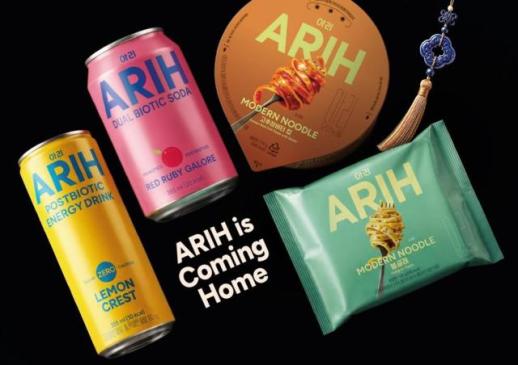 Food retailers launch BTS-themed products SEOUL, June 1 (AJP) - South Korean food companies Paldo and hy have launched 28 products under ARIH, a food and beverage brand themed with K-pop group BTS, the companies said Monday. Paldo is a South Korean instant noodle maker, while hy is a food and beverage company known for its probiotic products. The companies said BTS took part in the brand from the planning stage. ARIH is built around the concept of balance and health in everyday life. The brand name comes from a Korean word meaning "beautiful" or "graceful," with the final "H" standing for harmony, happiness and health. The lineup consists of three product categories: Modern Noodle, a stir-fried noodle product combining elements of pasta and ramen; Postbiotic Energy Drink; and Dual Biotic Soda, a low-sugar, low-calorie take on soda. The products were released in South Korea on Monday through hy's online mall hyFredit and Naver Smart Store. The companies plan to expand sales to other online marketplaces, convenience stores and major retail chains. ARIH first entered the overseas market through Walmart in the U.S. on April 24. The companies said the brand received a bestseller badge on Walmart's online store within three days of its launch, with some areas seeing temporary shortages due to strong demand. Paldo and hy plan to expand ARIH to additional markets, including Japan, Mexico and Canada. 2026-06-01 17:27:43
 -
 BTS to celebrates 13th anniversary with special event and concert in Busan SEOUL, June 1 (AJP) - K-pop super group BTS will host an event to mark the 13th anniversary of their debut, the group's agency BigHit Music said on Monday. The event named "BTS FESTA" is the group's annual celebration held around June 13, the date the septet debuted in 2013. This year's edition will run for about two weeks and coincide with the Busan leg of the group's "ARIRANG" world tour, scheduled for June 12 and 13 at Busan Asiad Main Stadium. The theme for this year's FESTA is "13(B)TS." BigHit Music said the title reflects the idea of adding a new "one" shared by BTS and its fandom ARMY to the group's 12-year journey, marking the start of a new chapter. The schedule begins Thursday with the release of a group photo shot under a family concept. On Friday, BTS will release a performance video for "Hooligan," a track from its fifth full-length album "ARIRANG." New episodes of the group's original variety content "Run BTS 2.0" will follow on June 10 and 11. On June 12, "Come Over," a new song previously available only on the deluxe vinyl edition of ARIRANG, will be released on major streaming platforms. Additional FESTA content will be released during the anniversary period, according to BigHit Music. 2026-06-01 17:23:17
 -
 New ad solution to connects mobile navigation with digital billboards in South Korea SEOUL, June 1 (AJP) - Innocean has launched what it describes as South Korea's first advertising solution linking mobile navigation services with large digital billboards, it said on Monday. Innocean is a Seoul-based advertising agency affiliated with Hyundai Motor Group. The solution links TMAP, one of South Korea's most widely used navigation apps, with Innocean's digital out-of-home, or DOOH, media network in major commercial districts. The service aims to reach consumers on the move, connecting mobile and outdoor ads within a single campaign. The service will initially use large digital billboards in key commercial areas, including The Monte near Gangnam Station and the K-Finance Building in Myeong-dong, central Seoul. Campaign packages can be arranged by day, week or month, depending on the advertiser's goals and campaign period. Lotte Entertainment will be the first partner to use the solution to promote its film "Wild Thing," scheduled for release on June 3. TMAP users moving through the Gangnam Station area will see promotional messages for the film through both the navigation app and connected outdoor screens. "By combining TMAP's mobility insights with DOOH, this solution opens a new way for brands to become part of consumers' everyday travel routes," an Innocean spokesman said. 2026-06-01 17:06:53
 -
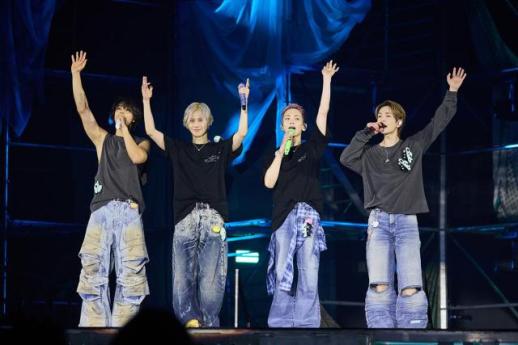 SHINee kicks off concert trilogy with sold-out Seoul shows SEOUL, June 01 (AJP) - K-pop boy band SHINee opened its new concert trilogy with three sold-out shows in Seoul, drawing more than 30,000 fans over the weekend, the band's agency SM Entertainment said Monday. SHINee held "The Trilogy I - 2026 SHINee WORLD VIII: THE INVERT" from May 29 to 31 at KSPO Dome in Olympic Park, Seoul. All three shows sold out, including restricted-view seats. The first show was shown through live viewing events at cinemas in South Korea, Indonesia, Thailand, Taiwan, Hong Kong, Macao and Malaysia, while the May 30 and 31 shows were streamed globally through Beyond LIVE and Weverse. "The Trilogy" is a three-part concert series running through 2028, when SHINee marks the 20th anniversary of its debut. Each installment draws from Dante's "Divine Comedy," reinterpreting the epic poem's themes through their music and stagecraft. The first chapter centers on the concept of "invert," turning something upside down or reversing perspective, reflected throughout the show's visuals, production and setlist. The concert opened with a video showing the members falling into another space, followed by kinetic set pieces rising from the floor. SHINee performed the full set with a live band, moving through tracks including "Spoiler," "HARD," "Sherlock," "Juliette," "Don't Let Me Go" and "Everybody." Members also previewed all tracks from its sixth mini album, "Atmos," including a full performance of the title track before the album's official release. "You are always our hope. Let's stay together for a long time," the members said during the show. SHINee released "Atmos" on major streaming platforms at 6 p.m. Monday, along with the music video for the title track on YouTube. The group is scheduled to hold concerts at Belluna Dome in Saitama, Japan, from Friday through Sunday. 2026-06-01 13:39:47
 -
 K-pop girl band Hearts2Hearts to release second EP 'Lemon Tang' SEOUL, June 01 (AJP) - K-pop girl band Hearts2Hearts will roll out its second EP, "Lemon Tang," on June 22, the group's agency SM Entertainment said Monday. Hearts2Hearts debuted under SM Entertainment in February 2025, becoming the agency's first new girl band in about five years. The six-track album will be available on major streaming platforms starting 6 p.m. (0900 GMT). A physical edition will also be released, with preorders beginning Monday through online and offline music retailers. "Lemon Tang" includes the title track of the same name and the group's February single "RUDE!" The album title combines "lemon" with "tang," referring to a sharp taste and scent, reflecting the group's bright and refreshing summer mood, according to SM. The upcoming release follows RUDE!, which gave Hearts2Hearts strong momentum earlier this year, drawing 107,601,743 streams on Spotify as of Monday. SM said the single became Hearts2Hearts' first music video to surpass 100 million views on YouTube. "RUDE!" also became the first song by a K-pop girl band released in 2026 to reach 100 million streams on Spotify, according to the agency. 2026-06-01 10:23:41
 -
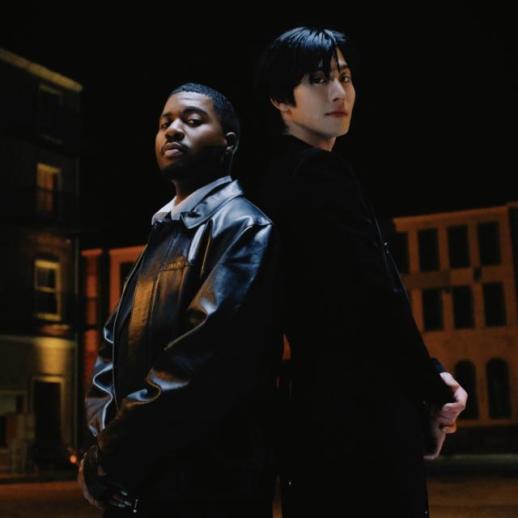 Ahn Hyo-seop teams up with Khalid for debut single 'Something Special' SEOUL, May 29 (AJP) - South Korean actor Ahn Hyo-seop has released his debut solo single "Something Special," a collaboration with Grammy-nominated American R&B artist Khalid. The single was released through FANDOM on major streaming platforms on Friday, with Musicow planning to unveil an official music video in June. Musicow is a music equity platform that lets fans co-own royalty revenue from their favorite artists' songs, and FANDOM is its debut project — an album series featuring U.S. and K-pop artist collaborations where fans can share in the music's financial journey. The release marks the 31-year-old's first official single as a solo recording artist and Khalid's first collaboration with a Korean artist. Ahn recently drew wider global attention for voicing Jinwoo, the leader of the demon boy band Saja Boys, in Netflix's animated film "KPop Demon Hunters." "Something Special" is an R&B-leaning track that brings together Ahn's growing music profile and Khalid's established sound. The song was produced by Woo "RAINSTONE" Rhee, known for his work on Wonder Girls' "Nobody," and co-produced by Grammy-winning producer Troy "R8DIO" Johnson, who contributed to Solange's "A Seat at the Table." The release follows FANDOM's January collaboration "Two Car Garage" by Jon Bellion and Swae Lee, as the platform continues to develop music projects involving artists from different markets. "Something Special" is available on major streaming platforms. 2026-05-29 17:39:01
 -
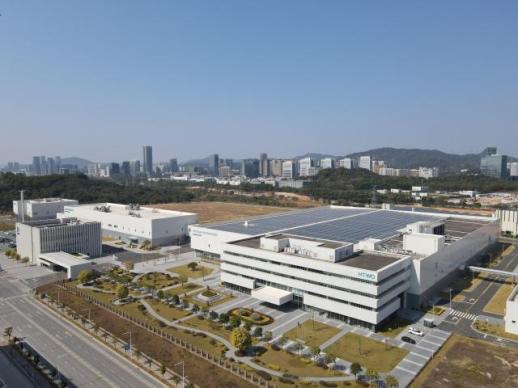 Hyundai Motor's HTWO Guangzhou named hydrogen industry leader in China SEOUL, May 29 (AJP) - Hyundai Motor Group's HTWO Guangzhou has been named a hydrogen industry leader by the southern Chinese city, becoming the only foreign-invested company among 96 firms selected under the city's strategic industry cluster program. According to the automaker, its first overseas production base for hydrogen fuel cell systems in China was selected by the Guangzhou municipal government as a leading enterprise in the hydrogen energy sector. The city has selected and fostered leading companies across 14 strategic industries including new energy, intelligent connected vehicles, artificial intelligence, and semiconductors with the aim of strengthening local supply chains, building industrial ecosystems and expanding cooperation in key technologies. With the designation, HTWO Guangzhou will take on a larger role in local hydrogen industry planning, supply-chain development, and technology cooperation, along with support and other benefits. The selection comes as China continues to expand its hydrogen industry as part of a broader energy transition. Beijing has set goals of reaching peak carbon emissions by 2030 and carbon neutrality by 2060, and has identified hydrogen as a key part of its future energy system. China's first long-term national hydrogen plan, released in 2022, called for establishing a hydrogen technology innovation system by 2030 and building a more diversified hydrogen application ecosystem by 2035. Under a 2021 program to promote hydrogen fuel cell vehicles, China designated five regional clusters, including Guangdong, with aims to deploy about 35,000 hydrogen vehicles by 2025. Guangdong led the five clusters by deploying more than 7,000 vehicles during the period, while Guangzhou operated more than 4,300, making it one of China's largest hydrogen vehicle markets. HTWO Guangzhou sold more than 900 hydrogen commercial vehicles in China in 2025, ranking third in the overall market and first among foreign-invested companies in a field of more than 60 competitors. "This selection recognizes HTWO Guangzhou's contribution to the development of Guangzhou's hydrogen industry and its local cooperation ecosystem," said Choi Doo-ha, general manager of HTWO Guangzhou. "We will continue contributing to the development of China's hydrogen industry and the expansion of its ecosystems. Choi added that the company plans to expand its participation in hydrogen energy demonstration projects scheduled to begin in China in the second half of this year and strengthen cooperation with local governments and partners. 2026-05-29 17:34:56
 -
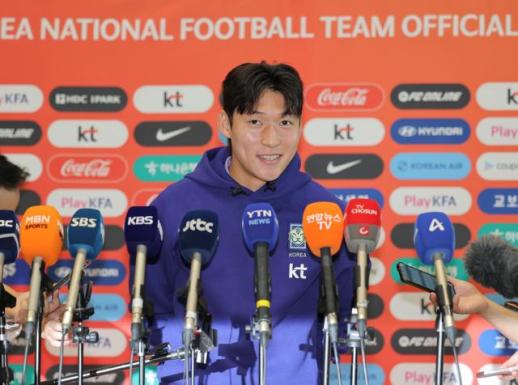 The Wildcard in Team Taegeuk Warriors SEOUL, May 29 (AJP) - When Hong Myung-bo named his squad for the 2026 FIFA World Cup last month, most of the coverage landed in the same place: Son Heung-min, captain, icon, almost certainly making his fourth and final appearance at the tournament. The farewell tour angle wrote itself. But scroll past the familiar names — Son, Lee Kang-in, Kim Min-jae, Hwang Hee-chan — and one entry reads differently. Bae Jun-ho, 22, Stoke City, attacker. Not a household name. Not yet a guaranteed starter. Precisely the kind of player that tends to get overlooked in squad announcements and remembered long after the tournament ends. Hong's selection problem is not obvious talent. South Korea has that. The problem is predictability. Opponents at this level have full dossiers on Son's movement, Lee's left foot, Hwang's runs in behind. They have watched the film. Against a Korea side that has historically leaned on its established stars, a younger attacking player creates a different equation — less data, less certainty, more space for something unexpected to happen. Bae can operate as an attacking midfielder or wide player, drift between lines, receive in tight spaces and link play in the final third. None of that sounds revolutionary. What matters is the context: in a squad where the attack announces itself in advance, he is the variable that doesn't. His path here has been methodical rather than meteoric. Three years ago he wore the No. 10 shirt for South Korea at the FIFA U-20 World Cup, contributing a goal and an assist across six matches as the team reached the semifinals. That was enough to accelerate his move from Daejeon Hana Citizen in the K League 1 to Stoke City in the Championship — English football's second tier, a division that tests character as much as quality. At Stoke he adapted without fanfare. In his first full season he logged 2,553 minutes across all competitions, scored twice and set up six more, and was named the club's player of the season. This season he has remained a regular. In Asian qualifying for the World Cup, he made 11 appearances and contributed two goals and four assists as South Korea punched through. The resume is solid without being spectacular. That, in a way, is the point. Korean football has a particular history with this kind of player — the young attacker who arrives without expectation and leaves with a moment the country doesn't forget. Lee Dong-gook was 19 at the 1998 World Cup in France when South Korea were hammered by the Netherlands. Most of that night is better forgotten. His long-range shot is not. Park Ji-sung was 21 in 2002 when he scored the goal against Portugal that helped send South Korea into the knockout rounds — and eventually the semifinals — under Guus Hiddink. Son himself was the youngest player in the 2014 squad when he scored against Algeria in Brazil, a footnote at the time and a origin point in retrospect. In Qatar in 2022, Hwang Hee-chan came off the bench against Portugal and scored in stoppage time to send Korea through. None of those moments were scripted. Bae is not a direct heir to any of them. But he is playing the same structural role: the player whose value lies partly in what opponents don't yet know about him. South Korea will enter Group A against Mexico, Czechia and South Africa, making their 11th consecutive World Cup appearance since 1986. The ambition, as ever, is to go further than the group stage — something the team has managed only once since that 2002 semifinal run. Hong's squad carries the usual weight of a nation's expectations on a small number of shoulders. What it also carries, quietly, is Bae — a 22-year-old who is not being asked to be the story, but who might end up being part of one. That is the thing about wildcards. You don't know which hand they'll fall in until the game is already being played. 2026-05-29 16:34:12
 -
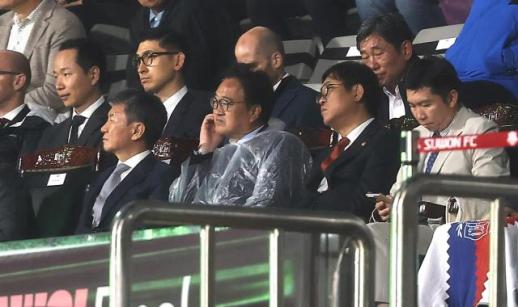 KFA chief Chung Mong-gyu to step down after 2026 World Cup SEOUL, May 29 (AJP) - Chung Mong-gyu, president of the Korea Football Association, said Friday he will step down after the 2026 FIFA World Cup in North America, ending his 13-year tenure at the helm of South Korean football. In a statement released two weeks before the tournament opens, Chung said he intends to resign after the World Cup, calling support for the national team his final duty as head of the association. "I intend to step down as president of the Korea Football Association after this World Cup," Chung said. "I believe my last duty as president is to do my best to support the national team so it can produce meaningful results at the tournament." "I am aware that there have been various controversies and criticisms during my time leading the association," Chung said. "I believe all of this is due to my shortcomings." The KFA said Chung made the decision to urge football fans to give their full support to the national team during the World Cup. It also said he concluded that taking responsibility was necessary for the association to move past the current situation and return to long-term planning for South Korean football. Chung won a fourth term in February last year with 85.6 percent support. He has led the KFA since 2013, when he took office as the association's 52nd president. South Korea, coached by Hong Myung-bo, is preparing for the World Cup finals, which open next month in North America. Chung plans to submit his resignation after the tournament, which is scheduled to conclude on July 19 local time. 2026-05-29 15:49:26