
Journalist

Joonha Yoo, and Yoo Na-hyun
joonhayoo94@ajupress.com
-
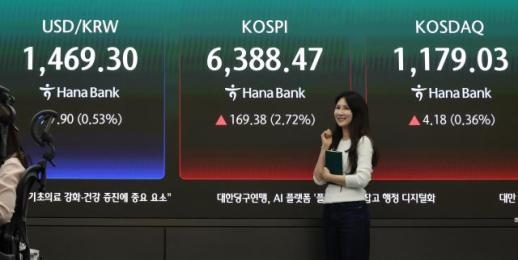 KOSPI hits record high on hopes before Iran announces to skip ceasefire talk SEOUL, April 22 (AJP) - The South Korean stock market opened sharply higher on Wednesday, with the benchmark KOSPI hitting a fresh record, before quickly surrendering gains as geopolitical uncertainty weighed on sentiment. The KOSPI rose to a record 6,401.97 at the open, extending early momentum, but failed to sustain the upward trajectory and slipped to around 6,366.5 in early trading. After climbing at the market open at 9:00 a.m., the index began to pull back around 9:02 a.m., reflecting a swift shift in investor positioning. The market briefly rebounded at around 9:09 a.m., only to turn lower again by 9:13 a.m., highlighting heightened trading session's volatility. The pullback came as investors grew cautious over geopolitical developments, after reports that Iran’s negotiation team had declined to participate in a second round of ceasefire talks with the United States via mediator Pakistan. Market direction was also shaped by diverging investor flows. Retail investors were heavy buyers of 424.4 billion won ($287.4 million), while foreign investors sold 176.1 billion won and institutions offloaded 241.3 billion won, indicating that early gains lacked support from key institutional participants. Large-cap stocks moved broadly lower in line with the market’s retreat. Shares of SK hynix fell 1.4 percent to 1,207,000 won, while Hyundai Motor declined 1.3 percent to 539,000 won. SK Square dropped 2.5 percent to 700,000 won, and Doosan Enerbility slipped 1 percent to 114,600 won. Biopharmaceutical heavyweight Samsung Biologics edged down 0.5 percent to 1,580,000 won, while Kia declined 0.9 percent to 158,600 won. 2026-04-22 10:24:11
 -
 KOSPI zooms to land on new high, unbothered by Gulf truce deadline SEOUL, April 21 (AJP) — The KOSPI ended as a winner amid broadly positive Asian trade Tuesday, breaking post-war highs on a renewed chip rally ahead of SK hynix’s earnings report later this week. The benchmark KOSPI rose 2.7 percent to close at 6,388.47, a new record closing high, amid a tight tug-of-war between institutional buying and retail profit-taking. Foreign investors led the advance, purchasing a net 1.33 trillion won ($905 million), while institutions added 737.1 billion won. Retail investors sold a net 1.92 trillion won, taking profits into the rally. Gainers outnumbered losers 457 to 410, underscoring the uneven breadth behind the index’s record run. Chipmakers drove the momentum. Samsung Electronics rose 2.1 percent to 219,000 won, while SK hynix climbed 5 percent to 1,224,000 won after briefly touching an intraday high of 1,228,000 won before trimming gains ahead of its Thursday earnings release. Battery-related shares posted outsized gains, with LG Energy Solution surging 11.4 percent to 478,000 won as sector-wide buying intensified. Hyundai Motor also advanced 3.6 percent to 546,000 won, supporting the broader index. By sector, electric equipment jumped 11.8 percent, electronic equipment and devices rose 8.6 percent, and paper and wood products gained 8.1 percent, with secondary battery and lithium-related themes leading momentum. Not all sectors participated in the rally. Samsung Biologics slipped 1.1 percent to 1,588,000 won, while Hanwha Aerospace fell 2.4 percent to 1,391,000 won. Shares of HYBE declined 2.4 percent to 249,000 won after reports that Chairman Bang Si-hyuk faces a potential arrest over alleged misconduct tied to the firm’s IPO, weighing on investor sentiment. The tech-heavy KOSDAQ also closed higher, rising 0.4 percent to 1,179.03, though gains were more modest compared with the main board. Individuals bought a net 500.8 billion won, while foreigners and institutions sold 349.4 billion won and 121 billion won, respectively. Battery-related names led gains on the secondary board, with EcoPro rising 5.2 percent to 163,700 won and EcoPro BM advancing 5 percent to 220,500 won. Among other stocks, Leeno Industrial gained 1.6 percent to 118,500 won, while Rainbow Robotics fell 1.2 percent to 601,000 won. Regional markets were broadly positive. Japan’s Nikkei 225 rose 0.9 percent to 59,345.8, led by semiconductor shares following overnight strength in the Philadelphia Semiconductor Index. Hong Kong’s Hang Seng added 0.4 percent to 26,456.8, while China’s Shanghai Composite edged down 0.03 percent to 4,080.7. The Korean won finished little changed at 1,472.30 per dollar. Market volatility increased, with the CBOE Volatility Index rising 8 percent to 18.87. Oil prices declined as expectations for renewed U.S.-Iran negotiations eased supply concerns. Brent crude fell 0.7 percent to $94.79 per barrel, while West Texas Intermediate dropped 0.9 percent to $86.60. 2026-04-21 17:27:16
 -
 Hyundai Motor's Q1 earnings to reflect tariff and war costs SEOUL, April 21 (AJP) - Hyundai Motor is expected to post a sharp drop in first-quarter earnings, as rising tariff burdens, war-related disruptions and currency-driven costs squeeze margins despite relatively resilient global demand. According to data compiled by FnGuide, the automaker’s operating profit is forecast at 2.4 trillion to 2.6 trillion won, down 38 to 50 percent from a year earlier. The company is set to report results on Thursday. The downgrade reflects intensifying cost pressures toward the end of the quarter, including higher tariffs, rising raw material prices and increased warranty provisions, which have become more expensive amid a sharp weakening of the Korean won against the U.S. dollar. Eugene Investment & Securities is among the more cautious, projecting operating profit at 2.46 trillion won. Revenue, however, is expected to remain broadly stable at around 45 trillion won, slightly up from 44.4 trillion won a year earlier. The key swing factor lies in the United States, where tariff-related expenses alone are estimated at around 1 trillion won for the quarter, according to DS Investment & Securities. The anticipated earnings miss appears largely cost-driven rather than demand-led. Global wholesale volumes are projected to have declined by about 3 percent year-on-year, suggesting underlying demand has held up relatively well. Regional performance has been mixed. U.S. shipments were broadly flat at around 243,000 units, reflecting steady demand, while Europe recorded an 8 percent decline. The Middle East saw a steeper 30 percent drop following the outbreak of war, highlighting the growing impact of geopolitical shocks on volume. Product mix trends have also diverged. Hybrid vehicle sales rose about 28 percent year-on-year, supporting revenue, while battery electric vehicle volumes fell 7 percent, limiting margin recovery. Brokerages expect earnings to bottom out in the second quarter before rebounding in the second half, supported by new model launches and a more favorable product mix. 2026-04-21 16:52:56
 -
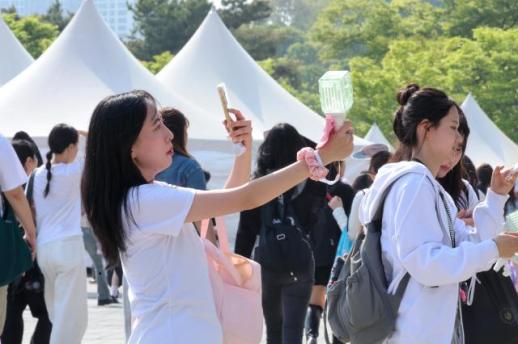 K-pop band NCT WISH heat up Seoul dome stadium with encore concert SEOUL, April 20 (AJP) - The courtyard of the KSPO Dome in southern Seoul was a sea of colorful outfits and posters on Sunday, buzzing in a state of suppressed excitement. Thousands of fans stood in long lines under a torching, late spring sun, clutching lightsticks and merchandise with the sternness of warriors before battle. They were there for the final stop of the first solo tour by the boy band NCT WISH, an event that has become a focal point for the latest phase of the expansion strategy of SM Entertainment. "Section H and I, please enter through Gate 2-1 in an orderly fashion." The long wait was occasionally broken by announcements ringing through the courtyard as fans were notified to enter the dome section by section. While masses rushed into the building, those on standby spent the remaining time trading photo cards or engaging in silent group choreography. Inside the arena, the atmosphere shifted. Fans did not hesitate to drop their composure, filling the space with noise in anticipation of rumors that the group would unveil unreleased songs during the Seoul finale. The three-night engagement drew 33,000 attendees, selling out every seat including those with restricted views. While the presence of photo zones and lottery events kept the crowd engaged, the venue itself provided the broader industrial context. The KSPO Dome, which has a capacity of approximately 15,000, is the definitive benchmark in the live music circuit of South Korea. Reaching this stage signals the transition of an artist into the top tier of the market. For NCT WISH, arriving here marked a compressed, high-velocity ascent from small live halls in early 2024 to the Handball Gymnasium and finally this benchmark arena. This trajectory framed the encore as a strategic checkpoint rather than a mere closing chapter. With their first full-length album, "Ode to Love," scheduled for release on Monday, the group utilized the stage as a live testing ground for new intellectual property. The title track and a second song, "Sticky," were performed for the first time to an immediate response from the crowd. The title track is built around a reworked humming motif from "Ode To My Family" by the Cranberries, blending a familiar melody with a New UK garage-inspired rhythm. The hook proved accessible enough for the audience to echo it back in unison during its debut performance. At a pre-concert press conference, the member Jae-hee described the track as instantly recognizable, noting a deliberate shift toward performance-led promotion by introducing the song visually ahead of its digital debut. The production of the concert leaned into the scale of the venue. A 68-meter-wide LED screen spanned the stage, while temple-inspired sets and kinetic butterfly lighting transformed the arena into a shifting visual landscape. During "We Go!," the members boarded moving stage carts to reach fans in the upper-level seats, physically collapsing the distance between the performers and the edge of the crowd. This emphasis on immersion continued through a series of choreographed sequences, including a winged entrance for the title track and a floating paper boat for the song "WICHU." Near the end of the show, the tone shifted as the members addressed the audience to reflect on a tour that spanned 18 cities and 30 shows across Asia. "You say we're your wish—but you are ours," the members told the fans. What began in Kaohsiung and traveled through Bangkok and Jakarta concluded in Seoul with a sense of acceleration. The forward trajectory outlined onstage was reinforced ahead of the show. During a pre-concert press conference, member Sakuya pointed to Japan as the group’s next strategic milestone, noting that while NCT WISH had already held its first arena-scale performances in the country, the long-term goal remains a Tokyo Dome debut. "We’ve only been active for about two years, but we were grateful to perform in arenas in Japan," adding "We haven’t stood on the Tokyo Dome stage yet that’s our next goal." NCT WISH releases its first full-length album "Ode to Love" at 6 p.m. on Monday across major streaming platforms. The album features 10 tracks, led by the title song and "Sticky," both of which were previewed during the sold-out encore engagement. 2026-04-20 19:15:44
 -
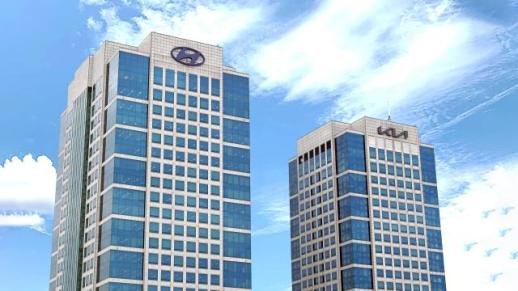 Hyundai Motor protests to USTR Section 301 probe for potential double taxing SEOUL, April 20 (AJP) - South Korea's Hyundai Motor Group has lodged a complaint with U.S. trade authorities over potential double taxing, claiming additional duties under Section 301 could duplicate existing restrictions under other regulations. In its submission to U.S. Trade Representative Jamieson Greer, the automaker — which plans to invest $26 billion in the United States through 2028 — stressed its role in strengthening American supply-chain resilience as it “respectfully submits comments” on the Section 301 investigation into excess capacity and manufacturing sectors. Section 301 of the U.S. Trade Act of 1974 allows Washington to impose tariffs or other restrictions on imports from countries deemed to engage in unfair trade practices. The so-called “Super 301” provision — historically used to identify and respond to priority foreign trade barriers — has been associated with broader and more aggressive enforcement measures. In its filing, Hyundai said industries such as automobiles and steel, already subject to import curbs under Section 232 of the Trade Expansion Act of 1962, should not face additional tariffs under Section 301, citing the risk of redundant regulatory burdens. The company argued that imposing further duties on inputs and components already covered by existing measures would increase production costs at U.S.-based facilities without materially improving domestic manufacturing capacity, employment, or supply chain resilience. The submission is seen as reflecting broader group-level concerns, given Hyundai’s extensive U.S. exposure across automobiles, parts, steel, and construction. In a separate filing, the Korea Automobile & Mobility Association (KAMA) highlighted the long-term economic contributions of Korean automakers in the United States. The association said Hyundai Motor Group has invested more than $20 billion in the U.S. over the past four decades, supporting roughly 570,000 jobs. It added that the company plans to invest an additional $26 billion between 2025 and 2028, a move expected to create about 25,000 new jobs. KAMA also noted that South Korea’s annual auto production has remained in the range of 3.5 million to 4.2 million units over the past decade despite rising global demand, contributing to a decline in the country’s global production ranking from fifth in 2020 to seventh in 2024. 2026-04-20 17:09:04
 -
 Korean stocks slip as foreign investors offload $1.34 billion in shares SEOUL, April 17 (AJP) - Korean stocks closed lower Friday, retreating from recent highs as foreign investors led broad-based selling. Lingering geopolitical uncertainty continued to cap risk appetite despite signs of potential de-escalation in the Middle East. Other Asian markets also traded lower, with Japan’s Nikkei 225 falling 1.21 percent, Hong Kong’s Hang Seng Index dropping 1.2 percent, and China’s Shanghai Composite edging down 0.2 percent. The benchmark KOSPI fell 0.6 percent to close at 6,191.9, after trading between a high of 6,230.32 and a low of 6,159.88. Foreign investors drove the decline, offloading 1.99 trillion won ($1.34 billion) worth of shares. Retail investors bought 1.44 trillion won, while institutions added 150.1 billion won, indicating continued dip-buying against external outflows. The pullback came as investors reassessed the sustainability of the recent rally, with mixed signals emerging around U.S.-Iran negotiations and a temporary truce between Israel and Lebanon failing to fully stabilize sentiment. Large-cap stocks were broadly weaker, led by semiconductors. Samsung Electronics fell 0.7 percent to 216,000 won, while SK hynix dropped 2.3 percent to 1,128,000 won, reflecting cautious positioning despite overnight gains in the Philadelphia Semiconductor Index. Defense and industrial names also came under pressure. Hanwha Aerospace slid 6.3 percent, and Doosan Enerbility lost 2.1 percent, reflecting profit-taking following recent strength in defense-linked plays. Automakers, however, provided limited support. Hyundai Motor rose 0.8 percent, and Kia gained 0.8 percent. Among notable movers, Hanwha Engine surged 16.4 percent to 56,100 won on expectations of earnings growth tied to expanding orders and improving profitability in marine engine segments. The rally was further supported by optimism over the shipbuilding supercycle and strategic overseas acquisitions aimed at strengthening its position in eco-friendly vessel markets. STX Engine also hit its daily upper limit, driven by strong demand tied to defense exports and shipbuilding expansion. Sector-wise, gains were concentrated in selective themes. Venture investment firms jumped 7.7 percent, while electronics equipment and display panel stocks rose 4.1 percent and 3.9 percent, respectively, highlighting rotation into mid-cap growth plays. The KOSDAQ outperformed, rising 0.6 percent to close at 1,170.04, supported by heavy buying from foreign and institutional investors, who added 15.8 billion won and 9.1 billion won, respectively. Retail investors bought a modest 2.5 billion won. Biotech and secondary battery names showed mixed performance. Meanwhile, COVID-19-related stocks gained amid renewed concerns over the global spread of emerging variants, including BA.3.2, supporting selective strength in healthcare names. However, the move was largely thematic and had limited impact on broader market direction. The Korean won weakened against the dollar, trading at 1,483.1 won, down 0.2 percent from the previous session, reflecting sustained external pressure amid foreign outflows. Oil prices edged lower, with Brent crude falling 0.7 percent to $98.7 per barrel and WTI declining 1 percent to $93.7, as optimism over potential negotiations offset ongoing concerns over supply disruptions in the Strait of Hormuz. 2026-04-17 17:31:30
 -
 K-pop girl group KATSEYE to release new album this summer SEOUL, April 17 (AJP) - Los Angeles-based K-pop girl group KATSEYE will release their new album this summer. According to their agencies HYBE and Geffen Records, their third EP "Wild" is slated for release on Aug. 14, more than a year after their previous mini album "Beautiful Chaos" was released in June last year. KATSEYE, consisting of multinational members, have recently gained traction through appearances at major music festivals like the Coachella Festival in California and other activities to promote their songs. The sextet also topped global music platform Spotify's rankings for most listeners, calculated on a 28-day basis, with 31.3 million as of Friday, followed by another K-pop act BLACKPINK's 24.78 million. That appeared to be attributed to their latest single, "Pinky Up," which has ranked highly on major music charts overseas including Amazon Music, Apple Music and Spotify, within just a few days after its release last Thursday. Formed through the 2023 reality singing competition show "Dream Academy" in collaboration with HYBE and Geffen Records, the six members - Daniela, Lara, Manon, Megan, Sophia and Yoonchae - have been groomed as a K-pop girl group targeting global audiences. 2026-04-17 14:00:47
 -
 Kpop big 4 unite to launch Coachella-scale Kpop festival SEOUL, April 17 (AJP) - South Korea’s K-pop powerhouses — HYBE, SM Entertainment, JYP Entertainment and YG Entertainment — are moving to institutionalize a Coachella-style annual K-pop festival, marking a rare joint initiative among the industry’s fiercest rivals. The four agencies have jointly submitted a joint-venture proposal, tentatively titled “Fanomenon” a portmanteau of “fan” and “phenomenon” to the Fair Trade Commission, according to sources on Friday. The initiative has also been tabled at the Presidential Committee on Popular Culture Exchange, a policy advisory body launched in October 2025 and co-chaired by Culture Minister Choi Hwi-young and Park Jin-young, founder of JYP. Park is aiming to debut the festival in South Korea in December 2027 as an annual event, with plans to expand into a global touring format across major cities starting in May 2028. He envisions building the project into a large-scale event on par with the Coachella Valley Music and Arts Festival, which spans two weekends and draws more than 120,000 attendees per day. The companies said the project remains under development, with key details on structure, operations and execution yet to be finalized. 2026-04-17 11:25:30
 -
 KOSPI flirts around record highs amid signs of de-escalating Gulf tensions SEOUL, April 16 (AJP) -Korean stocks extended gains Thursday, with the benchmark KOSPI hovering near a record close on signs of de-escalating Gulf tensions and renewed institutional buying. The KOSPI rose 2.2 percent to close at 6,226.10, a tad below last record finish of 6,307.27 on Feb. 26. Institutions led the advance, purchasing 1.10 trillion won($746.7 million), while foreign investors added 464.4 billion won. Retail investors sold 1.81 trillion won, locking in gains after recent rallies. Large-cap stocks broadly advanced, led by semiconductors and autos. Samsung Electronics rose 3.1 percent to 217,500 won, supported by renewed foreign buying. SK hynix gained 1.7 percent to 1,155,000 won despite some profit-taking following recent gains. Hyundai Motor jumped 5.1 percent and Kia rose 4.2 percent, extending momentum in auto shares. The strength in chipmakers reflects continued confidence in the memory cycle, as tight inventories and expectations of sharp price increases in DRAM and NAND reinforce earnings visibility. Supply constraints in high bandwidth memory (HBM), driven by surging demand from AI infrastructure, have further strengthened pricing power across the broader semiconductor sector. At the same time, diverging foreign flows between Samsung Electronics and SK hynix suggest growing sensitivity to valuation levels, as investors weigh whether current earnings momentum can be sustained beyond the first quarter. Sector rotation was also evident, with paper and wood products surging 12.2 percent, followed by retail and distribution-related shares, indicating broad-based participation beyond index heavyweights. The KOSDAQ rose 0.9 percent to close at 1,162.97, after trading between 1,168.77 and 1,156.31. Retail investors led buying on the secondary board, purchasing 361.0 billion won, while foreign and institutional investors sold 246.0 billion won and 64.5 billion won, respectively, suggesting continued retail-driven risk appetite. Gains were concentrated in select technology and thematic names. Komico surged 14.5 percent to 151,000 won, while Philoptics jumped 15.2 percent to 45,950 won. Kona I rose 17.1 percent to 71,100 won, and Interflex advanced 7.7 percent to 13,030 won, highlighting strong momentum in high-beta growth and component plays. Global markets provided supportive cues. The Nasdaq Composite rose 1.6 percent and the S&P 500 gained 0.8 percent, while Japan’s Nikkei 225 advanced 2.4 percent and Hong Kong’s Hang Seng rose 1.6 percent. Oil prices remained elevated, with Brent crude holding above $95 per barrel, as markets weighed the possibility of an extended ceasefire between the United States and Iran alongside ongoing supply risks tied to the Strait of Hormuz. The Korean won strengthened slightly against the dollar, with the currency rising to 1,473.1 per dollar, while the VIX volatility index edged lower, signaling easing near-term risk sentiment. 2026-04-16 17:51:44
 -
 BTS and K-culture boom lift tourist arrivals in Korea to record high Q1 SEOUL, April 16 (AJP) - Foreign tourist arrivals to South Korea rose to a record high in the first quarter, as global demand for Korean cultural content from highly anticipated K-pop supergroup BTS' return to digital hits like K-pop Demon Hunters continued to drive travel interest, Ministry of Culture, Sports and Tourism said Wednesday. Inbound visitors reached 4.76 million in the January–March period, up 23 percent from a year earlier, with March alone setting a monthly record of 2.06 million, according to the Ministry of Culture, Sports and Tourism. The growth was broad-based across key markets. Chinese tourists led with 1.45 million arrivals, followed by Japan at 940,000 and Taiwan at 540,000, the latter posting the fastest growth rate at 37.7 percent. Long-haul travel also gained traction, with visitors from the United States and Europe reaching a combined 690,000, signaling continued diversification of inbound demand. Beyond volume, indicators pointed to improving tourism quality. Cruise traffic rose 52.9 percent on-year to 338 port calls, while arrivals through regional airports surged 49.7 percent, reflecting increased travel beyond major gateways. Spending by foreign visitors climbed 23 percent to 3.21 trillion won, while overall travel satisfaction reached 90.8 points, suggesting stronger consumption and visitor experience. The ministry attributed the growth to the global appeal of K-culture and coordinated efforts between public and private sectors. Kang Jung-won, director general for tourism policy, said Korea is solidifying its position as a global tourism destination, but warned of potential headwinds from rising airfares linked to higher oil prices and geopolitical uncertainty. "We will proactively respond to external risks to sustain the growth of inbound tourism," Kang said. 2026-04-16 11:39:18