
Journalist

Yoo Joonha
joonhayoo94@ajupress.com
-
 BTS live return takes world by storm, album tests "creative mettle" SEOUL, March 25 (AJP) - The livestreamed BTS open-air stage performed before more than 100,000 people in Gwanghwamun for a comeback after a four-year hiatus drew 18.4 million viewers, according to Netflix, marking one of the largest synchronized global concert events to date as the group returned with its first studio album in six years Arirang,” described by The New York Times as “a raucous test of its creative mettle amid rapidly changing genre norms." The performance entered Netflix’s weekly Top 10 in 80 countries and ranked No. 1 in 24, with viewers across time zones tuning in simultaneously, turning the Seoul stage into a shared global broadcast. RM, Jin, SUGA, j-hope, Jimin, V and Jung Kook took the stage at “BTS THE COMEBACK LIVE | ARIRANG” in central Seoul before extending the momentum overseas and two days later headlined a second event at Pier 17 in New York. Held atop a rooftop venue overlooking the East River, the Pier 17 showcase gathered around 1,000 invited fans selected through Spotify streaming data — many already chanting lyrics and replicating choreography to songs released only days earlier. Online response scaled in parallel. The campaign generated more than 2.62 billion impressions across Netflix-owned channels, with related hashtags trending across the United States, South Korea and major markets in Asia, Europe and Latin America. The rollout highlights a shift in K-pop’s delivery model, combining large-scale physical concerts with streaming platforms and data-driven fan targeting to extend reach beyond geography. The music itself is drawing scrutiny alongside the scale. In a Critic’s Pick review, The New York Times described the album “Arirang” as “a raucous test of its creative mettle amid rapidly changing genre norms,” positioning the release as both a commercial milestone and an artistic checkpoint. The review notes the album’s maximalist structure and genre shifts, framing it as a project balancing experimentation with the demands of global success and the expectations surrounding BTS and its agency Hybe. Netflix is set to release a documentary, “BTS: THE RETURN,” offering a behind-the-scenes look at the reunion, album production and stage preparation, extending the narrative beyond the live performances. Ultimately, the comeback reflects both scale and uncertainty. As the New York Times review concludes, beneath the group’s vast commercial machinery may still lie “a work of odd and satisfying art” — suggesting BTS’ return is not only a global event, but also an open question about how far it can stretch creatively within its own success. 2026-03-25 09:11:47
 -
 Asian stocks rise on Trump remarks on Iran despite lingering volatility SEOUL, March 24 (AJP) - South Korea's KOSPI closed up more than 2 percent on Tuesday, tracking gains across Asian and U.S. markets as investors reacted to U.S. President Donald Trump's remarks delaying potential military action against Iran, despite swirling intraday volatility. The benchmark index rose 148.17 points or 2.74 percent to close at 5,553.92 points. It opened more than 4 percent higher, rose to an intraday high of 5,643, fell to 5,395.2, and later recovered to close at 5,553.92. Retail and institutional investors bought 722.5 billion won ($483 million) and 968.3 billion won, respectively, while foreign investors sold a net 1.986 trillion won, extending their selling streak. Most large-cap stocks closed higher. Samsung Electronics rose 1.8 percent to 189,700 won, and SK hynix gained 5.7 percent to 986,000 won. Hyundai Motor added 1.4 percent to 492,000 won. LG Energy Solution surged 10.3 percent to 392,500 won, leading gains. Samsung Biologics rose 1.6 percent to 1,547,000 won, while Hanwha Aerospace advanced 4.5 percent to 1,335,000 won. The broader gains reflected improved sentiment across the market. The junior KOSDAQ gained 24.55 points or 2.24 percent to close at 1,121.44. Similar to the KOSPI, it showed early strength, briefly turned lower during the session, and later recovered its upward momentum in the afternoon. Foreign and institutional investors bought 167.1 billion won and 22.1 billion won worth of shares, respectively, while retail investors sold 159.6 billion won. The move was driven by remarks from Trump, who signaled a weeklong delay in potential military action against Iran, citing ongoing dialogue. A sharp overnight drop in oil prices also supported the move. But market volatility remained elevated. The KOSPI has triggered sidecar mechanisms 10 times in less than two months, one of the highest frequencies since the global financial crisis. In March alone, seven sidecars were activated. Circuit breakers were also triggered twice this month, the first such occurrence since March 2020. The rebound came as part of a broader global rally, with Asian and U.S. equities moving higher on expectations following Trump's remarks, although underlying geopolitical risks remain unresolved. However, the broader situation remained uncertain, with markets continuing to react to headlines rather than confirmed developments. The shift in sentiment was also reflected in global markets. Overnight, U.S. markets closed higher. The Dow Jones Industrial Average rose 1.4 percent, while the Nasdaq and S&P 500 gained 1.4 percent and 1.2 percent, respectively. Asian markets also advanced. In Japan, the Nikkei 225 rose 1.4 percent, with automakers leading gains. Toyota Motor climbed 2.79 percent to $210.64 after announcing a $1 billion investment in U.S. plants, reinforcing expectations for continued global expansion. China’s Shanghai Composite gained 1.8 percent, and Hong Kong’s Hang Seng Index climbed 2.7 percent. Despite the gains, volatility remained a key feature of the market. The South Korean won strengthened to 1,495.2 per dollar, reversing recent weakness as markets reacted to Trump's remarks on Iran. Oil prices held above key levels, with Brent crude at $102.6 a barrel and West Texas Intermediate at $90.6. Frequent swings in oil prices and conflicting signals over U.S.-Iran negotiations have continued to drive volatility in global markets. 2026-03-24 17:56:37
 -
 Baeksang Arts Awards set for May 8, adds musical category SEOUL, March 24 (AJP) - Baeksang Arts Awards, South Korea's premier honors for television, film, and theater, will expand its awarding categories by adding a musical category starting this year's event in May, the organizers of the annual event said Tuesday. The Baeksang ceremony's decision to adopt the musical category into its selection of awards divisions reflects the increasing popularity of stage performances in South Korea. According to the Korea Arts Management Service, Korea’s musical sector has grown steadily from 9,408 performances in 2023 to 10,983 in 2025, up 14 percent over two years. The move marks a structural shift beyond the traditional television, film and theater divisions, reflecting the rising commercial and cultural significance of musicals within South Korea’s entertainment industry. The 62nd edition of the awards event, scheduled for May 8 this year, will coincide with the 60th anniversary of Korean musicals, adding further significance to the introduction of the new category. This year’s ceremony will be held under the theme "The Stage," reflecting an expanded concept that encompasses television, film, theater and musical performances rather than a single physical stage. 2026-03-24 16:46:09
 -
 DAY6's Wonpil to release solo EP "Unfiltered" on March 30 SEOUL, March 24 (AJP) - K-pop band DAY6 member Wonpil has treated fans on Tuesday by offering an unexpected gift, a glimpse at this upcoming solo album scheduled to be released on March 30. The track preview for the 31-year-old's new album called "Unfiltered" was released through a video uploaded through the group’s official social media channels. The teasers featured snippets of all seven songs on the album, including the title track "Love Ward." Six other songs included in the EP are -- "Toxic Love," "Becoming an Adult," "Up All Night," "Step by Step," "Not a Million Roses," and "Piano." Wonpil's agency JYP Entertainment said that the artist participated the creation of the songs. Day6 is a Korean pop rock band under JYP Entertainment, known for its members’ involvement in songwriting and production. The band is known for songs such as "You Were Beautiful" and "Time of Our Life." Wonpil, born April 28, 1994, is a vocalist and keyboardist of the band. The release marks his first solo project in four years, following his solo debut album "Pilmography" in February 2022. 2026-03-24 15:02:36
 -
 'Baby Shark' creator Pinkfong garners more than 210 billion views, 300mln subscribers SEOUL, March 24 (AJP) - The Pinkfong Company, the creator of global children's hit "Baby Shark" song, has surpassed 210 billion cumulative views and 300 million subscribers, highlighting the global popularity of the online content that united children across the globe for more than a decade, the company said Tuesday. Baby Shark gained global popularity through a combination of simple repetition, an easily recognizable melody, and strong visual synchronization, making it highly accessible to young audiences. Its short phrases, repetitive lyrics and hand gestures encourages participation, allowing children to engage with the content actively rather than passively. The song’s rapid spread was further amplified by platforms such as YouTube, where algorithm-driven recommendations and short-form viewing habits helped it reach audiences beyond its original target demographic, turning it into a cross-generational viral phenomenon. According to the company, Pinkfong's YouTube videos were watched about 66.5 billion times in 2025, up 52 percent from 43.6 billion a year earlier. The growth in accumulative view counts was driven largely by overseas audiences consuming Korean-language content, the company analyzed. Views of Korean-language videos reached 11.1 billion in 2025, nearly quadrupling from the previous year, while the share of overseas viewers rose to 90 percent from 75 percent. Its flagship "Baby Shark Dance" video has accumulated 16.7 billion views as of March 2026, maintaining its position as the most-viewed video on YouTube for 64 consecutive months. "We are seeing a rapid expansion of IP influence in the global market," adding "As global demand for Korean-language content increases, we are also contributing to the broader expansion of K-content." said Kwon Bit-na, chief strategy officer at The Pinkfong Company. 2026-03-24 14:56:50
 -
 KOSPI suffers one of biggest routs as Trump ultimatum rattles Asian markets SEOUL, March 23 (AJP) - The Seoul bourse suffered one of its steepest selloffs Monday as a sharp risk-off wave swept across Asia after U.S. President Donald Trump issued a 48-hour ultimatum to Iran, prompting heavy foreign outflows and broad-based selling. The rout came as escalating tensions in the Middle East stoked fears of disruptions to global energy supply routes, particularly the Strait of Hormuz, a chokepoint for about 20 percent of the world’s seaborne oil. The U.S. dollar rose past 1,510 won to close at 1,514.6 won, its highest level since the global financial crisis. Oil prices also jumped on supply fears, with Brent crude rising 1.6 percent to $113.9 a barrel and West Texas Intermediate climbing 3.4 percent to $101.5. The selloff spread across the region. Japan’s Nikkei 225 fell 3.48 percent to 51,515.49 after briefly slipping below the 51,000 mark during the session. Hong Kong’s Hang Seng Index dropped 3.34 percent to 24,433.3, while China’s Shanghai Composite lost 3.63 percent to 3,813.28. South Korea’s benchmark KOSPI plunged 6.5 percent to close at 5,405.75 after falling as low as 5,397.94 intraday, marking one of its sharpest one-day declines this year. Foreign investors drove the selloff, dumping more than 3.67 trillion won ($2.4 billion) worth of shares, while institutions sold a net 3.82 trillion won. Retail investors stepped in aggressively, purchasing nearly 7 trillion won worth of stocks and absorbing much of the selling pressure. Market volatility spiked early, triggering a sell-side sidecar at 9:18 a.m. — the sixth such activation this year — after KOSPI200 futures tumbled more than 5 percent for over one minute. The tech-heavy KOSDAQ also fell sharply, losing 5.6 percent to 1,096.9. On the secondary board, foreign investors sold a net 259.4 billion won and institutions offloaded 200.4 billion won, while retail investors bought 465.6 billion won, partially cushioning the drop. Losses were broad-based, with major index heavyweights falling in tandem. Samsung Electronics dropped 6.6 percent to 186,300 won, while SK hynix slid 7.4 percent to 933,000 won as semiconductor stocks came under pressure amid global risk aversion. Automakers also retreated, with Hyundai Motor down 6.2 percent to 485,000 won and Kia off 4 percent to 161,700 won. Energy and industrial shares also weakened. LG Energy Solution fell 5.2 percent to 356,000 won, Doosan Enerbility plunged 8.1 percent to 100,700 won, and Hanwha Aerospace slipped 3.2 percent to 1,278,000 won. In the bio and platform sectors, Samsung Biologics lost 4.9 percent to 1,523,000 won and Naver declined 5.6 percent to 209,000 won. Among the few gainers, SK Ocean Plant rose 7.2 percent to 27,400 won, while Pearl Abyss edged up 0.6 percent to 41,750 won. The selloff also hit entertainment shares despite BTS’s high-profile comeback, underscoring how broader market stress overshadowed stock-specific momentum. Hybe plunged 15.6 percent to 290,500 won, while JYP Entertainment fell 6.8 percent to 61,700 won. 2026-03-23 17:58:15
 -
 BTS is officially back, but Hybe stock plunges nearly 16% SEOUL, March 23 (AJP) - BTS may have returned in full force, but investors were in no mood to celebrate. Despite the group’s highly publicized comeback spectacle in Seoul’s Gwanghwamun on Saturday, distributed globally through Netflix, and the release of its first studio album in six years, Hybe shares tumbled sharply on Monday, the first trading session after the official return. Hybe closed down 15.55 percent at 290,500 won, a much steeper fall than the benchmark KOSPI’s 6.5 percent decline. The stock has now shed about 21 percent from last Wednesday, before the album’s Friday release. The sell-off came even as early sales of BTS’s fifth studio album, ARIRANG, appeared robust. The album sold about 3.98 million copies on its first day and topped 4 million within three days, setting a new K-pop sales record. That performance surpassed BTS’s previous benchmarks, including MAP OF THE SOUL: 7, which posted 3.37 million first-week sales, and MAP OF THE SOUL : PERSONA, which had held a Guinness-recognized mark with 3.39 million copies sold. Kim Doo-un, an analyst at Hana Securities, said the drop appeared to reflect a mix of profit-taking and broader market weakness rather than any single company-specific disappointment. “Overall market conditions were not favorable, and downside pressure was widespread across sectors,” Kim said. “It is difficult to attribute the fall solely to BTS’s comeback.” Asian markets were broadly under pressure Monday as rising geopolitical tensions dampened risk appetite, dragging down equities across the region. Some analysts also said much of the optimism surrounding BTS’s return had already been priced in. “Expectations had been high going into the comeback, and some elements may not have fully met those expectations,” Kim said. He added that while Hybe’s long-term growth story remains intact, the stock is still highly sensitive to whether short-term expectations are met. BTS is set to begin a new world tour in Goyang on April 9, followed by additional shows on April 11 and 12, before heading to Tokyo as part of a multi-city global run. In a statement released after the concert, Hybe thanked authorities and local residents for their cooperation, highlighting the cultural significance of holding the performance in Seoul’s historic Gwanghwamun district. 2026-03-23 17:58:07
 -
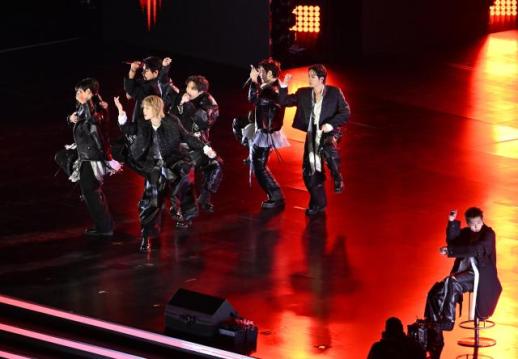 BTS week continues with back-to-back Tonight Show and Netflix documentary SEOUL, March 23 (AJP) - BTS moved immediately into the next phase of its comeback campaign after officially returning as a full group through a livestreamed concert at Gwanghwamun on Saturday, departing for New York the following day. The K-pop superstars are set to appear on “The Tonight Show Starring Jimmy Fallon” on March 25 and 26. RM, Jin, SUGA, j-hope, Jimin, V and Jung Kook will join Fallon in studio for their first public interview tied to a new album release in six years. The group is also scheduled to perform two songs from “ARIRANG.” It marks BTS’s first full-group return to the program since the July 2021 “BTS Takeover,” which drew more than 120 million views across digital platforms and included performances of “Butter” and “Permission to Dance.” The group’s full-scale return was amplified by a free concert at Gwanghwamun, which was livestreamed through Netflix, turning the album launch into a global event. As of Saturday, a day after the album’s release, “SWIM” and “Body to Body” were leading Spotify charts, while several other tracks also landed in the top 10. Netflix is set to release the documentary film “BTS: THE RETURN” on Friday, chronicling the making of “ARIRANG” and offering behind-the-scenes insight into the band’s reunion after nearly four years. The rollout will continue into April with the launch of BTS’s new world tour, beginning in Goyang, just outside Seoul. The group is scheduled to hold three shows there on April 9, 11 and 12 before moving on to Tokyo for the first overseas leg of what is expected to become a multi-continent tour. BTS closed its Gwanghwamun performance with a message stressing that the event had been made possible through broad collective support, thanking fans, local residents and public authorities. “This stage was not ours alone,” the group said in a letter released after the concert. The members also acknowledged the inconvenience caused to nearby residents and businesses, expressing both gratitude and apology for the disruption. 2026-03-23 11:32:23
 -
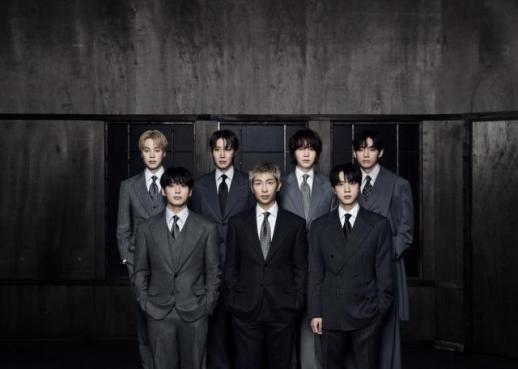 BTS returns with 'ARIRANG,' draws mixed early response despite global hype SEOUL, March 20 (AJP) — BTS’ long-awaited fifth studio album ARIRANG landed Friday to a more muted-than-expected reception, as early listeners welcomed the group’s full-member return but questioned the album’s restrained tone and artistic direction. Released at 1 p.m., the music video for the title track “Swim” surpassed 5 million views within 50 minutes, while the song quickly topped domestic charts including Melon and Bugs, followed by “Body to Body.” Global chart performance has yet to fully materialize and BTS not visible in top rankings across major Asian and global charts. Despite months of anticipation — fueled in part by the group’s high-profile comeback performance at Gwanghwamun scheduled for Saturday — initial reactions suggest a gap between hype and immediate impact. “I heard all 14 tracks. Nothing stuck,” one user wrote on the Bugs Music platform, reflecting a broader sentiment among some domestic listeners. Others pointed to a perceived mismatch between the album’s title and its content, expressing disappointment over the absence of Korean-language tracks or overt references to traditional themes implied by ARIRANG. International fans, by contrast, struck a more enthusiastic tone. “Bighit really dropped a 10/10 masterpiece and told me to #KEEPSWIMMING but I’m actually drowning in my own tears,” one fan wrote on X. According to BigHit Music, the album reflects the emotions and messages the members seek to convey at this stage of their careers, blending Korean and English lyrics to expand global accessibility while drawing from their cultural roots. Critics suggest the subdued reception may be partly intentional. Pop culture critic Ha Jae-geun described “Swim” as “relatively restrained and subdued,” noting that its departure from BTS’ traditionally performance-driven, high-energy sound may feel unfamiliar to longtime listeners. “That sense of flatness could be deliberate,” he said, pointing to the group’s evolving artistic direction and maturity. The shift marks a notable turn in BTS’ 13-year trajectory. Since debuting in 2013 with hip-hop-driven tracks grounded in youth and social commentary, the group expanded its narrative through The Most Beautiful Moment in Life series and WINGS, before cementing global dominance with the Love Yourself era. It later broke into mainstream Western pop with English-language hits such as “Dynamite” and “Butter.” ARIRANG, however, signals less an extension of that outward expansion than a recalibration — a pivot inward toward identity and introspection. The album follows nearly four years of staggered military service, during which each member developed a distinct artistic identity. Jin reinforced the group’s emotional core through vocal-driven releases, Suga broadened his reach as a producer, and J-Hope sharpened his role as a performance leader. RM deepened the group’s narrative direction through introspective work, while Jimin, V and Jungkook each carved out distinct sonic and stylistic lanes. Those individual trajectories now converge in ARIRANG, forming a more layered group identity. Music critic Kim Do-heon urged caution in early assessments, noting that “it has only been a few hours since release, making a full album-level evaluation difficult.” Still, he characterized the album’s tone as notably different. “Rather than simply soft, it conveys fatigue, exhaustion and a desire to escape,” he said. “If you look at ‘Swim,’ it’s less about moving forward and more about wanting to sink.” Kim added that the album presents “a different way of showing Korea,” reflecting a more contemporary emotional landscape shaped by pressure rather than the group’s earlier themes of unity and identity. The comeback will continue with a large-scale performance at Gwanghwamun on Saturday, to be streamed globally via Netflix to more than 190 countries — an event Ha described as “a global-scale spectacle rather than a conventional concert.” 2026-03-20 17:41:27
 -
 BTS Live D-1 : Gwanghwamun choice hinged on true identity of BTS - Korean: organizers SEOUL, March 20 (AJP) -Delving into BTS’ identity was the starting point of the comeback project, and that process ultimately led to “Koreanness” and, in turn, to the iconic setting of Gwanghwamun, organizers said Friday. “‘Why Gwanghwamun?’ was the question we heard most,” said Yoo Dong-joo, president of HYBE Music Group APAC, during a media briefing. Yoo said the historical resonance of Gwanghwamun was central to the thematic arc of “ARIRANG.” “If their journey began in Korea, then their return should also begin from a place that symbolizes that origin,” he said. The album, he explained, is meant to reinforce the bond between the artists and the land that shaped them. The official music video for SWIM, the lead single from the fifth full-length album by the musical group BTS, amassed more than four million views on YouTube within thirty minutes of its 1:00 p.m. (0400 GMT) release today. By anchoring the “ARIRANG” project at the symbolic heart of the republic, BTS ties its return to a site long associated with Korean history and public expression. The choice elevates what might otherwise have been a commercial broadcast into something closer to a civic homecoming. Gwanghwamun is inseparable from the legacy of the candlelight protests and has long served as a gathering place where the public asserts its collective voice. For organizers, the square was the only venue capable of sustaining what they described as a distinctly BTS narrative — one rooted in Korean identity even after years of individual global activity. The collaboration with Netflix, meanwhile, provides the technological bridge to carry that localized message to a global audience. Brandon Riegg, a Netflix vice president, said he was excited about the platform’s first-ever livestreamed concert reaching viewers in more than 190 countries, while also acknowledging the challenge of satisfying both fans on site and audiences watching around the world. The event will mark Netflix’s first live music performance and the first live event to be broadcast from South Korea to a global audience on the platform. Production will be led by director Hamish Hamilton, whose credits include the Emmy, Grammy and Oscar ceremonies, the Super Bowl halftime show, the opening ceremony of the 2012 London Olympics, and performances by Madonna, Beyoncé and Rihanna. Authorities expect an audience of 260,000 people to occupy the central district. Security personnel have been tasked with securing a perimeter that encompasses both the modern square and Gyeongbokgung Palace. The lead track, "SWIM," will serve as the centerpiece of a performance merging traditional aesthetics with pop production. Saturday’s free concert is projected to be the largest live music event in the history of the streaming platform. Executive producer Garrett English noted that the technical team is focused on maintaining intimacy despite the massive physical scale. The arrangement is designed to capture the interaction between the seven members and the civic gathering in real time. BigHit Music Vice President Kim Hyun-jung stated that the project resonates with a cross-generational demographic. The performance is scheduled to begin at 8 p.m. local time and will be available in over 190 countries. The city has implemented traffic restrictions to accommodate the influx of fans and international media. This event marks the first collective activity for the members in three years and nine months. The live broadcast will be archived on the streaming platform following its conclusion. 2026-03-20 15:04:41