
Journalist

by Joonha Yoo
joonhayoo94@ajupress.com
-
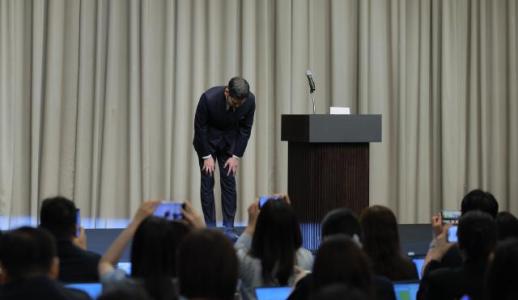 AJP Watch: Shinsegae vows to make amends "regardless of cost" over Starbucks Korea blunder SEOUL, May 26 (AJP) - Shinsegae Group Chairman Chung Yong-jin on Tuesday delivered a second public apology within a week over Starbucks Korea’s controversial “Tank Day” promotion, bowing repeatedly in a televised appearance and pledging to restore public trust through action rather than words after what the group described as a “serious” failure in historical awareness. Speaking at the Josun Palace hotel in Seoul, Chung bowed deeply three times during a five-minute apology addressing bereaved families of the May 18 Democratization Movement, the family of late student activist Park Jong-chul, citizens of Gwangju and the broader Korean public. “I will not make any excuses. This is my fault,” Chung said. “We will regain the public’s trust not through words, but through actions.” The apology came eight days after Starbucks Korea promoted tumblers branded with the word “Tank” on May 18, the anniversary of the 1980 Gwangju pro-democracy uprising. Critics also condemned the campaign’s use of the phrase “Tak! on the desk,” saying it evoked the infamous explanation once used to cover up the 1987 torture death of student activist Park Jong-chul. What initially appeared to be a marketing blunder quickly escalated into one of the most serious reputational crises faced by the Shinsegae Group in recent years, triggering boycott campaigns, police complaints, mounting political pressure and public criticism from President Lee Jae Myung. Social media became a major battleground for the backlash. One video posted on X showing a consumer removing a Starbucks logo from a tumbler with nail polish remover drew 4.8 million views, while another post showing an unusually empty Starbucks outlet during the holiday weekend amassed nearly 4 million views alongside thousands of reposts and boycott messages. Internal review finds systemic failures In a follow-up briefing, Yang Jong-hwan, managing director of Shinsegae’s internal audit team, said investigators reviewed company emails, work laptops, internal messenger records and other communication channels involving 15 employees, including five executives, using digital forensic methods. Cross-check interviews were also conducted with more than 10 employees. The probe did not uncover evidence of deliberate coordination or intentional political messaging, according to the company. But the review also exposed clear limitations. Of the five key employees directly involved in handling the “Tank” naming process, only two voluntarily submitted personal mobile phones for forensic analysis. Three declined, citing privacy concerns. Yang acknowledged that while the company wanted broader access, it lacked authority to compel employees to surrender personal devices. Executives nevertheless insisted that internal messenger records and work-related data showed no evidence of premeditated collusion. Kim Su-wan, vice president and head of external affairs, described the controversy as a symptom of an organization overly focused on speed and sales performance at the expense of historical sensitivity. “This case showed that speed and sales considerations had taken priority over historical awareness and social sensitivity,” Kim said. According to Kim, the promotion was handled by a small e-commerce team composed largely of younger employees, including two workers in their early 20s. Internal communications after the controversy suggested that some staff members did not fully grasp the historical weight associated with May 18 or the wording used in the campaign. “The task now is to create programs that can strengthen historical awareness across generations, from younger employees to senior staff,” Kim said. Executives acknowledged that the campaign should have passed through multiple review layers including corporate social responsibility and legal checks, but said several safeguards either failed or were bypassed altogether. “Even if the original planner made a poor judgment, this situation would not have escalated this far if the internal filtering system had functioned properly,” Kim said. “The core problem was that the review system failed to work as it should have.” Why the backlash became so explosive The controversy touched two of the most painful episodes in South Korea’s democratic history. The May 18 Democratization Movement refers to the 1980 uprising in Gwangju against military rule under the Chun Doo-hwan regime. The movement was violently suppressed by troops and later became one of the defining symbols of South Korea’s democratization struggle. Critics argued that using the word “Tank” on May 18 inevitably evoked memories of military violence and authoritarian repression tied to the uprising. The phrase “Tak! on the desk” carried a separate historical resonance linked to the death of Park Jong-chul, a Seoul National University student activist tortured to death during police interrogation in 1987. Authorities initially attempted to explain his death by claiming an investigator had struck the desk — “tak” — causing Park to collapse suddenly, a story later exposed as a cover-up. His death helped ignite the June Democracy Movement that accelerated South Korea’s transition to direct presidential elections. For many South Koreans, the combination of “Tank Day” and wording associated with Park’s death appeared to trivialize two defining traumas of the country’s authoritarian era. Growing commercial fallout Shinsegae said former Starbucks Korea CEO Sohn Jung-hyun and the executive overseeing e-commerce operations were dismissed immediately after the controversy erupted, with additional disciplinary action under review. Chung’s first apology, issued shortly after the backlash began, failed to calm public anger as boycott campaigns intensified online and civic groups filed criminal complaints. At Tuesday’s press conference, Chung repeatedly stressed that front-line Starbucks employees should not bear the blame. “The responsibility lies with the organization and management, including myself,” he said. “I earnestly ask that people look more warmly upon Starbucks partners and field employees at stores across the country.” He described store workers as “diligent employees” serving customers from early morning until late at night, while pledging a fundamental overhaul of the group’s risk management and social responsibility systems. “Today’s apology will not be the end, but a beginning,” Chung said. “We will start again from the beginning.” Executives also acknowledged the growing financial impact. Jeon Sang-jin, executive vice president overseeing corporate management, said sales had fallen “considerably” since the controversy, though the company declined to provide figures. He said the priority was restoring trust rather than minimizing short-term damage. The company said it is reviewing refund requests for prepaid Starbucks cards and account cancellations with relevant authorities because such products are governed by Fair Trade Commission regulations. Executives added that Starbucks’ U.S. headquarters had been fully informed of the incident and is discussing improvements to internal risk-control systems with the Korean operation. However, Shinsegae said the controversy does not currently appear to trigger contractual issues involving Starbucks’ U.S. parent company. The episode has also revived scrutiny of earlier marketing controversies among Korean consumer brands. In 2024, Starbucks Korea faced criticism for releasing a “Siren Classic Mug” on the anniversary of the Sewol ferry disaster, while fashion platform Musinsa issued a renewed apology after the Starbucks controversy resurfaced attention on a similar “Tak! on the desk” phrase used in one of its 2019 advertisements. For Shinsegae, the central challenge now extends beyond whether the campaign was intentional. The deeper question is whether one of South Korea’s most influential consumer groups can convince the public that its internal systems are capable of preventing another breakdown where commercial marketing collides with unresolved national trauma. 2026-05-26 12:21:00
 -
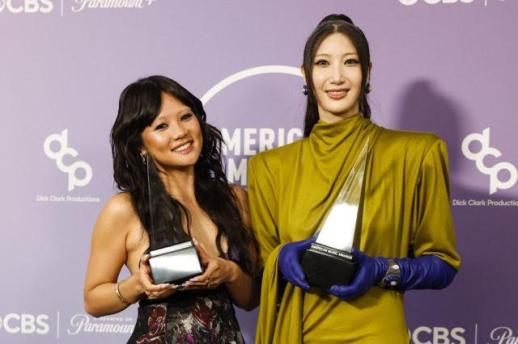 'Golden' wins 'Song of the Year' award at AMAs SEOUL, May 26 (AJP) - "Golden," the main theme song of Netflix's animated film "KPop Demon Hunters" won "Song of the Year" award at the American Music Awards in Las Vegas on Monday. The global hit song beat out nine major contenders including American singer-songwriter Taylor Swift's "The Fate of Ophelia," Alex Warren's "Ordinary," Morgan Wallen's "I'm The Problem" and Ella Langley's "Choosin' Texas." At the ceremony held at the MGM Grand Garden Arena, the song's performers, Ejae and Rei Ami, appeared on stage to accept the award, while Audrey Nuna was unable to attend. Ejae credited fans for giving the song and film "tremendous strength," expressing gratitude to them as well as the cast and crew of the 99-minute film. She also wished Rei Ami a happy birthday, as she turned 31 that same day. Rei Ami also thanked fans, family, and others, saying she is grateful for what has been a "life-changing year." "Golden," co-written by Ejae, became a global hit alongside the success of the film, topping the Billboard Hot 100 chart for eight consecutive weeks. It had previously earned critical acclaim by winning top honors at major awards ceremonies including the Grammy Awards, the Academy Awards and the Golden Globe Awards. 2026-05-26 11:32:59
 -
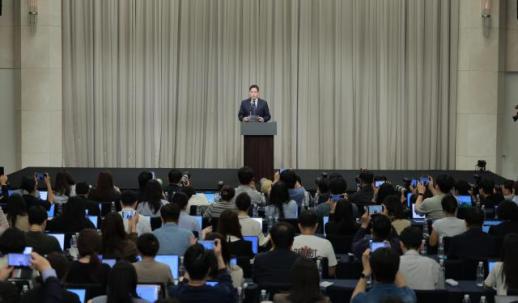 Shinsegae chief's apology over Starbucks controversy - text SEOUL, May 26 (AJP) -Below is the full statement of Shinsegae Group chairman Chung Yong-jin's apology over Starbucks Korea's "Tank Day" controversy. To the people of the nation, I stand before you today with a heavy and apologetic heart. First, as chairman of Shinsegae Group, I sincerely bow my head in apology and ask for forgiveness from the bereaved families of the victims of the May 18 Democratic Uprising, the bereaved family of the late activist Park Jong-chul, the citizens of Gwangju and the people of the nation who have felt deep pain and disappointment because of this incident. The reason the investigation took time was because we wanted to conduct a thorough review. We take very heavily the fact that many people were hurt and angered by Starbucks Korea's inappropriate marketing. I take very seriously the fact that many people felt deep pain and anger because of Starbucks Korea's inappropriate marketing campaign. Regardless of the reason, what hurt the hearts of the people is not something light. I will not make any excuses. This is my fault. All members of Shinsegae Group, including myself, will remember the history and sacrifices of our society and always strive to deeply understand and respect the feelings of the people. What I earnestly ask is that people look more warmly upon Starbucks partners and field employees at stores across the country. They are simply diligent workers doing their best in their respective positions from early morning until late at night for every Starbucks customer. The responsibility lies with the organization and management, including myself. Right now, I believe it is more important that we try to understand one another and move forward together. We all share the same desire to leave behind a better South Korea and a better world for future generations. Shinsegae, including myself, will take this incident as a lesson. We will listen more, and carry responsibility more heavily. We will sincerely approach customers again with genuine hearts. We will fundamentally reexamine our internal systems and risk management framework, while also raising our standards for social responsibility. Today's apology will not be the end, but a beginning. We will start again from the beginning and work to regain the public's trust not through words, but through actions. Once again, I sincerely bow my head in apology to everyone who has been hurt by this incident. 2026-05-26 10:39:48
 -
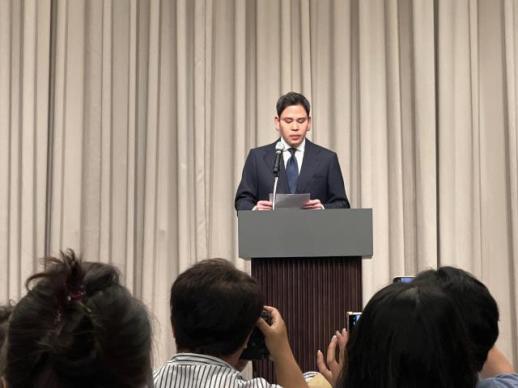 Shinsegae's Chung vows to take full responsibility over police finding SEOUL, May 26 (AJP) -Shinsegae Group Chairman Chung Yong-jin issued a second public apology Tuesday over Starbucks Korea's controversial "Tank Day" promotion, bowing deeply in a five-minute televised public apology and saying he would seek forgiveness "through actions, not words" in a rare public act of contrition by a major South Korean business leader. Speaking at the Josun Palace hotel in Seoul, Chung said the company took the controversy "very heavily" and acknowledged that the campaign had deeply hurt the public by touching one of the country's most traumatic democratic memories. "We sincerely apologize," Chung said. "The reason the investigation took time was because we wanted to conduct a thorough review. We take very heavily the fact that many people were hurt and angered by Starbucks Korea's inappropriate marketing." "What hurt the hearts of the people is not something light," he added. "I will not make any excuses. This is my fault," he said, while strongly denying any ill intention. The extraordinary appearance underscored how a marketing campaign initially seen as a corporate blunder escalated into a broader political and social crisis ahead of local elections, triggering public boycotts, police complaints and mounting pressure from government agencies. The controversy erupted after Starbucks Korea launched a "Tank Day" tumbler promotion on May 18, the anniversary of the 1980 Gwangju Democratic Uprising. Critics accused the company of trivializing the massacre by using military-themed marketing language and the phrase "Tak! on the desk," widely associated in South Korea with the torture death cover-up of student activist Park Jong-chul during the military dictatorship era. The backlash intensified after President Lee Jae Myung openly condemned the campaign, prompting ministries and public institutions to suspend partnerships and review ties with Starbucks Korea. Chung said responsibility lay entirely with management, including himself, not with front-line employees working at stores nationwide. "What I earnestly ask is that people look more warmly upon Starbucks partners and field employees at stores across the country," he said. "The responsibility lies with the organization and management, including myself." "Right now, I believe it is more important that we try to understand one another and move forward together," Chung said. "We all share the same desire to leave behind a better South Korea and a better world for future generations." "Shinsegae, including myself, will take this incident as a lesson," he added. "We will listen more, and carry responsibility more heavily. We will sincerely approach customers again with genuine hearts." Chung also pledged that the company would treat Tuesday's apology as a starting point rather than a conclusion. "Today's apology will not be the end, but a beginning," he said. "We will start again from the beginning and work to regain the public's trust not through words, but through actions. The company also unveiled findings from its internal investigation into how the campaign was planned and approved, though officials did not immediately disclose whether additional disciplinary measures would follow beyond the dismissal of former Starbucks Korea chief executive Sohn Jung-hyun. The apology marks one of the most serious reputational crises faced by Shinsegae Group in recent years, exposing the growing political and cultural risks facing corporations in South Korea as historical memory and social sensitivities increasingly intersect with branding and consumer culture. The full statement of his apology is as follows: To the people of the nation, I stand before you today with a heavy and apologetic heart. First, as chairman of Shinsegae Group, I sincerely bow my head in apology and ask for forgiveness from the bereaved families of the victims of the May 18 Democratic Uprising, the bereaved family of the late activist Park Jong-chul, the citizens of Gwangju and the people of the nation who have felt deep pain and disappointment because of this incident. The reason the investigation took time was because we wanted to conduct a thorough review. We take very heavily the fact that many people were hurt and angered by Starbucks Korea's inappropriate marketing. I take very seriously the fact that many people felt deep pain and anger because of Starbucks Korea’s inappropriate marketing campaign. Regardless of the reason, what hurt the hearts of the people is not something light. I will not make any excuses. This is my fault. All members of Shinsegae Group, including myself, will remember the history and sacrifices of our society and always strive to deeply understand and respect the feelings of the people. What I earnestly ask is that people look more warmly upon Starbucks partners and field employees at stores across the country. They are simply diligent workers doing their best in their respective positions from early morning until late at night for every Starbucks customer. The responsibility lies with the organization and management, including myself. Right now, I believe it is more important that we try to understand one another and move forward together. We all share the same desire to leave behind a better South Korea and a better world for future generations. Shinsegae, including myself, will take this incident as a lesson. We will listen more, and carry responsibility more heavily. We will sincerely approach customers again with genuine hearts. We will fundamentally reexamine our internal systems and risk management framework, while also raising our standards for social responsibility. Today's apology will not be the end, but a beginning. We will start again from the beginning and work to regain the public's trust not through words, but through actions. Once again, I sincerely bow my head in apology to everyone who has been hurt by this incident. 2026-05-26 09:20:03
 -
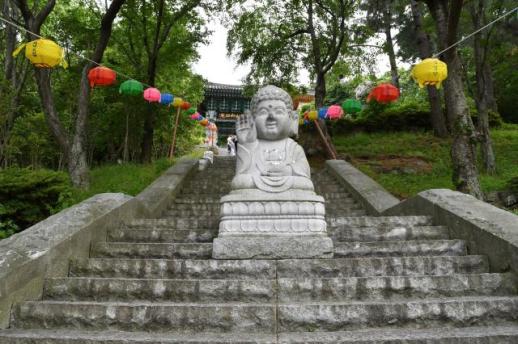 How wishes rise from cliff-side temple on Buddha's birthday SEOUL, May 24 (AJP) - Lotus lanterns glowed across South Korea on Sunday as temples filled with worshippers marking Buddha's Birthday, one of the country’s most widely observed religious celebrations and a day centered on compassion, reflection and prayer. At Hyangiram Hermitage in the southern coastal city of Yeosu, visitors climbed steep stone stairways beneath rows of colorful lanterns hung in honor of the birth of Siddhartha Gautama, the founder of Buddhism. The holiday, observed on the eighth day of the fourth month of the lunar calendar, commemorates the birth of the Buddha more than 2,500 years ago. In South Korea, where Buddhism has shaped art, architecture and spiritual life for centuries, the day is both a religious observance and a cultural tradition that draws believers and nonbelievers alike to temples nationwide. At Hyangiram, monks led chanting ceremonies inside prayer halls thick with incense smoke while worshippers bowed repeatedly before golden Buddha statues. Families arrived carrying children dressed in bright traditional clothing, elderly couples moved carefully along the uneven cliffside paths and younger visitors stopped to write personal wishes beneath hanging lanterns. Many of the lanterns carried handwritten prayers for peace, health and family. Others bore wishes reflecting anxieties of modern life: hopes for employment, recovery from illness or comfort during uncertain times. As sea winds swept through the temple grounds overlooking the South Sea, the lanterns shifted gently above visitors’ heads throughout the day. At Hyangiram, the occasion drew visitors who came not only to pray but also to experience a place where mountain, sea and centuries of faith converge. Families carrying lotus lanterns climbed the winding granite paths together, while elderly worshippers paused along the stone stairways to catch their breath before continuing upward. The scent of incense drifted through the narrow passages between the rocks as temple bells echoed faintly over the shoreline below. Some kneeled quietly before the main hall, pressing their palms together in prayer. Others stood near the cliff’s edge, looking out over the waters off Yeosu in silence. Monks in gray robes moved steadily between the prayer halls and lantern-lined courtyards, occasionally stopping to speak softly with visitors or help light candles placed before Buddhist statues. The hermitage’s name, meaning “hermitage facing the sun,” reflects both its geography and its spirit. Perched on the cliffs of Geumo Mountain at the southern tip of Dolsan Island, it looks directly toward the horizon where the sun rises over the South Sea. Even on a cloudy morning, shafts of light occasionally broke through the haze and reflected across the water beneath the temple cliffs. According to temple tradition, the site dates to 644 CE, when the Buddhist monk Wonhyo is said to have built a small hermitage here, originally called Wontongam. It was later known as Geumoam during the Goryeo period before taking its current name during the reign of King Sukjong in the Joseon era. Wonhyo is also said to have encountered Avalokitesvara, the Bodhisattva of Compassion, during meditation, a tradition that helped establish the site as a place of devotional prayer facing the sea. Hyangiram is best known as one of southern Korea’s most popular sunrise spots. On New Year’s Day, its narrow paths are often packed before dawn with visitors waiting for the first sunrise of the year. But on Buddha’s Birthday, the atmosphere carried a quieter rhythm. Instead of countdowns and celebration, there were hushed conversations, the soft rustling of prayer tags in the wind and the steady sound of footsteps against worn stone. The path up is not easy. Visitors must squeeze through tight gaps in the rock and climb steep, uneven stairs carved into the mountainside. Some sections are so narrow that people must turn sideways to pass. There are no shortcuts. But that effort is part of what the place gives back. At the top, the sea opens suddenly in front of you, and the climb makes the view feel earned. By mid-morning, the rock ledges around the temple had begun to fill. People sat alone or in small groups beneath strings of pink, blue and yellow lanterns. Some wrote wishes for health, peace or family on paper tags tied beneath the lanterns, while others carefully inscribed messages onto roof tiles that would remain at the temple long after the holiday ended. Small details gave the site much of its character: stacks of coins balanced in the hands of weathered stone Buddhas, tiny monk statues tucked between lanterns, candles flickering in lotus-shaped holders and handwritten prayers swaying in the ocean wind. Near one hall, visitors lined up quietly to pour water over a small baby Buddha statue resting inside a lotus basin, a traditional ritual symbolizing purification and renewal. The scenery here is not grand in the usual sense. What lingers instead is the layering: sea and rock, lantern and footstep, old story and today’s climb. On Sunday, the small cliff-top temple faced the sun as it always has, while those who came carried their prayers, memories and quiet intentions toward the water. 2026-05-25 09:34:50
 -
 Seoul's New Attraction: The 'Seoul Moon' Balloon Offers Unique City Views Seoul is a city that often requires its residents to look up. With towering buildings, complex roads, and people constantly on the move, there is little time for reflection. Whether navigating subway transfer corridors or waiting at crosswalks in the financial district, the city rarely allows for a moment of pause. In the center of Yeouido Park, a massive white balloon known as the 'Seoul Moon' momentarily shifts this familiar perspective. Adorned with the phrase 'SEOUL MY SOUL' and a smiling face, it resembles a city branding sculpture from afar, while up close, it evokes memories of amusement park rides. It appears lighthearted and whimsical—until the doors close. ▲ As the doors close, height takes precedence over scenery For those with a fear of heights, the 'Seoul Moon' serves as a small test before becoming a viewing platform. As the balloon slowly ascends, the heart reacts faster than the feet can feel the distance below. The seating area is donut-shaped, open on all sides, making the view both exhilarating and intimidating. No matter where one looks, the ground is visible, and the balloon sways slightly with the wind. Fear is omnipresent, equally distributed in all directions. As the cable loosens, Yeouido Park drifts further away. People, once clearly visible, shrink to mere dots below. While the sound of the wind fills the ears, the stunning view of Seoul momentarily fades from focus. The beauty is acknowledged, but fear takes precedence. Only upon reaching the maximum height does the view begin to register. The National Assembly and bridges over the Han River, along with cars on the roads, appear flattened like toys. What typically feels large and bustling from the ground seems surprisingly small and serene from above. The city itself hasn’t changed; only the perspective has. The 'Seoul Moon' is a tethered helium balloon that rises to a maximum height of 130 meters. Shaped like a full moon with a diameter of 22 meters, each ride lasts about 15 minutes from boarding to disembarking. Adult tickets cost 25,000 won. According to the Seoul Tourism Foundation, over 100,000 passengers have taken the ride, with approximately 44% being foreign visitors. Before boarding, German tourists Milita and Carsten shared that they discovered the 'Seoul Moon' through the travel app Klook and decided to visit Yeouido Park. Having arrived in Korea less than a day ago, their expectations were simple: "We want to look down at the buildings of Seoul from above." For first-time visitors to Seoul, this balloon offers a quick overview of the city. Before familiarizing themselves with the subway map or navigating the alleyways, they can gain a bird's-eye view of the entire city. ▲ After descending from the sky, the river awaits After descending from the sky, the next destination was the Han River Bus terminal in Yeouido. Upon boarding the boat, passengers initially settled inside. At the bow, people were already bustling about, taking photos and enjoying the breeze. Watching them through the glass, it was clear that everyone was savoring the moment in their own way, creating a beautiful scene. With the Han River as a backdrop, some passengers were dancing. Eventually, they ventured outside to take photos and feel the wind. Experiencing the river breeze directly was different from viewing it through glass. The wind was stronger and colder than expected. As the boat moved into the center of the river, Seoul unfolded on both sides. To the south, sleek, tall buildings lined the shore, while to the north, older residential areas and heavy apartment complexes stood in a row. This view revealed a side of Seoul that one would never encounter on the subway. As they watched the people outside, they soon became part of the scenery themselves. As the boat passed under the Jamsu Bridge, a sign reading '7.75m' caught their attention. While the concrete bridge loomed overhead, the boat glided beneath it without a hitch. Only the passengers felt the tension. The Han River Bus is a water transportation service connecting seven terminals, including Jamsil, Ttukseom, Okus, Apgujeong, Yeouido, Mangwon, and Magok. The standard fare is 3,000 won, with transfer discounts and climate-friendly card options available. Since its launch in September of last year, it has served over 270,000 passengers. Inu-rim, a resident of Yeouido, uses the Han River Bus as a practical means of transportation. He noted that the route from Apgujeong to Yeouido aligned perfectly with his needs. "It’s great to enjoy the Han River while getting home," he said, adding that while it’s not a daily commute, it’s a nice option for occasional experiences. Christel, visiting from Mexico, offered a succinct evaluation. "If you want to enjoy the scenery without rushing, this is the perfect boat for you." ▲ A time that becomes a landscape rather than a destination Seoul is a fast-paced city. Transfer times, traffic flow, office schedules, and smartphone notifications all synchronize with the rhythm of speed. Slowness is often categorized as inefficiency. However, the 'Seoul Moon' and the Han River Bus momentarily transform this inefficiency into a shared experience. One elevates people into the sky, making the city appear smaller, while the other carries them slowly across the river. There were moments when fear almost made one close their eyes or stay indoors. Had they done so, they would have seen nothing. In that brief time, Seoul became not a destination, but a landscape.* This article has been translated by AI. 2026-05-23 13:55:57
 -
 Former mimiirose member Hyori releases duet single 'Neutron Star' SEOUL, May 21 (AJP) - Hyori, former member of K-pop girl group mimiirose, has released a new duet single, "Neutron Star," with rookie vocalist Yuni, her agency Pocket7 Entertainment said Thursday. The digital single was released on major streaming platforms on May 16. Neutron Star is a ballad that uses images of the night sky and outer space to describe longing for someone who has grown distant but still exerts an emotional pull. The track pairs Hyori’s delicate vocals with Yuni’s deeper tone, focusing on the contrast between the two female vocalists. The single marks Hyori’s first major release as a solo artist since mimiirose disbanded in April, signaling a shift in musical direction from her girl group era. Pocket7 Entertainment said Hyori is currently working on a solo album targeted for release in June. Neutron Star is available on major music streaming platforms. 2026-05-21 17:50:35
 -
 KOSPI outperforms Asian peers with record point gain on Nvidia boost, Samsung labor deal SEOUL, May 21 (AJP) - South Korean stocks sharply outperformed regional peers Thursday, as Nvidia’s upbeat earnings and Samsung Electronics’ tentative labor deal triggered a powerful rally in Seoul’s chip-heavy market despite mixed trading across Asia. The KOSPI jumped 606.64 points, or 8.42 percent, to finish at 7,815.59, dwarfing other gains across Asia. Japan’s Nikkei 225 rose more than 3 percent, while Chinese and Taiwanese shares lost ground, underscoring the strength of Korea’s rebound. The daily point gain marked the largest on record, surpassing the previous record increase of 490.36 points set on March 5. It was also the first time since May 14 that the index closed above the 7,800 mark. The index opened 3.85 percent higher at 7,486.37 and extended gains throughout the session, touching an intraday high of 7,819.23. The rapid rally triggered buy-side sidecar curbs in both the KOSPI and KOSDAQ markets in early trading, the first simultaneous activation in both markets since April 8. The rebound was also supported by easing geopolitical concerns and a pullback in oil prices, after U.S. President Donald Trump said negotiations with Iran were in the “final stages,” raising hopes for a potential easing of Middle East tensions. U.S. Treasury yields also retreated overnight, helping restore risk appetite across global markets. Investor sentiment was also supported by stronger-than-expected earnings from Nvidia, widely seen as a bellwether for global artificial intelligence demand. Nvidia reported its 12th consecutive quarter of record revenue, while adjusted earnings per share came in at $1.87, above Wall Street’s estimate of $1.76. The results reinforced expectations that global AI infrastructure spending remains strong, lifting demand for Korean semiconductor shares tied to high-bandwidth memory and advanced AI chip supply chains. Samsung Electronics’ tentative wage agreement with its labor union further fueled the rally, easing concerns over a possible strike at the country’s largest chipmaker. The deal came late Wednesday, shortly before a planned walkout was set to begin. Institutional investors led the rally, buying 2.883 trillion won ($1.91 billion) worth of shares on the main bourse. Retail investors sold 2.647 trillion won, while foreign investors offloaded 233 billion won. Most large-cap shares ended sharply higher. Samsung Electronics jumped 8.51 percent to close at 299,500 won after the tentative labor deal eased concerns over production disruptions. SK hynix surged more than 11 percent to 1,940,000 won, reflecting renewed optimism over AI memory demand. SK Square also rallied, while Samsung Electronics preferred shares, Samsung Life Insurance and Samsung C&T gained strongly. Samsung Electro-Mechanics rose 13.48 percent, Samsung Life Insurance climbed 13.78 percent and Samsung C&T advanced 12.96 percent. LG Electronics hit the daily upper limit, soaring 29.83 percent to 235,000 won, as investors priced in expectations for growth in its robotics and physical AI businesses. Automakers also posted strong gains. Hyundai Motor jumped 12.50 percent to 666,600 won, while Hyundai Mobis surged 25.2 percent to 670,000 won on expectations that it could benefit from Hyundai Motor Group’s expansion into humanoid robots and physical AI. The tech-heavy KOSDAQ also rebounded after four consecutive sessions of losses, rising 49.90 points, or 4.73 percent, to close at 1,105.97. Foreign investors and institutions bought 137 billion won and 139 billion won, respectively, while retail investors sold 258 billion won. Semiconductor equipment and robotics shares led gains on the secondary market. Wonik IPS rose 11.97 percent, EO Technics climbed 18.8 percent and Rainbow Robotics advanced 16.5 percent. By sector, electronics products led the gains with a 29.1 percent rise, followed by auto parts with 17 percent and display panels with 16.1 percent. Among themes, major IT shares climbed 14.6 percent, major automakers rose 13.7 percent and electric wire-related stocks gained 13.1 percent. The dollar remained strong at 1,506.1 won after briefly retreating to the 1,490-won range earlier in the session. 2026-05-21 17:21:17
 -
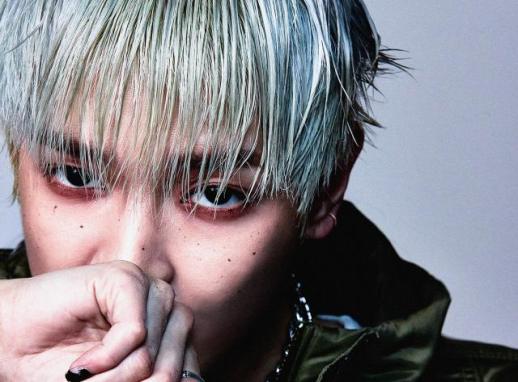 NCT's Taeyong begins 'WYLD' promotions with music shows, Seoul Jazz Festival SEOUL, May 21 (AJP) - Taeyong of K-pop group NCT will perform at the Seoul Jazz Festival this week as he begins promotions for his first full-length solo album "WYLD," SM Entertainment said Thursday. The 30-year-old rapper, dancer and songwriter is the leader of NCT and its subunit NCT 127. Taeyong will perform tracks from "WYLD" at the 18th Seoul Jazz Festival 2026, which runs from May 22 to 24 at Olympic Park in Seoul. The festival has grown into one of South Korea’s major outdoor music events by expanding beyond jazz to feature pop, R&B, hip-hop, indie and crossover artists. His festival setlist will include the first live performances of several album tracks. Taeyong will also appear on Mnet’s "M Countdown" on Thursday, followed by KBS2’s "Music Bank," MBC's "Show! Music Core" and SBS’ "Inkigayo" throughout the week, performing the album's title track. "WYLD," released on Monday, consists of 10 tracks, including songs Taeyong participated in the production stage. The hip-hop title track draws on the instinctive movements of wild animals, with choreography built around the contrast between restrained expression and explosive energy. Since its release, the album has topped domestic album and music charts. It also reached No. 1 on iTunes Top Albums charts in 10 regions and entered the top 10 in 18 regions, while the title track topped iTunes Top Songs charts in nine regions. Tracks from the album also occupied all top 10 spots on the real-time rising chart of AWA, a Japanese music streaming service, SM Entertainment said. 2026-05-21 16:20:05
 -
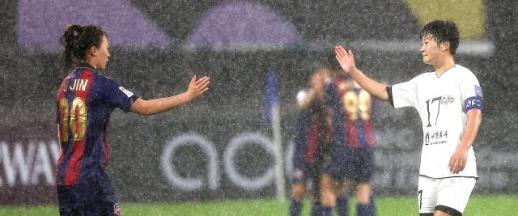 AJP Watch: The night Suwon lost more than a ball match SEOUL, May 21 (AJP) - The rain never stopped in Suwon on Wednesday night. Cold rain swept across the stands, soaked the banners and turned the pitch slick beneath the floodlights. Still, hundreds of South Koreans remained in their seats in plastic ponchos, pounding balloon sticks and chanting for a North Korean football club playing in the South for the first time in years. By the end of the night, Suwon FC Women had lost more than a semifinal. Suwon FC Women, led by coach Park Kil-young, fell 2-1 to North Korea's Naegohyang Women's Football Club in the semifinals of the AFC Women's Champions League at Suwon Sports Complex. The defeat ended Suwon's run at the continental title and sent the Pyongyang-based club into Saturday's final against Japan's Tokyo Verdy Beleza. On paper, the football story itself was straightforward enough. Suwon dominated long stretches of the match and created the better chances early. Japanese striker Haruhi Suzuki struck the post with a header in the first half. Brazilian forward Milena Barreto de Oliveira rattled the woodwork again minutes later. Suwon finally broke through in the 49th minute when Suzuki chipped the ball over goalkeeper Pak Ju-gyong after a deflection in the box. The lead lasted only six minutes. Naegohyang equalized through Choe Kum-ok’s header from a set piece before captain Kim Kyong-yong completed the comeback in the 67th minute with another headed goal after Suwon failed to clear danger inside the penalty area. Then came the image that lingered long after the final whistle. Ji So-yun, the captain and enduring face of South Korean women's football, stepped up for a late penalty that could have rescued the match. The shot drifted wide of the left post. Ji covered her face and collapsed onto the wet grass as the rain continued to fall around her. It was a football moment. But it also felt like something larger. From before kickoff, this had never been treated as an ordinary club match. Senior officials attended. Civic groups organized a joint cheering squad. Welcome banners greeted the North Korean side. Television crews crowded the stadium hours before kickoff. The match carried the weight of inter-Korean symbolism before a ball had even been kicked. That was understandable. North Korean teams rarely visit South Korea anymore. The last major period of sports exchanges between the two Koreas now feels like another political era altogether — back when athletes marched together under a unification flag at the Olympics and players from both sides still spoke publicly about reconciliation and shared identity. Those scenes have largely disappeared alongside the collapse of diplomacy over North Korea's nuclear weapons program. Today, the peninsula feels colder. North Korean leader Kim Jong-un has declared South Korea a "hostile" state. Military tensions have escalated again. Cross-border exchanges have withered. Even symbolic gestures once considered routine now feel exceptional. Which is why Wednesday night drew such emotional attention. But watching the match unfold through the rain in Suwon, another question slowly emerged. At what point does the symbolism surrounding an inter-Korean event begin to overshadow the athletes actually competing in it? For Suwon FC Women, this was not a diplomatic exhibition. It was not a goodwill friendly arranged for political theater. It was an AFC Women's Champions League semifinal. A place in the final, club history, prize money and continental recognition were at stake. Yet as the night unfolded, the emotional center of the stadium seemed to drift elsewhere. The joint cheering section had announced that it would support both teams. In reality, the louder emotional response often came for Naegohyang. Chants of the North Korean club's name echoed through the rain after goals. The visiting side was welcomed not simply as an opponent, but as a rare historical guest. There was nothing inherently wrong with that. Naegohyang deserved respect. The North Korean side played disciplined, relentless football and punished Suwon's mistakes with ruthless efficiency. Their victory was earned. Still, there was an unmistakable awkwardness in watching the home side slowly lose emotional ownership of its own stadium. Home advantage is not only geography. It lies in the noise, rhythm, and the feeling that the stadium rises with you when the match turns difficult. On Wednesday night, Suwon had the address. Naegohyang often seemed to have the occasion. That distinction mattered. After the match, Park struggled to hide her frustration. "We are Suwon FC Women, a South Korean football team," she said quietly. "I was upset throughout the match, and my heart was heavy." Her reaction was understandable. Football players are not immune to atmosphere simply because diplomacy surrounds them. They hear the cheers. They feel momentum shift. They understand when the crowd belongs emotionally to the night itself rather than to the team trying to survive it. Suwon did not lose because of the crowd. That must be said clearly. The South Korean side lost because it missed chances, conceded soft goals and failed to convert a penalty. Two shots off the post are still missed opportunities. A missed penalty remains a missed penalty. But football is never played in emotional silence. And this particular silence — the strange feeling that the home team had become secondary inside its own stadium — lingered long after the match ended. There was another layer to the unease. The football itself carried traces of the broader freeze between the two Koreas. The match was physical from the start, full of hard challenges and sharp confrontations. The atmosphere around the teams felt tense rather than warm, competitive rather than sentimental. That, too, reflected how much the peninsula has changed. There was a time when South and North Korean women footballers posed together for selfies after tournaments. During the East Asian Cup in Wuhan in 2015, players from both sides laughed together casually after matches, joking about hairstyles and hometowns. "We're one people, one bloodline," one North Korean player said at the time. Eleven years later, those words feel impossibly distant. Now the interactions are colder, more cautious and edged with hostility. The deterioration of political relations has slowly seeped into the football itself. The pitch no longer feels like neutral ground separating politics from sport. Instead, politics hangs invisibly over every challenge, every chant and every celebration. In the 2014 Incheon Asian Games semifinal, South Korea also lost 2-1 to North Korea on home soil — the same narrow margin, the same familiar ache against a side that has long been organized, disciplined and ruthless when the moment turns decisive. Wednesday night in Suwon felt like an echo of that older wound. When Ji So-yun stood over the penalty in the 79th minute, the entire weight of the night seemed to narrow onto one spot on the rain-soaked pitch — the cold, the crowd, the history, the strange emotional atmosphere surrounding the match. She is South Korea's captain, its most celebrated women's footballer, the player who has carried the domestic women’s game through much of the last two decades. In that moment, she stood alone against more than a goalkeeper. The shot drifted wide. Ji covered her face and sank onto the wet grass. It was a human moment before it was a sporting one. And it was also a reminder that even when football becomes wrapped in diplomacy and symbolism, the players themselves remain painfully human. They hear the crowd. They feel the emotional temperature of a stadium. They know when the night is carrying them forward, and they know when it is not. Naegohyang earned its victory. The North Korean side was disciplined, composed under pressure and clinical in the moments that ultimately decided the match. Welcoming its players with dignity was right. Respecting the quality of the team was right. But respecting the visiting side should not mean making the home side feel like a supporting cast in someone else's occasion. That was the lingering unease of Wednesday night. Somewhere between the rain, the banners, the official attention and the louder emotional response to the North Korean goals, Suwon FC Women seemed to lose more than a semifinal. They seemed to lose the emotional center of their own stadium. And long after the final whistle, after the chants faded and the rain continued falling over Suwon Sports Complex, the harder question remained — one no scoreline alone can answer: How did a home game come to feel like someone else's occasion? 2026-05-21 16:18:33