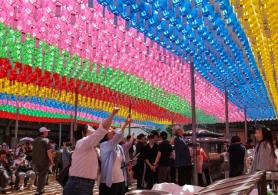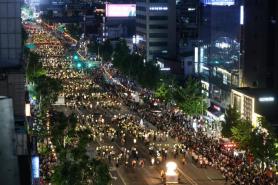
SEOUL, May 24 (AJP) - Lotus lanterns glowed across South Korea on Sunday as temples filled with worshippers marking Buddha's Birthday, one of the country’s most widely observed religious celebrations and a day centered on compassion, reflection and prayer.
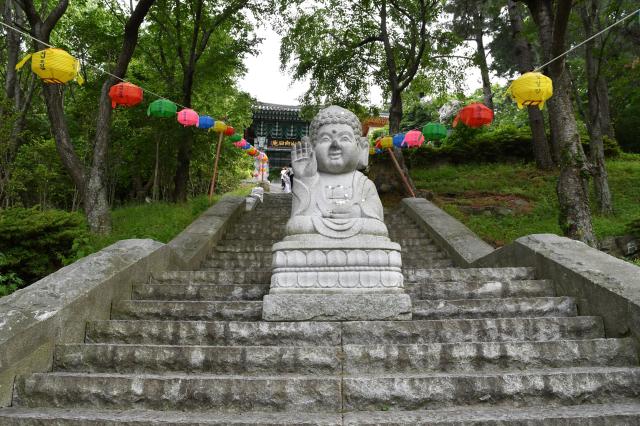
At Hyangiram Hermitage in the southern coastal city of Yeosu, visitors climbed steep stone stairways beneath rows of colorful lanterns hung in honor of the birth of Siddhartha Gautama, the founder of Buddhism.
The holiday, observed on the eighth day of the fourth month of the lunar calendar, commemorates the birth of the Buddha more than 2,500 years ago. In South Korea, where Buddhism has shaped art, architecture and spiritual life for centuries, the day is both a religious observance and a cultural tradition that draws believers and nonbelievers alike to temples nationwide.
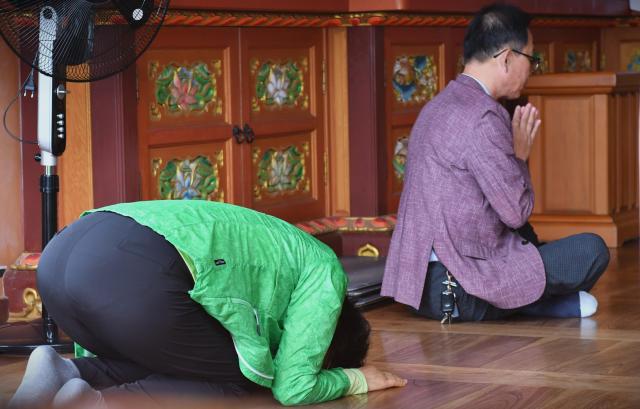
At Hyangiram, monks led chanting ceremonies inside prayer halls thick with incense smoke while worshippers bowed repeatedly before golden Buddha statues.
Families arrived carrying children dressed in bright traditional clothing, elderly couples moved carefully along the uneven cliffside paths and younger visitors stopped to write personal wishes beneath hanging lanterns.
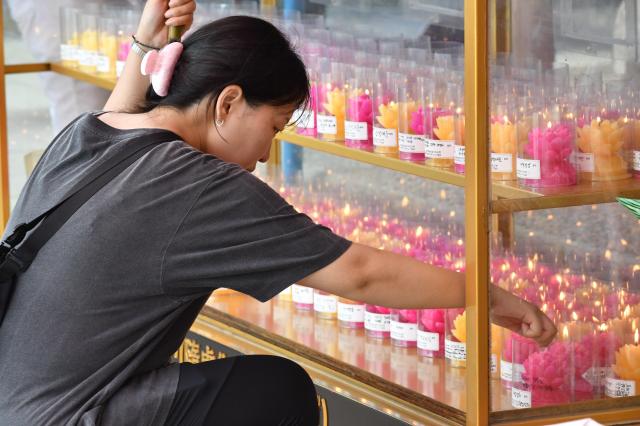
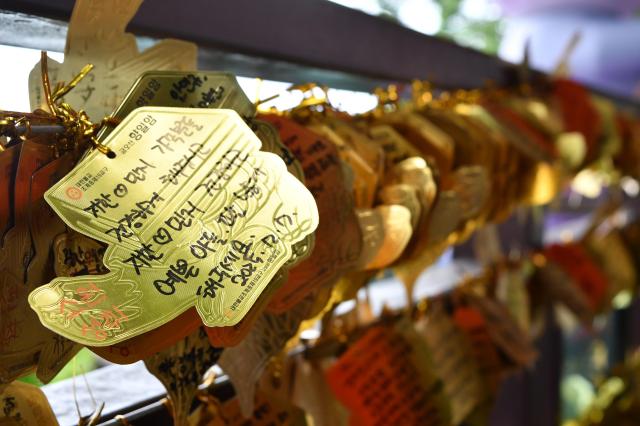
Many of the lanterns carried handwritten prayers for peace, health and family. Others bore wishes reflecting anxieties of modern life: hopes for employment, recovery from illness or comfort during uncertain times. As sea winds swept through the temple grounds overlooking the South Sea, the lanterns shifted gently above visitors’ heads throughout the day.
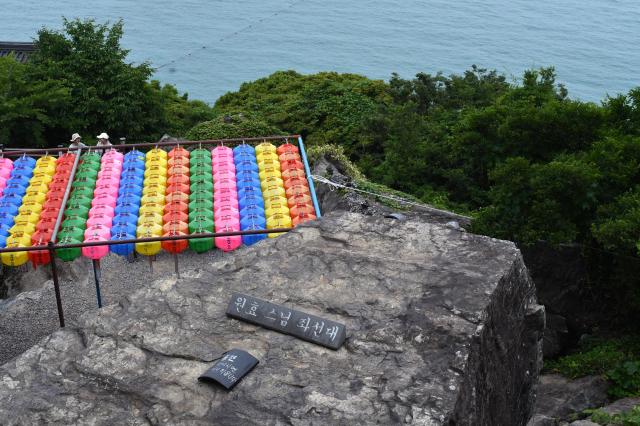
At Hyangiram, the occasion drew visitors who came not only to pray but also to experience a place where mountain, sea and centuries of faith converge.
Families carrying lotus lanterns climbed the winding granite paths together, while elderly worshippers paused along the stone stairways to catch their breath before continuing upward. The scent of incense drifted through the narrow passages between the rocks as temple bells echoed faintly over the shoreline below.
Some kneeled quietly before the main hall, pressing their palms together in prayer. Others stood near the cliff’s edge, looking out over the waters off Yeosu in silence. Monks in gray robes moved steadily between the prayer halls and lantern-lined courtyards, occasionally stopping to speak softly with visitors or help light candles placed before Buddhist statues.
According to temple tradition, the site dates to 644 CE, when the Buddhist monk Wonhyo is said to have built a small hermitage here, originally called Wontongam. It was later known as Geumoam during the Goryeo period before taking its current name during the reign of King Sukjong in the Joseon era. Wonhyo is also said to have encountered Avalokitesvara, the Bodhisattva of Compassion, during meditation, a tradition that helped establish the site as a place of devotional prayer facing the sea.
Hyangiram is best known as one of southern Korea’s most popular sunrise spots. On New Year’s Day, its narrow paths are often packed before dawn with visitors waiting for the first sunrise of the year. But on Buddha’s Birthday, the atmosphere carried a quieter rhythm. Instead of countdowns and celebration, there were hushed conversations, the soft rustling of prayer tags in the wind and the steady sound of footsteps against worn stone.
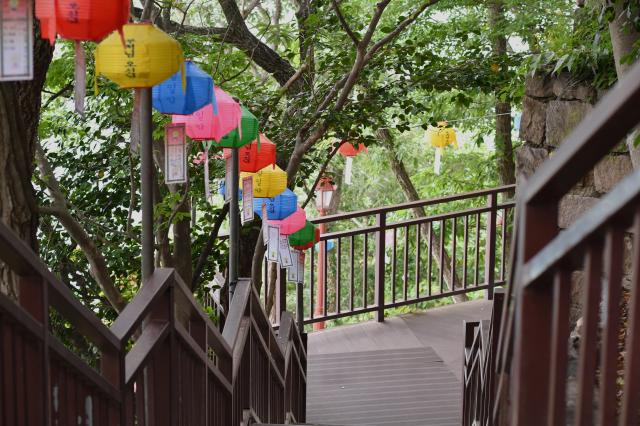
The path up is not easy. Visitors must squeeze through tight gaps in the rock and climb steep, uneven stairs carved into the mountainside. Some sections are so narrow that people must turn sideways to pass. There are no shortcuts. But that effort is part of what the place gives back. At the top, the sea opens suddenly in front of you, and the climb makes the view feel earned.
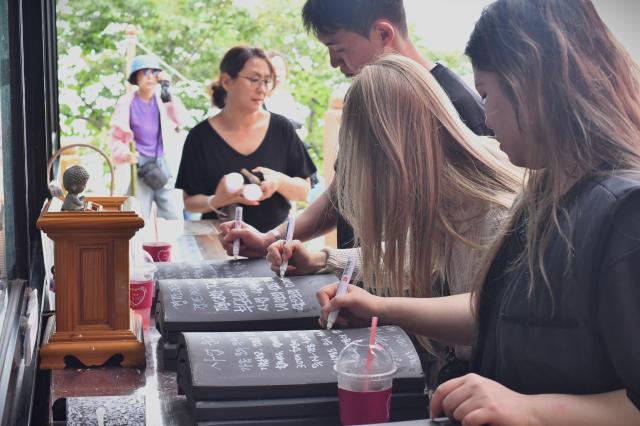
By mid-morning, the rock ledges around the temple had begun to fill. People sat alone or in small groups beneath strings of pink, blue and yellow lanterns. Some wrote wishes for health, peace or family on paper tags tied beneath the lanterns, while others carefully inscribed messages onto roof tiles that would remain at the temple long after the holiday ended.
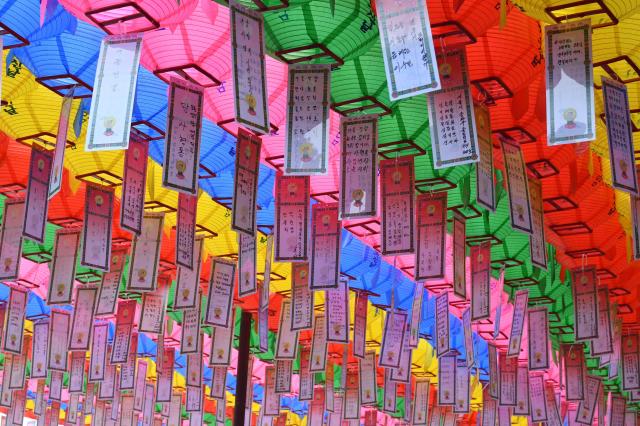
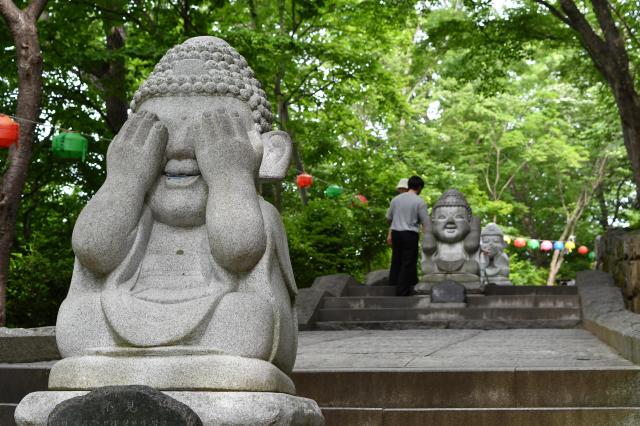
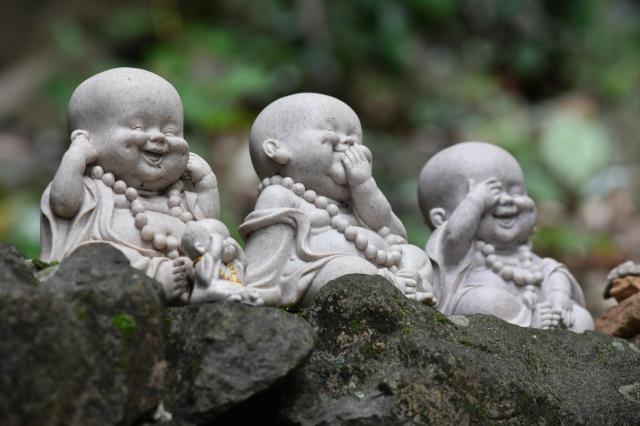
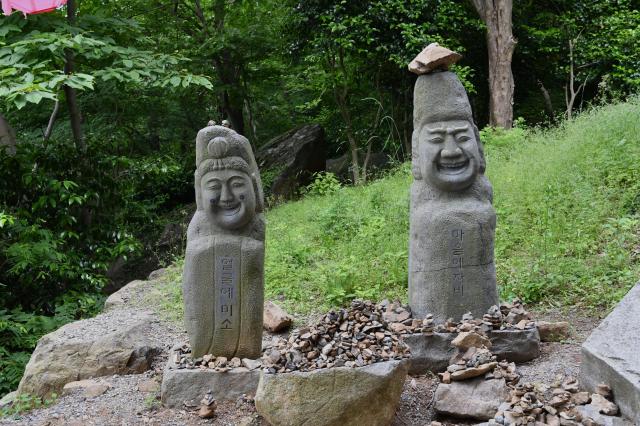
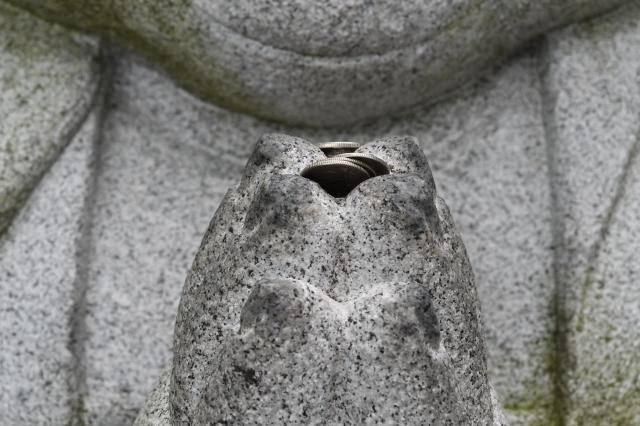
Small details gave the site much of its character: stacks of coins balanced in the hands of weathered stone Buddhas, tiny monk statues tucked between lanterns, candles flickering in lotus-shaped holders and handwritten prayers swaying in the ocean wind. Near one hall, visitors lined up quietly to pour water over a small baby Buddha statue resting inside a lotus basin, a traditional ritual symbolizing purification and renewal.
The scenery here is not grand in the usual sense. What lingers instead is the layering: sea and rock, lantern and footstep, old story and today’s climb. On Sunday, the small cliff-top temple faced the sun as it always has, while those who came carried their prayers, memories and quiet intentions toward the water.

Copyright ⓒ Aju Press All rights reserved.