

Journalist

Joonha Yoo유준하
joonhayoo94@ajupress.com
ReporterCOEX Sejong Center for the Performing Arts & Music, Culture, Entertainment, Automotive
Joonha Yoo is a bilingual journalist at AJU Press (AJP), covering music, culture, entertainment and Korea’s automotive industry.
Raised in Fort Collins, Colorado, he often writes from the scene, bringing firsthand detail to stories ranging
from BTS comeback concerts to unique cultural events that catch the world's eye. "I write from the scene, not from the sidelines."
Raised in Fort Collins, Colorado, he often writes from the scene, bringing firsthand detail to stories ranging
from BTS comeback concerts to unique cultural events that catch the world's eye. "I write from the scene, not from the sidelines."
Latest by Joonha Yoo
-
 Waiting becomes second nature for young 'pali pali' Koreans SEOUL, October 23 (AJP) - South Koreans are famously impatient, with a national ethos summed up by "pali pali," or "hurry, hurry." Yet younger generations seem curiously unhurried when it comes to queuing for hours for a meal or something they love. The queue for Justin Bieber's SKYLRK pop-up in Seoul began forming a day in advance. So did the line for Friday's pickup of Apple's new foldable phone. Seasoned queuers brought camping chairs and passed the time playing games or reading. Some befriended strangers or caught up with friends who shared their interests. Food and tips on staying warm circulated among those waiting. Kim Sung-min, a 34-year-old office worker, had arrived at 6 a.m. Eight hours later, he was still outside among more than a hundred people waiting to buy a hoodie. He just hoped there would be one left in his size. "I really like Justin Bieber, and I really want something from the brand he created," Kim said. "It's about being a fan." As he shared his excitement, someone behind him gave up and left. "There are just too many people ahead," the departing shopper said, adding that buying through resale or other platforms might be smarter. To onlookers, waiting since the small hours just to make a purchase may hardly look smart. South Koreans call the early rush to secure a purchase an "open run." The phrase suggests speed. Much of the experience involves staying put. Outside fashion pop-ups, dessert shops and newly opened restaurants, shoppers spend hours pursuing things others cannot imagine waiting for. Part of the reward is what they hope to take home. Part is simply being there: sharing an interest, trying something new or enjoying the anticipation of a long-wanted purchase. Kim said people often ask why he bothers and consider it a waste of time. But collecting and wearing things associated with someone he likes makes him happy — a feeling he finds difficult to explain to someone who has never joined the queue. "When you finally get exactly what you wanted after waiting so long — that feeling is incredible," he said. Bang Hae-jin, a professor at Kookmin University who teaches consumer marketing and psychology, said the effort of obtaining a product can become part of its appeal. Shoppers may attach greater value to something they have spent time pursuing. Those around them offer companionship and reinforce the feeling that the item is worth having. "Waiting becomes part of the experience rather than simply a cost," Bang said. For fans, attachment to an artist can give merchandise meaning before they have examined its fabric or fit. Wearing it expresses that attachment. Waiting alongside other fans offers a place to share it. For Lim Hyo-seon, the attraction is food — and the wait is easier with a chair. Born in 1999, Lim carries a small chair when she expects to queue. Standing gets tiring, and she would rather have somewhere to sit than settle onto the pavement. She has waited for Han Jeong Seon, Knotted and Chipotle. When acquaintances ask whether she gets bored, she wonders why the time needs defending. "Isn't it natural to spend time on something you like?" she said. If a food item is attracting attention, Lim wants to try it. Other people's enthusiasm may bring it to her notice, but tasting it is how she decides for herself. "You have to try it to know whether you like it," she said. The queue can also help her plan the next outing. People exchange restaurant recommendations, strike up conversations and hold places for one another during bathroom breaks. Lim sees a chance to make friends with people who have chosen to spend their time much as she has. Not every wait demands the same endurance. At Han Jeong Seon, she recalled registering for a place and walking around nearby until a notification arrived. Knotted had been tougher, partly because she felt supplies were limited. A place in line offers no guarantee of what will be left at the counter. Being free to walk around makes the delay easier; worrying about stock makes it harder. Still, the appeal of buying in person extends beyond securing products unavailable elsewhere. In an Embrain Trendmonitor survey conducted in late 2024, 64.1 percent of respondents who had visited pop-ups said buying on-site was enjoyable even when the products were also available online. Among all 1,000 respondents — South Koreans aged 19 to 59 — 43.3 percent said they would be willing to wait for a pop-up involving a brand or field that interested them. The findings measure willingness rather than hours actually spent queuing, but suggest why a long line does not automatically put shoppers off. For an unfamiliar restaurant, the queue itself may supply a reason to visit. Bang said consumers who know little about a product can treat other people's willingness to wait as a clue to its quality. Someone who already knows the product has less to learn from the crowd and may simply see a delay. Who else is waiting matters, too. Lim will queue for food but avoids merchandise lines because she dislikes competing with resellers who buy goods to offer them at higher prices. Someone visiting on a weekend or taking leave from work, she said, cannot necessarily compete with people doing it for a living. Online, sellers put a price on the alternative to waiting. One listing offered a blue SKYLRK hoodie for 550,000 won. The seller said it had been purchased during the opening-day rush and invited offers. That was an asking price, with no indication of a completed sale. For those still in line, walking away can become harder as the hours accumulate. Bang said shoppers may feel compelled to buy something to justify the time already spent. The effort can also influence how generously they judge what they eventually obtain. "That means the evaluation becomes more favorable, not that the actual quality has improved," Bang said. For a generation raised on "hurry, hurry," patience has found its place — at least when there is something worth waiting for. 2026-10-23 17:47:57
 -
 Korean content reaches four in five Netflix members SEOUL, October 23 (AJP) - Nearly four in five Netflix members have watched Korean content, the company said Friday as it marked 10 years in South Korea. More than 200 Korean titles have entered Netflix's global Top 10 rankings since the company began compiling the list in June 2021. "Squid Game" Season 1 remained in the global Top 10 for 32 consecutive weeks, including nine weeks at No. 1, the longest run for a Korean title, according to Netflix. The company worked with more than 80 production companies to produce or co-produce over 200 Korean titles between 2016 and 2025. Since Netflix began publishing its global Top 10 rankings in 2021, more than 200 Korean titles have appeared on the list. Productions during the decade involved more than 25,000 cast and crew members and were filmed in more than 100 cities and towns across Korea, according to the company. Netflix also said more than 6,500 people completed production and training programs it offered in Korea between 2021 and 2025. The company unveiled a website Friday documenting its 10 years in Korea through production data, creator interviews and localization cases. 2026-10-23 13:58:48
 -
 IVE tops YouTube music video trend chart SEOUL, October 23 (AJP) - K-pop girl group IVE's latest single "Looks Can Kill" topped YouTube's worldwide music video trending chart ahead of the release of the group's new EP, Kakao Entertainment said Friday. The music video, released Oct. 19, also ranked No. 1 in six countries including Britain and Japan and entered the top 10 in 18 countries and regions, according to the company. "Looks Can Kill" is the title track of IVE's upcoming six-track EP of the same name, which is scheduled for release on Oct. 26. The album also includes "Mirror Mirror," "SNAKESKIN," "CRUMBS," "Girls Girls Girls" and "Glow Motion." Members Gaeul, Rei and Liz participated in the album's creative process. IVE recently completed its second world tour, "SHOW WHAT I AM," which covered 20 cities and 28 shows. The group drew a combined 127,000 people at Kyocera Dome Osaka and Tokyo Dome, Kakao Entertainment said. 2026-10-23 12:44:44
 -
 Korea's first homegrown obesity drug to launch SEOUL, October 23 (AJP) - South Korea's first domestically developed GLP-1 obesity drug will become available at some clinics from Oct. 29, just three weeks after winning regulatory approval. Hanmi Pharmaceutical's Eppe, or efpeglenatide, reduced body weight by an adjusted average of 9.02 percent after 40 weeks in a Phase 3 trial, compared with 0.89 percent for a placebo, according to prescribing information approved by the Ministry of Food and Drug Safety. About 75 percent of patients taking the drug lost at least 5 percent of their body weight. The trial involved 448 Korean adults with obesity or overweight who did not have diabetes. The ministry approved Eppe on Oct. 7 as Korea's 45th domestically developed new drug and its first homegrown GLP-1 obesity treatment. The drug is administered once a week, starting at 2 mg and gradually increasing to a maintenance dose of 10 mg. Its launch adds a Korean-developed option to a market dominated by Novo Nordisk's Wegovy and Eli Lilly's Mounjaro. Hanmi disclosed the Oct. 29 prescription date at a medical symposium in Seoul on Thursday. 2026-10-23 11:03:07
 -
 Netflix's 'Tantara' to premiere in December SEOUL, October 22 (AJP) - Netflix's upcoming Korean series "Tantara," starring Song Hye-kyo and Gong Yoo, will premiere worldwide on Dec. 11, the streaming service said Thursday. Set against South Korea's entertainment industry from the 1960s through the 1980s, the series follows people struggling from poverty to build careers in the country's emerging music business. Song plays Min-ja, who enters the record industry after a difficult childhood, while Gong portrays Dong-gu, her longtime friend who supports her pursuit of success. The cast also includes Kim Seol-hyun as Min-hee, an ambitious woman whose relationship with Min-ja shifts between rivalry and affection, and Cha Seung-won as Seok Gil-yeo, a prominent composer known for turning new singers into stars. The series is written by Noh Hee-kyung and directed by Lee Yoon-jung. Lee Ha-nee and Na Moon-hee also appear. "Tantara" will be released at 5 p.m. on Dec. 11. 2026-10-22 17:39:35
 -
 NCT WISH tops weekly album charts with 'I SPY' SEOUL, October 22 (AJP) - K-pop boy group NCT WISH's fourth EP "I SPY" topped South Korea's weekly album charts after selling more than 1.2 million copies on its first day, SM Entertainment said Thursday. The six-track album, released Oct. 12, ranked No. 1 on Circle Chart's weekly album and retail album charts. It also topped Hanteo Chart's weekly album ranking. The first-day sales made "I SPY" the group's fourth consecutive million-selling release, according to the agency. The album also ranked first on the Global K-chart, which combines data from South Korea's Melon, China's Tencent Music and Japan's Line Music for the week of Oct. 12-18. "I SPY" is led by the title track of the same name and follows the group's first full-length album "Ode to Love," released in April. 2026-10-22 17:39:19
 -
 Korea's obesity drug race meets an appetite for thinness SEOUL, October 22 (AJP) - In appearance-conscious South Korea, medicines developed to treat obesity are finding an audience beyond patients seeking better health as they appeal to people whose goal is to become thin and stay thin. Lee Sun-young, a 34-year-old office worker, said her body mass index was within the normal range before she started taking Wegovy. “Just once in my life, I want to be thin,” she told AJP. Her experience raises a question as South Korea becomes a testbed for a new generation of obesity drugs: whether greater choice will help patients manage disease or deepen an obsession with thinness. Korean hospitals are participating in that development race. Eli Lilly’s ENLIGHTEN-2 phase III trial is evaluating eloralintide in adults with overweight or obesity and type 2 diabetes. Five Korean hospitals, including Seoul National University Bundang Hospital and Severance Hospital, are among its international sites. Globally, the options under development increasingly include pills. AstraZeneca announced in June that its oral GLP-1 candidate elecoglipron was advancing into phase III trials for obesity and type 2 diabetes. The medical rationale for testing treatments in Korea is distinct from the demand for a slimmer figure. Heo Yang-im, public relations director at the Korean Society for the Study of Obesity, said Asian populations can develop metabolic disease at lower BMI levels. Korean and Japanese participation provides evidence that predominantly Western trials cannot fully supply, she told AJP in a telephone interview Thursday. Korea also has an established research network, ranking sixth globally for industry-sponsored clinical trials in 2024, according to the Korea National Enterprise for Clinical Trials. But clinical eligibility and personal dissatisfaction with weight do not always coincide. When Wegovy first became available, Lee joined prospective buyers searching for clinics where they could obtain it. She eventually found one in Seoul’s Jongno district. The place felt “like a factory,” she said. She had barely mentioned Wegovy at reception before being directed to wait for a doctor. She recalled receiving a prescription shortly after entering the consultation room and then heading to a pharmacy. The convenience pleased her. It also left her wondering whether a medicine intended for patients with a medical need should have been so easy for her to obtain. Lee reported no side effects and said she could get through the day comfortably on about one meal while taking the injection. Her medical records were unavailable to establish what assessment preceded her prescription. For adult weight management, Wegovy’s Korean labeling specifies an initial BMI of at least 30, or at least 27 with a weight-related condition such as hypertension or type 2 diabetes. Treatment accompanies dietary changes and physical activity. Those criteria differ from Korea’s diagnostic threshold for obesity, a BMI of 25. Neither makes dissatisfaction with one’s appearance alone a medical indication. The gap between measured weight and perceived size was apparent before the injection boom. A Korea Disease Control and Prevention Agency analysis of national survey data from 2019–2021 found that 55.5 percent of normal-weight women aged 30–39 had tried to lose weight in the preceding year. In the same group, 25.2 percent perceived themselves as obese. The findings do not measure medication use. They show how the desire to lose weight can persist even within the normal range — the dissatisfaction that increasingly convenient treatments may risk reinforcing. Other patients describe needs rooted in longstanding weight problems or illness. Yoo Su-min, a 22-year-old university student from Seoul, said he had struggled with excess weight since childhood. He took Mounjaro for seven months and lost about 15 kilograms. He noticed little change during the first two months. After his dose increased, eating became difficult. “Before, I could finish a bowl of rice without any problem,” he said. “After the injection, I would have one or two spoonfuls and couldn’t eat any more. I felt nauseated and didn’t want food.” Yoo has stopped treatment but recently began worrying that his weight was creeping back up. He is considering exercising more regularly and possibly returning to medication. His concern has a clinical basis. In the SURMOUNT-4 trial, participants switched from tirzepatide, Mounjaro’s active ingredient, to placebo after 36 weeks gained an average 14 percent relative to their weight at the switch over the following year. Those who continued treatment lost a further 5.5 percent. Continued treatment for a chronic condition is therefore different from using medication to maintain an unnecessarily low weight. For Kim Ju-hyun, a 54-year-old office worker, the purpose is clear. “I have diabetes. That’s why I started taking it,” she said of Mounjaro. “It wasn’t because of my weight.” Kim said her blood sugar readings had fallen since starting treatment. She spends about 230,000 to 250,000 won a month and plans to continue. Both Kim and Yoo would consider a suitable oral medicine. Yoo imagined taking a tablet alongside his daily vitamins. “Even an injection once a week is more of a hassle than you might think,” he said. Heo cautioned that pills would not necessarily replace injections. “I don’t think everyone will necessarily switch to oral medicines just because they become available,” she said. Effectiveness, side effects, cost and individual preferences would shape their choices. For patients managing obesity or diabetes, easier treatment could make care more sustainable. For people already dissatisfied with a normal-weight body, it could also make medication a more routine means of pursuing thinness. 2026-10-22 17:38:47
 -
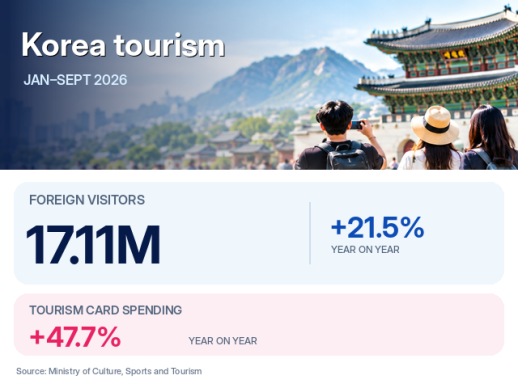 AJP Factbox: Foreign arrival nears 2025 count by Sept. South Korea welcomed 17.11 million foreign visitors in the first nine months of 2026, up 21.5 percent from a year earlier and nearing the 18.94 million recorded throughout 2025. Tourism-related card spending grew even faster, surging 47.7 percent to 15.94 trillion won ($11.9 billion) over the same period, according to government data. 2026-10-22 14:00:29
 -
 Busan shark returns to canal hours after being guided out SEOUL, October 22 (AJP) - A 3-meter shark that spent more than a month trapped in an artificial canal at Busan's North Port returned behind a containment barrier Thursday, hours after authorities had guided it toward open water. The female dusky shark, nicknamed Bukang, was spotted Thursday morning swimming between two barriers near the canal entrance. Authorities had moved her out of the waterway at around 6 p.m. Wednesday during their third rescue attempt. Bukang apparently passed beneath or around a floating pontoon equipped with netting that had been installed to prevent her from returning. Two additional net barriers remain between her current location and the inner section of the canal where she had previously stayed. Authorities have made three attempts to move the shark since late September. Earlier operations used boats, high-pressure water and large nets before officials changed their approach Wednesday and gradually pushed her toward an exit with a net attached to a floating structure. Concerns over Bukang's condition have grown as water temperatures fall. Authorities said no feeding activity has been confirmed during her stay in the canal, while abrasions have been observed around her snout and a fin. Fisheries experts, have said the visible injuries do not appear serious enough to impair her swimming. Authorities are preparing another effort to guide Bukang into open water. 2026-10-22 11:52:52
 -
 Foreign arrivals near 2025 full-year total by September SEOUL, October 22 (AJP) -Foreign arrivals in South Korea reached 17.11 million through September, closing in on last year’s full-year total, while tourist spending grew at more than double the pace of arrivals. Tourism-related card spending jumped 47.7 percent from a year earlier to 15.94 trillion won in the first nine months, while foreign arrivals rose 21.5 percent, the Ministry of Culture, Sports and Tourism said Thursday. The visitor count was 1.83 million short of the 18.94 million recorded for all of 2025. China remained the largest source market with 5.47 million visitors, up 29.2 percent from a year earlier. Japan followed with 3.12 million, up 16.9 percent, while arrivals from Taiwan rose 32.4 percent to 1.86 million. September alone drew 2.06 million foreign visitors, up 21.1 percent from a year earlier. Monthly arrivals topped 2 million for a third consecutive month, following 2.09 million in July and 2.25 million in August. Growth was also stronger outside the Seoul metropolitan area. Arrivals through regional airports including Gimhae, Jeju, Cheongju and Daegu rose 37.4 percent to 3.24 million in the first nine months, compared with a 17.3 percent increase through metropolitan-area airports. Regional airports and ports together handled 4.82 million foreign arrivals, accounting for 28.2 percent of the total. “The various efforts to raise awareness of Korean tourism, improve the travel environment and expand content are bearing fruit,” Kang Jung-won, head of the ministry's tourism policy office, said. 2026-10-22 11:52:30