

Journalist
Joonha Yoo유준하
joonhayoo94@ajupress.com
ReporterCOEX Sejong Center for the Performing Arts & Music, Culture, Entertainment, Automotive
Joonha Yoo is a bilingual journalist at AJU Press (AJP), covering music, culture, entertainment and Korea’s automotive industry.
Raised in Fort Collins, Colorado, he often writes from the scene, bringing firsthand detail to stories ranging
from BTS comeback concerts to unique cultural events that catch the world's eye. "I write from the scene, not from the sidelines."
Raised in Fort Collins, Colorado, he often writes from the scene, bringing firsthand detail to stories ranging
from BTS comeback concerts to unique cultural events that catch the world's eye. "I write from the scene, not from the sidelines."
Latest by Joonha Yoo
-
 Seoul's soaring property tax bills overlook graying homeowners SEOUL, October 21 (AJP) - Seoul’s property tax bills have shot up alongside home values, squeezing graying homeowners with little or no income to pay levies on gains they have yet to realize. The growing burden could pose another test for President Lee Jae Myung’s administration as his approval ratings slide, adding to discontent among traditionally conservative homeowners in Seoul’s affluent districts. The number of taxpayers assessed more than 5 million won ($3,773) in annual residential property tax surpassed 100,000 for the first time this year, according to Seoul Metropolitan Government data obtained by Rep. Choi Eun-seok of the People Power Party. A total of 106,799 taxpayers crossed that threshold, up 46.7 percent from 72,782 last year and exceeding the previous high of 87,462 in 2021. The number had fallen to 48,315 by 2023 before returning to growth in 2024. The figures cover apartments, detached houses, low-rise multiunit homes and residential officetels. The number of owners of homes with officially assessed values above 3 billion won also more than doubled from a year earlier. Yet the graying tax base suggests that rising bills could force some longtime owners to sell the only home they have known for decades. Seoul had 235,808 property taxpayers aged 80 or older this year, up 343 percent from 53,237 in 2012 and 18,009 more than last year. Over the same period, the number aged under 40 fell 23 percent to 306,079 from 396,328. Across all housing types, residential property tax assessments reached 3.77 trillion won this year, up 161 percent from 1.44 trillion won in 2012. The number of taxpayers increased 30.4 percent over those 14 years, from 2.36 million to 3.08 million. The average assessment per taxpayer doubled to 1.22 million won from 610,000 won. Apartments alone accounted for 3.27 trillion won in assessments this year, up 17.1 percent from 2025, with the burden heavily concentrated in Seoul’s affluent southern districts. Gangnam, Seocho and Songpa accounted for 1.56 trillion won, or 47.5 percent of apartment property tax assessments, despite representing just 23.5 percent of apartment property taxpayers. The average taxpayer in those three districts was assessed 3.34 million won, compared with 1.65 million won citywide. That was 6.7 times the 499,000 won average in Nowon, Dobong and Gangbuk in northern Seoul. Yet even in Gangnam, long synonymous with South Korea’s property wealth, a valuable address does not necessarily come with a comfortable cash balance. Some of its most coveted properties are worn, decades-old apartments awaiting reconstruction. Their prices reflect prized locations and the promise of new homes, while longtime owners still contend with aging infrastructure and mounting holding costs. For those who bought long before the neighborhood became so expensive, the windfall may have required nothing more than staying put. Paying the bills requires cash. Kim Ho-sung, a 58-year-old office worker who has lived in Eunma Apartment in Daechi-dong for nearly three decades, said owning a home worth billions of won had not necessarily brought financial ease. Kim bought his apartment in the late 1990s, when South Korea was grappling with the Asian financial crisis. He now estimates its value at roughly 3.5 billion won. “People ask me, ‘You live in Eunma? You must be rich,’” Kim said. “But I am anything but.” He declined to disclose his annual tax bill but said the combined burden of property taxes and the comprehensive real estate holding tax, an additional levy on high-value property holdings, had become a growing concern. Selling would unlock that wealth. It would also mean leaving the neighborhood he has called home for much of his adult life. “I’ve thought about selling, but once I leave, where would I go?” he said. Life inside the complex offers little of the luxury its price tag might suggest. Kim pointed to aging infrastructure, inadequate parking and heavy evening traffic around Daechi-dong, one of Seoul’s busiest private tutoring districts. Built in 1979, Eunma received reconstruction project implementation approval in July, clearing a major administrative hurdle after decades of delays. Plans call for 5,850 new apartments, with existing owners required to make additional contributions toward their new homes. Kim said the prospect of further payments had surprised him and prompted his family to reconsider whether to stay. Reconstruction has renewed interest in Eunma, but that attention has not consistently translated into purchases or higher prices. Kim Kyung-hwan, a real estate agent near the complex, said its location in Daechi-dong’s sought-after school district continued to draw inquiries. “Many people are interested in Eunma, and some want to live here,” he said. “But when it comes to people actually buying, there aren’t that many.” The complex primarily consists of apartments with about 76 or 84 square meters of exclusive floor space. Individual renovations have left considerable differences in their interiors, giving prospective buyers another factor to weigh. Asking prices for smaller apartments were generally in the low 3 billion won range, the agent said. Prices for larger units varied according to their characteristics. Overall activity had increased as reconstruction plans advanced, but that included leases as well as purchases. “When you put sales, jeonse and monthly rentals together, transactions have increased,” he said. “But prices are similar to before, and some are even lower.” Jeonse is South Korea’s rental system in which tenants provide a large refundable deposit instead of paying monthly rent. More rental transactions do not necessarily signal stronger demand to buy. Across Seoul, the rise in property taxes has been uneven. Dongdaemun recorded the sharpest increase in apartment property tax assessments at 27.4 percent, followed by Seocho at 25.7 percent and Songpa at 24.6 percent. Geumcheon’s increase was just 3.8 percent. Officially assessed values of apartments and other multiunit housing rose 18.6 percent across Seoul this year, according to the Ministry of Land, Infrastructure and Transport. The increase reached 25.83 percent in Gangnam but only 2.01 percent in Dobong. The figures show where Seoul’s housing wealth is concentrated. They reveal less about whether its increasingly elderly owners have the income to meet the bills. For longtime residents, selling can turn decades of appreciation into cash — but at the cost of leaving the only home they have known for much of their lives. At Eunma, potential rebuilding contributions add another expense before the promise of a new apartment becomes reality. For the government, the political difficulty lies in finding ways to contain housing prices and levy property wealth without making longtime owners feel they are being priced out of their own homes. Those figures show where the capital’s property wealth is growing. They say less about the incomes of the people living there — or whether residents own any of that wealth at all. 2026-10-21 18:04:21
 -
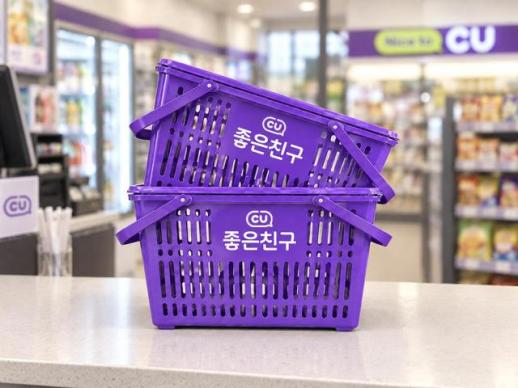 Korean retail outlook splits as convenience stores take hit SEOUL, October 21 (AJP) - South Korea's retail outlook diverged sharply heading into the fourth quarter, with department stores and large supermarkets remaining optimistic while convenience stores and neighborhood supermarkets turned markedly weaker, a business survey showed Wednesday. The overall retail business survey index, or RBSI, fell to 88 from 92 in the third quarter, according to the Korea Chamber of Commerce and Industry. A reading above 100 means more companies expect business conditions to improve than deteriorate. Department stores posted the strongest reading at 130, followed by large supermarkets at 111. Convenience stores fell to 79 from 127, while supermarkets dropped to 73 from 85. Online shopping was the only sector to improve from the previous quarter, rising to 82 from 74. The survey suggests consumers are becoming more selective rather than simply cutting spending across the board. Among retailers expecting conditions to worsen, 70 percent cited more cautious household spending as the main reason. Some 78.4 percent of respondents said demand for value-for-money products had either remained steady or increased, while 83.6 percent said the same for purchases focused on smaller quantities and specific needs. The divide was especially visible between department stores and convenience stores. Department stores continued to benefit from foreign tourist spending and year-end demand, while convenience stores entered a seasonal slowdown as colder weather reduced demand for beverages and frozen products. The chamber surveyed 500 retailers across Seoul and six major metropolitan cities. 2026-10-21 15:21:21
 -
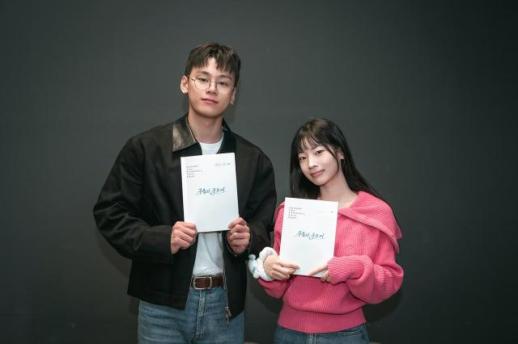 TWICE's Dahyun to star in new teen romance film SEOUL, October 21 (AJP) - K-pop girl group TWICE's member Dahyun has been cast opposite actor Cha Woo-min in a new teen romance film now in production for a 2027 release, production company TakeOne said Wednesday. The Korean-titled film "Gureumi Gureumi" follows two 17-year-olds -- a cheerful girl who uses a wheelchair and a promising swimmer carrying emotional scars -- as they develop feelings for each other. Dahyun will play Gureum, a high school student who has used a wheelchair throughout her life. Cha will portray Junsan, a competitive swimmer who meets her through a volunteer program. The film will be directed by Choi Sun-min, who previously worked as a co-director on television series including "King the Land" and "Miss Night and Day." 2026-10-21 15:20:54
 -
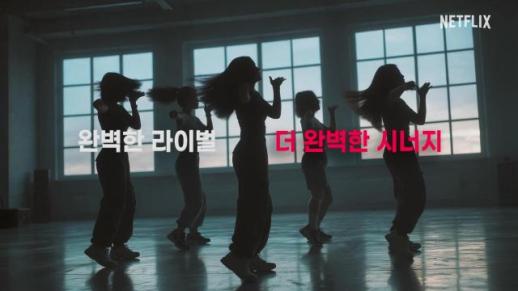 Netflix launches K-pop girl group audition project for arts-school students SEOUL, October 21 (AJP) - Global OTT giant Netflix is launching a K-pop girl group audition project featuring students from South Korean arts high schools, with applications opening Wednesday, the streaming service said. The project, titled "We Go High," will accept first- and second-year students attending high schools with arts or broadcasting-related programs, as well as students set to enter such schools in 2027. The competition will bring together students from arts schools across the country as they compete for places in a new K-pop girl group. Netflix has also signed a memorandum of understanding with SM C&C to support the group formed through the program after its debut. The companies said they would cooperate on the group's development and activities following the show. The project will be produced and directed by Park Jin-kyung and Lee Jae-seok of Monstera House. Information regarding the premiere date and the number of contestants or the final size of the group are yet to be disclosed. 2026-10-21 15:20:42
 -
 Korea woos 145 Taiwanese tourists with K-snack festival SEOUL, October 21 (AJP) - South Korea has attracted 145 Taiwanese tourists with a travel package built around regional festivals celebrating tteokbokki and gimbap, the Korea Tourism Organization said Wednesday. The visitors will attend the Daegu Tteokbokki Festival and the Gimcheon Gimbap Festival on Oct. 23 and 24 as part of a campaign to turn local food festivals in Daegu and North Gyeongsang Province into tourism draws for overseas visitors. The KTO's Taipei office developed the package with major Taiwanese travel agencies in September, targeting travelers interested in Korean food and culinary tourism. The campaign focuses on bunsik, a category of inexpensive Korean snack foods that includes spicy rice cakes, gimbap and instant noodles. The tourism agency will also invite influencers to the Daegu and Gimcheon festivals as well as the Gumi Ramen Festival scheduled for November. They will promote the events through their social media channels. The KTO said Taiwan was the largest source of foreign travelers arriving through Daegu International Airport and Gimhae International Airport, making it a key market for regional tourism campaigns. 2026-10-21 12:55:33
 -
 National Museum chief You offers resignation SEOUL, October 21 (AJP) - National Museum of Korea Director You Hong June offered to resign Wednesday over controversy surrounding a misidentified calligraphy work from his private collection. The museum displayed the work in its special exhibition "Our Tables" as calligraphy by independence activist Park Won-geun. It was later identified as the work of Park Jung-yang, who was designated by the government as a pro-Japanese collaborator. Criticism intensified after it emerged that the work belonged to the director himself, raising questions over the museum's verification process and a potential conflict of interest. "I concluded that stepping down as director is the right thing to do to restore the museum's damaged reputation," You said in a statement. He apologized to the public, descendants of independence activists and museum employees, saying responsibility for the controversy rested with him. Lawmakers from both the ruling and opposition parties questioned the chief of the National Museum over the case during a parliamentary audit on Monday. He apologized twice during the hearing. You, who has led the museum for about 15 months, said he hoped the controversy would not overshadow the work of museum researchers who prepared the exhibition. 2026-10-21 11:39:07
 -
 KOSPI rebounds over 3% as foreign buying lifts chip stocks SEOUL, October 21 (AJP) - South Korean stocks rebounded more than 3 percent Wednesday morning as foreign buying lifted semiconductor shares following a sharp selloff. The benchmark KOSPI climbed 3.28 percent to 5,735.14 as of around 9:50 a.m. (0050 GMT), after trading between 5,630.14 and 5,765.42. Foreign investors bought a net 197.3 billion won worth of shares, while institutions purchased 45.3 billion won. Retail investors sold a net 406.4 billion won. The rebound followed a 3.73 percent plunge in the KOSPI on Tuesday, when concerns over the profitability of massive artificial intelligence investments and financing pressures among data center operators weighed on technology shares. SK hynix surged 7.11 percent to 1,310,000 won, while Samsung Electronics jumped 5.56 percent to 223,250 won, recovering part of their recent losses. The recovery came as Nomura Securities maintained its bullish outlook for the global memory industry, arguing that concerns over AI investment profitability and China's technological advances had been overdone. The Japanese brokerage set target prices of 4.7 million won for SK hynix and 670,000 won for Samsung Electronics, maintaining buy ratings on both stocks. Nomura expects global memory demand to outpace supply through at least 2028, supported by continued expansion of data center infrastructure. The brokerage projected new global data center capacity would increase from 22.3 gigawatts this year to 31.5 gigawatts in 2027, sustaining demand for memory chips despite concerns over slowing growth at some AI companies. Nomura also estimated that combined revenue at OpenAI and Anthropic grew about 507 percent from a year earlier in the third quarter, suggesting that underlying AI demand remained strong despite questions over investment returns. It played down concerns over Chinese memory maker ChangXin Memory Technologies (CXMT), while cautioning that sustained cuts or major delays to data center projects could weaken its demand outlook. Other semiconductor-related stocks joined the rally. Samsung Electro-Mechanics rose 2.94 percent to 1,189,000 won, while SK Square gained 6.21 percent to 787,000 won. Samsung Electronics' preferred shares advanced 4.94 percent to 174,100 won. Despite the broader recovery, battery makers showed a weaker performance. LG Energy Solution fell 1.21 percent to 409,000 won, while Samsung SDI edged up 0.36 percent to 558,000 won. Defense manufacturer LIG Nex1 plunged 11.31 percent to 486,000 won, making it one of the sharpest decliners among actively traded KOSPI stocks. Daeduck Electronics slipped 0.08 percent to 132,200 won. Semiconductor equipment and materials stocks led sector gains, advancing 5.79 percent, while biotechnology research equipment and services rose 5.42 percent. Semiconductor-related themes also strengthened, with conventional chipmakers and chip production stocks each gaining 6 percent. The tech-heavy KOSDAQ climbed 1.77 percent to 795.84, after trading between 792.59 and 803.68. Foreign investors sold a net 59.4 billion won worth of shares, while institutions bought 40 billion won. Retail investors purchased a net 20.6 billion won. Elice Group surged 29.92 percent to 79,900 won, hitting the daily upper price limit after plunging 32.04 percent on its trading debut Tuesday. The AI cloud infrastructure company had closed its first session at 61,500 won, well below its initial public offering price of 90,500 won, amid concerns over the profitability and valuations of companies investing heavily in AI infrastructure. The sharp reversal followed a recovery in U.S. neocloud operator CoreWeave, whose shares rebounded from steep intraday losses to close 1.65 percent higher. Despite Wednesday's rally, Elice remained below its IPO price, highlighting the volatility surrounding AI infrastructure companies. Elsewhere on the KOSDAQ, semiconductor-related stocks advanced, with Doosan Tesna surging 12.99 percent to 115,700 won and Jeju Semiconductor gaining 6.06 percent to 70,000 won. Jusung Engineering rose 3.23 percent to 204,500 won, while HPSP gained 2.19 percent to 51,400 won. Robotics stocks also posted strong gains. HT Robotics climbed 10.85 percent to 10,830 won, while Bigwave Robotics jumped 15.96 percent to 21,650 won. Melon surged 23.18 percent to 14,880 won, while LS Materials advanced 6.02 percent to 13,910 won. Simtech edged up 0.65 percent to 124,800 won. The Korean won strengthened 0.03 percent to 1,326.6 won per dollar. Oil prices edged higher as investors weighed uncertainty over possible diplomatic progress between the United States and Iran against continuing supply risks in the Middle East. West Texas Intermediate crude rose 0.6 percent to $98.40 a barrel, while Brent crude gained 0.6 percent to $109.42. The modest gains followed reports of talks involving Pakistani and Iranian officials over U.S.-Iran negotiations, although a diplomat involved in the discussions reportedly dismissed suggestions that an agreement was imminent. Oil prices remained supported by attacks on commercial vessels near the Strait of Hormuz and continued fighting involving Saudi Arabia and Yemen's Iran-backed Houthi rebels. However, signs that Middle Eastern crude shipments had recovered to about 80 percent of prewar levels helped ease some supply concerns. 2026-10-21 10:52:41
 -
 Lee Soo-man puts a new label on a familiar K-pop playbook SEOUL, October 20 (AJP) - Lee Soo-man, the septuagenarian pioneer of K-pop, did not retire from the idol business when he sold his stake in SM Entertainment in 2023. Three years after leaving the company he founded, he is back with two new groups, a familiar production formula and a fresh pitch for taking it global. The market has given him an early hearing. A2O LITE, a nine-member girl group introduced alongside the 15-member boy group A2O SOUL, topped Melon’s Top 100 chart with its debut single “NEON” just 29 hours after its Oct. 13 release. For a rookie act competing in K-pop’s crowded release calendar, that is a notable entrance. For Lee, it is evidence that his instincts can still find an audience. Whether he has found a new direction for the industry is another question. New label, familiar instincts Lee’s latest banner is “Zalpha Pop,” a combination of Generation Z and Generation Alpha that positions A2O’s music for young listeners raised in a digitally connected world. The name is new. The practice of giving a production style its own vocabulary is deeply familiar. During Lee’s decades at SM, such distinctions helped turn groups into self-contained brands, from SHINee’s “contemporary pop” to the elaborate fictional universe built around aespa. Kim Do-heon, a South Korean music critic, places Zalpha Pop in that lineage. “K-pop has always used new terms and concepts to distinguish its music,” Kim told AJP in a telephone interview Tuesday. He cited SHINee’s contemporary pop and NMIXX’s “mixxpop” as examples of labels that establish an act’s identity without necessarily amounting to a new musical genre. Zalpha Pop, in his assessment, has yet to develop a musical language distinct enough to stand on its own. It is more readily understood as a production concept: a way of arranging sound, image and performance into a recognizable package. That does not make the package uninteresting. Kim credited A2O LITE’s early appeal partly to its performances and tightly controlled aesthetic, qualities familiar from Lee’s strongest SM productions. “NEON” also resists some of the prevailing habits of the streaming era. At three minutes and 28 seconds, it gives itself more room than many tracks built for short-form dance challenges. Forceful production and heavily processed vocals create a mechanical, futuristic sound. Kim heard a deliberate effort to make the members’ voices sound unusually alike, which he interpreted as part of the group’s AI-era aesthetic. In a business that sells individual personalities alongside synchronized performance, the choice is striking. A2O LITE’s first impression rests heavily on the collective: a unified sound and image with few loose edges. That can make a group immediately recognizable. Whether it leaves enough room for the individual attachments that sustain an idol fandom will take longer to establish. The ambition that outlived SM The more consequential experiment may be the organization behind the music. Lee’s interest in an idol system that can expand across borders long predates Zalpha Pop. At SM, NCT was conceived around expandable membership and multiple units serving different markets. The ambition was to make the group itself flexible—a brand that could accommodate new performers, languages and audiences. A2O revisits that idea. A2O MAY has built an audience through activities centered on China. A2O LITE and A2O SOUL now add two more acts under the same banner. Kim described the structure as a modular model, with an overarching identity capable of housing different groups across regions. He sees Lee returning to an ambition that was never fully realized at SM, where NCT’s original expansion concept was eventually curtailed. Seen that way, Zalpha Pop is more interesting as a business proposition than as a genre claim. The established K-pop export model largely develops performers within the Korean entertainment system and then takes them abroad. A modular structure could allow a company to build localized acts around a shared production identity, adjusting personnel, language and promotion to each market. The appeal is clear: a successful formula could travel without requiring every audience to embrace the same group. The expense travels, too. Each act still needs songs, training, promotion and a fan base of its own. The umbrella brand may secure an introduction, but it cannot guarantee a following. The uneven attention surrounding A2O LITE and A2O SOUL is an early reminder. A shared producer and debut strategy do not produce identical receptions. One breakout group can put the project on the map. It takes several to demonstrate that the system works. The beat before the branding The listeners A2O is courting may be less interested in the architecture. Kim Ui-seong, a sixth-grade elementary school student in Bundang, said he did not really understand what Zalpha Pop meant. He liked the fast tempo, powerful drums and energetic choreography. His friends were listening, and the song’s prominence on Melon encouraged him to give it a try. He remembered little of the lyrics. What stayed with him was the energy. Lee Sun-young, a university student in her 20s who lives in Seoul’s Ichon neighborhood, heard something more familiar. She recognized Lee Soo-man’s production imprint and the resemblance to his SM-era work. But to her, the music lacked both aespa’s harder, metallic intensity and a sufficiently distinctive character of its own. Fans of NCT or aespa during Lee’s production years might respond to A2O LITE, she said. She was unlikely to become a regular listener. Two listeners cannot speak for two generations. Their reactions nevertheless bring the discussion back to the song: one found an irresistible rhythm, while the other heard a familiar style without enough to draw her back. Neither needed a new genre name to reach a verdict. A comeback is only the beginning A2O LITE has established that Lee can still command attention in an industry he helped shape. Kim believes the breakthrough could also bring momentum to the wider A2O project, which had previously attracted relatively limited notice in South Korea. But the debut has supplied an opening, not a conclusion. A chart-topping single establishes demand for a song. It does not yet establish a new genre, much less prove that a multinational idol system can repeatedly turn out successful acts. Lee’s latest venture draws its interest from that unfinished ambition. He is taking methods refined over decades—the meticulous production, the conceptual worlds and the tightly coordinated performances—and testing how far they can travel under a different structure. For now, Zalpha Pop sounds more like a new chapter in Lee’s career than a break with his past. The harder work begins after the debut. To turn a successful comeback into a durable industry model, A2O will have to carry its momentum beyond one group, one song and one market. 2026-10-20 17:40:10
 -
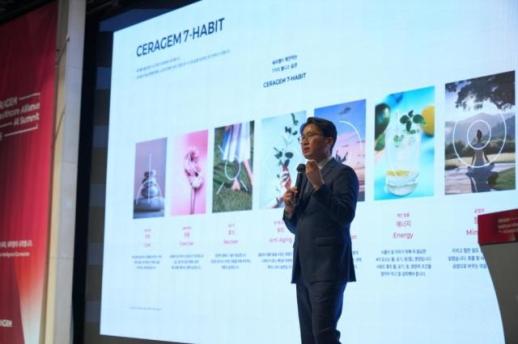 Ceragem founder turns CEO into family SEOUL, October 20 (AJP) - In a country where corporate empires are often passed from one generation to the next, South Korean healthcare company Ceragem is taking an unusual approach: its founder has made a longtime professional manager his legal son to hand over the business. Ceragem said Tuesday that founder and Chairman Lee Hwan-sung adopted CEO Lee Kyung-soo last year and transferred 10 percent of the company's outstanding shares to him this year, marking the first step in a long-term ownership succession plan. The arrangement challenges South Korea's traditional family-controlled business model, under which company ownership typically remains with a founder's descendants, even when professional managers oversee daily operations. Rather than choosing a successor based on blood ties, Lee selected an executive who had spent more than two decades working his way through the company. But the decision also presents an unusual paradox: to transfer ownership outside his biological family, the founder first brought his chosen successor legally into it. The younger Lee joined Ceragem in 2003 as an entry-level employee, working in strategic planning, marketing and overseas sales before taking charge of the company's domestic operations in 2018. He helped expand Ceragem beyond its traditional spinal-care medical devices into the broader home healthcare market. The company also introduced Wellcafe, combining retail spaces with cafes where customers can experience its products. Lee became CEO in 2022, taking responsibility for a business seeking to diversify beyond its established product lines. Ceragem reported revenue of 549.8 billion won ($414 million) in 2025, up 0.7 percent from a year earlier. Operating profit jumped more than elevenfold to 25.8 billion won, according to the company's April earnings announcement. The improvement followed investments in new healthcare products and efforts to restructure its business, although revenue growth remained modest. The succession therefore comes as Ceragem seeks to strengthen profitability and expand its presence in AI-powered home healthcare services. The founder, who has one biological daughter, held a 60.5 percent stake in the company according to last year's disclosure. A substantial portion of ownership therefore remains under his control, leaving the timing and structure of future transfers unresolved. Ceragem said the decision reflected the CEO's management record and understanding of the business, rather than a preference for blood relations. Under South Korean law, adoption gives the CEO the legal standing of a child, including inheritance rights. That makes the arrangement different from simply appointing an outside executive or granting a performance-based stock award. The company said the adoption was not intended to obtain tax benefits and that the relevant business succession tax incentives were unavailable under its circumstances. For Ceragem, the challenge now goes beyond choosing a successor. It must complete the transfer of ownership while maintaining the management stability that prompted the decision. The case also highlights a broader question for South Korea's corporate sector: whether leadership can be chosen on professional merit without abandoning the family-based ownership structures that have long shaped the country's businesses. 2026-10-20 15:25:11
 -
 Korean stocks tumble over 3% as foreign selling hits chipmakers SEOUL, October 20 (AJP) - South Korean stocks fell more than 3 percent Tuesday morning as heavy foreign and institutional selling battered semiconductor shares. The benchmark KOSPI fell 3.2 percent to 5,587.27 as of 10:30 a.m. (0130 GMT), after trading between 5,493.24 and 5,733.57. Foreign investors sold 605.8 billion won ($456 million) worth of shares, as institutions followed with 470.7 billion won worth of sale. Retail investors bought 832.1 billion won, helping cushion the decline. The selloff came a day in the wake of the KOSPI's rebound of 1.76 percent and President Lee Jae Myung's interventionist comment on Monday, calling Korean shares undervalued and stimuli measures to aid corporate governance and shareholder rights. Speaking to reporters, Lee called the Seoul market undervalued after it suffered 16-percent plunge so far this month, adding the government was reviewing additional measures to normalize the stock market without specifying. SK hynix dropped 3.6 percent to 1,231,000 won, while Samsung Electronics fell 1.5 percent to 214,500 won. SK hynix shares came under particularly heavy pressure, briefly falling below 1.2 million won for the first time in nearly six months before recovering some losses. The decline came amid growing concerns over a possible U.S. initial public offering of Solidigm, SK hynix's NAND flash memory subsidiary. Solidigm has reportedly selected Goldman Sachs and Morgan Stanley as lead underwriters for a potential U.S. listing, raising concerns among investors that a separate listing could dilute the value of SK hynix and divert investment away from its Korean-listed parent. The losses contrasted with an overnight rebound in U.S. semiconductor stocks. The Philadelphia Semiconductor Index rose 1.61 percent Monday, snapping an eight-session losing streak. Micron Technology gained 2.97 percent, while AMD advanced 1.76 percent and Sandisk climbed 5.53 percent. Despite the rebound, concerns over AI spending and corporate profitability continued to weigh on some U.S. technology companies, including Microsoft and Meta. Elsewhere on the KOSPI, battery makers gave back some of Monday's gains. Samsung SDI fell 1.7 percent to 582,000 won, while Hyundai Motor dropped 3.7 percent to 313,500 won. Doosan Enerbility declined 5 percent to 63,300 won, while defense manufacturer Hyundai Rotem plunged 12.7 percent to 88,000 won. SK Square lost 4.1 percent to 749,000 won, and Celltrion slipped 0.9 percent to 196,400 won. Power equipment and cable manufacturers also came under pressure as investors reassessed the outlook for AI infrastructure spending. LS Electric fell 6.38 percent to 154,100 won, while HD Hyundai Electric dropped 6.95 percent. Iljin Electric lost 7.01 percent, and LS Eco Energy plunged 14.85 percent. The losses followed concerns over project delays and the pace at which power equipment makers could convert their order backlogs into revenue. SK Securities lowered its target price for Hyosung Heavy Industries to 2.5 million won from 4 million won, citing a lower valuation multiple and expectations that third-quarter earnings would fall short of market estimates. Despite the broader selloff, some electronic component manufacturers advanced. Samsung Electro-Mechanics rose 1.8 percent to 1,191,000 won, while Daeduck Electronics gained 3.7 percent to 138,750 won. Korea Circuit surged 18.3 percent to 76,500 won, helping printed circuit board stocks outperform the broader market. The tech-heavy KOSDAQ fell 2.7 percent to 786.70, after trading between 773.32 and 807.22. Foreign investors sold 187.9 billion won worth of shares, as institutions offloaded 98 billion won. Retail investors bought 288 billion won. Battery-related shares were among the heavy decliners on the KOSDAQ, with EcoPro falling 5.8 percent to 85,200 won and EcoPro BM dropping 6.4 percent to 108,300 won. Jusung Engineering slipped 2.2 percent to 205,000 won, while HLB edged down 0.7 percent to 42,650 won. Alice plunged 25.6 percent to 67,300 won, making it one of the sharpest decliners among actively traded stocks. By contrast, HT Robotics jumped 17.3 percent to 10,700 won, while Vinatech rose 11.8 percent to 91,800 won. G2G Bio surged 14.9 percent to 37,000 won, and SungHo Electronics gained 3.8 percent to 27,875 won. Asian markets started the session weak alongside Korea as Japan's Nikkei 225 slipped 0.8 percent to 64,402.2, while Hong Kong's Hang Seng Index fell 1.1 percent to 23,910.68. China's Shanghai Composite declined 0.2 percent to 3,722.17. The Korean won strengthened 0.3 percent to 1,328.90 won per dollar. Oil prices edged higher amid continuing tensions in the Middle East and Eastern Europe, although signs of recovering crude shipments from the Persian Gulf helped ease some supply concerns. West Texas Intermediate crude rose 0.2 percent to $98.70 a barrel, while Brent crude gained 0.2 percent to $109.77. U.S. Energy Secretary Chris Wright said crude shipments from the Persian Gulf had recovered to about 80 percent of prewar levels, although supplies of refined petroleum products remained constrained. Continued attacks on commercial vessels near the Strait of Hormuz and renewed strikes on energy infrastructure in Russia and Ukraine kept supply risks elevated. 2026-10-20 11:27:32