

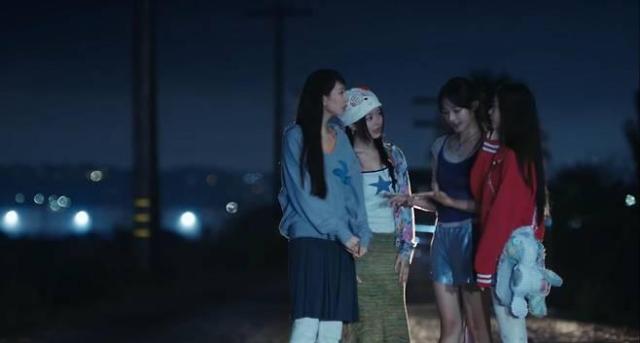
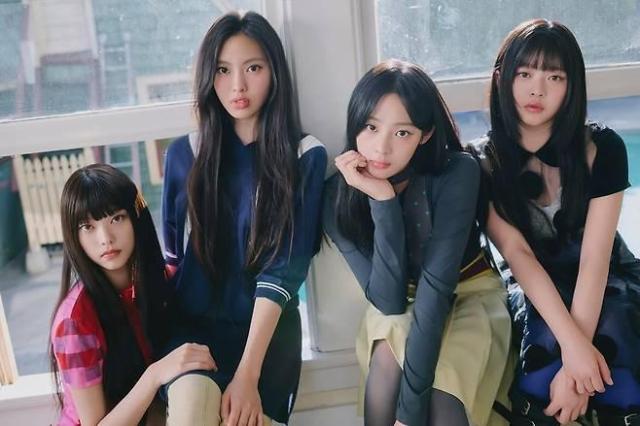
The video reunited Minji, Hanni, Haerin and Hyein in official group content for the first time in one year and four months after a prolonged contract dispute that had brought the group's activities to a halt.
A court sided with their agency, ADOR, in both an injunction and the main lawsuit over the validity of their exclusive contracts. Haerin, Hyein and Hanni subsequently returned to the label, while ADOR terminated Danielle's contract in December. Minji also appeared in the film, although her contractual status had not been formally clarified at the time of its release.
No comeback has been announced. ADOR has said it will reveal NewJeans' future plans once discussions are complete.
Yet the appearance of four members alone was enough to reignite speculation that one of K-pop's most influential groups of the past four years could be edging toward a return.
NewJeans has neither disbanded nor reunited. That ambiguity is precisely what makes the group's situation significant.
Increasingly, a K-pop group can stop functioning without disappearing.
A breakup, agency split or years-long hiatus no longer necessarily marks the end. Members may pursue separate careers. The legal rights may remain with a former agency. The original lineup may never perform together again. Yet the group's name, catalog, visual identity and emotional bond with fans often continue to exist—and to retain considerable commercial value.
In modern K-pop, a group is becoming less a temporary collection of performers than a long-lived intellectual property.
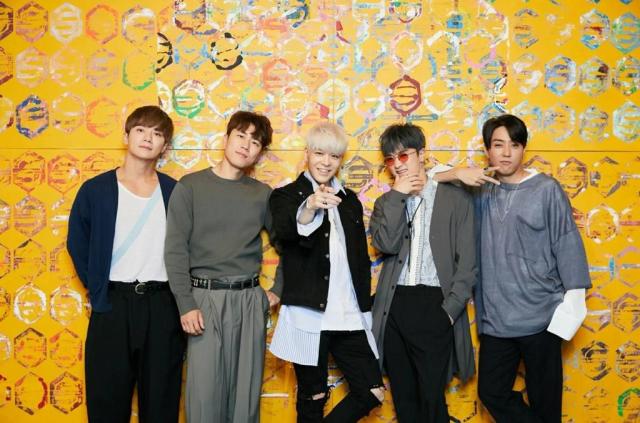
The industry has already produced several models of what a "comeback" can mean.
Sechs Kies offers the classic reunion story. After formally disbanding in 2000, the first-generation boy band unexpectedly reunited in 2016, signing with YG Entertainment, holding concerts and releasing new music 16 years after its final activities.
Kara followed a different path. Rather than reuniting after an official breakup, it resumed activities in 2022 following a seven-year hiatus with the anniversary album Move Again. Its title track, When I Move, made Kara the first girl group to win on Korean music programs across the 2000s, 2010s and 2020s.
Then came 2NE1.
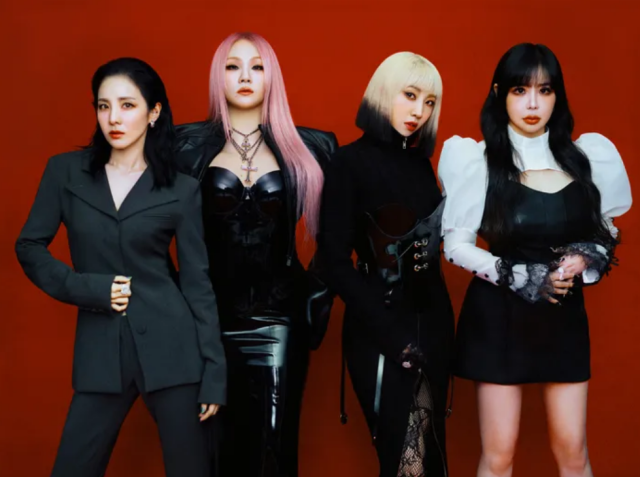
A decade after its previous solo concert, the four members reunited in October 2024 for a 15th-anniversary world tour. YG Entertainment expanded the tour to 27 performances in 12 cities, with expected attendance of about 220,000. More than 400,000 users reportedly attempted to purchase tickets for the opening Seoul concerts alone.
All three are commonly described as reunions, but each represents a different business model.
Sechs Kies returned after formal disbandment.
Kara resumed activities after an extended hiatus.
Other groups demonstrate that survival sometimes requires abandoning the very identity that made them famous.
Unable to continue using the Beast trademark after leaving Cube Entertainment, the remaining members relaunched as Highlight in 2017.
Although they later regained the legal rights to the Beast name, they continued promoting under Highlight, having already built a successful second identity.
VIVIZ illustrates yet another model. Rather than reviving GFriend, former members Eunha, SinB and Umji created a separate trio after GFriend's activities ended in 2021.
What links these examples is not disbandment itself but something more fundamental.
K-pop groups have become modular.
Their lineup, catalog, trademark, music and fan community can now survive independently and be recombined in different ways.
Nostalgia has become an asset
For entertainment companies, the value of returning groups is easier to see in ticket demand than in abstract discussions about fandom.
Launching a successful rookie group requires years of recruitment, training, production and marketing—with no guarantee of success.
Returning groups already possess something almost impossible to manufacture: recognition.
They also own an existing catalog and a fan base whose emotional attachment has survived years of inactivity.
The phenomenon extends well beyond K-pop.
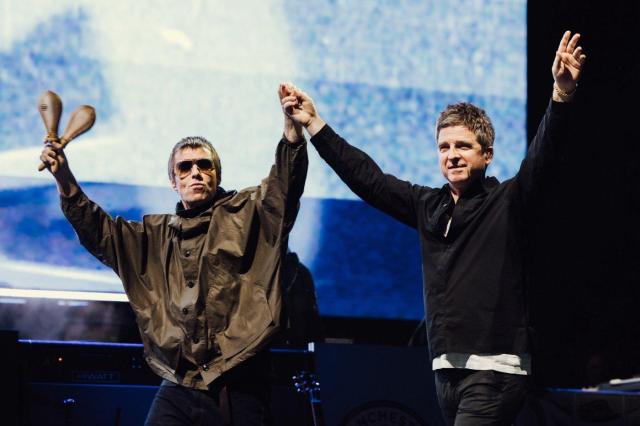
ABBA went even further.
Its London residency ABBA Voyage, featuring digital avatars rather than the members themselves, generated £103.7 million ($139 million) in ticket revenue in 2023 while attracting nearly 1.1 million visitors.
Different technology.
Different audiences.
The same commercial principle.
People are not simply paying to hear familiar songs.
They are paying to revisit a period of their own lives.
In that sense, nostalgia is no longer merely an emotion.
It has become a monetizable asset.
Turning nostalgia into a comeback, however, is often more difficult than reuniting the members.
A group also needs access to its name, catalog, trademarks, recordings and performance rights—assets that frequently remain under the control of current or former agencies.
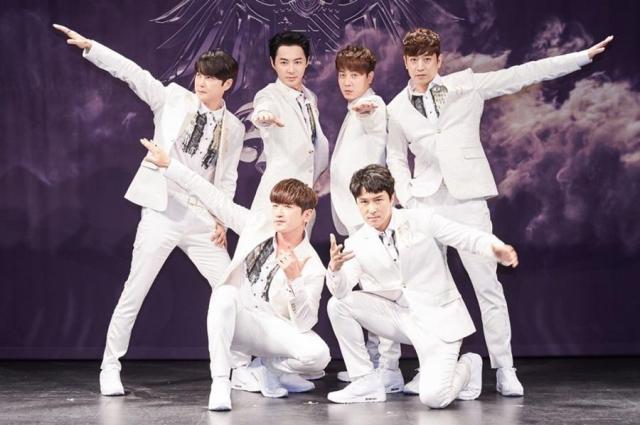
Shinhwa spent 12 years fighting legal battles over the right to use its own name before reaching a court-mediated settlement in 2015.
Highlight chose the opposite strategy, building a new identity instead of waiting to recover Beast.
NewJeans now finds itself confronting the same divide between performers and intellectual property.
According to legal experts cited during the dispute, ADOR owns the NewJeans trademark. The members briefly attempted to promote independently as NJZ before a court prohibited activities outside the agency.
Changing the name solved nothing.
The legal conflict was never about the letters.
It was about ownership of the identity those letters represented.
That explains why entertainment companies fight so fiercely over trademarks.
A group's name is no longer simply a label.
It is a business asset built through years of accumulated recognition, fan loyalty and commercial value.
The people who created that value and the company that legally owns it are not always the same.
What fans are really waiting for

Lim Jung-bin, a 40-year-old office worker in Seoul, has followed 2NE1 since its debut in 2009.
"When I heard they were getting back together, I almost cried," she said.
"The group was part of the brightest years of my twenties."
She never stopped listening to 2NE1's music during the hiatus and followed each member's solo career.
Attending the reunion concert in Seoul last October, she said, "felt like a dream."
"It was a precious moment when everyone sang together and shared the same memories. I want to experience it again."
Her comments illustrate why inactive groups continue to generate economic value.
Fans rarely experience the inactive years as empty time.
They keep listening.
They follow individual members.
They preserve the emotional context that first connected them to the music.
Watching the NewJeans dispute, Lim said the exact lineup mattered less than preserving the group's distinctive identity.
"Whether four members come back or five, NewJeans has its own atmosphere," she said.
"I miss that retro, lo-fi sound."
Not every fan would agree.
But her response highlights the central paradox of modern K-pop.
Fans often remain attached to the identity of a group even after the people, contracts and companies behind it have changed.
That is what makes returning groups simultaneously so valuable—and so difficult to recreate.
A K-pop group is no longer defined only by the people standing on stage.
It is also a trademark, a catalog, a visual language and a community of memories that can outlive the contracts that first brought those people together.
The performers may leave.
The music may stop.
Ownership may change.
But the group itself rarely disappears.
Its next chapter is written in the space between what fans still remember and what the law allows someone else to revive.

Copyright ⓒ Aju Press All rights reserved.
