
Journalist

Ryu Yuna
julia37@ajupress.com
-
 Asian markets rally on ceasefire hopes, Seoul stocks surge over 8% SEOUL, April 1 (AJP) - Asian markets rose as ceasefire hopes strengthened after U.S. President Donald Trump signaled a potential de-escalation within weeks, while Iran indicated willingness to end the conflict provided attacks do not resume. Japan’s Nikkei 225 jumped 5.24 percent to trade at 53,739.68, marking its biggest gain of the year and the fourth-largest on record, as overseas investors bought on easing Middle East tensions. Semiconductor stocks led the rally, with Kioxia jumping 7.10 percent, Advantest rising 10.67 percent, and Tokyo Electron gaining 5.51 percent. Shares of SoftBank Group and Fujikura also rose more than 5 percent and 9 percent intraday, respectively. Hong Kong’s Hang Seng Index rose 2.22 percent to 25,339.45. China’s Shanghai Composite Index rose 1.46 percent to 3,948.55, and Taiwan’s TAIEX rose 4.58 percent to 33,174.82. South Korea’s benchmark KOSPI opened more than 5 percent higher, quickly reclaiming the 5,300 level and triggering a buy-side sidecar in early trade. Gains accelerated through the session, with the index closing at 5,478.70, up 8.44 percent — marking its strongest daily rise since last month. The rally was driven largely by a rebound in semiconductor shares, which had underperformed in recent sessions. Samsung Electronics jumped 13.4 percent, while SK hynix climbed 10.66 percent, lifting the broader index. The tech-heavy KOSDAQ also rose sharply, gaining 6.06 percent, to close at 1,116.18, reclaiming the 1,100 level in a single session. Buy-side sidecars were triggered in both markets during intraday trading. The Korean won strengthened sharply, with the dollar-won exchange rate falling 28.8 won to trade at 1,501.3. U.S. Treasury yields and the dollar fell, and risk assets including equities, gold and cryptocurrencies rose. Verbal intervention by authorities also helped strengthen the won. Oil prices retreated on rising ceasefire expectations, with West Texas Intermediate dropping more than 4 percent intraday to briefly break below $97 per barrel ahead of U.S. President Donald Trump’s scheduled address at 10 a.m. Thursday Korea time, fueling hopes of a breakthrough in negotiations. Domestic factors also supported the rally. South Korea’s inclusion in the FTSE World Government Bond Index (WGBI), effective Wednesday, raised expectations of $50 billion to $60 billion in inflows, putting downward pressure on yields and the currency. Autos and mobility stocks surged, with Hyundai Motor rising 9.54 percent to close at 488,000 won, Kia adding 6.96 percent and closing at 155,300 won, and Hyundai Mobis climbing 8.20 percent to 409,000 won. Financials also advanced, as KB Financial gained 4.51 percent to 148,300 won, Shinhan Financial rose 6.39 percent to 93,300 won, Mirae Asset Securities jumped 8.12 percent to 66,600 won, and Samsung Life Insurance increased 7.84 percent to 227,000 won. Industrial and defense-related stocks were strong, with Hanwha Aerospace up 6.73 percent to 1,333,000 won, Hanwha Ocean rising 5.66 percent to 127,000 won, Doosan Enerbility surging 8.50 percent to 99,600 won, and Samsung C&T gaining 7.69 percent to 273,000 won. Bio and platform shares posted moderate gains, with Samsung Biologics up 4.52 percent to 1,572,000 won, Celltrion rising 4.46 percent to 206,000 won, and Naver adding 4.22 percent to 210,000 won. Battery and electronics-related stocks also climbed, with LG Energy Solution up 3.17 percent to 407,000 won, Samsung SDI gaining 5.88 percent to 432,000 won, Samsung Electro-Mechanics jumping 9.08 percent to 444,500 won, and SK Square also advanced 7.40 percent to 501,000 won. HD Hyundai Heavy Industries was the only decliner, slipping 2.90 percent to 451,500 won. 2026-04-01 17:38:47
 -
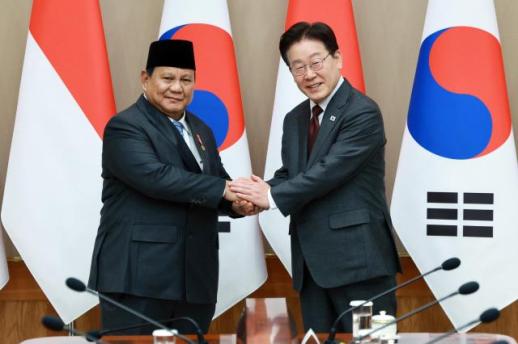 Korea, Indonesia elevate ties as Middle East shock drives energy cooperation SEOUL, April 1 (AJP) — South Korea and Indonesia elevated their relationship to a “special comprehensive strategic partnership” on Wednesday, as Middle East tensions disrupting energy markets pushed the two Asian economies to deepen cooperation on supply security and strategic industries. In their first summit in Seoul, President Lee Jae Myung and Indonesian President Prabowo Subianto framed the upgrade as a response to mounting global uncertainty, with both sides stressing the need for closer coordination on energy, supply chains and defense. Hosting Prabowo with full state honors, Lee called the bilateral relationship “a blessing” at a time of deepening instability worldwide. He said South Korea has long relied on Indonesia, a trusted supplier of liquefied natural gas, coal and other key resources, over the five decades since the two countries established diplomatic ties. Prabowo echoed that view, saying rising global uncertainty made the partnership even more important. He said that the two countries were well placed to complement each other as Pacific nations and trade-dependent economies. South Korea has strong industrial capabilities and advanced science and technology, while Indonesia has abundant resources and a large market, he pointed out. As middle powers, the two countries also share the importance of peace and stability, as well as the need for strong security and defense, he said. The two governments signed 16 memorandums of understanding to expand cooperation in areas including defense, energy, critical minerals and artificial intelligence. Ten of the agreements were signed in the presence of the two leaders, including plans to establish a high-level diplomatic dialogue channel and resume a joint economic committee that has been suspended since 2023. Other agreements covered critical minerals, digital development, AI-based primary healthcare, clean energy including renewables and nuclear power, and carbon capture and storage. The two sides also agreed to cooperate on maritime plant services, financial cooperation and intellectual property protection. Six additional MOUs were signed separately in areas such as environmental cooperation, forestry, wildfire management, development assistance and data collaboration. The summit underscored growing strategic alignment between the two economies as they seek to deepen cooperation in supply chains, investment and defense industries. South Korea has been a key partner in Indonesia’s industrial and infrastructure development, while Indonesia’s natural resources have become increasingly important for Korean manufacturers. Prabowo’s visit was marked by full state protocol, highlighting Seoul’s push to strengthen ties with Southeast Asia’s largest economy. A state luncheon followed, with Korean and Indonesian dishes prepared with halal-certified ingredients in consideration of Prabowo’s Muslim faith. After the luncheon, the leaders were scheduled to attend a cultural program featuring a taekwondo demonstration, reflecting Prabowo’s long-standing interest in martial arts as a former military officer and head of Indonesia’s pencak silat association. Lee was also expected to confer South Korea’s highest honor, the Mugunghwa Order of Merit, on Prabowo in recognition of his contribution to bilateral ties. Business leaders from major Korean conglomerates including SK Group, Hyundai Motor, Lotte Group and POSCO attended related events, signaling expectations for broader investment and industrial cooperation. Both governments see the upgraded partnership as a platform to expand collaboration not only in traditional sectors such as defense and infrastructure, but also in emerging areas including AI, shipbuilding, energy transition and cultural content. 2026-04-01 14:43:23
 -
 Asian stocks slump on war fears, chip rout hits KOSPI SEOUL, March 31 (AJP) - Asian stocks overall traded lower on Tuesday, with South Korea’s benchmark KOSPI extending losses for a fourth straight session amid uncertainty surrounding the Iran crisis and weakness in global semiconductor shares. Japan’s Nikkei 225 fell 1.58 percent to 51,063.72, Hong Kong's Hang Seng Index edged down 0.16 percent to 24,712.24, China’s Shanghai Composite Index fell 0.80 percent to 3,891.86, and Taiwan’s TAIEX Index fell 2.45 percent to 31,722.99. The KOSPI opened 2.53 percent lower at 5,143.75 and fell 4.26 percent to close at 5,052.46, after briefly threatening to dip below the 5,000 level in early trade. It later pared losses to reclaim the 5,200 mark, but selling pressure intensified again toward the close. Heavyweight chip stocks led the decline, as concerns grew that the sharp rally in memory prices driven by the AI boom could lose momentum. Samsung Electronics plunged 5.16 percent to close at 167,200 won, after opening 3.57 percent lower at 170,000 won and briefly trimming losses to 174,700 won before resuming its decline. The company’s announcement that it would cancel about 14.5 trillion won worth of treasury shares failed to support the stock. SK hynix also dropped sharply, falling 7.56 percent to 807,000 won, tracking a steep overnight sell-off in semiconductor stocks on Wall Street. In the auto sector, Hyundai Motor declined 5.11 percent to 445,500 won, slipping to fourth in market capitalization as the Iran conflict raised concerns over supply chain disruptions and production setbacks. Analysts warned that a prolonged war could pressure margins and disrupt supplies of key inputs such as plastics, chemicals and automotive semiconductors, while longer shipping routes could add to near-term production risks. However, a weaker won and a higher share of high-margin models, including SUVs, Genesis vehicles and hybrids, are expected to support profitability. Affiliate Kia fell 4.16 percent to 145,200 won, and Hyundai Mobis dropped 5.03 percent to 378,000 won. In the shipbuilding and defense sector, HD Hyundai Heavy Industries shed 3.12 percent to 465,000 won, and Hanwha Aerospace lost 4.51 percent to 1,249,000 won. In biopharmaceuticals, Samsung Biologics slipped 1.70 percent to 1,504,000 won and Celltrion declined 2.13 percent to 197,200 won. Financials were also lower, with KB Financial Group falling 2.74 percent to 141,900 won, Samsung Life Insurance dropping 4.10 percent to 210,500 won, Shinhan Financial declining 3.09 percent to 87,700 won, and Mirae Asset Securities edging down 1.75 percent to 61,600 won. Elsewhere, Samsung C&T fell 2.31 percent to 253,500 won and Doosan Enerbility dropped 2.55 percent to 91,800 won, Hanwha Ocean was the only gainer among the major stocks, rising 1.69 percent to close at 120,200 won. On the secondary KOSDAQ market, Samchundang Pharm plunged 29.98 percent to 829,000 won, retreating sharply from recent highs above 1.1 million won the previous day. The drop came despite the company’s announcement of an exclusive agreement in the United States for an oral semaglutide generic, which includes about $100 million in conditional payments and a 90 percent share of sales for 10 years, as profit-taking emerged amid concerns over stretched valuations after a rapid rally. The Korean won traded at 1,529.30 per dollar, weakening further from around 1,522.60 earlier in the day, as persistent geopolitical tensions, elevated oil prices and strong dollar demand continued to weigh on the currency. 2026-03-31 17:24:13
 -
 KOSPI slides as Korean won hits 17-year low amid deepening Middle East conflict SEOUL, March 31 (AJP) - With Asian markets mostly opening mixed on Tuesday, South Korean stocks took the brunt of losses as the won weakened to around 1,520 for the first time since the 2008 global financial crisis. The escalating conflict in the Middle East, along with fading hopes for ceasefire talks, further weighed on market sentiment. The possible deployment of U.S. ground forces further heightened fears of the conflict turning into a massive regional war. With Asian markets mostly opening mixed on Tuesday, South Korean stocks took the brunt of losses as the won weakened to around 1,520 for the first time since the 2008 global financial crisis. The Korean won weakened sharply, trading at 1,522.60 per dollar in morning trade, marking its lowest level since March 2009. Prolonged geopolitical tensions, elevated oil prices, and strong dollar demand are expected to keep pressure on the exchange rate. Such geopolitical risks also took a heavy toll on South Korean equities. The benchmark KOSPI fell 1.14 percent to 5,215.47 points shortly after the day's trading began, while the junior KOSDAQ declined 1.47 percent to 1,090.03. These losses came after the combined market capitalization of the KOSPI and KOSDAQ shrank by about 840 trillion won in March alone, as energy price shocks and supply uncertainties rattled investor confidence. Samsung Electronics and SK hynix together accounted for roughly 372 trillion won of the decline, while cyclical stocks such as Hyundai Motor and HD Hyundai Heavy Industries also posted sharp losses. Shares of Samsung Electronics fell 3.49 percent to 170,150 won, while SK hynix dropped 5.96 percent to 821,000 won in early trade, as broader market weakness and geopolitical risks weighed on sentiment. Broader losses were seen across sectors. In autos, Hyundai Motor fell 3.73 percent to 452,000 won and Kia dropped 3.70 percent to 145,900 won, Hyundai Mobis declined 4.15 percent to 381,500 won. Energy and industrial shares also weakened, with LG Energy Solution down 3.17 percent to 397,000 won, SK Square falling 6.67 percent to 476,000 won, and Hanwha Aerospace losing 4.66 percent to 1,247,000 won. HD Hyundai Electric slipped 3.44 percent to 842,000 won. Financials were lower, as KB Financial Group fell 2.33 percent to 142,500 won and Shinhan Financial Group declined 2.65 percent to 88,100 won, while Samsung Life Insurance dropped 3.42 percent to 212,000 won. Among tech and platform stocks, Naver fell 2.42 percent to 202,000 won, Samsung Electro-Mechanics dropped 3.73 percent to 413,000 won, and Samsung SDI edged down 0.48 percent to 410,500 won. Hanwha Ocean was the only gainer, rising 4.40 percent to 123,400 won. Meanwhile, Wall Street closed mixed overnight. The Dow Jones Industrial Average edged up 0.11 percent to 45,216.14, while the S&P 500 fell 0.39 percent to 6,343.72 and the Nasdaq Composite dropped 0.73 percent to 20,794.64. Semiconductor stocks led losses, with Micron plunging 9.8 percent amid concerns over Google's "TurboQuant" technology, which could improve computing efficiency, though its impact on memory demand remains uncertain Oil prices rose after U.S. President Donald Trump warned he would "obliterate" Iran's energy infrastructure if a ceasefire is not reached soon, while inflation data also weighed on Japan's stock market. The Nikkei 225 fell 1.61 percent to 52,738.55 in morning trade, with chip-related shares leading losses as Advantest dropped 4.40 percent and Tokyo Electron declined 5.25 percent. Tokyo's core CPI rose 1.7 percent in March from a year earlier, below market estimate of 1.8 percent. Hong Kong's Hang Seng Index rose 0.48 percent to 24,868.36, China's Shanghai Composite edged up 0.02 percent to 3,924.07, while Taiwan's TAIEX fell 0.62 percent to 32,317.38. 2026-03-31 11:28:26
 -
 Global love for K-content hits new highs, but fatigue also on the rise SEOUL, March 30 (AJP) - That K-content is widely loved is no longer in doubt. With K-pop-themed animation sweeping the Grammys and Oscars, and Netflix livestreaming BTS’ comeback, the latest data only puts a number to the momentum: nearly 70 percent approval worldwide. According to data released Monday by the Ministry of Culture, Sports and Tourism and the Korea Foundation for International Cultural Exchange, 69.7 percent of respondents expressed favorable views toward Korean content in the 2026 Overseas Hallyu Survey. The halo effect extends beyond entertainment. South Korea’s national image drew positive responses from 82.3 percent of global respondents — the highest since the survey began in 2012. The surge is not just cultural, but economic. Content exports reached a record $14.08 billion in 2024, while inbound tourism rose to 18.9 million visitors in 2025, underscoring Hallyu’s growing weight as an export engine. Momentum remains strongest in Southeast Asia, with the Philippines, India, Indonesia and Thailand leading in favorability. But the more telling shift is in the West, where gains have been sharper in markets such as the United Kingdom, the United States and Spain — a sign that Hallyu is still expanding its geographic footprint. The wave itself has also broadened. While K-pop remains the core driver, consumption has spread across dramas, films, food and beauty — embedding Korean culture into everyday life rather than keeping it confined to entertainment. That deeper penetration, however, is beginning to invite pushback. Negative perceptions, unchanged at 37.5 percent, have risen steadily over the past five years, pointing to growing polarization as Hallyu becomes more visible — and harder to ignore. Kim Hyung-jun, a professor of cultural anthropology at Kangwon National University, said the backlash is no longer driven by content alone but by the breadth of Hallyu’s reach. “It is no longer confined to entertainment — it touches politics, the economy and social behavior,” he said. He noted that criticism now cuts across multiple fronts. “Concerns arise that young people are becoming less interested in local culture, while others point to excessive fan spending or changing social behaviors linked to fandom culture,” he said. Because these concerns span everyday life, they are easily amplified by different groups — from politicians and religious leaders to parents — allowing negative sentiment to spread beyond those directly engaged with Korean content, Kim added. Regional dynamics differ. In Southeast Asia, resistance is often tied to religious sensitivities and the financial burden of fandom consumption. In Western markets, it tends to center more on cultural influence and questions of relevance within established norms. At the same time, the industry faces a more structural challenge: fatigue. Im Jin-mo, a music critic and pop columnist, said K-pop may be approaching a turning point after more than a decade of global exposure. “K-pop has not shown enough variety or newness,” he said. “The style has become more predictable.” He warned that the genre may be entering a phase where it feels less fresh and less compelling to global audiences, with fewer new acts emerging to sustain momentum. “This year could be a decisive moment,” he said. “The quality of new releases will matter more than ever.” He also offered a blunt assessment of recent output from major acts. “The album felt somewhat boring — it lacked a strong hook,” he said, adding that some see it as an early sign of a broader slowdown. For now, Hallyu remains firmly in expansion mode. But as its reach widens, so too does the test of whether it can sustain not just scale, but staying power. 2026-03-30 17:18:07
 -
 KOSPI and Nikkei tumble on oil price surge and anxiety over prolonged war SEOUL, March 30 (AJP) — South Korean and Japanese stocks plunged more than 4 percent at the open Monday as oil prices surged on Yemen’s Houthi rebels entering the Iran conflict stoked fears of a broader and prolonged war. May futures for international benchmark Brent crude rose 2.92 percent to $115.86 per barrel during early Asia hours, while U.S. West Texas Intermediate futures were 3.20 percent higher at $102.80 per barrel. Reports that China-linked vessels were forced to turn back from the strait underscored growing supply risks, while speculation over potential U.S. ground operations added to escalation concerns. As of 9:11 a.m., the benchmark KOSPI fell 4.48 percent to 5,195.19, while the tech-heavy KOSDAQ dropped 3.71 percent to 1,099.13. Japan’s Nikkei 225 also slid 4.74 percent in early trading. Investor sentiment was further dented by falling U.S. stock futures, as global markets extended a risk-off shift driven by rising energy prices and geopolitical uncertainty. The widening conflict — now entering its second month — is increasingly being priced not as a short-term shock but as a sustained supply disruption. Analysts warn that further escalation, including ground operations or expanded regional involvement, could deepen the energy crisis and prolong market volatility. Institutional selling intensified in Seoul, with heavy liquidation in chipmakers amid fresh concerns over demand outlook. Sentiment was also pressured by hype surrounding Google’s “TurboQuant,” an AI technology that some believe could reduce memory intensity, and reports that AI firm Anthropic is testing a more advanced model, Claude Mythos. The dollar spiked, hitting 1,512.80 won as foreign stock pullout continued. Large-cap stocks moved broadly lower. Samsung Electronics fell 3.78 percent to 172,900 won, while SK hynix dropped 5.31 percent to 873,000 won. Automakers also came under pressure, with Hyundai Motor down 5.66 percent and Kia losing 5.26 percent. Hyundai Mobis slipped 4.53 percent. Battery makers edged lower, with LG Energy Solution falling 1.52 percent and Samsung SDI down 2.22 percent. Biopharmaceutical and internet stocks weakened, with Samsung Biologics declining 4.17 percent, Celltrion dropping 3.20 percent and Naver falling 3.53 percent. Defense and heavy industry shares were also broadly lower, with Hanwha Aerospace down 4.72 percent, Hanwha Ocean falling 5.44 percent and HD Hyundai Heavy Industries plunging 6.72 percent. Financial stocks followed suit. KB Financial Group fell 4.34 percent, Shinhan Financial Group dropped 3.85 percent, Samsung Life Insurance lost 2.69 percent and Mirae Asset Securities slid 6.56 percent. 2026-03-30 09:58:38
 -
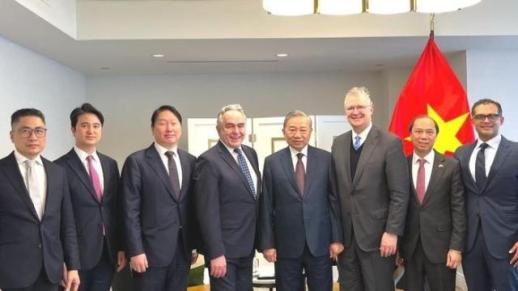 South Korean businesses in race to expand presence in Viet Nam SEOUL, March 27 (AJP) - With Viet Nam further solidifying its status as a strategic hub in Asia, major South Korean conglomerates are accelerating their push to make deeper inroads into the Southeast Asian country through investment and partnerships. These efforts are being led by companies likes SK Group, HD Hyundai, and GS Energy. In response, Viet Nam is also wooing foreign investors, pledging support to attract more investment from global firms. The country's General Secretary, Tô Lâm on Thursday vowed that his country will support international businesses as it seeks to "play a more active role in building sustainable and resilient global supply chains," speaking at a forum hosted by the Asia Business Council (ABC) forum in Hanoi. Lâm said that Viet Nam is "ready to work with global companies," stressing that foreign-invested firms play an integral role in the Vietnamese economy. Earlier this week, SK Group chairman Chey Tae-won visited Viet Nam to inspect several ongoing projects, including the construction of a 1.5-gigawatt liquefied natural gas (LNG) power plant in Quynh Lap, central Viet Nam, secured in February by its affiliate SK Innovation. SK Group has been expanding its presence there in resources and renewable energy including solar power facilities in Ninh Thuan in south-central Viet Nam since 2020. Choi's trip coincided with HD Hyundai Chairman Chung Ki-sun's visit to the country, during which he toured the construction site of the company's petrochemical carrier (PC) plant and other production facilities. GS Energy Vice Chairman Huh Yong-soo also met Deputy Prime Minister Mai Van Chinh in Hanoi the previous day to discuss expanding cooperation in the energy and infrastructure sectors. GS Energy is currently involved in major projects including the construction of an integrated refining and petrochemical complex in the northern province of Thanh Hóa, as well as a liquefied natural gas (LNG)-fired power plant in the southern province of Long An. The company is also eyeing the Vietnamese retail market as part of its broader strategy to diversify its business there. Viet Nam is, meanwhile, targeting carbon neutrality by 2050, shifting away from fossil fuels toward renewable and new energy sources, creating new opportunities for foreign investors. South Korean firms, already standing out among the pack in the country, are increasingly positioning themselves to play a central role in this transition while deepening industrial and supply chain partnerships. 2026-03-27 17:07:20
 -
 Asian stocks fall as geopolitical tensions rise and tech shares weaken SEOUL, March 27 (AJP) — The Seoul bourse led broad losses across Asia as the toll from the Middle East crisis weighed heavily on the region, largely dependent on energy and commodities, with the critical transit Strait of Hormuz remaining crippled for a month. In Japan, the Nikkei 225 fell 1.61 percent to 52,738.55 in morning trade, as selling pressure mounted on concerns over a possible deployment of U.S. ground troops. Expectations for ceasefire negotiations also weakened following continued pressure on Iran from U.S. President Donald Trump. Hong Kong’s Hang Seng Index fell 0.35 percent to 24,768.66, China’s Shanghai Composite slipped 0.22 percent to 3,880.44, and Taiwan’s TAIEX dropped 1.54 percent to 32,825.21. The retreat was sharper in Korean markets, reflecting the heavy weight of chipmakers Samsung Electronics and SK hynix. Samsung Electronics fell 4.39 percent to 172,200 won, while SK hynix dropped 5.47 percent to 882,000 won in morning trade. The weakness followed concerns over Google’s newly unveiled “TurboQuant” algorithm, which is expected to significantly improve data efficiency and potentially reduce memory demand for artificial intelligence workloads. The technology, which compresses data to roughly one-sixth of its original size, is seen as easing memory bottlenecks in large-scale AI models, raising doubts over the long-held equation that AI demand directly translates into memory demand. The benchmark KOSPI fell 2.79 percent to 5,308.24, while the KOSDAQ dropped 1.02 percent to 1,125.03 as of 11:00 a.m. Broader market pressure was compounded by rising oil prices as hopes for a near-term resolution between the United States and Iran faded. Brent crude futures for May delivery rose 5.66 percent to $108.01 per barrel, while West Texas Intermediate gained 4.61 percent to $94.48. Overnight, U.S. stocks closed sharply lower. The Dow Jones Industrial Average fell 1.01 percent, while the S&P 500 and Nasdaq Composite dropped 1.74 percent and 2.38 percent, respectively. The Nasdaq entered correction territory, falling more than 10 percent from its recent peak, led by declines in major chip stocks including Nvidia, SanDisk and Micron Technology. The Philadelphia Semiconductor Index plunged 4.79 percent. Across sectors, declines were broad-based. Autos and batteries fell, with Hyundai Motor down 4.34 percent to 468,750 won, Kia slipping 3.17 percent to 149,800 won, and LG Energy Solution losing 4.16 percent to 368,500 won. Samsung SDI dropped 4.41 percent to 379,000 won. Defense and heavy industry stocks also declined, as Hanwha Aerospace fell 4.53 percent to 1,307,000 won, HD Hyundai Heavy Industries lost 5.68 percent to 482,000 won, and HD Hyundai Electric slid 7.67 percent to 891,000 won. In chemicals and industrials, SK Square dropped 5.02 percent to 530,000 won, while Doosan Enerbility fell 5.45 percent to 95,400 won. Financials traded lower, with KB Financial down 2.50 percent to 148,400 won, Samsung Life Insurance slipping 2.25 percent to 217,000 won, Mirae Asset Securities falling 3.83 percent to 62,800 won, and Shinhan Financial declining 3.00 percent to 90,600 won. Samsung Biologics fell 2.33 percent to 1,548,000 won, Samsung C&T dropped 6.47 percent to 260,000 won, Hanwha Ocean declined 6.21 percent to 117,900 won, Hyundai Mobis slipped 1.38 percent to 393,000 won, and Naver edged down 1.89 percent to 207,500 won. The won stayed above the 1,500 level for a third straight session as U.S.-Iran ceasefire talks stalled, hovering at 1,509.20 per dollar from a previous close of 1,507.0. 2026-03-27 11:35:49
 -
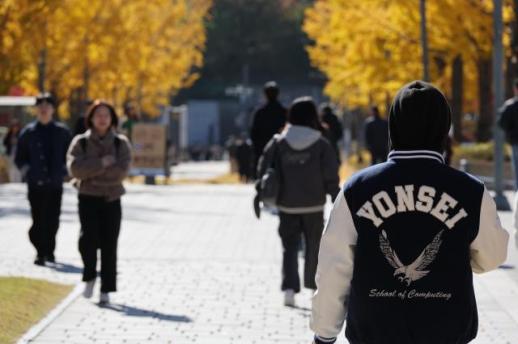 AI beginning to crowd out young Koreans from elite professions SEOUL, March 27 (AJP) – Jenny Kim, 23, a senior at Yonsei University, had thought finding a job would be secure once she entered a top Seoul university majoring in engineering, but many of her peers are now despondent. “There may not be much left to do in computer engineering,” she said, as artificial intelligence has already replaced much of the entry-level back-office corporate work. Sophomore Kim S.H., studying structural engineering, also said he and his peers are increasingly exploring career paths unrelated to their majors as the field is rapidly being reshaped by AI. College graduates in Korea now vie against AI in an already tight job market, with the average time to land a first job stretching to nearly nine months — the longest in 20 years, according to a recent survey as of May 2025. Even degrees from top universities or STEM majors no longer guarantee employment. “Many returning from military service delay graduation as long as possible to buy time to apply for jobs,” said J.W. Park, 29, a Yonsei graduate who landed a job 18 months after submitting nearly 100 applications. The employment ratio of Yonsei University graduates fell to 46.6 percent last year from 51 percent in 2024. AI is now cutting into hiring across South Korea’s traditionally secure professions, with entry-level roles shrinking in law, accounting and technology — forcing young graduates to compete not only with each other, but increasingly with machines. The strain is already visible in the labor market. Employment among those aged 25 to 29 fell to 2.346 million in February, the lowest for the month since 2017, while the employment rate slipped to 70.4 percent. Youth unemployment rose to 7.1 percent, with underemployment reaching 17.4 percent, the highest February level in three years. Losses have been concentrated in white-collar sectors. Employment in information and communications fell by 52,000 — the steepest drop since 2014 — while professional, scientific and technical services, including legal and accounting, declined by 29,000. Studies point to AI as a key driver. The Korea Employment Information Service found white-collar jobs more exposed to AI-driven displacement, identifying lawyers, accountants and journalists among the most at risk. A Bank of Korea report showed that of 211,000 youth jobs lost between July 2022 and July 2025, about 208,000 were in highly AI-exposed sectors such as programming. “AI can relatively easily replace routine tasks typically performed by less-experienced workers,” the central bank said. That shift is most visible at the bottom of the hiring ladder. “We received around 120 applications for just two positions,” said Rhee Jay Jun, managing director at Young & Jin Tax Consulting Corp. “Whether they stay depends on how well they can filter out AI errors,” he added, noting that junior roles are shifting from execution to verification. The pressure is compounded by a bottleneck in certification. Of 12,263 candidates who sat for this year’s CPA preliminary exam, only around 1,200 are expected to pass, and even fewer will secure the mandatory training positions required to qualify fully. Yet even as AI displaces routine work, its limits remain clear. In one tax appeal involving hundreds of billions of won, an AI system cited a non-existent Supreme Court ruling — a so-called “hallucination” — nearly leading to a flawed argument. “We have to fact-check everything again,” Rhee said. A similar tension is playing out in the legal sector, where AI is lowering barriers while intensifying competition. Nearly 90 percent of civil first-instance cases in 2024 involved at least one self-represented party, according to the Supreme Court of Korea, with generative AI increasingly used to draft complaints and briefs. At the same time, the number of registered lawyers has surged to 38,123, up 76 percent from 2016. “Giving the same materials to a junior associate and to Gemini, Gemini often does a better job,” said Kim Woong, managing partner at Namdang Law Firm. But within the legal profession, views diverge on how far AI will reshape hiring. Ko Eunyoung, a lawyer at Barun Law, said AI cannot replicate “practical experience” and “judgment,” stressing that strategic decision-making in complex cases remains firmly within the domain of human lawyers. She noted that large firms are better positioned to continue hiring. “Hiring a few junior lawyers is less financially burdensome for bigger firms,” she said, allowing them to maintain recruitment even as smaller firms scale back. Ko emphasized that legal work requires judgment at every stage of a case. While AI can assist with document review and analyzing opposing arguments, overall case management still depends on human experience, strategy and real-time decision-making. She also warned of longer-term risks. Reduced hiring at the junior level could weaken the profession’s pipeline, leaving fewer lawyers able to develop into mid-level practitioners. Academic experts share a similar view. “Because law is as much about persuasion and judgment as it is about raw information review and analysis, I am confident that it will survive this technological change,” said Brendan Ballou-Kelley of Stanford Law School, a former U.S. federal prosecutor. He cautioned, however, that AI remains less reliable in drafting briefs and should not replace judicial reasoning. Mark A. Lemley of Stanford Law School said AI adoption in U.S. legal practice has already expanded rapidly, with litigators using it to draft briefs and corporate lawyers to prepare contracts. But he warned of growing risks tied to AI errors. “We have seen over 800 cases in which lawyers have been caught filing briefs that use hallucinated citations,” he said. Experts say the broader question is no longer whether AI will reshape jobs — but how far it will go. Some warn that rapid AI adoption could deepen inequality and trigger economic disruption, as gains concentrate among those who control capital and technology, while others point to risks of overinvestment and asset bubbles. For young professionals in Korea, however, the disruption is already here and for jobseekers, the real task would be not just beating other candidates, but avoiding areas machines can do better. Business-major 21-year-old Gonhee says she would settle for any big-company job that won't be affected by AI. 2026-03-27 11:00:20
 -
 KOSPI slips on chip concerns as hopes for Middle East ceasefire lift Asian markets SEOUL, March 26 (AJP) - Asian markets mostly opened higher on Thursday amid growing hopes for a possible ceasefire in the Middle East. In contrast, South Korean stocks fell as semiconductor shares dropped over concerns that Google's "TurboQuant" could reduce demand for memory chips. Earlier investor sentiment improved as signs of possible talks between the U.S. and Iran lifted Wall Street overnight. The Dow Jones Industrial Average rose 0.66 percent to 46,429.49, the S&P 500 gained 0.54 percent to 6,591.90, and the tech-heavy Nasdaq Composite advanced 0.77 percent to 21,929.83. In Japan, the Nikkei 225 rose 0.66 percent to 54,114.46 in morning trading, reflecting gains on Wall Street. China's Shanghai Composite also gained 1.3 percent to 3,931.84 and Taiwan's TAIEX climbed 0.83 percent to 33,707.60. In Seoul, the benchmark KOSPI fell 1.41 percent to 5,562.60, while the junior KOSDAQ rose 0.58 percent to 1,166.28 shortly after the day's trading began. The decline was mainly driven by weakness in semiconductor stocks, as Google's TurboQuant algorithm sparked concerns that improved data efficiency could reduce demand for memory chips. Most major stocks traded lower, with Samsung Electronics falling 2.38 percent to 184,500 won, and SK Hynix dropping 2.91 percent to 966,000 won. Hyundai Motor declined 0.7 percent to 497,500 won, and LG Energy Solution slipped 1.02 percent to 390,000 won. But Samsung Biologics rose 0.76 percent to 1,597,000 won, and Hanwha Aerospace and Doosan Enerbility both gained 0.29 percent, to 1,404,000 won and 102,900 won, respectively. In the KOSDAQ, Samchundang Pharm rose 3.32 percent to 1,152,000 won, while Alteogen surged 11.16 percent to 398,500 won after a technology-licensing deal with global pharmaceutical company Biogen the previous day. Kolon TissueGene jumped 13.29 percent to 115,900 won, backed by optimism ahead of its final-stage, large-sale clinical trial for a knee osteoarthritis treatment. The won weakened to 1,504.60 per dollar from 1,499.70 in the prior session. 2026-03-26 11:10:44